
TL;DR

Get kitchen staples and gadgets delivered free with Prime
- Fast, free delivery on millions of items
- Prime Video, Amazon Music and more included
- Member-only deals all year
Falanghina and other southern Italian white wines are ideal bottles for late summer because they are refreshing enough for hot evenings but textured and savory enough for grilled seafood, ripe vegetables, and roast meats. Start with dry Falanghina, then try Fiano for richness, Greco for structure, Carricante for saline tension, or Grillo for an herbal Sicilian style.
The best late-summer white wine does more than cool you down. It should brighten a plate of grilled squid, handle the sweetness of September tomatoes, and still taste inviting when the evening air starts asking for a sweater. Southern Italian white wines do that job with acid, texture, and a savory finish.
Falanghina makes a friendly starting point. In Campania, it can smell of lemon peel, white peach, wild flowers, and the herbs that grow along a sunbaked path. Most bottles are dry and stainless-steel fermented, giving you clean fruit without losing the salty or gently bitter edge that makes another bite seem sensible.
Yet Falanghina has good company. Fiano, Greco, Pecorino, Carricante, Grillo, and Vermentino can frame southern Italian white wines as ideal bottles for late summer, each offering a different balance of freshness and weight. You will learn how to read their labels, choose a style, serve it at the right temperature, and build a meal that carries summer produce and early-autumn appetite on the same plate.
Choose recent, stainless-steel-aged Falanghina when you want a dry, versatile introduction to Campanian white wine.
Use Falanghina del Sannio DOC as a clue for a broader inland style and Campi Flegrei DOC as a clue for a sharper coastal expression.
Serve light bottles at 8–10°C and fuller or aged whites at 10–13°C so their aromas and texture remain clear.
Pair southern Italian whites with seafood, tomatoes, grilled vegetables, lemon, capers, olives, young cheese, or herb-seasoned roast meat.
Look beyond young everyday wine when labels mention old vines, named vineyards, lees aging, Fiano di Avellino DOCG, Greco di Tufo DOCG, or Etna Bianco DOC.
Falanghina and Friends
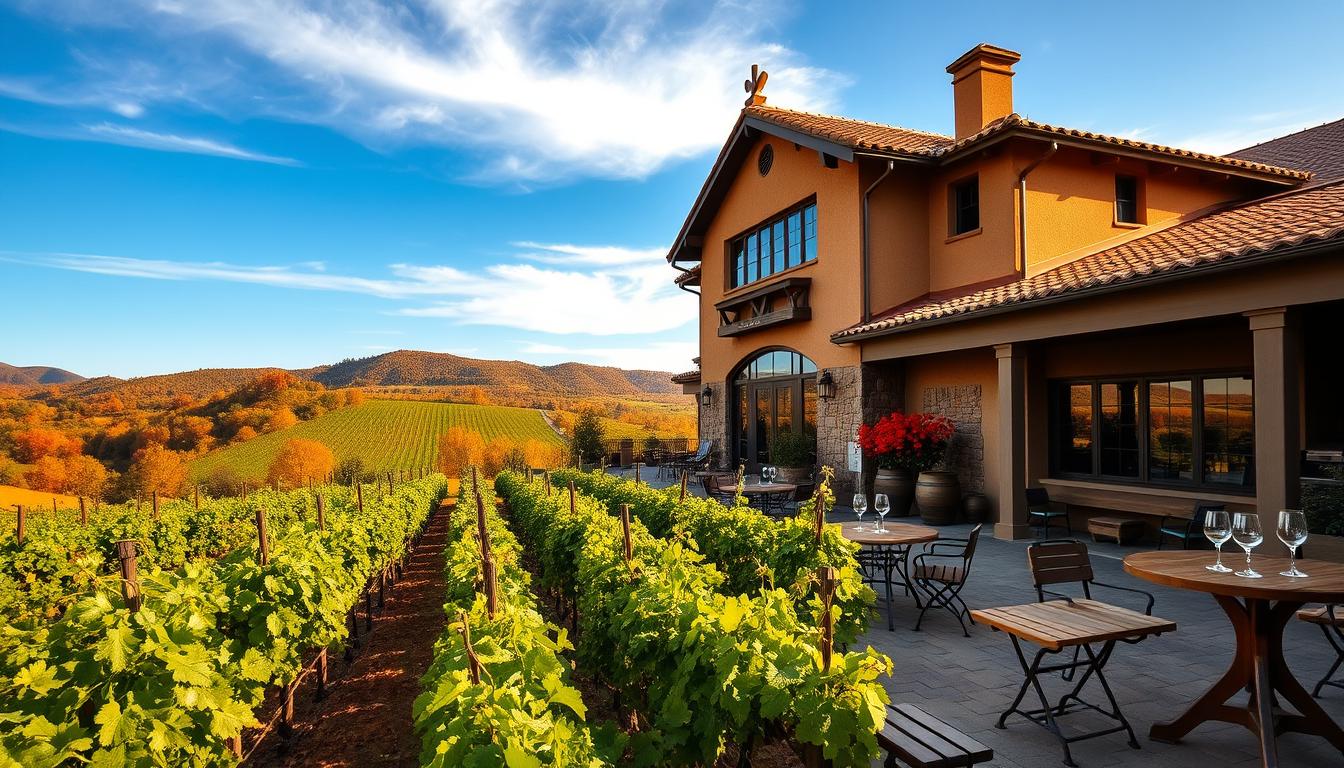
Southern Italian whites bridge two seasons: bright enough for warm evenings, yet textured and savory enough for grilled seafood, ripe tomatoes, roast meats, herbs, olives, and the first cool nights of early autumn.
One familiar name, two distinct Falanghinas
Campania provides the reference point, but place changes the glass. Inland warmth tends to broaden the fruit; the volcanic coast often sharpens the profile.
Falanghina Beneventana
Closely associated with the Sannio area. Bottles can feel broader and more fruit-forward, with ripe pear, white peach, herbs, and a rounded mid-palate.
Falanghina Flegrea
Rooted in Campi Flegrei, a volcanic coastal landscape. The style often feels lighter, sharper, more saline, and naturally suited to clams or grilled fish.
Beneventana and Flegrea are separate registered varieties, not casual regional names for a single grape. Their different geographic associations help explain Falanghina’s range.
Meet the southern white-wine spectrum
Begin with Falanghina for versatility, then move toward richness, firmness, aromatic intensity, or saline tension as the menu demands.
Falanghina
Lemon, pear, white flowers, herbs, and a saline or almond finish.
Fiano
Citrus, pear, hazelnut, herbs, smoke, and enough breadth to age.
Greco
Citrus peel, orchard fruit, almond, mineral impressions, and grip.
Carricante
High acidity, restrained fruit, saline lift, and notable aging potential.
Pecorino
Crisp, aromatic, herbal, and more substantial than its freshness suggests.
Grillo
Citrus, stone fruit, herbs, and generous texture for robust seafood.
Vermentino
Citrus, flowers, Mediterranean herbs, and a characteristic saline finish.
Zibibbo
Muscat of Alexandria: intensely aromatic and made in dry or sweet styles.
Match structure, not just flavor
A useful pairing starts with the wine’s weight and acidity. Herbal, saline, and gently bitter finishes connect naturally with char, vegetables, citrus, and briny seasonings.
| Wine | Body | Acid drive | Seafood | Vegetables | Roast meat | Best first clue |
|---|---|---|---|---|---|---|
| Falanghina | Medium-light | Bright | ✓ Excellent | ✓ Excellent | ~ Flexible | Lemon and herbs |
| Fiano | Medium-full | Balanced | ~ Rich fish | ✓ Excellent | ✓ Excellent | Hazelnut and smoke |
| Greco | Medium | Firm | ✓ Excellent | ~ Charred | ~ Light meat | Citrus peel and grip |
| Carricante | Light-medium | Very high | ✓ Excellent | ~ Delicate | ✗ Less natural | Saline tension |
| Grillo | Medium | Fresh | ✓ Excellent | ✓ Excellent | ~ Flexible | Stone fruit and herbs |
| Vermentino | Light-medium | Bright | ✓ Excellent | ✓ Excellent | ✗ Less natural | Citrus and savory finish |
Four clues turn a label into a style forecast
No single word guarantees flavor. Read the clues together to estimate whether a bottle will be light and immediate or broader and more structured.
Choose the basic shape
Falanghina is approachable; Fiano is broader; Greco is firmer; Carricante is more tensile.
Locate the expression
Look for Sannio, Campi Flegrei, Fiano di Avellino, Greco di Tufo, or Etna Bianco.
Estimate maturity
Recent years favor freshness; strong older bottles may show honey, wax, nuts, smoke, and dried herbs.
Use it as a clue
Lower alcohol often accompanies lightness; a higher figure may indicate riper fruit and greater body.
Do not overchill the evidence
Very cold wine may feel refreshing at first, but low temperature suppresses aroma, texture, and the savory finish that makes these bottles so useful with food.
Carry Falanghina across the whole table
A recent stainless-steel Falanghina can connect an aperitivo, peak-season vegetables, grilled seafood, and young cheese without losing its refreshing edge.
Your late-summer bottle checklist
Use these shortcuts at the wine shop, then let the menu decide how far you travel from Falanghina’s easy versatility.
Choose a recent, stainless-steel Falanghina for a dry and flexible introduction to Campanian white wine.
Use Falanghina del Sannio DOC for a broader inland clue and Campi Flegrei DOC for a sharper coastal clue.
Serve light bottles at 8–10°C and fuller or aged whites at 10–13°C.
Build pairings around seafood, tomatoes, grilled vegetables, lemon, capers, olives, herbs, and young cheese.
For greater depth, seek old vines, named vineyards, lees aging, Fiano di Avellino DOCG, Greco di Tufo DOCG, or Etna Bianco DOC.
Why Falanghina Stays Bright When Dinner Gets Richer
Falanghina and Friends: Southern White Wines for the Last Days of Summer begins in Campania because Falanghina combines lively acidity with enough pear, peach, herbs, and texture to handle real food. It refreshes after a hot afternoon, yet it does not disappear beside grilled fish, tomatoes, or young cheese.
The grape has two principal forms. Falanghina Beneventana is strongly linked with the inland Sannio area around Benevento, while Falanghina Flegrea belongs to Campi Flegrei, the volcanic coastal landscape west of Naples. According to the Vitis International Variety Catalogue, these are separate registered varieties rather than two casual names for one grape [1].
Place changes the glass. A Falanghina del Sannio DOC may feel broad and fruit-forward, with ripe pear and white peach, like a linen jacket that has enough weight for evening. A Campi Flegrei DOC example often feels leaner, sharper, and more saline, a natural match for spaghetti alle vongole, or spaghetti with clams.
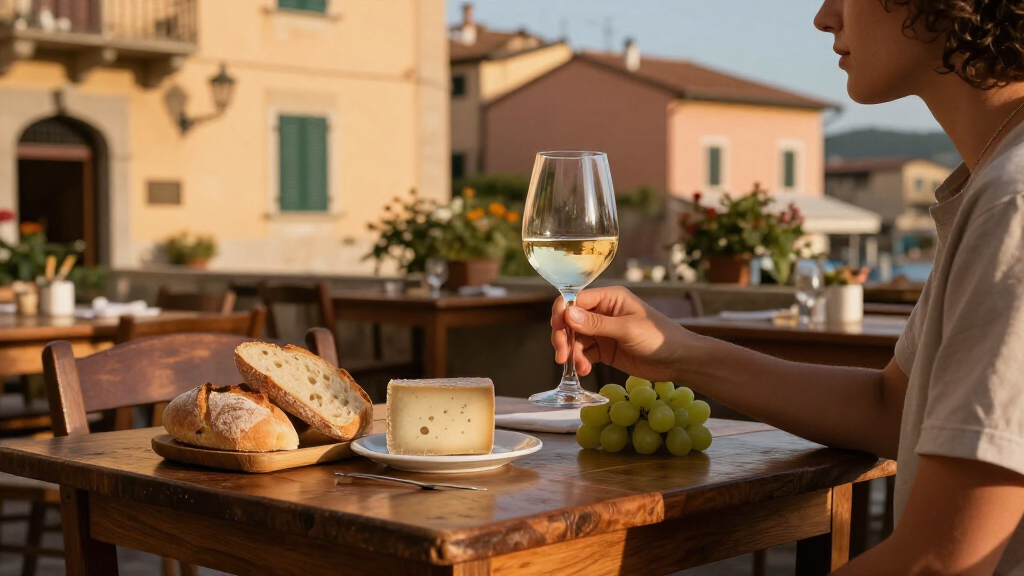
Most Falanghina is dry, unoaked, and young, though sparkling, lees-aged, skin-contact, and barrel-aged versions exist. At a backyard dinner, a recent stainless-steel bottling can cut through fried zucchini and the assumption that southern whites are simple. That gently bitter almond or herb finish is not a flaw; it is the small hook that pulls you back toward the plate.
As an affiliate, we earn on qualifying purchases.
Choose the Right Southern White at a Glance
Falanghina and Friends: Southern White Wines for the Last Days of Summer gives you a spectrum rather than one fixed style. Choose Falanghina for easy versatility, Fiano for breadth, Greco for firmness, or Carricante for high-acid tension. The table below matches each grape with its clearest flavor clue and a practical dinner.
| Wine | What you can expect | Try it with |
|---|---|---|
| Falanghina | Lemon, pear, white flowers, herbs, saline or almond finish | Fried calamari or tomato bruschetta |
| Fiano | Citrus, pear, hazelnut, herbs, smoke, fuller body | Roast chicken with lemon |
| Greco | Citrus peel, orchard fruit, mineral impression, firm finish | Grilled swordfish with capers |
| Pecorino | Crisp, aromatic, herbal, surprisingly substantial | Pesto pasta or grilled zucchini |
| Grillo | Citrus, stone fruit, herbs, generous texture | Sicilian-style tuna with olives |
| Carricante | High acidity, saline lift, restrained fruit, aging potential | Clams or baked sea bass |
| Vermentino | Citrus, flowers, Mediterranean herbs, savory finish | Octopus salad or fregola |
Fiano di Avellino DOCG is the choice when you want white wine with shoulders. Its hazelnut, herb, and smoky notes suit a cooler evening and a rosemary-scented chicken. Greco di Tufo DOCG feels firmer, sometimes almost grippy, making it useful when capers, olives, or charred fish bring stronger flavors.
Beyond Campania, the map widens. Verdeca and Bombino Bianco offer lighter Puglian options, while Calabria gives you Greco Bianco. Sicily supplies Grillo, Carricante, Catarratto, and aromatic Zibibbo; Sardinia answers with Vermentino. Think of the group as a well-stocked tool roll: each bottle solves a different problem, but none needs to imitate Sauvignon Blanc.
Read Four Label Clues Before You Buy
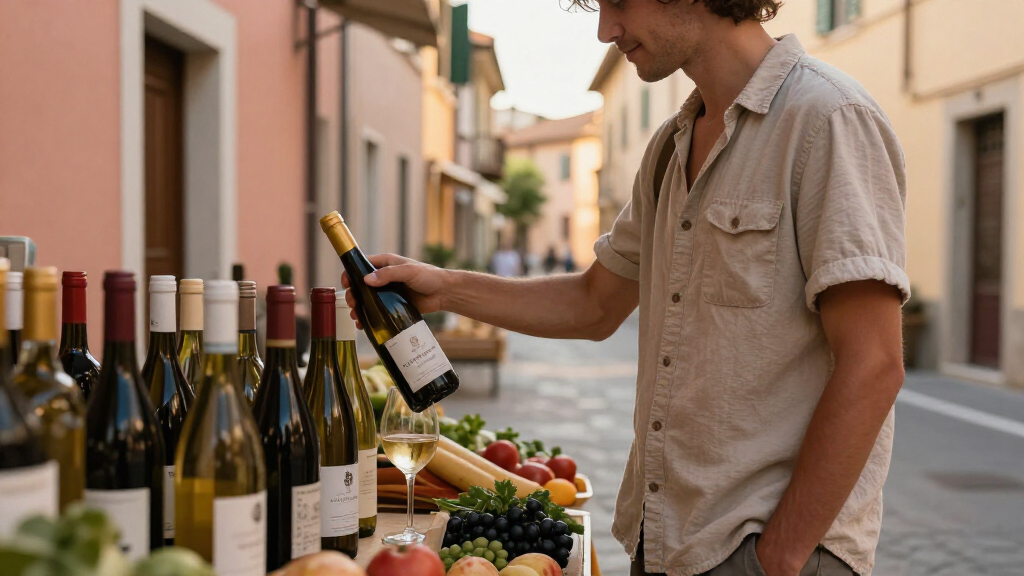
A useful southern Italian wine label tells you four things: grape, appellation, vintage, and alcohol level. Those clues help you predict whether a bottle will taste light and immediate or broad and structured. They also protect you from treating every white made south of Rome as the same sunny, uncomplicated drink.
- Find the grape. Falanghina usually offers the gentlest introduction, while Fiano and Greco bring more structure. Pecorino is a grape from Abruzzo and Marche, not a wine made from sheep’s cheese.
- Find the place. Falanghina del Sannio DOC points toward inland Campania, while Campi Flegrei DOC suggests a coastal volcanic setting. Fiano di Avellino DOCG, Greco di Tufo DOCG, and Etna Bianco DOC are reliable geographic starting points [2].
- Check the vintage. A recent vintage suits an aperitivo or fried seafood. An older bottle from a strong site may show honey, dried herbs, wax, nuts, or smoke.
- Notice the alcohol. A lower figure often accompanies a lighter style, while higher alcohol can hint at riper fruit and more body. It remains a clue, not a promise.
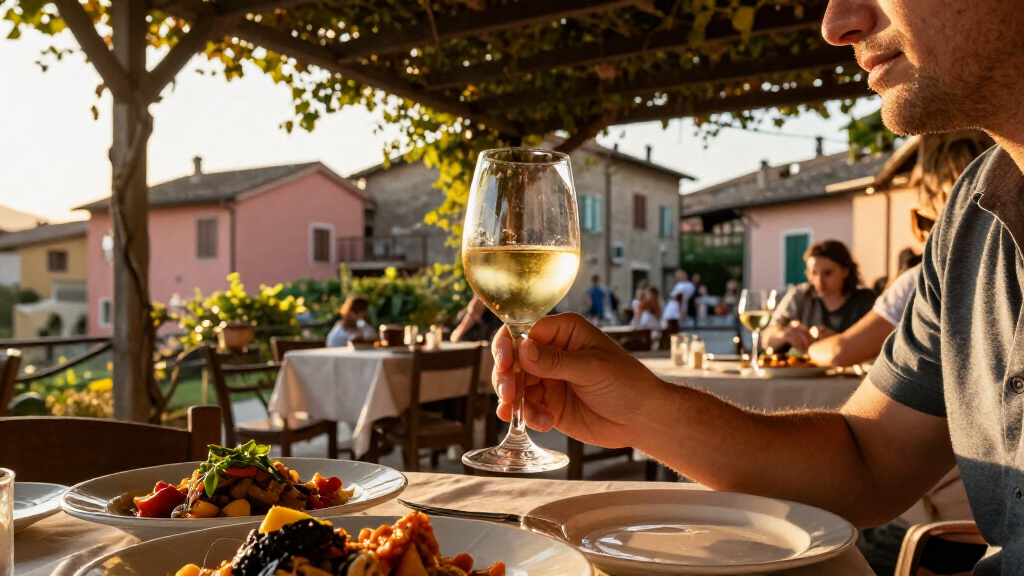
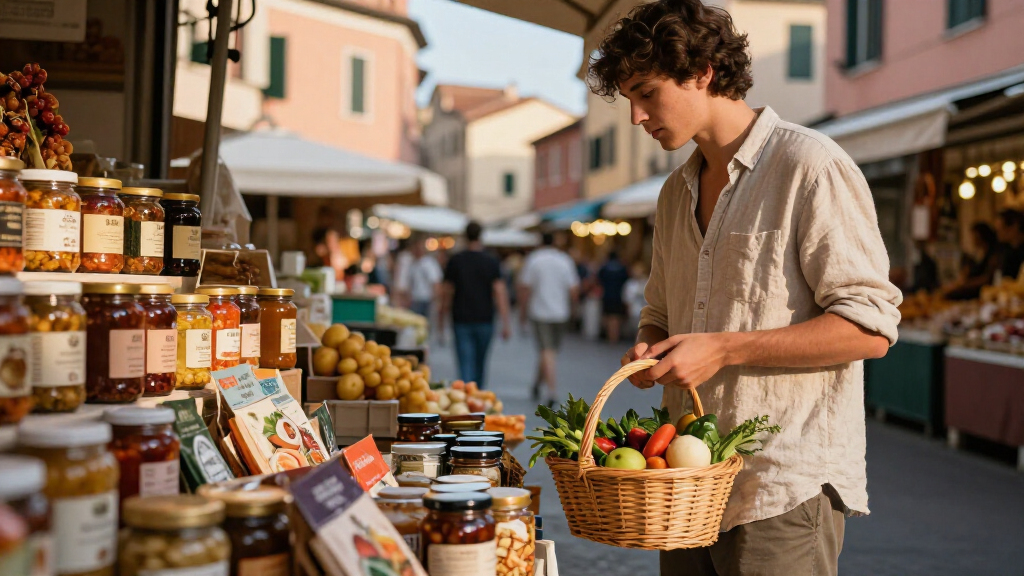
Suppose you are shopping for a terrace dinner of mozzarella, grilled peppers, and shrimp. A recent Falanghina del Sannio fermented in steel offers a safe, flexible choice. If the menu shifts toward pork, roast chicken, or aged cheese, a Fiano di Avellino with more weight can hold the center of the table.
Do not read volcanic as a guarantee of smoke or salt. The word usually means vines grow in land shaped by volcanic activity; climate, elevation, harvest timing, and cellar choices still shape the flavor. Likewise, mineral describes an impression of stone, chalk, smoke, or salt, not literal rocks traveling from soil into your glass.
Build One Late-Summer Menu Around a Single Bottle
Falanghina and Friends: Southern White Wines for the Last Days of Summer works at the table because acidity clears rich flavors while herbal and saline notes echo tomatoes, seafood, capers, and smoke. One well-chosen bottle can accompany an aperitivo, a vegetable course, and a simple main without feeling stretched.
- Open with something crisp. Serve olives, taralli, and small pieces of mozzarella di bufala Campana DOP. Falanghina’s lemony edge trims the cheese’s milky richness.
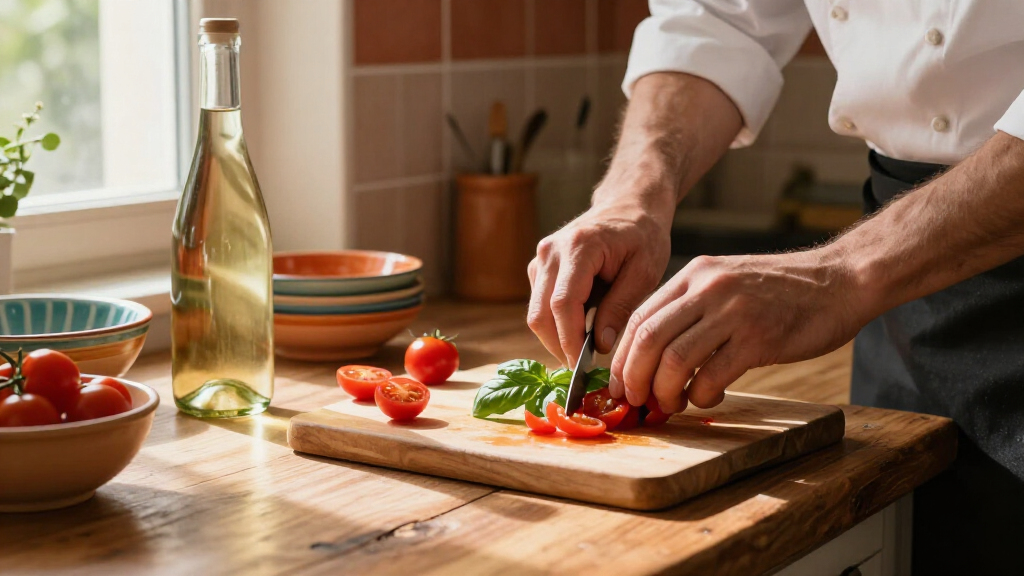
- Add the season’s vegetables. Grill zucchini, peppers, and eggplant, then dress them with olive oil, parsley, and a little vinegar. The char draws out the wine’s smoky or herbal side.
- Choose a salty main. Cook shrimp, squid, clams, or a firm white fish with lemon and capers. Falanghina carries the seafood and the fading sunlight without becoming heavy.
- Move richer when needed. If the evening turns cool, swap in Fiano for roast chicken or Greco for grilled sausage. Their added structure meets browned skin, fat, and rosemary.
A practical Campanian scenario might begin with fiori di zucca fritti, or fried zucchini flowers, and continue with spaghetti alle vongole. A young Campi Flegrei Falanghina keeps both dishes moving. Its acid resets your mouth after the batter, while its saline impression feels at home beside clam liquor and parsley.
Food safety still belongs at a relaxed table. Cook fish to 145°F or 63°C; cook poultry to 165°F or 74°C, and pork to 145°F or 63°C followed by a three-minute rest. Refrigerate seafood and dairy promptly, and never leave them out longer than two hours, or one hour above 90°F or 32°C.
Allergen note: Seafood menus may contain fish, crustaceans, and mollusks; mozzarella contains milk, pesto often contains milk and tree nuts, and wine commonly contains sulfites. Check every ingredient when cooking for someone with an allergy.
Serve Every Glass at the Temperature It Deserves
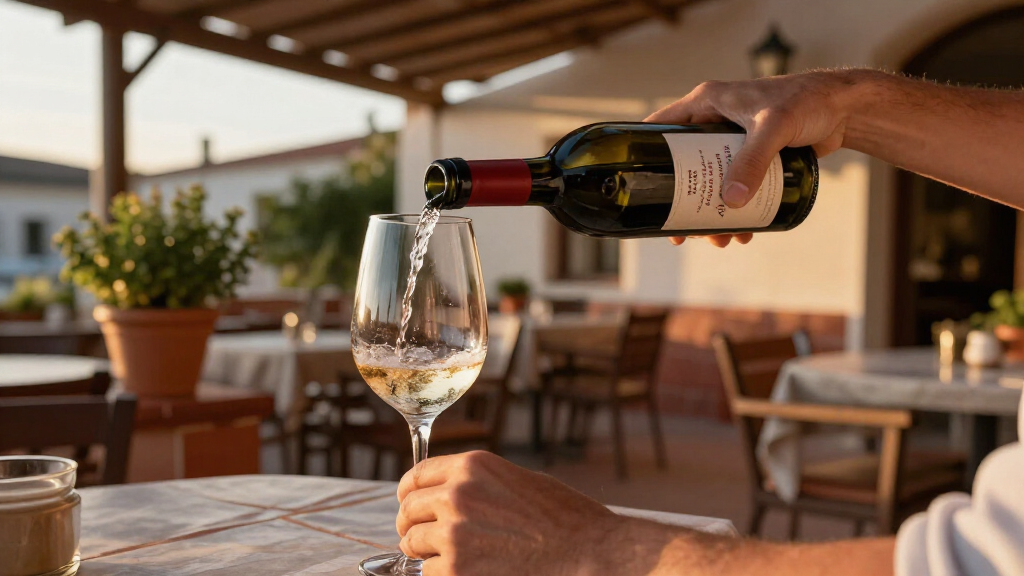
Light southern whites taste best around 8–10°C or 46–50°F, while fuller, aged, or lees-matured bottles show better at 10–13°C or 50–55°F. Colder is not always better. Excessive chilling mutes peach, flowers, herbs, and texture, leaving even a characterful wine tasting like cold lemon water.
For a young Falanghina, place the bottle in the refrigerator for roughly two hours, then let it sit on the table for five or ten minutes before pouring. For Fiano di Avellino or an older Etna Bianco, take it out earlier. Your hand and the room will warm the wine gradually, opening aromas without making the alcohol feel hot.
A simple test beats gadget obsession. If the wine tastes hard, blank, or only acidic, wait five minutes and try again. If it feels broad and warm, return it to an ice bucket containing both ice and water for a short chill; water fills the gaps around the bottle and cools it faster than ice cubes alone.
Use a medium-size white-wine glass rather than a tiny flute, even for many sparkling styles. The extra space lets white peach, fennel, citrus peel, and smoke gather above the wine. Once opened, recork the bottle, refrigerate it, and aim to finish a fresh everyday white within three to five days.
Wine is for adults of legal drinking age. Pour modest servings, put water on the table, eat with the wine, and never drive after drinking. The goal is to taste Campania or Sicily in the glass, not to turn dinner into an endurance test.
Find the Bottles That Reward a Few Years of Patience
Southern Italian white wines now range from bright weekday bottles to site-specific wines built for aging. Basic Falanghina usually tastes best young, but concentrated Falanghina, Fiano di Avellino, Greco di Tufo, and Etna Bianco can gain honeyed, herbal, smoky, or nutty detail over several years.
During the 2010s and 2020s, producers gave more attention to old vines, higher elevations, coastal sites, and named vineyards. Those choices matter in a warming climate because altitude, sea breezes, and later-ripening places can help grapes retain acidity. The result is a category defined by geography, not by one simple flavor or price bracket.
Cellar work has widened the range too. You may encounter extended lees aging, spontaneous fermentation, amphora, skin contact, restrained oak, or sparkling Falanghina made by tank or traditional methods. None of those techniques comes automatically with the grape, and Falanghina is not automatically orange, natural, barrel-aged, or volcanic.
If you want a low-risk experiment, buy two bottles of the same age-worthy wine. Drink one with dinner now, then store the second on its side in a dark place near 12–15°C, or 54–59°F, with little temperature movement. Revisit it after three years and compare the fresh citrus with any new honey, dried-herb, wax, or nut notes.
A few naming traps are worth remembering. Greco Bianco from Calabria is not automatically identical to Campania’s Greco, and Sicily’s Zibibbo, the local name for Muscat of Alexandria, can be dry as well as sweet. Catarratto can be simple and fresh or textured and serious; the producer, site, and method complete the story.
Reference notes: [1] Vitis International Variety Catalogue entries for Falanghina Beneventana and Falanghina Flegrea. [2] Italian Ministry of Agriculture production rules for Falanghina del Sannio DOC, Fiano di Avellino DOCG, Greco di Tufo DOCG, and Etna DOC.
Frequently Asked Questions
Is Falanghina sweet or dry?
Most Falanghina is dry, especially the young stainless-steel styles commonly sold as everyday wine. Ripe pear, peach, and floral aromas can suggest sweetness even when very little residual sugar remains. Look for secco, meaning dry, or ask the wine merchant when the label is unclear.
How do you pronounce Falanghina?
Say it roughly as fah-lahn-GHEE-nah, placing the stress on GHEE. You do not need theatrical Italian pronunciation at the wine shop; a clear attempt plus the appellation, such as Falanghina del Sannio, will identify the bottle.
Is Falanghina similar to Pinot Grigio?
Both can be light, dry, and refreshing, but Falanghina commonly offers more flowers, herbs, texture, and savory flavor. If basic Pinot Grigio feels like a clean white shirt, Falanghina adds rolled sleeves, sea air, and a sprig of wild fennel.
What is the difference between Falanghina, Fiano, and Greco?
Falanghina is usually the lightest and most immediate, with citrus, pear, flowers, and herbs. Fiano is broader, often showing hazelnut and smoke, while Greco tends to be firmer, more mineral in impression, and slightly bitter or grippy at the finish.
Can Falanghina and other southern Italian whites age?
Everyday Falanghina is generally made for early drinking, but strong examples can develop honeyed, herbal, and nutty flavors. Fiano di Avellino, Greco di Tufo, and Etna Bianco often offer more dependable aging potential, though producer, vintage, storage, and bottle style all matter.
What is the best first bottle to try?
Choose a dry Falanghina from a recent vintage, preferably fermented in stainless steel. Falanghina del Sannio DOC offers an approachable inland expression, while Campi Flegrei DOC suits you if you prefer leaner, more saline whites with seafood.
Conclusion
Start with one dry Falanghina from a recent vintage and serve it slightly warmer than refrigerator temperature. Put it beside grilled seafood, ripe tomatoes, or mozzarella, then notice how the citrus clears the plate while the herbs and saline finish pull the food back into focus. That balance is the point.
Once you recognize it, follow the map: Fiano for breadth, Greco for grip, Carricante for tension, and Grillo for Sicilian warmth. Late summer does not need a heavy wine or a fading poolside bottle. It needs a white that holds sunlight and supper in the same glass.

Halloween Picks
halloween
As an affiliate, we earn on qualifying purchases.