
TL;DR

Get kitchen staples and gadgets delivered free with Prime
- Fast, free delivery on millions of items
- Prime Video, Amazon Music and more included
- Member-only deals all year
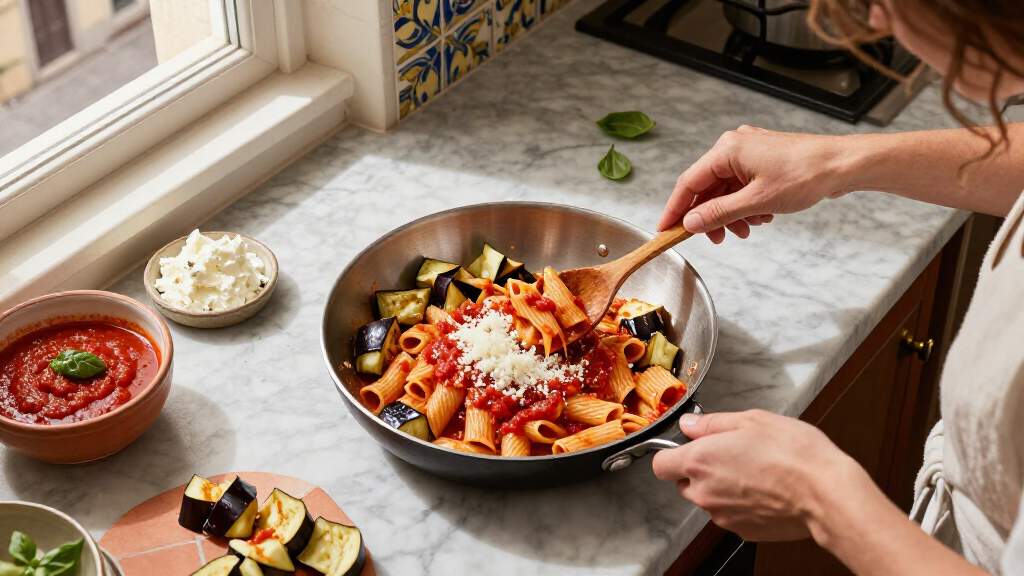
Pasta alla Norma is a classic Sicilian pasta dish from Catania made with pasta, bright tomato sauce, golden eggplant, basil, olive oil, and ricotta salata. Frying produces the traditional silky eggplant, but roasting and air-frying work when you want a lighter approach; in every version, dry the eggplant well, finish the pasta in the sauce, and add the cheese only after tasting for salt.
Eggplant can drink oil like a thirsty sponge, yet in a good Pasta alla Norma it emerges from the pan silky, bronzed, and almost custardy. The tomato sauce stays bright. Basil lifts its green perfume from the plate, while a snowfall of ricotta salata gives every forkful a clean, salty finish.
This classic Sicilian pasta dish is associated especially with Catania, on Sicily’s eastern coast, where summer markets fill with glossy eggplants and tomatoes warmed by the sun. You will learn how to choose those ingredients, fry without greasiness, time the sauce and pasta, and assemble the dish without turning the eggplant into mush.
You will also get exact quantities for four servings, a comparison of frying, roasting, and air-frying, plus practical storage and substitution advice. The recipe is meatless, but it contains dairy and wheat allergens in its traditional form. Think of the dish as a small ensemble: tomato carries the melody, eggplant brings the velvet bass, basil adds a high green note, and ricotta salata keeps everyone in time.
Dry ¾-inch eggplant pieces thoroughly and fry them in uncrowded batches at 350–365°F for deep browning without excessive greasiness.
Use ricotta salata rather than fresh ricotta; its firm, salty texture supplies the dish’s characteristic finish.
Cook pasta about 2 minutes short of al dente, reserve 1 cup of cooking water, and finish the pasta directly in the tomato sauce.
Fold in only two-thirds of the eggplant and place the best pieces on top so they retain their shape and browned edges.
Refrigerate leftovers within 2 hours at 40°F or below, eat within 3 days, and reheat to 165°F.
Pasta alla Norma: Sicily’s Eggplant Classic, Step by Step
Bright tomato, silky eggplant, fragrant basil, and salty ricotta salata form one of Sicily’s clearest expressions of summer cooking. The secret is separation: brown each component properly, then bring everything together at the last moment.
Six voices, one Sicilian composition
The dish depends on contrast rather than complexity: sweet tomato carries the melody, eggplant supplies velvet depth, basil adds a high green note, and ricotta salata keeps the whole plate in tune.
Why Catania claims the dish
Pasta alla Norma is closely associated with Catania, birthplace of composer Vincenzo Bellini. His opera Norma premiered in 1831. A cherished local story says writer Nino Martoglio called the pasta “a Norma”—something exceptional. Treat the tale as culinary tradition rather than a firmly documented naming event.
Pasta
12 oz rigatoni, penne, or maccheroniRidged tubes hold both sauce and eggplant. Spaghetti is more sauce-led; busiate catches tomato in its coils.
Eggplant
1½ lb, cut into ¾-inch piecesChoose fruit that feels heavy and taut, with glossy skin, a fresh cap, and no soft thumb-shaped dents.
Tomatoes
28 oz canned or 2 lb ripe freshUse sweet plum tomatoes in season. Outside summer, good whole peeled canned tomatoes usually taste livelier.
Ricotta salata
3 oz, grated or crumbledFirm, dry, aged, and commonly made from sheep’s milk. Taste the finished sauce before adding more salt.
Basil + garlic
1 generous handful + 2 clovesScent the oil gently with garlic. Add torn basil near the end to preserve its perfume and green color.
Olive oil
2 tbsp for sauce; more for fryingUse extra-virgin olive oil and keep frying oil hot enough to brown without crossing its smoking point.
A solid wedge gives the dry, salty finish the dish needs. A soft tub of fresh ricotta is moist, mild, and texturally different. Pecorino Romano can substitute sparingly, but it tastes sharper.
Golden eggplant, never mushy
Prepare the eggplant, sauce, and pasta as distinct components. Combine them only when each has reached its best texture.
Cut and dry
Cut 1½ lb eggplant into even ¾-inch pieces. Salt for 30 minutes if desired, then wipe or rinse and dry thoroughly.
Start the sauce
Warm 2 tbsp oil. Cook 2 crushed garlic cloves gently for about 60 seconds; do not brown them.
Simmer bright
Add 28 oz tomatoes and ½ tsp salt. Simmer uncovered for 20–25 minutes, keeping the flavor fresh.
Brown in batches
Fry in about ½ inch of oil at 350–365°F. Leave room around each piece and drain when deeply golden.
Undercook pasta
Boil until about 2 minutes short of al dente. Reserve 1 cup of pasta water before draining.
Finish in sauce
Toss pasta over low heat with tomato sauce. Add reserved water gradually until the sauce clings and shines.
Fold and finish
Fold in two-thirds of the eggplant. Top with the rest, ricotta salata, torn basil, and a little olive oil.
Cool oil encourages absorption; overcrowding drops the temperature. Deep browning creates a silky center and bronzed shell.
Gentle folding flavors the pasta while preserving the most attractive browned edges for the final plate.
Traditional silk or lighter edges
Frying gives the classic custardy texture. Roasting and air-frying reduce hands-on oil use while retaining good browning—provided the pieces are dry, coated lightly, and given enough space.
| Measure | Fry · Traditional | Roast · Lighter | Air-fry · Fast |
|---|---|---|---|
| Typical heat | 350–365°F oil | 425°F oven | 390°F air fryer |
| Approximate time | 3–6 min per batch | 25–35 min | 15–20 min |
| Classic silky center | ✓ BEST | ~ GOOD | ~ GOOD |
| Lowest added oil | ✗ NO | ~ MODERATE | ✓ YES |
| Batch attention | High; watch temperature | Low; turn once | Medium; shake basket |
| Best result cue | Mahogany edges, tender center | Brown corners, collapsed center | Crisp edges, soft interior |
Work in uncrowded batches and let the oil recover between additions. Pale eggplant often tastes oily and spongy.
Spread pieces on a single layer with space between them. Turn once and continue until the centers are fully tender.
Cook in batches rather than filling the basket deeply. Shake midway so the hot air reaches multiple surfaces.
The texture chain
Every decision affects the next. Protecting the eggplant’s surface at the beginning preserves the dish’s contrast at the table.
Five rules worth remembering
- Dry the eggplant thoroughly so it browns rather than steams.
- Keep the tomato sauce simple, fresh, and tomato-forward.
- Reserve one cup of pasta water before draining.
- Add basil near the end to preserve its aroma and color.
- Taste before salting because ricotta salata is already assertive.
Store safely
Why Catania Claims This Pasta as Its Own
Pasta alla Norma is a classic Catanese dish whose name connects local cooking with composer Vincenzo Bellini, born in Catania. Bellini’s opera Norma premiered in 1831, and culinary tradition says the pasta later earned the opera’s name because it seemed equally masterful [1].
The widely repeated story credits Catanese writer Nino Martoglio with seeing the dish and declaring it “a Norma”—something exceptional. Treat that account as a treasured local story, not a firmly documented naming event. According to the Catanese culinary tradition summarized by madtasting.com [1], the Bellini connection expresses civic pride even though the precise exchange cannot be proved.
You can feel why the story endured when you eat the dish in Catania during eggplant season. Imagine a July lunch after walking beneath the dark lava-stone façades near the fish market: the sauce glows red, the eggplant edges are nearly mahogany, and torn basil releases its scent as the plate lands. The food looks composed, but it tastes generous and familiar.
Its defining combination is pasta, tomato sauce, fried eggplant, fresh basil, olive oil, and ricotta salata, usually with garlic scenting the sauce [1]. There is traditionally no meat and no long list of dried herbs. Each ingredient gets enough room to speak, which also means a watery tomato or pale, undercooked eggplant has nowhere to hide.
The Bellini story gives the dish romance, but the cooking gives it identity: sweet tomato, creamy eggplant, salty cheese, and aromatic basil must remain distinct in every forkful.
That balance is your practical link to Catania. You do not need Sicilian sunshine outside your window, but you do need restraint. When the garlic whispers instead of shouting and the cheese sharpens rather than smothers, your kitchen begins to sound like that same small orchestra.

As an affiliate, we earn on qualifying purchases.
Choose Six Ingredients That Keep Every Flavor Clear
Pasta alla Norma tastes best when you choose firm eggplant, lively tomatoes, ricotta salata, sturdy pasta, basil, and good olive oil. For four servings, start with 12 ounces of pasta, 1½ pounds of eggplant, 28 ounces of tomatoes, 3 ounces of cheese, two garlic cloves, and a generous handful of basil.
Pick eggplants that feel heavy and taut, with glossy skin and no soft, thumb-shaped dents. Sicilian eggplant is lovely when available, but Italian or globe eggplant works well. At a market, compare two of similar size: the firmer one with a fresh green cap will usually give you cleaner cubes and fewer brown seeds.
Salting is optional with many mild modern eggplants. Use it when the fruit tastes bitter, seems especially seedy, or when you want firmer pieces with less surface moisture. Toss the cut eggplant with about 1 teaspoon kosher salt, rest it for 30 minutes, then wipe or rinse it and dry every piece thoroughly.
In August, use 2 pounds of ripe plum tomatoes if they smell sweet at the stem and yield slightly under your fingers. In February, a good can of whole peeled tomatoes will beat pale supermarket tomatoes with cottony centers. Crush canned tomatoes by hand for a sauce with soft, irregular pieces rather than a perfectly smooth purée.
Ricotta salata is firm, dry, and aged, commonly made from sheep’s milk. It grates into snowy flakes and tastes much saltier than fresh ricotta, which is moist, mild, and spoonable. If a shop offers you a tub rather than a solid wedge, you are looking at a different cheese.
Choose rigatoni, maccheroni, or penne when you want eggplant cubes to nestle inside the pasta. Spaghetti gives you a more slippery, sauce-led forkful, while Sicilian busiate catches tomato in its coils. For an easy weeknight example, rigatoni provides the most forgiving match because its ridges hold sauce even if your sauce remains slightly loose.

- Best cheese substitute: Use Pecorino Romano sparingly; it is sharper and more forceful than ricotta salata.
- Best tomato shortcut: Choose canned whole tomatoes with tomatoes, juice, and salt rather than a heavily seasoned prepared sauce.
- Traditional aromatics: Use olive oil, usually with garlic, and add basil near the end instead of loading the sauce with dried herbs.
- Allergen note: Traditional pasta contains wheat, and ricotta salata contains milk; use certified gluten-free pasta or omit the cheese when those allergens matter.
7 Steps to Build Pasta alla Norma Without Mushy Eggplant
Pasta alla Norma comes together cleanly when you prepare each component separately, then combine the pasta, sauce, and eggplant just before serving. The full process takes about 60 minutes, including optional salting time, and gives you four main-course portions without sacrificing the eggplant’s browned edges.
- Cut and dry the eggplant. Cut 1½ pounds of eggplant into ¾-inch cubes, strips, or ½-inch rounds of even size. Salt it for 30 minutes if desired, then wipe or rinse it and press it very dry with clean towels. Water encourages steaming and makes hot oil spit with a sharp spat-spat.
- Start the bright tomato sauce. Warm 2 tablespoons of extra-virgin olive oil over medium-low heat and gently cook two crushed garlic cloves until fragrant, about 60 seconds. Add 28 ounces of crushed or hand-crushed tomatoes and ½ teaspoon salt, then simmer uncovered for 20 to 25 minutes. Remove the garlic if you want a softer flavor.
- Fry in uncrowded batches. Pour about ½ inch of olive oil into a wide, heavy pan and heat it to 350–365°F. Add only enough eggplant to leave visible space between pieces. Fry until deeply golden and tender, usually 3 to 5 minutes per batch, then move it to a rack or absorbent paper and season lightly.
- Boil the pasta just short of done. Bring at least 4 quarts of water to a rolling boil and salt it so it tastes pleasantly seasoned. Cook 12 ounces of pasta about 2 minutes less than the package’s al dente time. Scoop out 1 cup of pasta water before draining.
- Finish the pasta in the sauce. Add the drained pasta to the simmering tomato sauce and toss over low heat for 1 to 2 minutes. Add reserved pasta water a tablespoon at a time until the sauce shines and clings. The starchy water acts like a bridge, helping tomato and oil hold hands around every ridge.
- Fold in only part of the eggplant. Add roughly two-thirds of the fried eggplant and turn it through the pasta gently. Do not beat or mash it. Keep the darkest, most handsome pieces aside so they stay crisp-edged on top.
- Finish and serve at once. Divide the pasta among warm bowls, then add the reserved eggplant, 3 ounces of grated or crumbled ricotta salata, and torn basil. Taste before adding more salt, because the cheese carries plenty. A small thread of olive oil can add fruitiness, but the pasta should not sit in a slick.
For a real dinner timeline, begin the tomato sauce while the salted eggplant rests. Fry the eggplant while the sauce murmurs with a quiet blup-blup, then boil the pasta once both components are ready. This order keeps you near the stove without forcing three pans to demand your attention at once.
Oil temperature matters. If it drops much below 350°F, eggplant absorbs more oil before its surface can brown; if the oil smokes, it is too hot and can taste harsh. Use a thermometer when possible, keep children away from the pan, and never add wet eggplant or pour water onto hot oil.
The final toss should last only long enough for the pasta to drink a little sauce. Think back to the Catanese orchestra: folding preserves each instrument, while aggressive stirring turns the whole performance into one muddy note. Serve promptly, while the pasta has bite and the eggplant still shows its burnished edges.

Pick the Eggplant Method That Fits Your Dinner
Pasta alla Norma gets its classic texture from fried eggplant, while roasting and air-frying trade some silky richness for easier cleanup and less oil. Choose frying for a traditional weekend plate, roasting for a large batch, or air-frying when you are cooking for one or two people.
| Method | Heat and timing | Texture | Best use |
|---|---|---|---|
| Fried | 350–365°F oil, 3–5 minutes per batch | Deeply browned outside, silky and custardy inside | The closest match to the classic Catanese preparation |
| Roasted | 425°F oven, 25–35 minutes | Caramelized edges, firmer and slightly drier center | Four to six servings with less hands-on work |
| Air-fried | 390–400°F, 15–22 minutes | Crisp corners, light center, less uniform browning | A small batch with quick cleanup |
| Grilled | Medium-high heat, 3–5 minutes per side | Smoky, structured slices with charred lines | An outdoor summer variation |
For roasted eggplant, toss ¾-inch cubes with 2 to 3 tablespoons of olive oil, spread them across a large metal sheet pan, and turn them halfway through cooking. If the cubes touch on every side, they trap steam and stay beige. A dark pan with breathing room gives you the crisp, brown corners that make the lighter method satisfying.
An air fryer works best when the basket is no more than half to two-thirds full. Shake it every 5 to 7 minutes and watch smaller cubes near the end. If you try to cook the entire 1½-pound batch at once in a compact machine, the eggplant will huddle together like commuters in the rain and emerge soft rather than bronzed.
Grilling changes the dish more noticeably because smoke joins the flavor. Cut long slices about ½ inch thick, brush both sides lightly with oil, and grill until supple with clear char marks. At an August cookout, you can lay those slices over spaghetti dressed in tomato sauce, then add basil and ricotta salata at the table.
Frying remains the traditional choice because hot oil gives eggplant its characteristic yielding center [2]. Still, the lighter methods produce a good dinner when their tradeoffs suit your evening. Do not call roasted eggplant identical to fried eggplant; enjoy it as a practical adaptation with a firmer bite.

Fix the Five Mistakes That Make Norma Greasy or Flat
Pasta alla Norma turns greasy, watery, or dull when the eggplant stays wet, the pan gets crowded, the oil runs cool, or the sauce becomes overloaded. Keep the components simple and control moisture, heat, salt, and timing; those four checks solve nearly every disappointing plate.
- Wet eggplant: Dry every cut surface before frying, especially after salting and rinsing.
- Crowded pan: Fry in batches so the oil temperature rebounds quickly and steam can escape.
- Pale color: Wait for deep gold rather than removing soft, beige pieces too soon.
- Heavy sauce: Skip sugar, cream, meat, and a cabinet’s worth of dried herbs.
- Early assembly: Add most eggplant near the end and save some for the top.
Suppose your first batch lands in 360°F oil and browns in four minutes, but the second batch takes nine minutes and looks gray. You probably added too many pieces at once or failed to let the oil reheat. Pause, bring the temperature back into range, and give the next batch more space.
Eggplant that absorbs oil is not automatically a failure. Its porous flesh naturally takes in fat, and that richness is part of the dish. The goal is controlled absorption with real browning, not a dry cube; proper heat sets the surface quickly while the center softens.
The tomato sauce can also wander off course. A spoonful of tomato paste, sugar, onion, oregano, chili, and wine may each sound harmless, but together they bury the fresh contrast that defines the dish. For example, if your canned tomatoes taste sharp, simmer them five minutes longer and add a spoonful of pasta water instead of masking them with sweetness.
Cheese needs restraint as well. Ricotta salata already supplies salt, so taste the finished pasta before reaching for the salt cellar. If you substitute Pecorino Romano, begin with about half the quantity, toss, and taste; its sharper bite can chase the basil from the plate.
Pale eggplant tastes oily because it has absorbed fat without earning flavor. Wait for deep golden color, then let the pieces drain while you finish the pasta.
Finally, do not cook the pasta fully in water and then let it sit in the sauce. Pull it about 2 minutes before al dente so it finishes without becoming soft. That small timing choice gives the final bowl structure—the stage on which tomato, basil, cheese, and eggplant can still play separate parts.

Serve, Store, and Reheat It Without Losing the Good Part
Pasta alla Norma should be served immediately in warm bowls, with reserved eggplant and ricotta salata added at the table. For make-ahead cooking, prepare the tomato sauce up to three days early but cook the pasta fresh; store leftovers within 2 hours and reheat them to 165°F.
A simple Sicilian-style meal needs little around it. Serve a bitter-leaf salad with lemon and olive oil before the pasta, then finish with chilled peaches or blood-orange granita when the season allows. The lean, bright sides give the eggplant room to carry the meal’s richness.
If you serve wine, choose a Sicilian red with acidity and moderate weight, such as Frappato or a restrained Nero d’Avola. A dry Sicilian rosé or mineral white also works with tomato and basil. Wine is for adults of legal drinking age; pour modestly, drink responsibly, and offer sparkling water at the table.
For advance preparation, cool tomato sauce promptly and refrigerate it in a covered container at 40°F or below for up to 3 days. You can fry or roast the eggplant earlier the same day, then warm it for several minutes in a 425°F oven. Keeping the sauce and eggplant apart protects those browned edges.
Refrigerate complete leftovers in shallow, covered containers within two hours of cooking, or within one hour if the room is above 90°F. Eat them within 3 days and reheat to 165°F. Add a tablespoon of water before warming pasta in a covered skillet, then finish it uncovered so the sauce does not remain watery.
Freezing the tomato sauce works well for roughly 3 months, but freezing the assembled dish gives you softer pasta and spongier eggplant. At the end of summer, make a double batch of tomato sauce and freeze half without basil. In November, you can thaw it, roast fresh eggplant, and build a much livelier dinner than a frozen bowl would provide.
For a vegan adaptation, omit the ricotta salata or use a dairy-free salty topping, while acknowledging that the flavor moves away from the Catanese original. For a gluten-free plate, use certified gluten-free pasta and check packaged ingredients if cross-contact matters. The callback is the same orchestra: substitutions can change an instrument, but tomato, eggplant, basil, and a salty finish should still keep the tune recognizable.
Frequently Asked Questions
Does authentic Pasta alla Norma contain meat?
No, traditional Pasta alla Norma is meatless. Its flavor comes from eggplant, tomatoes, basil, olive oil, pasta, and ricotta salata. Adding sausage or ground meat creates a different pasta rather than a classic Catanese Norma.
Do I have to salt the eggplant before cooking it?
Salting eggplant is optional when the fruit is young, firm, and mild. Salt it for about 30 minutes when it seems seedy, may taste bitter, or needs help shedding moisture. Wipe or rinse it afterward and dry it thoroughly before it touches hot oil.
Can I use fresh ricotta instead of ricotta salata?
Fresh ricotta does not behave like ricotta salata. It is moist, soft, and mild, while ricotta salata is aged, firm, and salty. Fresh ricotta can make a pleasant variation, but it will give the pasta a creamier and less sharply seasoned finish.
Why did my eggplant absorb so much oil?
Cool oil, wet eggplant, or an overcrowded pan usually causes excessive absorption. Heat the oil to 350–365°F, dry the pieces well, and leave room around each batch. Deep browning gives you a silky center without a mouth-coating result.
Can I make Pasta alla Norma without frying?
Yes, roast the eggplant at 425°F or air-fry it at 390–400°F until deeply browned. These methods use less oil and make cleanup easier, though the eggplant will taste firmer and less custardy than the traditional fried version.
Can I make the sauce or complete dish ahead?
The tomato sauce can be made up to 3 days ahead and refrigerated at 40°F or below. Cook the pasta fresh and keep the eggplant separate until serving when possible. A fully assembled dish softens as it sits because the pasta and eggplant continue absorbing sauce.
Is Pasta alla Norma gluten-free or vegan?
The tomato and eggplant sauce is naturally gluten-free and vegan, but standard pasta contains wheat and ricotta salata contains milk. Use certified gluten-free pasta when needed, and omit or replace the cheese for a vegan adaptation. Check labels carefully when allergen cross-contact is a concern.
Conclusion
Give each ingredient one clear job: brown the eggplant deeply, keep the tomato sauce bright, leave the pasta firm, add basil late, and let ricotta salata provide the final salt. If you remember only one move, save some golden eggplant for the top; that simple choice protects both texture and the dish’s generous Catanese character.
Cook it when eggplants feel heavy and basil perfumes your fingers, or open a good can of tomatoes when Sicily seems far away. Then carry the bowl straight to the table while the sauce still gleams and the browned pieces give a faint crackle under the cheese. That first hot forkful is your destination.

Halloween Picks
halloween
As an affiliate, we earn on qualifying purchases.