TL;DR

Get kitchen staples and gadgets delivered free with Prime
- Fast, free delivery on millions of items
- Prime Video, Amazon Music and more included
- Member-only deals all year
Bistecca alla Fiorentina is a large, thick, bone-in T-bone steak associated with Florence and Tuscany, traditionally cooked over intense heat and served very rare. For a home version, ask your butcher about the cut, breed, and aging; dry and salt the steak; sear it over high heat; and use a thermometer to guide doneness. Carve the meat off the bone and slice both sides across the grain for sharing.
A Florentine steak can weigh more than a pound, yet its best-known seasoning fits in your palm: salt. That contrast is part of its appeal. In Florence, bistecca alla Fiorentina turns a thick T-bone, a fierce fire, and a table of hungry friends into a meal that feels both celebratory and refreshingly direct.
You can make a version at home without pretending your grill is a Tuscan trattoria. The useful work starts at the butcher counter: choosing a 3–4 cm or thicker bone-in cut, learning what its label does and does not tell you, and deciding how rare you are comfortable serving it. Then you’ll build a browned crust, manage the heat, and carve the two sides for sharing.
This guide also explains the dish’s regional ties, familiar accompaniments, and food-safety tradeoffs. If you are planning a meal in Tuscany, the same questions will help you order with more confidence. If you are cooking at home, they’ll help you choose a steak worth gathering around.
Buy a thick, bone-in T-bone, ideally 3–4 cm or more, with both tenderloin and strip loin.
Ask about breed, raising region, aging, and cut; “Fiorentina” alone does not certify Chianina or Tuscan origin.
Dry the steak, salt it, sear over high heat, and finish more gently if the outside browns before the center is ready.
Use a thermometer instead of relying on a universal cooking time, and account for the food-safety risks of rare beef.
Carve the meat off the bone, separate the two sides, and slice across the grain for sharing.
Bistecca alla Fiorentina Sourcing, Searing, and Sharing
A thick, bone-in T-bone turns simple seasoning and high heat into a meal for sharing. Choose the cut carefully, cook to your preferred doneness, and carve across the grain.
Choose the steak
The name describes a Florentine tradition; it does not certify breed or origin.
Look for a substantial T-bone
Choose a thick cut with both tenderloin and strip loin, plus marbling on the strip side.
Ask what the label means
Ask about breed, raising region, aging, and cut. Chianina is associated with the dish, but not guaranteed.
Choose by taste
Dry aging can concentrate flavor and soften texture; wet-aged or fresh beef can also work.
Build the crust, protect the center
Use heat and the steak’s condition to guide the cook; timing varies with thickness, equipment, and fire.
Pat the surface dry and season simply. Avoid sugary marinades over intense heat.
Brown both faces and render the fat edge on a hot grill or in a heavy pan.
If the crust forms before the center is ready, finish more gently. Use a thermometer, then rest briefly.
Know the doneness tradeoff
Very rare is traditional, but you can choose a doneness that suits your needs.
- Serve the center very rare.
- Keep the seasoning spare: beef, salt, and fire.
- Use a thermometer to guide doneness.
- Undercooked beef carries food-safety risks; handle it safely and follow local guidance.
Carve for sharing
Rest the steak, then separate the meat from the bone before slicing.
What Makes a Steak a Florentine Bistecca?
Bistecca alla Fiorentina is a thick, bone-in T-bone steak associated with Florence and Tuscany. The T-shaped bone separates the tenderloin, which is small and tender, from the strip loin, which has a firmer bite and often more visible marbling. A traditional cut is substantial—often around 3–4 cm thick or more—and typically goes to the table whole for several people to share.
That bone is more than a dramatic centerpiece. It gives the butcher a visual cue that you have the two familiar loin portions together, and it makes the steak easy to present before carving. When you order one in Florence, you may hear the server ask its weight because the steak is usually priced and shared as a large cut rather than treated like a small individual portion.
Stories connect the dish’s name and customs with Florentine public celebrations and the city’s steakhouse culture. Origin tales vary, so treat the colorful versions as local tradition rather than settled history. What you can count on is the enduring format: beef, bone, high heat, and restrained seasoning.
Think of the bone as a handle on a shared platter: it makes the meal feel communal, while the two sides give everyone a choice of texture. If you’re cooking for four, a large steak with both the tenderloin and strip can turn dinner into a simple carving ritual. Serve it on a warm board and bring a sharp knife to the table.
Products Worth Considering

Levoit Eleva 300X Air Purifier with Sealed HEPA Filtration

Samsung QN65LS03FAFXZA 65 The Frame QLED 4K Art Mode Vision AI Smart TV (2025)

Dreame L40 Ultra Gen 2 Robot Vacuum and Mop with 25,000 Pa Suction
As an affiliate, we earn on qualifying purchases.
How to Buy a Thick T-Bone With the Right Details
Bistecca alla Fiorentina starts with a thick, bone-in T-bone that contains both tenderloin and strip loin. Ask for a steak at least 3–4 cm thick; that gives you room to brown the outside without the center racing toward well done. Look for firm, bright-red meat and some marbling on the strip side, where fine white streaks can help keep each slice flavorful.
Chianina, a large white cattle breed native to central Italy, has a strong association with the dish. But “Fiorentina” describes a preparation and tradition; it does not guarantee Chianina, Tuscan raising, or any single origin. Florentine restaurants may serve beef from other breeds and regions, so the label matters less than the details the butcher can actually confirm.
Ask where the animal was raised, what breed it was, how long the beef was aged, and whether the cut is from the loin. Dry aging can concentrate beef flavor and soften texture; wet-aged or fresh beef can also make a fine steak. Aging is a choice that affects taste and texture, not a requirement for the dish.
For example, if the butcher offers two T-bones, one thin and one thick, choose the thicker cut even if you are cooking for fewer people. A thin steak gives you little time to build a crust before the center cooks through. The butcher’s answers also help you decide whether you’re buying a particular provenance or simply a good cut for a Florentine-style preparation.
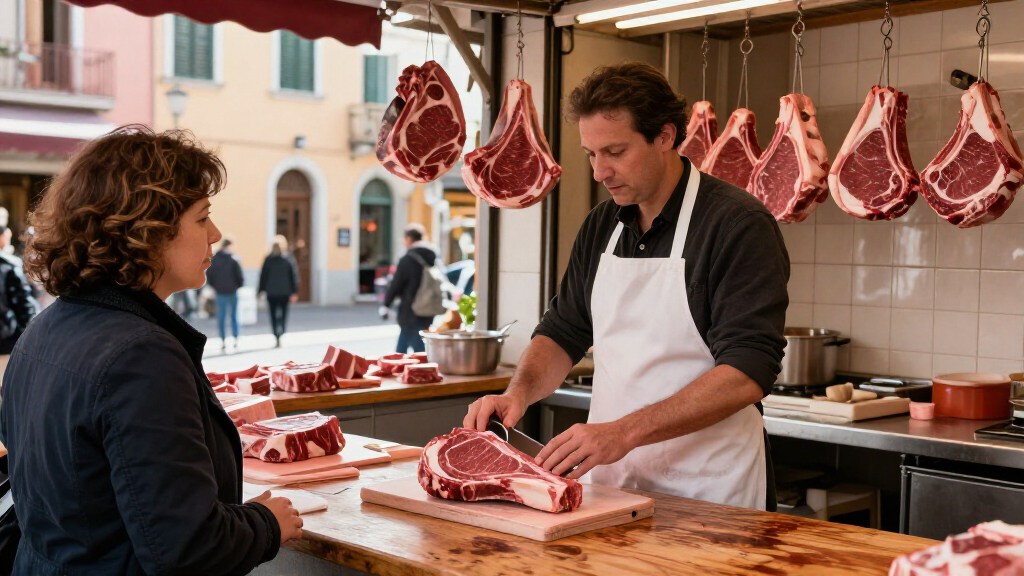
- Check the shape: look for a clear T-bone and visible portions of both loin muscles.
- Check the thickness: aim for 3–4 cm or more.
- Ask direct questions: breed, raising region, aging, and cut.
How to Sear the Steak Without Drying the Center
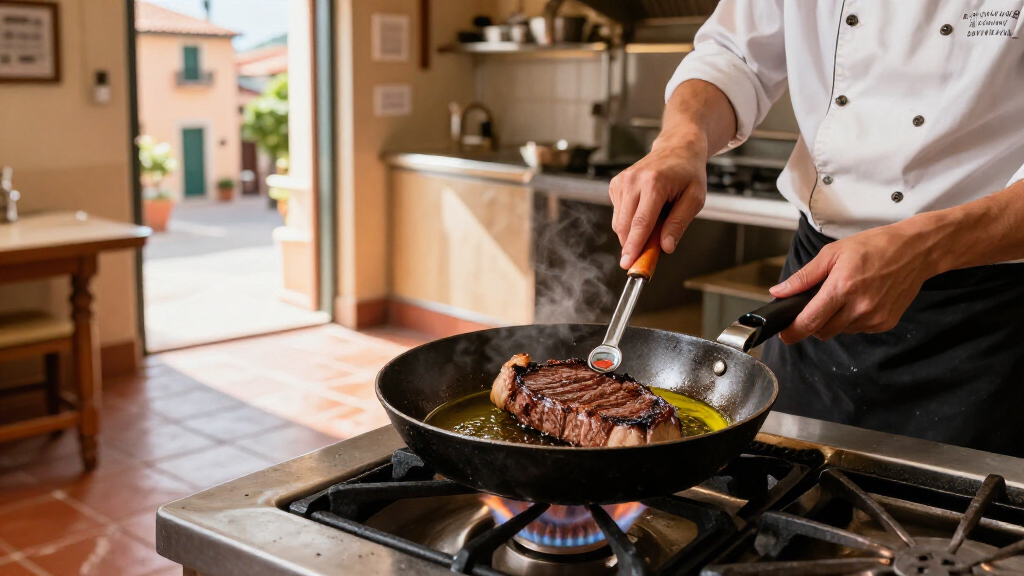
To cook a Florentine-style T-bone, dry and salt it, sear it over very high heat, and use gentler heat if the crust forms before the center reaches your preferred doneness. A hot charcoal fire is traditional, but a gas grill or heavy pan can work. Thickness, starting temperature, equipment, and fire strength all change the timing, so a thermometer gives you better guidance than a fixed number of minutes.
- Prepare safely. Take the steak from the refrigerator shortly before cooking and keep it safely handled; don’t leave raw beef sitting out for a long stretch. Pat the surface dry with paper towels.
- Season simply. Salt the meat. Skip sugary marinades, which can scorch over intense heat and bury the flavor of the beef.
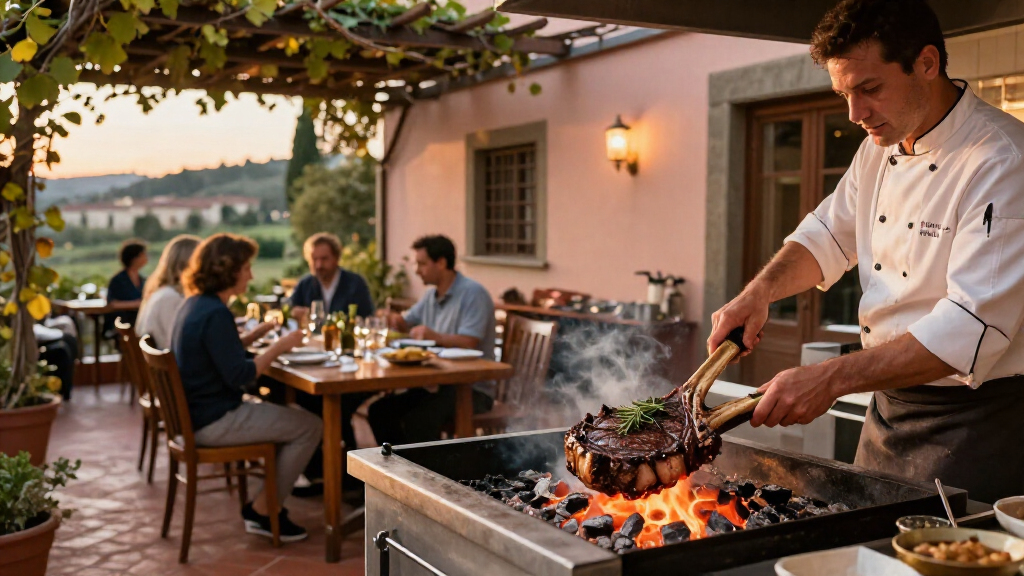
- Sear both faces. Use the hottest part of the grill or heat a heavy pan until very hot. Turn the steak as needed to brown both sides, and hold the fat edge to the heat to render it.
- Adjust the heat. If the surface is dark before the center is ready, move the steak to a cooler grill zone or reduce the pan heat and finish more gently.
- Check and rest. Use an instant-read thermometer to judge doneness, rest the steak briefly, and carve it from the bone.
A simple kitchen example: with a thick steak on a gas grill, one burner can provide the direct sear while another stays off for a gentler finish. If you only have a stovetop, a heavy pan can develop a rich brown crust; open a window and keep a close eye on the hot fat. Let the meat tell you when to change heat, rather than trusting a timer written for someone else’s grill.
Traditional bistecca is served very rare in the center, but you can choose a different doneness. Rare or undercooked beef carries food-safety risks, especially for people more vulnerable to foodborne illness. Buy from a reliable source, prevent raw-meat juices from touching ready-to-eat foods, wash hands and tools, and follow local food-safety guidance. A thermometer can help you cook to a safer temperature that suits your needs, though the texture will differ from the rare Florentine tradition.
How to Carve and Serve It for a Crowd
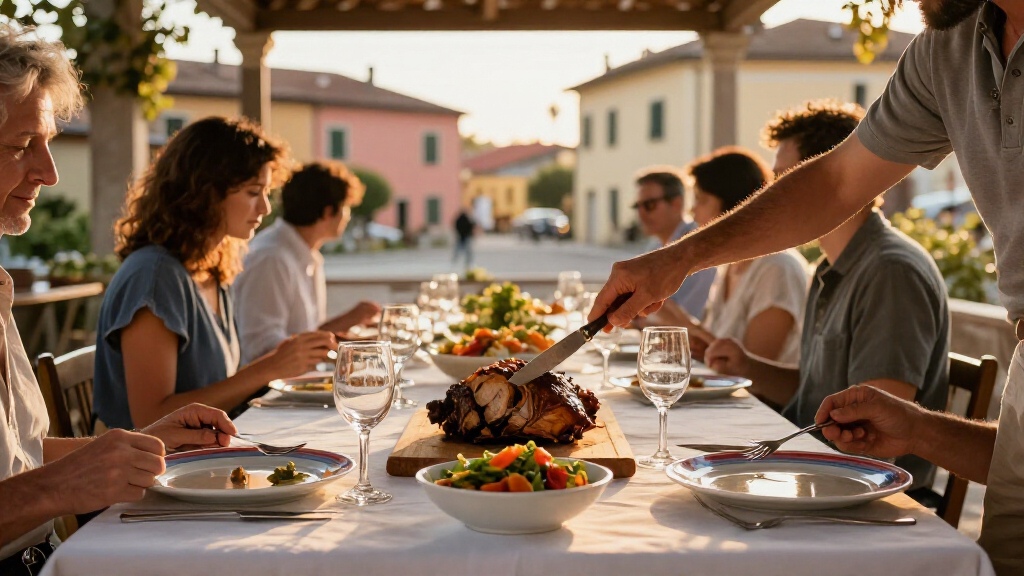
Carve a bistecca alla Fiorentina by cutting the meat from the T-bone, separating the tenderloin and strip, and slicing each piece across the grain. Set the rested steak on a board, use a sharp knife to follow the bone, and lift away the meat. Find the direction of the muscle fibers, then slice across them so each bite feels tender rather than stringy.
The tenderloin and strip have different characters, which makes the platter more interesting. The tenderloin is soft and delicate; the strip side gives you more chew and often a richer beef flavor. Arrange both in loose slices on a warm platter so guests can choose. If you’re serving four, a few slices of each side per person give the table a natural starting point for sharing.
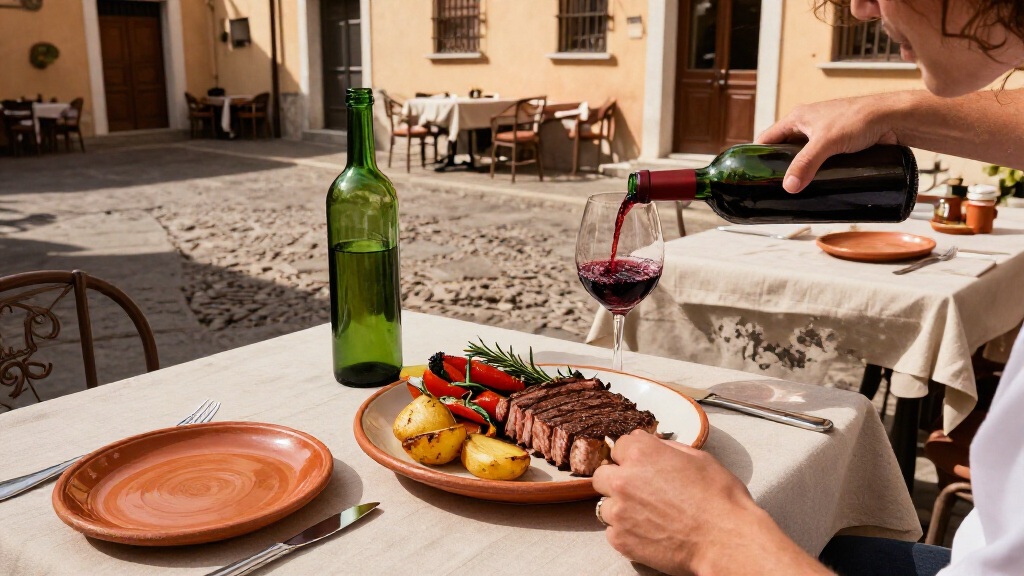
Keep the finish spare: a little coarse salt, with olive oil or lemon as optional additions after cooking. Lemon’s bright acidity can cut through rich beef, while too much oil can mute the crust you just worked to create. Beans, leafy greens, or potatoes make familiar sides; a bowl of white beans with herbs offers a soft, creamy contrast to the dark seared edges.
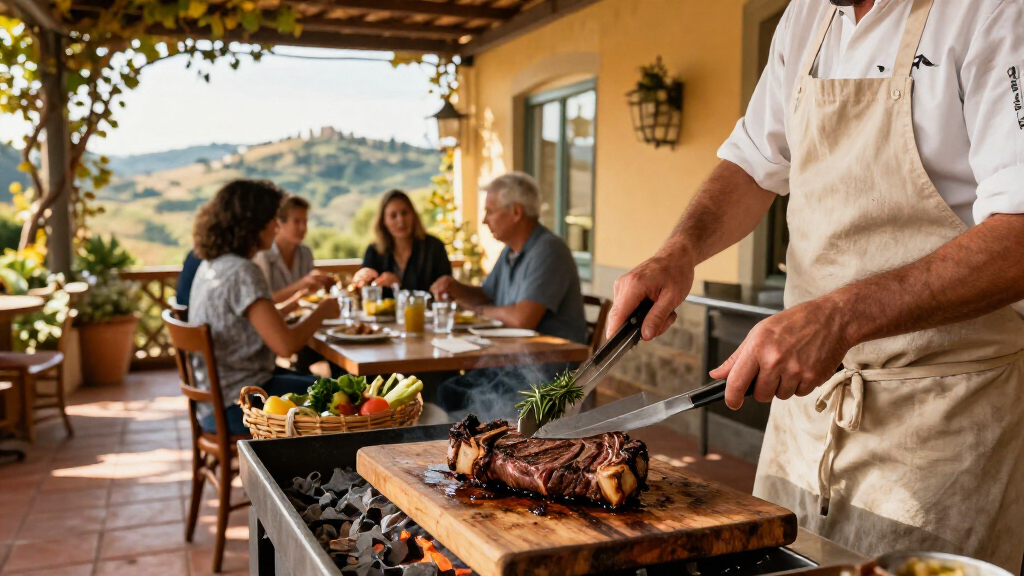
A casual dinner at home can follow the same rhythm as a meal in Florence: carry the whole steak to the table, let everyone see the browned crust, then carve and pass the platter. Add a green salad or sautéed greens and serve the sides in bowls. The dish is naturally meat-centered, so check for guest dietary needs; the steak itself is beef, and accompaniments or shared kitchen tools may introduce other ingredients or allergens.
What the Name Tells You—and What It Leaves Unsaid
The name “bistecca alla Fiorentina” tells you the steak follows a Florentine tradition, but it does not prove the beef is Chianina or that the animal was raised in Tuscany. That distinction matters when a menu leans on place names to suggest provenance. If breed and origin matter to you, ask the restaurant or butcher; clear answers are more useful than a familiar label alone.
In Florence, contemporary discussion often centers on transparency: which breed a restaurant serves, where the animal was raised, how the beef was aged, and how those details are communicated. The same questions belong in a home kitchen. A butcher who can describe the cut and its history gives you a better basis for choosing than a label that only says “Florentine style.”
Beef also has environmental costs, and animal welfare depends on how animals are raised and handled. Those are ongoing issues rather than a single simple rule for choosing a steak. You can respond in practical ways: buy beef less often, choose a portion your table will finish, ask about raising practices, and use leftovers promptly. A large shared steak can suit that approach better than buying multiple individual steaks that go uneaten.
If you’re planning a trip, put the questions to the server politely before ordering: “Is this Chianina? Where was it raised? How many people does this size serve?” If you’re at home, ask the butcher the same questions and compare the answers with the price. That conversation helps you understand what you’re paying for—and what the steak’s name can’t promise.
What to Serve Beside the Steak, and What to Pour
Serve bistecca alla Fiorentina with uncomplicated vegetables, beans, or potatoes so the beef and its seared crust stay at the center of the meal. Tuscan white beans offer a mellow, creamy counterpoint; bitter greens bring freshness; roasted or boiled potatoes make the meal more filling. Choose one or two sides, not a crowded collection that leaves the steak with nowhere to shine.
Picture a cool evening after a market visit: a thick steak rests on the board while a pot of beans warms with garlic and herbs. That pairing works because the sides add softness and freshness without asking you to make another complicated dish. A bright salad can do the same job when you want something lighter, especially in warmer weather.
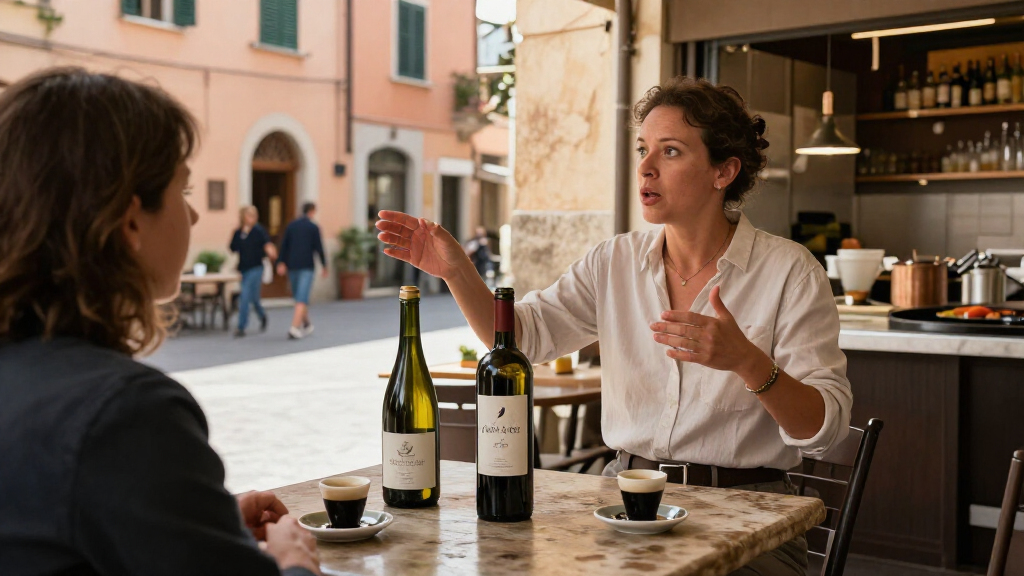
A robust Tuscan red is a familiar wine pairing, but the meal doesn’t depend on alcohol. If you choose wine, keep alcohol to adults who can drink responsibly and offer water or a nonalcoholic option alongside it. Sparkling water with lemon gives the table a crisp, palate-cleansing drink; unsweetened iced tea works well for guests avoiding alcohol.
Timing matters more than a long menu. Start the beans or potatoes before the steak goes on, and dress greens while the meat rests. Then the hot slices can reach the table with the sides ready, rather than waiting on a last-minute pan. The best accompaniment is often a calm one: something you can prepare ahead, so you’re present when the steak gets carved.
Frequently Asked Questions
Is bistecca alla Fiorentina always Chianina?
No. Chianina is a breed traditionally associated with the dish, but the name describes a Florentine steak preparation and tradition. Ask the butcher or restaurant about the breed and where the animal was raised if provenance matters to you.
What cut should I buy for a Florentine-style steak?
Choose a thick, bone-in T-bone from the loin, with both strip loin and tenderloin on either side of the bone. Ask for a cut around 3–4 cm thick or more so you have time to brown the exterior before the center cooks through.
Can I cook it without a charcoal grill?
Yes. Use the hottest section of a gas grill or a heavy pan to build the crust. If the outside gets dark while the center still needs time, move the steak to a cooler zone or lower the heat to finish it more gently.
Should I marinate bistecca alla Fiorentina?
Traditionally, no: good beef, salt, and high heat are the point. Sugary marinades can burn during a hard sear and cover the flavor of the meat. If you want lemon or olive oil, add a small amount after cooking.
Is rare steak safe to eat?
Rare beef carries a food-safety risk because the center remains undercooked. Use reliable sourcing and safe handling, keep raw juices away from ready-to-eat foods, and follow local guidance. People more vulnerable to foodborne illness should take particular care and may prefer beef cooked to a safer temperature.
How do I slice the steak so it stays tender?
Cut the meat away from the bone, separate the tenderloin from the strip, and slice each portion across the grain. Cutting across the visible muscle fibers shortens them, making each bite easier to chew. Arrange both cuts on a platter for sharing.
Conclusion
For a convincing bistecca alla Fiorentina, spend your attention where it pays off: choose a thick T-bone, ask what beef you’re buying, and control the heat. Salt and fire can do the rest. A thermometer helps you make an informed choice about doneness, and careful carving turns one steak into a platter everyone can share.
Set the bone at the center of the table, add a bowl of beans or greens, and slice across the grain while the crust still crackles faintly under the knife. That’s the Florentine lesson worth carrying into your own kitchen.