TL;DR

Get kitchen staples and gadgets delivered free with Prime
- Fast, free delivery on millions of items
- Prime Video, Amazon Music and more included
- Member-only deals all year
Rialto Market brings Venice’s food culture into view through the Pescheria fish market and Erberia produce stalls near the Grand Canal. Visit in the morning, check current hours before you go, ask where seafood comes from, and look for seasonal specialties such as Sant’Erasmo artichokes or soft-shell crabs when available.
Visit the Pescheria and Erberia in the morning, and check current opening days and hours first.
Ask vendors where seafood comes from; the market’s location doesn’t mean every catch came from the lagoon or Adriatic.
Follow the season: ask about Sant’Erasmo *castraure* and when *moeche* are available.
Give shoppers room and ask before taking close-up photos of vendors or their stalls.
Allow about an hour to browse, then choose a nearby café or *bacaro* for coffee or *cicchetti*.
Venice · Market Morning Guide
Food and Dining Experiences in Venice: Rialto Market Mornings
Follow the morning rhythm from the fish displays of the Pescheria to the colorful produce of the Erberia. Learn what to ask, what may be in season, and how to browse a working market with care.
Rialto mornings at a glance
01 / Find your bearings
Start with the fish hall, then cross to the produce
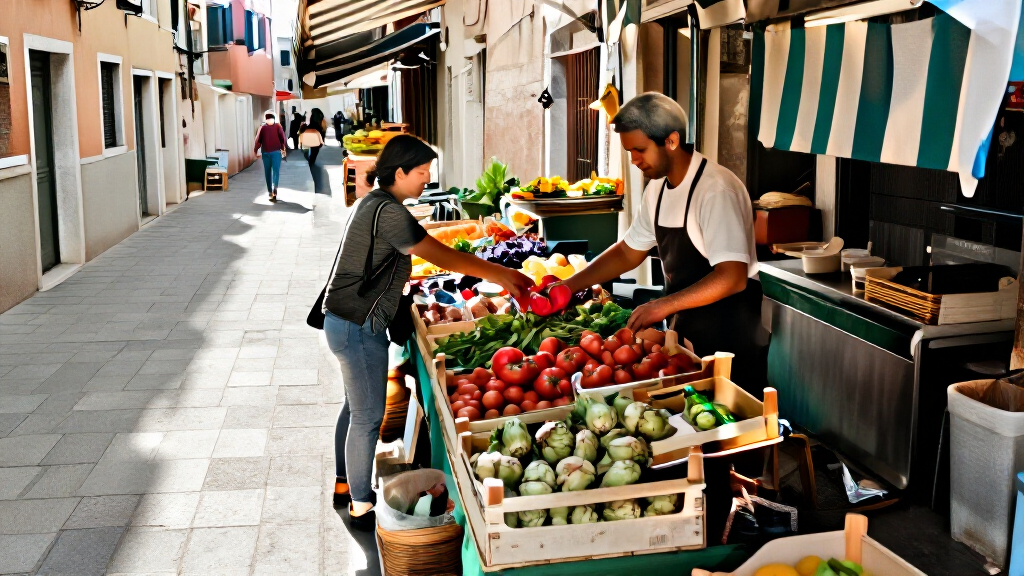
The Pescheria and Erberia sit close together beside the Grand Canal. In a short walk, cool silver seafood gives way to bright greens, citrus, fruit, and herbs. The market is both a food destination and a place where residents and restaurant workers get on with the day.
Read the seafood display
Look for clear origin information and ask the seller where a catch comes from. Stalls may carry lagoon or Adriatic seafood as well as products from elsewhere.
Notice what the season brings
Fruit and vegetables shift over the year. Ask what is especially good today, check prices before buying, and find out how to store delicate items.
A useful market question
“Where is this from?” Ask about a fish’s origin, then ask how people nearby usually cook it. A product’s location at Rialto alone does not tell you where it was caught.
02 / Make the morning flow
Go early, leave room, and check the schedule
Traders typically set up early, and weekday mornings can offer a clearer view of the market at work. Opening days and hours vary by section and season, so confirm current local information before setting out.
Check locally
Confirm operating days and hours for both market areas.
Arrive in the morning
Browse before the narrow lanes grow busier.
See both areas
Visit the Pescheria and Erberia at an unhurried pace.
Pause nearby
Allow time for coffee, a pastry, or cicchetti at a bacaro.
A practical visit plan · time guide
Bars show relative planning emphasis, not measured market duration. Schedules and crowd levels can change.
03 / Follow the season
Ask what is good today, not what is always available
Seasonality shapes the stalls and menus. These Venetian specialties are worth asking about when their brief windows arrive; availability depends on the time of year.
Castraure
The first artichokes from Sant’Erasmo, an island in the Venetian lagoon. Ask whether they are available and how a local cook might prepare them.
Moeche
Soft-shell crabs available only during particular periods. Their season is short, so ask whether they are currently on a nearby menu.
Cicchetti & an ombra
Continue at a nearby bacaro with small savory bites and, if you like, an ombra of wine. Menus and prices vary from place to place.
Buying seafood? Plan to keep it cold.
Ask whether it can be packed safely for travel and how soon it needs refrigeration. Fresh seafood is best enjoyed locally if your plans involve a long walk or journey without a way to keep it chilled.
04 / Browse with care
A living market, shared by the people who use it
Rialto has been a commercial center for centuries, but its buildings and routines have changed over time. Treat it as a working place, not a frozen medieval scene: observe, make space, and let the morning unfold.
Keep aisles clear
Give shoppers and workers room to pass, especially around busy stalls.
Photograph respectfully
Ask permission before taking close-up photos of vendors or their goods.
Carry a backup
Payment options differ by vendor. Keep bags close in crowded lanes and check prices before choosing.
Start at the Pescheria and Erberia to see two sides of Venetian food
Rialto Market is Venice’s morning food market, with a historic fish hall called the Pescheria and an open produce area known as the Erberia. The two areas sit near the Rialto Bridge beside the Grand Canal, so you can move from silvery fish laid on ice to heaps of oranges, greens, and seasonal vegetables in a short walk. That contrast gives you a useful first glimpse of how the city shops and eats. Start with the Pescheria, where the colors are cool and the displays catch the light: pale squid, red prawns, and fish with bright eyes. Then cross to the Erberia, where the mood feels warmer and the scent of fruit and herbs hangs in the air. If you’re visiting before breakfast, pause to notice how restaurant workers scan the stalls quickly while visitors linger over unfamiliar names. The market is both a place to look and a place where people are getting the day’s work done. Rialto has served as a commercial center for centuries, but today’s buildings and routines have changed over time. Treat it as a living market, not a frozen medieval scene. You’ll get more from the visit by watching what people buy and asking a vendor a simple question about a product than by trying to recreate a storybook version of old Venice.Venice Rialto Market seafood basket
As an affiliate, we earn on qualifying purchases.
As an affiliate, we earn on qualifying purchases.
Go early, then check the schedule before you leave
Rialto Market is liveliest in the morning, when traders set up and residents, restaurant staff, and visitors share the lanes. Exact opening times and operating days can vary by market section and season, so check local listings before planning your route. If you arrive early on a regular weekday, you’re more likely to see the market at work and browse before the narrow paths become crowded. Plan for about one hour to see both the Pescheria and the Erberia at an unhurried pace. Add extra time if you want coffee, a pastry, or a stop at a nearby *bacaro* (small wine bar). For example, you might reach Rialto soon after opening, walk the fish stalls while vendors are arranging the displays, then cross to the produce stands and finish with breakfast nearby. On a weekend, expect more people and allow extra time to move through the area. Don’t assume the market is open every day or that both sections follow the same hours. A quick schedule check matters more than a general rule, especially if you have a short stay in Venice. Bring cash as a backup because payment options differ between vendors, and keep your bag close in crowded lanes.Ask where the seafood comes from before choosing a dish
The seafood at Rialto Market can include catches from the Venetian lagoon and Adriatic as well as products brought in from elsewhere. A stall’s location alone doesn’t tell you where a fish was caught, so look for origin information and ask the vendor if it’s unclear. That small question helps you understand what you’re seeing and avoids treating every display as a local catch. Try a straightforward exchange: point to a fish that interests you and ask, “Where is this from?” Then ask how people nearby usually cook it. Those two questions connect the market display to both geography and everyday cooking: origin can explain why a product is available, while preparation advice can help you judge whether it suits a meal you can actually make. If you’re staying in an apartment, the answer might help you choose a fish for a simple supper; if you’re eating out, it gives you a better question to bring to a restaurant menu. The details vary by species and supply, so let the seller guide you rather than assuming the market has one fixed signature fish. Keep in mind that most fresh seafood is best eaten locally. Before buying, ask whether the vendor can pack it safely for travel and how soon you should refrigerate it. Freshness is only an advantage if you can preserve it: carrying raw seafood unrefrigerated for hours can undermine the care taken to keep it fresh. Keep it cold, follow the vendor’s storage advice, and consider the tradeoff between buying something tempting and having a safe way to store it. If your plans involve a long walk or a train ride, enjoy the displays and save your meal for a nearby café instead.Look for seasonal specialties instead of a year-round checklist
Rialto’s produce changes with the season, so the best thing to try depends on when you visit. One Venetian specialty to look for in season is castraure, the first artichokes from Sant’Erasmo, an island in the Venetian lagoon. You may also hear about moeche, soft-shell crabs available only during particular periods; their short season makes them a treat to ask about rather than a dish to expect at any time. Imagine arriving in spring and spotting small artichokes among the vegetables. Ask whether they’re *castraure* and how a local cook might prepare them. The question helps you understand more than the name: it connects a brief harvest to the nearby lagoon landscape and to the choices cooks make while the ingredient is tender and available. Later in the year, ask a restaurant or *bacaro* whether *moeche* are in season. Their limited availability means menus may change, and a seasonal dish can cost more or be absent altogether; asking lets you decide whether to seek it out or choose what is plentiful that day. The point is to follow what’s available that morning, not to judge the market by whether it matches a fixed list. Seasonality gives you a reason to return: the stalls can tell a different story in another month. A seasonal question also makes browsing easier if you don’t know Italian food names. You can ask what is especially good today, then decide whether to buy it, order it nearby, or simply remember it. If you do buy produce, check prices before choosing and ask how to store it. Fresh fruit and vegetables travel more easily than seafood, but delicate items still need care in a crowded bag.Browse like a guest in a working market
Rialto Market is a place to shop first, so a respectful visit means leaving room for customers and asking before taking close-up photos. The aisles are narrow, and the same spot that looks like a perfect photo angle may be where a resident is trying to finish a purchase. Step to the side before stopping, keep your belongings close, and avoid blocking a stall while you decide what to photograph. A wide view of the market buildings or the canal is usually less intrusive than a close portrait of a vendor or a detailed shot of someone’s goods. If you want a closer picture, ask first and accept a no without making it awkward. You’ll notice a difference when you pause near the edge of a lane: shoppers can pass, vendors can serve customers, and you can still watch the rhythm of bargaining, sorting, and packing. The market also has the ordinary pressures faced by Venice’s food culture: tourism, high operating costs, a changing local population, and the challenge of keeping traditional trades going. Your visit can’t solve those issues, but you can treat the space as more than a backdrop. Buying a small item, asking a thoughtful question, or simply keeping the aisle clear recognizes that this is part of everyday life for the people who work here.Turn your market visit into a nearby breakfast or cicchetti stop
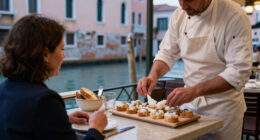
The market is mainly for shopping, but the surrounding Rialto streets offer cafés, bakeries, and *bacari* where you can sit down or pause for a snack. A traditional neighborhood-style stop might pair *cicchetti*—small savory bites—with an *ombra* (a small glass of wine). If you prefer breakfast, look for a café or bakery nearby and let your appetite decide whether to keep it simple or linger. Here’s an easy route: browse the Pescheria, cross to the Erberia, then choose a nearby counter for coffee and a pastry. If you arrive later in the morning, ask whether a *bacaro* is serving *cicchetti*. You might see a small bite topped with seafood or vegetables; ask what it contains before ordering, especially if you have allergies. Common allergens in Venetian snacks can include fish, shellfish, gluten, dairy, and nuts, so check with staff rather than guessing from appearance. If you choose an alcoholic drink, keep it for adults and enjoy it responsibly; a glass of wine is optional, not a required part of the experience. Check the price before ordering if it isn’t displayed, and remember that a quick market browse can be rewarding even if you don’t eat nearby. The best meal plan is the one that fits your morning, budget, and appetite.Use this simple plan for a smooth Rialto morning
A good Rialto morning needs only a little planning: confirm the schedule, arrive early, browse both market areas, and leave room for a nearby snack. This sequence helps you see the stalls while they’re active without turning a working market into a rushed checklist. It also gives you time to adjust if a section is closed or a lane is especially busy.- Check current hours and opening days for the Pescheria and Erberia before leaving your accommodation.
- Arrive in the morning with a small bag and cash as a backup; keep valuables close in busy lanes.
- Walk through both sections before buying, and look for seasonal produce or seafood with clear origin information.
- Ask before photographing people or individual stalls, and step aside when shoppers need space.
- Finish nearby with coffee, a pastry, or *cicchetti*, checking ingredients and prices as you order.
Frequently Asked Questions
What time does Rialto Market open?
The market generally operates in the morning, but hours can vary by section, day, and season. Check current local listings before you set out.Is Rialto Market open every day?
No. The fish and produce areas may follow different schedules, and weekly closures are possible. Confirm the hours for both sections before planning your visit.What should I try at Rialto Market?
Ask what is seasonal. Depending on the time of year, you may find Sant’Erasmo *castraure* (first artichokes) or hear about *moeche* (seasonal soft-shell crabs), alongside produce and seafood that changes with supply.Can visitors eat at the market?
The market is mainly a place to shop. Nearby cafés, bakeries, and *bacari* offer coffee, pastries, and *cicchetti* (small savory bites); ask about ingredients if you have food allergies.How long should I allow for a visit?
About an hour is enough to browse both main areas at a relaxed pace. Allow longer if you plan to eat nearby or explore the Rialto neighborhood.Can I take photos at Rialto Market?
General views are usually less intrusive than close photos of individual stalls or people at work. Ask permission before taking close-up pictures, and keep walkways clear while you stop.Conclusion
Arrive early, let the stalls show you what’s in season, and leave enough room in your morning to stop nearby for a bite. Rialto Market is at its best when you see it as both a food destination and a working part of Venice: fish on ice, artichokes in season, crates shifting through narrow lanes, and the Grand Canal just beyond. Check the schedule before you go, ask a vendor one good question, and carry the market’s rhythm with you into breakfast. A Venice morning can begin with nothing more than a basket of greens and the sound of water under the bridge.Halloween Picks
halloween
As an affiliate, we earn on qualifying purchases.