TL;DR
Vin brulè is Italian mulled wine, usually made by gently heating red wine with sugar, citrus peel, and spices. Warm it until steaming, steep it for 15–30 minutes without boiling, then taste and adjust the sweetness before serving in small mugs. Recipes vary by household and region, and the drink remains alcoholic even after heating.
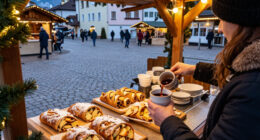
At a winter market in northern Italy, the first clue that the cold has arrived may be a curl of orange peel and cinnamon rising from a steaming mug. Vin brulè brings that same warm, spiced aroma into your kitchen, with a pot of red wine, sugar, citrus, and whole spices.

Get kitchen staples and gadgets delivered free with Prime
- Fast, free delivery on millions of items
- Prime Video, Amazon Music and more included
- Member-only deals all year
There is no single recipe that every Italian household follows. The proportions and spices shift from town to town, and the best version is the one that tastes balanced to you: fruity, gently sweet, and bright with citrus. You’ll learn what belongs in a classic pot, how to heat it without boiling, and what to serve alongside it on a cold evening.
That small choice of heat matters. Treat the wine like a guest you want to keep comfortable, not a pot you want to reduce: warm it slowly, give the spices time to speak, then pour while the kitchen smells of cloves and orange.
Choose a fruit-forward red wine you enjoy; very tannic or heavily oaked wines can taste harsh when warmed with spices.
Use orange or lemon peel and whole spices, then adjust the blend to your taste rather than following a supposed single regional formula.
Heat until steaming and steep for 15–30 minutes; avoid a rolling boil.
Add sugar gradually so the wine stays aromatic and balanced instead of syrupy.
Vin brulè remains alcoholic after heating; use grape or cranberry juice for a nonalcoholic batch.
Italian mulled wine for cold nights
Vin brulè brings red wine, citrus, sugar, and warming spices together for a fragrant winter drink. Gentle heat and balanced ingredients keep the wine’s fruit in focus.
A seasonal Italian ritual
Especially associated with northern Italy’s colder months, vin brulè is served at winter gatherings and Christmas markets.
Citrus lifts the wine
Orange peel adds fragrance; lemon can sharpen the finish.
Warmth in layers
Cinnamon and cloves bring familiar warmth. Some versions add star anise, nutmeg, juniper, or apple.
Build a balanced cup
Start with simple ingredients, then taste and adjust.
Use a young, fruit-forward red that tastes pleasant on its own. Dry or medium-dry wine gives you control over sweetness.
For one bottle, start with a few tablespoons of sugar, orange peel, one cinnamon stick, and several cloves.
Infuse gently for about 15–20 minutes without boiling. Taste, adjust, remove the spices, and strain before serving.
Keep the flavors clear
Small choices help prevent a harsh or bitter cup.
- Use citrus zest with little white pith.
- Keep the wine steaming, not boiling.
- Remove spices when the flavor is balanced.
- Strongly oaked or very tannic wine.
- Too much sugar, which can flatten the fruit.
- A long clove infusion that turns medicinal.
Serve and store thoughtfully
A small hot cup suits a cold-weather gathering.
| Need | What to do |
|---|---|
| Serving | Use heatproof mugs or small cups; pair with biscuits or roasted chestnuts. |
| Making ahead | Cool and refrigerate, strain out spices, then reheat slowly. |
| Avoiding alcohol | Warm grape, cherry, or cranberry juice with citrus and spices; reduce or skip added sugar. |
What vin brulè tastes like—and why it belongs to cold nights
Vin brulè is Italian mulled wine: red wine gently heated with sugar, citrus peel, and spices. Its flavor works in layers: the wine supplies fruit and acidity, sugar rounds sharp edges, citrus adds a fresh high note, and spices provide a lingering warmth. That balance matters because a mug that tastes only of clove or sweetness loses the wine’s character.
The name comes from French vin brûlé, meaning “burnt wine.” That translation describes the name, not the method; you don’t scorch or boil the wine. Gentle heat keeps the fruit aromas more present, while a hard boil can drive off volatile aromas and concentrate the liquid unevenly. Think of the pot like a small orchestra: wine carries the melody, citrus lifts it, and spices add a lower, warming note.
For a practical first taste, imagine coming in from a walk through a cold Bolzano evening. A small mug warms your hands while the orange aroma cuts through the chilly air. That context helps explain why the drink is usually served hot and in modest pours: its appeal is the contrast with the cold and the aroma released by steam, rather than a large volume meant for sipping all night.
Recipes vary from household to household, so vin brulè is better understood as a seasonal tradition than a strict formula. Red wine is typical, though some versions use white wine. Those choices change the result: red usually gives a fuller, darker base, while white can make the citrus and spice feel lighter. The appeal lies in the combination of wine, warmth, and aromatic spice, adjusted to the people gathered around the pot.
Products Worth Considering

Google Nest Cam Indoor/Outdoor Battery Security Camera

Shark NV752 Rotator Powered Lift-Away TruePet Upright Vacuum, Bordeaux

Dyson Airwrap i.d. Multi-Styler for Straight and Wavy Hair
As an affiliate, we earn on qualifying purchases.
Choose a red wine that stays pleasant when warm
Vin brulè starts with an affordable, fruit-forward red that you’d be happy to drink on its own. A dry or medium-bodied wine gives the citrus and spices room to show up. You don’t need an expensive bottle, but avoid wine that tastes harsh, very tannic, or heavily oaked before it goes into the pot. Sugar and spice can soften some roughness, but they don’t reliably hide it; they can make a bitter or woody finish more noticeable.
Why does that choice matter? Heat and spices can make a wine’s rough edges more noticeable, much as a bright lamp shows every mark on a wall. A simple, soft red is a steadier base. If you’re shopping for a pot to share after dinner, choose a bottle you already know is pleasant rather than an unfamiliar bargain with a strong oak or bitter finish. That modest cost is a useful tradeoff: the wine needn’t be rare, but its underlying flavor still matters because it remains the foundation of the drink.
Italian origins don’t require one specific regional wine, and this isn’t a drink with one mandated grape. If a local wine from a northern Italian trip inspired you, use it; if you’re cooking at home, pick a familiar bottle from your own shop. The goal is a balanced base, not a geography quiz. The flexibility also makes it easier to adapt the pot to what is available without treating a particular bottle as a test of authenticity.
Use a wine you enjoy, then let the spices add detail instead of trying to hide a poor bottle. If you prefer a lighter, fruitier result, a less tannic red is a sensible choice. The wine’s acidity should still be present: it keeps sugar from making every sip feel syrupy. In practice, this means adjusting sweetness to the wine rather than assuming every bottle needs the same amount.
Build a fragrant pot with citrus, sugar, and whole spices
Citrus peel and whole spices give vin brulè its familiar aroma, while sugar softens the wine’s sharpness. Cinnamon sticks and cloves are common choices, but recipes may also include star anise, nutmeg, juniper, bay leaf, or apple. There is no required spice blend, so start modestly and add only what you enjoy. This restraint gives you room to notice how each ingredient changes the wine instead of letting several strong flavors compete.
For a first pot, use one bottle of red wine, a few strips of orange peel, a cinnamon stick, a small handful of cloves, and a little sugar. Add sugar gradually rather than measuring out a large amount at the start. The peel contributes fragrance and brightness; too much white pith can bring bitterness, so use a vegetable peeler and keep the strips thin. Small, reversible additions matter here: you can sweeten a tart pot, but you can’t easily remove sugar or an overpowering spice once it has infused.
Consider the spice jar like a volume knob. Cinnamon can set a steady background, while a few cloves can quickly turn up the intensity. If your household prefers a softer mug, leave out star anise; if you want a rounder sweetness, try a spoonful of honey in place of some sugar. Honey is a variation, not a rule. It brings its own flavor, so it may suit a robust red better than a delicate one.
Whole spices are easier to strain than ground ones, which can leave the drink cloudy and gritty. They also make it easier to stop the infusion once the flavor is right. Add apple slices if you like a little fresh fruit in the pot, but keep the wine’s flavor in front. Taste after steeping: if the citrus is lively and the spices warm but not medicinal, you have a good balance. If a spice is already dominant, strain the pot rather than adding more ingredients to chase the flavor back into balance.
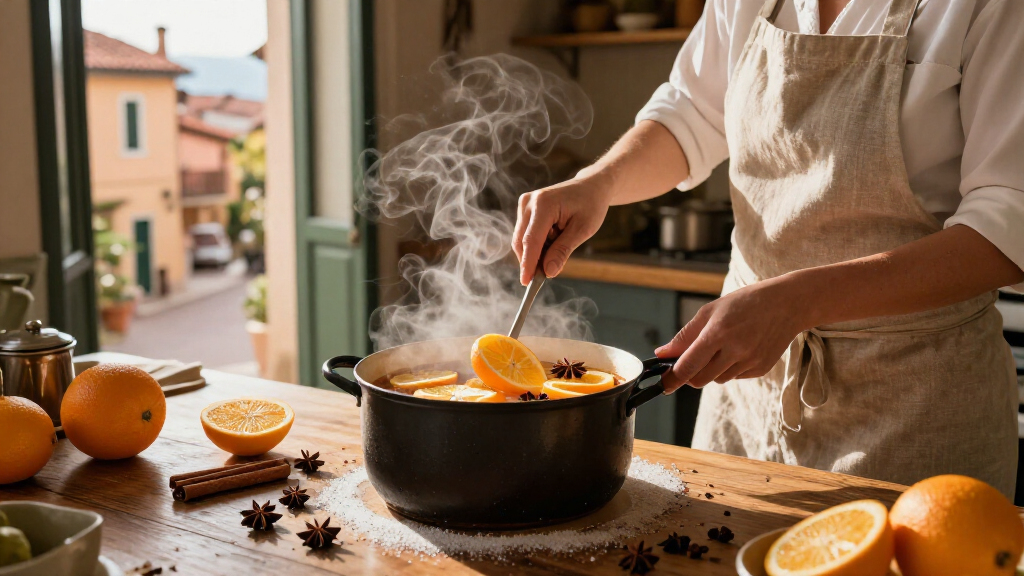
Warm vin brulè gently in four practical steps
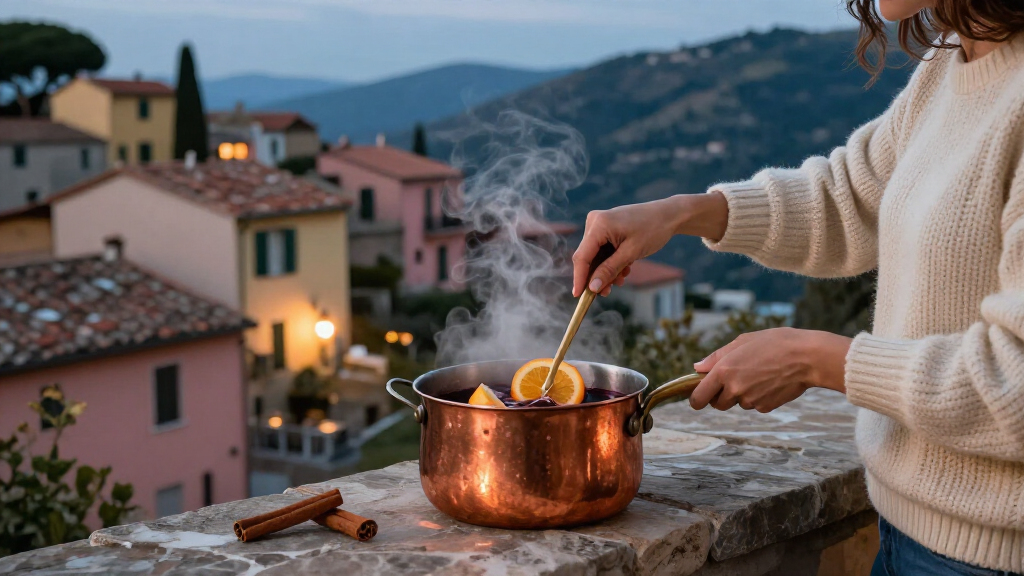
Heat vin brulè until steaming, then steep it gently for 15–30 minutes; a rolling boil isn’t part of the recipe. This gradual approach lets citrus and spices infuse without aggressively reducing the wine. A shorter steep keeps the wine fruit more prominent; a longer one draws out more spice, which can be welcome but risks turning cloves or cinnamon bitter and dominant. Follow these steps for a first pot.
- Combine: Pour a bottle of red wine into a saucepan and add orange peel, whole spices, and a small amount of sugar.
- Warm: Set the pan over low heat and stir until the sugar dissolves. Watch for steam and small ripples; don’t let the wine boil.
- Steep: Keep it over low heat for about 15–30 minutes. Taste after 15 minutes so the spices don’t overpower the fruit. If the flavor is already strong enough, strain the spices rather than waiting for the full time.
- Adjust and serve: Add a little more sugar if needed, strain out the spices, and ladle the drink into small heat-safe mugs.
A thermometer can help if you want more control, but you don’t need to chase a magic number. The useful kitchen cue is visible steam without a rolling boil. If the pot starts bubbling steadily, lower the heat or move it off the burner for a moment. These cues are practical because stove strength and pan size vary; a gentle visual check works better than relying on one exact heating time.
Imagine making this while friends come in from the cold: the slow steep gives you time to set out biscotti and mugs instead of rushing. Avoid leaving a saucepan unattended on the stove, and remember that heating doesn’t reliably remove the alcohol. Vin brulè remains an alcoholic drink. Gentle heating is for flavor and serving temperature, not a method for making wine safe for anyone avoiding alcohol.
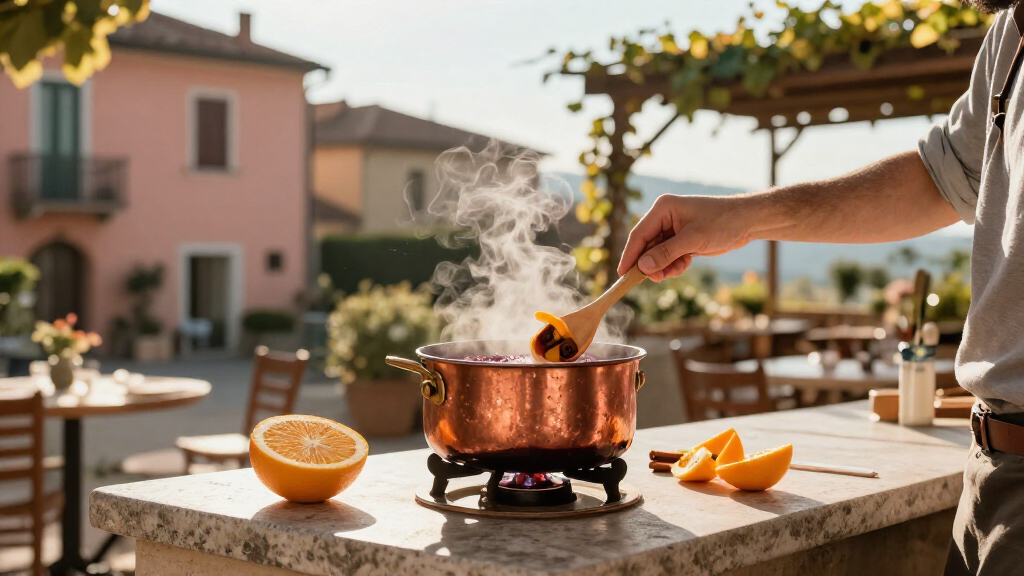
Keep the sweetness balanced instead of making it syrupy
A well-balanced vin brulè tastes of wine, spice, and citrus—not just sugar. Start with less sweetener than you think you need, then taste after the wine has warmed and the spices have infused. Warmth changes how aromas reach you, and the wine’s acidity and fruit should still be easy to recognize in the finished mug. The aim is to round the wine, not erase its structure.
This is where a pot can go wrong quietly. Sugar dissolves into the wine and makes the first sip smooth, but too much can flatten the citrus and leave a sticky finish. If your first taste feels sharp, add sugar in small increments; if it already tastes rounded, let the spices do the warming rather than sweetening it further. Small additions give you control because sweetness is difficult to correct once the whole batch has become heavy.
Suppose you’re serving both a friend who likes dry red wine and someone who prefers a sweeter drink. Keep the main pot restrained, then offer a little honey or sugar on the side for individual mugs. That lets each person adjust their serving without turning the whole batch into dessert. It also avoids forcing one preference on everyone, especially when the wine itself may already bring enough ripe fruit.
Some cooks use honey, and others add apple or choose a white wine variation. These are household choices, not signs that one version is more authentic. Adjust the sweetness to the wine you chose and to the food you’ll serve; biscotti or spiced cookies may call for a drier drink than a simple plate of roasted chestnuts. Pairing changes the perceived balance: a sweet snack can make a sugary mug feel cloying, while a plain, toasted bite leaves more room for sweetness.
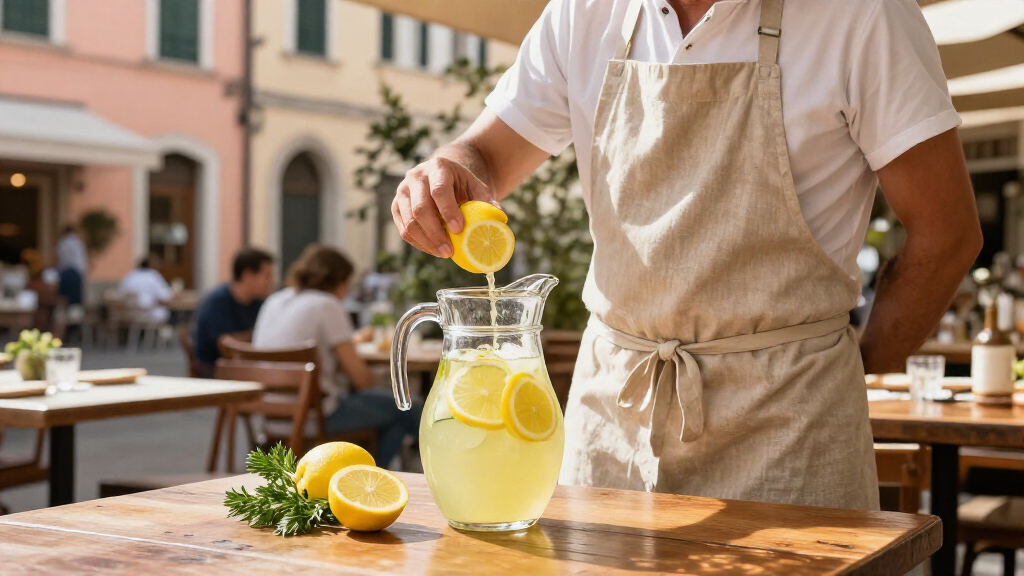
Serve it like a small winter-market pause
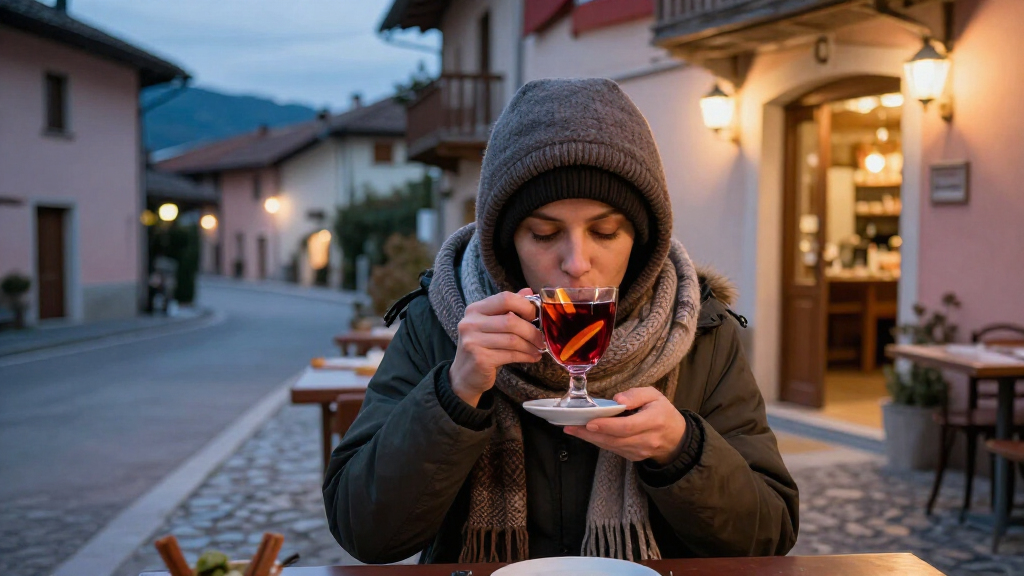
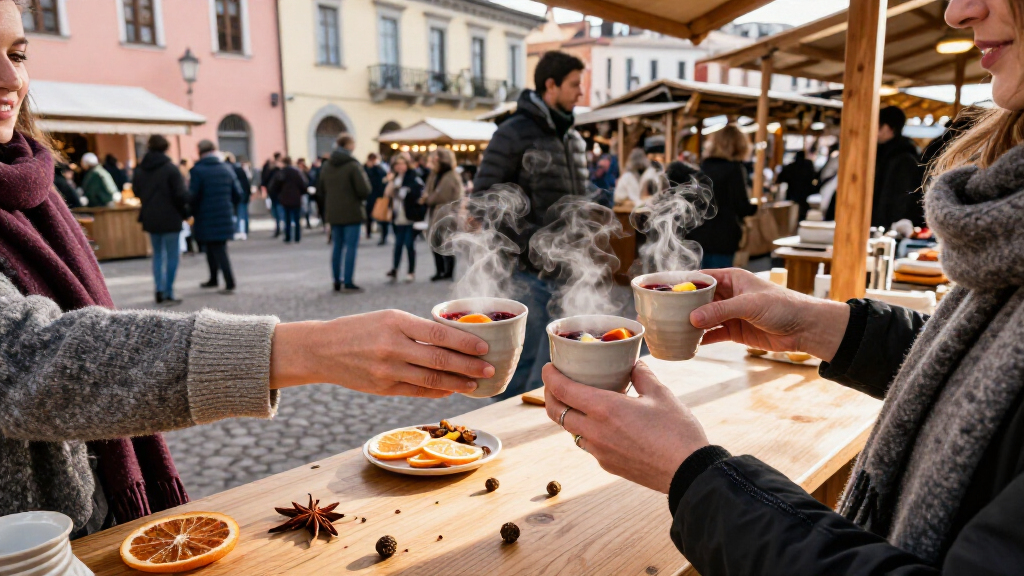
Vin brulè is best served hot in small mugs, while its citrus and spice aromas still rise with the steam. A small pour suits its concentrated, warming character and leaves room for a snack beside it. In northern Italian winter-market settings, it’s a cold-weather pause as much as a drink: the heat, aroma, and brief stop outdoors are part of the experience.
At home, set out roasted chestnuts, biscotti, simple pastries, or spiced cookies. Their toasted or buttery flavors pair naturally with orange and cinnamon. If you’re hosting after a snowy walk, keep the pot warm on the lowest stove setting and ladle modest servings so the wine doesn’t sit at a hard simmer. A low serving temperature preserves the aroma; holding the pot too hot for too long can dull it and keep extracting spice.
Use heat-safe cups and remind guests that the drink is hot and alcoholic. Warmth can make alcohol feel gentler than it is, so serve it to adults and encourage responsible drinking. For children or anyone avoiding alcohol, make a separate batch with grape juice or another rich fruit juice, plus citrus and spices; the flavor will differ from wine-based vin brulè because juice brings different sweetness and acidity. Keeping the batches separate makes that difference clear and avoids accidental serving.
There’s no need to stage a full market at home. A few mugs, a bowl of chestnuts, and the scent of orange peel can turn an ordinary cold evening into a small seasonal ritual. Keep the serving simple, and let the steam carry the welcome. The small scale is part of its ease: one bottle can make a shared moment without requiring a full meal or elaborate setup.
Make it ahead safely and keep the spices from taking over
You can make vin brulè ahead: infuse it, cool it, refrigerate it, and reheat it gently when you’re ready to serve. Strain out the spices before storage, since a long soak can make cloves or other seasonings overpowering. Storage pauses the work of hosting, while straining protects the balance you already achieved. Store leftovers in a covered container in the refrigerator and reheat only the amount you plan to serve.
For example, if you’re hosting on Saturday, you can prepare the wine earlier in the day, strain it, and chill it rather than asking guests to wait while the spices steep. Rewarm it over low heat until steaming. Don’t leave a pot of wine sitting at room temperature for hours, and don’t assume reheating makes it alcohol-free. Planning ahead helps with timing, but it doesn’t change the drink’s alcoholic nature or remove the need for refrigeration.
A slow cooker can hold a batch warm for serving, but use a low setting and check that the wine isn’t bubbling. This is a convenience choice, not a requirement. On the stove, a heavy saucepan and a low flame work well for a single bottle. The tradeoff is attention: a slow cooker can free up a burner, but a low stovetop setting gives you a clearer view of how the wine is heating.
Alcohol remains present after heating, though the amount can change with time and temperature; home warming isn’t a reliable way to remove it. For a fully nonalcoholic option, use grape or cranberry juice with citrus and spices from the beginning. Keep that batch separate and label it clearly when serving a group. The result will be its own spiced fruit drink rather than wine-based vin brulè, but it offers the same warm, aromatic style to people who avoid alcohol.
Frequently Asked Questions
Does vin brulè have to boil?
No. Warm it gently until steaming and let it steep for about 15–30 minutes. A rolling boil can make the flavor harsh, and heating does not reliably remove the alcohol.
What wine should I use for vin brulè?
Choose an affordable, fruit-forward red you’d enjoy drinking. Very tannic or heavily oaked wines can become unpleasant when warmed with sugar and spices.
Which spices are essential?
There is no fixed required blend. Cinnamon and cloves are common, while star anise, nutmeg, juniper, bay leaf, and apple are optional additions. Start with a small amount and taste as it steeps.
Can I make vin brulè ahead?
Yes. Infuse it, cool it, strain out the spices, and refrigerate it in a covered container. Reheat gently until steaming and serve; don’t leave it sitting at room temperature for hours.
Can I make it without alcohol?
Yes. Use grape juice or another rich fruit juice with citrus peel and spices. It will have a different flavor from wine-based vin brulè, but it makes a warm, aromatic drink for people avoiding alcohol.
What should I serve with vin brulè?
Try roasted chestnuts, biscotti, spiced cookies, or simple pastries. Their toasted, buttery, or gently sweet flavors sit comfortably beside the wine’s citrus and spice.
Conclusion
Keep your first pot simple: a soft red wine, orange peel, cinnamon, a few cloves, and just enough sugar to round the edges. Warm it until steam rises, steep for 15–30 minutes, and taste before you serve.
Then pour a small mug, set out chestnuts or biscotti, and let the scent of citrus and spice mark the season’s first cold night.