
TL;DR

Get kitchen staples and gadgets delivered free with Prime
- Fast, free delivery on millions of items
- Prime Video, Amazon Music and more included
- Member-only deals all year
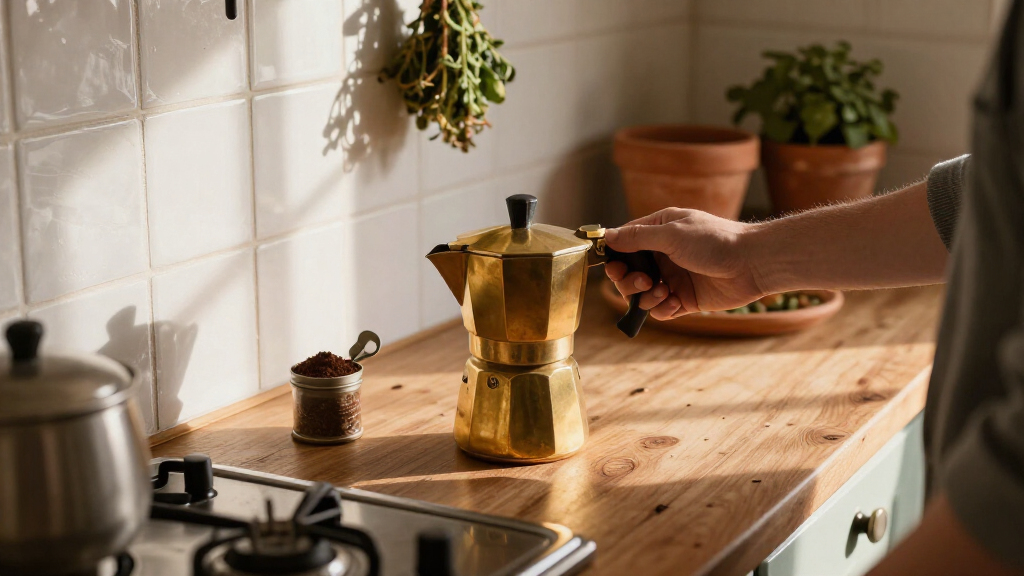
The moka pot brews strong stovetop coffee at roughly 1–2 bar of pressure — far below the 9 bar of true espresso — so treat it as its own method, not a cheap espresso machine. Brew the pot’s full capacity, fill water to just below the safety valve, use a medium-fine grind without tamping, keep the heat medium-low, and remove the pot as the stream turns pale, before the gurgle. The result is the concentrated, familiar coffee that anchors Italian home life.
Ninety percent of Italian households own one, according to widely cited industry estimates, yet outside Italy the moka pot is one of the most misunderstood coffee makers on earth. People call it a stovetop espresso maker, grind for it like an espresso machine, and wonder why the result tastes scorched and bitter.
Here is the truth: the moka pot is not trying to be an espresso machine, and when you stop treating it like one, it makes some of the most satisfying coffee there is. Alfonso Bialetti introduced the octagonal Moka Express in 1933, and that little aluminum icon — turning strong stovetop coffee into a two-minute kitchen ritual — has barely changed since. It is an enduring symbol of Italian domestic life, as recognizable on a Naples countertop as a Parmigiano Reggiano wedge is in an Emilian pantry.
In this guide you’ll learn how to brew with a moka pot the way Italians actually do: the right grind, the right heat, the right moment to pull it off the flame, and the small maintenance habits that keep a pot working for decades. No gadgets required.
A moka pot brews at roughly 1–2 bar of pressure versus 9 bar for espresso — so use a medium-fine grind, never tamp, and expect concentrated coffee without true…
Always brew the pot’s full stated capacity; a "cup" is a 30–40 ml demitasse serving, so match pot size to how much you actually drink.
Pull the pot off the heat when the stream turns pale and starts to surge — before the loud gurgle — to avoid the harsh, overheated final portion.
Use medium-low heat with the flame smaller than the pot’s base; a slow, steady flow is the goal, not a violent eruption.
Rinse after every brew and periodically wash with mild unscented detergent if the manufacturer allows it — the traditional "never soap" coating can turn rancid…
It’s Not Espresso: What a Moka Pot Actually Does
A moka pot is a stovetop coffee maker that forces steam pressure from a lower water chamber up through a bed of grounds and into an upper serving chamber. That sounds like espresso, and the vocabulary confuses everyone. Espresso machines push water through coffee at about 9 bar of pressure. A moka pot manages roughly 1–2 bar — a fraction of the force, and nowhere near enough to produce the thick, stable crema that defines a real shot.
What you get instead is something Italians call caffè della moka: concentrated, full-bodied, gently sweet coffee served in small demitasse cups. It sits closer to espresso in strength than drip coffee does, but with a softer, rounder texture. Think of it as espresso’s unhurried cousin — same family, completely different temperament.
This pressure difference explains nearly every rule that follows. Because the pressure is low, you never tamp the grounds — water can’t force its way through a compressed puck, and the pot will strain, sputter, or leak from the gasket. Because the extraction is shorter and gentler than a machine’s, the grind sits finer than filter coffee but coarser than espresso. Treat the pot as its own method, and everything else in this guide falls into place.
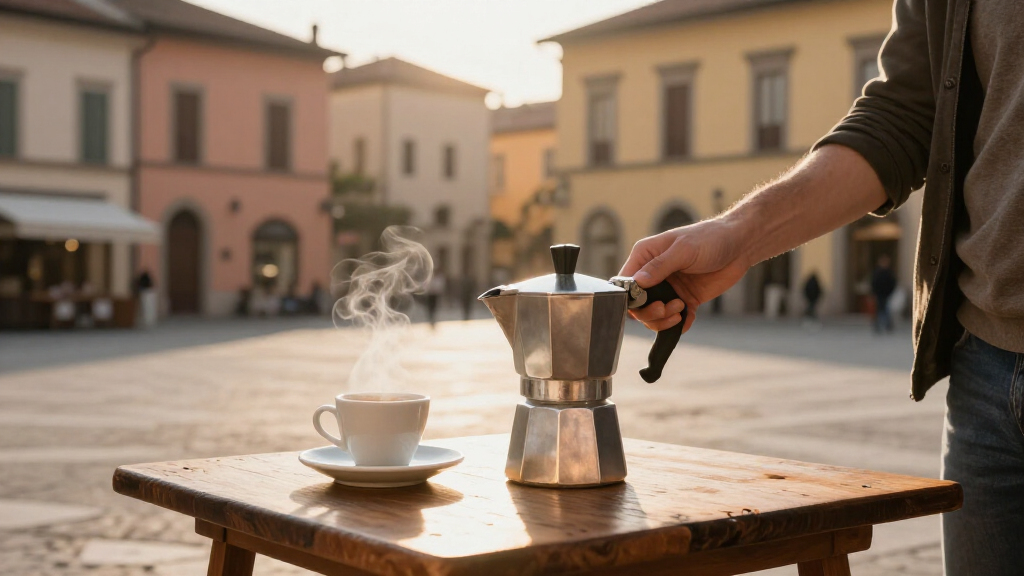
The moka pot was never a budget espresso machine. It is a distinct brewing method with its own logic — and its own rewards.
As an affiliate, we earn on qualifying purchases.
The 8 Steps That Make or Break Your Brew
The method below follows the traditional Italian approach, refined by specialty-coffee brewers over the past decade. Follow it in order — each step protects the next one.
- Match pot size to servings. Moka pots are engineered to brew their full stated capacity, and a “cup” means a demitasse serving of about 30–40 ml, not a mug. A three-cup pot makes three tiny coffees — roughly one regular mug’s worth in total. If you live alone, buy a one- or two-cup pot rather than half-filling a larger one.
- Fill the base with water to just below the safety valve. The valve is the pot’s pressure release — never submerge it. Many brewers now start with preheated water to shorten the coffee’s exposure to heat, but that makes the base hot during assembly; grab it with a towel. Room-temperature water remains perfectly legitimate and simpler.
- Grind medium-fine. Finer than drip, coarser than espresso — think fine table salt, or the texture of sand at the water’s edge. If you buy pre-ground, a bag labeled “for moka pot” from an Italian brand like Lavazza or Kimbo is already in the right range. Too fine gives bitterness and stalled flow; too coarse gives a thin, sour cup.
- Fill the basket loosely and level it. Heap the grounds to the rim, then sweep them level with your finger — like smoothing flour across the top of a measuring cup. Never tamp.
- Wipe the rim and screw the chambers together firmly. Stray grounds on the rim break the gasket’s seal and cause mid-brew leaks — a common cause of coffee dribbling down the side of the pot and hissing at the joint.
- Brew over medium-low heat. Keep the flame smaller than the base of the pot, angled away from the handle. On a gas stove, that means the flame should lick the bottom without crawling up the sides. Rushing the brew with high heat is the single most common mistake.
- Listen for the turn. Coffee should rise as a slow, steady, honey-colored stream, like a thin ribbon of maple syrup. When the stream turns pale and starts to surge — before the loud gurgle — remove the pot from the heat. Some brewers run the base under cold tap water to stop extraction instantly; keep water away from the brewed coffee.
- Stir before pouring. The first coffee up the pipe is stronger than the last. Five seconds with a spoon in the upper chamber evens out the whole batch, the same way stirring a pot of soup redistributes the seasoning.
A real-world check: if your kitchen fills with a hissing, sputtering racket every morning, your heat is too high. My neighbor in Bologna used to say you should hear the moka, not notice it — a low murmur, like a kettle just before it boils, then a soft sigh as it finishes.

Why Your Coffee Tastes Bitter (or Weak): The 5 Variables That Matter
Most moka problems trace back to five variables, and fixing them costs nothing. Here is what each one does to your cup and how to adjust.
| Variable | If it’s wrong | How to fix it |
|---|---|---|
| Grind size | Bitter, stalled brew (too fine); weak, sour cup (too coarse) | Adjust coarser if flow is slow, finer if the coffee tastes thin |
| Heat level | Harsh, burnt flavors from a violent, rushing brew | Medium-low flame, smaller than the pot’s base |
| Coffee freshness | Flat, stale aroma — the biggest hidden killer | Buy recently roasted beans; use them within weeks of the roast date |
| Water quality | Chlorine or mineral off-flavors dominate | Fresh, moderately mineralized water; filtered if your tap is heavily chlorinated |
| Timing | Letting the pot sputter to the end overheats the final portion | Pull it off the heat as the stream pales |
Consider a few concrete scenarios. If your brew takes ten minutes and barely trickles out, your grind is too fine — the classic symptom of ordering “espresso grind” at the supermarket counter. If the coffee lands tasting like an ashtray and you brew on the largest burner at full blast, the culprit is heat, not the beans: the violent boil scorches the grounds and the final splash of coffee alike. And if the cup smells like nothing at all, look at the bag — supermarket beans that sat in a warehouse for a year will taste like cardboard no matter how well you brew them. A bag roasted within the last month, even a modest one, transforms the same pot.
Roast level deserves a note. Traditional Italian blends — the Lavazzas and Illys of the world — lean medium-dark, often with robusta in the blend, which gives that chocolatey, crema-friendly punch Italians grew up with. Specialty roasters increasingly push medium and even lighter roasts through the moka, which highlights fruit and acidity — a washed Ethiopian through a moka pot, for example, tastes like blueberry jam where the same beans in a dark Italian blend would taste like dark chocolate. Both work. Neither is wrong. Taste your way between them.
One reassurance: you don’t need to obsess over ratios. Unlike pour-over, the basket and water chamber define the dose for you — think of it as baking with a pre-portioned mix rather than weighing flour by hand. As a reference point, most pots land around 1 gram of coffee per 7–10 grams of water, but the hardware does the math.
The Ritual: Why Italians Keep the Same Pot for Thirty Years
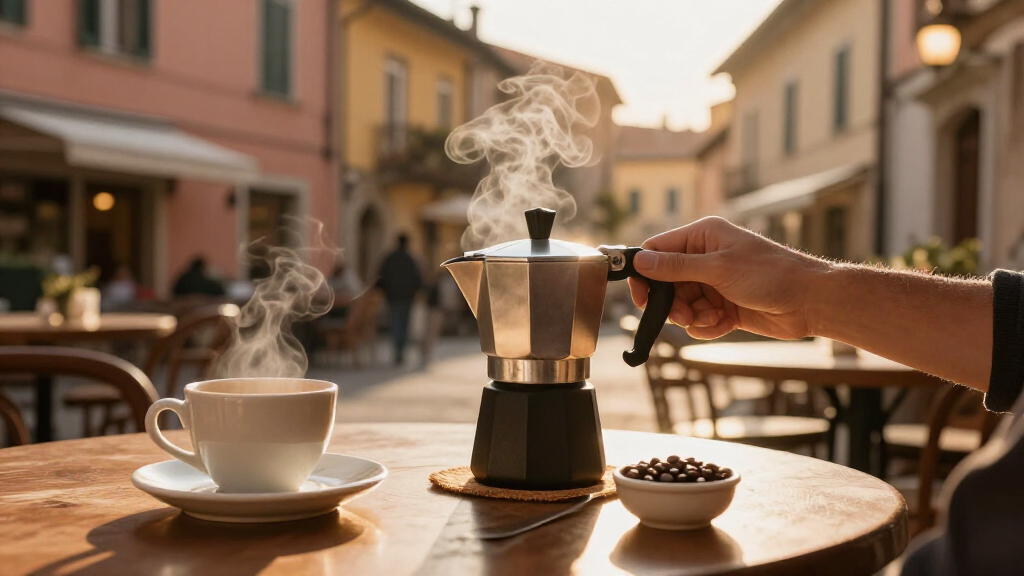
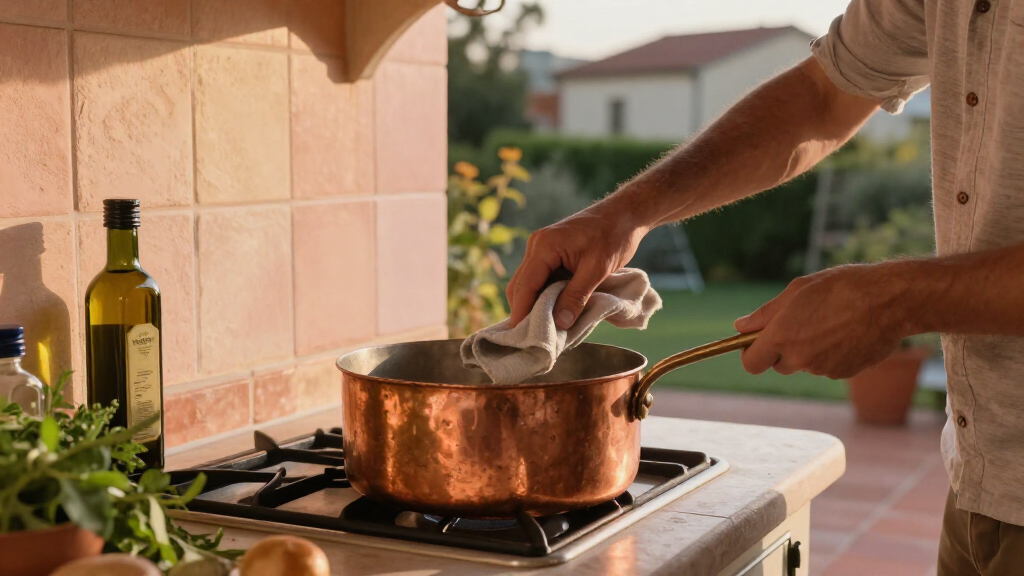
In Italy, the moka pot is less an appliance than a family member. It sits on the stovetop permanently, gets passed down, and gets repaired rather than replaced — a new gasket and filter plate every year or two keeps a decades-old pot brewing like new. That repairability has earned the moka a second life among consumers who care about low-waste living.
The ritual itself is the point. Morning: fill the base, fill the basket, light the flame. Mid-morning pause: another small pot, maybe with a biscotto to dunk. After lunch: the final one, often sweetened heavily or stretched with warm milk for children’s caffè latte (milky coffee). Nobody times extraction to the second. The repetition is the pleasure — the same pot, the same murmur, the same smell of the first stream hitting the upper chamber.
Italian coffee culture splits cleanly between the bar and the home. The bar is for espresso, standing at the counter, a one-euro jolt of precision. The home is for the moka: slower, softer, shared from the same pot. If you’ve only had moka coffee made in a hurry, you’ve never had it the way it’s meant to be drunk — poured into small cups, taken to the table, and finished while it’s still hot.
The design matters too. That octagonal aluminum body is a recognized icon of twentieth-century Italian industrial design, displayed in museums alongside Vespa scooters. When you brew with one, you’re handling the same object, nearly unchanged, that Italian grandmothers used in 1955.
Safety, Cleaning, and the Soap Debate Settled
A moka pot is a small pressure vessel on your stove, and it deserves basic respect. The safety valve in the lower chamber must stay clear — never fill water above it. Never tamp the grounds, never use an espresso-fine grind that blocks flow, and never open the pot while it’s hot and pressurized. A worn gasket or blocked filter can cause weak flow, leakage, or genuinely unsafe operation, so inspect both regularly.
Cleaning is where folklore and food safety collide. Traditional Italian advice says never use soap — rinse only, and let an established coffee coating season the pot like a cast-iron pan. The problem: that coating can go rancid over time, especially oils from dark roasts, and it eventually flavors your coffee. The sensible middle path used by most modern guides: rinse after every brew, and periodically wash with a mild, unscented detergent if the manufacturer allows it. Skip abrasives, and skip the dishwasher for aluminum models — dishwasher detergents oxidize and discolor aluminum badly. Some stainless-steel models are dishwasher-safe; check your specific pot.
The routine that works: let the pot cool completely, disassemble it, knock out the grounds (they compost beautifully), rinse all parts, and dry thoroughly before reassembly. Storing it dry prevents the gasket from degrading. Replace the gasket when it hardens, cracks, or fails to seal — usually every one to two years with daily use.

Never put milk in the lower chamber. It scorches, clogs the mechanism, and creates unsafe pressure. Water only — heat milk separately.
Which Pot Should You Buy: Aluminum vs. Stainless Steel vs. Induction
The classic aluminum Moka Express remains the best choice for most people: cheap, iconic, and available in sizes from one to twelve cups. But your stovetop decides a lot. Traditional aluminum pots do not work on induction — the magnetic field has nothing to grab. If you cook on induction, you need a stainless-steel model, a pot with a magnetic base, or an induction adapter plate.
- Aluminum (classic): cheapest, lightest, heats fast, the traditional flavor many Italians swear by. Not induction-compatible; never dishwasher-safe.
- Stainless steel: more durable, works on more cooktops (check for induction compatibility), sometimes dishwasher-safe. Slightly slower to heat, a bit pricier.
- Pressure-controlled variants: a valve system that raises pressure slightly and produces a more aerated foam layer. Pleasant, but it is not true espresso crema — don’t buy one expecting café results.
Whichever you choose, buy the size you’ll actually brew. A six-cup pot used to make two cups of coffee will underperform every single time, because the basket and water chamber only balance at full capacity. Two small pots beat one large one used at half-load.
And buy spare gaskets and filter plates when you buy the pot. Replacement parts are inexpensive and widely available, and having them on hand is the difference between a pot that lasts three years and one that lasts thirty.
Frequently Asked Questions
Is moka coffee the same as espresso?
No. Moka coffee is concentrated and full-bodied, but it brews at roughly 1–2 bar of pressure versus about 9 bar for espresso machines, so it lacks the texture and stable crema of a true shot. Treat it as its own style of coffee, closer to strong, small-scale drip than to bar espresso.
What grind size should I use in a moka pot?
Use a medium-fine grind — finer than drip coffee, slightly coarser than espresso, roughly the texture of fine table salt. If the flow is slow and the cup tastes bitter, go coarser. If the coffee tastes thin or sour, go finer.
Should I start with hot or cold water?
Both work. Preheated water shortens brewing time and may reduce cooked, bitter flavors, but the hot base makes assembly hazardous — hold it with a towel. Room-temperature water is the traditional approach and simpler for beginners. Neither is wrong.
Why does my moka pot sputter violently?
A brief sputter at the very end is normal. Early or violent sputtering usually means the heat is too high, the seal is imperfect, the filter is blocked, the basket is overfilled, or the grind is too fine. Lower the flame first — excessive heat is the most common culprit.
Can I use a moka pot on an induction cooktop?
Only if the model has a magnetic stainless-steel base, or if you use an induction adapter plate. Traditional aluminum pots do not work directly on induction. Most major brands now offer induction-compatible stainless versions.
How often should I replace the gasket?
Replace the gasket when it hardens, cracks, deforms, or no longer seals — typically every one to two years with daily use. Also inspect and replace the filter plate periodically. These inexpensive parts are what allow a moka pot to last decades.
Is the first brew from a new moka pot safe to drink?
Manufacturer guidance varies, but most recommend washing the pot and running one or more discarded brews to remove manufacturing residues and condition the brewer. Check the instructions included with your specific model before the first real cup.
Conclusion
If you remember one thing, make it this: the moka pot rewards patience and punishes haste. Low flame, full pot, medium-fine grind, no tamping, and off the heat at the first pale surge. That’s the whole method, and it hasn’t changed since 1933 because it doesn’t need to.
Tomorrow morning, set the pot on the smallest burner, listen for the murmur, and pour the first stream into a small cup while the kitchen still smells of it. That pause — the two minutes between lighting the flame and the first sip — is what Italians have been protecting for nearly a century. Now it’s yours too.
Fall Picks
fall essentials
As an affiliate, we earn on qualifying purchases.