
TL;DR

Get kitchen staples and gadgets delivered free with Prime
- Fast, free delivery on millions of items
- Prime Video, Amazon Music and more included
- Member-only deals all year
A battuto is a finely chopped mixture of aromatics, while soffritto is that mixture once it is gently cooked in fat. Use onion, carrot, and celery as a starting point—not an unbreakable rule—and cook them over low or medium-low heat for about 10 to 20 minutes until tender, fragrant, and only lightly golden.
A rushed onion can leave its bitterness in an entire pot of ragù. Give the same onion, carrot, and celery 15 quiet minutes in warm olive oil, and they soften into something round, savory, and almost invisible. That small act of patience is one of the most useful lessons you can borrow from an Italian kitchen.
You will often hear battuto and soffritto treated as two names for the same thing, but the distinction changes how you cook. Battuto is the raw, finely chopped aromatic mixture; once that mixture meets fat and gentle heat, it becomes soffritto. One describes the prepared ingredients, while the other describes a cooked foundation carrying sweetness and aroma through the finished dish.
This guide shows you how finely to chop, which fat to choose, when to add garlic, and why one Italian dish may need the familiar onion-carrot-celery trio while another needs only garlic and parsley. You will also learn how to avoid scorching, manage moisture, and freeze useful portions safely. The goal is not one supposedly perfect formula, but the confidence to build the right base for your pot.
Treat battuto as the raw chopped aromatics and soffritto as the gently cooked flavor base.
Use onion, carrot, and celery as a flexible starting point, then adjust the mixture to the region and dish.
Cook evenly chopped vegetables in warm fat over low or medium-low heat for roughly 10 to 20 minutes.
Add minced garlic late, limit carrot when sweetness would distract, and use a wider pan when moisture collects.
Freeze cooled soffritto in 1/3- to 1/2-cup portions for quick soups, ragù, beans, braises, and risotto.
Battuto and Soffritto: The Flavor Base of Almost Everything Italian
A battuto is the raw, finely chopped aromatic mixture. Once it softens slowly in warm fat, it becomes soffritto: a round, savory foundation that carries flavor through ragù, soup, risotto, beans, braises, and sauces.
minutes of patient, gentle cooking
or medium-low, never fiercely hot
for a base that nearly dissolves
for visible texture in soups
one method, two distinct stages
The ingredient list does not define the difference
The raw mixture and the cooked base are related, but not interchangeable. Keeping the names separate gives you two useful checkpoints: first inspect the chop, then judge the cooking.
Battuto
Finely chopped, uncooked aromatics. The familiar trio is onion, carrot, and celery, but garlic, parsley, sturdy herbs, chili, pancetta, guanciale, or lardo may join the mixture.
Soffritto
Battuto gently cooked in fat. The vegetables become tender, glossy, fragrant, and lightly golden, creating a foundation that supports the dish without behaving like a garnish.
One technique, many Italian expressions
Onion, carrot, and celery are a useful starting point—not an unbreakable national formula. Region, cooking fat, and the final dish determine the right base.
Rich and rounded
Base: onion, carrot, celery; sometimes pancetta.
Fat: butter, olive oil, or rendered pork fat.
Herbal and rustic
Base: onion or garlic with rosemary, sage, parsley, or cured pork.
Fat: olive oil or pork fat.
Clean and vivid
Base: onion or garlic, sometimes chili.
Fat: olive oil for restrained sweetness and clear aroma.
Light and saline
Base: garlic and parsley, often without carrot.
Fat: olive oil that leaves delicate seafood flavors clear.
| Cooking context | Onion–carrot–celery | Likely fat | Desired result |
|---|---|---|---|
| Ragù or long braise | Strong fit | Butter, olive oil, or rendered pork fat | Round sweetness and a savory backbone |
| Bean or rustic meat dish | Adapt it | Olive oil or rendered pork fat | Herbal fragrance and depth |
| Tomato or vegetable dish | Use lightly | Olive oil | Clean aroma with controlled sweetness |
| Seafood preparation | Often skip | Olive oil | Brightness without masking the seafood |
Sweet, savory depth comes from control
The clock is only a trail marker. Even chopping, moderate moisture, gentle heat, and sensory cues tell you when the base is ready.
Choose
Match the aromatic mixture to the final dish rather than forcing one formula.
Chop
Cut evenly so every piece softens at approximately the same rate.
Warm
Heat enough fat to coat the pan. It should be warm, never smoking.
Salt
Add a small pinch to draw moisture and encourage gentle softening.
Soften
Cook over low or medium-low heat, stirring every minute or two.
Add late
Protect minced garlic and delicate herbs by adding them near the end.
Build
Continue with meat, wine, rice, beans, stock, or tomato.
Trust the vegetables more than the timer
A finished soffritto should be soft, glossy, and fragrant. Stop before mahogany browning unless the recipe specifically asks for it.
Small physical choices reshape the result
A broad pan releases steam faster. A crowded saucepan traps it. A fine battuto disappears into sauce; a coarse one remains visible on the spoon.
A practical 20-minute window
For an ordinary skillet batch, the most useful zone often begins around minute 10. Stay alert: pan width, quantity, and water content can shift the timing.
Match the chop to the pot
Uniform size matters more than machine-like perfection.
Three mistakes that echo through the whole pot
Soffritto is culinary scaffolding. If its structure is harsh, watery, or uneven, the finished dish carries that weakness.
Heat is too high
Signal: fierce crackling, dark edges, or bitter onion and garlic.
Correction: lower the heat and begin with warm—not smoking—fat.
The pan is crowded
Signal: liquid pools while vegetables steam without developing aroma.
Correction: use a wider pan or cook a smaller batch.
Sweetness dominates
Signal: carrot overwhelms lentils, tomato, squash, or delicate seafood.
Correction: reduce or omit carrot and increase onion or herbs.
How the base disappears into the dish
The best soffritto rarely announces itself. It changes the trajectory of every ingredient added afterward, then settles behind the finished flavor.
Make patience convenient
Cool cooked soffritto promptly, divide it into useful portions, and freeze it for fast soups, ragù, beans, braises, tomato sauces, and risotto. Celery leaves, herb stems, and suitable vegetable trimmings can also support a low-waste batch.
What You Gain by Knowing Battuto from Soffritto
Battuto and Soffritto name two stages of one flavor-building method: battuto is the uncooked chopped mixture, and soffritto is the result after those ingredients soften gently in fat. The distinction tells you whether a recipe is asking you to prepare aromatics or to develop their sweetness and fragrance through cooking.
The word battuto comes from battere, meaning “to beat” or “to chop,” while soffritto roughly means “lightly fried.” The familiar battuto is a finely chopped mixture of onion, carrot, and celery, but it may also contain pancetta, parsley, rosemary, sage, garlic, chili, guanciale, or lardo. According to madtasting.com [1], the mixture becomes soffritto once it is gently cooked in fat.
Suppose you are making ragù alla bolognese on a cold Sunday in Emilia-Romagna. The raw vegetables on your cutting board are the battuto; after they turn tender and glossy in butter or oil, they are the soffritto supporting the meat, wine, and milk. You should taste depth in the final sauce, not encounter a pile of obvious vegetable cubes.
Soffritto is culinary scaffolding: it supports the finished dish, then seems to disappear behind it. If the onion tastes raw or the carrot stays firm, that hidden structure never fully forms.
People use the two words loosely in everyday conversation, so context still matters. Yet keeping the stages clear gives you a useful checkpoint: first ask whether the battuto is evenly chopped, then ask whether the soffritto has become soft, fragrant, and lightly golden. Those are different jobs, and both affect the plate.
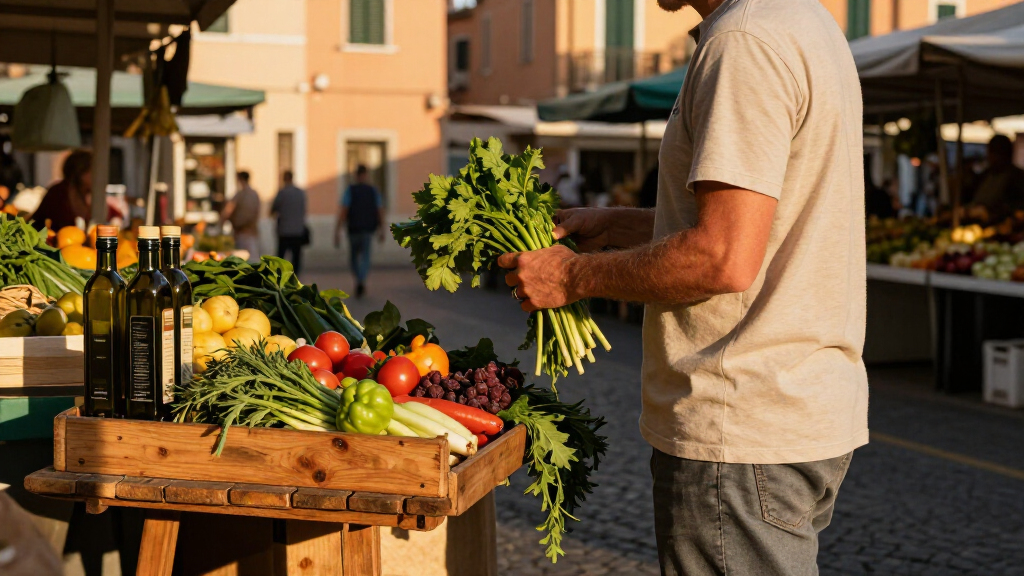
As an affiliate, we earn on qualifying purchases.
Choose the Right Italian Base Instead of Following One Formula
Battuto and Soffritto do not follow one mandatory Italian formula; the right ingredients depend on the region, cooking fat, and final dish. Onion, carrot, and celery in roughly equal amounts offer a useful starting point, but an onion-only base or a lighter garlic-parsley mixture can be more authentic for a particular preparation.
| Cooking context | Common aromatic base | Likely fat | What it gives the dish |
|---|---|---|---|
| Northern ragù or braise | Onion, carrot, celery; sometimes pancetta | Butter, olive oil, or rendered pork fat | Round sweetness and a rich savory backbone |
| Central Italian bean or meat dish | Onion or garlic with rosemary, sage, parsley, or cured pork | Olive oil or rendered pork fat | Herbal fragrance and rustic depth |
| Southern tomato or vegetable dish | Onion or garlic, sometimes chili | Olive oil | Clean aroma, warmth, and restrained sweetness |
| Seafood preparation | Garlic and parsley, often without carrot | Olive oil | A lighter base that leaves the seafood clear |
Imagine cooking spaghetti alle vongole beside the Gulf of Naples. A sweet carrot-heavy trio could blur the saline flavor of the clams, while garlic, parsley stems, and olive oil keep the sauce bright. In a Piedmontese beef braise, butter, onion, carrot, and celery can comfortably carry red wine and long-cooked meat.
Carrot deserves particular care because it brings both aroma and sugar. A large carrot in a small pan of lentils may turn an earthy dish noticeably sweet, so use more onion and less carrot when you want a savory profile. Some households omit carrot entirely, especially when tomato, squash, or another sweet ingredient already dominates the pot.
Italian soffritto and Spanish or Latin American sofrito are related but distinct. Sofrito may include tomato, peppers, cilantro, or other local ingredients, while the Italian technique centers on aromatics gently softened in fat. They share a family resemblance, but you cannot swap formulas blindly and expect the same result.
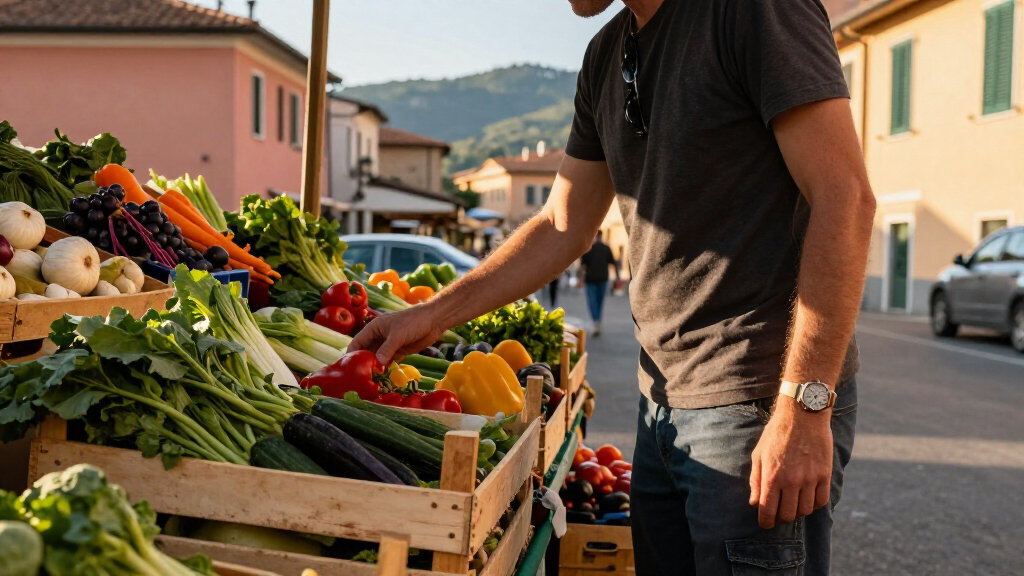
7 Steps That Give Soffritto Its Sweet, Savory Depth
Battuto and Soffritto reward controlled heat more than strict timing: chop the aromatics evenly, place them in warm rather than smoking fat, and cook slowly until tender and fragrant. For an ordinary skillet batch, expect roughly 10 to 20 minutes, with the vegetables telling you more than the clock.
- Choose the mixture for the dish. Start with onion, carrot, and celery, or simplify it when sweetness or celery would interfere.
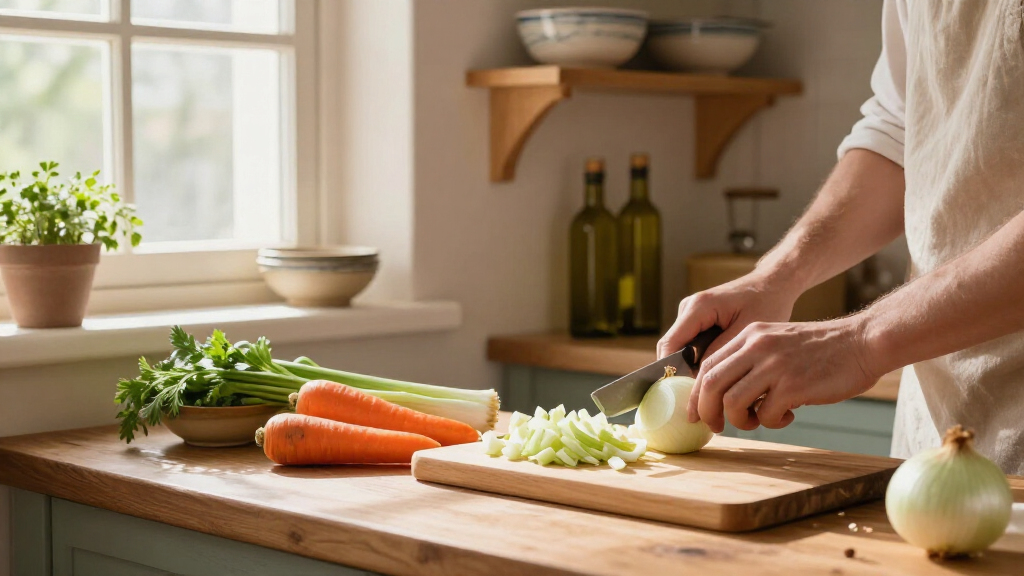
- Cut everything evenly. Aim for pieces around 1/8 inch for a smooth ragù or 1/4 inch for a rustic soup.
- Warm the fat gently. Use enough olive oil, butter, or rendered fat to coat the pan without creating a deep pool.
- Add a small pinch of salt. Salt draws out some moisture and helps the vegetables soften, but you will season the complete dish later.
- Cook over low or medium-low heat. Stir every minute or two and lower the heat if the edges darken quickly.
- Add vulnerable ingredients later. Minced garlic and delicate herbs need less time than onion, carrot, celery, or rosemary.
- Continue when the base is ready. Add meat, wine, stock, rice, beans, or tomato according to the recipe.
For a practical example, put a 10-inch skillet over medium-low heat with two tablespoons of extra-virgin olive oil. Add one small onion, one carrot, and one celery rib, all finely cut. The first sound should be a gentle murmur; a fierce crackle means the pan is too hot.
At five minutes, the onion may still look chalky and the carrot may feel firm. Around 12 to 15 minutes, the pieces should appear glossy, flexible, and translucent, with a sweet smell replacing the onion’s raw sting. For most soups and sauces, stop before the mixture becomes mahogany brown.
Pan size changes the timing. A crowded saucepan traps steam, while a broad skillet lets moisture escape and can brown the edges faster. Treat the clock as a trail marker, not the destination: texture, aroma, and color tell you when the soffritto is ready.
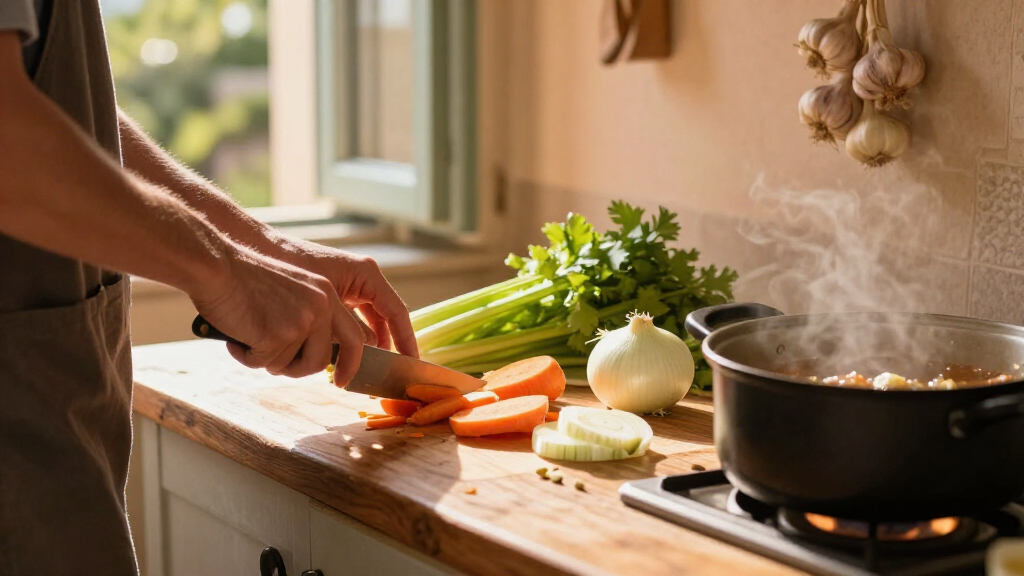
Match the Chop and Cooking Fat to the Dish in Front of You
The best chop and fat are the ones that support the finished dish: use a very fine battuto when you want the vegetables to melt into sauce, and a larger dice when their texture belongs in the bowl. Choose olive oil, butter, or pork fat for the flavor each will carry forward, not from habit.
For tagliatelle al ragù, chop the vegetables to roughly 1/8 inch so they almost vanish during the long simmer. For a Tuscan-style bean soup, a 1/4-inch dice can leave soft golden and orange flecks among the beans and cavolo nero. Uniformity matters more than hitting an exact measurement because pieces of the same size soften at the same pace.
A food processor works when dinner needs to move. Use short pulses, scrape the bowl once, and stop before the vegetables resemble wet pulp. If you process one onion for 30 uninterrupted seconds, its broken cells release enough liquid to make the mixture steam; five or six quick pulses usually give you more control.
Fat acts like a delivery vehicle for aroma. Fruity extra-virgin olive oil suits many central and southern dishes, while butter can give a northern risotto or meat sauce a rounder, softer finish. Pancetta, guanciale, or lardo adds cured-pork savor, though you should watch the salt and flag pork clearly when serving guests.
The most assertive oil is not automatically the best one. A peppery Tuscan oil can taste beautiful with beans and rosemary but may crowd a delicate white fish. If you are cooking risotto with Parmigiano Reggiano DOP, a blend of butter and mild olive oil can provide both richness and control without covering the cheese’s nutty edge.
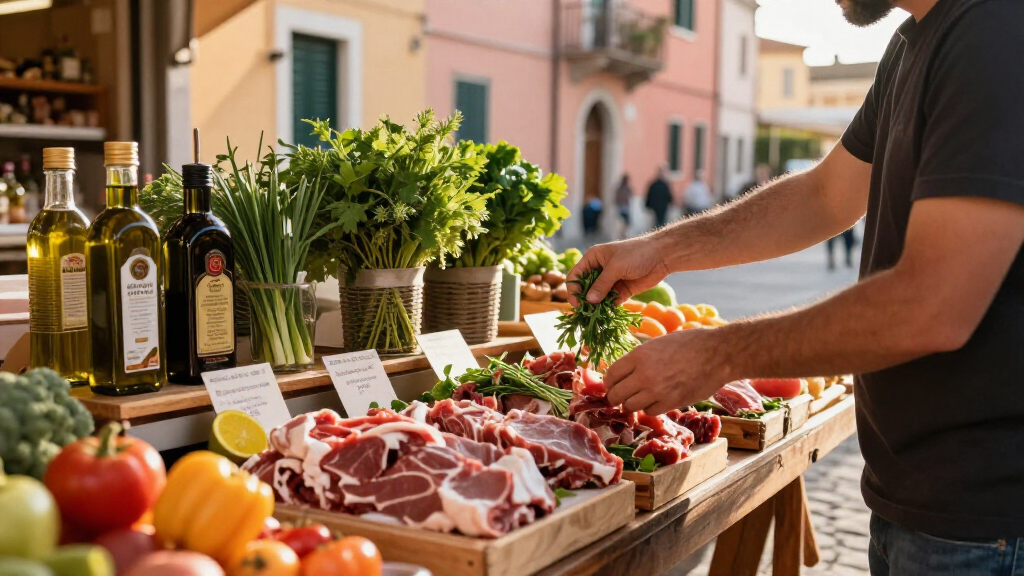
Fix the Mistakes That Make Aromatics Bitter, Sweet, or Watery
Most soffritto problems come from excessive heat, uneven cutting, or trapped moisture. Lower the flame when the edges brown before the centers soften, match the vegetable pieces in size, and use a pan wide enough to release steam. These small corrections protect the sweet, savory base from bitterness or watery blandness.
- Bitter or scorched: The heat was too high, or minced garlic entered too early.
- Raw onion flavor: The base needed more time before you added tomato, wine, or stock.
- Unexpected sweetness: The carrot overwhelmed the onion, or the final dish already contained sweet ingredients.
- Wet and pale: The pan was crowded, the vegetables were processed into paste, or frozen pieces released extra water.
- Heavy flavor: Strong oil, too much cured pork, or deeply browned vegetables took control of a delicate dish.
Garlic can move from fragrant to acrid in less than a minute in a hot pan. If your onion, carrot, and celery need 15 minutes, add minced garlic during the final minute or two. Another Italian kitchen habit is to warm one whole crushed clove in the oil, then remove it before it colors.
If the pan becomes watery, spread the vegetables into a thinner layer and raise the heat only slightly. Let the steam subside, then return to gentle cooking; do not chase evaporation with a blast of heat. In a crowded Dutch oven, you may need 20 minutes where a broad sauté pan needs 12.
Deep browning is not always wrong. A long-cooked beef ragù or braise can benefit from a little extra color, while a pale risotto, seafood sauce, or spring pea soup usually needs a softer hand. The question is not whether browning is allowed, but whether that toasted flavor belongs in the dish you plan to serve.
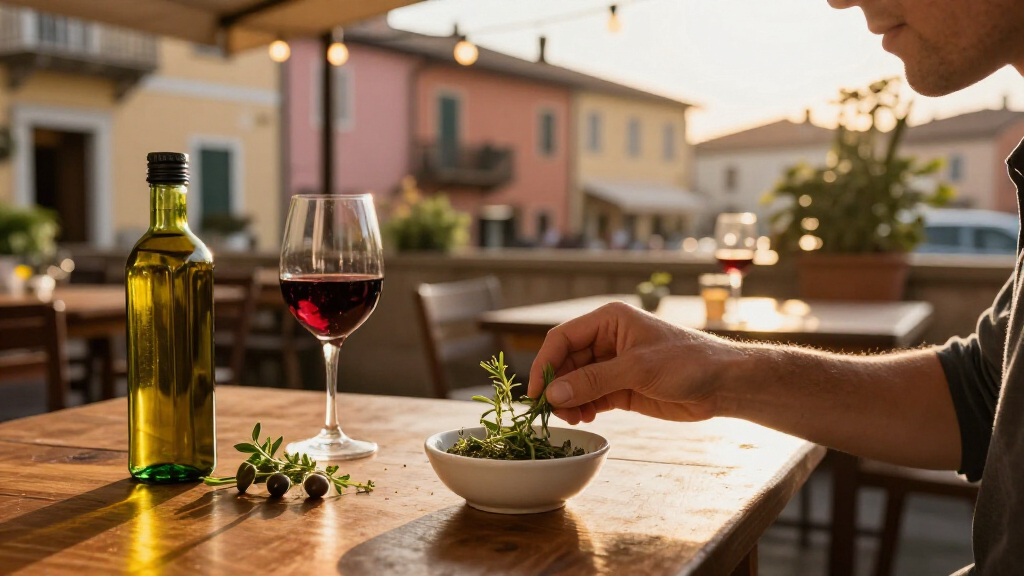
Make Weeknight Portions Without Losing Fresh Flavor
You can prepare battuto or soffritto ahead by chilling it promptly in shallow, airtight containers or freezing it in recipe-sized portions. Keep refrigerated ingredients at 40°F or below, avoid leaving cooked aromatics at room temperature for more than two hours, and use clean utensils whenever you remove a portion.
On Sunday, chop three onions, three carrots, and three celery ribs, then cook them slowly in olive oil. Cool the mixture in a shallow container rather than leaving a hot mound in a deep bowl. During the week, one frozen portion can start lentil soup, tomato sauce, or risotto without another cutting-board session.
USDA food-safety guidance [2] uses 40°F as the upper safe refrigerator temperature and a two-hour limit for perishable food at ordinary room temperature. For cautious home use, refrigerate cooked soffritto for three to four days or freeze it once cool. If it smells sour, feels slimy, or sat warm too long, discard it rather than tasting it.
Freeze the mixture in silicone trays, small containers, or flat bags holding roughly 1/3 to 1/2 cup each. Label the date and ingredients, especially when a batch contains butter, celery, pancetta, or another allergen or dietary concern. Frozen vegetables soften after thawing, but that texture change barely matters in ragù, soup, beans, and braises.
Raw battuto can also be frozen, though it will release more water in the pan. Cook that moisture away gently before adding other ingredients. Freshly chopped vegetables give you a cleaner aroma and firmer texture, while batch preparation trades a little freshness for speed—a fair exchange on a Tuesday night.
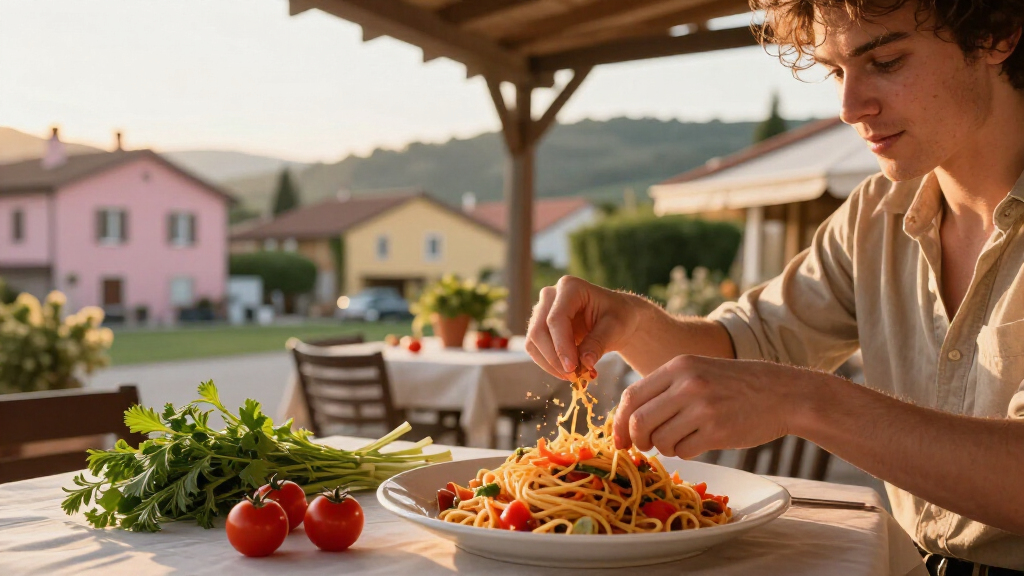
Build Meat-Free Depth and Waste Less in the Process
Soffritto builds plant-based depth by turning modest vegetables into a layered savory foundation. Olive oil carries their aromas, patient cooking concentrates sweetness, and additions such as rosemary, chili, mushroom stems, or tomato paste can deepen the result. You gain body and fragrance without relying on butter, pancetta, or meat stock.
Consider a pot of Umbrian-style lentils. Slowly soften onion, celery, a modest amount of carrot, and one rosemary sprig in olive oil; add the lentils only when the onion loses its raw smell. Water or vegetable stock then has a seasoned base to absorb, so the final bowl tastes rounded rather than thin.
Low-waste cooking fits this method naturally. Tender celery leaves can join parsley, clean herb stems can flavor the oil, and a small outer piece of carrot can disappear into a fine battuto. Use only sound, clean trimmings; moldy, slimy, or badly bruised scraps belong in the compost, not the saucepan.
You can also make a low-fat version by starting with one teaspoon of olive oil and adding spoonfuls of water or stock when the pan dries. The vegetables will soften, but the finished aroma will be lighter because fat captures and carries flavor compounds. For many cooks, one tablespoon of oil across four servings offers a better balance between flavor and restraint.
Common allergens depend on the dish rather than the basic vegetable trio. Celery is a recognized allergen in several labeling systems, butter contains milk, and some stocks contain wheat, soy, or other hidden ingredients. Ask guests directly, read packaged-stock labels, and replace celery with extra onion or fennel only when its flavor suits the recipe.
Frequently Asked Questions
What is the difference between battuto and soffritto?
Battuto is the raw, chopped aromatic mixture, while soffritto is that mixture after it has been gently cooked in fat. People sometimes use the terms loosely, but remembering raw stage versus cooked stage makes recipes easier to follow.
What is the traditional onion, carrot, and celery ratio?
A 1:1:1 ratio offers an easy starting point, but it is not a binding Italian rule. Use more onion for a savory base, reduce carrot when the dish already tastes sweet, and omit celery when its grassy flavor clashes with the final sauce or filling.
Should soffritto turn brown?
Most soffritto should become tender, translucent, and lightly golden, not dark brown. A beef braise or long-cooked ragù may benefit from extra color, while risotto, seafood, and pale vegetable soups usually taste cleaner with minimal browning.
Is garlic always part of Italian soffritto?
Garlic is optional and does not belong to the standard onion-carrot-celery trio by default. Its use changes by region, household, and recipe; when using minced garlic, add it during the final one or two minutes so it does not burn.
Can I make soffritto with a food processor?
Yes, but use short, controlled pulses and stop before the vegetables become a watery paste. Overprocessed onion, carrot, and celery release moisture and steam in the pan, while a fine but distinct chop gives you better softening and aroma.
Can I leave out celery or carrot?
Yes. Onion-only bases are common, seafood may call for garlic and parsley, and recipes often omit carrot to avoid unwanted sweetness. Authentic Italian cooking matches the aromatics to the dish and local tradition rather than forcing one trio into every pan.
Can I freeze battuto or soffritto?
You can freeze either one in small, recipe-sized portions. Cool cooked soffritto promptly before freezing, label batches that contain butter, celery, or pork, and expect raw frozen battuto to release extra water when it reaches the pan. Its softer texture works well in sauces, soups, and braises.
Conclusion
Choose your soffritto for the dish, then give it time. A seafood sauce may need only garlic and parsley in olive oil; a northern meat ragù may welcome onion, carrot, celery, butter, and pancetta. In both cases, your real task is the same: create quiet depth without letting the base shout.
Next time you cook soup, risotto, beans, or tomato sauce, pause before pouring in the main ingredients. Listen for the soft hiss of warm fat, wait until the raw onion smell turns sweet, and watch the vegetables grow glossy at the edges. That patient spoonful at the bottom of the pan is where your Italian dinner begins.
Fall Picks
fall essentials
As an affiliate, we earn on qualifying purchases.