
TL;DR
Italian holiday baking relies on strong flour, healthy fermentation, and flavorful inclusions that an enriched dough can support. Match your flour to the recipe, judge yeast activity by the dough as well as the clock, and choose fragrant candied peel that tastes like citrus rather than syrup.
Choose strong bread flour suited to enriched doughs, and remember that absorption varies by brand.
Use an active lievito madre or follow a recipe built for commercial yeast; the two methods have different timing and flavor.
Select candied peel for fragrant citrus flavor and chew, not just sweetness, and chop it to the recipe’s specified size.
Judge fermentation by expansion, aroma, and texture as well as the clock.
Cool panettone as directed, often upside down, and seal the fully cooled loaf to limit drying.
The Italian Baking Cupboard Flour, yeast and citrus peel
A tender, airy holiday loaf starts with ingredients suited to enriched dough and careful attention to how it develops.
Build a dough that can lift
Panettone needs structure to hold fermentation gas and support butter, eggs and fruit.
Choose strong bread flour
Match the flour to the recipe. Absorption varies by brand, so adjust liquid gradually.
Balance the additions
Butter, eggs, sugar and fruit make dough rich and flavorful, but harder to develop and lift.
Choose a fermentation method
Lievito madre and commercial yeast can both make holiday bread, but their timing and flavor differ.
- Traditional maintained sourdough starter
- Feed regularly and use when vigorous
- Contributes fermentation power and flavor
- Used in some dependable recipes
- Follow the recipe’s method and timing
- Do not substitute gram for gram without guidance
Read the dough, not just the clock
Temperature changes fermentation time, especially in rich dough.
Follow the recipe’s ingredient order and kneading cues.
Use expansion, aroma and texture alongside elapsed time.
Cool panettone as directed, often upside down, then seal when fully cooled to limit drying.
Make citrus the bright note
Candied peel should bring fragrant citrus and chew to rich panettone dough.
| Choice | What to look for | How to use it |
|---|---|---|
| Candied orange peel | Fragrant, not harshly bitter or merely sugary | Chop to the recipe’s specified size |
| Homemade peel | Orange peel simmered until translucent | Follow a dependable recipe for drying and storage |
| Other inclusions | Raisins, lemon peel or other fruit | Keep quantities close to the recipe |

Get kitchen staples and gadgets delivered free with Prime
- Fast, free delivery on millions of items
- Prime Video, Amazon Music and more included
- Member-only deals all year
Choose flour that can carry butter, eggs, and fruit
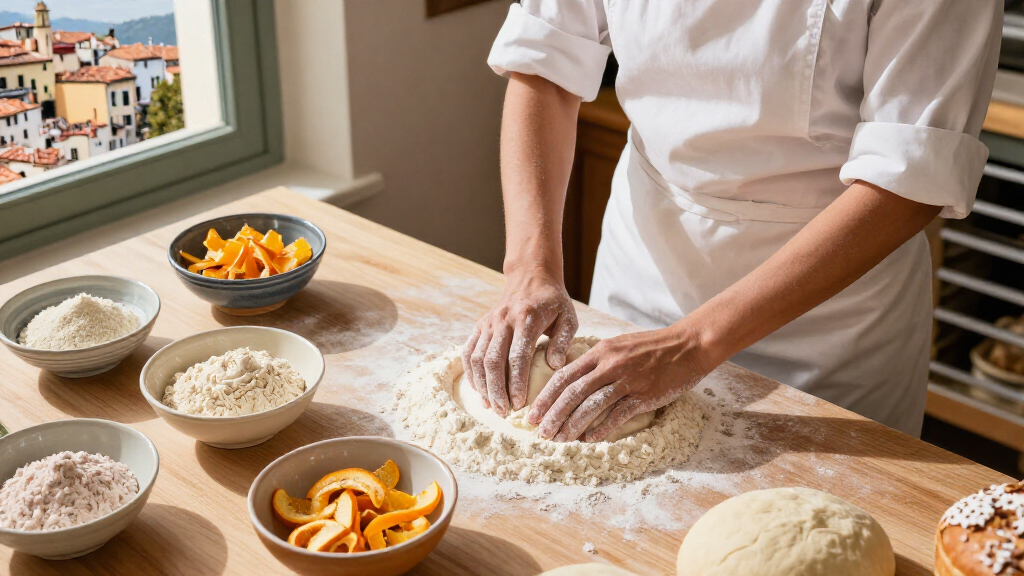
Strong bread flour gives panettone the gluten structure it needs to hold fermentation gas and support butter, eggs, sugar, and fruit. In practical terms, flour strength describes how well the dough can stretch and hold its shape; it is not a guarantee that every bag will behave the same way. An enriched dough is a dough with added ingredients such as butter and sugar. Those ingredients make it tender and flavorful, but they also make the dough harder to develop than a lean loaf. Think of the gluten network like a woven net: it needs to stretch as gas builds, then stay sturdy under the weight of raisins and candied orange. A weak net lets the loaf spread or collapse. Read the recipe before shopping. If it names a flour intended for enriched dough, match its strength as closely as you can. Protein percentage can offer a clue, but milling and absorption vary by brand, so a dough may need a small liquid adjustment. If your first mix feels stiff and tears instead of stretching, pause before adding all the remaining flour; if it feels soupy, give it time to develop before making a correction. For example, a baker switching from one bread flour to another may find that the same measured liquid produces a firmer dough. That does not automatically mean the recipe is wrong. Let the dough mix and develop, then adjust gradually. Flour matters most when it supports the whole loaf, not when its label sounds impressive.Products Worth Considering

Roborock Q7 M5+ Robot Vacuum and Mop with Self-Emptying Dock

Samsung 65-Inch M70H Series 4K Mini LED Smart TV (2026)

Ring Battery Doorbell 4K Pro (2nd Gen)
As an affiliate, we earn on qualifying purchases.
Know when yeast is ready for a holiday dough
Yeast is ready for enriched dough when it can produce steady fermentation, and you can judge that by the dough’s expansion, aroma, and texture as well as by elapsed time. A clock gives you a useful estimate; it cannot tell you exactly how warm your dough or kitchen has stayed. Traditional panettone often uses lievito madre (a maintained sourdough starter). The starter adds fermentation power and flavor, but it needs regular feeding and should be vigorous before you ask it to lift a rich, heavy dough. Some recipes use commercial yeast, while others combine methods. Those approaches can make good holiday bread, but their timing and flavor differ; don’t swap one for another gram for gram without a recipe that explains the change. Butter and sugar slow fermentation compared with a simple flour-and-water dough. A warm kitchen may speed the rise, while a chilly winter counter may stretch it out. Watch for the cues your recipe gives: a dough that expands to a target volume, feels aerated, or holds a rounded surface. If you’re making panettone for a holiday lunch, build in time for the dough rather than counting backward from the meal by a fixed number of hours. A starter that smells pleasantly tangy and rises reliably after feeding is a better candidate than one that has sat neglected in the refrigerator. If it looks sluggish, strengthen it before baking day or choose a dependable commercial-yeast recipe. The aim is controlled lift, not a race.Pick candied peel that tastes like citrus
Good candied orange peel tastes fragrant and gently bitter, with a chewy texture and sweetness that supports the bread rather than burying it. In panettone, peel brings concentrated citrus aroma through a rich dough that could otherwise taste heavy. Buy peel that smells like orange when you open the package, or make your own from fresh fruit. Chop purchased peel to the size specified by your recipe. Oversized pieces can tear the dough or leave clumps in the crumb; very fine pieces spread flavor more evenly but may disappear into the texture. Raisins often join orange peel in classic panettone, while some versions include lemon peel or other fruit. Keep additions close to the recipe’s quantities so the dough still has enough structure to lift them. To make peel at home, simmer strips of orange peel in syrup until they become translucent, then dry or store them according to a dependable recipe. The transformation is easy to see: opaque peel turns glossy and jewel-like, and the kitchen fills with a warm citrus scent. Take care with the hot syrup, and don’t improvise storage times; use a tested recipe’s chilling or shelf-storage instructions. Imagine slicing a loaf and finding a bright orange ribbon in the crumb. That little burst works because peel has a clear flavor of its own, not because it adds more sugar. If you taste a sample and get only harsh bitterness or sweetness, choose another batch or make your own.Stock the other ingredients without losing the dough’s balance
Butter, eggs, sugar, salt, vanilla, and sometimes honey round out holiday dough, while dried fruit and candied peel contribute sweetness, moisture, and texture. Each ingredient has a job, so the cupboard needs dependable basics rather than a long list of decorative extras. Butter brings a soft, rich crumb; eggs contribute color and structure; salt keeps sweetness from becoming flat. Vanilla and honey can add a gentle aroma, but use the amount your recipe calls for. If you change several ingredients at once, you may not know why the dough has become greasy, dry, or slow to rise. That matters especially in panettone, where the dough must carry both enrichment and fruit. Panettone and pandoro share a holiday table, but they are not interchangeable. Panettone typically contains fruit, including candied peel and often raisins. Pandoro, associated with Verona, is a golden, buttery cake-like bread traditionally dusted with icing sugar. If you’re preparing a simple Italian holiday baking cupboard for a first attempt, decide which bread you’re making before buying the inclusions. A bag of fragrant peel helps panettone; it does not turn a pandoro recipe into the same bread. Check freshness as well as quantity. Eggs should be handled safely and refrigerated as directed on their packaging; butter should be fresh and kept cold until the recipe calls for it. For a winter baking day, setting out measured ingredients before mixing can prevent a last-minute hunt for vanilla while the butter-softened dough waits.Mix and proof by dough cues, not a rigid timetable
To make an enriched holiday dough more predictable, follow the recipe’s ingredient order and use its volume, surface, and texture cues to decide when to move to the next stage. The dough’s condition matters because room temperature, starter strength, and flour absorption all change how quickly it develops.- Measure and prepare. Weigh ingredients if the recipe provides weights, chop peel to the specified size, and check that your starter or yeast is active.
- Develop the dough. Mix and knead as directed, adding butter and fruit at the recipe’s stage. Look for a dough that becomes elastic rather than greasy or ragged.
- Track the rise. Note the dough’s volume and texture. If your kitchen is cool, it may need more time than the printed estimate; if it’s warm, check sooner.
- Bake and cool as directed. Use the recipe’s visual or internal doneness cues. Panettone is often cooled upside down so its tall, delicate structure can keep its shape.