TL;DR

Get kitchen staples and gadgets delivered free with Prime
- Fast, free delivery on millions of items
- Prime Video, Amazon Music and more included
- Member-only deals all year
The Alba White Truffle Fair celebrates Piedmont’s seasonal white truffle, but its charity auction features exceptional lots and does not set ordinary market or restaurant prices. Supply and prices shift with the harvest, so check the current program, ask restaurants whether they serve fresh Tuber magnatum Pico, and clarify how any truffle supplement is calculated.
At an Alba restaurant, a server shaves a truffle over warm tajarin, and the room briefly goes quiet. The scent is earthy and intense; the bill, however, depends on how much is shaved and what the season has brought in. That difference is the key to enjoying the fair without mistaking its headlines for everyday prices.
The Alba White Truffle Fair takes place during the autumn season in Alba, in Italy’s Piedmont region. It brings together food, wine, producers, demonstrations, and cultural events. Its most famous spectacle, the World White Truffle Auction, raises money for charity with selected high-profile truffles. The wider market works on a more practical, changing scale.
This guide explains how the auction, truffle market, and restaurant menus connect—and where they don’t. You’ll learn what to ask before ordering, why a dish can change from one evening to the next, and how to plan around dates that shift each year. The goal: leave room for the aroma, the meal, and a realistic budget.
The World White Truffle Auction features selected charity lots; its headline bids are not ordinary market or restaurant prices.
White truffle, Tuber magnatum Pico , is seasonal and difficult to cultivate commercially, so supply can change with habitat, weather, and harvest.
Ask whether a restaurant serves fresh white truffle and how it calculates the supplement before the server shaves it.
Tajarin, risotto, and eggs are common warm pairings; restaurants usually shave white truffle raw over the dish.
Check the current fair program and Piedmont harvest rules each year, since event dates and permitted harvesting periods can vary.
Auction headlines and everyday menus
The fair celebrates Piedmont’s seasonal white truffle, but charity auction bids do not set market or restaurant prices. Supply changes with the harvest, so ask what is fresh and how your dish is priced.
Three prices, three purposes
The auction showcases selected truffles for charity; daily sales and restaurant servings follow different conditions.
- Selected, notable lots
- Charity bids draw headlines
- Supply and quality vary
- Restaurant charges depend on sourcing and serving
What shapes the market
White truffle is difficult to cultivate commercially, and availability depends on habitat, weather, and the season.
A changing supply
Licensed hunters find truffles with trained dogs. What reaches markets can shift from week to week.
More than weight
Size, shape, aroma, freshness, quality, supply, and demand all affect value.
Dates can vary
Harvesting generally falls in autumn and early winter. Check current regional rules and the fair program.
From the countryside to the table
A perishable truffle moves through local buyers or markets to restaurant suppliers, so availability can change quickly.
Trained dogs help licensed hunters locate truffles underground.
Hunters sell through local buyers or markets; restaurants source through suppliers.
Servers usually shave it raw over warm tajarin, risotto, or eggs to preserve its aroma.
Ask before ordering
Menu wording and pricing practices vary by restaurant.
- Is it fresh white truffle, Tuber magnatum Pico?
- Is the truffle included in the dish price or charged separately?
- If priced by weight, how much will be shaved and how is the final charge calculated?
- Can you confirm the amount or charge before shaving begins?
What the Alba White Truffle Fair offers beyond the auction
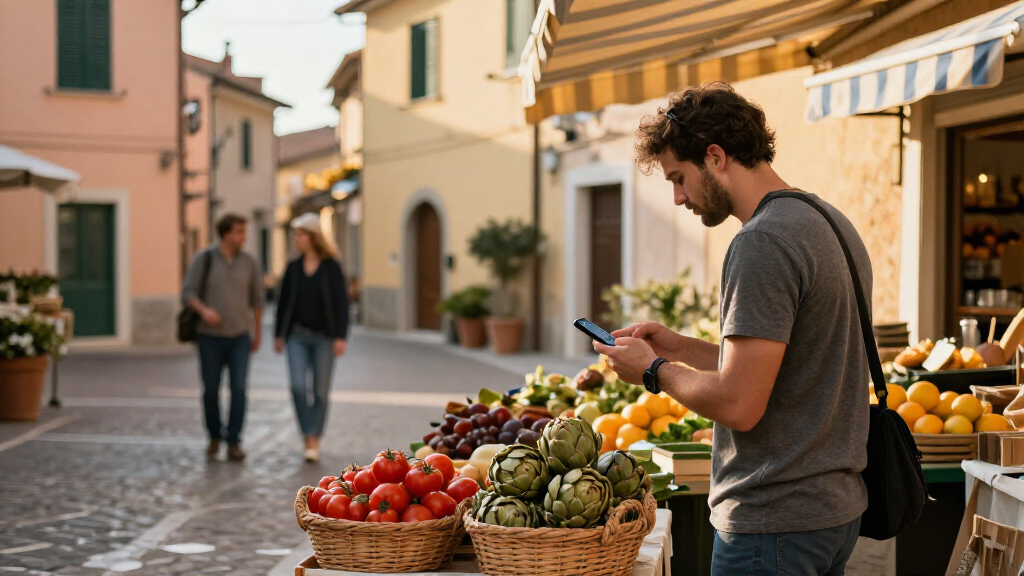
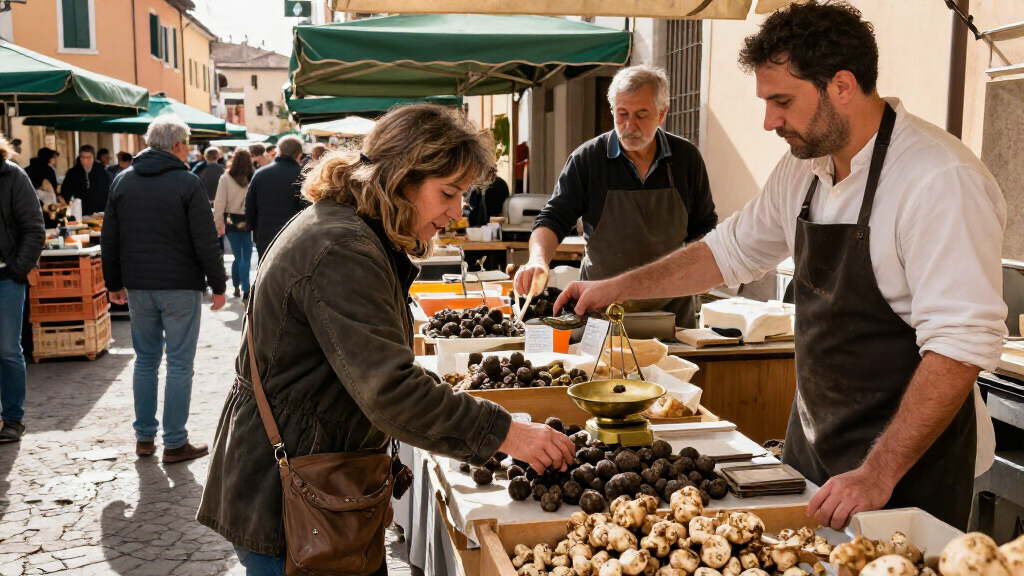
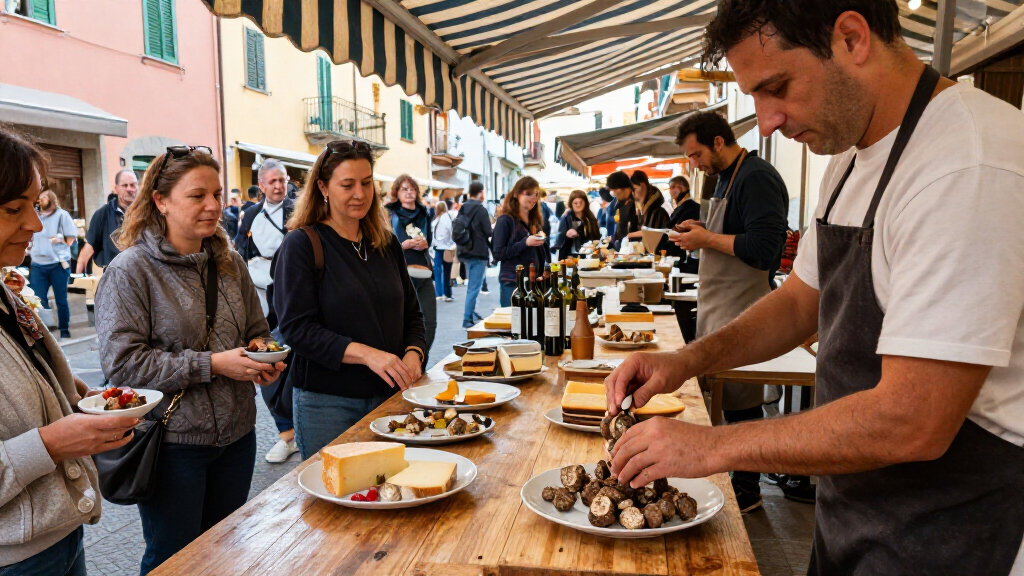
The Alba White Truffle Fair is a seasonal food and cultural event in Alba, not simply a place where one auction determines the price of every truffle. Visitors may find truffle sales, regional food and wine, demonstrations, producers, and other programming, with the details varying by year. Think of it as a window onto the autumn food culture of Langhe, Roero, and Monferrato, not just a luxury bidding room.
The star is the white truffle, Tuber magnatum Pico, a prized fungus that grows underground in association with certain trees. It is difficult to cultivate commercially, so supply depends on habitat, weather, and the season. Unlike a product that can be restocked from a warehouse, a market stall can only sell what hunters and suppliers bring in.
That natural rhythm shapes the visit. On one day, you might see truffles for sale alongside local food; on another, supply or prices may differ. A visitor who comes for the broader festival can still enjoy the region’s cooking and wines even without buying a truffle. The fair’s appeal is the combination: Alba’s streets, seasonal food, and the sense that the menu is tied to what the landscape gives that week.
For travel planning, check the current official program before booking. The event happens during the autumn white-truffle season, but dates and activities change each year. If your priority is a particular market day, demonstration, or dinner, confirm its schedule rather than assuming every fair day offers the same experience. The fair is one part of a wider seasonal market, with restaurants and suppliers operating beyond the event itself.
Products Worth Considering

Philips Hue White and Color Ambiance Smart Retrofit Recessed LED Downlights, 5/6-Inch, 4-Pack

Dyson Supersonic Travel Hair Dryer

Dyson PencilVac Fluffycones Cordless Hard Floor Vacuum
As an affiliate, we earn on qualifying purchases.
Why the charity auction price does not set your dinner bill
The Alba White Truffle Fair’s World White Truffle Auction is a charity event featuring a small number of selected, notable truffles. Its lots can draw attention from patrons in Italy and abroad, and the winning bids make striking headlines. Those prices describe a high-profile fundraising spectacle; they do not tell you what a typical truffle costs at a market stall or how a restaurant prices a shaving at dinner.
Imagine seeing a news report about an unusually large truffle selling for a dramatic sum, then arriving in Alba expecting every menu to reflect that figure. The comparison would be like using a charity gala’s auction price for a painting to estimate the price of a print at a local shop. The auction selects exceptional lots and adds the meaning of the cause and the event. An ordinary market sale answers a different question: what is available, and what is its quality today?
Truffle value depends on several things at once: size, shape, aroma, freshness, and quality, as well as supply and demand. A large, striking truffle can attract special attention, while a smaller one may suit a restaurant dish just as well. Market conditions can shift from week to week as the harvest changes.
Keep three prices separate when you plan: auction price for selected charity lots, market price for truffles offered through daily channels, and restaurant price for sourcing, handling, and the amount served. A restaurant supplement may be based on weight, but practices vary. Ask what the quoted price covers before ordering; that simple question gives you a much clearer budget than an auction headline ever could.
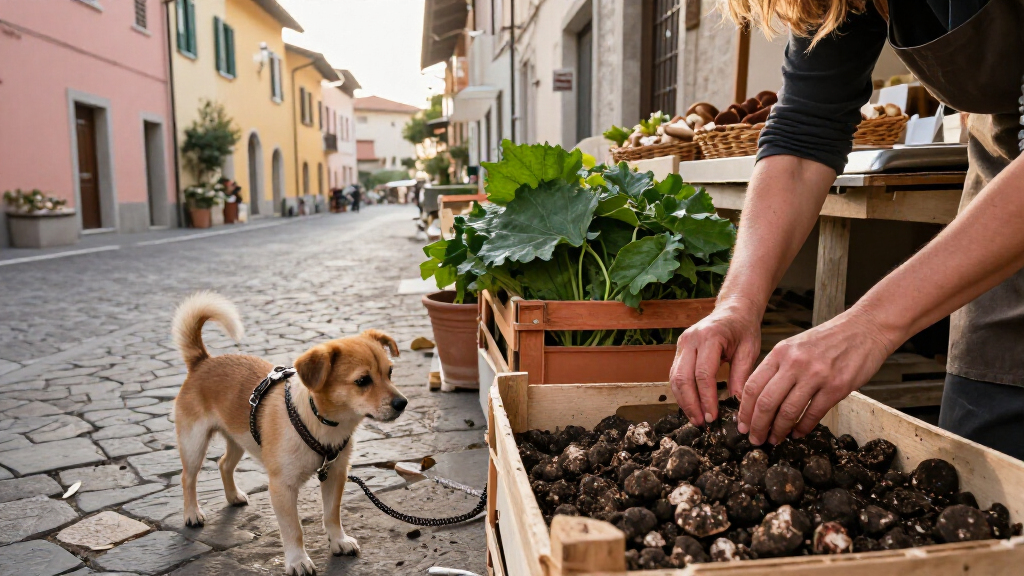
How a wild truffle reaches your plate in Piedmont
A fresh white truffle typically reaches the table through a chain that starts with licensed hunters searching in the countryside with trained dogs. The dogs help locate truffles underground; hunters then sell their finds through local buyers or markets, and restaurants source them through suppliers. Because the truffle is perishable, freshness and careful handling matter at every step.
The season is regulated, too. In Piedmont, harvesting generally falls in autumn and early winter, but the exact permitted dates are set by regional rules and can vary. Check the current calendar with regional authorities if you are planning around a harvest period. A calendar date alone does not promise a particular quantity or quality; the available supply still depends on conditions and what hunters find.
For a visitor, the supply chain explains why menus can change quickly. A restaurant may have fresh truffle on Friday and a different quantity—or none—on Sunday. If you see a seasonal dish advertised before your trip, treat it as an invitation to ask, not a guarantee that the same truffle will be waiting when you arrive.
Freshness is part of the experience because the aroma is the point. White truffle has a powerful but fleeting fragrance, and each specimen varies. When a server brings the truffle to your table and shaves it over warm food, you can smell it immediately. That moment depends on a real ingredient moving through a short, seasonal supply chain, rather than a uniform flavor that tastes identical all year.
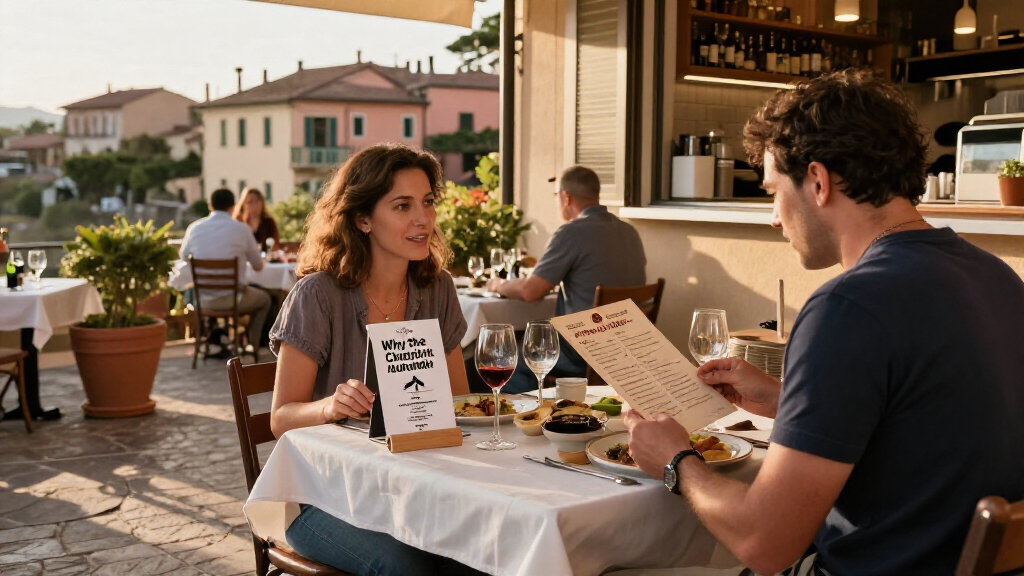
How to order white truffle without a surprise on the bill
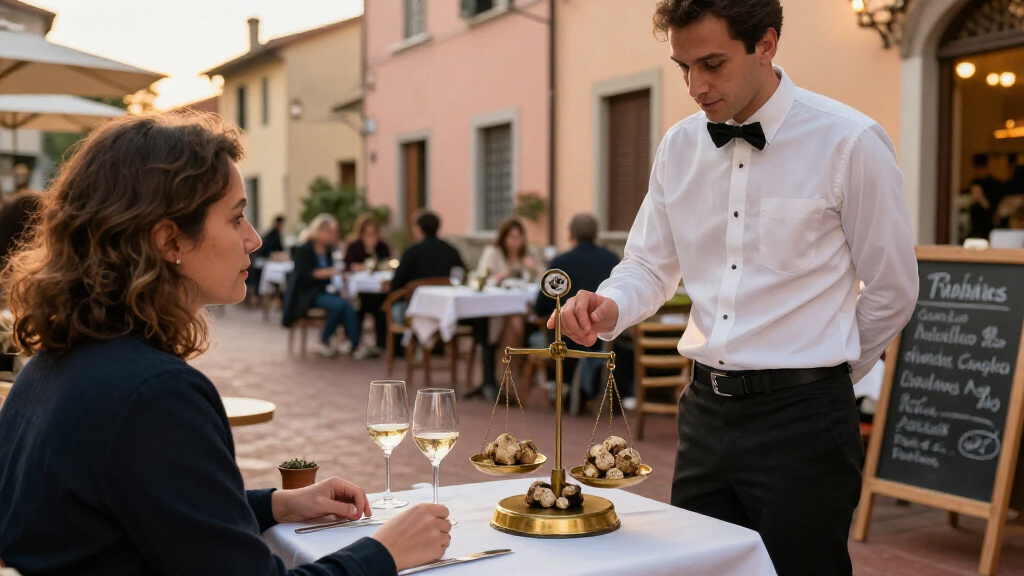
To order white truffle confidently, ask whether it is fresh white truffle, which species the restaurant is serving, and how the final price is calculated. If the menu lists a supplement by weight, ask how much will be shaved and whether you will see the weight or charge before the server begins. These details vary by restaurant, so one clear exchange can prevent a mismatch between your expectations and the bill.
- Read the menu carefully. Check whether the dish price includes truffle or lists it as a supplement.
- Ask what is fresh today. Confirm that the restaurant has fresh Tuber magnatum Pico and that it is available for your chosen dish.
- Clarify the portion and price. Ask whether the restaurant charges by weight, by portion, or another method, and what amount the price covers.
- Choose a simple warm dish. Tajarin, risotto, or eggs let the truffle’s aroma stand out.
- Confirm before the truffle is shaved. Make sure you and the server agree on the amount and charge.
For example, a menu might list tajarin at one price and fresh truffle as a seasonal addition. The base dish and the truffle are separate decisions. Ask whether the supplement is fixed or based on the amount shaved, then decide what fits your budget.
Also ask what “truffle” means on the menu. A truffle-scented oil or a truffle-flavored seasoning is not the same thing as fresh white truffle. There is nothing wrong with choosing another dish, but the distinction matters if you came for the fragrance of the real thing. During peak weekends, reserve ahead and check the menu close to your visit; a popular restaurant can fill up, and supply can change between the time a dish is advertised and the evening you arrive.
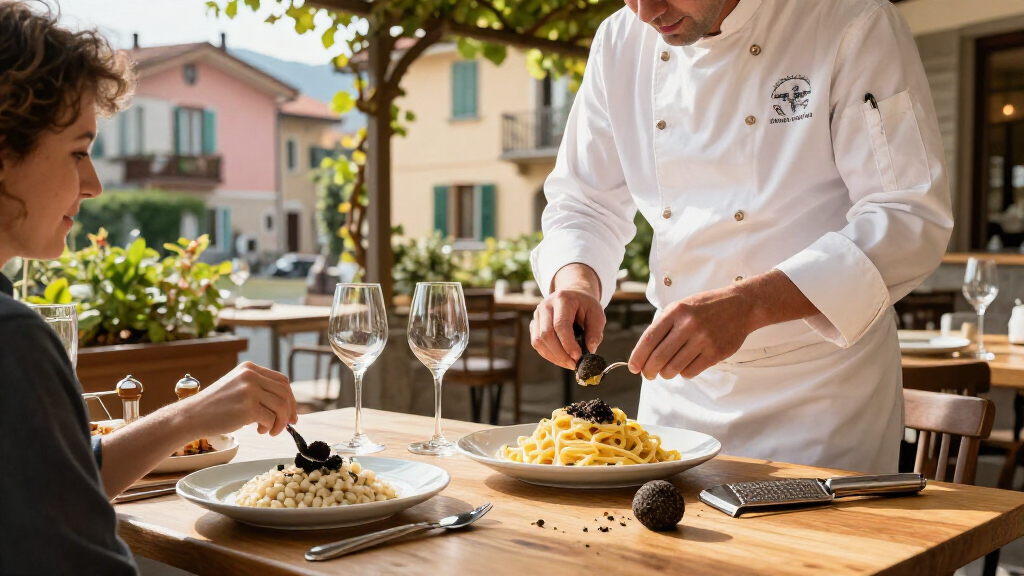
Why warm tajarin and risotto show off the truffle best
White truffle is usually served raw and shaved thinly over warm food, because prolonged cooking can diminish its delicate aroma. The heat from a freshly cooked plate helps release the fragrance at the table, where you can smell it before the first bite. This is why a simple dish often makes a more revealing pairing than a rich, heavily seasoned sauce.
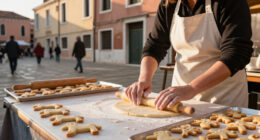
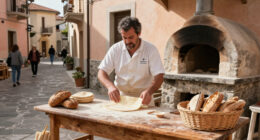
In Alba, one classic match is tajarin, thin Piedmontese egg pasta. The strands carry butter and warmth, giving shaved truffle a soft landing without burying its scent. Risotto and eggs are also common partners. If you have just one truffle dish on your trip, ask which of these the kitchen serves especially well that day.
The moment is tactile as much as aromatic: fine curls fall across the pasta, soften against its heat, and release a scent that can seem different from one truffle to the next. White truffle does not have one uniform taste. Its aroma varies with the individual truffle and how recently it was harvested, so the restaurant’s handling and timing affect what you experience.
Keep the dish uncomplicated. If the plate is crowded with strong spices or an elaborate sauce, the truffle may have to compete for attention. A server shaving it at the table also lets you notice the fragrance at its freshest. The practical takeaway is simple: order the truffle as a finishing touch, served over a warm plate, and let the first few bites stay quiet enough for the aroma to come through.
How to plan your visit around changing dates and supply
Plan the Alba fair around the current season’s official dates, then build in flexibility for food and restaurant choices. The event is held during the autumn white-truffle season, but its schedule changes each year, and the legal harvesting calendar can vary as well. Check the current program and regional rules before you book travel around a specific market or activity.
For a realistic weekend, choose a fair day that suits your interests, book a restaurant ahead for a peak evening, and confirm what is on the menu near the date. If fresh truffle is your priority, ask whether the restaurant expects to serve it and how it prices the addition. Even a well-planned visit cannot guarantee a particular truffle or dish: supply follows the harvest, and menus follow supply.
Prices can move with the amount and quality of truffle brought to market. Weather and habitat conditions matter to the resource, but avoid treating a general concern as proof that one specific season has been poor. For current conditions, seek reporting from reliable local or regional sources rather than relying on a broad claim from a previous year.
The fair can still be worthwhile if you do not plan to buy truffles. You can explore Piedmontese food and wine, watch demonstrations, and take in Alba’s seasonal atmosphere. The event of the year for one visitor may be the auction; for another, it is a warm plate of tajarin after a day among the region’s producers. Check tickets or venue requirements for the current program, then leave some room in the itinerary for a market price or menu to surprise you—in the pleasant sense of finding something the season actually offers.
Frequently Asked Questions
When is the Alba White Truffle Fair?
The fair takes place during the autumn white-truffle season, but its dates change each year. Check the current official program before booking travel, tickets, or dinner.
When is white-truffle season in Piedmont?
Harvesting generally takes place in autumn and early winter. Piedmont’s regional rules set the permitted dates, which can vary, so check the current calendar if timing your visit around the harvest.
Can visitors buy truffles at the fair?
The fair includes opportunities to see and buy truffles, but availability and prices depend on the day’s supply and market arrangements. Ask what is available that day rather than assuming the same selection will appear throughout the event.
Are auction prices normal truffle prices?
No. The charity auction features selected, notable lots, and its headline bids are not a reliable guide to ordinary market or restaurant prices. Everyday prices reflect that day’s supply, quality, freshness, and demand.
How can I tell whether a restaurant is serving fresh white truffle?
Ask whether it is fresh white truffle, which species the restaurant is serving, and how the price is calculated. A truffle-scented oil or flavored seasoning is not the same as fresh Tuber magnatum Pico.
What should I order with white truffle?
Common pairings include tajarin (thin Piedmontese egg pasta), risotto, and eggs. These warm, relatively simple dishes let the server shave the truffle over the top so its aroma comes through.
Do I need a restaurant reservation?
Booking ahead is sensible for popular restaurants during peak fair weekends, when tables can be tight. Menus and truffle availability change with supply, so confirm the dish and pricing near your visit.
Conclusion
Remember the difference between the auction, the market, and the menu: each shows a different side of Alba’s white-truffle season, and none can promise what the next day will bring. Check current dates, reserve a table, and ask how fresh truffle is priced before it reaches your plate.
Then let the server shave it over warm tajarin and take in that first earthy breath. In Alba, the season is part of the meal.