TL;DR

Get kitchen staples and gadgets delivered free with Prime
- Fast, free delivery on millions of items
- Prime Video, Amazon Music and more included
- Member-only deals all year
Oca di San Martino, or “St. Martin’s goose,” is an autumn dish associated with November 11, the feast of St. Martin of Tours, in parts of northern Italy, especially Veneto and Lombardy. The goose is one part of a varied local observance that may also include seasonal sweets, such as Venice’s decorated San Martino cookies; families can adapt the meal while keeping its regional roots clear.
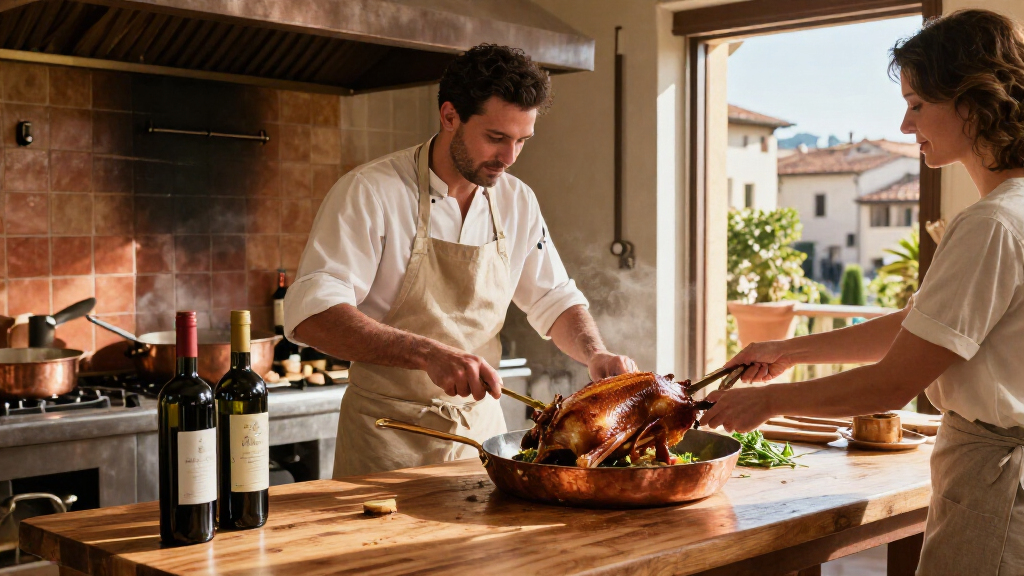
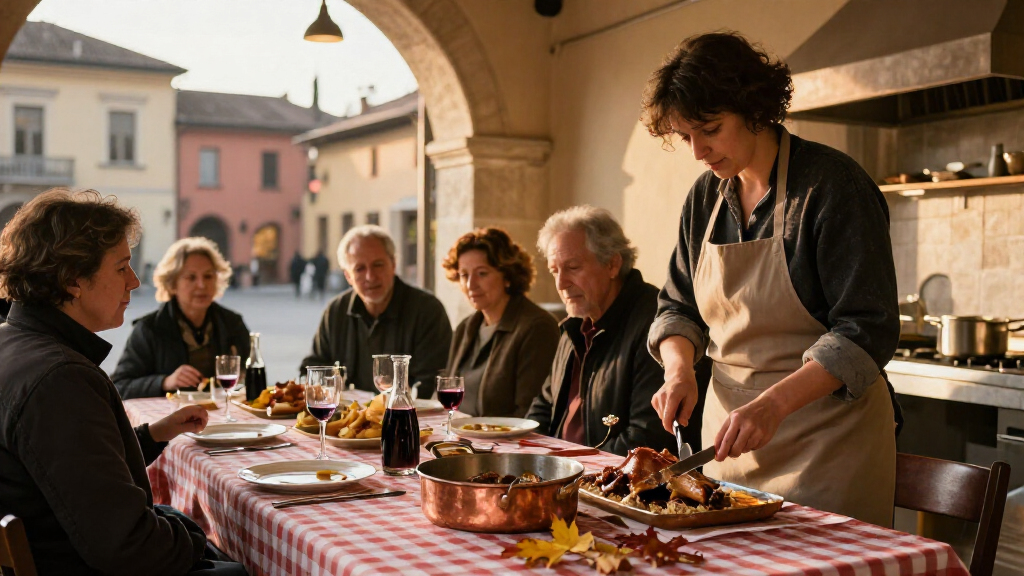
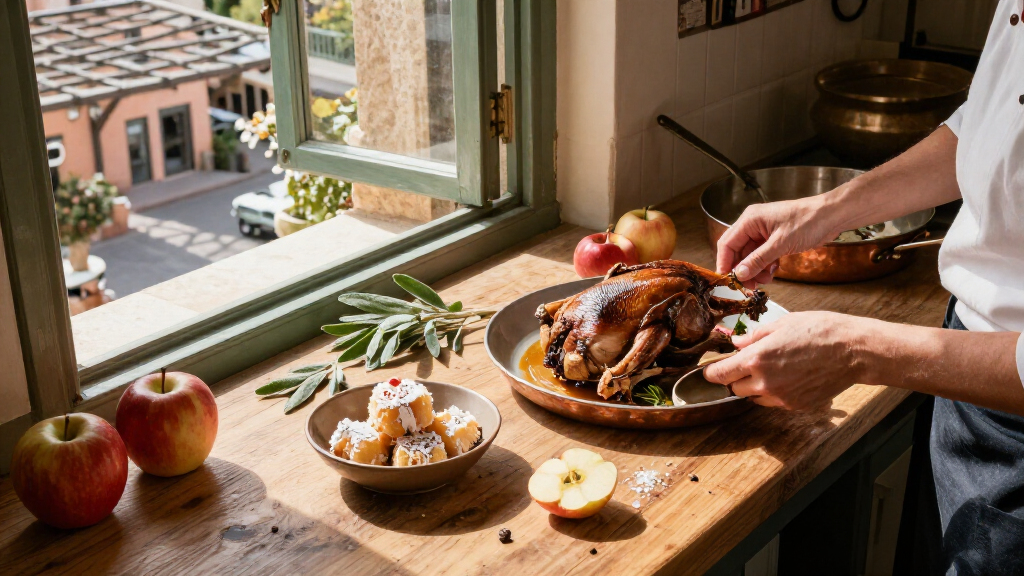
On November 11, a roast goose may appear on a table in Veneto or Lombardy, its skin crackling as autumn apples soften in the pan. The dish is called Oca di San Martino, or “St. Martin’s goose,” and it belongs to a particular patchwork of northern Italian customs rather than to one national menu.
If you are planning an autumn meal, that distinction makes the tradition more interesting, not less. You can learn why geese became linked with St. Martin of Tours, what a Venetian bakery might sell that day, and how to borrow the season’s flavors for your own table without pretending every Italian celebrates the same way.
Think of it as a feast before the feast: a generous November gathering just ahead of Advent in the traditional Christian calendar. That phrase describes the timing and mood; it is not a fixed historic name for the observance. The useful part is practical: a date, a regional story, and a menu built around what late autumn offers.
Oca di San Martino means “St. Martin’s goose” and is associated with November 11, the feast of St. Martin of Tours.
The goose custom belongs to parts of northern Italy, especially Veneto and Lombardy; it is not a nationwide celebration.
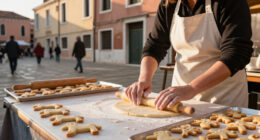
Venetian San Martino sweets are often decorated shortcrust cookies shaped like St. Martin on horseback.
The goose legend is a familiar explanation for the association, while the custom also fits autumn farm and food rhythms.
You can adapt the meal with seasonal ingredients or another centerpiece, while identifying the goose dish as the traditional version.
Sunday Goose Oca di San Martino
St. Martin’s goose is an autumn dish linked to November 11 in parts of northern Italy. Its regional roots make the meal more meaningful, not less adaptable.
A regional tradition
Goose is associated with parts of northern Italy, especially Veneto and Lombardy—not with one nationwide menu.
Goose and local festivities
Households may serve roast goose or goose pieces, alongside seasonal foods.
San Martino sweets
Decorated shortcrust cookies often show St. Martin on horseback.
Local customs vary
The observance differs by town and household; goose is not universal across Italy.
Why goose belongs
The custom brings together a feast day, a familiar legend, and the practical rhythms of autumn.
St. Martin’s feast gives the gathering its November setting.
Legend says honking geese revealed Martin when he tried to hide from becoming bishop.
After harvest, seasonal provisions and preparations for winter made a generous meal fitting.
Adapt the meal with care
There is no single required recipe. Keep the regional tradition clear while choosing what suits your table.
- Goose, roasted whole or cooked in pieces
- Seasonal apples or chestnuts
- Venetian San Martino sweets
- Serve smaller goose portions
- Choose another autumn centerpiece
- Describe alternatives as adaptations
What Oca di San Martino means on November 11
Oca di San Martino is goose prepared for St. Martin’s Day, November 11, in some northern Italian communities. The name translates as “St. Martin’s goose,” and the custom is associated with parts of Veneto and Lombardy. It is a regional practice, so you should not expect it to define the whole Italian peninsula.
St. Martin of Tours was a fourth-century Christian bishop, and his feast day lands deep in autumn. In a town near Venice, the date might mean a family meal, a bakery window filled with decorated cookies, or a local event. In another Italian region, November 11 may pass without goose at all. That difference is part of how food traditions work: the same calendar date can carry meaning in one place and little practical significance in another, shaped by local histories and habits.
That local variety gives you a useful way to approach the dish at home. Rather than calling it “what Italians eat in November,” describe it as a northern Italian custom connected with a specific feast day. If you are visiting Veneto, ask a neighborhood bakery whether it has dolci di San Martino (“St. Martin’s sweets”); if you are cooking elsewhere, mark November 11 with a seasonal meal and name the inspiration accurately. The distinction preserves the tradition’s geographic meaning while still letting you participate through food and curiosity.
There is no single required recipe. One household might roast a whole bird, while another braises goose pieces or focuses on sweets. Those choices reflect different household sizes, budgets, and local customs; requiring one canonical menu would flatten that variety. The shared thread is the date and the autumn setting, not a standardized national menu.
Products Worth Considering

eufy Security 4G LTE Cam S330 4K Solar Outdoor Camera with Pan and Tilt, AI Tracking, SIM Card and 32GB SD Card

Philips Hue White and Color Ambiance Smart Retrofit Recessed LED Downlights, 5/6-Inch, 4-Pack

Roborock Q7 L5 Robot Vacuum and Mop Combo, 8,000 Pa Suction
As an affiliate, we earn on qualifying purchases.
Why geese belong to the autumn story
The goose tradition reflects several stories at once: a legend about St. Martin, autumn farm work, and the practical rhythms of food before winter. November was associated with settling accounts and hiring workers, while the harvest had left households with seasonal provisions. That background helps explain why a substantial bird suited the time of year: it could turn the close of an agricultural season into a meal for a household or community.
A familiar legend says Martin tried to hide among geese when people wanted to make him a bishop. Their honking gave him away. The tale is memorable because it turns the noisy birds into comic accomplices, but it is best treated as a story explaining the association rather than proof of how the custom began. Keeping legend and history distinct matters: the tale gives the day a memorable character, while the calendar and farm rhythms offer a broader explanation for why a substantial autumn meal made sense.
Imagine a household after the autumn harvest: work arrangements are being settled, colder days are arriving, and a bird can feed a gathering. The calendar, the farm, and the religious feast overlap. Food customs often grow from that kind of overlap rather than from one neat origin story. Each strand adds a different kind of meaning—the feast supplies a date, the legend a story to retell, and seasonal work a practical reason to gather and eat well.
For your own table, the practical lesson is to let autumn ingredients do the supporting work. Apples bring tart sweetness, chestnuts add a soft, earthy bite, and roasted roots make a generous plate feel grounded in the season. They are possible accompaniments, not mandatory ingredients in every regional recipe. Choosing a few keeps the meal connected to the season without suggesting there is one correct version to reproduce.
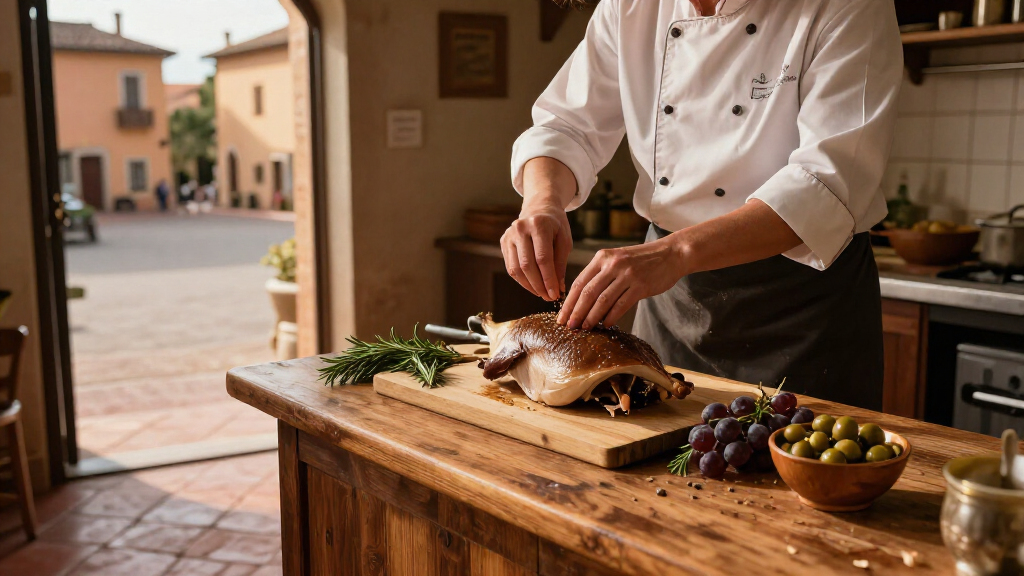
Build a November meal around goose, apples, and local sweets
A St. Martin’s meal can center on roast goose, seasonal accompaniments, and a sweet associated with the local version of the feast. In Veneto, a colorful horse-shaped cookie may be as recognizable as the bird. Recipes and household customs vary, so treat this as a menu pattern you can adapt, not a fixed ceremonial sequence. That flexibility matters in practice: a whole bird may suit a large gathering, while a smaller household can honor the seasonal idea with portions and a local sweet.
For a simple home example, serve goose with apples and chestnuts, then finish with a small pastry or cookie. In Venice and the surrounding Veneto, San Martino sweets are often shortcrust cookies shaped like St. Martin on horseback and decorated with icing or candies. A local bakery version makes an easy way to bring a regional touch to the table if baking a detailed shape feels like too much for a weeknight. Buying one also shifts effort away from an elaborate dessert and toward the meal or the company, while still preserving a recognizable local detail.
If a whole goose is too much for your household, ask a butcher about smaller portions or use another autumn centerpiece. A roast chicken or a vegetarian dish with mushrooms and chestnuts can make a satisfying meal, but call it an adaptation rather than traditional goose. Goose offers a distinctive link to the custom, but its size, cost, and richness can make it impractical; an adapted centerpiece makes the gathering easier to manage while clear labeling keeps the regional dish distinct.
Goose is rich, so pair it with something bright and crisp: an apple salad, bitter greens, or a splash of vinegar in the pan sauce. The contrast keeps each bite from feeling heavy and gives the meal balance without adding another rich side. Keep raw poultry separate from ready-to-eat foods, refrigerate it at 40°F (4°C) or below, and cook poultry to 165°F (74°C) at its thickest point.
Plan the meal without turning it into a holiday production
You can mark November 11 with a St. Martin’s menu without roasting a whole bird or staging a formal feast. The date gives you a reason to gather; the scale is up to you. A few thoughtful choices can evoke a northern Italian autumn more clearly than an elaborate menu that ignores the place and season. Keeping the plan modest also makes it easier to explain what is regional about the meal instead of letting spectacle stand in for context.
Start by choosing the centerpiece that suits your guests. A small goose portion works for a focused dinner; chicken, beans, or roasted squash can serve as adaptations for a smaller budget or different diet. Add one seasonal side, then seek out a San Martino cookie if you can find a bakery making them. In Venice, the decorated cookie’s shape and icing offer a visual link to the feast, even when the main course is modest. The tradeoff is simple: goose gives the meal a closer culinary connection, while an alternative makes it more accessible; either can work if you describe it honestly.
- Pick the date: Set the meal for November 11, or the nearest convenient evening.
- Choose the scale: Buy goose portions, select another centerpiece, or make a vegetarian autumn menu.
- Add a regional detail: Serve apples or chestnuts, or seek out a Venetian-style San Martino sweet.
- Tell the story accurately: Explain that the custom is associated with parts of Veneto and Lombardy, and that local practices differ.
For example, a couple might roast two goose legs, serve them with sautéed apples and bitter greens, and split one decorated cookie for dessert. It feels intentional, takes less space in the refrigerator, and leaves room for the story without making the meal a reenactment. A small menu can also make conversation easier: each dish has a clear seasonal or regional role, rather than competing for attention.

Understand what “the feast before the feast” really means
“The feast before the feast” describes the timing and generous mood of a November meal before Advent; it is an editorial phrase, not a universal traditional title. In the traditional Christian calendar, St. Martin’s Day comes shortly before Advent, the season leading to Christmas. That makes the language an inviting way to frame a meal, as long as you do not present it as an official name used everywhere. The distinction matters because a vivid label can help a reader picture the occasion, but it can also make a modern framing sound like a historical custom if left unexplained.
The phrase also helps you picture a seasonal pause. Thanksgiving is a distinct North American holiday, while Oca di San Martino belongs to a local Italian observance tied to St. Martin. Both can involve a gathering and autumn food, but they do not share the same origins or calendar meaning. The comparison is useful only at the level of mood: it helps readers imagine a meal, while the separate histories keep the Italian custom from being recast as a version of another holiday.
Suppose you are hosting friends who know little about Italian food traditions. You can say, “This is inspired by a goose custom associated with St. Martin’s Day in parts of northern Italy.” That one sentence sets the scene and avoids turning a regional practice into a claim about all of Italy. It gives guests enough context to appreciate the meal while leaving room for the fact that traditions vary locally.
It also leaves space for honest adaptation. You might serve a vegetarian autumn supper and still talk about the date, the legend, and Venetian sweets. The meal connects you to the tradition through curiosity and seasonality, even when goose is not on the plate. This is a different kind of connection from reproducing the dish itself, but it can keep the observance accessible to guests with dietary, budget, or sourcing constraints.
Choose the right ingredients and keep the kitchen safe
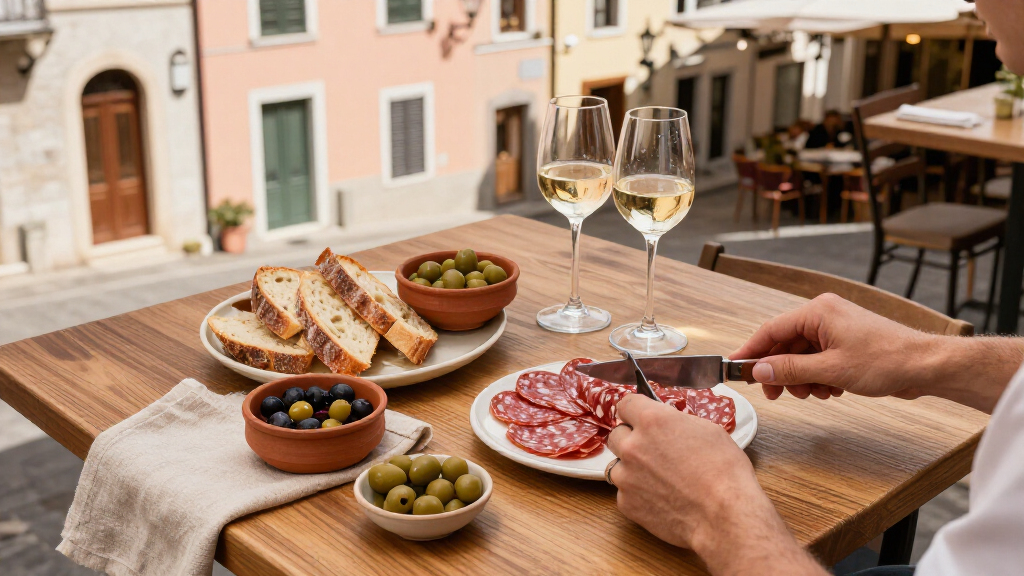
Choose seasonal ingredients for flavor, and handle goose as raw poultry from the moment you bring it home. Apples, chestnuts, and winter greens pair naturally with a rich bird, but none is a rule that every Oca di San Martino recipe must follow. The best menu depends on what you can find and how many people you are feeding. That flexibility lets you use what is fresh and practical without turning a set of plausible pairings into a false recipe requirement.
If you shop in Italy, look for ingredients with clear regional identity rather than assuming a DOP or IGP label applies to the whole dish. DOP (“Protected Designation of Origin”) and IGP (“Protected Geographical Indication”) identify protected products; they do not make a goose recipe automatically certified. Ask the market vendor where an apple or chestnut comes from, and use the answer to shape your menu. A product’s origin can add a specific local detail, while the label alone says nothing about whether a particular preparation is traditional.
At home, thaw frozen poultry in the refrigerator, not on the counter. Keep it wrapped and on a tray below foods you will eat uncooked, then wash hands, boards, and knives after contact with raw juices. A thermometer is more dependable than judging doneness by color: check for 165°F (74°C) in the thickest part, avoiding bone. These steps take a little planning and careful cleanup, but they reduce the risk of raw juices reaching foods that will not be cooked.
Refrigerate leftovers within two hours in shallow containers and eat them within three to four days, or freeze them for longer storage. Goose fat can be strained and refrigerated separately for later cooking, but handle it with clean utensils and discard it if it smells rancid or looks spoiled. A safe meal lets you enjoy the crisp skin and soft apples without worrying about what happened at the cutting board.
Frequently Asked Questions
When is St. Martin’s Day?
St. Martin’s Day falls on November 11. It marks the feast of St. Martin of Tours and is the date associated with Oca di San Martino in parts of northern Italy.
Where in Italy do people eat goose for St. Martin’s Day?
The custom is associated with parts of Veneto and Lombardy, though local practices differ from town to town and household to household. Goose is not a required dish across Italy.
What is the story behind the St. Martin’s goose?
A familiar legend says Martin tried to hide among geese when people sought to make him a bishop, but their honking gave him away. The story helps explain the association, while the custom likely also reflects seasonal farm life and food traditions.
What are San Martino sweets?
In Venice and the surrounding Veneto, San Martino sweets are often decorated shortcrust cookies shaped like St. Martin on horseback. Bakers may use icing and candies, and designs vary by bakery and household.
Can I celebrate without cooking goose?
Yes. You can make an autumn menu with another centerpiece, or serve a vegetarian meal and a San Martino sweet. Describe goose as the traditional dish associated with the custom and your menu as an adaptation.
Why call it the feast before the feast?
The phrase points to St. Martin’s Day arriving shortly before Advent in the traditional Christian calendar, giving the meal the feel of a generous autumn gathering. It is a descriptive framing, not a fixed historic title used everywhere.
Conclusion
Remember Oca di San Martino as a regional November custom with room for local variation: a goose dish, a St. Martin’s sweet, or simply a meal shaped by the autumn calendar. If you cook it, keep the ingredients seasonal, the poultry safely handled, and the story tied to Veneto or Lombardy rather than to all of Italy.
On November 11, set apples beside the roast, break a decorated cookie after dinner, and let the cold evening outside make the warm table feel like its own small feast.