
TL;DR

Get kitchen staples and gadgets delivered free with Prime
- Fast, free delivery on millions of items
- Prime Video, Amazon Music and more included
- Member-only deals all year
Pasta nera means black pasta, often colored with squid or cuttlefish ink, which gives it a dramatic look and a mild, savory taste. For a black-tie Halloween dinner, pair it with a light seafood, tomato, or mushroom sauce, serve small portions in pale bowls, and check labels carefully for mollusk allergens.
A bowl of glossy black linguine can make a Halloween table feel dressed for the opera. Its color comes from squid or cuttlefish ink, and its flavor is gently briny rather than fiercely fishy, so you can build an elegant dinner around it without turning the meal into a costume joke.
Pasta nera means “black pasta” in Italian. It has a natural place in Italy’s coastal cooking, including the seafood traditions of the Veneto, where cuttlefish is known as seppia. You can borrow that coastal mood at home with a light sauce, bright citrus, and one vivid garnish.
This guide helps you choose a pasta and sauce, plan a practical menu, plate it for a black-tie fright dinner, and handle ink and allergens with care. You’ll also get a simple cooking sequence that keeps the noodles glossy and the evening calm.
Pasta nera means black pasta; squid or cuttlefish ink gives it color and mild marine savoriness.
Light sauces with garlic, olive oil, citrus, seafood, roasted tomatoes, or browned mushrooms let the pasta’s flavor and dark color stand out.
Cook pasta close to serving time, toss it briefly with sauce and reserved pasta water, and plate it in pale bowls with restrained bright garnishes.
Check labels for mollusk ink, egg, and other ingredients; ask about cross-contact when guests have allergies.
Prepare sauces and garnishes ahead, keep seafood refrigerated, and promptly chill leftovers.
Halloween Pasta Nera: Squid-Ink Dishes for a Black-Tie Fright Dinner
Pasta nera means “black pasta.” Squid or cuttlefish ink lends it a dramatic hue and a mild, savory taste. Build an elegant Halloween course around that contrast with a light sauce, a bright finish, and careful attention to mollusk allergens.
A dramatic look, a quiet sea-savor
Squid or cuttlefish ink is usually a supporting flavor: gently briny and savory, with enough depth to meet garlic, olive oil, citrus, herbs, seafood, tomatoes, or mushrooms. Fresh pasta may have ink mixed into its dough; dried pasta is colored during production, so intensity varies by product.
Ink in the dough
“Pasta nera” means black pasta in Italian. Some black pasta uses other colorings, so read the label when the source matters.
Veneto inspiration
Spaghetti al nero di seppia draws on the Veneto’s coastal cooking. Borrow the mood with seafood, citrus, and restraint.
Dark against bright
Pale bowls and a restrained garnish of lemon zest, parsley, or cherry tomato keep the pasta visually striking.
Match the course to the table
Choose freshness, texture, or a vivid accent without burying the pasta’s subtle savor. The sauce changes the character of the course; keep it light enough for the noodles to remain visibly black.
| Sauce direction | What it adds | Best dinner-party fit |
|---|---|---|
| Garlic, chili, prawns & lemon | Sweet seafood, gentle heat, brightness | A classic coastal first course |
| Scallops & citrus | Soft sweetness and a clean finish | A refined, small plated portion |
| Roasted cherry tomatoes & basil | Juicy acidity and vivid red color | A vegetarian direction, if pasta suits guests |
| Browned mushrooms & herbs | Earthy depth and satisfying texture | A cozy meatless course with a bright finish |
Balance the menu: Tomato’s acidity can reset the palate before a richer main. Prawns and chili bring more flavor to an otherwise light dinner. Finish either with lemon or parsley.
Keep it glossyFour moves for a glossy finish
Cook close to serving time, use a little reserved pasta water to help the sauce cling, and plate without delay. Follow the package timing and taste a strand near the suggested finish.
Make the sauce; chop parsley and zest lemon before the pasta goes into the pot.
Cook in well-salted water according to the package. Taste near the finish time.
Reserve a cup before draining. Add a splash to loosen the sauce and help it cling.
Toss the hot noodles briefly in sauce. Plate in pale bowls; finish with lemon or herbs.
Prep sauce and garnish. Keep seafood refrigerated until needed.
Cook pasta close to serving time; don’t leave drained noodles waiting.
Add pasta water a little at a time for a light, cohesive sheen.
Offer lemon wedges, parsley, and chili oil on the side.
Promptly chill leftovers. Wipe ink splashes before they set.
Make the drama easy to enjoy
Check every label
Squid and cuttlefish are mollusks. Check for ink, egg, and other ingredients; ask restaurants about cross-contact for guests with allergies.
Ink is animal-derived
Squid- or cuttlefish-ink pasta is not vegetarian. For a plant-based dish, choose a non-ink black pasta and verify ingredients and production details.
Protect pale surfaces
Ink may stain hands, fabric, and light counters. Wear an apron, keep a damp cloth close, and wipe spills promptly.
From ink to an elegant Halloween plate
Pick a pasta shape and check the color source and ingredients.
Pair subtle marine savor with a light sauce and a bright accent.
Toss with reserved water until glossy, then serve while hot.
Use a pale bowl and restrained garnish for black-and-bright contrast.
Remember: The best black-tie fright dinner lets one dramatic ingredient lead. Keep portions modest, the sauce fresh, and the rest of the menu simple.
Dinner, dressedWhat makes pasta nera taste and look so dramatic?
Halloween pasta nera is pasta colored with squid or cuttlefish ink, and its dark surface brings drama while its flavor stays mildly savory and marine. That difference matters: the appearance promises a bold dish, but the ink is usually a supporting flavor, not a sauce that overwhelms everything else. It works like a dark backdrop in a small painting, making lemon, parsley, and tomato stand out without needing extra decoration. Fresh pasta may have ink mixed into its dough; dried pasta usually has ink incorporated during production, so color intensity and flavor can vary by brand.
The taste is more like a quiet sea breeze than a wave of fishiness. Garlic and olive oil bring warmth, lemon lifts the savory edge, and parsley adds a green, clean finish. These pairings do more than decorate: acidity and herbs keep the ink’s marine savoriness from feeling heavy, while a modest portion lets guests enjoy the flavor without palate fatigue. If you’re serving a first course, a small nest of black linguine with lemon zest and chopped parsley can feel polished without weighing guests down.
For a Venetian note, think of spaghetti al nero di seppia—spaghetti with cuttlefish ink—a dish associated with the Veneto’s coastal cooking. You don’t need to reproduce a regional recipe exactly to take inspiration from it: choose ink pasta, keep the sauce light, and let seafood or citrus lead. A richer sauce can be satisfying, but it may blur both the pasta’s dark contrast and its subtle flavor. Labels vary, so read the ingredients if you need to know whether the color comes from animal ink; the name “black pasta” alone doesn’t tell you its source.
Ink can stain hands, fabric, and pale counters. Wear an apron, keep a damp cloth nearby, and wipe a splash promptly. The color is part of the pleasure, but because it can linger where you don’t want it, a little setup makes serving more relaxed.
Products Worth Considering

Samsung 85-Inch QN70H Neo QLED 4K Smart TV (2026)

Levoit Vital 100S-P Air Purifier with Washable Pre-Filter

Ring Alarm 5-Piece Wireless Security System
As an affiliate, we earn on qualifying purchases.
Which sauce makes black pasta shine at dinner?
Halloween pasta nera pairs best with sauces that add freshness, texture, or color without burying the pasta’s savory character. Garlic, olive oil, chili, lemon, seafood, roasted tomatoes, and mushrooms all work; the choice affects the balance of the whole course. Seafood reinforces the coastal character, tomatoes bring acidity and a vivid red contrast, and mushrooms shift the dish toward earthy autumn comfort. For a dressy seafood course, prawns or scallops bring sweetness that contrasts with ink’s gentle brininess.
Imagine a small serving of linguine with prawns, sliced garlic, a little chili, and lemon juice. The pan smells warm and bright, the noodles catch a thin sheen of oil, and parsley adds a fresh green finish. The oil and a little pasta water help the sauce cling without creating a heavy coating. Keep the sauce light enough that the pasta remains visibly black. A heavy cream sauce can mute both the color and the delicate flavor, so use it only if richness is the point of the course.
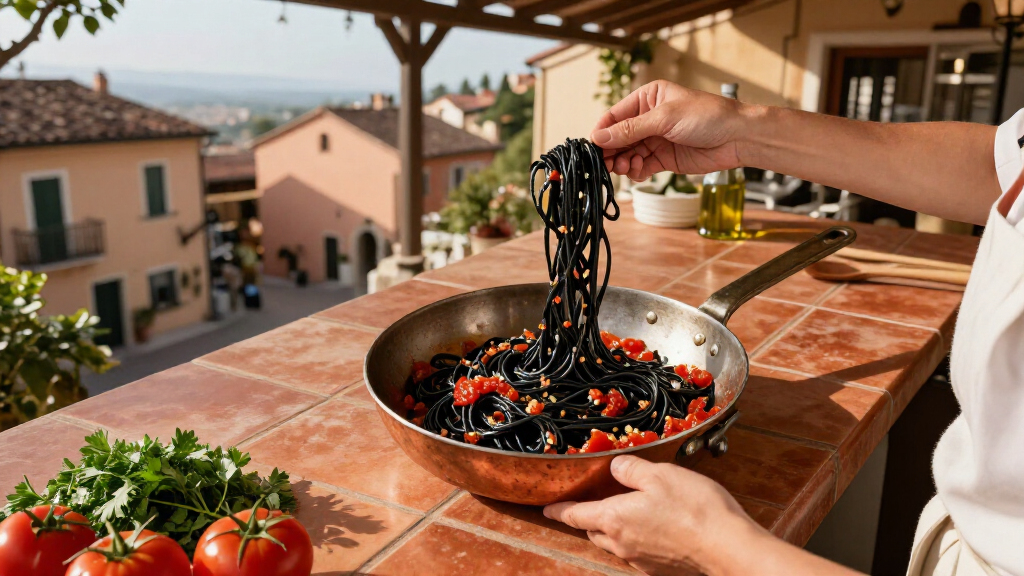
For a vegetarian direction, roast cherry tomatoes until their skins wrinkle and their juices turn syrupy, then toss them with garlic, basil, and olive oil. Their acidity gives the ink a lively counterpoint, though a generous amount of tomato can dominate the pasta’s subtler savoriness. Mushrooms offer a darker, earthier route: brown them well so they develop crisp edges before adding herbs and a splash of pasta water. This option feels autumnal and substantial, but needs lemon or another bright finish to keep it from tasting too dense. If guests avoid animal products, check the pasta itself; ink from squid or cuttlefish is animal-derived, and some dried pastas contain egg.
Use this quick comparison to match the sauce to your table:
| Sauce | What it adds | Good dinner-party fit |
|---|---|---|
| Garlic, chili, prawns, lemon | Sweet seafood, gentle heat, brightness | A classic coastal first course |
| Scallops and citrus | Soft sweetness and a clean finish | A refined, small plated portion |
| Roasted cherry tomatoes and basil | Juicy acidity and vivid red color | A vegetarian option, if the pasta suits guests |
| Browned mushrooms and herbs | Earthy depth and satisfying texture | A meatless course with a cozy autumn feel |
For instance, if your main course is rich, serve the tomato version as a restrained starter: its acidity helps reset the palate. If the rest of the menu is light, prawns and chili can carry more of the evening’s flavor. Matching the sauce to the rest of dinner keeps the pasta memorable without making every course compete for attention.
How do you cook and plate pasta nera without losing its contrast?
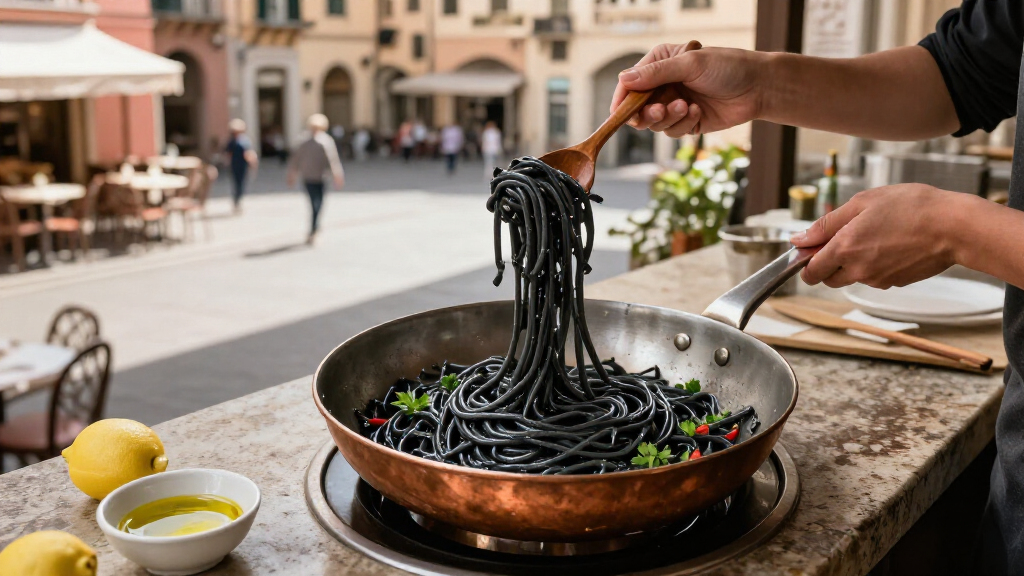
Halloween pasta nera stays glossy and striking when you cook it close to serving time, reserve some starchy water, and toss it briefly with a light sauce. That timing protects both texture and appearance: as cooked pasta waits, it keeps absorbing liquid and can stick into a dense mass. Think of pasta water as a small bridge between oil and noodles: its starch helps the sauce cling instead of separating into a puddle on the plate. Follow the package’s timing, since shapes and brands differ.
- Prepare the sauce first. Chop parsley, zest a lemon, and cook your prawns, tomatoes, or mushrooms before the pasta goes into the pot. This leaves you free to serve the noodles at their best rather than keeping them warm while you finish other work.
- Boil in well-salted water. Cook the pasta according to its package directions and taste a strand near the suggested finish time. The bite matters because the pasta will spend a short time in the hot sauce after draining.
- Save a cup of pasta water. Drain the noodles, then add them to the sauce while they’re hot. The water gives you control: add a little at a time to loosen the sauce without diluting its flavor.
- Toss briefly. Add a small splash of pasta water and just enough oil or sauce to coat the strands. A light coating keeps the black pasta visible; too much sauce can turn the plate into a single dark or pale mass.
- Plate in pale bowls. Twirl small portions with tongs, then finish with lemon zest, parsley, or a few cherry tomatoes. The light bowl and bright garnish make the pasta’s color legible at a glance.
A pale plate makes a useful frame for the ink-black strands. Place a lemon wedge at the rim and keep the garnish focused; a scatter of parsley and a few flecks of red chili look more considered than a crowded plate. If you’re hosting six people, finish each bowl just before it reaches the table so the pasta doesn’t cool into a dense tangle. Small portions also help the dish read as a composed first course rather than a large, heavy bowl.
Put on an apron and keep the serving area clear of white napkins while you plate. Ink marks are easier to clean when fresh, so wipe a spill as soon as you see it. A small bowl of extra parsley and lemon wedges lets guests adjust their own portions without turning dinner into a decorating contest.
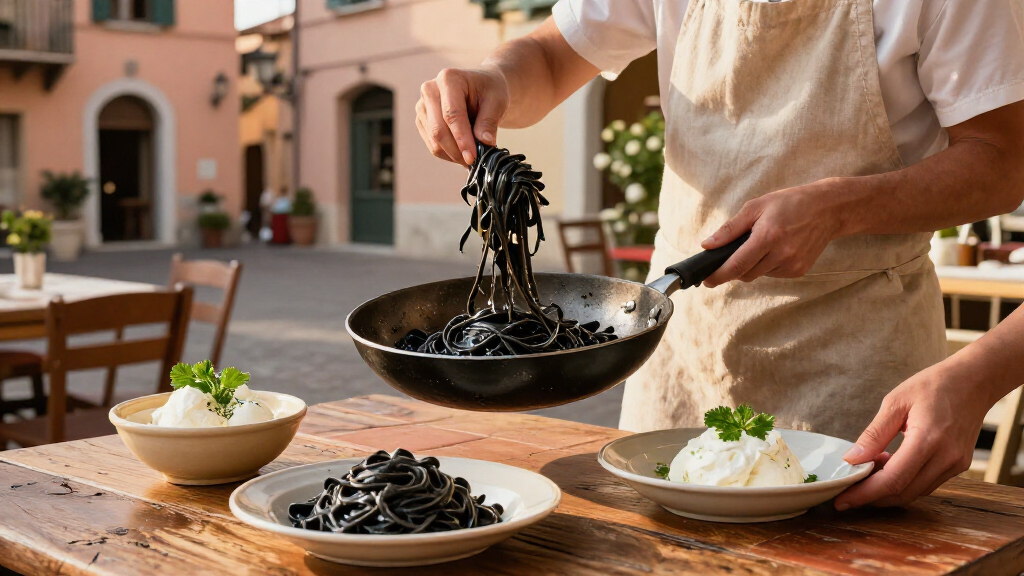
How can you make a black-tie fright dinner feel Italian and seasonal?
Halloween pasta nera works as the centerpiece of an elegant October dinner when you borrow from Italy’s coastal traditions and keep the rest of the menu simple. In the Veneto, cuttlefish connects the black color to a real ingredient and a real stretch of coastline. At home, a restrained pasta course can nod to that tradition while autumn brings mushrooms, herbs, and roasted tomatoes to the table. The point is a coherent menu: a few seasonal details make the pasta feel considered, while too many dramatic props can distract from its natural color.
Serve a small pasta portion as a first course, or primo—the Italian first course—then follow it with a lighter main such as roasted fish or vegetables. That pacing makes the pasta feel like a focal point without making every dish compete for attention. For a vegetarian dinner, roasted squash or mushrooms can follow a tomato-tossed pasta; check the pasta label if you need a fully plant-based meal. A smaller first course also leaves room for the menu to feel generous without requiring a large, rich serving of pasta.
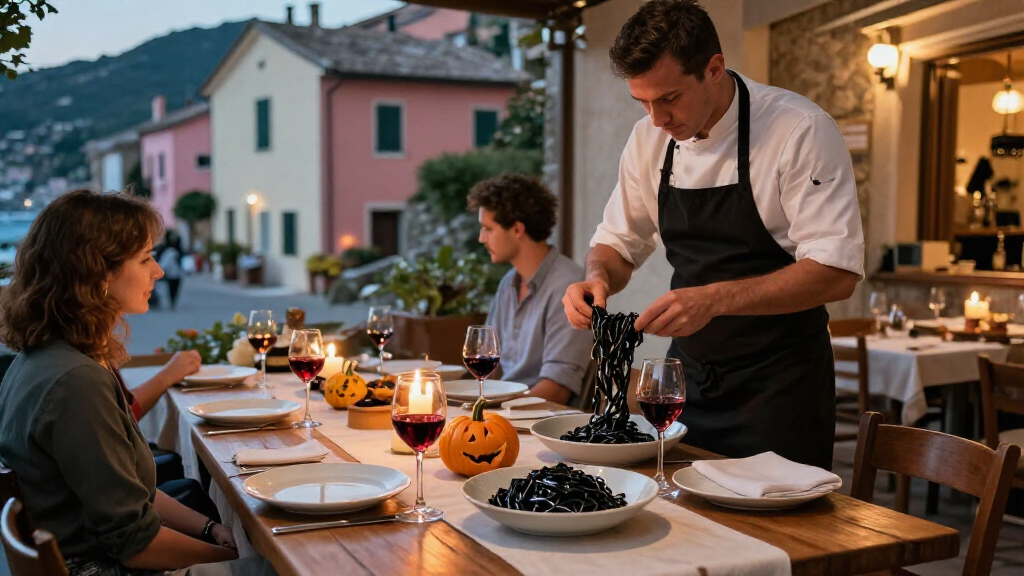
For an elegant table, start with ivory plates, low candlelight, and one small seasonal detail: a branch of rosemary, a few dark grapes, or a simple black napkin. Treat the pasta as a natural centerpiece instead of adding novelty props to every place setting. A short menu card that names the dish and its main ingredients can help guests with dietary needs choose comfortably and lets the food’s regional inspiration come through without a long explanation.
Choose drinks to suit the sauce. A crisp white wine often fits delicate seafood and citrus; its acidity echoes the lemon and keeps the pairing light. A sparkling water with lemon or a citrus spritz without alcohol gives everyone a bright alternative. If you serve wine, make it for adults, offer food and water alongside it, and keep the evening’s mood centered on the meal rather than the pour.
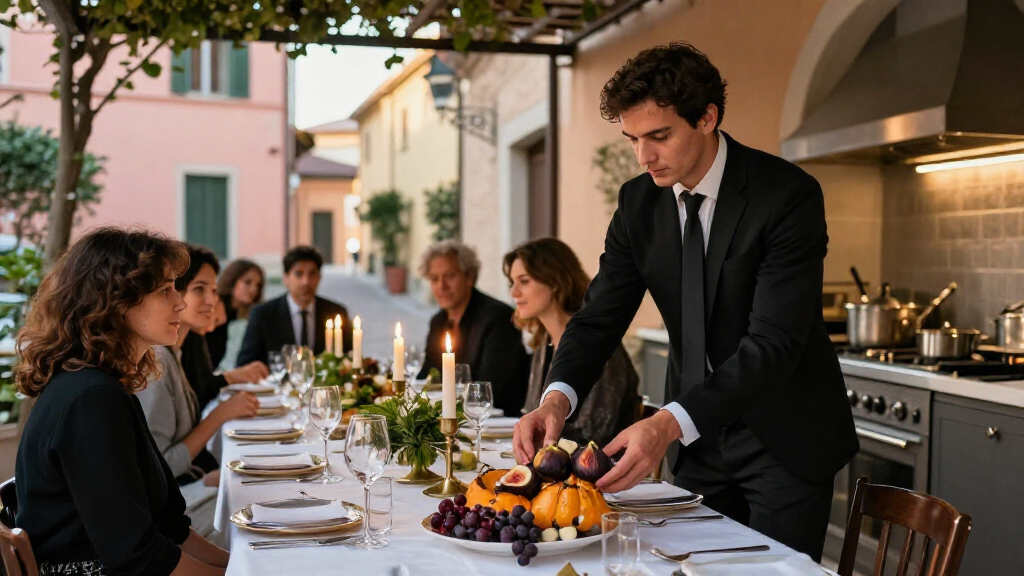
What should you check before serving ink pasta to guests?
Squid-ink pasta can contain mollusk ingredients, so anyone with a seafood or mollusk allergy needs a clear answer about the product and how the kitchen handled it. Squid and cuttlefish are mollusks. The distinction matters because “seafood” can mean different things to different people, and a guest may need to avoid a particular ingredient or contact with it. Read the package, ask a restaurant about cross-contact, and don’t assume that a black color means a particular ingredient.
Some black pastas use plant-based coloring, while pasta colored with squid or cuttlefish ink is not vegetarian. Recipes and manufacturing practices differ, and fresh pasta may also contain egg. These are separate questions: a plant-colored pasta may still contain egg, and a seafood-free sauce does not make ink pasta suitable for someone avoiding animal ingredients. If one guest is vegetarian and another has a shellfish or mollusk allergy, a separately cooked vegetable dish may be the simplest safe choice; check its ingredients and preparation surfaces too.
Food-grade ink belongs in cooking, but a guest with a mollusk allergy should avoid it unless a qualified clinician has advised otherwise. Ask about allergies before you shop, then keep original packaging available so guests can inspect ingredient and allergen statements. In a restaurant, ask staff directly about both the ink and shared equipment. Specific answers help guests make their own informed choices; if the ingredient source or preparation is uncertain, choose a clearly labeled alternative.
Temperature and storage matter for seafood sauces because bacteria can multiply while food sits warm. Keep raw prawns refrigerated until you cook them, avoid leaving cooked seafood at room temperature for more than two hours, and refrigerate leftovers promptly in a covered container. Reheat leftovers until steaming hot throughout; when you are unsure how long a dish sat out, discard it. A calm, direct ingredient conversation is a better dinner-party welcome than a surprise at the table.
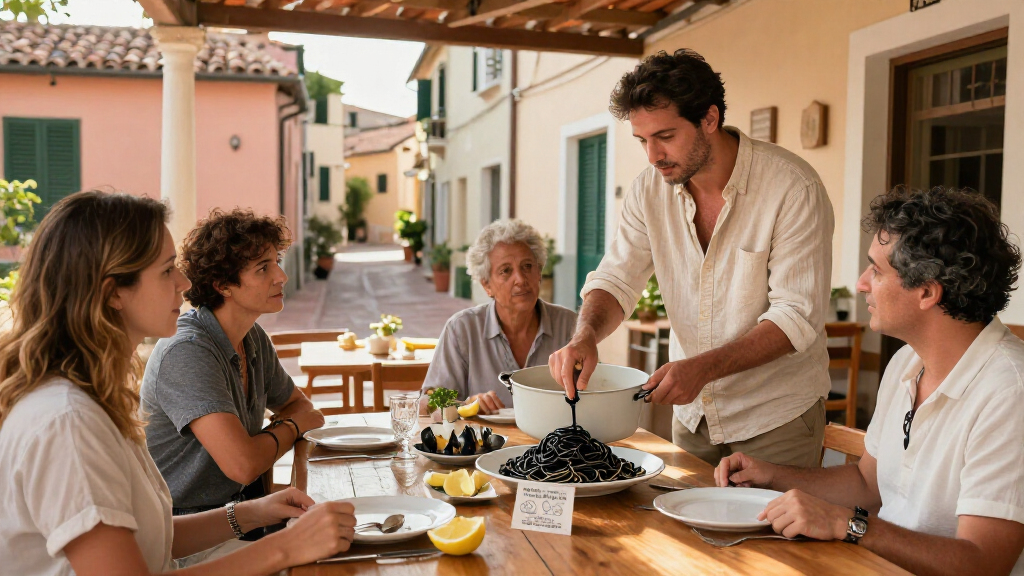
How can you prepare the dinner ahead and keep service relaxed?
Prepare the sauce and garnishes ahead, then cook the pasta just before you serve it. That split gives you the calm of an organized kitchen and the springy texture of freshly cooked noodles. Ink pasta can turn sticky as it waits because it continues absorbing moisture and cools into a compact mass, so timing the boil around your guests’ arrival makes a real difference.
Earlier in the day, zest the lemon, chop parsley, roast tomatoes, or brown mushrooms. Store prepared ingredients separately in covered containers in the refrigerator, and keep raw seafood chilled until cooking. Keeping components separate preserves their texture and gives you room to adjust the sauce at the last minute: tomatoes can release more juice than expected, while mushrooms can soak up liquid. If prawns are on the menu, cook them shortly before dinner; they take only a few minutes and taste best when tender rather than rubbery.
When guests sit down, bring the water to a boil and cook the pasta while the sauce warms gently in a broad pan. Set out pale bowls and garnish dishes before draining. A dinner for four might take ten minutes of active pasta cooking, but the prep done beforehand keeps those minutes from feeling rushed. The broad pan gives you room to toss the noodles evenly, which matters when you want every strand coated without adding excess sauce.
Do not dress the pasta early and leave it in a serving bowl. It will cool, absorb sauce, and lose its loose, glossy look. Instead, toss it at the last moment with a splash of reserved pasta water and bring it straight to the table. If you need to hold seafood briefly, keep it hot and serve promptly; refrigerate leftovers within two hours. This division of work lets you spend the busy moments finishing one dish rather than managing several tasks at once.
Frequently Asked Questions
Does squid-ink pasta taste strongly fishy?
Usually, no. It tastes mildly briny and savory, while the sauce shapes the finished dish. Garlic, lemon, parsley, and olive oil keep the flavor bright.
Is all black pasta made with squid ink?
No. Some products use other colorings, including plant-based ingredients. Read the package if the source of the color matters for your menu.
Is squid-ink pasta vegetarian?
Pasta colored with squid or cuttlefish ink is not vegetarian because the ink comes from an animal. Some black pastas use plant-based color, but check the full ingredient list and preparation details.
Can I serve black pasta without seafood?
Yes. Roasted cherry tomatoes, garlic, basil, or browned mushrooms make satisfying pairings. The pasta itself may still contain squid or cuttlefish ink, so choose a plant-colored version for guests who avoid animal ingredients.
Can I make squid-ink pasta ahead?
Prepare the sauce and garnishes ahead, but cook and dress the pasta near serving time for the best texture. If the sauce contains seafood, refrigerate it promptly and reheat it thoroughly before serving.
What drink goes with squid-ink pasta?
A crisp white wine often suits a light seafood and citrus sauce, while sparkling water with lemon works for everyone. Serve alcohol only to adults, alongside food and water, and offer a nonalcoholic choice.
Conclusion
For a black-tie fright dinner, let the pasta do the theatrical work: choose a light sauce, cook the noodles just before serving, and finish with lemon and parsley. Check the label and your guests’ needs before the pot goes on.
Then carry a pale bowl to the table and watch the black strands catch the candlelight, brightened by one small flash of citrus.