
TL;DR
Visit Catania’s La Pescheria in the morning to see a working seafood market near Piazza del Duomo, then ask vendors or nearby restaurants about the day’s catch and its origin. Give Etna DOC wine country a separate half-day or full day: Nerello Mascalese leads many reds, while Carricante is central to Etna Bianco, and winery visits often need advance reservations. Together, these experiences in Sicily connect the Ionian coast and Mount Etna through food shaped by place and season.
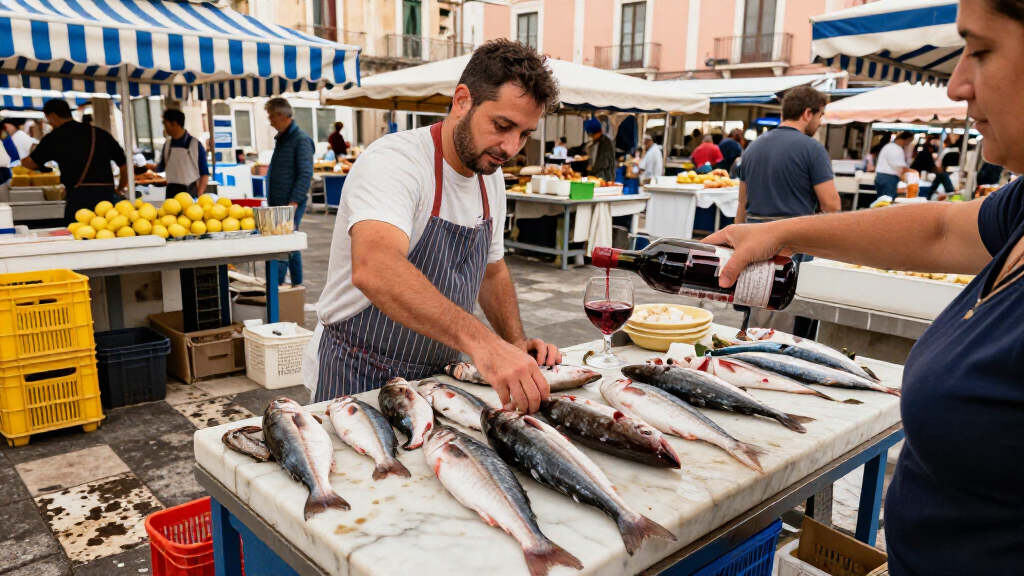
At Catania’s fish market, the morning can arrive with the slap of ice, the gleam of silver sardines, and vendors calling across the stalls. On Mount Etna, a winery visit trades that clamor for steep rows of vines and a glass shaped by altitude, exposure, and lava-derived soils. These are two very different ways to taste eastern Sicily.

Get kitchen staples and gadgets delivered free with Prime
- Fast, free delivery on millions of items
- Prime Video, Amazon Music and more included
- Member-only deals all year
This guide helps you plan both: when to visit La Pescheria, what to ask about seafood, which local dishes make sense at lunch, and how to approach Etna’s varied wines without reducing them to a single “volcanic” flavor. You’ll leave with a practical route, useful Italian terms, and a better feel for why the day’s catch and a vineyard’s location matter.
Visit La Pescheria in the morning, and check current opening days and hours before you go.
Ask seafood sellers or restaurants for the species, origin, and season instead of assuming a fish is local.
Try Catanese pasta alla Norma for a non-seafood city classic, or ask how a restaurant prepares sarde a beccafico.
Etna DOC dates to 1968; Nerello Mascalese leads many reds, while Carricante is central to Etna Bianco.
Book Etna winery visits ahead and plan transport and extra time for mountain roads.
Start at La Pescheria before Catania’s lunch hour
La Pescheria is Catania’s historic fish market, a working seafood trade near Piazza del Duomo and the Amenano Fountain. Go in the morning, when the calls, colors, and movement are generally at their liveliest, and you’ll see more than a pretty market scene: you’ll see how seafood enters the city’s daily food life. Hours and opening days can vary, so check locally before building your morning around it.
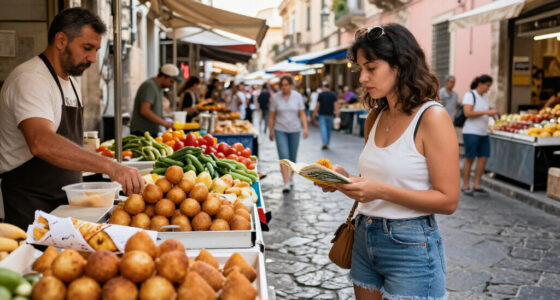
The market’s appeal comes from details that change by the day: a row of glistening prawns, a vendor trimming a fish, a customer checking the eyes and gills. You might see tuna, swordfish, sardines, anchovies, mussels, or prawns, but the selection depends on season, catch, and fishing rules. A stall’s display is a snapshot, not a promise that every species is local or in season all year.
Walk slowly and make room for people carrying shopping bags or working behind the counter. Ask before photographing a vendor or stall; this is someone’s workplace as well as a visitor stop. If you’re staying nearby and can cook, ask what is best that day and how to prepare it. If you’re just exploring, notice which seafood appears in quantity and which items a vendor recommends.
Experiences in Sicily feel more grounded when you treat a market as a place with its own rhythm. Picture arriving around breakfast time, taking in the shouts and salt air, then stepping away before the lunch crowd thickens. That leaves space to explore the streets around the market and find a table for a simple meal without expecting the market itself to operate like a food hall.

Products Worth Considering

Dyson V9 Motorbar Cordless Vacuum

Sonos Era 300 Wireless Smart Speaker with Dolby Atmos, Black

Samsung 55-Inch S90H OLED 4K UHD Smart TV Bundle with Full-Motion Mount and Surge Protector
As an affiliate, we earn on qualifying purchases.
Ask these three questions before choosing seafood
For a more informed seafood choice in Catania, ask what the species is, where it came from, and whether it is in season. Together, those questions help you separate what is actually known about a fish from what its display or menu description might suggest. “Local” is not a synonym for fresh: a fish sold in Catania may have traveled, while a nearby catch may not be available that day. Fishing seasons and rules also change what can responsibly be offered.
- Name it: Ask “Che pesce è?” (“What fish is it?”) or point to an item and ask its name. Knowing the species gives you a useful starting point for comparing taste and texture: sardines and anchovies, for example, are both small oily fish but are not interchangeable in every dish.
- Ask where it came from: “Da dove viene?” means “Where does it come from?” A fish may be sold in Catania without having been caught just offshore. If a seller can name the origin, you have context for its journey; if not, you can still make a choice, but you should avoid treating the market location as proof of provenance.
- Ask how it is best cooked today: “Come lo cucineresti?” means “How would you cook it?” The answer connects the fish’s size and condition to a preparation: a simple grill may suit one catch, while a fish better suited to baking or pasta may call for a different plan. It also helps you avoid ordering by name alone when the kitchen’s best option has changed with the day.
This exchange can shape lunch. If a nearby restaurant says its swordfish came in that morning, ask how the kitchen plans to serve it; a straightforward preparation can let the fish’s texture come through. The description still tells you only what the restaurant can confirm, not every detail of how the fish was caught. If the origin is unclear, choose based on what the seller can tell you rather than calling it local yourself.
Seasonality is useful, but it is not a complete sustainability label. A species may be available while subject to rules or changing abundance, and no visitor can infer responsible sourcing just by looking at a bright display. Ask about the catch and origin, then stay open to another choice. The tradeoff is simple: a planned favorite can make for an easy order, while asking and adapting may lead to a more informative meal—and possibly a fish you had not planned to try.

Turn a market morning into a distinctly Catanese lunch
Catania’s fish market makes the most sense as the start of a meal, not a guarantee that every surrounding business serves the seafood on display. Food counters and eateries operate in the area, while the market itself is primarily a place to buy seafood. That distinction matters if you arrive expecting to pick a fish at a stall and have it cooked on the spot. Ask locally what is open and what the kitchen is cooking that day; menus, stalls, and dining options can change.
For a dish with a strong Catanese identity, order pasta alla Norma: pasta with tomato, fried eggplant, basil, and ricotta salata, a firm salted sheep’s milk cheese. It is not a seafood dish, and that is part of the point. The market can lead you into the wider food culture of the city rather than narrowing lunch to whatever seafood caught your eye. Norma offers a satisfying alternative if the available catch or its origin is unclear, or if you simply want to understand a local classic beyond the market’s stalls.
If you want seafood, ask about sarde a beccafico, stuffed sardines prepared in several Sicilian variations. The filling and seasoning can differ by kitchen, so ask how that restaurant makes them. Their richer, seasoned filling gives you a different experience from a simply grilled catch: ordering both, if the menu and appetite allow, makes the contrast easier to notice. A small shared plate also lets you try the dish without making it your entire meal.
You might plan a morning market stroll, then sit down nearby around lunchtime and ask what the kitchen can explain clearly. That leaves you free to choose a city classic or seafood based on the meal in front of you, instead of trying to reconstruct the market display on your plate. If you have a shellfish allergy, tell staff before ordering; seafood dishes can involve cross-contact in busy kitchens. Allergens can also include dairy in pasta alla Norma’s ricotta salata, so ask about ingredients rather than assuming a familiar dish is safe for you.

Read Etna’s wines through grape, site, and season
Etna DOC is a wine appellation on Mount Etna’s slopes, established in 1968, where altitude, exposure, steep terrain, and varied lava-derived soils shape growing conditions. The practical consequence is variation: elevation and aspect affect sun, temperature, and ripening, while steep parcels can make vineyard work demanding. “Volcanic wine” is not one fixed taste, and the soil alone cannot explain what you find in a glass. Producer choices, grape, vintage, and site all matter.
For reds, start with Nerello Mascalese, the best-known grape, sometimes blended with Nerello Cappuccio. Etna Rosso is often described as fresh, aromatic, and structured, with red-fruit and herbal notes. Those descriptions can help you choose a first glass, but they are not guarantees: a cooler or warmer vintage, a different vineyard, or winemaking decisions can shift the balance. If you compare two wines, keep the grape constant where possible so site or producer differences are easier to notice.
For whites, look for Carricante, the principal grape associated with Etna Bianco. These wines can show lively acidity with citrus or savory character. Acidity can make a white feel brisk at the table, which is useful with food, though individual wines vary. Etna Bianco Superiore has a particular connection to the Milo area and specific production rules, so the label can tell you more than a broad claim about mountain soil. The appellation gives you a geographic and regulatory clue; it does not promise a single flavor profile.
At a tasting, ask for the grape, vintage, appellation, and vineyard area before you reach for a flavor description. Those details make your impressions more useful: if one Etna Rosso seems light and herbal while another feels more structured, you can ask whether the difference reflects site, year, blend, or cellar choices. You are tasting not just a volcano, but a set of places and decisions made by growers and winemakers. That makes comparison more rewarding than searching for one definitive “Etna” taste.

Give Etna wineries enough time to make the trip worthwhile
A winery visit on Etna deserves at least a planned half-day, and a full day gives you more breathing room for the mountain roads and a tasting. The volcano is close to Catania in broad geographic terms, but travel time depends on your destination, traffic, and the route up the slopes. A map’s short-looking line can hide slow turns and time between estates. That affects how many appointments are realistic: fewer stops can leave room to understand one vineyard, while a packed route turns the landscape into passing scenery.
Book ahead, especially with smaller wineries. Tasting formats, prices, and availability change, and some producers receive visitors only by reservation. Confirm the appointment directly, ask how long the visit lasts, and check whether the winery expects you to arrive by car or can suggest transport. These details shape the day as much as the tasting itself: a visit with a fixed start time leaves less flexibility for detours, and an uncertain return plan can make a tasting stressful. If you plan to taste, arrange a sober driver or another safe way back; wine is for adults, and responsible drinking matters on mountain roads.
Steep vineyards help explain why a visit feels different from a quick tasting room stop. Some parcels are difficult to work mechanically, so terrain can influence labor and vineyard practices as well as the wine’s eventual character. Old vines and traditional practices have drawn renewed attention in recent decades. When a grower talks about a particular slope or harvest, connect that detail to the wine in your glass: it can reveal the work and timing behind the bottle, even when a flavor cannot be attributed to one soil or elevation alone.
For example, a traveler who books one estate near Milo can focus on Carricante and the local setting instead of racing between several appointments. Leave time to ask how the vineyard’s elevation or exposure affects picking, then note the producer and vintage. One thoughtful tasting gives you a clearer memory than a hurried checklist of wineries, though it offers a narrower view of the region. If comparison matters to you, ask the first producer whether a second visit is feasible before adding it to the day.

Pair Catania’s market and Etna into a relaxed two-part itinerary
To taste eastern Sicily without rushing, give La Pescheria a morning and Etna a separate half-day or full day. The market and vineyards belong to the same broad food region, but they are distinct places with different rhythms: one is an urban seafood market, the other a wide wine-growing area with many producers and varied sites. Keeping them separate gives each enough time for its own questions—what the day’s catch is and where it came from at the market, which grape and site you are tasting on Etna. A single day can be possible, but travel, lunch, and a fixed winery booking may squeeze out the unplanned time that makes both experiences worthwhile.
Here is a practical two-day outline. On day one, check market hours, arrive in the morning, walk the stalls, and ask about the day’s seafood. Have lunch in Catania and choose either a seasonal catch or a local favorite such as pasta alla Norma. Keeping the afternoon flexible lets you follow a street or find a table without watching the clock for a mountain appointment.
On day two, follow a confirmed winery booking and build in extra driving time. Before you go, check the address, tasting length, price, and transportation plan. These checks reduce the chance that a late arrival or an unexpected gap between estates takes over the day. If you want to compare a red and white, ask whether the producer pours Nerello Mascalese and Carricante; availability varies, so treat those as questions rather than guarantees. A focused tasting at one producer may reveal more about its site and approach, while visiting multiple estates can offer a broader comparison at the cost of time on the road.
Catania offers two memorable ways to encounter the region: the daily exchange between sellers and seafood buyers, and the slower work of growing grapes on Etna’s slopes. One makes the coast tangible; the other shows how a mountain can shape farming. Keep notes on what you actually tasted, including origin or producer when known, and your trip will stay specific long after the salt air and lava stone have faded from view.
Frequently Asked Questions
When is the best time to visit Catania’s fish market?
Morning is generally the best time to see La Pescheria active, with vendors displaying the catch and buyers moving through the stalls. Opening days and hours can vary, so check locally before you plan your visit.
Is La Pescheria open every day?
Schedules can vary by day, season, and individual stall. Verify current local hours before you set aside a morning, especially if the market is a key part of a short visit.
Can you eat at Catania’s fish market?
Food businesses and restaurants operate in the surrounding area, but the market itself is primarily a place to buy seafood. Ask locally which nearby places are open and what they are serving that day.
What should I try in Catania?
Try pasta alla Norma, made with tomato, fried eggplant, basil, and ricotta salata, or ask whether a restaurant serves sarde a beccafico, stuffed sardines with regional variations. For seafood, ask what was caught recently and where it came from.
Which grapes should I look for in Etna wines?
Nerello Mascalese is Etna’s best-known red grape, often blended with Nerello Cappuccio. Carricante is central to Etna Bianco; wines vary by producer, vintage, vineyard site, and production rules.
Are Etna wines always smoky or mineral?
No single flavor defines every Etna wine. Grape, producer, vintage, elevation, exposure, and vineyard site all shape the result, so taste each bottle on its own terms rather than expecting a fixed “volcanic” profile.
Can I visit a winery and La Pescheria in one day?
It may be possible, but the day can feel rushed once you account for market hours, lunch, winery reservations, and mountain-road travel. A morning in Catania and a separate Etna outing usually leave more room to enjoy both.
Conclusion
Make one choice that keeps your Sicily food trip rooted in place: ask where the seafood came from at La Pescheria, then ask which grape and vineyard site shaped your Etna wine. Those questions turn a market walk and a tasting into encounters with the coast, the mountain, and the people who work both.
Take your time. Let the morning’s fish calls give way to a glass of Etna Bianco or Rosso, with black lava under the vines and the Ionian Sea still in your memory.