
TL;DR

Get kitchen staples and gadgets delivered free — and shop member deals
- Fast, free delivery on millions of items
- Access to Prime Big Deal Days deals on October 6–7
- Prime Video, Amazon Music and more included
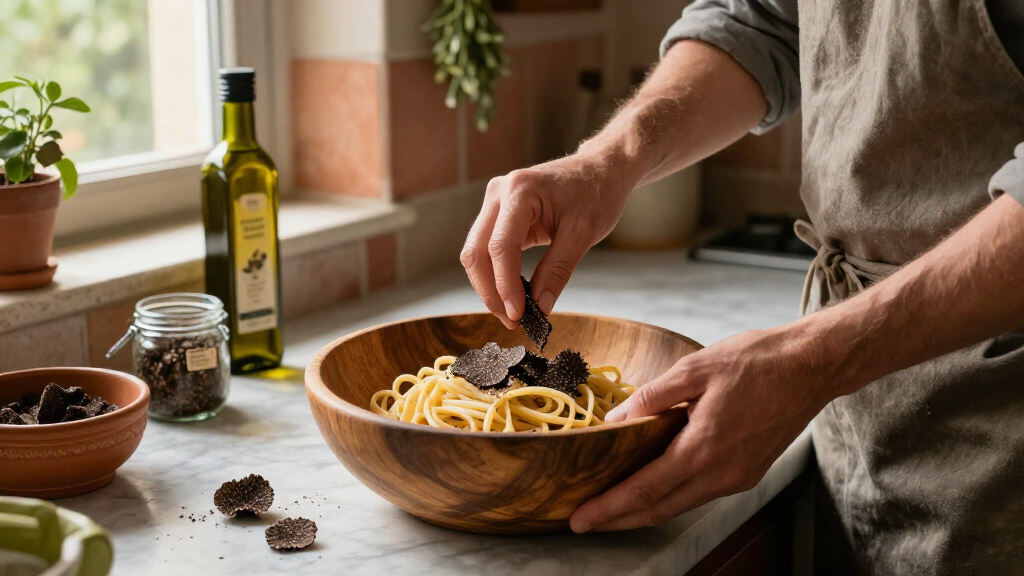
Strangozzi al tartufo nero is an Umbrian pasta of thick, usually eggless noodles coated with extra-virgin olive oil, garlic, pasta water, and fresh black truffle. Warm the oil gently, add most of the truffle away from direct heat, and serve at once; about 10–20 grams of fresh truffle per person gives a clear aroma, depending on its species and freshness.
Black truffle pasta succeeds or fails in the final minute. You can buy a fragrant truffle, roll beautiful noodles, and still lose the dish by frying the truffle until its aroma disappears. The better approach feels almost suspiciously simple: gentle heat, excellent olive oil, and enough restraint to let an underground fungus command the plate.
This guide shows you how to make strangozzi al tartufo nero, one of Umbria’s signature pasta dishes, in a home kitchen. You will learn what separates strangozzi from spaghetti, how winter and summer black truffles behave, and why starchy pasta water matters more than cream. You will also get practical quantities, storage guidance, substitution ideas, and a clear cooking sequence.
The dish belongs to the landscape around Spoleto, Norcia, and the Valnerina, where wooded Apennine slopes produce some of Italy’s most sought-after black truffles. Its rustic strands dressed with garlic-scented extra-virgin olive oil taste earthy but never heavy. Make it well, and the steam rising from the bowl carries the damp-leaf, toasted-nut scent of an Umbrian woodland after rain.
Use about 10–20 grams of fresh black truffle per person, choosing the higher end for a mild summer truffle.
Add most of the truffle after removing the pan from direct heat, then serve the pasta immediately in warm bowls.
Reserve at least one cup of pasta water and add it gradually until the olive oil forms a glossy coating rather than a greasy pool.
Ask for the truffle’s botanical name: Tuber melanosporum, Tuber aestivum, and Tuber uncinatum differ in season, aroma, and price.
Treat homemade garlic- or truffle-infused oil as perishable; refrigerate it at 40°F or below and use it within four days unless following a tested preservation…
Strangozzi al Tartufo Nero
Thick, rustic noodles meet garlic-scented extra-virgin olive oil and fresh black truffle. The secret is restraint: build the glossy coating first, then add most of the truffle away from direct heat.
Why strangozzi carry aroma better
Traditionally made from flour and water, strangozzi are thicker, rougher, and more irregular than spaghetti. Their surface catches tiny truffle particles while their firm bite balances the silky oil.
Hand-cut and irregular
Long, narrow strips provide rustic edges and more surface contact than a polished factory noodle.
Thick, rough, chewy
The sturdy bite gives structure to a nearly transparent sauce without requiring cream.
Spoleto and Umbria
Stringozzi is a common alternative spelling. Strozzapreti may describe different shapes elsewhere.
Choose the right strand
Fresh strangozzi are the ideal aroma carrier, but sturdy alternatives can still deliver a convincing result when handled with the same light touch.
| Pasta | Typical texture | Performance with truffle | Best use |
|---|---|---|---|
| Fresh strangozzi | Thick, irregular, pleasantly chewy | Excellent grip for a light oil coating | The authentic first choice |
| Dried strangozzi | Firm and sturdy | Very good at holding emulsified sauce | Convenient pantry option |
| Thick spaghetti | Smooth and uniform | Good, though less rustic | Easy substitute |
| Pici or tonnarelli | Substantial, dense bite | Very good with restrained sauce | Strong regional alternatives |
Fresh pasta often cooks in 2–4 minutes. Follow package guidance for dried noodles.
“Black truffle” is not specific enough
Ask for the botanical name and origin. Species, maturity, rainfall, woodland health, and freshness all influence fragrance—and the fair price.
Tuber melanosporum
Prized winter black truffle with the deepest fragrance: earthy, layered, nutty, and sometimes cocoa-like.
Tuber uncinatum
Burgundy or autumn truffle. Usually more expressive than summer truffle, with intensity varying by maturity and origin.
Tuber aestivum
Summer truffle with a gentler, pleasantly nutty aroma. Use a more generous quantity and keep other flavors quiet.
Relative aroma guide · grams per person · freshness may change the result
The seven-step aroma method
The dish succeeds in the final minute. Prepare every component before the pasta leaves the water, then move quickly.
Brush under a light stream of cool water. Dry carefully; never soak.
Heat serving bowls so the finished pasta retains its fragrance.
Warm olive oil gently with one crushed garlic clove. Keep it pale.
Optional: dissolve one small anchovy fillet for quiet savory depth.
Cook the strangozzi in well-salted water until pleasantly firm.
Toss with oil and pasta water until the strands shine, not swim.
Leave direct heat, grate in most of the truffle, garnish, and serve.
Add most of the truffle off the heat. Prolonged cooking flattens its volatile aroma.
Serve nowGlossy, aromatic, never greasy
Starch is the bridge between water and oil. Add reserved cooking water one tablespoon at a time while tossing vigorously.
Four-serving formula
Adjustment guide
- Greasy pool: add a spoonful of pasta water and toss harder.
- Watery coating: keep tossing briefly before adding more liquid.
- Weak aroma: grate more truffle finely off the heat.
- Heavy flavor: omit cream and use cheese only sparingly.
- Bitter garlic: discard browned garlic and begin the oil again.
- Slow service: warm the bowls and have diners ready first.
Protect the ingredient you paid for
Choose a truffle that feels firm and dense for its size, with a clear earthy fragrance. Softness, excess moisture, or an ammonia-like smell can signal deterioration.
Ask for identity
Confirm the botanical name, origin, harvest timing, and storage history—not merely the words “black truffle.”
Clean with restraint
Brush away soil beneath a very light stream of cool water, dry carefully, and prepare immediately before use.
Treat infused oil as perishable
Refrigerate homemade garlic- or truffle-infused oil at 40°F / 4°C or below and use within four days unless following a tested preservation method.
What Strangozzi Give You That Ordinary Spaghetti Cannot
Strangozzi are long, hand-cut Umbrian noodles traditionally made with flour and water rather than eggs. Their thick, irregular shape and lightly rough surface hold an oil-based truffle sauce better than smooth spaghetti, giving you a firm bite and flavorful coating without relying on cream.
The pasta is closely associated with Spoleto and central-southern Umbria, although local names and dimensions vary. You may see stringozzi on a menu or package; that is a common alternative spelling. Strozzapreti can name different twisted or short pasta shapes elsewhere in Italy, so you should not assume the terms describe the same noodle.
Think of the noodle as the dish’s aroma carrier. That definition matters because strangozzi do more than provide bulk: their ridges catch tiny truffle particles, while their thickness gives you time to notice the contrast between chewy pasta and silky oil. At a trattoria near Spoleto, that roughness is why a nearly transparent sauce can taste richer than it looks.
| Pasta | Typical texture | How it works with truffle |
|---|---|---|
| Fresh strangozzi | Thick, irregular, pleasantly chewy | Best match for a light olive-oil coating |
| Dried strangozzi | Firm and sturdy | Convenient and good at holding pasta water |
| Thick spaghetti | Smoother and more uniform | A useful substitute, though less rustic |
| Pici or tonnarelli | Substantial, dense bite | Good alternatives when strangozzi are unavailable |
For homemade pasta, start with 300 grams of flour and roughly 150 grams of water for four modest first-course servings, adjusting for humidity and the flour’s thirst. Italian tipo 00 flour makes supple noodles, while replacing up to one-third with fine semolina adds grip and a faint golden color. Because flour contains wheat, this dish contains gluten unless you use a tested gluten-free pasta formula.
As an affiliate, we earn on qualifying purchases.
Choose the Black Truffle That Matches Your Season and Budget
Strangozzi al tartufo nero tastes different with each truffle species, so the label matters as much as the price. Tuber melanosporum gives you the deepest winter fragrance, while Tuber aestivum and Tuber uncinatum offer gentler aromas that may require a larger quantity.
Tuber melanosporum, called tartufo nero pregiato or prized black truffle, has a dark, layered aroma that can suggest damp earth, cocoa, garlic, and toasted hazelnut. It is the truffle you might seek for a winter dinner after visiting Norcia or the Valnerina. Its intensity lets 10–20 grams per person make a noticeable impression when the truffle is fresh [1].
Tuber aestivum, the summer truffle, is usually milder and less expensive. Its pale-veined interior can smell pleasantly nutty, yet it rarely fills a room like a strong winter specimen. If you make lunch for four in July, you may use closer to 20 grams per person, grate most of it finely, and keep the seasoning especially quiet.
Tuber uncinatum, often sold as Burgundy or autumn truffle, sits between those experiences, though aroma varies with maturity and origin. Nero is one broad color description, not a species guarantee. Ask for the botanical name and geographical origin, since traceability helps protect you from paying winter-truffle prices for a less costly species.
A truffle label should name the species. The words “black truffle” alone do not tell you its season, fragrance, strength, or fair price.
Umbria’s truffle harvest also depends on rainfall, summer heat, woodland health, and the slow work of cultivated truffle orchards. That helps explain why two truffles of the same species can differ in price and perfume. When a firm, fragrant specimen costs more than planned, buy a smaller amount of better truffle and serve the pasta as a first course rather than weakening it beneath cream.

The 7-Step Method That Keeps Every Bit of Truffle Aroma
Strangozzi al tartufo nero needs gentle heat and fast service: scent the oil with garlic, cook the pasta until firm, loosen the sauce with starchy water, and add most of the truffle off the heat. This method creates a glossy coating without frying away the ingredient you paid for.
- Clean the truffle. Brush away soil under a very light stream of cool water, dry it carefully, and avoid soaking it.
- Warm the serving bowls. A warm bowl keeps the pasta fragrant; a cold one steals heat before you reach the table.
- Scent 60 milliliters of olive oil. Warm it over low heat with one lightly crushed garlic clove for four servings. Remove the garlic while it remains pale.
- Add optional anchovy. Let one small fillet dissolve in the warm oil for savory depth, then remove the pan from fierce heat.
- Cook 400 grams of fresh strangozzi. Boil it in well-salted water until pleasantly firm, often just 2–4 minutes for fresh pasta. Follow the package timing for dried noodles.
- Build the coating. Toss the drained pasta with the scented oil and 60–120 milliliters of reserved cooking water until the strands shine rather than swim.
- Finish away from direct heat. Grate in most of the truffle, toss briefly, and place fresh shavings on top immediately before serving.
The pasta water acts like a bridge between oil and water. Starch helps the two cling together, turning separate slicks of oil into a thin sauce that hugs each rough noodle. If the pan looks greasy, add pasta water one tablespoon at a time and toss vigorously; if it looks watery, keep tossing over the gentlest heat before adding the truffle.
An anchovy is optional, but the choice has regional precedent in some Umbrian kitchens [1]. It should melt into the oil and taste like savory depth, not fish. Flag it for anyone with a fish allergy, and omit it for a vegan plate; traditional flour-and-water strangozzi with olive oil, garlic, and plant-based truffle products can otherwise be vegan.
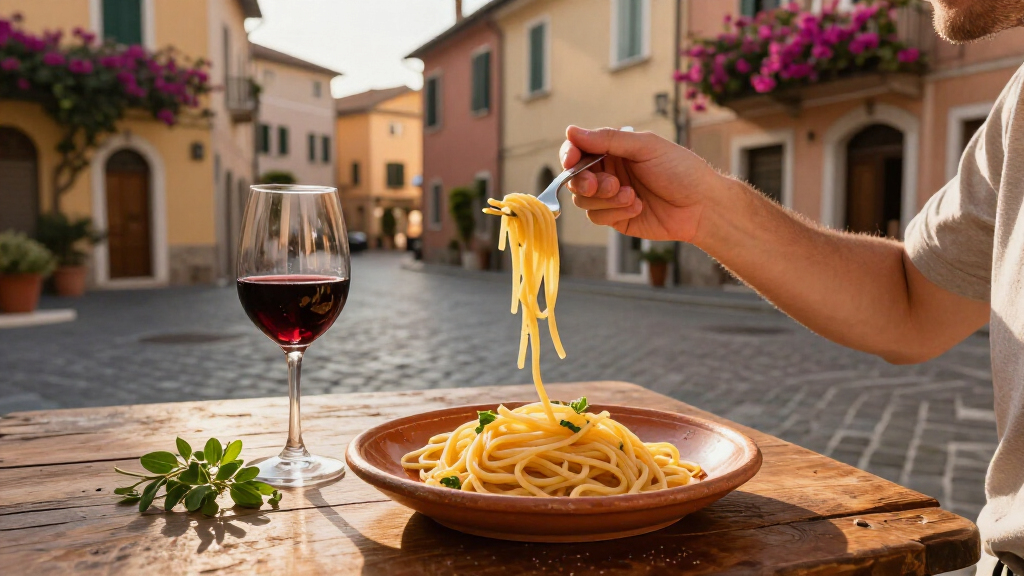
Serve the pasta the moment you finish it. Imagine four bowls waiting on the counter while everyone sits down: that is better than letting the cooked strands wait while you find plates. Heat lifts the truffle fragrance, but prolonged pan heat destroys it, so the table—not the stove—is where the final aroma should bloom.
Buy, Clean, and Store Fresh Truffles Without Wasting Them
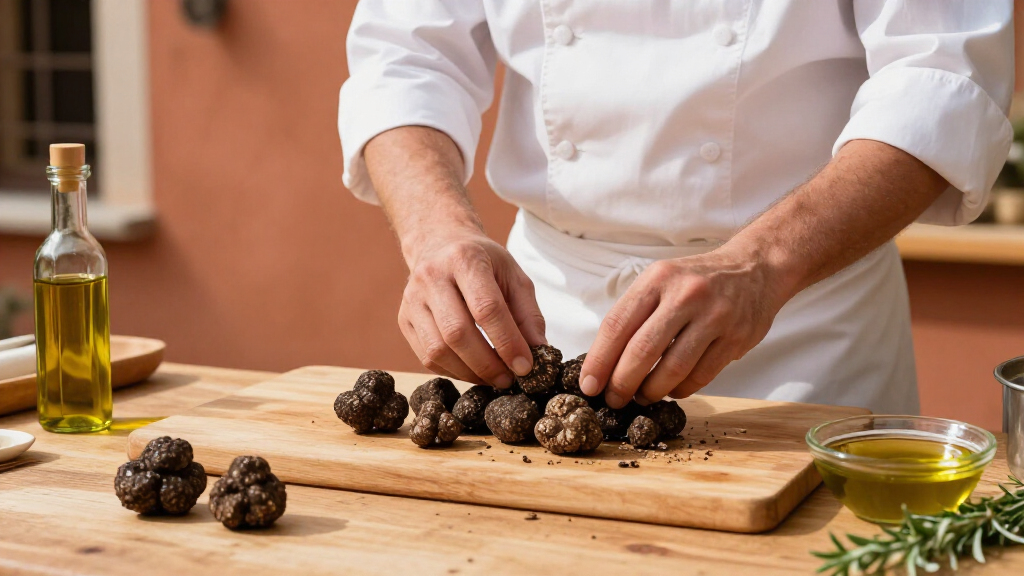
Strangozzi al tartufo nero begins with a firm, aromatic truffle that feels dense for its size and smells cleanly earthy. Reject specimens that feel very soft, appear wet or slimy, or carry an ammonia-like odor, since those signs point to deterioration rather than desirable ripeness.
At a specialty counter, ask to smell the truffle and check its botanical name before you buy it. A good specimen may look knobbly and soil-streaked, but it should feel alive with fragrance when held near your nose. For four people, 40–80 grams total gives you a practical shopping range, with mild summer truffle usually demanding the higher end.
Clean it shortly before cooking. Use a soft mushroom brush or clean toothbrush under the faintest trickle of cool water, paying attention to soil trapped in the creases. Dry it at once with clean paper or a kitchen towel; a 15-minute soak would waterlog the surface and wash away aroma.
For short storage, place the dry truffle in a closed refrigerated container lined with absorbent paper, then replace damp paper daily. Use the truffle as soon as you can because its perfume fades rapidly even when it still looks sound. Storing it buried in rice is popular, but rice can pull moisture and aroma from the truffle.
Keep your refrigerator at 40°F or below, and refrigerate cooked pasta within two hours. Eat leftovers within 3–4 days, reheating them gently until steaming, though their truffle scent will be weaker. A tiny piece of truffle butter added after reheating can restore some aroma without scorching it.
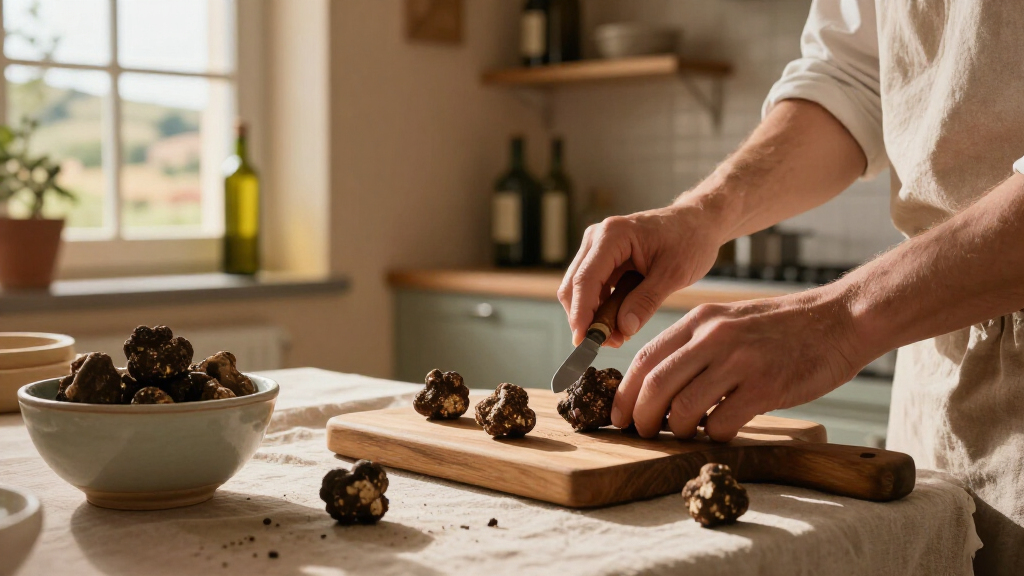
Do not casually store fresh truffle or garlic in oil at room temperature. Low-acid ingredients held without oxygen can support dangerous bacterial growth. The National Center for Home Food Preservation advises refrigerating garlic-in-oil mixtures at 40°F or below and using them within four days, or freezing them for longer storage [2].
Use These Substitutes When Fresh Truffle Is Out of Reach
Strangozzi al tartufo nero can still taste convincing without fresh truffle when you layer preserved truffle with mushrooms and a modest amount of truffle butter or oil. No substitute copies a newly harvested truffle exactly, but balanced earthy flavors beat an aggressive cloud of synthetic aroma.
| Option | What you gain | How to use it |
|---|---|---|
| Frozen black truffle | Real truffle flavor with softer texture | Grate while partly frozen and add off the heat |
| Preserved whole truffle | Convenience and identifiable pieces | Chop finely; add its packing liquid only if it tastes clean |
| Truffle paste or carpaccio | Concentrated flavor and easy measuring | Check the truffle percentage and warm gently |
| Truffle butter | Round texture and reliable aroma | Stir in a teaspoon per serving after cooking |
| Truffle oil | Strong aroma at low cost | Add a few drops at the table, never a free pour |
Many inexpensive truffle oils rely mainly on manufactured aroma compounds, which can smell sharp and one-dimensional. Read the ingredient list rather than trusting a pastoral label. If the oil reminds you of raw garlic and gasoline, more will not make it taste more authentic; start with two or three drops per serving.
For a practical weeknight version, brown 225 grams of finely chopped cremini mushrooms until their moisture evaporates, then toss them with olive oil, strangozzi, pasta water, and two tablespoons of preserved truffle paste. Remove the pan from the heat before adding a little truffle butter. The mushrooms supply bass notes while the truffle product provides the high, woodland perfume.
This version is not identical to a plate served during winter truffle season in Norcia, and that distinction is worth preserving. Authenticity here means being honest about the ingredient, not pretending every jar equals fresh Tuber melanosporum. Check packaged pastes for milk, fish, soy, nuts, and gluten, since recipes and processing facilities vary.
Avoid the Small Mistakes That Flatten an Expensive Dish
The biggest mistakes with strangozzi al tartufo nero are excessive heat, browned garlic, heavy cream, and too much finishing oil. Each one covers or destroys the truffle’s volatile fragrance. Keep the sauce pale, fluid, and restrained so the truffle remains the loudest aroma in the bowl.
Garlic should whisper. If its edges turn mahogany, the oil can taste bitter and roasted, pushing the truffle into the background. Suppose the phone rings while the clove sizzles: take the pan off the burner before answering, because thirty distracted seconds can change the whole sauce.
Cream creates another problem. It gives the plate weight but blankets the aroma, like hanging a thick curtain across an open window. If your sauce needs body, use starchy cooking water and vigorous tossing; if you want cheese, add no more than a light dusting of mild aged pecorino or Parmigiano. Cheese brings milk allergens and can also add enough salt to unbalance the dish.
- Do not fry the truffle: add most of it after removing the pan from direct heat.
- Do not skip the pasta water: reserve at least one cup before draining.
- Do not flood the bowl: the sauce should cling, not pool beneath the noodles.
- Do not confuse species: summer and winter truffles differ sharply in strength and cost.
- Do not wait to serve: lukewarm pasta releases far less aroma.
For drinks, a structured Umbrian Grechetto suits a lighter summer-truffle plate, while a medium-bodied Sangiovese-based red can meet the depth of winter truffle. A powerful Montefalco Sagrantino DOCG can work with a richer preparation, but its tannins and alcohol may dominate a very spare sauce. Wine is for adults; pour moderately, drink responsibly, and offer sparkling water alongside it.
The practical test happens at the table. When you lift a forkful, you should smell truffle before tasting garlic, cheese, or oil. The strands should feel supple and lightly slick, with no greasy puddle left behind. That is Umbria’s signature pasta at its best: simple on paper, precise in the pan.
Frequently Asked Questions
Can I use spaghetti instead of strangozzi?
Yes. Choose thick spaghetti, tonnarelli, or pici rather than delicate angel hair, since a substantial noodle supports the oil and truffle better. The texture will be smoother than handmade strangozzi, but reserved pasta water will still help the sauce cling.
Do traditional strangozzi contain eggs?
Traditional strangozzi commonly contain flour and water, sometimes with a pinch of salt, but household and commercial recipes vary. Check packaged pasta if you avoid eggs, and remember that standard strangozzi still contain wheat and gluten.
Is cream traditional in strangozzi al tartufo nero?
The characteristic Umbrian preparation uses olive oil rather than a cream-heavy sauce. Cream appears in modern versions, but it can mute the truffle’s fragrance and make the dish feel heavier. Use starchy pasta water when you want a smooth, cohesive coating.
Why do some Umbrian truffle sauces contain anchovy?
A small anchovy fillet can dissolve into the warm oil and add savory depth without a fishy taste. The practice varies by town, restaurant, and family, so omission is completely reasonable. Skip it for a vegan dish or a guest with a fish allergy.
Can I make strangozzi dough ahead of time?
Yes. Keep the dough tightly covered so its surface does not dry, and let it rest for several hours in a cool kitchen. Refrigerate cut noodles only briefly in well-floured nests, or freeze the separated nests before transferring them to a container.
Conclusion
Let the truffle set the rules. Choose sturdy strangozzi, fragrant extra-virgin olive oil, and the best clearly identified black truffle your budget allows. Keep the garlic pale, use pasta water instead of cream, and move the pan away from direct heat before adding the ingredient that matters most.
Then eat without delay. Strangozzi al tartufo nero is not a dish that improves while waiting under a lid; its pleasure lives in the first hot curl of steam. Bring the bowls to the table while the rough strands still shine, and let your kitchen smell, for a few brief minutes, like wet oak leaves on an Umbrian hillside.
Fall Picks
fall essentials
As an affiliate, we earn on qualifying purchases.