TL;DR

Get kitchen staples and gadgets delivered free — and shop member deals
- Fast, free delivery on millions of items
- Access to Prime Big Deal Days deals on October 6–7
- Prime Video, Amazon Music and more included
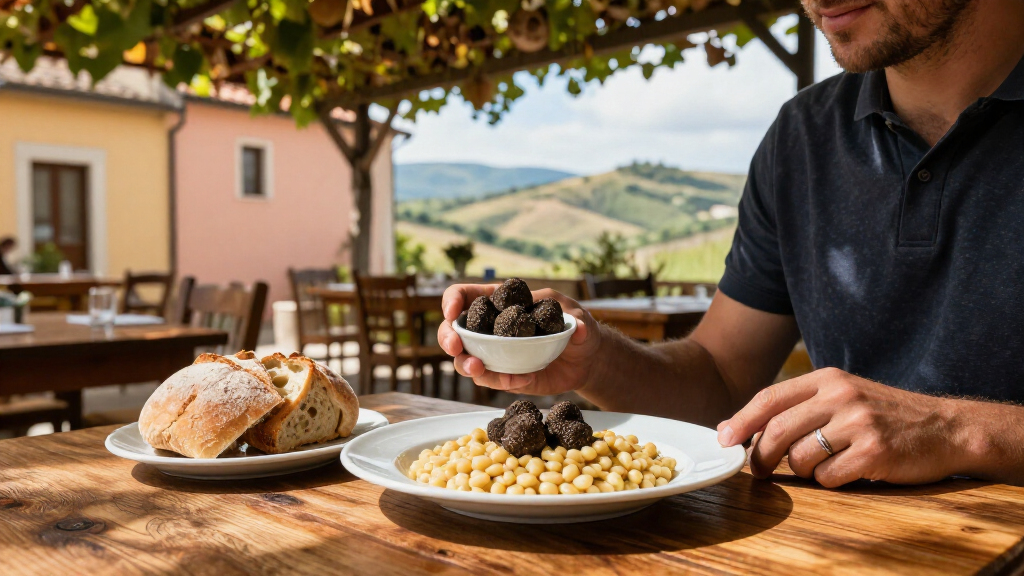
Norcia, in southeastern Umbria at the foot of the Sibillini Mountains, is one of Italy’s most distinctive food towns: its cuisine reflects a high-altitude pastoral landscape of cured pork (norcineria), black truffles, and Lenticchia di Castelluccio di Norcia IGP lentils grown at 1,300–1,500 meters. Visit in late autumn or winter for prized winter black truffles and hearty dishes, or late spring through midsummer for the plateau’s famous Fioritura flowering. Buy only products carrying the full IGP name and EU seal, and book truffle hunts and trattoria meals in advance.
An entire Italian culinary vocabulary comes from this one small town. Norcia, in southeastern Umbria beneath the Sibillini Mountains, gave its name to norcineria — the Italian word for both the craft of curing pork and the shop where you buy it. That tells you most of what you need to know: this is a town that takes food seriously, and has for centuries.
But Norcia is more than prosciutto. The surrounding mountains produce some of Italy’s most prized black truffles, and the high plateau of nearby Castelluccio grows tiny lentils so special they hold EU-protected IGP status. Its cuisine reflects the altitude pastoral landscape around it — generally rustic and ingredient-led rather than elaborate, built on sheep’s-milk cheese, mountain legumes, wild herbs, and game.
In this guide you’ll learn what to eat in Norcia, when to go for truffles and the famous lentil flowering, how to spot authentic products, and how to plan a trip that supports a region still rebuilding after the 2016 earthquakes.
Book a truffle hunt with a licensed hunter and dog for late autumn or winter, when the prized winter black truffle (Tuber melanosporum) is in season; summer’s…
Buy lentils only in packaging bearing the full name Lenticchia di Castelluccio di Norcia IGP plus the EU certification mark — generic products trade freely on…
Castelluccio lentils need no soaking and cook in 20–30 minutes; salt them at the end of cooking to keep the thin skins tender.
There is no guaranteed peak day for the Fioritura — plan a flexible 2–3 day window between late spring and midsummer, and never walk into the lentil fields for…
Verify road conditions, restaurant closing days, and Fioritura access arrangements before visiting, and buy directly from producers to support post-2016-earthq…
Norcia, Black Truffles & the Lentils of Castelluccio
The Italian word norcineria — meaning both the craft of curing pork and the shop that sells it — comes from this one small town beneath the Sibillini Mountains. Here is what to eat, when to go, and how to spot the real thing.
What Makes a Classic Norcia Meal
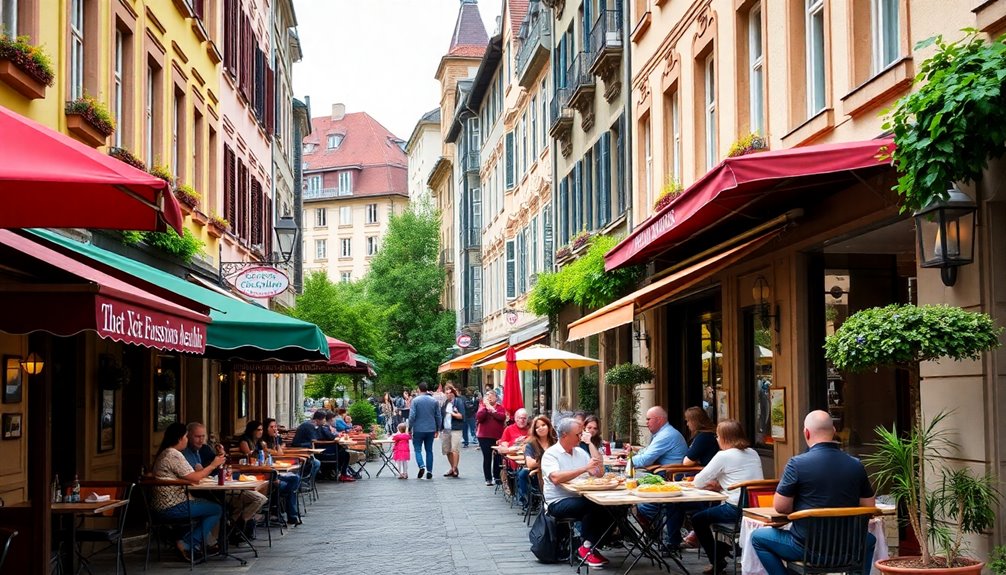
A classic meal here combines four things: a board of cured pork and pecorino, handmade pasta shaved with black truffle, grilled meat, and a bowl of Castelluccio lentils. Historically, skilled butchers from Norcia traveled across central Italy practicing their craft — carrying the town’s name with them. Trattorias, not temples: wooden tables, paper placemats, food that tastes like the mountains.
Prosciutto di Norcia IGP
A savory, long-cured ham — always look for the IGP seal on packaging or the tagliere card.
Corallina
Coarse-ground salami studded with white cubes of fat — Norcia’s most recognizable salume.
Guanciale & Pancetta
The fat base for real Roman-style pastas — cured in the mountain air of the Valnerina.
Pecorino
Young and sweet, or aged until crumbly and sharp — sometimes flecked or flavored with truffle.
Wild Boar
Ragù over pasta and slow stews — best in the cold months, when Norcians eat their heartiest.
Grilled Sausages
Locals grill them or simmer them with lentils — the simplest pairing on the plateau.
Practical Note
Many traditional restaurants close between lunch and dinner, roughly 3 p.m.–7:30 p.m. Check opening days carefully — especially in smaller villages and outside summer. Arriving at 4 p.m. hungry in an Umbrian mountain town is a lesson in patience.
Which Truffle You’re Eating, and When
Umbria’s black truffles come in two main varieties — knowing the difference saves you money and disappointment. Ask two questions before ordering: which species, and is it fresh? Then check whether truffle is included in the price or charged by weight.
| Attribute | Winter Black — Tuber melanosporum | Summer Black — Tuber aestivum (scorzone) |
|---|---|---|
| Season | Late autumn into winter (Nov–Feb sweet spot) | Warmer months, May–August |
| Aroma | Far more aromatic, darker interior | Milder — “the scaly one” is gentler but genuine |
| Scarcity | Scarce — the prized truffle of Norcia & Spoleto | Widely available |
| Price | Can run well over €100 per 100 g | A fraction of winter prices |
| Best use | Shaved over strangozzi, tagliolini, eggs, risotto | Shaved over eggs or stirred into pasta on a June evening |
The Truffle Oil Warning
Truffle oil is not equivalent to fresh truffle. Many commercial oils rely partly or entirely on added synthetic aroma — the ingredient list will tell you. If a menu says “tartufo nero” without specifying, ask the species and origin. Good places answer without hesitation.
Why the Lentils Are Worth the Drive Up the Mountain
Grown at 1,300–1,500 meters, where cold nights, thin soil, and dry mountain air produce a lentil unlike any grocery-store variety. Ordinary lentils turn to mush or take forever — these behave. What makes them special is practical, not poetic.
Thin Skins, Firm Flesh
Tender but firm, they hold their shape during cooking instead of dissolving into paste.
Earthy, Almost Sweet
A delicate flavor that needs no more than celery, carrot, onion, garlic, herbs, and good Umbrian olive oil.
Read the Label
Buy only packaging bearing the full name Lenticchia di Castelluccio di Norcia IGP plus the EU certification mark.
Symbolism & Tip
Lentils are Italy’s New Year’s Eve food — their coin-like shape represents prosperity, often served with cotechino sausage. At home: rinse, spread on a white plate to check for tiny stones, simmer with a bay leaf and garlic clove, and salt only at the end to keep the thin skins tender.
How to Build It, Step by Step
The richest way to experience Norcia is to string together producer visits, a proper trattoria lunch, and a hands-on experience — rather than rushing between photo stops.
Morning Market
Start at a norcineria shop: taste prosciutto IGP, corallina, and aged pecorino before buying.
Truffle Hunt
Book a licensed hunter and dog — late autumn or winter for Tuber melanosporum.
Trattoria Lunch
Strangozzi with black truffle, grilled sausage, and a bowl of Castelluccio lentils. Order a little of everything, shared.
Drive the Plateau
Wind up to Castelluccio for the Fioritura — red, yellow, blue, purple, and white field bands.
Buy Direct
Purchase IGP lentils straight from producers — tourism and direct sales sustain post-2016-earthquake recovery.
Plan It Right
Book a truffle hunt with a licensed hunter and dog for late autumn or winter, when the prized winter black truffle is in season.
Buy lentils only in packaging bearing the full name Lenticchia di Castelluccio di Norcia IGP plus the EU mark — generic products trade freely on the region’s reputation.
Castelluccio lentils need no soaking and cook in 20–30 minutes; salt them at the end to keep the thin skins tender.
There is no guaranteed peak day for the Fioritura — plan a flexible 2–3 day window between late spring and midsummer, and never walk into the lentil fields.
Verify road conditions, restaurant closing days, and Fioritura access before visiting — and buy directly from producers to support post-earthquake recovery.
A restaurant that can name the truffle species and origin — and shaves it fresh at the table — generally offers the most authentic experience.
What Makes a Classic Norcia Meal (And Why the Word ‘Norcineria’ Exists)
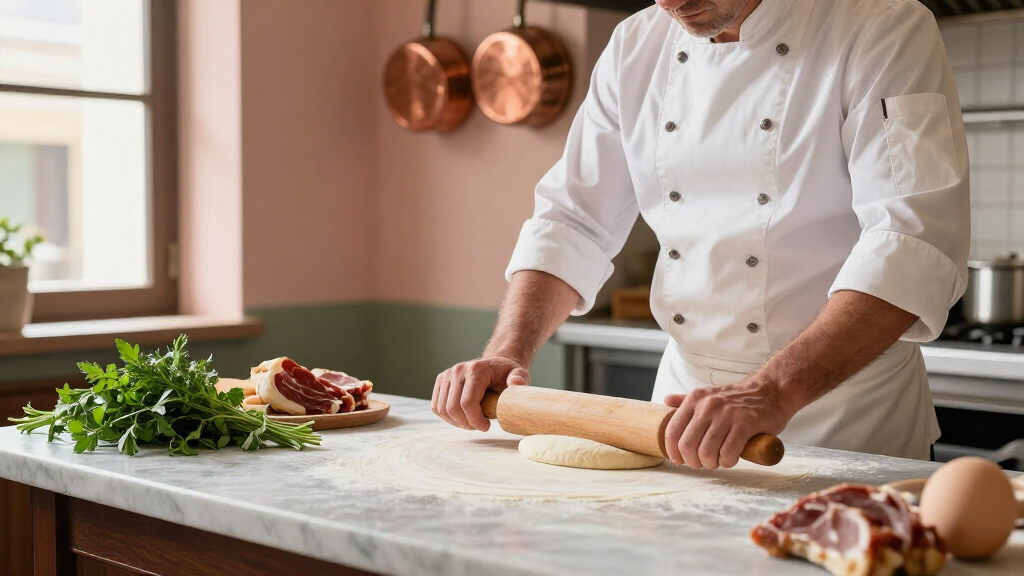
A classic meal in Norcia combines four things: a board of cured pork and pecorino, handmade pasta shaved with black truffle, grilled meat, and a bowl of Castelluccio lentils. Norcia’s pork tradition runs so deep that norcineria — the craft of making cured pork products — became the national Italian term for the trade, and for the shops selling it. Historically, skilled butchers from Norcia traveled across central Italy practicing their craft, carrying the town’s name with them.
What you’ll find on the board: Prosciutto di Norcia IGP, a savory, long-cured ham; corallina, a coarse salami studded with white fat cubes; plus capocollo, pancetta, and guanciale. Alongside it, aged pecorino — sometimes flecked or flavored with truffle — and fresh sausages, which locals often grill or serve simmered with lentils.
The restaurants here are trattorias, not temples of fine dining. Wooden tables, paper placemats, and food that tastes like the mountains. In winter you’ll find wild-boar ragù over pasta and slow stews that go with the cold. Order the way Norcians eat: a little of everything, shared, over an hour or two.
One practical note: many traditional restaurants close between lunch and dinner, often from about 3 p.m. to 7:30 p.m. Check opening days carefully, especially in smaller villages and outside summer — arriving at 4 p.m. hungry in an Umbrian mountain town is a lesson in patience.
- Prosciutto di Norcia IGP — the flagship ham; look for the IGP seal
- Corallina — Norcia’s signature coarse salami
- Guanciale and pancetta — the fat base for real Roman-style pastas
- Pecorino — young and sweet, or aged until crumbly and sharp
- Wild boar — ragù and stew, best in cold months
As an affiliate, we earn on qualifying purchases.
Black Truffles in Umbria: Which Kind You’re Eating and When to Get Them
Umbria’s black truffles come in two main varieties, and knowing the difference saves you money and disappointment. The prized one is the winter black truffle (Tuber melanosporum), traditionally associated with Norcia and Spoleto. It’s darker inside, far more aromatic, scarcer, and correspondingly expensive. Its main season runs from late autumn into winter — November through February is the sweet spot.
The other is the summer black truffle (Tuber aestivum), often called scorzone (roughly “the scaly one”). It appears in warmer months, costs a fraction of the price, and has a milder aroma. It’s still genuinely good — shaved over eggs or stirred into pasta on a June evening, it tastes like the season.
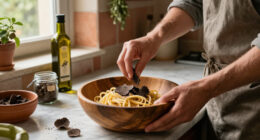
Fresh truffle is used simply and deliberately: shaved or grated over foods quiet enough to let it speak. The classic preparations are strangozzi (a hand-rolled eggless pasta, the name loosely meaning “shoestrings”) or tagliolini with black truffle, scrambled or fried eggs with truffle, truffle crostini, risotto, and grilled meats finished at the table with fresh shavings.
The truffle oil warning
Here’s the honest part: truffle oil is not equivalent to fresh truffle. Many commercial oils rely partly or entirely on added synthetic aroma, and the ingredient list will tell you. A restaurant that emphasizes freshly shaved seasonal truffle — and can tell you the species and origin — generally offers the most authentic experience. If a menu says “tartufo nero” without specifying, ask. Good places will answer without hesitation.
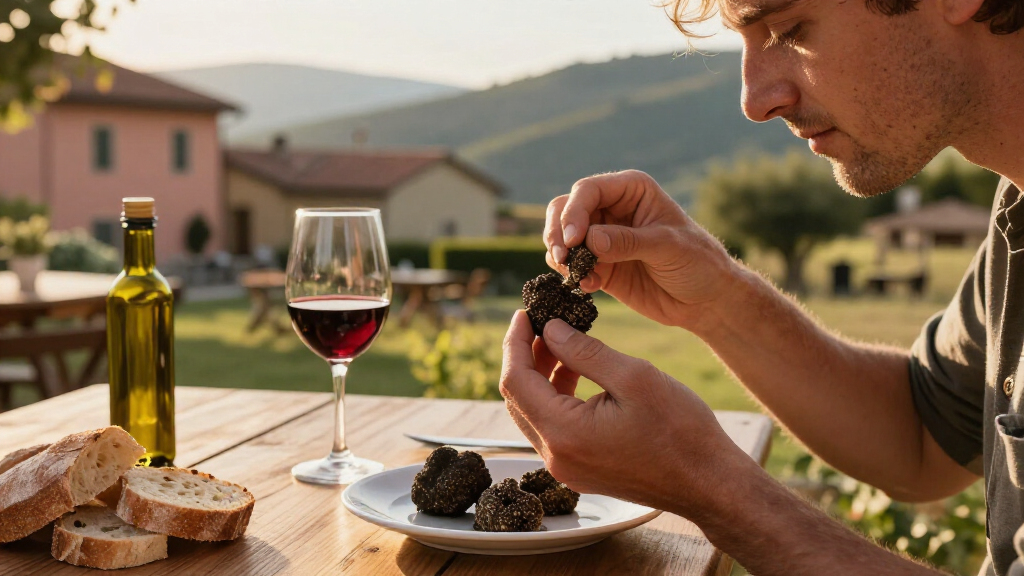
Ask two questions before ordering truffle in Umbria: which species is being served, and is it fresh? Then check whether the truffle is included in the price or charged by weight — fresh winter truffle can run well over €100 per 100 grams.
Why Castelluccio Lentils Are Worth the Drive Up the Mountain
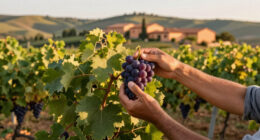
The “lentils of Ca” are almost certainly Lenticchia di Castelluccio di Norcia IGP — lentils grown on the high plateaus around Castelluccio, roughly 1,300–1,500 meters above sea level, protected by the European Union’s geographical-indication system. That altitude matters: cold nights, thin soil, and dry mountain air produce a lentil unlike any grocery-store variety.
What makes them special is practical, not poetic. They have thin skins and a tender but firm texture, they hold their shape during cooking, and they cook relatively quickly — usually 20 to 30 minutes with no soaking required. Their flavor is earthy and delicate, almost sweet. Ordinary lentils turn to mush or take forever; these behave.
Traditional preparations are deliberately simple because the lentil is the point. Simmer them with celery, carrot, onion, garlic, herbs, and good Umbrian olive oil, then serve as a soup or alongside a grilled local sausage. In Italy, lentils also carry symbolic weight: they’re eaten on New Year’s Eve — often with cotechino sausage — because their coin-like shape represents prosperity for the year ahead.
How to cook them at home
- Rinse the lentils and spread them on a white plate to check for tiny stones or debris.
- Sauté a soffritto of diced onion, carrot, and celery in olive oil.
- Add the lentils, cover with water or light broth by about two fingers’ width.
- Add a bay leaf and a clove of garlic; simmer gently 20–30 minutes until tender but intact.
- Finish with olive oil and salt at the end — salt too early can toughen the skins.
Food safety note: store dried lentils in a sealed container in a cool, dark place, and refrigerate cooked lentils within two hours, using them within three to four days. And when buying: packaging bearing the full IGP name and EU certification mark, plus identifiable producer or consortium information, is the safest way to distinguish genuine Castelluccio lentils from generic products borrowing the area’s reputation.
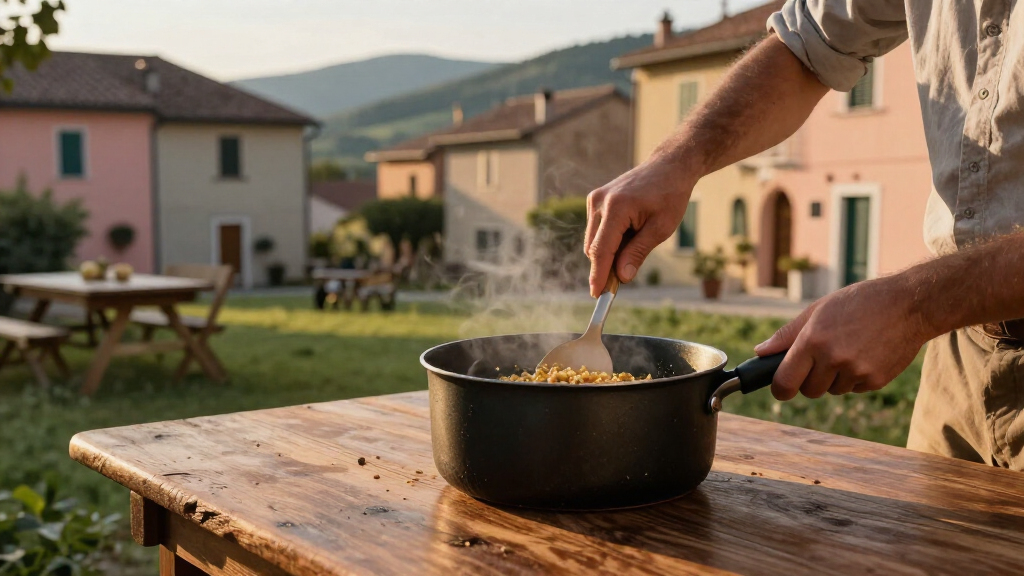
The Fioritura: When Castelluccio’s Fields Explode in Color
The Castelluccio plateau is famous for the Fioritura — the seasonal flowering of cultivated lentils and surrounding wild plants that turns the plain into a patchwork of red, yellow, blue, purple, and white. It usually happens between late spring and mid-summer, roughly late May through July, and it draws visitors from across Italy and beyond.
Here’s what nobody tells you in the Instagram posts: the exact spectacle changes every year according to weather, planting schedules, and natural growth. There is no guaranteed “peak day,” and locals can’t predict it months in advance. If you plan a trip around a specific date someone quoted online, you may arrive to green fields. Build flexibility into your itinerary instead — a two- or three-day window in the area beats a single-day dash.
Etiquette matters here too. These are working lentil fields, not a photo set.
Stay on marked roads and paths. Walking into the fields tramples crops and compacts the soil, damaging the very plants that create the show — and the lentils that sustain local farms.
The Fioritura has also become a traffic-management challenge, with heavy visitor congestion on the narrow mountain road up to the plateau. Local authorities have introduced access controls and shuttle arrangements in peak periods in recent years — check current arrangements before you drive. And a somber note: the plateau’s villages were hit hard by the 2016 Central Italy earthquakes. Reconstruction continues gradually, and food tourism and direct purchases from producers have genuinely helped sustain the local economy. Eating a lentil soup here is not just scenic; it’s participation in a recovery.
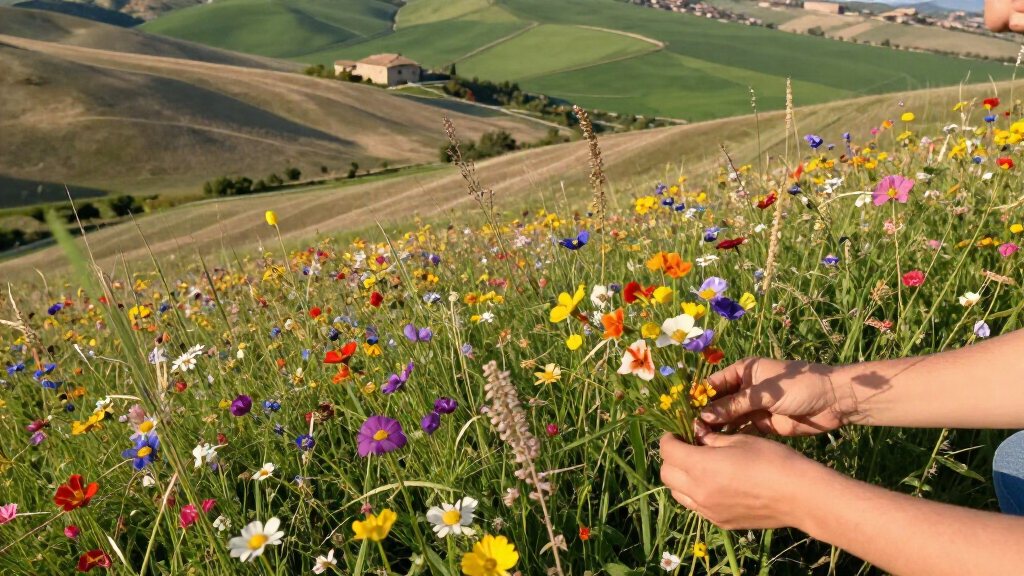
Winter vs. Summer in Norcia: Which Season Fits Your Trip
The best time to visit Norcia depends on which foods you want at their peak, and the two seasons offer genuinely different trips. Winter is for the serious truffle hunter’s palate and hearty mountain cooking; summer is for combining food with hiking, the Fioritura, and long evenings outdoors.
| Season | Truffles | Other Highlights | Tradeoffs |
|---|---|---|---|
| Late autumn–winter (Nov–Feb) | Winter black truffle (T. melanosporum) at its best | Wild-boar ragù, hearty stews, New Year lentils, fewer tourists | Cold, short days, some closures, mountain roads can be tricky |
| Late spring–summer (May–Aug) | Summer truffle (scorzone), milder and cheaper | Fioritura, hiking in the Sibillini, outdoor dining | Peak crowds on the plateau, no winter truffle |
| Autumn (Sep–Oct) | Season transition; some summer truffle | Mushrooms, game, harvest atmosphere | Shoulder-season closures in small villages |
Outside peak summer, Norcia’s restaurants pivot to winter truffles and hearty dishes, and the town feels like what it is: a mountain food capital in its quiet, most authentic mode. Reserve ahead for anything specific — truffle hunts, farm visits, and the better trattorias fill up in both high seasons.
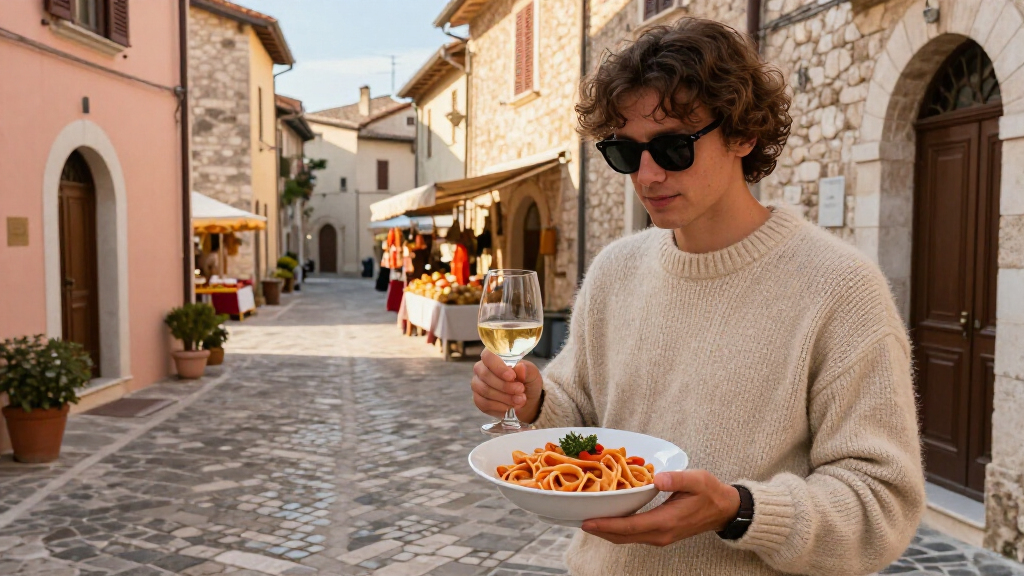
How to Build the Perfect Food Day in Norcia (Step by Step)
The richest way to experience Norcia is to string together producer visits, a proper trattoria lunch, and a hands-on experience rather than hopping between shops. Here’s a sequence that works, in the order most visitors find rewarding — and note that most of it requires booking in advance.
- Start at a norcineria. Visit a cured-meat shop and ask about curing methods — the good ones will walk you through prosciutto, corallina, and capocollo and explain the differences. Tasting before buying is normal.
- Book a truffle hunt. Go out with a licensed hunter and trained dog, ideally followed by a tasting or cooking lesson. Hunts run in both summer and winter seasons; reserve well ahead.
- Lunch in a trattoria. The classic order: a salumi-and-cheese board, strangozzi with black truffle, grilled sausage, and Castelluccio lentils. Ask which truffle species is on the plate.
- Drive up to Castelluccio. Take in the plateau — the vast plain ringed by mountains is the visual memory of the trip — and eat a lentil-based meal at altitude.
- Buy directly from producers. Certified IGP lentils, pecorino, honey, local olive oil, and clearly labeled truffle products. Direct purchases matter here more than in most of Italy.
Can you do Norcia and Castelluccio in one day? Technically yes — they’re about 30 minutes apart by mountain road. But seasonal congestion, weather, and the simple pleasure of a long lunch make an unhurried overnight stay far more rewarding.
Practical cautions: verify current road conditions and opening hours before visiting these remote mountain communities, as post-earthquake reconstruction and road work continue. And if you’re buying cured meats to take home, check your country’s import rules first — many destinations, including the US, restrict importing cured pork products. Vacuum-packed pecorino, lentils, honey, and olive oil travel without issue.
Frequently Asked Questions
When is the best time to visit Norcia for black truffles?
Late autumn and winter — roughly November through February — are best for the prized winter black truffle (Tuber melanosporum). Summer offers the milder, cheaper scorzone and the advantage of combining truffle meals with hiking and the Castelluccio Fioritura. Ask restaurants which species they’re serving and whether it’s fresh.
Do Castelluccio lentils need soaking before cooking?
Usually not. Their thin skins and small size mean they cook in roughly 20–30 minutes with no soaking. Rinse them and check for debris first, then simmer gently with a soffritto of onion, carrot, and celery until tender but intact. Add salt at the end.
How can I tell if Castelluccio lentils are authentic?
Look for the complete name Lenticchia di Castelluccio di Norcia IGP, the EU geographical-indication logo, and identifiable producer or consortium information on the package. Products labeled simply “lenticchie di montagna” or borrowing the Castelluccio name without the IGP mark are not certified.
Is truffle oil a substitute for fresh truffle?
No. Many commercial truffle oils rely partly or entirely on added synthetic aroma rather than real truffle — check the ingredient list. Fresh seasonal truffle, shaved at the table over strangozzi, eggs, or risotto, is a completely different experience. Some preserved truffle products do contain real truffle and are clearly labeled.
Is Norcia suitable for vegetarian travelers?
Yes, to a point. Lentil soups, truffle pasta, bruschetta, pecorino, and vegetable dishes are widely available. However, pork fat, meat broth, or anchovies can appear in recipes, so ask specifically. Truffle-strangozzi and Castelluccio lentils made with olive oil are the safest and most delicious bets.
Can I visit Norcia and Castelluccio in one day?
You can — they’re about 30 minutes apart by mountain road — but seasonal congestion, weather, and time for proper meals or producer visits make an unhurried overnight stay far more rewarding. If you only have one day, start early in Norcia, check road conditions first, and don’t try to squeeze in a truffle hunt.
Conclusion
If you remember one thing about Norcia, make it this: this is a place where the food and the landscape are the same story. The pork, the truffles, the lentils — all of it comes from one high mountain basin, and the best meals here are the simplest ones, led by the ingredient rather than the chef. Eat what the season gives you, buy directly from the people who make it, and carry the IGP seal home in your suitcase.
Go in winter for black truffle shaved over strangozzi in a warm trattoria, or in early summer for a plateau in bloom and a bowl of lentils at 1,400 meters. Either way, you’ll understand why an entire Italian word for curing pork was named after a town this small.

Fall Picks
fall essentials
As an affiliate, we earn on qualifying purchases.