
TL;DR

Get kitchen staples and gadgets delivered free with Prime
- Fast, free delivery on millions of items
- Prime Video, Amazon Music and more included
- Member-only deals all year
Tagliatelle al ragù is Bologna’s signature dish: broad ribbons of fresh egg pasta tossed with a slowly simmered, meat-dominant sauce built on soffritto, pancetta, beef, wine, and only a restrained amount of tomato. It is fundamentally different from the tomato-heavy spaghetti Bolognese served outside Italy, and the Italian Academy of Cuisine deposited its most recent reference recipe with the Bologna Chamber of Commerce in 2023.
Order spaghetti Bolognese in Bologna and you’ll get a polite smile, maybe a menu footnote, and almost certainly not the dish you imagined. The city that gave the world its most famous pasta sauce doesn’t actually eat it that way. What Bologna eats is tagliatelle al ragù — ribbons of fresh, silky egg pasta coated in a slowly cooked meat sauce that has about as much in common with a jar of tomato-heavy “bolognese” as a Sunday roast has with a TV dinner.
The difference isn’t snobbery. It’s physics and patience. A dense, meaty ragù needs a surface that can hold it, and a sauce built on pancetta, beef, wine, and hours of gentle simmering tastes like nothing a twenty-minute weeknight sauce ever will.
In this guide, you’ll learn what real ragù contains (and what it doesn’t), why the pasta matters as much as the sauce, the story behind the official recipe registered with the Chamber of Commerce — updated as recently as 2023 — and how to cook a version at home that a Bolognese nonna wouldn’t send back.
Real ragù alla bolognese is a meat sauce with a little tomato, not a tomato sauce with meat — aim for an amber-brown color, not red.
Use fresh egg tagliatelle (about 8 mm wide, one egg per 100 g of flour), and toss it with the sauce in the pan so every ribbon gets coated.
Simmer gently for two to four hours with gradual stock additions; milk near the end softens acidity and rounds the flavor.
Skip the garlic, oregano, and basil — the codified recipe gets its depth from soffritto, pancetta, wine, and time.
The official recipe (deposited 1982, updated 2023 with the Bologna Chamber of Commerce) is a cultural benchmark, not law — family variations are legitimate if…
Tagliatelle al Ragù: The Bolognese That Bologna Actually Eats
Order spaghetti Bolognese in Bologna and you’ll get a polite smile — and almost certainly not the dish you imagined. What Bologna eats is tagliatelle al ragù: broad ribbons of fresh egg pasta tossed with a slowly simmered, meat-dominant sauce built on soffritto, pancetta, beef, wine, and only a restrained amount of tomato. The difference isn’t snobbery — it’s physics and patience.
What Real Tagliatelle al Ragù Is
Fresh egg pasta ribbons, roughly 8 millimetres wide when cooked, tossed until glossy with a meat-forward sauce simmered for two to four hours. The sauce — ragù alla bolognese — is built from rendered pancetta, a finely chopped soffritto of onion, carrot, and celery, coarsely ground beef, white or red wine, a small quantity of tomato, gradual additions of stock, and often milk.
Meat is the point. Tomato plays a supporting role, adding acidity and depth, never dominating the plate. Think of the sauce as a loose, spoonable meat stew rather than a tomato sauce with meat in it. The finished dish should look like gold-and-amber ribbons, each one coated — with no red pool collecting at the bottom of the bowl.
Why Your Spaghetti Bolognese Isn’t Bolognese at All
Spaghetti Bolognese is an international adaptation, not a Bolognese dish. It pairs dried spaghetti — smooth, thin, slippery — with a looser, tomato-forward sauce that usually includes garlic, oregano, or basil. None of those three seasonings appear in the codified recipe. Ragù is dense and rich; spaghetti is narrow and slick — like trying to paint a wall with a feather. Tagliatelle’s broad, porous, egg-rich surface grabs the meat and holds it, ribbon by ribbon.
| Feature | Tagliatelle al Ragù (Bologna) | Spaghetti Bolognese (International) |
|---|---|---|
| Pasta | ✓ Fresh egg tagliatelle, ~8 mm wide | ✗ Dried spaghetti |
| Sauce base | ✓ Meat-dominant, minimal tomato | ✗ Tomato-dominant |
| Garlic & herbs | ✗ Not typical | ✓ Common (garlic, oregano, basil) |
| Cooking time | ✓ 2–4 hours, gentle simmer | ~ Often under 1 hour |
| Dairy | ✓ Milk, sometimes | ~ Cream, frequently |
| Serving style | ✓ Tossed together, glossy and coated | ✗ Sauce ladled over pasta |
How to Cook Ragù the Bolognese Way, Step by Step
Ragù builds in stages, and each stage exists for a reason. Understanding why each step matters is what separates a cook who follows a recipe from one who can rescue it when something goes sideways.
Render the Pancetta
Dice finely and cook slowly so the fat melts out and becomes your cooking fat.
Soften the Soffritto
Onion, carrot, and celery, cooked gently until sweet and translucent — ten minutes minimum, no browning.
Brown the Beef
Coarsely ground beef, colored without scorching the vegetables underneath.
Pour in the Wine
White or red both work — let it evaporate completely until the raw alcoholic smell is gone.
Add Tomato, Restrained
A spoonful of paste, a little strained tomato, or both. Two to three tablespoons serves six.
Simmer with Stock
Add stock gradually over two to four hours at the barest simmer, replenishing as the sauce reduces.
Add Milk Near the End
Traditionally toward the end, or in stages depending on the recipe.
Toss in the Pan
Cook the tagliatelle until tender but resilient, then mix thoroughly with the ragù.
Where Ragù Actually Shows Up in Bologna
You might find spaghetti alla bolognese in tourist-heavy spots near Piazza Maggiore — but it’s on the menu for visitors, not locals. In Bolognese kitchens, ragù appears under these pastas:
Fresh Tagliatelle
The signature pairing: broad, porous ribbons that grab and hold the dense meat sauce, ribbon by glossy ribbon.
Lasagne Verdi
Green spinach pasta layered with ragù and besciamella — the city’s other great monument to the sauce.
Broad & Filled Egg Pastas
Any wide ribbon or filled egg pasta offers the surface area a rich ragù demands — a rule of physics, not snobbery.
Historical note: Meat ragù developed from French-influenced slow-cooked traditions that entered elite Italian cooking in the 18th–19th centuries. In 1982, the Bologna delegation of the Italian Academy of Cuisine deposited a formal recipe with the Bologna Chamber of Commerce; an updated version followed in 2023. It’s a cultural benchmark, not law — family variations are legitimate as long as the structure holds: egg pasta, meat-forward sauce, restrained tomato, patient cooking, balanced richness.
The Ragù Rules, Distilled
It’s a meat sauce with a little tomato, not a tomato sauce with meat — aim for an amber-brown color, not red.
Use fresh egg tagliatelle (about 8 mm wide, one egg per 100 g of flour), and toss it with the sauce in the pan so every ribbon gets coated.
Simmer gently for two to four hours with gradual stock additions; milk near the end softens acidity and rounds the flavor.
Skip the garlic, oregano, and basil — the codified recipe gets its depth from soffritto, pancetta, wine, and time.
The official recipe is a benchmark, not law — deposited in 1982 and updated in 2023 with the Bologna Chamber of Commerce, it documents a tradition rather than policing it.
What Real Tagliatelle al Ragù Is (In One Paragraph)
Tagliatelle al ragù is a dish of fresh egg pasta ribbons, roughly 8 millimetres wide when cooked, tossed until glossy with a meat-forward sauce simmered for two to four hours. The sauce — ragù alla bolognese — is built from rendered pancetta, a finely chopped soffritto of onion, carrot, and celery, coarsely ground beef, white or red wine, a small quantity of tomato, gradual additions of stock, and often milk. Meat is the point. Tomato plays a supporting role, adding acidity and depth, never dominating the plate.
Think of the sauce as a loose, spoonable meat stew rather than a tomato sauce with meat in it. That mental shift changes everything about how you cook it. The finished dish should look like gold-and-amber ribbons, each one coated, with no red pool collecting at the bottom of the bowl.
Local lore says a cooked tagliatella should measure exactly 1/12,270 of the height of Bologna’s Asinelli Tower — the medieval leaning tower that defines the city’s skyline. That’s cultural identity dressed up as a measurement, and it tells you how seriously Bologna takes its pasta width.
As an affiliate, we earn on qualifying purchases.
Why Your Spaghetti Bolognese Isn’t Bolognese At All
Spaghetti Bolognese is an international adaptation, not a Bolognese dish. It pairs dried spaghetti — smooth, thin, slippery — with a looser, tomato-forward minced-meat sauce that usually includes garlic, oregano, or basil. None of those three seasonings appear in the codified Bolognese recipe, and none of them need to.
The pasta mismatch is the deeper problem. Ragù is dense and rich; spaghetti is narrow and slick, like trying to paint a wall with a feather. The sauce slides off and pools at the bottom of the bowl. Tagliatelle’s broad, slightly porous, egg-rich surface grabs the meat and holds it, ribbon by ribbon.
In Bologna, ragù shows up under tagliatelle, layered into lasagne verdi (green spinach pasta lasagna), or under other broad or filled egg pastas. You might find spaghetti alla bolognese in tourist-heavy spots near Piazza Maggiore, but it’s on the menu for visitors, not locals.
| Feature | Tagliatelle al Ragù (Bologna) | Spaghetti Bolognese (international) |
|---|---|---|
| Pasta | Fresh egg tagliatelle, ~8 mm wide | Dried spaghetti |
| Sauce base | Meat-dominant, minimal tomato | Tomato-dominant |
| Garlic & herbs | Not typical | Common (garlic, oregano, basil) |
| Cooking time | 2–4 hours, gentle simmer | Often under 1 hour |
| Dairy | Milk, sometimes | Cream, frequently |
| Serving style | Tossed together, glossy and coated | Sauce ladled over pasta |
None of this makes spaghetti Bolognese bad food. It’s just a different dish wearing a borrowed name — like calling a hard cider Champagne.
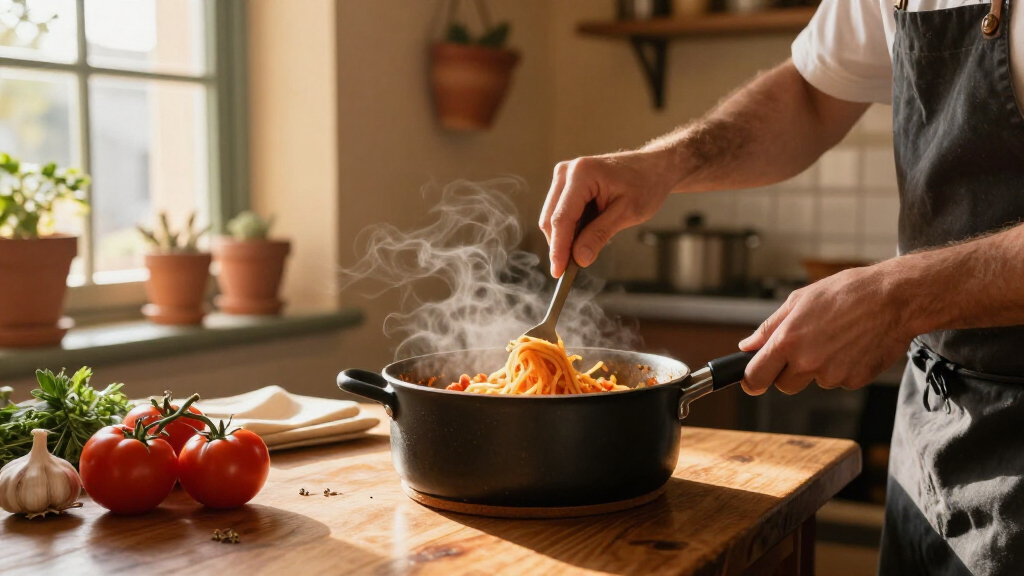
How to Cook Ragù the Bolognese Way, Step by Step
Ragù builds in stages, and each stage exists for a reason. Understanding why each step matters is what separates a cook who follows a recipe from one who can rescue it when something goes sideways. Here’s the traditional sequence:
- Render the pancetta. Dice it finely and cook it slowly so the fat melts out and becomes your cooking fat. Why it matters: pancetta fat carries cured-pork flavor into every other ingredient, and it coats the soffritto as it softens rather than letting it fry in neutral oil. Rush this and the meat tastes like separate components; take your time and the pot smells like a trattoria before anything else goes in.
- Soften the soffritto. Finely chopped onion, carrot, and celery, cooked gently until sweet and translucent — ten minutes minimum, no browning. The tradeoff: browning adds caramelized flavor but bitter edges, while slow sweating draws out sugars that later balance the wine’s acidity. Finely chopping matters too — the vegetables are meant to dissolve into the sauce as a sweet aromatic base, not appear as visible pieces.
- Brown the beef. Add coarsely ground beef and let it color without scorching the vegetables underneath. Browning triggers the Maillard reaction, creating hundreds of flavor compounds you simply cannot get from grey, steamed meat. A coarse grind is deliberate: it gives the sauce texture and distinct tender nuggets, where a fine paste-like grind turns mushy over a long simmer.
- Pour in the wine — white or red both work — and let it evaporate completely until the raw alcoholic smell is gone. The choice is a genuine tradeoff: white wine keeps the sauce’s color brighter and its flavor sharper; red adds depth but darkens the pot toward brick. What matters is full evaporation — residual raw alcohol tastes harsh and sharp in the finished sauce.
- Add tomato, restrained. A spoonful of tomato paste, a little strained tomato, or both. This is seasoning, not foundation. Think of it the way you’d think of vinegar in a stew: it’s there to lift and balance the meat, not to be tasted on its own. Two or three tablespoons is genuinely enough for a sauce serving six.
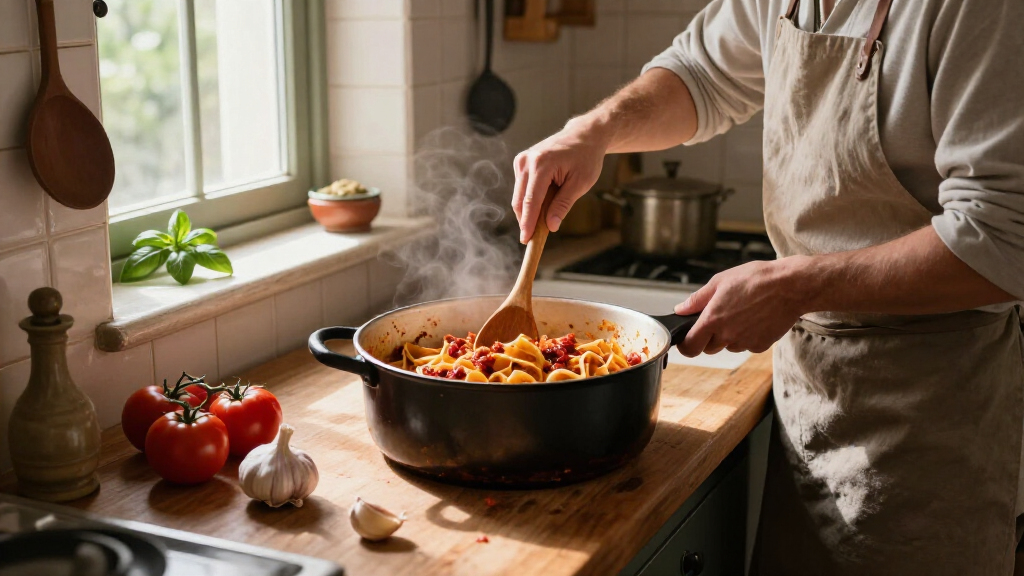
- Simmer with stock. Add stock gradually over two to four hours at the barest simmer, replenishing as the sauce reduces. Why gradually instead of all at once? A pot that’s too liquid never reduces into that concentrated, spoon-coating texture, while one that runs dry catches and scorches. The slow, wet-dry rhythm is what melds the meat, vegetables, and tomato into a single flavor. For a concrete picture: a proper simmer shows the occasional lazy bubble, not a rolling boil — if your surface is churning, drop the heat.
- Add milk toward the end (or in stages, depending on the recipe) to soften acidity and round out the flavor. It doesn’t make the sauce creamy — the small quantity evaporates into the meat — it tames the tomato’s edge and gives the ragù a softer, rounder finish.
- Season simply with salt and pepper. Nothing else. Restraint is the point: with hours of reduction, the pancetta, soffritto, and beef have already built more depth than any herb blend could add.
A real-world example of the payoff: make the same recipe twice — once simmered forty minutes at a hard boil, once three hours at a whisper — and taste them side by side. The short version tastes like seasoned ground beef in tomato; the long one tastes like a single, unified sauce where you can’t isolate any ingredient. That difference is the dish.
Texture tells you when it’s done: concentrated, tender, cohesive. If it still looks watery, it isn’t finished. According to madtasting.com, the most reliable rule is that flavor and texture matter more than any exact clock time.
For food safety, keep the simmering sauce above 140°F (60°C) while cooking, cool leftovers within two hours, and refrigerate for up to three days or freeze for up to three months. Ragù is genuinely better the next day — overnight, the fats and gelatin continue melding, which is why many Bolognese families cook it a day ahead.
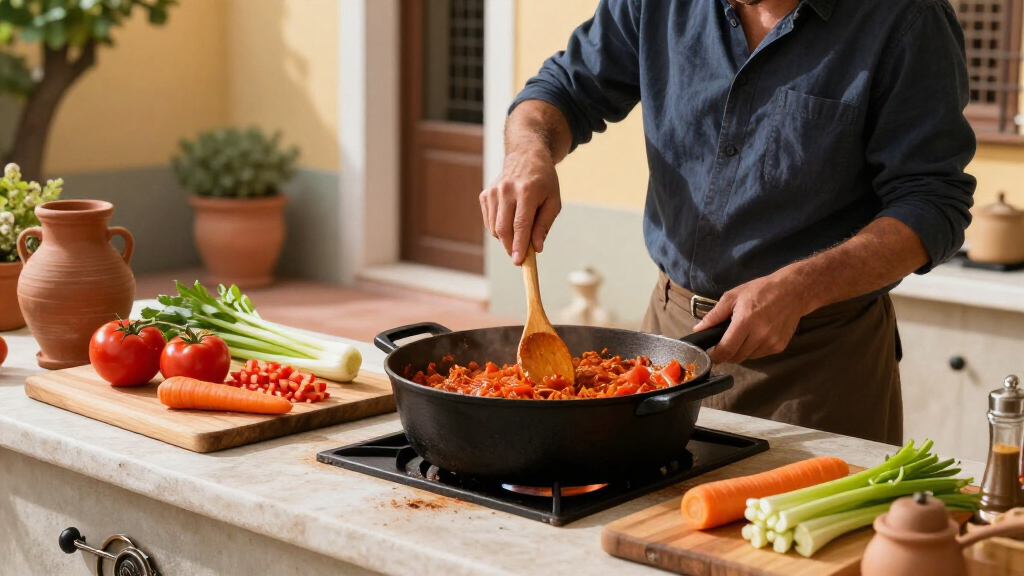
The Pasta: Why 8 Millimetres and One Egg Per 100 Grams Matter
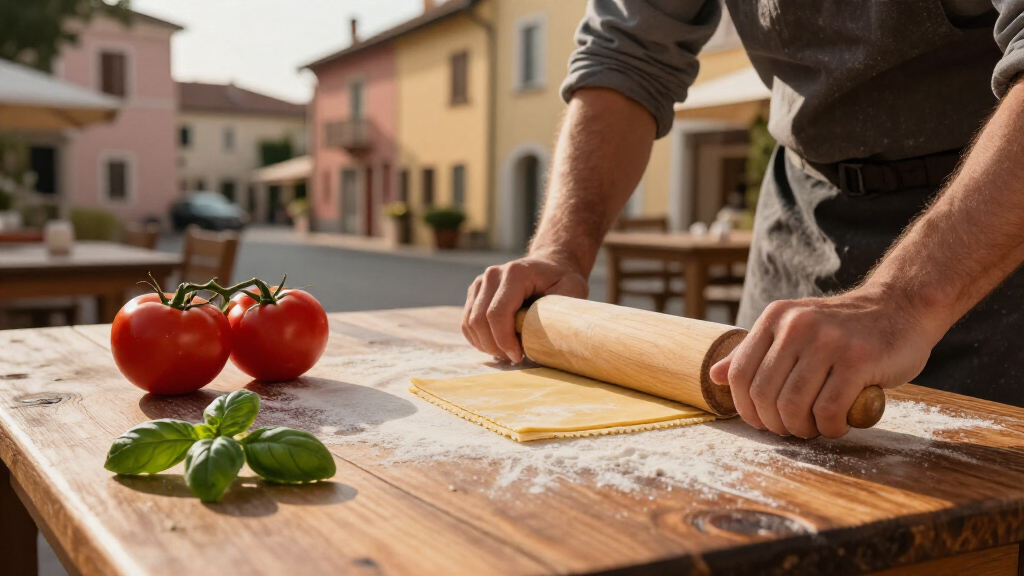
Traditional Bolognese tagliatelle is fresh egg pasta made with roughly one egg for every 100 grams of flour. No water, no oil — just flour and eggs worked into a dough, rested, rolled into thin sheets, and cut into ribbons. The result is tender but resilient, golden, and rough enough at the surface to grip sauce.
Why the ratio matters: egg yolks bring fat and emulsifiers, which give the pasta its rich flavor, golden color, and — crucially — a slightly matte, porous surface once rolled. Compare that to commercial dried spaghetti, which is extruded through bronze or Teflon dies into a slick, hard strand: smooth pasta sheds sauce, textured egg pasta holds it. An easy way to see the difference at home: drop a spoon of ragù onto a plate of fresh tagliatelle and onto a plate of dried spaghetti, give both a stir, and watch which one keeps the sauce after thirty seconds.
Superior-quality dried egg tagliatelle is a respectable substitute; many good Italian brands deliver a genuinely fine result. But fresh pasta gives you that delicate, almost silky bite that makes the dish. If you’re rolling by hand or with a machine, aim for sheets thin enough to see the shadow of your hand through — then cut ribbons about 8 mm wide.
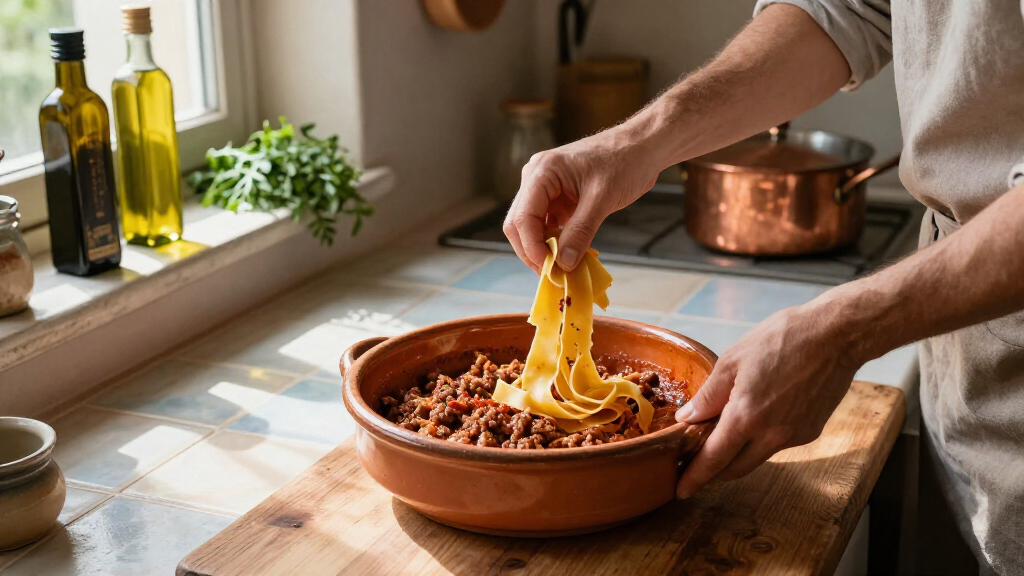
Cook the tagliatelle only until tender with a slight chew, reserving a splash of pasta water, then toss the pasta with the ragù in the pan — don’t ladle sauce over a static nest of noodles. The practical reason: thirty to sixty seconds of tossing over gentle heat lets the starchy pasta water and the meaty fat emulsify into a glossy film that coats each ribbon, the same principle behind cacio e pepe or aglio e olio. Ladling sauce over plated pasta just gives you a pile with a puddle. Finish with grated Parmigiano Reggiano, the natural regional cheese, aged 24 months or more if you can find it. And never, ever rinse the cooked pasta; you’d wash away the starch that helps the sauce cling.
If you can’t find or make tagliatelle, pappardelle or fettuccine carry the sauce well — pappardelle, at roughly twice the width, is the traditional partner for game ragùs in neighboring Tuscany, and it works beautifully here too. Just know the dish stops being tagliatelle al ragù and becomes something equally delicious with a different name.
The 1982 Recipe, the 2023 Update, and Why None of It Is Law
In 1982, the Bologna delegation of the Italian Academy of Cuisine (Accademia Italiana della Cucina) deposited a formal ragù recipe with the Bologna Chamber of Commerce — a deliberate act of documentation, preserving a representative tradition on paper. In 2023, the Academy deposited an updated version after historical and culinary research, acknowledging that meat cuts, ingredients, and household kitchens had changed over four decades.
The update kept the dish’s core identity intact while clarifying which ingredients and variations are acceptable. Think of both documents as benchmarks, not statutes.
Tagliatelle al ragù carries no DOP or IGP protection, unlike Parmigiano Reggiano or Prosciutto di Parma. The deposited recipes preserve heritage — they do not bind restaurants or home cooks.
This matters because authenticity in Bologna is structural, not rigid. Recognizable egg pasta, a meat-forward sauce, restrained tomato, patient cooking, balanced richness — hit those marks and your version counts, whether or not your grandmother came from Emilia-Romagna. The historical roots run back to French-influenced slow-cooked meat preparations that entered elite Italian kitchens in the eighteenth and nineteenth centuries, before evolving into the minced-meat sauce paired with the region’s egg pasta.
Seven Mistakes That Ruin a Perfectly Good Ragù
Most ragù failures trace back to a handful of fixable errors. Check your own habit against this list:
- Too much tomato. If your sauce is red, it’s a tomato sauce. Ragù should be amber-brown.
- Garlic and dried herbs. Oregano and basil belong to other Italian traditions; here they crowd out the meat.
- Rushing the simmer. Boiling aggressively for forty minutes won’t replicate three gentle hours.
- Coarse vegetables. The soffritto should nearly melt into the sauce; big chunks stay chunky.
- Very lean meat. Fat carries flavor and keeps the texture succulent; extra-lean beef turns grainy and dry.
- Sauce on top, not tossed through. The pasta and ragù should be married in the pan, not introduced at the table.
- Portions the size of a soup tureen. In Bologna, tagliatelle al ragù is a primo — a modest first course, not a bucket.
The anecdote every visitor collects: you watch a server in a trattoria on Via delle Pescherie toss a modest nest of tagliatelle with a ladle of ragù in a warm pan, sixty seconds of movement, and what arrives at the table is glossy, compact, and utterly unlike the saucy heap the word “Bolognese” conjures abroad. Less sauce, more integration. That’s the whole secret of the presentation.
Eating It in Bologna: Where the Dish Lives
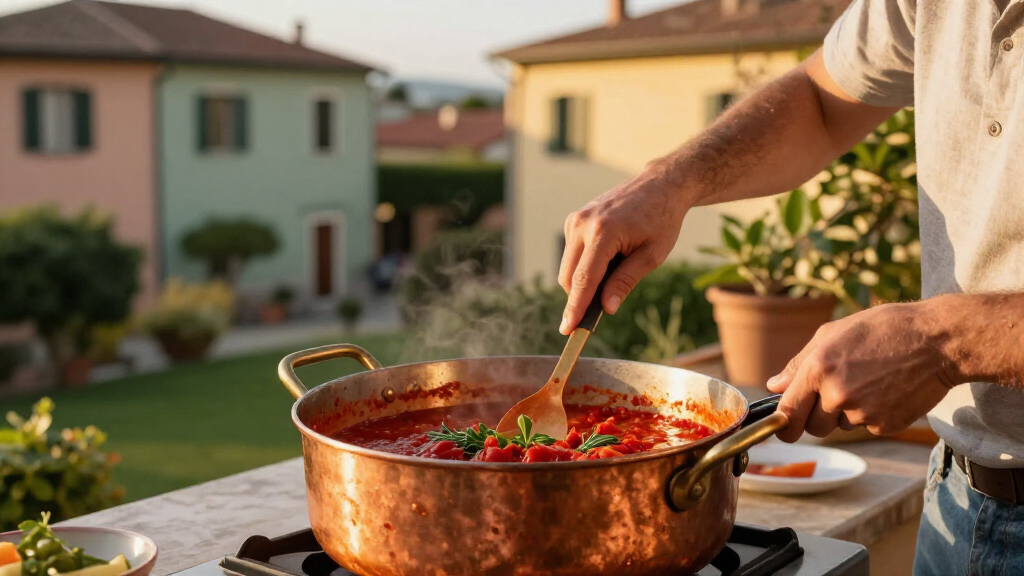
Picture a typical scene: it’s 1 p.m. on a Saturday in November, and a small trattoria in the Quadrilatero — the medieval market district of narrow lanes just off Piazza Maggiore, where streets like Via dell’Indipendenza and Via delle Pescherie Vecchie are lined with family-run shops — is filling with locals. A server sets down a modest plate of tagliatelle al ragù: a tidy nest of ribbons, pasta and sauce fused into one amber-gold thing, a cloud of grated Parmigiano Reggiano on top. It looks small. Then you taste it, and understand why the portion is sized like a first course, not a main.
A concrete example of the rhythm: many of these trattorie start the ragù early in the morning — or even the day before — so the lunchtime primo arrives after three hours of simmering plus an overnight rest. If you order it as a visitor at 12:30, you’re eating the same pot that a Bolognese family would serve at their own Sunday table. Watch how it’s finished, too: the pasta goes back into a warm pan with a ladle of ragù and a splash of starchy water, gets sixty seconds of tossing, and only then is plated. Sauce is never simply poured over a static mound of noodles.
Autumn and winter are the seasons for it. Ragù is cold-weather food, and the November lunch above — fog curling under the porticoes, a glass of local Sangiovese or a Lambrusco from nearby Modena alongside — is one of Italy’s quietly perfect food moments. The region’s reds are built to sit beside its cured meats and slow sauces. If you drink, do so moderately and with food.
A note for anyone recreating the experience at home with allergies in mind: the dish contains wheat (gluten) and egg in the pasta, dairy in the milk and cheese, and often sulfites from the wine. All are structural to the traditional recipe — unlike, say, swapping the cheese for garnish, these can’t simply be omitted — so guests with sensitivities need a heads-up before they sit down.
Frequently Asked Questions
Is spaghetti Bolognese eaten in Bologna?
You may find it in tourist-oriented restaurants, but it is not the city’s traditional pairing. In Bologna, ragù is served with fresh tagliatelle, layered into lasagne verdi, or paired with other broad or filled egg pastas.
Is authentic Bolognese sauce tomato-based?
No. It contains a restrained amount of tomato — paste or strained tomato — for depth and acidity, but meat remains the dominant ingredient and flavor. If the sauce looks bright red, it has drifted from the Bolognese style.
Does real ragù contain milk or cream?
Milk appears in the official reference recipe and many traditional versions; it softens acidity and rounds the sauce. Cream is not typical — if you want dairy, milk is the characteristic choice. Some families omit milk entirely without making the ragù inauthentic.
How long should ragù cook?
Usually two to four hours at a very gentle simmer, with stock added gradually as the sauce reduces. Texture matters more than the clock: the finished ragù should be concentrated, tender, and cohesive, never watery.
Can I make tagliatelle al ragù ahead of time?
Yes — ragù often tastes better the next day and freezes well for up to three months. Cool it within two hours of cooking and refrigerate for up to three days. Fresh tagliatelle, however, should be cooked just before serving.
Can I use dried tagliatelle instead of fresh?
Yes, especially a good-quality dried egg tagliatelle. Fresh handmade pasta gives the most characteristic tender, sauce-grabbing texture, but well-made dried egg tagliatelle is a perfectly respectable substitute.
Conclusion
Here’s the one thing to remember: tagliatelle al ragù is a marriage, not a topping. Broad egg ribbons and a patient, meaty sauce, tossed together until you can’t tell where one ends and the other begins. Respect the ratio of meat to tomato, give it the hours it asks for, and you’re eating the dish Bologna actually eats — not the one the rest of the world renamed.
Cook it once this way and you’ll understand why a city registered the recipe with its Chamber of Commerce, and why locals measure their pasta against a medieval tower. Some dishes earn that kind of devotion. This is one of them.
Halloween Picks
halloween
As an affiliate, we earn on qualifying purchases.