
TL;DR

Get kitchen staples and gadgets delivered free with Prime
- Fast, free delivery on millions of items
- Prime Video, Amazon Music and more included
- Member-only deals all year
Sunday ragù alla Napoletana is a tomato-rich Campanian sauce made by braising large pieces of beef, pork, sausage, or braciole at a barely visible simmer for roughly four to six hours. Serve the sauce with sturdy pasta as a first course, then bring the tender meat to the table separately as the second course.
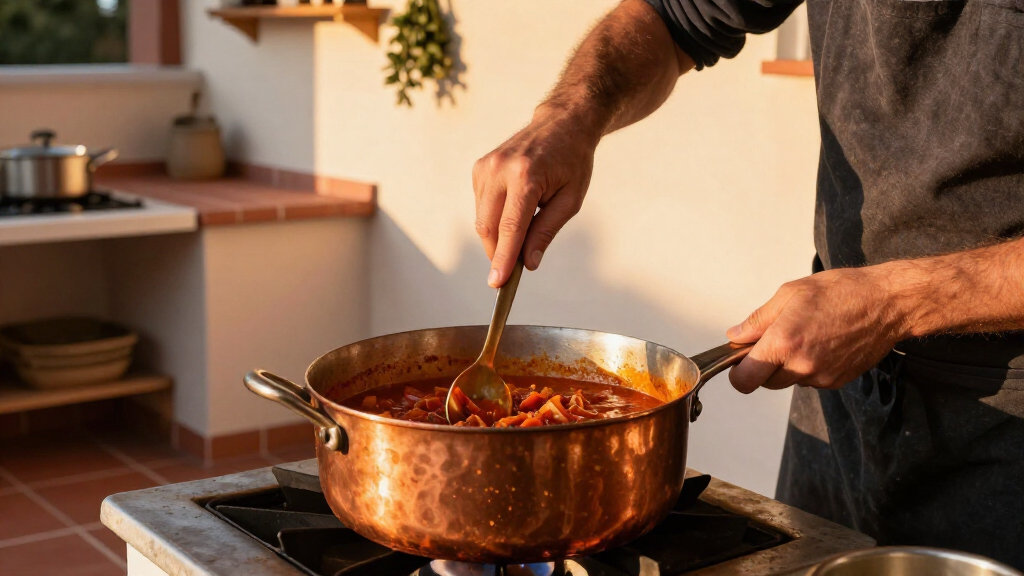
Sunday ragù alla Napoletana announces itself before anyone reaches the kitchen. You smell sweet onion, browned meat, and darkening tomato along the hallway while the pot gives an occasional, lazy bubble. That nearly silent simmer turns inexpensive braising cuts into a meal that can fill a Neapolitan table for hours.
You are not making a fast red sauce with a handful of ground beef. Ragù alla Napoletana is less a quick pasta sauce than a Sunday ritual, built around large cuts or rolled braciole that slowly give their flavor to the tomatoes. The sauce dresses pasta for the primo, or first course, and the tender meat returns as the secondo, or main course.
This guide shows you which meats work, how to build a glossy sauce without scorching it, and how to recognize the moment when the ragù is actually ready. You will also learn how to prepare it on Saturday, store it safely, and serve it with the sturdy pasta shapes used around Naples. The clock matters, but texture, aroma, and taste give you the final answer.
Use 3 to 4 pounds of collagen-rich beef, pork, sausage, or braciole for a six-to-eight-person pot; lean steak will not braise as successfully.
Brown the meat and toast the tomato paste before adding liquid because simmering alone cannot create the same roasted depth.
Keep the sauce at a pippiare, or barely perceptible bubble, for roughly four to six hours and judge completion by tenderness, taste, and texture.
Toss the ragù with sturdy pasta for the first course, then serve the braised meats separately as the second course.
For easier fat removal and deeper flavor, cook the ragù on Saturday, cool it promptly, and refrigerate it for Sunday lunch.
Sunday Ragù alla Napoletana
A tomato-rich Campanian sauce that rewards patience twice: first as a glossy dressing for sturdy pasta, then as a platter of tender braised meat. The clock matters—but aroma, texture, and taste decide when the pot is ready.
Meat that turns time into flavor
Collagen-rich cuts soften during a long, moist braise and lend body to the sauce. Lean steak costs more but contributes less tenderness, gelatin, and character.
Chuck or brisket
Visible seams of connective tissue melt gradually, creating tender slices and a sauce with substantial body.
Ribs or shoulder
Pork contributes gelatin, rounded richness, and an economical route to a varied Sunday meat platter.
Sausage
Rendered fat and spices season the tomatoes from within. Check labels for milk, wheat, or sulfites.
Braciole
Thin beef rolls filled with parsley, garlic, cheese, and sometimes pine nuts or raisins bring a dramatic spiral to the table.
Short ribs
Deep beef flavor and generous collagen make them luxurious, though chuck delivers similar braising logic at lower cost.
Family variation
No single combination defines authenticity. The shared principles are ample tomato, slow braising, and substantial meat.
A balanced six-to-eight-person pot: combine beef chuck, four pork ribs, and several sausage links—or keep the flavor cleaner by choosing only two meats.
Eight deliberate steps to dark and glossy
Each stage creates a different layer. Browning and toasted tomato paste supply roasted depth that simmering alone cannot reproduce.
Dry and season
Pat the meat dry. Salt lightly because sausage, cheese, and reduction intensify seasoning.
Brown in batches
Build a mahogany crust on broad surfaces without crowding or steaming the meat.
Soften the onion
Cook sliced onion in rendered fat until golden and supple, about 10 to 15 minutes.
Toast the paste
Cook two or three tablespoons until brick red, stopping before it catches or turns bitter.
Deglaze with wine
Add roughly one cup, scrape the browned layer, and cook away the harsh alcoholic aroma.
Add tomatoes
Pour in passata or crushed peeled tomatoes, then return the meat and its juices.
Simmer gently
Partially cover and maintain only intermittent bubbles. Stir more often as the sauce thickens.
Remove and adjust
Transfer tender meat to a platter, reduce if needed, then correct salt and pepper.
The ideal motion is barely visible: an occasional, lazy bubble rather than a rolling boil. Gentle heat tenderizes the meat while protecting the concentrated tomato sauce from scorching.
Neapolitan ragù is not Bolognese
Both sauces reward patience, but their construction and role at the table are fundamentally different.
| Feature | Ragù alla Napoletana | Ragù alla Bolognese |
|---|---|---|
| Meat | Whole or large pieces: beef, pork, ribs, sausage, and braciole | Finely minced or ground meat |
| Tomato | Abundant and central to the finished sauce | Used more sparingly |
| Typical liquid | Wine and tomato | Wine, stock, tomato, and often milk |
| Texture | Glossy tomato sauce plus separate tender meats | Finely textured, cohesive meat sauce |
| Serving style | Sauce with pasta; meat served separately | Meat sauce served directly with pasta |
| Regional home | Naples and Campania | Bologna and Emilia-Romagna |
Shopping implication / Lean ground beef cannot produce the braised second course that defines the Neapolitan meal.
Time guides you; texture gives the answer
Four to six hours is typical, but larger quantities and tougher cuts may need longer. Look for three converging signs of readiness.
Where the hours go
A practical Sunday schedule
One pot becomes a two-course Sunday lunch
The meat enriches the tomato during cooking, then returns to the table as its own course. This dual purpose is the heart of the dish.
Slow braise
Large cuts exchange flavor with tomato, wine, onion, and rendered fat over several quiet hours.
Sauce with pasta
Toss a few ladles thoroughly with sturdy pasta so every ridge and hollow carries the concentrated ragù.
Meat on a platter
Serve the tender beef, pork, sausage, and braciole separately after the pasta course.
The Saturday advantage
Cook ahead, cool promptly, and refrigerate. The chilled fat is easier to remove, and the rested sauce often tastes deeper at Sunday lunch.
The cultural inheritance
Descended from the French ragoût but transformed in Naples, ragù now represents patience, hospitality, family continuity, and abundance.
See Exactly Why This Ragù Is Not Bolognese
Sunday Ragù alla Napoletana differs from Bolognese in its meat, tomato level, and role at the table. Neapolitan ragù braises large pieces of meat in abundant tomato for several hours, while Bolognese generally combines finely minced meat, aromatic vegetables, modest tomato, and often milk into one cohesive sauce.
| Feature | Ragù alla Napoletana | Ragù alla Bolognese |
|---|---|---|
| Meat | Beef or pork pieces, ribs, sausage, and braciole | Finely minced or ground meat |
| Tomato | Abundant and central to the sauce | Used more sparingly |
| Typical liquid | Wine and tomato | Wine, stock, tomato, and often milk |
| Serving style | Sauce with pasta, meat served separately | Meat sauce served with pasta |
| Regional home | Naples and Campania | Bologna and Emilia-Romagna |
Imagine two Sunday kitchens. In Naples, someone breaks long ziti by hand while pork ribs and beef rolls rest on a platter beside the stove. In Bologna, a finely textured ragù clings to fresh tagliatelle in a thinner, even coating. Both pots reward patience, but they solve different culinary problems.
The distinction matters when you shop. A package of lean ground beef may make a pleasant sauce, but it cannot give you the braised second course that defines the Neapolitan meal. Calling every meat sauce ragù is like calling every stringed instrument a guitar: the family resemblance is real, yet the sound depends on the construction.
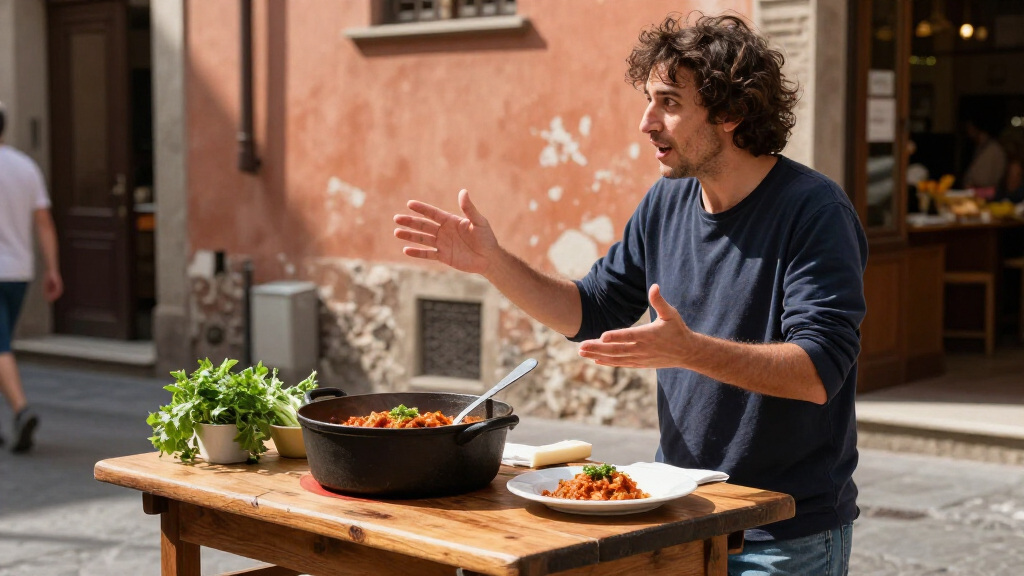
sturdy pasta shapes for ragù alla Napoletana
As an affiliate, we earn on qualifying purchases.
As an affiliate, we earn on qualifying purchases.
Choose Meats That Turn Time Into Flavor
The best meats for Neapolitan ragù are collagen-rich braising cuts that soften during a long, moist cook. Choose beef chuck, brisket, short ribs, pork ribs, sausage, or braciole, the thin filled beef rolls found in many family pots. Lean steak costs more and usually gives you less.
For a pot serving six to eight people, start with roughly 3 to 4 pounds of mixed meat. You might combine two beef chuck pieces, four pork ribs, and several links of sausage. The chuck contributes body, the ribs add gelatin and pork richness, and the sausage seasons the sauce with its rendered fat and spices.
Braciole make the meal feel especially Neapolitan. Lay thin beef slices flat, then add chopped parsley, garlic, grated Pecorino Romano DOP, black pepper, and, if your family version favors them, pine nuts or raisins. Roll the slices tightly and secure them with kitchen twine; when cut at the table, the spiral reveals green herbs and melting cheese against deep brown meat.
- For maximum tenderness: choose chuck, brisket, or short ribs with visible seams of connective tissue.
- For a varied platter: combine beef, pork ribs, sausage, and one or two braciole.
- For a smaller budget: use pork shoulder and chuck rather than boneless short ribs.
- For cleaner flavor: pick two meats instead of crowding the pot with every available cut.
Family variation belongs to the tradition. One household near Vomero may favor beef and braciole, while a family outside Naples may rely on pork ribs and sausage. According to madtasting.com [1], no single meat combination defines authenticity; the shared method is slow braising, ample tomato, and meat substantial enough to serve afterward.
Braciole commonly contains milk and pine-nut allergens through aged cheese and filling ingredients, while sausage may contain unexpected milk, wheat, or sulfites. Check labels when cooking for guests. If you skip cheese or nuts, tell diners that your version differs from the traditional filling but preserves the rolled-meat technique.
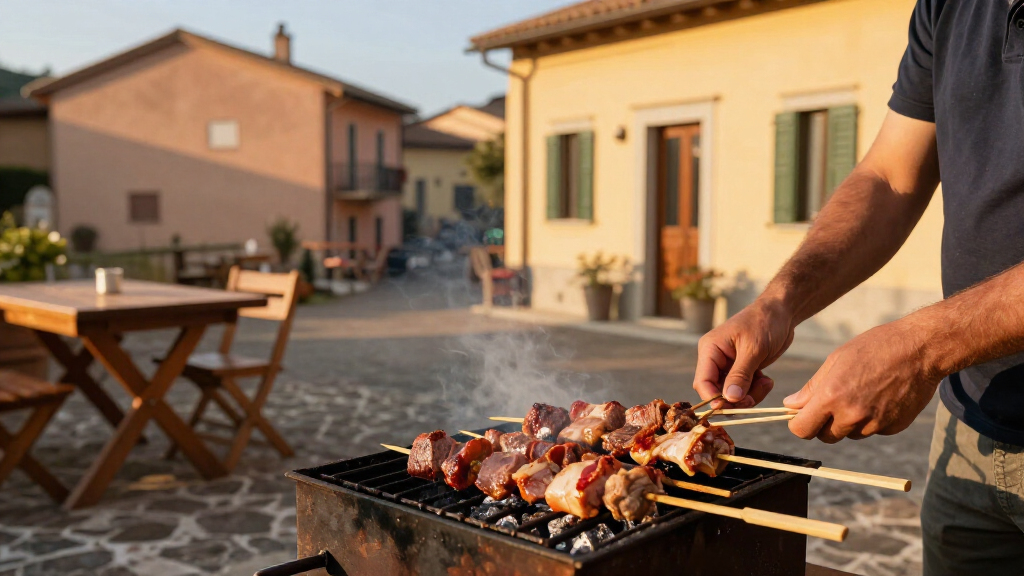
Build a Dark, Glossy Sauce in 8 Deliberate Steps
Sunday Ragù alla Napoletana becomes dark, glossy, and savory when you brown the meat, soften the onion, toast the tomato paste, and simmer everything slowly. Each stage adds a separate layer. Skipping the early browning leaves even a six-hour sauce tasting flatter than it should.
- Dry and season the meat. Pat each piece dry so it sears rather than steams. Salt lightly because sausage, aged cheese, and later reduction can raise the final salt level.
- Brown in uncrowded batches. Heat a thin layer of olive oil or lard in a heavy pot and brown every broad surface. A mahogany crust matters more than cooking the center.
- Soften the onion. Lower the heat and cook one or two finely sliced onions in the rendered fat until golden and supple, about 10 to 15 minutes.
- Toast the tomato paste. Stir in two or three tablespoons and cook until it turns brick red. Stop before the paste catches and smells bitter.
- Deglaze with wine. Add about one cup of red or white wine, scrape up the browned layer, and simmer until the harsh alcoholic aroma fades.
- Add the tomatoes. Pour in roughly 56 ounces of passata or crushed peeled tomatoes, then return the meat and its juices to the pot.
- Let the sauce pippiare. Keep the pot partially covered and adjust the heat until bubbles rise only now and then. Stir more often as the sauce thickens.
- Remove the meat and finish. Transfer fork-tender pieces to a platter, reduce a watery sauce gently, and adjust salt and pepper near the end.
A heavy Dutch oven works like a thermal savings account: it collects steady heat and releases it slowly, reducing the sharp temperature swings that scorch tomato. Use a pot wide enough to brown meat properly but deep enough to contain splashes. If meat lies stacked in a tight heap, brown it in batches and rotate pieces during braising.
For a concrete Sunday schedule, begin browning at 8:00 a.m., have the full pot simmering by 9:00, and check tenderness around 1:00 p.m. Toss a few ladles with pasta just before serving rather than pouring sauce over bare noodles. That final minute in the pan gives ridged rigatoni a lacquered red coating instead of a puddle underneath.
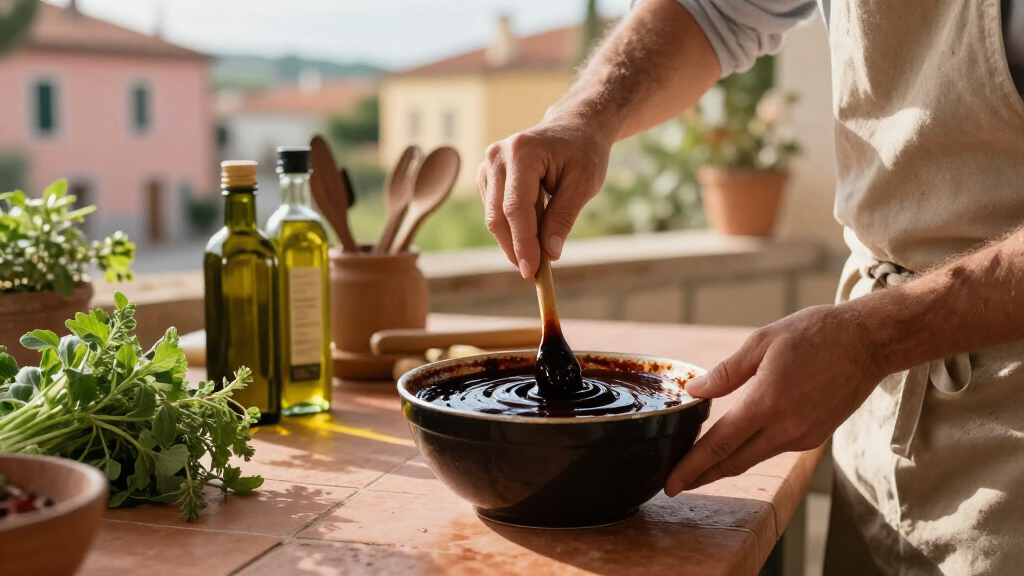
Know When the Ragù Has Truly Finished
Sunday Ragù alla Napoletana is finished when the meat yields to a fork, the tomato tastes rounded rather than raw, and the sauce looks dark red, glossy, and cohesive. Most pots need four to six hours, but tenderness and concentration matter more than a fixed deadline.
Neapolitans describe the right simmer as pippiare or peppiare: the surface barely murmurs, releasing one soft bubble and then another. You should hear a quiet plip against the lid, not the hard rattle of boiling tomato. That low heat gives connective tissue time to soften before the liquid disappears.
Heat cannot replace time. A hard boil reduces liquid quickly, but it can tighten the meat, scorch the tomato, and leave you with a thick sauce wrapped around stubbornly tough beef.
Suppose your chuck still resists after four hours. Do not turn up the burner and hope for a fast rescue. Check that enough sauce surrounds the meat, add a small splash of hot water if the pot looks dry, and continue at a low simmer for another 30 to 45 minutes. Braising meat often feels firm shortly before its collagen finally softens.
Watch the tomato as closely as the meat. Early in the cook, the sauce looks bright and loose, and its acidity lands sharply on your tongue. Later, it clings to a spoon in a smooth sheet, rendered fat glints across the surface, and the kitchen smells of roasted meat and sweet tomato rather than canned purée.
If the meat becomes tender before the sauce thickens, lift it onto a covered platter and simmer the sauce uncovered. If the sauce grows too dense first, loosen it with hot water rather than more wine. The goal is concentration without heaviness, not tomato paste disguised as gravy.
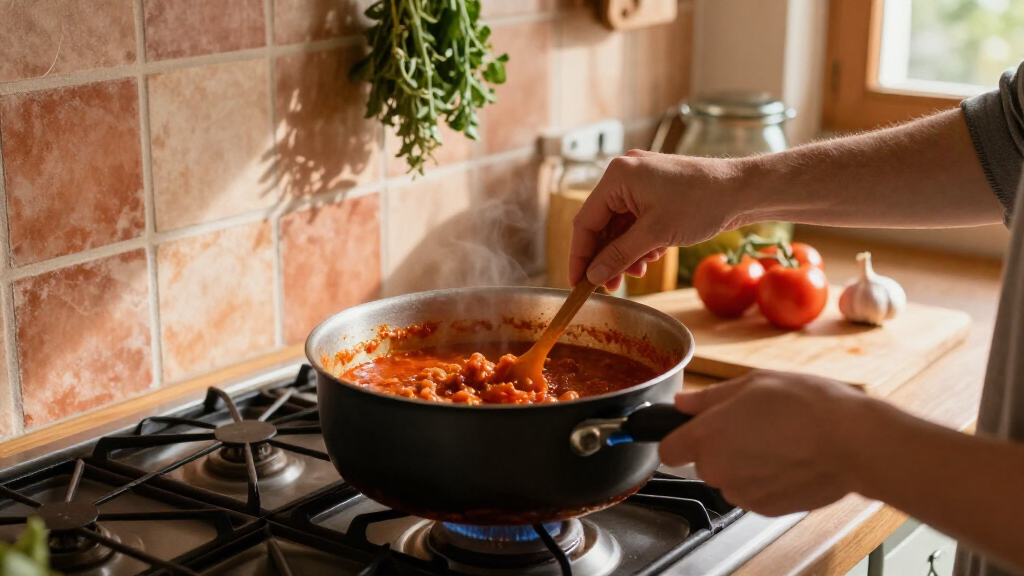
Serve It the Neapolitan Way, in Two Courses
The traditional serving pattern gives you two courses from one pot: sauce-coated pasta as the primo, followed by the braised meat as the secondo. This division turns a long-simmered sauce into a full Sunday lunch, not merely a topping for noodles.
Choose pasta with enough structure to carry the concentrated sauce. In Naples, good candidates include ziti broken by hand, paccheri, rigatoni, candele spezzate, or broken candle-shaped pasta, and mafaldine with rippled edges. The sauce settles inside paccheri and catches along rigatoni ridges, leaving every bite streaked dark red.
For six diners, cook about 1 to 1½ pounds of dried pasta in well-salted water. Move it to a wide pan while still firm, add several ladles of ragù, and toss until the sauce grips the pasta. Pass extra sauce and grated Parmigiano Reggiano DOP or Pecorino Romano DOP at the table according to household taste.
After the pasta bowls leave the table, bring out the beef, ribs, sausage, and sliced braciole on a warm platter. Serve them with bitter greens, roasted peppers, a sharply dressed salad, or bread for the remaining sauce. This pause between courses changes the rhythm: pasta opens the meal, while the meat invites everyone to linger.
The word ragù comes from the French ragoût, a seasoned slow-cooked preparation. French influence reached aristocratic kitchens in Naples during the eighteenth and nineteenth centuries, but Neapolitan cooks reshaped the idea around tomato and local family dining [1]. Eduardo De Filippo later captured the dish’s emotional weight in his poem ’O rraù, where a disappointing ragù becomes a domestic grievance larger than dinner.
If you serve wine, keep it an adults-only pairing and drink responsibly. A dry Campanian red such as Aglianico can stand beside the sauce, but sparkling water with lemon handles the richness just as well. Wine used during cooking may retain some alcohol, so do not describe the finished ragù as guaranteed alcohol-free.
Make Sunday Easier With Saturday Prep and Safe Storage
Sunday Ragù alla Napoletana is an excellent make-ahead dish because an overnight rest lets the flavors settle and makes excess fat easy to remove. Cook it on Saturday, cool it promptly, refrigerate it, and reheat it gently on Sunday while you prepare the pasta and side dishes.
Historically, some Neapolitan households began the pot on Saturday for Sunday lunch. That approach still fits a modern kitchen: you can finish the long cook before evening, then wake to a chilled pot with a firm layer of fat on top. Lift away only the excess; leaving a little preserves the sauce’s silky texture and meaty aroma.
- Cool it safely: divide a large batch among shallow containers rather than leaving a deep, hot pot on the counter for hours.
- Refrigerate promptly: get the ragù into the refrigerator within two hours of cooking.
- Use within 3 to 4 days: keep the refrigerator at 40°F or colder and reheat leftovers to 165°F [2].
- Freeze for 2 to 3 months: pack the meat with enough sauce to surround it and limit dry edges.
The braise usually takes meat well past its minimum safe temperature because collagen softens at higher temperatures over time. If you check early, whole beef and pork cuts should reach at least 145°F with a 3-minute rest, while sausage or ground-meat fillings should reach 160°F [2]. For this dish, fork tenderness remains the practical finish line after food safety has been met.
Several common problems have simple fixes. A watery sauce needs uncovered simmering after you remove the tender meat. A greasy sauce benefits from skimming or overnight chilling, while bitterness usually points to burned onion, scorched paste, or a sticking pot. Move unburned sauce to a clean pan immediately if you smell scorching; scraping the black layer only spreads the bitterness.
A slow cooker can handle the braising stage, but brown the meat, onion, and tomato paste in a skillet first. A pressure cooker softens tough cuts much faster, yet the sauce often needs an uncovered stovetop reduction afterward. Both tools save active attention, but neither reproduces the dark concentration of open, gentle simmering without a finishing step.
USDA food-safety guidance supports the cooling, storage, and reheating limits used here [2]. Madtasting.com documents the dish’s regional method, family variations, and two-course serving tradition [1]. Together, those references support a practical rule: cook by texture, store by the clock.
Frequently Asked Questions
Can I make ragù alla Napoletana with ground meat?
You can make a satisfying sauce with ground meat, but it will not have the defining structure of traditional ragù alla Napoletana. Large braised pieces enrich the tomato and later become a separate meat course, which ground beef cannot do.
Why is my meat still tough after several hours?
The meat probably needs more gentle cooking, not stronger heat. Keep enough liquid around it and continue simmering in 30-minute intervals; chuck, ribs, and brisket can feel firm shortly before their connective tissue softens.
Should I use red wine or white wine?
Either wine can work, and family recipes use both. Red wine gives the sauce darker fruit and tannic weight, while white wine adds brighter acidity without deepening the color as much; use a dry wine you would willingly drink.
Does authentic Neapolitan ragù contain garlic or sugar?
Garlic appears in some family recipes, especially inside braciole, while other cooks rely only on onion. Sugar is usually unnecessary because slow reduction softens tomato acidity; adjust salt and cooking time before adding even a small pinch.
What pasta is best for ragù alla Napoletana?
Broken ziti, paccheri, rigatoni, candele spezzate, and mafaldine all have enough strength and surface area for the dense sauce. Toss the pasta with ragù before serving so the sauce coats every ridge and hollow rather than sitting at the bottom of the bowl.
Can I freeze the sauce with the meat?
Yes, freeze the meat in airtight portions surrounded by sauce so exposed edges do not dry out. Use it within roughly two to three months, thaw it in the refrigerator, and reheat it to 165°F before serving [2].
What should I do if the ragù tastes bitter?
Bitterness usually comes from scorched tomato paste, burned onions, or sauce stuck to the pot. Transfer the unburned portion to a clean pan without scraping the bottom, add a small splash of water, and continue at the gentlest simmer; sugar cannot hide a truly burned flavor.
Conclusion
The one rule worth remembering is simple: let the ragù whisper, never roar. Choose tough, flavorful meat, brown it deeply, and give the tomato four to six quiet hours to lose its sharpness. Your patience returns as glossy sauce, yielding meat, and two generous courses from the same pot.
Start on Saturday if Sunday feels crowded. When you lift the lid the next day, the sauce will be darker, calmer, and ready to loosen over low heat while the pasta water boils. Break the ziti by hand, warm the meat platter, and let that slow red pot set the pace for lunch.

Fall Picks
fall essentials
As an affiliate, we earn on qualifying purchases.