
TL;DR

Get kitchen staples and gadgets delivered free with Prime
- Fast, free delivery on millions of items
- Prime Video, Amazon Music and more included
- Member-only deals all year
Lambrusco is a family of sparkling red and rosé wines from Emilia-Romagna, and many bottles are dry or off-dry rather than sweet. Served cool, its acidity and bubbles refresh your palate alongside cured meats, ragù, filled pasta, fried food, and aged cheese; choose a bottle by its producer, appellation, sweetness, and sparkling style.
A bottle of red wine can be exactly what a plate of lasagna needs, but a heavy still red may leave your mouth feeling as rich as the meal. Lambrusco brings a different kind of refreshment: red-fruit flavor, lively acidity, and a gentle sparkle that works beautifully with Emilia-Romagna’s generous cooking.
The name may still bring to mind inexpensive, sweet wine from decades past. That reputation has shaped how many people see the category, but Lambrusco is a family of wines, not one grape or one style. You’ll find dry and off-dry bottles, red and rosé versions, and both lightly and more fully sparkling wines.
This guide will help you read the label, match the wine to dinner, and serve it at a temperature that lets its fruit shine. Think of it as a practical invitation to bring a little of Emilia-Romagna to your table: perhaps with mortadella and bread, a pan of lasagna, or a plate of Parmigiano-Reggiano.
Lambrusco refers to a family of wines made from related varieties such as Sorbara, Grasparossa, Salamino, and Maestri.
Use secco , semisecco , amabile , and dolce to get a first read on sweetness, then check the producer’s notes.
Pair dry, more structured styles with cured meats, roast pork, or aged cheese; try fruitier or slightly sweeter wines with spicy food.
Serve Lambrusco cool, roughly 8–12°C (46–54°F), adjusting for the wine’s body.
Ask about the producer, appellation, sweetness, and sparkle instead of choosing by the Lambrusco name alone.
Lambrusco Redeemed
The fizzy red that belongs with rich food. Lambrusco is a family of sparkling red and rosé wines, with styles from dry to sweet. Served cool, its red fruit, lively acidity, and bubbles bring welcome lift to generous dishes.
Not one grape. Not one sweetness. A whole family of wines.
Choose the bottle for the food on your tableOne name, many expressions
“Lambrusco” signals a family and a place—not a guaranteed flavor, body, or sweetness level.
Different grapes, different weight
Sorbara, Grasparossa, Salamino, and Maestri are familiar members of the family. Some wines feel light and floral; others are darker, firmer, and more structured.
Frizzante or spumante
Frizzante is lightly sparkling, with a softer bead. Spumante has fuller bubbles. The fizz changes texture and occasion, while body and sweetness still shape the pairing.
Red fruit and freshness
Look for cherry, strawberry, raspberry, or violet, supported by bright acidity. Some bottles finish with a pleasantly bitter or earthy note.
Reset the stereotype: inexpensive, sweet bottles helped define Lambrusco abroad, but they are only part of the story. Many bottles are dry or off-dry and made to work at the table.
Read the label, then match the meal
Start with sweetness and sparkle. Use the producer and appellation to understand the bottle beyond its family name.
Sweetness is a dial
These terms offer a useful first read. Exact usage can vary, so check the producer’s tasting notes when available.
Dry Semisecco
Off-dry Amabile
Medium-sweet Dolce
Sweet
Dry styles keep savory flavors clear. A little sweetness can soften chili heat or meet a hint of sweetness in a dish.
Body belongs in the decision
Think about the dish’s weight as well as its flavor. A light, aromatic wine can suit delicate cured meats; a more structured bottle can stand beside roast pork or aged cheese.
Gentle fizz Spumante
Fuller fizz Light
More lift Full
More weight
Ask for the producer, appellation, sweetness, and sparkling style. Those clues make a better guide than “Lambrusco” alone.
Five questions for a better match
For example: “I’m serving pork shoulder with Parmigiano-Reggiano. Which dry Lambrusco has enough body?”
Why the fizz loves rich food
Acidity brings a crisp edge; bubbles add lively texture; fruit contrasts with salty, savory flavors.
From regional cooking to your table
A food culture built around generous, savory dishes makes room for a sparkling red with freshness and range.
What Lambrusco Really Is—and Why It Isn’t One Wine
Lambrusco is a family of sparkling red and rosé wines made from several related grape varieties, most closely associated with Emilia-Romagna in northern Italy. The best-known varieties include Sorbara, Grasparossa, Salamino, and Maestri. Their differences matter at the table: a lighter, more aromatic wine may refresh delicate flavors without overwhelming them, while a darker wine with firmer tannin can hold its own against richer meat and cheese. The name alone therefore gives you a region and a broad family, not a reliable prediction of weight or taste.
That range gives you choices, but it also means buying by category name alone can disappoint. A bottle suited to a picnic of prosciutto may feel too slight beside roast pork; a more structured bottle could overpower a simple snack. Use the producer and appellation as clues to origin and style, then look for a description of body and sweetness. They help narrow the choice, though the producer’s own notes or a merchant’s advice may be needed when the label is brief.
The wines also vary in sparkle. Frizzante means lightly sparkling, with a softer bead of bubbles; spumante means more fully sparkling. The gentler fizz can make a bottle feel relaxed and easy with lunch, while fuller bubbles add lift and a more celebratory feel. Neither is inherently better: the level of sparkle changes the wine’s texture and occasion, while sweetness and body still determine how it will meet the food. Some bottles are red, others rosé, and sweetness runs from dry to sweet.
Lambrusco’s place makes the diversity easier to understand. Emilia-Romagna has a strong food culture built around cured meats, filled pasta, ragù, and aged cheeses. A wine family that meets those dishes in many different ways makes sense. Lambrusco is a family of sparkling red wines from Emilia-Romagna in northern Italy, and its range belongs with the variety of food served there.
As an affiliate, we earn on qualifying purchases.
How to Choose a Bottle That Fits Your Dinner
Choose Lambrusco by sweetness, sparkle, and weight, then check the producer and appellation for more detail. The key label words offer a useful starting point: secco means dry, semisecco generally means off-dry, amabile means medium-sweet, and dolce means sweet. These terms matter because sweetness changes how a wine feels alongside food: a dry wine keeps savory flavors in focus, while a little sweetness can soften chili heat or echo sweet elements in a dish. Exact usage can vary, so a producer’s tasting notes can help clear up any doubt.
Imagine you’re serving tortellini in a rich broth or a baked tray of lasagna. A dry or off-dry bottle with bright fruit can refresh the palate without making the meal taste sweet. For spicy food, a fruitier, slightly sweeter style can soften heat and meet a hint of sweetness in the dish. The tradeoff is that sweetness that helps with spice may feel distracting beside a very savory dish, so choose for the whole plate rather than treating one label term as a universal match.
- Pick the sweetness. Look for secco for dry, semisecco for off-dry, or a sweeter term if that’s what you enjoy. Consider whether the dish is savory or spicy, since the wine’s sweetness will shape that balance.
- Decide how much fizz you want. Choose frizzante for a gentler sparkle or spumante for fuller bubbles. Think about texture and occasion as well as intensity: softer fizz feels casual, while fuller sparkle brings more lift.
- Match the wine’s weight to the food. Try a lighter, aromatic style with delicate cured meats and a more structured bottle with roast pork or aged cheese. A mismatch can make either the wine or the food seem thin, so body is as useful as flavor when choosing.
- Ask about the producer and appellation. Those clues help explain the bottle beyond the word Lambrusco. They can narrow the style, but tasting notes are still helpful because the varieties and producers differ.
For example, if a local wine shop has several options, tell the merchant you’re making pork shoulder with Parmigiano-Reggiano. Ask for a dry Lambrusco with enough body for the pork. That specific description gives the shop a more useful starting point than asking simply for “a red sparkling wine.” If the available bottle is lighter than expected, serve it a little cooler and alongside the cheese as well as the pork; its freshness may still work even if it doesn’t match the meat’s weight exactly.
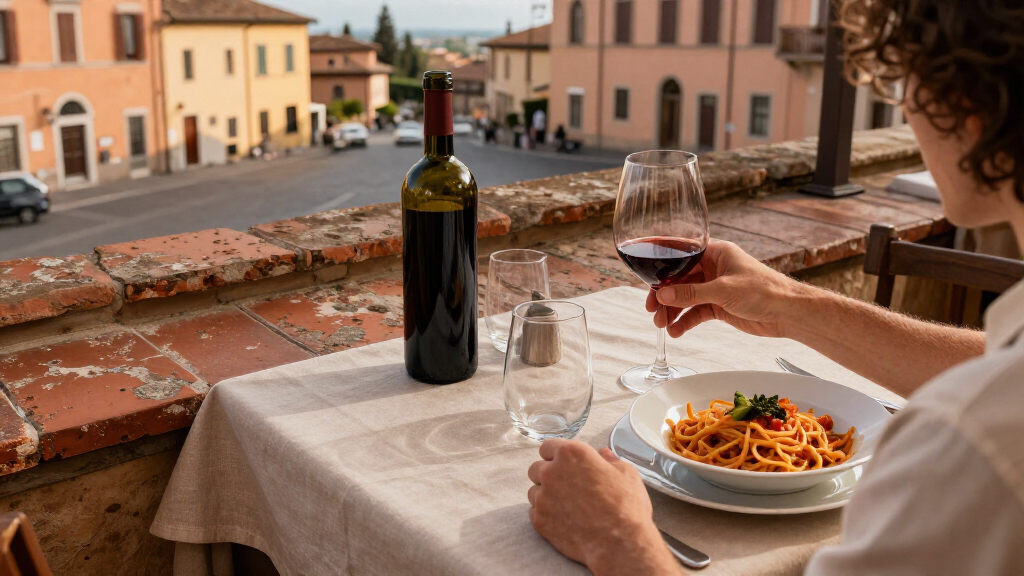
Why Its Fizz Works with Fatty, Savory Food
Lambrusco’s acidity and bubbles refresh your palate between rich bites, while its fruit complements salty and savory flavors. Fatty meats and creamy or aged cheeses can coat your mouth; acidity gives the wine a crisp edge, and bubbles create a lively texture that helps the next bite feel distinct. This is a contrast in sensation, not a literal cleansing effect, and it doesn’t depend on the wine being sweet. A dry bottle can do the job while keeping the meal’s savory character clear.
That’s why Lambrusco feels so natural beside the food of Emilia-Romagna. Try it with mortadella, whose smooth, rich texture meets the wine’s brightness, or with salty salami and crusty bread. With Parmigiano-Reggiano, the wine’s fruit offers contrast to the cheese’s savory depth. If you set out a board for friends, a chilled bottle can serve as the bridge between the meat, cheese, and anything fried. A lighter style may suit the mortadella particularly well, while the cheese’s concentration can call for a wine with more body.
It also earns a place beside a serious pasta dinner. A forkful of ragù or meat-filled tortellini carries plenty of savory richness; a glass of sparkling red can keep the meal from feeling dense. Picture a Sunday lasagna, edges browned and bubbling, served with a dry Lambrusco. The wine’s bright fruit gives you contrast, and its bubbles make the next forkful feel inviting. If the sauce is especially rich, that freshness can be welcome; if the pasta is delicate, a lighter wine is less likely to crowd its flavors.
For a simple pairing guide, go by the dish’s weight and seasoning. Drier, more structured Lambrusco works well with cured meats, roast pork, and aged cheese. Fruitier or slightly sweeter styles can suit spicy dishes or food with a touch of sweetness. These are starting points, not strict rules: a wine’s body and the dish’s specific flavors matter more than a pairing slogan. The useful tradeoff is balance—choose enough weight to meet a substantial dish, but enough freshness to keep the pairing from feeling heavy.

What to Expect in the Glass, from Cherry to Earth
Many Lambruscos taste fresh and fruit-forward, with cherry, strawberry, or raspberry notes and lively acidity. Some versions also show violet, earthy flavors, or a pleasantly bitter finish. The exact character depends on the variety and producer, which is why two bottles can look and taste quite different while carrying the same broad name. These are practical clues, not a scorecard: bright fruit may make a wine easy to enjoy young, while tannin or earthy notes can give it more presence with savory food.
A light, fragrant style can feel almost like a handful of tart berries with a soft stream of bubbles. In a darker, more structured bottle, you may find firmer tannin and deeper fruit, which can stand up to a slice of roast pork. The color can range from vivid ruby to deep purple-red. Those differences make it useful to pay attention to a merchant’s description rather than guessing from the label alone. Greater body can help with rich dishes, but it may feel less refreshing with a delicate snack; a lighter wine can be lively and approachable, though it may fade beside bold flavors.
If you’ve only tasted a sweet version, try a bottle marked secco and give it a proper chill. The contrast may surprise you: instead of candy-like sweetness, you may get a crisp, savory finish that makes you reach for another bite of salami. For a low-pressure tasting at home, pour two styles side by side with the same cheese and notice which one you prefer. Holding the food constant helps show whether the difference you enjoy comes from sweetness, body, or the wine’s aromatic character.
Keep an open mind about sweetness, too. Some people enjoy a hint of sugar with spicy food; others want a fully dry wine for the whole meal. Sweetness is a choice, not a defining feature of Lambrusco. Looking for fruit, acidity, tannin, and the wine’s balance will tell you more than relying on old assumptions about the category. Each quality involves a tradeoff: more tannin can add structure but feel firm, while more sweetness can soften spice but shift attention away from savory flavors.

Serve It Cool, and Pair It with Real Emilia-Romagna Dishes
Serve Lambrusco cool—about 8–12°C (46–54°F) as a practical starting range. A lighter bottle may suit the cooler end; a fuller, more structured red can show more character slightly warmer. Chilling emphasizes fresh fruit and fizz, and can soften the impression of alcohol or tannin, making the wine refreshing with a substantial meal. Too cold, however, can mute aroma and make a structured wine seem austere, so let it warm a little in the glass if its flavors feel closed.
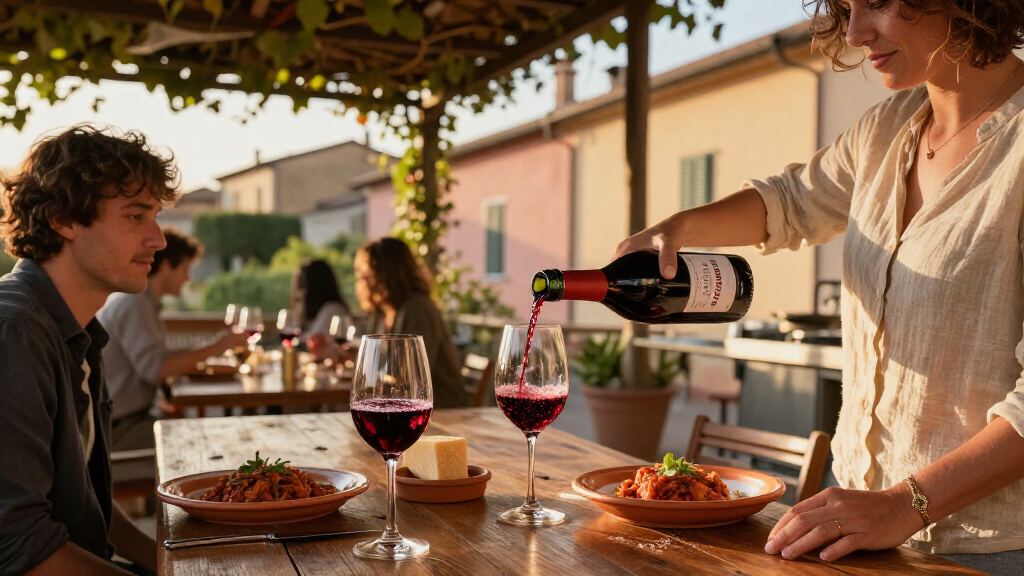
That serving temperature pays off at the table. Take a bottle from the refrigerator and pour it with a board of prosciutto, mortadella, salami, and Parmigiano-Reggiano. The meats taste saltier and richer as they warm on the plate, while a cool glass keeps its fruit and sparkle bright. For a main course, try the same approach with roast pork, fried food, savory pastries, or filled pasta. As the bottle warms, its aromas become easier to notice; this gradual change can make the same wine feel more expressive over dinner.
You don’t need to recreate an elaborate Italian menu to make the pairing work. On a weeknight, serve a pan of lasagna with a dry Lambrusco and a green salad. For a casual gathering, put out fried snacks and a slightly fruitier bottle. If the meal is spicy, consider an off-dry style; a touch of sweetness can sit more comfortably beside heat than a very austere dry wine. The choice depends on the dish: the sweetness that helps with chili may feel out of place with a purely savory plate.
Let the food set the direction, then adjust the bottle to match. A soft, lightly sparkling wine can suit a relaxed lunch; fuller bubbles can give a festive feel to roast pork or an abundant spread. Cool temperature is the common thread, but the exact choice depends on how full-bodied the wine feels and how much sweetness you want with dinner. Start cool, taste with the food, and allow the wine to warm slightly if you want its fruit and aromas to come forward.
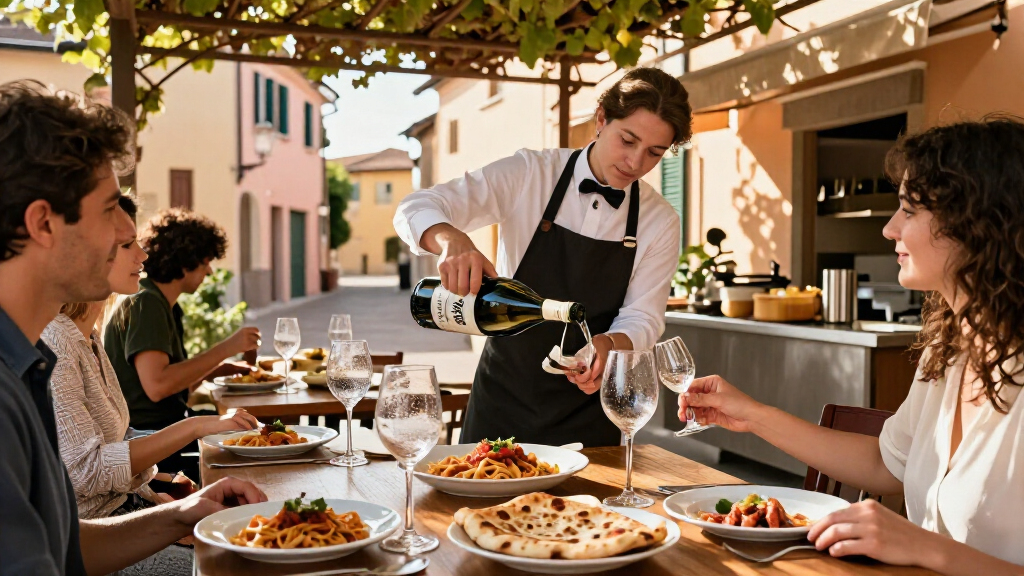
How to Judge Lambrusco Beyond Its Old Reputation
Judge Lambrusco by the bottle in front of you, not by its old reputation. In some markets, inexpensive sweet versions shaped the category’s image, and those wines remain available. But the range also includes dry and off-dry bottles with distinct fruit, acidity, and structure. Calling every Lambrusco sweet is like assuming every pasta dish tastes the same because it’s made with wheat. The reputation can help explain why a drinker might be hesitant, but it tells you little about whether a particular bottle will suit tonight’s meal.
The category’s appeal now fits the way many drinkers approach regional Italian wine: they want bottles with a strong sense of place and food on the table. That interest has helped give more attention to dry and distinctive styles and to the differences between local varieties and appellations. It doesn’t mean every bottle is excellent or that all Lambrusco has changed. Quality and style still vary, and an inexpensive sweet wine may be exactly what someone wants. The useful implication is to judge the wine on its own terms: a simple, sweet bottle can be enjoyable in its own setting, while a more complex dry one may be better suited to a savory meal.
Instead of treating the word “redeemed” as a claim that the past was wrong, use it as a reason to taste more carefully. If you see a bottle at a restaurant, ask whether it’s dry or sweet and whether it’s lightly or fully sparkling. At a wine shop, explain your menu and ask for a producer whose style fits it. Those two questions can turn an unfamiliar label into a useful dinner choice. They also surface the main tradeoff: a wine with more sweetness or lighter fizz may be approachable on its own, while a drier, more structured bottle may connect more closely with salty, rich food.
Its reputation has never described the whole category. You don’t need to dismiss sweeter Lambrusco to enjoy a dry one. You only need to recognize that the family has range, and let your own palate decide which style belongs beside your food.
Frequently Asked Questions
Is Lambrusco sweet?
Some Lambrusco is sweet, but many bottles are dry or off-dry. Look for secco for dry, semisecco for off-dry, amabile for medium-sweet, and dolce for sweet; producer descriptions can help when label terms leave you unsure.
Is Lambrusco red wine or sparkling wine?
It is usually sparkling or lightly sparkling red wine, though rosé styles are also made. Frizzante describes a gentler sparkle, while spumante means more fully sparkling.
What food goes well with Lambrusco?
Try it with cured meats, roast pork, aged cheese, fried food, lasagna, ragù, and filled pasta. Match the wine’s sweetness and weight to the dish: a dry, structured bottle suits savory richness, while a fruitier off-dry style can work with spice.
Should I chill Lambrusco before serving?
Yes. Start around 8–12°C (46–54°F), with lighter bottles toward the cool end and fuller wines a little warmer. Serving it cool helps its fruit and bubbles feel refreshing beside rich food.
Is Lambrusco a grape or a place?
The name refers to a family of related grape varieties and the wines made from them, associated especially with Emilia-Romagna in northern Italy. Sorbara, Grasparossa, Salamino, and Maestri are among the best-known varieties.
Is Lambrusco similar to Prosecco?
Both can be sparkling, but they differ in region, grapes, color, and typical flavor. Lambrusco is generally red or rosé and often makes a natural partner for savory, rich dishes.
Conclusion
When rich food is on the table, give Lambrusco a place beside it. Choose a style that matches your meal, chill it well, and let its fruit, acidity, and bubbles refresh the palate between bites.
Start with a dry bottle, a plate of mortadella and Parmigiano-Reggiano, and a loaf of good bread. The first bright sip may change how you think about sparkling red wine.

Halloween Picks
halloween
As an affiliate, we earn on qualifying purchases.