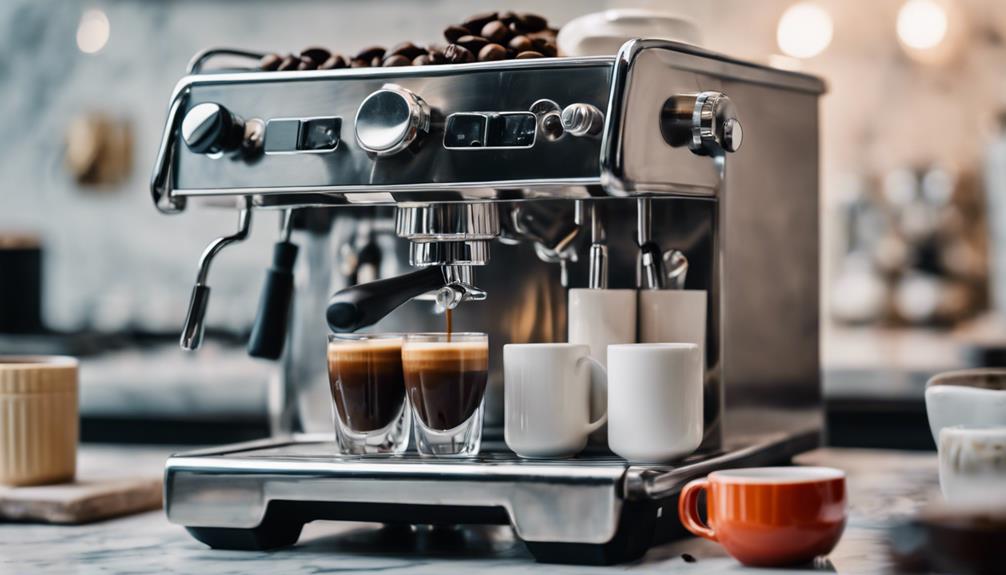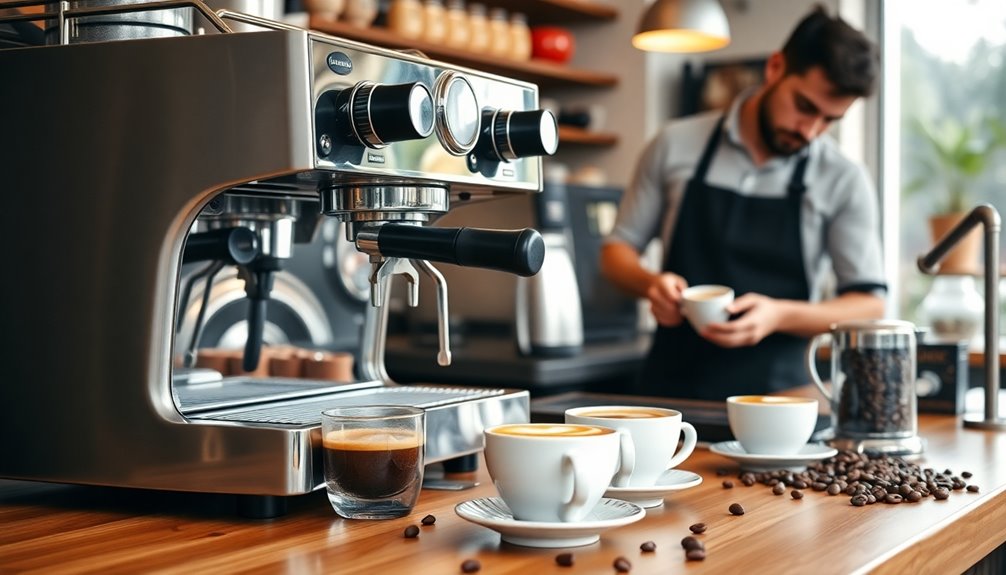
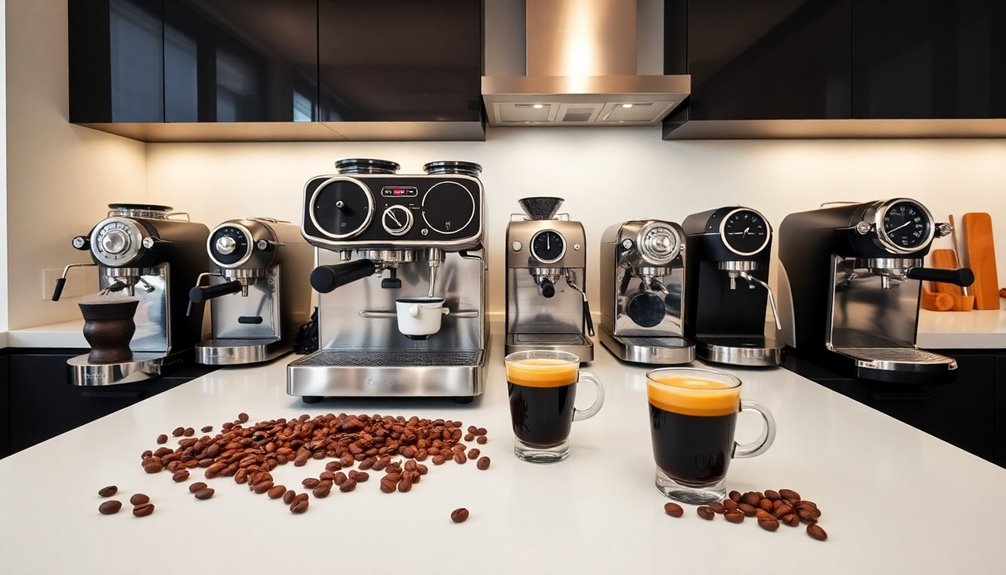
Opening a small coffee shop on a tight budget means every dollar of equipment has to earn its counter space, and nothing eats budget faster than an espresso machine. After comparing four of the most commonly purchased machines in this price bracket, I landed on the Gaggia E24 as my top pick because it is the only one here with genuinely commercial-grade internals — a 58mm commercial portafilter, a three-way solenoid valve, and a commercial steam wand. The AMZCHEF with grinder takes the value crown if you want to skip buying a separate grinder, and the Gevi 20 Bar is the backup-machine pick that makes sense when you need a second station for Americanos and low-volume service without spending much.

Get kitchen staples and gadgets delivered free — and shop member deals
- Fast, free delivery on millions of items
- Access to Prime Big Deal Days deals on October 6–7
- Prime Video, Amazon Music and more included
The honest tradeoff in this roundup is that all four machines are technically prosumer or home machines being asked to do light commercial work. None of them will survive a busy rush the way a two-group La Marzocco will, but at a fraction of the price, the right one can carry a low-volume café, a cart, or a farmers-market stand. The bigger tradeoff is between durability and recovery speed versus convenience features like built-in grinders and touch screens — and I’ll explain where each machine falls on that spectrum.
Complete the kit


Key Takeaways
- The Gaggia E24 is the only machine in this lineup with a commercial 58mm portafilter, three-way solenoid valve, and commercial steam wand, making it the most realistic primary machine for a small café.
- The AMZCHEF bundles a grinder with 44 grind settings and touch-screen temperature control, saving you a separate grinder purchase — the best value if your budget is tight.
- The Gevi 20 Bar is a $100-class backup or Americano station, not a primary café machine; its 1-liter tank and 1350W boiler limit throughput.
- The Breville Barista Express is best treated as a training and recipe-development machine or office-style setup, not a service machine — its single-boiler design slows drink output under pressure.
- Every machine here needs a separate commercial grinder except the Breville and AMZCHEF, which affects your total equipment budget more than the machine price itself.
| Gaggia RI9380/46 E24 Espresso Machine, Brushed Stainless Steel |  | Best Overall — The Closest Thing To A Real Café Machine Here | Pump Pressure: 9 Bar | Portafilter: 58mm Commercial | Valve: Commercial Three-Way Solenoid | VIEW ON AMAZON | See Our Full Breakdown |
| AMZCHEF Espresso Machine With Grinder, Temp Control, 44 Grind Settings |  | Best Value — A Complete Brewing Station For The Price Of One Machine | Temperature Range: 190°F–201°F | Grind Settings: 44 | Water Tank Capacity: 60 oz | VIEW ON AMAZON | See Our Full Breakdown |
| Breville BES870XL Barista Express Espresso Machine, Brushed Stainless Steel |  | Best For Training And Recipe Development | Bean Hopper Capacity: 1/2 lb | Water Tank: 67 oz | Power: 1600 Watts | VIEW ON AMAZON | See Our Full Breakdown |
| Gevi 20 Bar Compact Commercial Espresso Machine for Home and Office |  | Best Budget Backup — A Second Station, Not A Primary Machine | Pump Pressure: 20 Bar | Wattage: 1350 Watts | Tank Capacity: 1 Liter, Removable | VIEW ON AMAZON | See Our Full Breakdown |
| espresso machine for a small coffee shop | Pump Pressure | Portafilter | Steam Wand | Power |
|---|---|---|---|---|
| Gaggia RI9380/46 E24 Espresso | 9 Bar | 58mm Commercial | Commercial Steam Wand | — |
| AMZCHEF Espresso Machine With | — | — | Yes, microfoam capable | 1350W |
| Breville BES870XL Barista Expr | — | 54mm Stainless Steel | — | 1600 Watts |
| Gevi 20 Bar Compact Commercial | 20 Bar | — | — | — |
More Details on Our Top Picks
Gaggia RI9380/46 E24 Espresso Machine, Brushed Stainless Steel
The Gaggia E24 earns the top spot for one simple reason: it’s the only machine in this lineup built with parts you’d actually find behind a café counter. The 58mm commercial portafilter means your baristas practice on the same basket size they’d use on a full commercial machine, and your accessory budget — tampers, distribution tools, spare baskets — buys standard commercial parts instead of proprietary ones. That matters more than it sounds when you’re training staff or scaling up later.
Compared with the Breville Barista Express, the E24 gives up the built-in grinder but gains a three-way solenoid valve, which releases pressure after each shot so the puck comes out dry and the machine is ready for the next pull almost immediately. In a service environment, that recovery speed is the difference between a smooth morning and a queue out the door. The commercial steam wand also outclasses the wand on the Gevi by a wide margin — it produces the kind of textured microfoam that latte art requires, which customers notice.
The tradeoffs are real, though. You’ll need to buy a separate grinder, which pushes your total investment well past the AMZCHEF all-in price. And the 9-bar pump with a single boiler means steaming and brewing don’t happen simultaneously the way they do on a true two-group machine, so during a rush one barista can only do so much. This pick makes the most sense for a café doing modest volume — say, under 50 espresso drinks a day — where quality and durability matter more than raw throughput.
Pros:- Commercial-grade 58mm portafilter uses standard commercial baskets and accessories
- Three-way solenoid valve enables fast back-to-back shots with dry pucks
- Commercial steam wand produces genuine latte-art-quality microfoam
- Solid steel housing and Italian build quality built for years of daily use
Cons:- Requires a separate grinder purchase, adding to total cost
- Single-boiler design limits throughput during a busy rush
- Higher price than every other machine in this lineup
Best for: Small cafés, coffee carts, and specialty shops doing low-to-moderate volume where shot quality and equipment longevity are the priority.
Not ideal for: High-volume shops or anyone who wants an all-in-one package with a grinder included out of the box.
- Pump Pressure:9 Bar
- Portafilter:58mm Commercial
- Valve:Commercial Three-Way Solenoid
- Steam Wand:Commercial Steam Wand
- Housing:Solid Steel, Brushed Stainless Steel
- Country of Origin:Italy
- Model:RI9380/46 E24
Our verdict“If I could only buy one machine from this list for a small coffee shop, the Gaggia E24 is it — commercial parts, fast recovery, and the durability a service environment demands.”
AMZCHEF Espresso Machine With Grinder, Temp Control, 44 Grind Settings
The AMZCHEF wins on simple arithmetic: it bundles a grinder with 44 adjustable grind settings into the machine itself, which means you walk away with a complete espresso station for less than the Gaggia E24 costs on its own — before you’ve even bought the grinder the Gaggia requires. For a startup café counting every dollar, that package deal is hard to argue with.
The 190°F to 201°F temperature control is genuinely useful at the bar, because different roasts extract best at different temperatures and being able to dial that in without guesswork keeps your shots consistent when a light-roast single origin is on the hopper. The touch screen is also a quiet advantage for staffing: compared with the Gevi’s semi-automatic workflow, new baristas can be trained on the AMZCHEF faster because settings are visible and repeatable rather than muscle-memory based.
Where it falls behind the Gaggia is durability and steam performance — this is a consumer-grade machine doing commercial duty, and the plastic-adjacent build and slower steam recovery will show during a rush. The 60oz tank sounds generous, but a busy shop will still refill it multiple times a day since there’s no plumbed-in option. Compared with the Breville Barista Express, the AMZCHEF offers finer grind control and more brew versatility (including pour-over and cold brew modes), which makes it the more flexible choice for a shop that also sells batch-style drinks.
Pros:- Built-in grinder with 44 settings eliminates a separate grinder purchase
- Precise 190°F–201°F temperature control for consistent extraction across roasts
- Touch screen interface shortens staff training time
- Versatile brewing modes cover espresso, pour-over, and cold brew menus
Cons:- Consumer-grade build won’t hold up to heavy daily commercial volume
- Steam wand recovery is slower than the Gaggia’s commercial wand
- Non-plumbable 60oz tank needs frequent refills during service
Best for: Budget-conscious café owners who want an all-in-one machine-and-grinder setup and serve moderate daily volume with mixed drink offerings.
Not ideal for: Shops prioritizing long-term durability, heavy steaming volume, or a professional barista workflow with separate commercial equipment.
- Temperature Range:190°F–201°F
- Grind Settings:44
- Water Tank Capacity:60 oz
- Power:1350W
- Steam Wand:Yes, microfoam capable
- Controls:Touch screen
- Brew Modes:Espresso, Pour-Over, Cold Brew
Our verdict“The AMZCHEF is the smartest total-budget play here — one purchase covers grinding and brewing, as long as your volume stays modest.”
Breville BES870XL Barista Express Espresso Machine, Brushed Stainless Steel
I place the Breville Barista Express third, and its role here is different from the top two: this is the machine for the owner who wants to learn the craft before committing to commercial equipment. The built-in conical burr grinder with dose control, the PID temperature regulation, and the manual steam wand together teach you the full workflow — grinding, dosing, tamping, extracting, texturing milk — in a way that transfers directly to whatever commercial machine you buy later.
Compared with the AMZCHEF, the Barista Express has the more proven track record and a tighter espresso focus, but fewer grind settings and no multi-brew versatility, so the AMZCHEF is the better value for an actual service counter while the Breville is the better teaching tool. The 67oz water tank is the largest in this roundup, which reduces refill interruptions during practice sessions or light service.
As a shop machine, though, the limitations stack up. The single boiler means you brew, then wait, then steam — a sequence that caps you at roughly one milk drink every few minutes, which simply cannot keep pace with a line. The 54mm portafilter uses non-standard accessories, and the grinder, while convenient, can’t match a dedicated commercial grinder for dial-in precision on fresh single origins. This option stands out for low-volume settings — a bookshop café, a salon, an office-adjacent espresso bar — where the theatre of making drinks matters more than speed.
Pros:- Built-in conical burr grinder delivers fresh grounds with dose control
- PID digital temperature regulation keeps shots consistent
- Complete accessory package includes tamper, milk jug, and cleaning tools
- Largest water tank in this lineup at 67 oz
Cons:- Single-boiler design forces serial brewing and steaming, capping throughput
- 54mm portafilter requires proprietary accessories
- Relatively expensive for a machine that can’t handle service volume
Best for: Owner-operators still learning espresso, and very low-volume settings like bookshops, salons, or tasting setups where the drink count stays under a couple dozen per day.
Not ideal for: Any shop expecting a morning rush or serving more than a few milk drinks in quick succession.
- Bean Hopper Capacity:1/2 lb
- Water Tank:67 oz
- Power:1600 Watts
- Voltage:120 Volts
- Portafilter:54mm Stainless Steel
- Grinder:Built-in Conical Burr
- Temperature Control:PID Digital
Our verdict“The Barista Express is an outstanding classroom and a mediocre café workhorse — buy it to learn on, not to serve a queue.”
Gevi 20 Bar Compact Commercial Espresso Machine for Home and Office
The Gevi lands fourth not because it’s a bad machine but because its role in a coffee shop is narrow: this is the inexpensive second station you put on the counter for Americanos, drip-style orders, and overflow during busy stretches — not the machine you build your espresso program around. At this price, the expectation bar is different, and judged as a utility player the Gevi delivers.
The built-in pressure gauge is the standout feature at this price point. Watching live extraction pressure teaches dial-in faster than any of the other budget machines I compared, and the pre-infusion cycle produces shots that are respectable for Americanos and milk-heavy drinks. Compared with the Breville, you give up the grinder and the PID but keep adjustable shot volume, auto shut-off, and a cup warmer — genuinely useful things on a backup station where different staff jump on throughout the day.
The limitations are exactly what you’d expect from a compact 8.6-pound machine: the 1-liter tank empties fast, the 1350W heating system recovers slowly between drinks, and the steam wand froths adequately for cappuccinos without producing competition-grade microfoam. It’s also the least durable-feeling machine here next to the Gaggia’s solid steel housing. This model is better suited for shops that already have a primary machine and need cheap redundancy, or for a market stall doing occasional service on weekends.
Pros:- Built-in pressure gauge makes dial-in visible and teachable
- Adjustable shot volume and pre-infusion produce consistent budget shots
- Compact footprint fits a crowded secondary counter
- Easy cleaning with removable tank and frother nozzle
Cons:- 1-liter tank and slow recovery make real service volume impractical
- Steam wand froths adequately but can’t produce fine microfoam
- Lightweight build raises durability concerns under daily commercial use
Best for: Owners who need an affordable backup station, an Americano/hot-water station, or a low-frequency weekend setup alongside a primary machine.
Not ideal for: Anyone planning to use it as their shop’s main espresso machine or serving any meaningful rush.
- Pump Pressure:20 Bar
- Wattage:1350 Watts
- Tank Capacity:1 Liter, Removable
- Pressure Gauge:Built-in
- Pre-Infusion:Yes
- Dimensions:12.3″D x 5.5″W x 12″H
- Weight:8.6 lbs
Our verdict“Buy the Gevi as your second machine, never your first — it’s cheap redundancy and a decent Americano station, nothing more.”
How We Picked
Because none of these machines are true commercial units, I judged them against what a small coffee shop actually demands: shot consistency across dozens of drinks per day, steam power for back-to-back lattes, serviceability when something breaks mid-shift, and total cost of ownership including any grinder you’d need to buy separately.
My first filter was build quality and duty cycle. A machine with a steel housing, commercial-sized portafilter, and a solenoid valve will handle repeated pulls far better than a lightweight unit with plastic internals, so I weighted those heavily. My second filter was workflow fit — a shop machine gets used by multiple baristas, sometimes untrained ones, so I looked at how forgiving each machine is and how quickly it recovers between drinks. My third filter was value per dollar of revenue: a cheap machine that dies in six months costs more than an expensive one that lasts five years, so I compared price against realistic lifespan under light commercial use.
I also factored in what each machine omits. Machines without built-in grinders assume you’ll budget for a commercial grinder, which can add a substantial cost, so I treated the grinder-equipped Breville and AMZCHEF as complete packages rather than standalone machines when comparing prices. Finally, I ranked based on how each machine performs in its distinct role — primary workhorse, value package, backup station, or training machine — rather than pretending they all compete for the same job.
| espresso machine for a small coffee shop | Steam Wand |
|---|---|
| Gaggia RI9380/46 E24 Espresso | Commercial Steam Wand |
| AMZCHEF Espresso Machine With | Yes, microfoam capable |
| Breville BES870XL Barista Expr | — |
| Gevi 20 Bar Compact Commercial | — |
Factors to Consider When Choosing Espresso Machine For A Small Coffee Shop
Choosing between these four machines comes down to matching the machine’s real capability to your actual daily volume and budget. Here’s how I’d think through the decision.Duty Cycle: The Number That Decides Everything
Before comparing features, estimate how many espresso drinks you’ll serve on your busiest day. Under 25 drinks, any of these machines can be a primary with careful workflow. Between 25 and 50, only the Gaggia E24 holds up, thanks to the solenoid valve and commercial components. Above 50, you need a true commercial machine — buying any of these four for that volume means buying twice. Be honest with this number; most failed equipment purchases come from optimistic volume estimates.
Grinder Strategy: Bundled Versus Separate
The Breville and AMZCHEF include grinders, which simplifies your purchase but locks you into a grinder that can’t be upgraded independently. The Gaggia and Gevi require a separate grinder — and for a shop, that grinder should be commercial-grade, which often costs more than the machine itself. My advice: if budget forces a choice, spend more on the grinder and less on the machine. A great grinder on a modest machine beats the reverse every time, because grind consistency drives shot quality more than any machine feature.
Steam Performance And Milk Drink Mix
If lattes and cappuccinos dominate your menu, steam capability should outweigh almost every other spec. The Gaggia’s commercial steam wand is the only one here built for continuous milk work. The AMZCHEF and Breville wands handle periodic drinks fine, and the Gevi wand is best reserved for the occasional cappuccino. Recovery time between steaming cycles matters just as much as raw power — single-boiler machines all make you wait between brew and steam, so plan your bar layout and workflow around that pause.
Portafilter Size And Accessory Ecosystem
The Gaggia’s 58mm commercial portafilter connects you to the largest accessory ecosystem in espresso — precision baskets, distribution tools, and tampers from every major brand. The Breville’s 54mm portafilter is proprietary, limiting upgrades. This sounds like a minor detail, but it affects your ability to improve shot quality over time without replacing equipment. Standard sizes also mean any skilled barista you hire will feel immediately at home.
Total Cost Of Ownership
Price the whole station, not just the machine: grinder, water filtration, spare baskets, cleaning supplies, and a backup plan for breakdowns. A consumer machine used commercially will wear faster, so factor in a realistic replacement horizon of two to three years for the Gevi, AMZCHEF, and Breville, versus five-plus for the Gaggia. Also check warranty terms carefully — most consumer warranties are voided by commercial use, so assume repair costs come out of pocket.
Frequently Asked Questions
Can a home espresso machine really work in a small coffee shop?
It can, within strict limits. Machines like the Gaggia E24 sit in the prosumer category, meaning they borrow commercial components — portafilter size, solenoid valve, steam wand — while running on a single boiler designed for home duty cycles. For a shop serving under about 50 espresso drinks a day with a single barista, that’s workable. The problems begin with volume: consumer machines lack the boiler capacity and simultaneous brew-steam capability of true commercial machines, so recovery slows, shots drift, and components wear faster. If your business plan depends on a morning rush, budget for a genuine commercial machine; if you’re a low-volume specialty or satellite location, a prosumer machine can absolutely carry the menu.
Is a 20-bar pump better than a 9-bar pump for espresso?
No, and the marketing around bar pressure is misleading. Proper espresso extraction happens at roughly 9 bars at the puck, which is why the Gaggia E24 uses a 9-bar pump — that’s the standard commercial machines are built around. A ’20-bar’ rating describes the pump’s maximum pressure, not what your coffee actually experiences, and machines advertising big pressure numbers are usually budget units where the pump rating substitutes for engineering substance. What actually matters is pressure stability during the shot and the pre-infusion stage that gently wets the grounds before full pressure. The Gevi’s pre-infusion and gauge matter far more to shot quality than its 20-bar claim.
Do I need a separate grinder if my machine has one built in?
For a coffee shop, a dedicated commercial grinder is one of the best investments you can make, and I’d prioritize it over upgrading the machine itself. Built-in grinders on the Breville and AMZCHEF are convenient and fine for learning, but they hold little coffee, grind slowly, generate heat that affects flavor at volume, and can’t be serviced independently of the machine. A commercial grinder with large burrs grinds consistently all day, doses fast during rushes, and keeps your espresso program sharp. My recommendation is to start with a bundled machine if budget demands it, then add a commercial grinder as soon as revenue allows, moving the built-in grinder to decaf or backup duty.
Which of these machines handles milk drinks best?
The Gaggia E24, without much contest. Its commercial steam wand produces the fine, glossy microfoam needed for latte art and properly textured cappuccinos, and it recovers between steaming cycles faster than the others. The AMZCHEF’s steam wand is the second best and handles a steady trickle of lattes acceptably. The Breville’s wand is capable but hampered by the single-boiler design, forcing you to wait between brewing and steaming on every drink. The Gevi froths milk adequately for a basic cappuccino but produces airy foam rather than microfoam, so it’s best kept on Americano duty.
What should I budget beyond the espresso machine itself?
Plan on the machine being roughly half your total equipment cost, sometimes less. If you choose the Gaggia or Gevi, a commercial-grade grinder is mandatory and often costs as much as or more than the machine. Beyond that, budget for water filtration — scale is the number one killer of espresso machines, and filtered water dramatically extends lifespan — plus a proper tamper and mats, milk pitchers, cleaning chemicals and backflush supplies, spare gaskets and baskets, and cups. Also set aside a repair reserve, because consumer warranties typically don’t cover commercial use, and a dead machine during operating hours means lost revenue until it’s fixed.
Conclusion
After comparing all four, the decision really splits by what kind of shop you’re running. If you’re opening a genuine small café where espresso is the centerpiece, the Gaggia E24 is the only choice here I’d trust as a primary machine — its commercial portafilter, solenoid valve, and steam wand are built for daily service, and you should pair it with a proper commercial grinder.
If your budget is the binding constraint and you want a working station on day one without a separate grinder purchase, the AMZCHEF delivers the best total package for the money, with the understanding that you’ll likely upgrade within a couple of years. The Breville Barista Express is the right call if you’re still learning the craft and want to develop recipes and your palate before investing in commercial equipment — treat it as tuition. And the Gevi earns its place only as an affordable second station or weekend setup; it’s cheap redundancy, not a foundation. Whatever you choose, price the complete station — grinder, filtration, accessories — rather than the machine alone, and match the purchase to your honest daily drink count, not your hopeful one.
Fall Picks
fall essentials
As an affiliate, we earn on qualifying purchases.