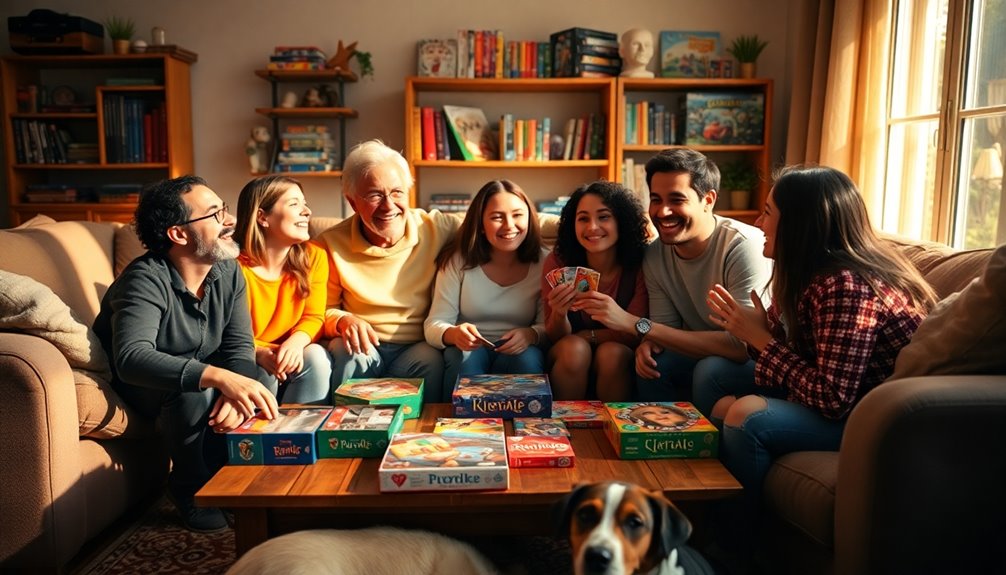

For families who want a flexible game night pick, Sequence stands out for mixing simple card play with light planning, while UNO is easier to teach and Jenga brings a hands-on option. The best board games for families depend on who is playing: younger children need accessible rules, while mixed-age groups may prefer quick turns and room for strategy. Longer games such as Monopoly and The Game of Life suit households that enjoy settling in, but they ask for more time and attention. I compared all 15 picks by learnability, group fit, replay appeal, and practical tradeoffs. Read on for the full breakdown and recommendations by family type.

Get kitchen staples and gadgets delivered free with Prime
- Fast, free delivery on millions of items
- Prime Video, Amazon Music and more included
- Member-only deals all year
Key Takeaways
- Sequence offers the broadest middle ground in this lineup: familiar card mechanics with more planning than UNO, though it needs table space and a little patience.
- UNO and Taco Cat Goat Cheese Pizza are better fits for short, lively rounds; the former is more familiar, while the latter asks players to react quickly.
- Candy Land prioritizes simple turns for young children, while Scrabble and Rummikub reward households ready for word or number strategy.
- Monopoly and The Game of Life offer a longer, story-like session, but their play time and rule load make them less convenient for brief weeknight games.
- Do You Really Know Your Family? and Grab The Mic shift the focus to conversation and performance, so they suit outgoing groups better than families seeking classic board play.
| Hasbro Gaming Yahtzee Classic Dice Game |  | Best for Scorekeeping Fans | Players: 2 or more | Recommended age: 8 years and up | Dice: 5 | VIEW ON AMAZON | See Our Full Breakdown |
| Taco Cat Goat Cheese Pizza Card Game | 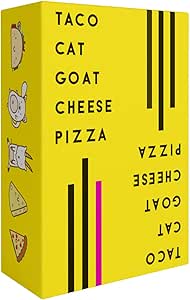 | Best for Fast Group Energy | Players: 2–8 | Recommended age: 7+ | Round length: 10–15 minutes | VIEW ON AMAZON | See Our Full Breakdown |
| Sequence Original Game with Folding Board, Cards, and Chips |  | Best for Large Family Groups | Players: 2–12 | Recommended age: 7 years and up | Board dimensions: 19.75 x 15.25 in | VIEW ON AMAZON | See Our Full Breakdown |
| Mattel UNO Card Game – Ages 7+, 2–10 Players |  | Best for Easy Mixed-Age Play | Players: 2–10 | Recommended age: 7+ years | Included components: 112 cards and instructions | VIEW ON AMAZON | See Our Full Breakdown |
| Hasbro Sorry! Classic Family Board Game for Ages 6+ |  | Best for Younger Board-Game Starters | Players: 2–4 | Recommended age: 6 years and up | Included components: Gameboard, 12 pawns, 45 cards, instructions | VIEW ON AMAZON | See Our Full Breakdown |
| Hasbro Gaming Jenga Game with Digital Die – Classic Wooden Block Stacking Game for Ages 6+ |  | Best for Active, Short Turns | Players: 1 or more | Recommended age: 6+ | Play style: Wooden block stacking | VIEW ON AMAZON | See Our Full Breakdown |
| USAOPOLY Flip 7 Card Game |  | Best for Press-Your-Luck Families | Players: 3 or more | Recommended age: 8+ | Play time: About 20 minutes | VIEW ON AMAZON | See Our Full Breakdown |
| USAOPOLY TAPPLE Family Word Game |  | Best for Fast Wordplay | Players: 2–8 | Recommended age: 8+ | Playing time: About 15 minutes | VIEW ON AMAZON | See Our Full Breakdown |
| Monopoly Family Board Game for 2-6 Players, Ages 8 and Up |  | Best for Long Strategy Sessions | Players: 2–6 | Recommended age: 8+ | Tokens: 8 | VIEW ON AMAZON | See Our Full Breakdown |
| Hasbro Gaming Scrabble Classic Crossword Board Game |  | Best for Word-Building Families | Players: 2–4 | Recommended age: 8+ | Playing time: About 40 minutes | VIEW ON AMAZON | See Our Full Breakdown |
| Candy Land Kingdom of Sweet Adventures Board Game for Kids |  | Best for Preschool Beginners | Recommended age: 3 and up | Players: 2 or more | Game format: Board game | VIEW ON AMAZON | See Our Full Breakdown |
| Do You Really Know Your Family? Family Card Game |  | Best for Conversation and Laughs | Recommended age: 8 years and up | Players: 3–8 | Components: Cards | VIEW ON AMAZON | See Our Full Breakdown |
| Pressman Rummikub – The Original Rummy Tile Game |  | Best for Family Strategy | Players: 2–4 | Recommended age: 8 and up | Game type: Tile game | VIEW ON AMAZON | See Our Full Breakdown |
| The Game of Life Board Game, Family Game for Kids Ages 8 and Up |  | Best for Themed Family Play | Recommended age: 8 and up | Players: 2–4 | Peg colors: 6 | VIEW ON AMAZON | See Our Full Breakdown |
| Grab The Mic – Award-Winning Karaoke Party Game for Bad Singers with Foam Microphone |  | Best for Energetic Family Parties | Number of cards: 120 | Included components: Foam microphone, game board, player tokens, instructions | Game modes: Multiple | VIEW ON AMAZON | See Our Full Breakdown |
| board games for familie | Players | Recommended age |
|---|---|---|
| Hasbro Gaming Yahtzee Classic | 2 or more | 8 years and up |
| Taco Cat Goat Cheese Pizza Car | 2–8 | 7+ |
| Sequence Original Game with Fo | 2–12 | 7 years and up |
| Mattel UNO Card Game | 2–10 | 7+ years |
| Hasbro Sorry! Classic Family B | 2–4 | 6 years and up |
| Hasbro Gaming Jenga Game with | 1 or more | 6+ |
| USAOPOLY Flip 7 Card Game | 3 or more | 8+ |
| USAOPOLY TAPPLE Family Word Ga | 2–8 | 8+ |
| Monopoly Family Board Game for | 2–6 | 8+ |
| Hasbro Gaming Scrabble Classic | 2–4 | 8+ |
| Candy Land Kingdom of Sweet Ad | 2 or more | 3 and up |
| Do You Really Know Your Family | 3–8 | 8 years and up |
| Pressman Rummikub | 2–4 | 8 and up |
| The Game of Life Board Game | 2–4 | 8 and up |
| Grab The Mic | — | — |
More Details on Our Top Picks
Hasbro Gaming Yahtzee Classic Dice Game
Yahtzee suits families who enjoy a familiar turn-based game with room for small strategic choices. Each player can roll up to three times to build combinations, then weigh which score to pursue across 13 turns. That gives it more decision-making than UNO, where luck can dominate, while keeping the rules approachable for players ages 8 and up. The shaker lid also holds the dice between games, making cleanup and travel straightforward. Its pace is measured, though: players take turns rolling and recording scores, so it asks for more patience than a quick round of Taco Cat Goat Cheese Pizza. Repeated rolls and scorekeeping are part of the appeal for some families, but can feel repetitive to others. It also needs at least two players.
Pros:- Rules are approachable for family play
- Rerolls let players make choices about which scoring combinations to pursue
- Shaker lid keeps the dice together for storage and travel
Cons:- Scorekeeping adds a recurring task throughout the game
- Repeated dice rolls may feel slow or repetitive
- Requires at least two players
Best for: Families with children ages 8 and up who like turn-based games, simple scorekeeping, and choices about how to use each turn.
Not ideal for: Families looking for a lively, low-fuss group game or a game that works for solo play; Yahtzee requires another player and repeated score recording.
- Players:2 or more
- Recommended age:8 years and up
- Dice:5
- Score cards:100
- Turns:13
- Material:Plastic
- Model number:00950
Our verdict“Choose Yahtzee for family game nights that suit turn-taking and scorekeeping, rather than rapid group play.”
Taco Cat Goat Cheese Pizza Card Game
Taco Cat Goat Cheese Pizza is the pick for families who want quick, physical rounds and can enjoy the scramble when spoken words match the cards. Its 10–15 minute rounds make it easier to fit into a busy evening than Sequence, which spreads play across a board and several hands of cards. It also accommodates up to eight players, so more relatives can join without teams. The action cards add surprises, but the central challenge is reacting quickly and slapping the pile; that can be exciting for some children and stressful for players who prefer thoughtful turns. Compared with UNO, it has less focus on managing a hand and more emphasis on timing. The compact card deck travels easily, though the game depends on players being comfortable with lively, fast reactions.
Pros:- Short rounds fit easily into a family gathering
- Supports groups of up to eight players
- Compact card format is convenient for travel
- Action cards change the pace and add surprises
Cons:- Fast reactions and slapping the pile may not suit every player
- Less room for planning than hand-management games such as UNO
- Listed without a manufacturer warranty
Best for: Families with children ages 7 and up who want short, energetic rounds for a larger group or a travel game.
Not ideal for: Players who dislike quick reactions or slap-based play, and families seeking a quiet game with deliberate strategy.
- Players:2–8
- Recommended age:7+
- Round length:10–15 minutes
- Components:Cards
- Edition:Original
- Manufacturer:Dolphin Hat Games
- UPC:736284444932; 855836006081
Our verdict“Pick this for brief, high-energy group play when everyone is comfortable reacting quickly.”
Sequence Original Game with Folding Board, Cards, and Chips
Sequence makes the most sense when a family wants a shared board and room for a big group: it supports up to 12 players, with team play helping bring children and adults together. Players match cards to board spaces, build five in a row, and can block opponents, so choices matter more than in UNO while luck still shapes each hand. The folding board, two card decks, and 135 chips give the game a more substantial table presence than Taco Cat Goat Cheese Pizza, which is easier to pack and play in a short burst. That larger setup is useful for a settled game night, but less convenient for travel or a crowded table. The small chips also require care around young children, and the team-based options may add coordination for players who want a simple individual contest.
Pros:- Accommodates 2–12 players and supports teams
- Combines card luck with choices about placing chips and blocking opponents
- Includes a folding board, two card decks, and 135 chips
- Rules can bring children and adults into the same game
Cons:- The board and chips need more table and storage space than a card-only game
- Small chips pose a choking hazard for young children
- Team play may require coordination that some groups would rather avoid
Best for: Families and mixed-age gatherings that need a board game for several players, including teams of children and adults.
Not ideal for: Households with children who may put small chips in their mouths, or players seeking a compact game for quick travel play.
- Players:2–12
- Recommended age:7 years and up
- Board dimensions:19.75 x 15.25 in
- Included components:Folding board, 2 decks of cards, 135 chips, instructions
- Chip colors:50 green, 50 blue, 35 red
- Material:Paper
- Batteries:Not required
- Game mechanics:Area control, hand management, team-based gameplay
Our verdict“Choose Sequence when a larger family group wants a shared board game with tactical choices and team options.”
Mattel UNO Card Game – Ages 7+, 2–10 Players
UNO is a practical choice for families who want familiar rules and flexible group size. Players match colors or numbers and use action cards to disrupt the discard order, which makes it easier to teach than Sequence, with its board positions and chip placement. It also seats up to 10, compared with Yahtzee’s minimum of two and narrower focus on scorekeeping. The colorblind-accessible symbols give players another way to distinguish cards, and three blank wild cards let families set house rules. The tradeoff is that the match often turns on which cards players draw, so it offers less sustained planning than Sorry!, where movement and sending pawns back shape the board. UNO’s simplicity helps a mixed-age table get started, but can leave families wanting more strategic depth after repeated games.
Pros:- Straightforward matching rules are accessible to mixed-age groups
- Supports 2–10 players
- Graphic symbols provide an additional way to identify card colors
- Three blank wild cards allow families to make custom rules
Cons:- Card draws can outweigh players’ strategic choices
- The familiar, simple loop may offer limited depth for players seeking longer-term planning
Best for: Families with children ages 7 and up who want a familiar card game that accommodates up to 10 players and is easy to teach.
Not ideal for: Players who want deeper planning or more control over outcomes; card draws can strongly shape the game.
- Players:2–10
- Recommended age:7+ years
- Included components:112 cards and instructions
- Blank wild cards:3
- Manufacturer:Mattel
- Model year:2019
- Model number:GDJ85
- Warranty:No Warranty
Our verdict“Choose UNO for an easy-to-teach family card game that fits a large group and accepts custom house rules.”
Hasbro Sorry! Classic Family Board Game for Ages 6+
Sorry! is a good fit for families introducing children ages 6 and up to a shared board game. Players draw cards to move pawns around the board and race to get all three home, with chances to send an opponent back to start. That direct interaction gives it more board drama than Yahtzee, where players focus on their own score, while its 2–4 player limit makes it less suited to a large gathering than Sequence. The rules are familiar and card-driven, so younger players can follow the race without managing a complicated hand. The same take-that mechanic is its sharpest tradeoff: a pawn sent back can erase progress and frustrate children who are invested in finishing. It also needs at least two people, making this a family table game rather than a solo activity.
Pros:- Recommended for children as young as 6
- Card-driven movement keeps the basic race easy to follow
- Sending pawns back creates interaction between players
- Includes a board, pawns, cards, and instructions
Cons:- Opponent moves can send a pawn back to start and undo progress
- Supports only 2–4 players
- Requires at least two players
Best for: Families with children ages 6 and up who are ready for a simple board race with direct interaction between players.
Not ideal for: Children who find setbacks upsetting, or larger households that need a game for more than four players.
- Players:2–4
- Recommended age:6 years and up
- Included components:Gameboard, 12 pawns, 45 cards, instructions
- Pawns:12
- Cards:45
- Language:English
- Edition:Standard Edition
- Model number:A5065
Our verdict“Choose Sorry! for younger children ready for an easy board race, provided they can handle having progress reversed.”
Hasbro Gaming Jenga Game with Digital Die – Classic Wooden Block Stacking Game for Ages 6+
Jenga with Digital Die makes the most sense for families who want a familiar dexterity game with extra prompts. Its six challenge modes, such as using only thumbs or racing a timer, change how players handle the 54 wooden blocks, adding variety without a large rulebook. Compared with Flip 7, the tension comes from careful hands rather than deciding when to take a risk, so younger players can join while turns stay easy to follow. The tradeoff is that the digital die requires a smartphone, which adds setup and may interrupt a screen-free game night. The physical game is compact, but the added challenges may be less appealing to players who prefer the straightforward original. I’d choose it for mixed-age groups who enjoy quick, hands-on turns.
Pros:- Six digital challenges add variety to familiar block-stacking play.
- Wooden blocks make each turn a tactile dexterity challenge.
- Solo or group play gives it flexible use.
- Compact set is practical for storage and travel.
Cons:- Digital die features require a smartphone.
- Phone setup can slow down the start of a game.
- Challenge modes may frustrate younger or less steady players.
Best for: Families with children ages 6 and up who want a quick, hands-on game with optional challenges.
Not ideal for: Screen-free households or families who want a game that needs no phone setup.
- Players:1 or more
- Recommended age:6+
- Play style:Wooden block stacking
- Blocks:54
- Material:Wood
- Additional feature:Digital die with 6 challenge modes
Our verdict“Choose Jenga with Digital Die for family groups who want quick physical tension and do not mind using a phone for extra modes.”
USAOPOLY Flip 7 Card Game
Flip 7 suits families who like weighing a tempting next move against the chance of losing a round. Players work toward 200 points while avoiding duplicate numbers, and action and modifier cards give the deck more twists than a simple draw-and-score game. Compared with Jenga with Digital Die, its suspense comes from choices and risk rather than physical skill, making it easier to play around a table but less active. The stated minimum of 3 players rules out two-person family nights, and the age guidance of 8+ may leave younger siblings out. Its roughly 20-minute playtime is convenient for a quick session, though families wanting a longer centerpiece may find a round ends too soon.
Pros:- Press-your-luck choices give players a meaningful risk decision.
- Action and modifier cards add variety to number cards.
- About 20 minutes fits a short family game slot.
- Compact card format is easy to bring along.
Cons:- Requires at least three players.
- Duplicate-number risk and special cards may be difficult for younger children.
- Short playtime may not satisfy families seeking a longer game.
Best for: Families with at least three players, including children ages 8 and up, who enjoy risk-taking and quick card rounds.
Not ideal for: Two-player households or families seeking a longer game with a shared board and substantial planning.
- Players:3 or more
- Recommended age:8+
- Play time:About 20 minutes
- Goal:Reach 200 points
- Deck:Multiple copies of numbers 1 to 12
- Special cards:Action and modifier cards
Our verdict“Pick Flip 7 for groups of three or more who want a fast card game built around risk and timing.”
USAOPOLY TAPPLE Family Word Game
Tapple is the word-game pick for families who enjoy thinking aloud under a little time pressure. Players name words that fit a category and start with an available letter before the 10-second timer runs out; 144 categories help keep repeated sessions from feeling identical. Compared with Scrabble Classic, it rewards quick recall rather than spelling strategy and tile placement, so turns move briskly but vocabulary confidence matters more than long-range planning. The wheel stores its category cards, which makes this more travel-ready than a full board game. Its battery-powered timer needs batteries, and the pace can put younger or slower-thinking players at a disadvantage. I’d favor it for lively groups comfortable with English wordplay.
Pros:- Ten-second turns keep the group engaged and rounds moving.
- 144 categories provide variety across the included cards.
- Portable wheel stores the cards for easier transport.
- Works with groups from two to eight players.
Cons:- Requires batteries for the built-in timer.
- Fast recall can disadvantage younger players or those less confident with English.
- Timed pressure may not suit relaxed family game nights.
Best for: Families with two to eight players ages 8 and up who enjoy quick English word-association challenges.
Not ideal for: Groups with younger children, players who dislike timed pressure, or households seeking a battery-free game.
- Players:2–8
- Recommended age:8+
- Playing time:About 15 minutes
- Cards:36 cards with 144 categories
- Timer:Built-in 10-second timer
- Materials:Paper and plastic
- Language:English
- Power:Battery
Our verdict“Choose Tapple for word-loving families who want a portable, lively game and are comfortable with a timer and batteries.”
Monopoly Family Board Game for 2-6 Players, Ages 8 and Up
Monopoly belongs on a family shortlist for groups that want property trading, rent collection, and a game that can fill a longer gathering. Buying and developing properties gives players ongoing financial choices, while the eight tokens add options for a group of up to six. Compared with Sequence, Monopoly builds its drama through negotiation and accumulating assets, but that longer arc is also its main drawback: a session can run long, and eliminated or cash-poor players may have less to do. The listed two-to-six-player range supports smaller groups, though the interaction is likely livelier with more players. I’d pick it when the family is ready to commit to a substantial game rather than fit in a quick round.
Pros:- Property buying and rent create ongoing strategic choices.
- Trading can make family interaction central to play.
- Eight tokens offer several character choices.
- Supports groups of two to six players.
Cons:- Games can take a long time to finish.
- Players who lose their money may have reduced involvement before the game ends.
- The experience is less lively with only two players.
Best for: Families with children ages 8 and up who enjoy property trading and have time for a long shared session.
Not ideal for: Families with short game-night windows or players who dislike extended turns and financial knockouts.
- Players:2–6
- Recommended age:8+
- Tokens:8
- Token options:Top Hat, Rubber Ducky, Scotty, Hazel, Race Car, Penguin, Battleship, Thimble
- Core play:Buy, sell, and trade properties; collect rent
- Property development:Build houses and hotels
Our verdict“Choose Monopoly for families seeking a long, interactive property game and willing to set aside time to finish.”
Hasbro Gaming Scrabble Classic Crossword Board Game
Scrabble Classic is the strongest fit here for families who want vocabulary and spelling to shape every turn. Players use 100 wooden letter tiles to build crossing words and claim premium squares, so the board rewards both word knowledge and placement choices. Compared with Tapple, Scrabble gives players time to study a rack and plan a move instead of racing a timer; that makes it calmer, but it also asks more of spelling skills and can slow play while everyone searches for a word. Team play and other included ways to play offer some flexibility, yet the standard format tops out at four players. I’d choose it for families who enjoy language puzzles and want a more deliberate contest than quick-response word games.
Pros:- Wooden tiles and racks make the word-building components tactile.
- Premium squares add placement strategy beyond forming words.
- Team play and other ways to play offer format flexibility.
- The textured board helps tiles stay in place.
Cons:- Limited to two to four players.
- Spelling and vocabulary differences can create an uneven family matchup.
- Longer deliberation over words may slow the game.
Best for: Families with two to four players ages 8 and up who enjoy spelling, vocabulary, and thoughtful turns.
Not ideal for: Larger families or groups with a wide gap in spelling confidence who want quick, low-pressure rounds.
- Players:2–4
- Recommended age:8+
- Playing time:About 40 minutes
- Language:English
- Letter tiles:100 wooden tiles
- Tile racks:4 wooden racks
- Other components:Gameboard, drawstring letter bag, and game rules
- Edition:Standard Edition
Our verdict“Pick Scrabble Classic for smaller families who enjoy spelling strategy and prefer thoughtful turns to Tapple’s timed wordplay.”
Candy Land Kingdom of Sweet Adventures Board Game for Kids
Candy Land is the gentlest starting point in this group for families with preschoolers: players follow colored cards toward the castle, with no reading required. Its simple turns let young children join in before they can manage the rules or strategy of games such as Rummikub or Sequence. The bright destinations give kids something to follow visually, while taking turns offers a first taste of playing together. That accessibility comes with a clear limit: choices and tactics are scarce, so older children may lose interest sooner than they would with UNO. It also works best with other players, so it is a poor fit for solo play. I’d choose it as an early family game, not as the one game expected to hold a mixed-age group’s attention for years.
Pros:- No reading required, so preschoolers can follow along
- Colorful board and destinations give young players clear visual cues
- Simple turns make it easy to introduce turn-taking
- Suitable for children ages 3 and up
Cons:- Limited choices may not hold older children’s attention
- Play is most enjoyable with multiple players
- The straightforward race offers little strategic variety
Best for: Families with children ages 3 and up who want a first board game that does not depend on reading.
Not ideal for: Families seeking meaningful strategy or a game that will challenge older children; its simple card-driven race offers little tactical depth.
- Recommended age:3 and up
- Players:2 or more
- Game format:Board game
- Play style:Race to the castle
- Reading required:No
- Included components:Game board, colored cards, game pieces
Our verdict“Choose Candy Land for a colorful, low-reading first game with preschoolers, and look to Rummikub or UNO when your family is ready for more decisions.”
Do You Really Know Your Family? Family Card Game
This card game makes family interaction the main event: trivia prompts and silly challenges invite players to share what they know about one another, rather than compete over a board. That gives it a different role from The Game of Life, where the fun comes from moving through a life-themed route, and from Rummikub, which asks players to plan tile plays. Easy-to-learn rules suit ages 8 and up, and the 3–8 player range fits a family gathering better than a two-player game. Its format also sets limits: groups larger than eight need another activity, and the entertainment depends on players being comfortable answering prompts and taking part in challenges. I’d pick it for a lively family night where conversation matters more than a long strategic contest.
Pros:- Prompts and challenges give family members reasons to talk and laugh together
- Easy-to-learn format helps the group get started quickly
- Suitable for children ages 8 and up, teens, and adults
- Tin container keeps the cards together for storage
Cons:- Requires at least three players
- The listed player range tops out at eight
- Personal prompts and challenges may not suit every group
Best for: Families with children ages 8 and up who enjoy conversation games and can gather at least three players.
Not ideal for: Two-player households, groups of more than eight, or players who would rather focus on strategy than personal prompts and challenges.
- Recommended age:8 years and up
- Players:3–8
- Components:Cards
- Material:Cardstock
- Language:English
- Container:Tin
- Dimensions:2 x 4.7 x 6.7 inches
- Theme:Trivia
Our verdict“Pick this card game for a group of three to eight who want conversation and shared laughs rather than the tile planning of Rummikub.”
Pressman Rummikub – The Original Rummy Tile Game
Rummikub gives families ages 8 and up room to plan without the reading demands of a word game: players arrange numbered tiles into groups and runs, aiming to empty their racks first. Since players build on the shared table, each turn can change what combinations are possible; that gives it more tactical back-and-forth than the mostly luck-driven turns of Candy Land. It also asks for a different kind of attention than Scrabble, relying on number patterns rather than spelling. The tradeoff is a small table, with just 2–4 players, and its tile-rummy approach may feel too light for gamers seeking intricate systems. I’d put it near the center of a family shelf when players enjoy spotting combinations and adjusting plans, but not as the choice for a big gathering or very young children.
Pros:- Numbered tiles support pattern recognition and planning
- Shared table combinations give players room to adapt their turns
- Works for ages 8 and up
- Playable with two to four people
Cons:- Limited to four players
- The tile-rummy format may feel too simple for advanced strategy fans
- Requires multiple players for the intended shared play
Best for: Families with players ages 8 and up who like number patterns, flexible planning, and turn-by-turn tactical choices.
Not ideal for: Families with more than four players, preschoolers, or strategy fans looking for a highly complex game.
- Players:2–4
- Recommended age:8 and up
- Game type:Tile game
- Theme:Rummy
- Objective:Use all your tiles first
- Play:Place numbered tiles in runs or groups
Our verdict“Choose Rummikub for a small family group that wants more planning than Candy Land without relying on word skills.”
The Game of Life Board Game, Family Game for Kids Ages 8 and Up
The Game of Life gives a family session a built-in story: players move through choices involving college, marriage, family, money, and retirement. That theme makes it feel more like a shared journey than Rummikub, where attention stays on number arrangements, or Do You Really Know Your Family?, where conversation prompts drive the activity. With a listed age of 8 and up, it suits families ready to read and follow more involved rules. Its 2–4 player limit narrows its usefulness for larger gatherings, and the path of life events may feel repetitive to players who want sharper strategic control. The appeal is in seeing where turns lead, not in deep planning. I’d choose it for a small family that enjoys a themed route and varied events over a compact, replayable card game.
Pros:- Life-event theme gives turns a clear narrative
- Players make choices involving education, family, and money
- Suitable for children ages 8 and up
- Colorful pegs distinguish players on the board
Cons:- Limited to two to four players
- The themed route may feel repetitive over repeated plays
- Requires reading and understanding the rules
Best for: Families with children ages 8 and up who enjoy story-like board play and can play in a group of two to four.
Not ideal for: Large families or players seeking a compact game with strategic control and little reading.
- Recommended age:8 and up
- Players:2–4
- Peg colors:6
- Game format:Board game
- Theme:Life decisions and milestones
- Play:Choose routes and make life decisions
Our verdict“Pick The Game of Life for a small family that wants a themed journey, while Rummikub is a better fit for number-based planning.”
Grab The Mic – Award-Winning Karaoke Party Game for Bad Singers with Foam Microphone
Grab The Mic turns a family game into a singing challenge: players race to grab the foam microphone and sing lyrics containing a revealed word. Its multiple modes and 120 word cards give groups ways to vary the activity, while the fast pace suits a lively gathering better than the turn-by-turn number play of Rummikub. The format calls for active participation, though, so it is a less comfortable fit for anyone who would rather watch than sing. The description also pitches it as a party game; families seeking a quieter, more structured board game may prefer The Game of Life. The listed data does not specify a recommended age or player count, which makes it harder to judge its fit for families with younger children. I’d choose it when the group is willing to make noise and play along.
Pros:- Word cards and singing create a lively group challenge
- Foam microphone gives the race a clear central prop
- Multiple game modes add variety
- Includes a board and player tokens
Cons:- Active singing may put off players who prefer quieter games
- Its party format may not suit families seeking a structured board game
- The supplied product data does not state an age range or player count
Best for: Families and friends who enjoy singing, quick reactions, and an energetic party-style activity.
Not ideal for: Quiet family nights, players uncomfortable singing in front of others, or buyers who need a stated age range and player count.
- Number of cards:120
- Included components:Foam microphone, game board, player tokens, instructions
- Game modes:Multiple
- Game style:Karaoke party game
- Play:Race to grab the microphone and sing lyrics containing a revealed word
Our verdict“Choose Grab The Mic for a family party where everyone is ready to sing; choose The Game of Life for quieter, turn-based play.”

How We Picked
I compared these 15 games on the factors that most affect a family game night: how quickly new players can learn, whether different ages can take part, how long a typical session may feel, and what kind of attention or interaction the game asks from the group. I also weighed replay appeal, setup and storage demands, and whether the game works with the player counts listed by its maker. Those criteria matter because a game can be well known yet still be a poor fit for a household with limited time, young children, or a small table.
The order favors broad family fit, approachable play, and flexibility across occasions. Sequence earns the lead for balancing accessible mechanics with meaningful decisions; UNO and Jenga follow as easier-to-start alternatives with different kinds of energy. Games aimed at narrower needs—such as early-childhood simplicity, word play, longer strategy, conversation, or singing—rank lower overall but may be the stronger choice for the right household. I treated tradeoffs as part of each recommendation, rather than assuming that one style works for every family.
Factors to Consider When Choosing Board Games For Families
Start with the kind of evening your household actually has: a short round before bed calls for a different game than a weekend session around the table. These broader checks can help you choose beyond a game’s theme or familiar name.
Match the Rules to the Youngest Regular Player
Look at the youngest person who will play often, then ask whether they can make meaningful choices without an adult managing every turn. Age labels are a starting point; reading demands, fine motor actions, and the ability to wait through other turns can matter just as much. A simple game can include older relatives if the pace stays lively, while a complex game may leave younger players watching instead of participating. Avoid buying an advanced game on the assumption that children will grow into it quickly if your family rarely has long sessions. For mixed ages, choose rules adults can enjoy without adding house rules that give children a separate, easier game.
Choose a Session Length Your Family Can Finish
Families often underestimate how much the end of a game matters: a session that runs long can leave everyone impatient, even if the opening was fun. Check the publisher’s play-time guidance where available, but allow extra time when players are learning or children need help. If game night often gets interrupted, favor formats that end cleanly after a round or hand. Longer games make more sense when everyone has set aside the time and enjoys gradual progress. A useful rule is to match the game to the time you have on an ordinary evening, not the rare occasion when nobody needs to leave the table.
Decide Whether Your Group Wants Luck, Skill, or Both
Chance can level the field between adults and children, while strategy gives players a reason to improve over repeated sessions. A game with both can work well for a mixed-experience group, but the balance matters: too much luck may frustrate players who want their choices to count, and too much strategy can make beginners feel outmatched. Consider whether your family prefers playful surprises, word or number challenges, or planning several turns ahead. Games built around speed also reward quick reactions, which may not suit every age or temperament. Think about what makes your group laugh or stay engaged, rather than treating complexity as a measure of quality.
Check Player Count and Table Space Together
The advertised player range only helps if the game remains comfortable at the number of people who usually join. Some formats move quickly with a larger group, while board layouts or shared play areas can feel crowded around a small table. Consider where pieces, cards, tiles, or blocks will sit during play, and whether the box is easy to store between sessions. A compact card game may be more practical for travel or a small home, but it may not provide the tactile board experience some families want. Before buying, picture your usual group seated around your actual playing surface.
Pay More for Fit, Replay, and Durability
A higher-cost game makes sense when its components, variety, or repeated use matter to your household; price alone does not predict a better family fit. For games with small pieces, tiles, or wooden blocks, think about how easily components can be gathered and stored after play. Replay value may come from different player choices, changing challenges, or simply a format your family enjoys bringing out often. A familiar classic can be a sensible choice if it gets regular use, while an unusual party game may sit untouched if nobody likes performing or shouting. Compare the kind of repeat play you expect with the space and upkeep the game requires.
Treat Social Comfort as Part of the Rules
Conversation and performance games depend on the group’s mood as much as their mechanics. Some players enjoy personal questions or singing in front of others, while quieter relatives may prefer shared puzzles or turn-based play. A game night works better when nobody feels pushed into revealing something private or performing for the room. Check whether prompts can be skipped and whether the fun depends on every player joining in at the same intensity. If your guests change from week to week, a more neutral game may be a safer choice than one built around personal stories or showmanship.
Frequently Asked Questions
Which game in this roundup works best for a family with both young children and adults?
Sequence is a strong starting point for a mixed-age group that can manage card matching and simple planning. For a younger child who is not ready to track choices, Candy Land keeps turns simpler, though older players may find it less engaging. If the group wants quick reactions and short rounds, UNO can be easier to bring everyone into. The right choice depends on whether younger players can follow the core rules independently. Consider trying a short game with a borrowed copy before choosing a more involved format.
What should I choose if our family has less than half an hour for game night?
Look toward games built around quick rounds, such as UNO, Taco Cat Goat Cheese Pizza, or Flip 7, and check current play-time guidance before buying. The pace can still vary with group size, interruptions, and how quickly players learn the rules. Games like Monopoly and The Game of Life are less reliable choices when you need a firm end time. A game that finishes in rounds gives you a natural stopping point. Pick one whose turn structure your family can pause without losing track of the game.
Are word and number games a good choice when players have different skill levels?
They can be, if the group enjoys learning from one another and does not mind uneven knowledge. Scrabble leans on vocabulary and spelling, while Rummikub emphasizes spotting number runs and sets, so each favors different strengths. Differences in experience can make these games rewarding, but they may also leave beginners feeling behind. You can make the first session more welcoming by agreeing to help with rules and keeping the focus on shared play rather than winning. If that would feel awkward for your group, a lighter luck-based game may be a better fit.
How do I choose between a traditional board game and a party-style game?
Choose a traditional board format when your group enjoys taking turns, tracking progress, and making decisions over a shared layout. Party games such as Grab The Mic center on group energy and performance, while conversation games rely on players being comfortable sharing answers. These social formats can suit gatherings where the goal is laughter and interaction, but they may not work well for shy players or quieter evenings. Consider the least outgoing regular player, not just the person most excited to host. If participation might feel pressured, pick a game where players can contribute without being the center of attention.
Should I buy a familiar classic or try a less familiar game?
A classic such as UNO, Jenga, or Yahtzee can reduce the time spent explaining rules, which helps when guests change often. A less familiar pick can add a different challenge or social style, but it asks someone to teach the game and may need a few rounds before it clicks. Think about whether your household values an easy start or novelty that can renew interest. Familiarity does not guarantee that a game suits your group’s ages, time, or preferred level of strategy. Match the choice to how often you expect to play and who will be at the table.
Conclusion
Sequence is my best overall pick for families looking for a shared game with accessible rules and room for decisions. For a familiar, flexible option, UNO is the best value-minded choice; for newcomers or short sessions, it is also the easiest starting point. Scrabble is the premium-feeling choice for households that enjoy word challenges and a more thoughtful pace. Choose Candy Land when younger children need especially simple turns, Rummikub for number-pattern play, or Jenga for a hands-on group activity. If your family prefers conversation or performance, consider Do You Really Know Your Family? or Grab The Mic; their appeal depends on everyone being comfortable joining in.
Halloween Picks
halloween
As an affiliate, we earn on qualifying purchases.