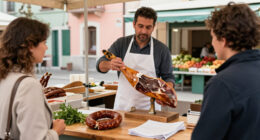

TL;DR
Saint Lucy’s feast day falls on December 13, but its celebrations vary by place: Syracuse is known for a major religious procession, while Bergamo and nearby northern communities are associated with children’s gifts. Sicilian cuccìa is a local feast food, and torrone may appear among seasonal sweets, but neither processions nor torrone stalls define the day across all of Italy.
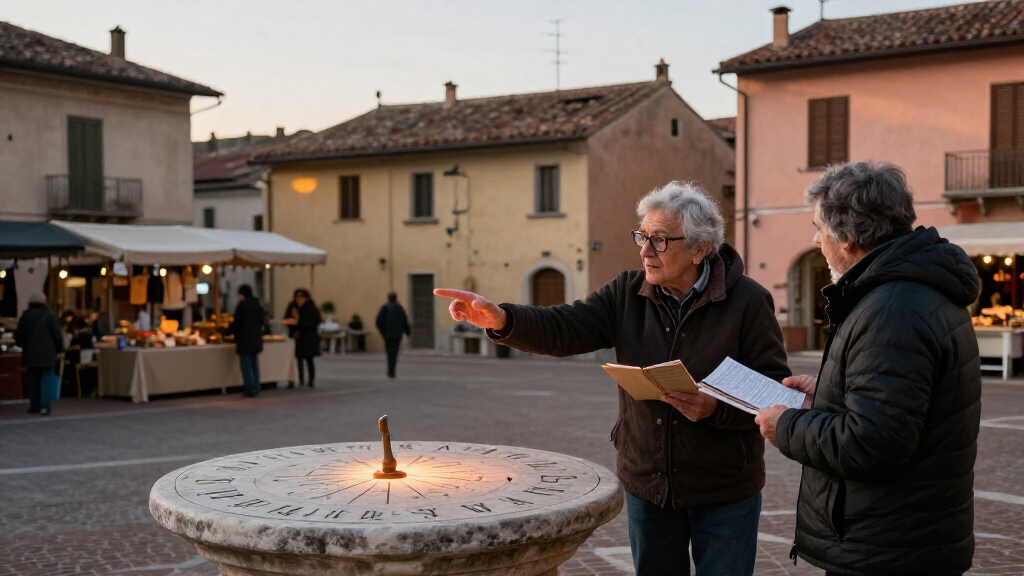
On December 13, you might hear a brass band approach a church square in Syracuse, or find children in Bergamo comparing the gifts Santa Lucia left overnight. A few streets away, a stall may smell of toasted almonds and honey. These scenes belong to the same feast day, but they do not happen everywhere, or in the same way.

Get kitchen staples and gadgets delivered free with Prime
- Fast, free delivery on millions of items
- Prime Video, Amazon Music and more included
- Member-only deals all year
Santa Lucia—Saint Lucy—is a Christian martyr whose feast day is marked in parts of Italy with church services, processions, food, and children’s traditions. This guide helps you choose a place to visit, understand what you’re seeing, and find local sweets without assuming that every town has the same parade or a row of torrone stalls.
Think of December 13 as a set of local invitations. Syracuse offers a particularly significant religious story; parts of northern Italy bring a family tradition into the early morning; and in Sicily, cuccìa gives the feast a distinctive taste. Check current local notices before you travel, because schedules, routes, and market offerings can change each year.
Saint Lucy’s feast day is December 13, but public celebrations vary by town and region.
Syracuse is especially significant to Saint Lucy’s story and is known for a major religious procession; verify the current route and schedule locally.
Santa Lucia brings gifts to children in some northern communities, especially around Bergamo and Brescia, but this is not a nationwide custom.
Some Sicilian communities serve cuccìa for the feast; ask whether it is sweet or savory and check ingredients for wheat, dairy, and nuts.
Torrone is a festive nougat you may find at seasonal stalls, but it is not unique to Santa Lucia; the winter solstice falls around December 21.
December 13 across Italy One feast, many local customs
Saint Lucy’s feast day brings distinct traditions in different places. Choose a town first, then check what is happening there.
Traditions change by region
The day is not one nationwide festival.
A religious procession
Syracuse is known for a major procession carrying Saint Lucy’s statue. Check the local route and schedule.
Gifts for children
In and around Bergamo and parts of Brescia, children may wake to gifts attributed to Santa Lucia.
Cuccìa at the feast
Some communities serve boiled wheat, prepared sweet or savory according to local custom.
Plan around local notices
Routes, timings, access, and market offerings can change each year.
Customs and public events vary from place to place.
Ask the parish, diocese, municipality, or tourism office.
Give religious processions room and follow local guidance.
Sweets are local, too
Seasonal stalls may offer torrone, but it is not a defining custom everywhere on December 13.
- A Sicilian boiled wheat dish
- Sweet or savory versions
- Ask about ingredients and allergens
- Italian festive nougat
- May appear at seasonal stalls
- Not unique to Saint Lucy’s feast
Start with one town: December 13 customs change across Italy
Lucia processions and torrone stalls are not a single nationwide Italian custom; December 13 is observed differently from town to town. Saint Lucy’s feast day brings church services and public devotion in some places, children’s gift traditions in parts of the north, and special foods in parts of Sicily. Other communities hold no major public event.
That variety matters when you plan a trip. A visitor who expects every piazza to host a procession and nougat market could arrive in a town where the day is observed mainly at church or at home. Choose your destination first, then look for its parish, municipality, diocese, or official tourism office announcements.
Saint Lucy’s name is linked to the Latin lux, meaning “light,” and she is traditionally invoked as a protector of eyesight. In Christian art, you may see her holding a palm branch and a plate with eyes. Those symbols help explain why the feast feels especially apt in the darkening days of December, even though local observances carry their own histories.
For a practical itinerary, treat the feast as a reason to spend time in one place rather than as a guaranteed national festival. If you are in Verona, ask a local tourism office what is scheduled that year; if you are in Sicily, ask which churches or neighborhoods observe the day. A short, specific plan will serve you better than traveling between cities in search of customs that may not be on the calendar.
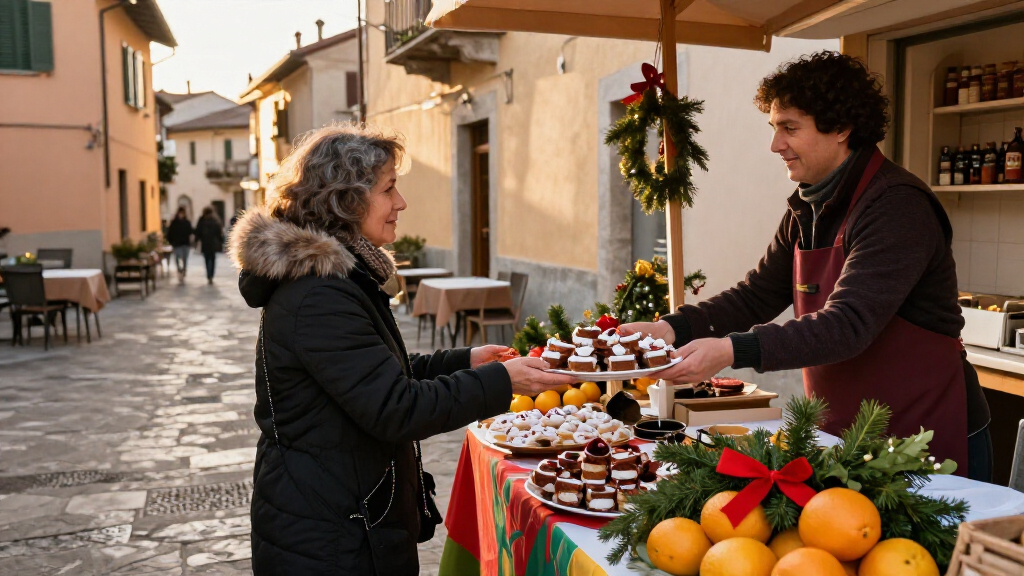
Products Worth Considering

Dyson V8 Cyclone Cordless Vacuum

Sonos Era 100 SL Compact Microphone-Free Speaker, Black

Ring Battery Doorbell 2K Plus, Indoor Cam 2K, and Window & Door Sensor Bundle
As an affiliate, we earn on qualifying purchases.
See Syracuse’s procession as a religious act, not a street show
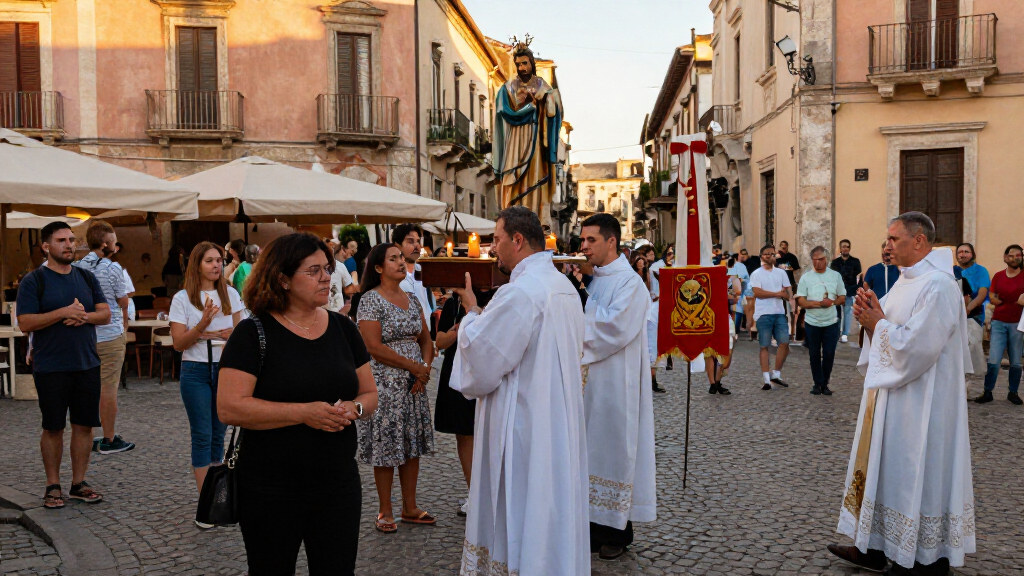
In Syracuse, Sicily, Saint Lucy’s feast has special significance because tradition holds that she was born and martyred there. A major religious procession carrying her statue is among the best-known observances associated with December 13. The procession is an act of local devotion, not a performance staged for visitors.
Depending on the year and the local arrangements, clergy, confraternities, musicians, and residents may take part. The route and timing can change, so confirm details through the church, diocese, municipality, or official tourism office before you set out. A map from a past year may be out of date even if it shows the same familiar streets.
On the day, give the procession room and follow the lead of people around you. Keep doorways and narrow sidewalks clear, lower your voice near a church service, and ask before photographing worshippers up close. If you have a choice between rushing to the front for a photograph and watching from a respectful distance, the second choice usually makes for a more meaningful visit.
For example, you might plan a quiet morning around the historic center, check the latest notice over breakfast, and arrive at the announced viewing area with time to spare. December streets can be crowded and cool; comfortable shoes and a warm layer make waiting easier. Save time afterward for a local meal or pastry stop, but let the religious event set the pace of the day.
Find the northern gift tradition in Bergamo and nearby towns
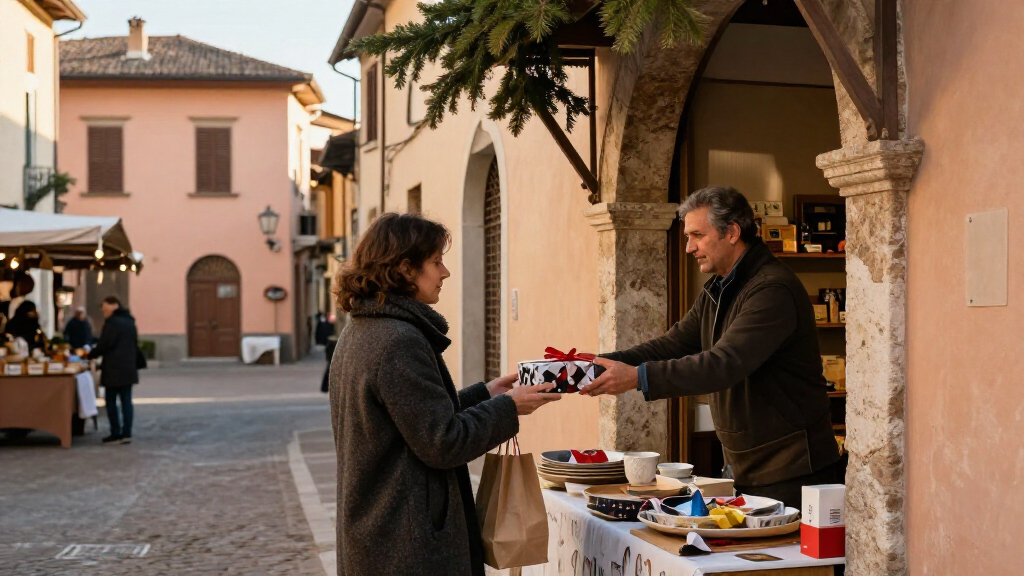
In and around Bergamo, Santa Lucia is especially associated with children receiving gifts on December 13. Some families tell children that the saint arrives with a donkey, leave food for the animal, and wake to find presents. Nearby areas, including parts of the province of Brescia, also have well-known Santa Lucia traditions.
The custom makes the night before the feast feel different from an ordinary December evening. A family may set out a small snack for the donkey, then keep the morning quiet while children discover what has been left. If you are visiting relatives or friends, ask what their household does; one family’s ritual can be more informative than a citywide guidebook description.
It is a regional custom, not a rule for all Italian children. Elsewhere, families may connect gift-giving with Christmas or Epiphany, and some children do not receive gifts from Santa Lucia at all. That distinction helps you talk about the tradition accurately and avoids giving young travelers the impression that every child in Italy follows the same calendar.
Visitors looking for public activities should check local announcements rather than assume the gift tradition comes with a parade or market. A winter walk through Bergamo’s streets can still be a lovely way to spend the day: look for a bakery, listen for neighborhood activity, and ask politely whether a local event is open to the public. Let families keep private rituals private.
Taste cuccìa in Sicily and ask what each town makes
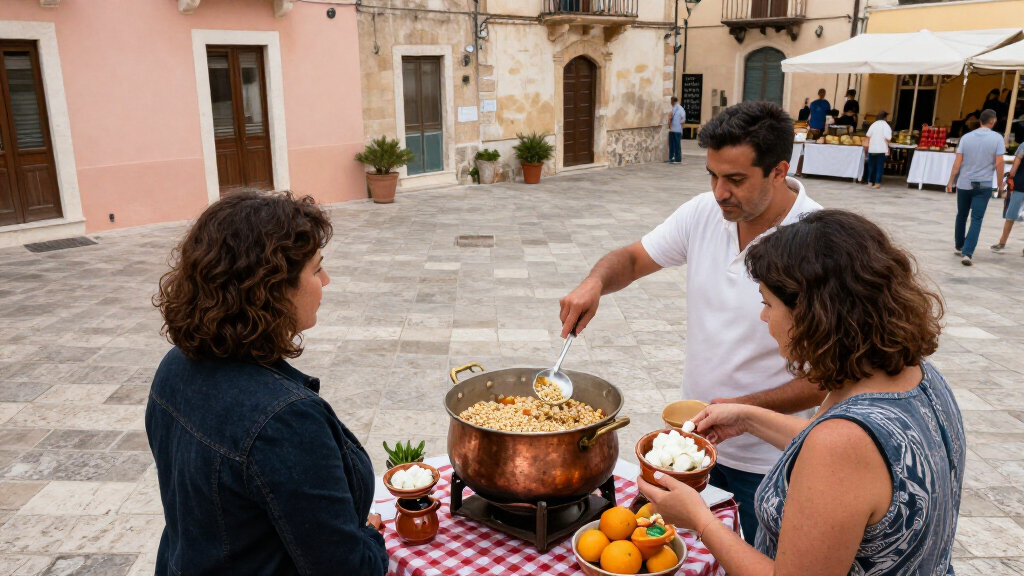
Cuccìa is a boiled wheat dish eaten in some Sicilian communities on Saint Lucy’s feast day. It may be prepared sweet or savory, with recipes and serving customs varying by place and family. If you see it on a menu or at a local event, ask how that kitchen makes it; the answer may tell you more than a generic description ever could.
In a sweet version, the wheat can be paired with ingredients such as ricotta or chocolate, depending on local practice. A savory preparation may be quite different. Think of the grain as the shared starting point, with the final dish shaped by a household’s habits—like finding that two relatives make the same holiday soup with completely different toppings.
Use this simple approach when you want to try it:
- Ask a Sicilian host, bakery, or restaurant whether cuccìa is available specifically for December 13.
- Ask whether the version is sweet or savory and what ingredients it contains.
- Check for allergens before ordering, especially dairy, nuts, or wheat if you have a food allergy or intolerance.
- Choose a shop or restaurant that handles and serves food safely, and eat the dish while it is fresh.
Wheat contains gluten, and sweet versions may include milk or nuts, so ask clearly if you have dietary restrictions. A shop’s recipe can differ from the version you read about elsewhere; that is part of the local picture, not necessarily a mistake. If you are staying in Sicily, call ahead rather than expecting the dish at every restaurant throughout the season.
Know what torrone can tell you—and what it cannot
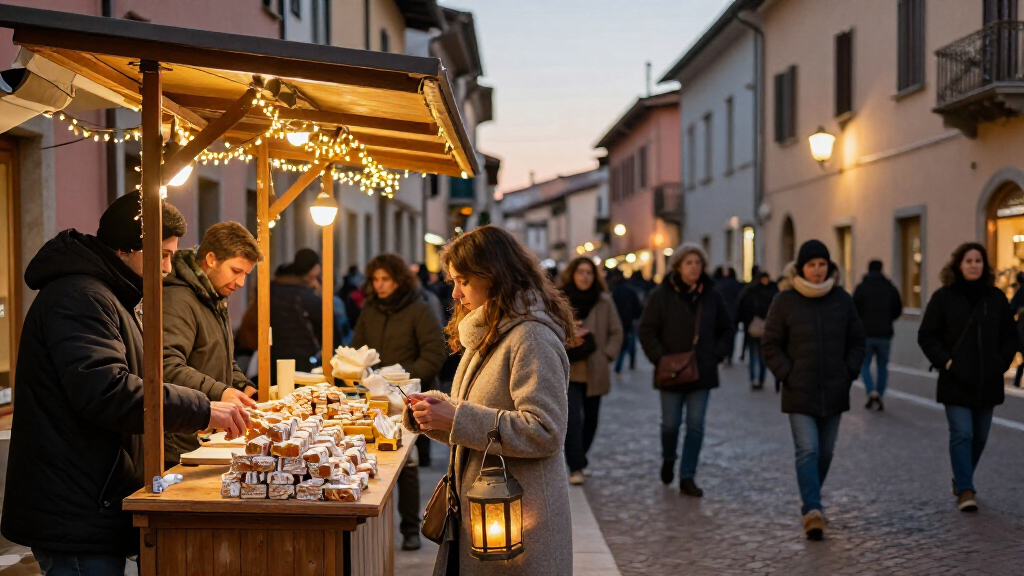
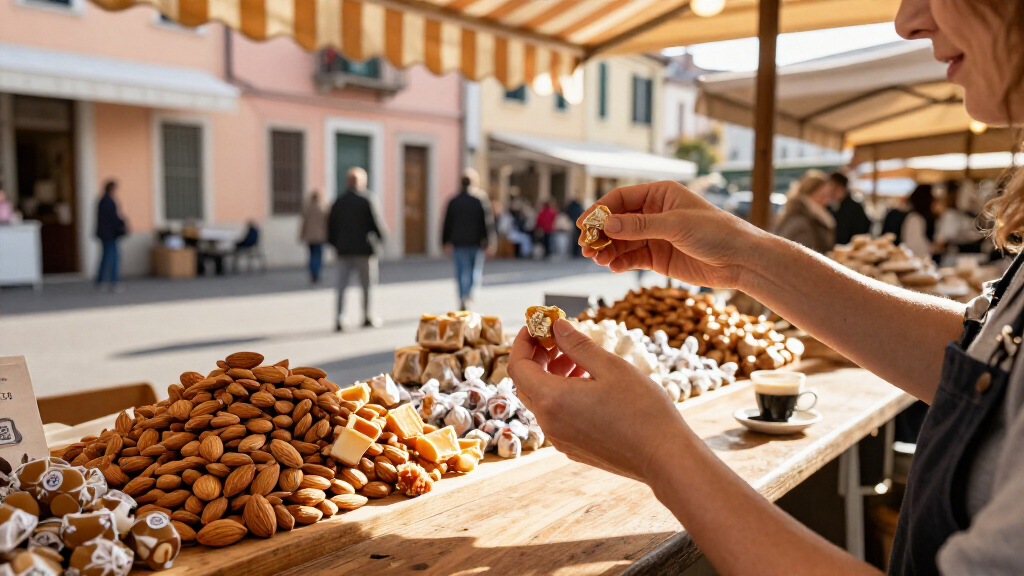
Torrone is Italian nougat, commonly made with honey, sugar, egg whites, and nuts, but it is not a defining or universal Santa Lucia food. You may find it at seasonal stalls or confectioners around December, alongside other sweets. A display of nougat can make a tempting stop; it does not prove that a town has a special December 13 torrone tradition.
That distinction helps you shop with curiosity rather than expectations. A market stall might sell hard, pale slabs packed with almonds, while a nearby confectioner offers a softer version. Ask the vendor where the sweet was made and which nuts it contains. Small details—a local maker’s name, a regional recipe, or the texture when you break off a piece—can tell you more than the word “Italian” on a sign.
| What you may encounter | What it means | What to ask |
|---|---|---|
| Torrone | Festive Italian nougat, often made with honey, sugar, egg whites, and nuts | Which nuts are included, and where was it made? |
| Cuccìa | A wheat dish served for Saint Lucy’s Day in some Sicilian communities | Is this version sweet or savory, and what is in it? |
| Other seasonal sweets | Local market or confectionery offerings that vary by town | Is this a local specialty or a general holiday sweet? |
Torrone commonly contains nuts and egg, and a sweet may also be made around dairy or other allergens. Ask about ingredients and cross-contact if you have an allergy. If a vendor offers tastings, take a small piece and compare the snap of a firm nougat with the softer chew of another; that is a delicious way to learn without treating every stall as part of one national ritual.
Plan your visit around local notices, weather, and crowds
Check the year’s local schedule before you travel, because procession routes, service times, access arrangements, and market offerings can change. Start with the municipality, diocese, parish, or official tourism office for the place you plan to visit. Then confirm close to December 13, especially if you need accessible routes or are traveling with children.
Winter days in Italy are short, and a public event can draw a crowd into streets that feel spacious on an ordinary afternoon. Wear shoes suited to cobblestones, bring a warm layer, and decide on a meeting point if your group gets separated. If you hope to watch a procession, arrive early enough to find a place without pushing into a church entrance or blocking residents’ routes.
Keep the schedule flexible. You might build a day in Syracuse around the announced procession, then leave time for a meal and a slow walk rather than booking a tight chain of activities across town. In Bergamo, ask whether any public events accompany the family gift tradition; a local custom can be widespread in homes without being organized as a visitor-facing spectacle.
When you see a stall selling torrone or other sweets, treat it as a local opportunity. Ask what is made nearby, whether the product is fresh, and how it should be stored if you plan to take some home. For packaged gifts, check the label and keep the sweets sealed and cool according to the maker’s directions. Travelers with food allergies should ask about nuts, eggs, wheat, dairy, and shared equipment before tasting.
Read the old shortest-day saying with the calendar in mind
December 13 is not the shortest day of the year; the winter solstice now falls around December 21. Still, the old saying “Santa Lucia, the shortest day there is” remains part of popular culture. It reflects an earlier way of reckoning with the calendar rather than the present date of the solstice.
The line makes intuitive sense when December afternoons darken early and the feast arrives like a small marker in the heart of winter. If you hear it sung or repeated, you do not need to correct someone in the middle of a family tradition. You can simply understand it as an old rhyme that has outlasted the calendar system that helped give it meaning.
For a traveler, the distinction can help with planning. If you are arranging a December visit to watch a procession, the day’s daylight and weather matter more than the rhyme. Check sunrise and sunset for your destination, confirm event times locally, and keep a backup indoor stop in mind if rain or cold makes waiting uncomfortable.
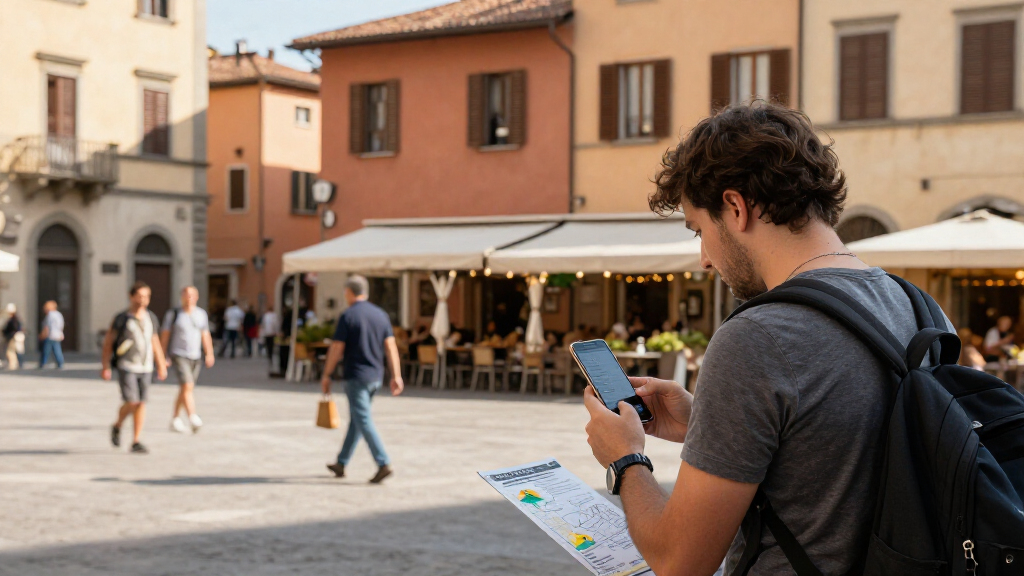
Imagine arriving in Verona for a winter walk, hearing the saying from a shopkeeper, then checking the sunset time on your phone before choosing a late afternoon route. The phrase offers a glimpse of seasonal memory; the actual solstice date tells you when the astronomical turning point occurs. Both can sit comfortably in the same conversation.
Frequently Asked Questions
When is Saint Lucy’s feast day?
Saint Lucy’s feast day is December 13. Parts of Italy mark it with church services, processions, food traditions, or children’s customs. The observance depends on the town, so check local announcements if you are planning a visit.
Where can I see a well-known Santa Lucia procession?
Syracuse, Sicily, is especially significant because tradition holds that Saint Lucy was born and martyred there, and the city is known for a major procession carrying her statue. Routes and times can change each year, so confirm details with the parish, diocese, municipality, or official tourism office.
Are there Santa Lucia processions throughout Italy?
No, there is no single nationwide procession. Some places hold important public religious events, while others observe the feast more quietly or do not hold a major public celebration. Look up the specific town you plan to visit.
Is torrone a special Santa Lucia sweet?
Torrone is a festive Italian nougat, not a sweet tied exclusively to December 13. Seasonal stalls may sell it alongside other local or holiday sweets. It often contains nuts and egg whites, so ask about ingredients if you have an allergy.
What is cuccìa, and where can I try it?
Cuccìa is a boiled wheat dish eaten for Saint Lucy’s feast in some Sicilian communities. It can be sweet or savory, with recipes that vary by town and household. Ask a local restaurant or bakery whether it is available and what ingredients the version contains.
Does Santa Lucia bring gifts to every child in Italy?
No, the gift tradition is regional. It is particularly associated with Bergamo and nearby communities, where some children leave food for the saint’s donkey and wake to find presents. In other places, gifts may be connected to Christmas or Epiphany instead.
Is December 13 the shortest day of the year?
No. The winter solstice falls around December 21. The saying that Santa Lucia brings the shortest day reflects an older calendar tradition and remains part of popular culture.
Conclusion
Choose one town and follow its own December 13 customs. Check the local schedule, make room for a procession or family tradition, and ask what is actually made nearby before you order cuccìa or buy torrone. That small bit of local curiosity turns a winter visit into something more personal than ticking off a holiday market.
Then step back into the December evening with the taste of honey, toasted nuts, or warm wheat still on your mind. The feast is not one Italian scene repeated everywhere; it is a collection of local lights, each bright in its own place.