
TL;DR
Choose a Thanksgiving roasting pan by measuring your oven and checking the pan’s interior dimensions, sturdy handles, material, and stovetop rating. A rack can help lift the turkey above the drippings, but it is optional; a sturdy dish or a supported foil pan can work too. Use a food thermometer to check doneness, since color and timing alone do not confirm a safe turkey.
A Thanksgiving turkey can weigh as much as a small suitcase, and a flimsy pan full of hot drippings can fold when you least want it to. Choosing the right Thanksgiving roasting pan is less about buying the most expensive piece of cookware and more about matching the pan to your bird, oven, and gravy plans.

Get kitchen staples and gadgets delivered free with Prime
- Fast, free delivery on millions of items
- Prime Video, Amazon Music and more included
- Member-only deals all year
Start by checking the space between your oven walls and racks, then look at the pan’s dimensions and handles. This guide explains which materials and shapes make sense, when a rack helps, and how to use a disposable pan without carrying a wobbly load across the kitchen. You’ll leave with key facts for choosing a pan and a practical plan for the holiday meal.
Measure oven clearance and compare it with the pan’s stated dimensions before buying.
Choose sturdy construction and secure handles for a heavy bird and hot drippings.
Treat a rack as helpful but optional; oven-safe vegetables can support the turkey.
Support a disposable foil pan with a rigid baking sheet before filling or lifting it.
Check turkey doneness with a food thermometer, and use the pan on a stovetop only when its maker approves.
Measure your oven before you buy a roasting pan
A Thanksgiving roasting pan should hold your turkey without crowding and still leave room to slide into your oven safely. Measure the oven’s usable width and depth with the racks in place, and check clearance near the door; a pan that fits on a store shelf may be awkward once handles and oven walls enter the picture.
Then compare those measurements with the manufacturer’s listed pan dimensions. A large bird needs space around it for heat to circulate, but a pan that nearly touches the oven walls can make handling difficult and may roast unevenly. For example, if you plan to cook a 14-pound turkey, do not rely on a pan’s vague “large” label—check the actual measurements and whether your oven rack can support the loaded pan.
Think about the route from oven to counter, too. A long handle can make a pan easier to grip with oven mitts, but it also takes up room. Measure the oven, check the rack, and allow a little clearance before buying; those few minutes can save you from discovering the mismatch on Thanksgiving morning.
If you’re comparing pans online, read both the exterior dimensions and the cooking surface dimensions. The bird needs to fit on the inside, while the whole pan needs to fit in your oven and sink. A tape measure, a note on your phone, and a look at the manufacturer’s specifications beat guessing from a product photo.
Products Worth Considering

Philips Hue Play HDMI Sync Box

Philips Hue Smart Light Starter Kit with Bridge and 4 White and Color A19 Bulbs

Sonos One Two-Room Set Smart Speakers with Built-In Alexa, Black
As an affiliate, we earn on qualifying purchases.
Choose a material that matches your cooking and cleanup
Stainless steel, aluminum, and coated pans each trade something useful for something else. Stainless steel tends to be durable and versatile, while aluminum conducts heat well; coated or enameled finishes can release food more easily, though they may scratch or limit stovetop use. Check the maker’s care and temperature guidance before you decide.
For a cook who wants one dependable pan for turkey, vegetables, and future roasts, stainless steel can be a sensible all-purpose pick. Its durability matters if you expect to use metal utensils or move the pan from oven to burner, but stainless steel does not distribute heat as evenly as some alternatives. That can mean browner patches where the pan contacts the oven rack or burner, so follow a reliable recipe and watch for hot spots. Aluminum spreads heat quickly and is often lighter, which can make a full pan easier to lift; bare aluminum, however, may react with acidic ingredients such as wine or tomatoes. A protected finish can prevent that reaction, so check the product details.
Coated pans can make cleanup feel less like scraping winter mud from boots, but the easy release comes with care limits: metal utensils or abrasive scrubbing may damage the surface, and high heat can exceed the maker’s rating. If you want to make gravy directly in the pan, confirm that its base is safe for your burner type. Oven-safe does not automatically mean stovetop-safe, especially if you use induction. That rating affects your workflow: a pan that cannot go on the burner means transferring the drippings to a saucepan, adding a dish and another step, but it may still be the right choice if easy cleanup matters more.
Consider how often you will use the pan after the holiday. A versatile pan may also hold a large lasagna or a tray of roasted vegetables, but it should suit those dishes’ temperatures and cooking methods. Pick for durability, heat response, cleanup, and the uses you’ll actually make; the best material is the one whose tradeoffs fit your meals and handling needs, not simply the shiniest finish on the shelf.
Use this checklist to compare pans, racks, and foil options
A good roasting pan balances support, airflow, and manageable cleanup. Heavy-gauge construction is less likely to warp under a heavy bird and hot juices, while secure handles give you a firmer grip through oven mitts. These details matter most when you lift the loaded pan; it can be much heavier than it looked on the counter.
| Option | Useful when | Tradeoff to check |
|---|---|---|
| Stainless steel pan | You want a durable pan for several kinds of cooking. | Heat response can differ from other materials; check stovetop rating. |
| Aluminum pan | You value quick heat conduction or a lighter pan. | Bare aluminum can react with acidic ingredients. |
| Coated or enameled pan | You want food to release more easily. | Finish can scratch or wear; check heat and burner limits. |
| Disposable foil pan | You need an inexpensive, occasional-use option. | Thin foil may buckle; support it with a rigid baking sheet. |
A rack lifts the turkey above the drippings so air can circulate beneath it. That separation can help the underside roast instead of sitting in liquid, while leaving drippings available for gravy. A V-shaped rack cradles the bird and can keep it stable, but its narrow shape may make it harder to lift out and leaves less space for vegetables. A flat rack gives you more room, though the bird may need more careful positioning. Neither is required: sturdy oven-safe vegetables can support a turkey, though they will soak up drippings and may roast differently. That can be a useful flavor trade if you plan to serve them soft or use them in gravy; it is less suitable if you want distinct, browned vegetables.
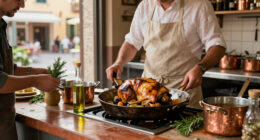
Picture the moment after roasting: you need both hands to carry a hot, heavy pan past guests gathered near the kitchen. A rigid base resists bending under the weight, and handles wide enough for oven mitts help you keep a balanced grip. Those qualities matter more than a fancy accessory when the pan is full. If you choose a disposable pan, place it on a baking sheet before filling it, and keep it there while it roasts and when you move it. The sheet adds a stable surface to grip, turning a foil pan into a practical cooking vessel without asking thin foil to bear the load by itself.
Set up the pan for better browning and easier gravy
A relatively shallow pan can help expose the turkey and vegetables to oven heat, while sides still need enough height to contain juices. Very deep sides can shield the lower parts of the bird from circulating heat and make the drippings harder to reach. The tradeoff is capacity: low sides are convenient for browning and spooning out juices, but a pan that is too shallow may not contain the liquid released by a large bird. For a home cook following a family recipe, choose enough depth to catch the juices without surrounding the turkey like a high-walled pot.
Use the rack if your pan includes one and you want to lift the turkey above the drippings. This keeps the bird from sitting in liquid and leaves a clear pool underneath for gravy, though it can reduce space for vegetables. If you do not have a rack, arrange sturdy vegetables as a base in an oven-safe pan. They add flavor to the juices, but because they sit under the bird they can soften and release moisture rather than brown evenly. Treat them as part of the gravy plan rather than expecting crisp edges.
After roasting, use the pan for gravy only if the manufacturer says it works on your stovetop. Separating excess fat and scraping browned bits into the gravy can add flavor, but the pan’s burner rating determines whether you can do that directly over heat. A stainless pan rated for your burner may make the transition simple; an oven-only coated pan needs the juices transferred to a saucepan instead. That extra step takes a little time and can leave some browned bits behind, so decide whether direct stovetop use is a feature you will value before buying.
Choose the pan shape and rack around the result you want: easy access to drippings, room for vegetables, or a lifted bird. A rack can help heat reach underneath, but it will not fix a pan that is too deep, too crowded, or unsuitable for your stove.
Roast and lift the turkey without a last-minute spill
To use a Thanksgiving roasting pan safely, set it on a stable oven rack, keep the handles clear, and check the turkey with a food thermometer rather than trusting color or timing alone. Current USDA guidance recommends cooking turkey to 165°F (74°C), measured in the thickest part of the breast and the innermost parts of the thigh and wing. Avoid touching bone with the probe.
- Check the pan and oven fit before you preheat; place the rack or vegetable support inside.
- Set the turkey securely in the pan, and keep the pan centered on the oven rack.
- Check the internal temperature in the recommended spots with a food thermometer.
- Use dry oven mitts and a clear path when lifting the pan; set it on a heatproof surface.
- Let the pan cool before washing to avoid a sudden temperature change that can warp metal or damage a finish.
Imagine carrying a turkey past a crowded counter while someone reaches for a serving spoon. Clear the route first, ask others to step back, and use both hands on secure handles. If you’re using a foil pan, keep it on its supporting baking sheet during the lift; thin foil can buckle under a heavy bird and hot juices.
Wash according to the pan maker’s instructions. For burnt-on drippings, let the pan cool, soak it in warm water with dish soap, and use a nonabrasive scrubber suited to its finish. Temperature checks, stable support, and a clear path are simple habits that make the meal safer and calmer.
Make a budget pan work for a holiday turkey
You do not need an elaborate pan to roast a turkey; you need a sturdy, oven-safe vessel that can hold the bird and its juices. A rimmed sheet pan or oven-safe dish may work if it supports the turkey securely and contains the drippings. The exact result depends on the dish’s size and shape, so check that the bird sits safely without crowding the oven.
A disposable aluminum pan can be useful for an occasional holiday meal or a kitchen with little storage space. Treat it as a liner rather than a strong carrier: set it on a rigid baking sheet before adding the turkey, and keep that support under it when moving the pan. Without the sheet, the foil may sag or spill as you carry the load.
To improvise a rack, place substantial oven-safe vegetables beneath the turkey. The vegetables can add flavor to the drippings, though they may soften and release moisture. If you are cooking for a large gathering, that tradeoff may be worthwhile; if you want easier access to browned drippings for gravy, a proper rack or shallow pan may help more.
Before buying, decide whether you’ll use the pan for other meals. Many roasting pans also serve for large casseroles or vegetables when their material and temperature limits suit the recipe. Spend for the features you’ll use—fit, stability, and suitable construction—then let the turkey be the star.
Frequently Asked Questions
What size roasting pan do I need for a Thanksgiving turkey?
Choose a pan that holds your turkey with some room around it and fits your oven with the racks in place. Check the pan’s actual dimensions rather than relying only on labels such as “large.” For example, measure the oven opening and interior before ordering a pan online.
Can I roast a turkey without a roasting pan?
Yes. A sturdy oven-safe dish or rimmed sheet pan can work if it supports the bird and contains the drippings. You can use oven-safe vegetables as a support in place of a rack, though they may soften as they roast.
Do I need a roasting rack?
No. A rack lifts the turkey above the drippings and can help air circulate underneath, but it is optional. A flat rack gives you more room for vegetables than a V-shaped one, while vegetables can serve as an improvised support if you do not own a rack.
Are disposable aluminum pans safe for roasting turkey?
They can work, but thin foil may buckle under the weight of a turkey and hot juices. Place the foil pan on a rigid baking sheet before filling it, and keep it supported when moving it. Follow the pan’s heat-use instructions.
Can I use my roasting pan on the stovetop to make gravy?
Only use it on a stovetop if the manufacturer approves it for your burner type. Oven-safe does not mean safe for every gas, electric, or induction cooktop. If your pan is not rated for stovetop use, pour the drippings into a suitable saucepan.
How do I clean burnt-on drippings from a roasting pan?
Let the pan cool, then soak it in warm water with dish soap and scrub with a nonabrasive pad suitable for its finish. Avoid sudden temperature changes and harsh abrasives, which can warp metal or damage a coating. Check the care instructions for coated and enameled pans.
Conclusion
Choose your roasting pan by measuring the oven first, then matching the pan’s material, handles, and cooking features to your turkey and gravy plans. A sturdy pan that fits will serve you better than an oversized showpiece that barely clears the oven door.
On Thanksgiving, you want the turkey to make the grand entrance—not a wave of hot drippings. Measure, choose carefully, and carry it with support.