
TL;DR

Get kitchen staples and gadgets delivered free — and shop member deals
- Fast, free delivery on millions of items
- Access to Prime Big Deal Days deals on October 6–7
- Prime Video, Amazon Music and more included
Ribollita is a thick Tuscan bread soup made with white beans, winter greens, vegetables, stale country bread, and olive oil. Its name means “reboiled,” and the defining method is to rest the soup before gently reheating it, which lets the bread absorb the broth and produces a cohesive texture closer to stew than thin soup.
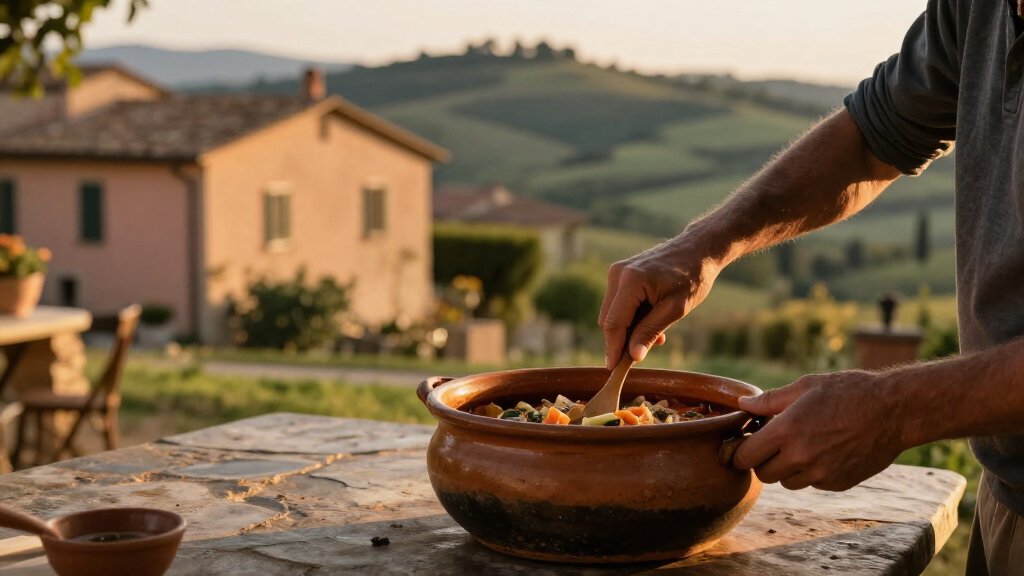
Ribollita weather arrives before Tuscany sees real winter. The sky turns pewter, stone streets shine with rain, and the air smells of wet leaves and chimney smoke. These are the cool, damp days when a bowl of beans, cavolo nero, and bread becomes especially welcome.
This is Tuscany’s equivalent of soup season, but ribollita is not simply vegetable soup with croutons. The bread goes into the body of the dish, rests there, and drinks up the savory broth. When you reheat the pot the next day, separate ingredients become one thick, spoon-standing meal.
You will learn what makes ribollita different from ordinary bean-and-kale soup, why stale bread works better than fresh bread, and how to build the right texture at home. You will also see where substitutions make sense, how to store the soup safely, and why Tuscan extra-virgin olive oil matters more than a snowfall of cheese. The goal is a practical pot you can cook on Sunday, reheat on Monday, and enjoy even more on Tuesday.
Rest ribollita for several hours or overnight, then reheat it gently; this second cooking creates its characteristic thick, cohesive texture.
Use cannellini beans, cavolo nero, slow-cooked soffritto, dense stale bread, and extra-virgin olive oil as the core structure.
Dry fresh country bread at 250°F for 20 to 30 minutes rather than using soft sandwich bread, which can turn gummy.
Refrigerate the soup within two hours, keep it for three to four days, and reheat leftovers to 165°F.
Freeze the bean-and-vegetable base without bread when you want the best texture after thawing.
Ribollita Weather Begins
When Tuscan skies turn pewter and rain glosses the stone streets, beans, winter greens, vegetables, stale bread, and olive oil become a thick meal that improves overnight. Ribollita is not soup with croutons—it is bread transformed by broth, rest, and gentle reheating.
Six elements, one shared texture
Ribollita earns depth through slow vegetables, creamy beans, sturdy greens, good bread, olive oil, and time—not cream, meat, or elaborate seasoning.
Cannellini beans
Use about three cups of cooked beans for six servings. Purée roughly one-quarter to give the broth body while keeping whole beans visible.
Patient soffritto
Cook onion, carrot, and celery until soft and sweet. Avoid scorched edges and wait until the raw-onion sharpness disappears.
Cavolo nero
Tuscan, lacinato, or dinosaur kale supplies mineral bitterness. Remove the tough central ribs before slicing the leaves.
Stale country bread
Dense, crusty bread absorbs broth without instantly collapsing. Pane sciocco is traditional; rustic sourdough or Italian bread also works.
Measured tomato
One 14-ounce can or two tablespoons of tomato paste adds brick-red acidity without turning the dish into tomato soup.
Extra-virgin olive oil
Add a raw ribbon to each bowl. Peppery Tuscan oil contributes grassiness, warmth, and more character than a snowfall of cheese.
Build the texture in six practical steps
The overnight pause is the hinge of the recipe. Without it, the pot is a good Tuscan-style bean soup; after it, the dish becomes fully realized ribollita.
Soften the soffritto
Cook onion, carrot, and celery in olive oil over medium-low heat.
Add tomato and greens
Cook until the leaves lose their stiff volume and turn glossy.
Add whole and mashed beans
Blend a portion with broth while leaving most beans intact.
Simmer slowly
Cook until cavolo nero is tender rather than leathery.
Add bread and rest
Cool promptly, cover, and refrigerate while the bread drinks the broth.
Reheat and finish
Warm gently; loosen only as needed, then add pepper and raw olive oil.
Ribollita versus ordinary bean soup
Household formulas vary across Tuscany, but the method and final consistency separate convincing ribollita from a thin soup garnished with bread.
| Test | Convincing ribollita | Bean-and-kale soup | Common shortcut |
|---|---|---|---|
| Bread placement | ✓ Inside the body of the dish | ~ Served alongside | ✗ Croutons scattered on top |
| Resting stage | ✓ Several hours or overnight | ✗ Optional | ✗ Served immediately |
| Second cooking | ✓ Gentle reheating | ~ Leftovers may be reheated | ✗ Hard boiling for speed |
| Final texture | ✓ Thick, cohesive, spoon-standing | ~ Brothy with separate pieces | ✗ Gummy or pasty |
| Primary finish | ✓ Raw extra-virgin olive oil | ~ Oil or cheese | ✗ Heavy cream required |
Time does the heavy lifting
The bread changes from a separate ingredient into a structural one. Starch, bean purée, and broth integrate as the pot rests, then settle further during reheating.
Keep the second bowl safe
Rest is central to the method, but it must happen under refrigeration. Cool promptly, store covered, and bring leftovers fully back to temperature.
Refrigeration window
Move the soup into refrigeration within two hours of cooking.
Days to enjoy
Keep covered in the refrigerator and reheat only the portion needed.
Leftover target
Heat the center thoroughly while stirring carefully over low heat.
Best freezing method
Freeze the bean-and-vegetable base, then add bread after thawing.
From thrift to transformation
Ribollita belongs to cucina povera: economical, low-waste cooking rooted in excellent basics. Its modern relevance continues an old Tuscan practice rather than inventing a new trend.
History note: Stories about servants reclaiming bread from aristocratic banquet tables are best treated as culinary folklore. The firmer history is more practical: Tuscan households stretched vegetable-and-bean soup across meals, using stale bread and reheating to turn leftovers into something better.
Why Reheating Ribollita Gives You a Better Bowl
Ribollita weather calls for a soup that improves while you leave it alone. Ribollita means “reboiled” or “boiled again”, though you do not need to subject the pot to a violent second boil. Resting and gentle reheating let the bread absorb broth, soften into the beans, and create the dish’s defining thickness.
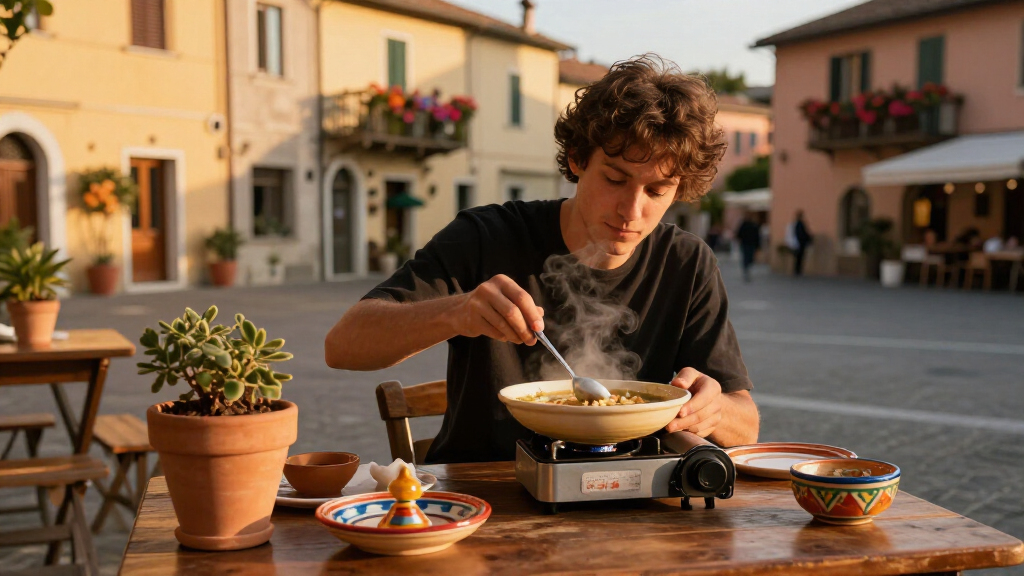
Imagine cooking a vegetable-and-bean soup on a rainy Sunday afternoon in Florence. You layer it with firm pieces of yesterday’s pane sciocco, Tuscany’s traditionally unsalted bread, then place the covered pot in the refrigerator. By Monday evening, the loose broth has become a dark green, rust-red mixture that folds from the spoon rather than running off it.
Treccani describes ribollita as a Tuscan preparation based on reheated bread-and-vegetable soup, supporting the connection between the name and the method [1]. The second heating is not decorative folklore. It turns starch, bean purée, and vegetable broth into a shared texture, much as an overnight rest lets the layers of lasagna settle into clean, flavorful slices.
The dish belongs to cucina povera, literally “poor cooking,” the resourceful food of rural and working households. That label can sound grim in English, yet the cooking itself is generous: one pot, inexpensive vegetables, and bread saved from the bin. These are established Tuscan principles—seasonality, thrift, and patience—rather than modern food trends wearing rustic clothes.
You may hear a story about servants gathering bread from aristocratic banquet tables and boiling it into supper. Treat that tale as culinary folklore, not documented history. The firmer truth is more useful: Tuscan households stretched vegetable soup across several meals, adding bread and heat to turn leftovers into something better.
As an affiliate, we earn on qualifying purchases.
Choose These Ingredients for Deep Tuscan Flavor
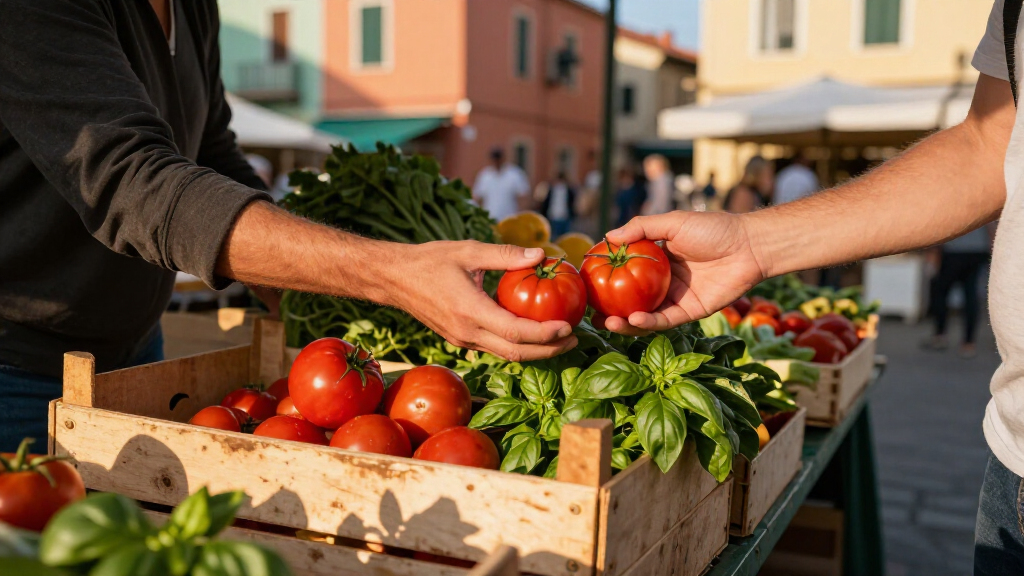
Ribollita weather rewards a short ingredient list chosen with care: creamy white beans, a patient soffritto, sturdy winter greens, dense stale bread, and peppery olive oil. The soup gets its depth from slow browning, bean starch, and resting time, not cream, meat, or a crowded spice cabinet.
- Cannellini beans: Dried beans give you a silky, flavorful cooking liquid, while canned beans make a reliable weeknight version. Purée roughly one-quarter of the beans so the broth gains body without becoming completely smooth.
- Onion, carrot, and celery: Cook this soffritto, or aromatic vegetable base, for 10 to 15 minutes. You want sweetness and softness, not scorched edges.
- Cavolo nero: Also called Tuscan, lacinato, or dinosaur kale, this blue-green leaf has a mineral bitterness that balances sweet carrots and creamy beans. Remove the tough central ribs before slicing it.
- Stale country bread: Choose a dense loaf with a sturdy crust. Traditional pane sciocco contains no salt, but a rustic sourdough or plain Italian loaf works well outside Tuscany.
- Extra-virgin olive oil: Pour it over each bowl after reheating. A peppery Toscano IGP oil can bring the grassy bite and warm throat-catching finish associated with central Italian oils.
Fresh sandwich bread behaves like a wet sponge made from cotton candy: it collapses quickly and can leave the pot gummy. A two-day-old country loaf keeps some structure while soaking up the broth. If your bread is fresh, cut it into 1-inch pieces and dry it in a 250°F oven for 20 to 30 minutes.
Tomatoes should provide a brick-red background, not turn the meal into tomato soup. For a pot serving six, one 14-ounce can of tomatoes or two tablespoons of tomato paste usually gives enough acidity. On a January night in Siena, you should still taste beans and dark greens before tomato.
Salt needs patience because beans, greens, and bread all absorb it. Canned beans, boxed stock, and commercial bread may already contain plenty. Season the vegetable base lightly, taste again after adding bread, and make the final adjustment only after the soup has rested.
Build the Thick Texture in Six Practical Steps
Ribollita weather gives you permission to cook this meal across two days. Start with a bean-and-vegetable soup, add firm stale bread, cool it safely, and reheat it gently after several hours or overnight. That pause is the hinge of the recipe; without it, you have a good Tuscan-style soup, but not fully realized ribollita.
- Cook the soffritto. Warm three tablespoons of olive oil in a heavy pot, then cook diced onion, carrot, and celery over medium-low heat for 10 to 15 minutes. At this stage, your kitchen should smell sweet and earthy, with no sharp raw-onion edge.
- Add tomatoes and greens. Stir in tomato paste or crushed tomatoes, followed by chopped cavolo nero and optional Savoy cabbage. Cook until the leaves lose their stiff volume and turn glossy.
- Thicken with beans. Add whole cannellini beans plus a portion mashed or blended with broth. For six servings, about 3 cups of cooked beans creates a hearty pot without burying the vegetables.
- Simmer slowly. Add enough bean liquid, water, or vegetable stock to cover the mixture. Simmer for 30 to 45 minutes, until the kale feels tender rather than leathery.
- Add the bread and rest. Layer slices in a casserole with the soup, or stir large chunks directly into the pot. Cool promptly, cover, and refrigerate for several hours; overnight is better.
- Reheat and finish. Warm the thickened soup over low heat, stirring carefully and adding a small splash of water if it catches. Serve with black pepper and a ribbon of raw extra-virgin olive oil.
A practical Sunday-to-Monday example shows why this schedule works. Cook the vegetable base while Sunday dinner is in the oven, add the bread after eating, then refrigerate the pot. On Monday, you need only 15 minutes of gentle reheating before dinner, and the flavor will be rounder than it was the night before.
Do not chase a rolling boil. The second cooking should warm and meld the soup, not scorch the starch-heavy bottom of the pot.
Your finished ribollita should mound softly in the bowl. If broth forms a moat around the vegetables, simmer it uncovered a little longer. If a spoon stands rigidly upright, loosen the mixture with two tablespoons of hot water at a time until it moves like thick oatmeal.
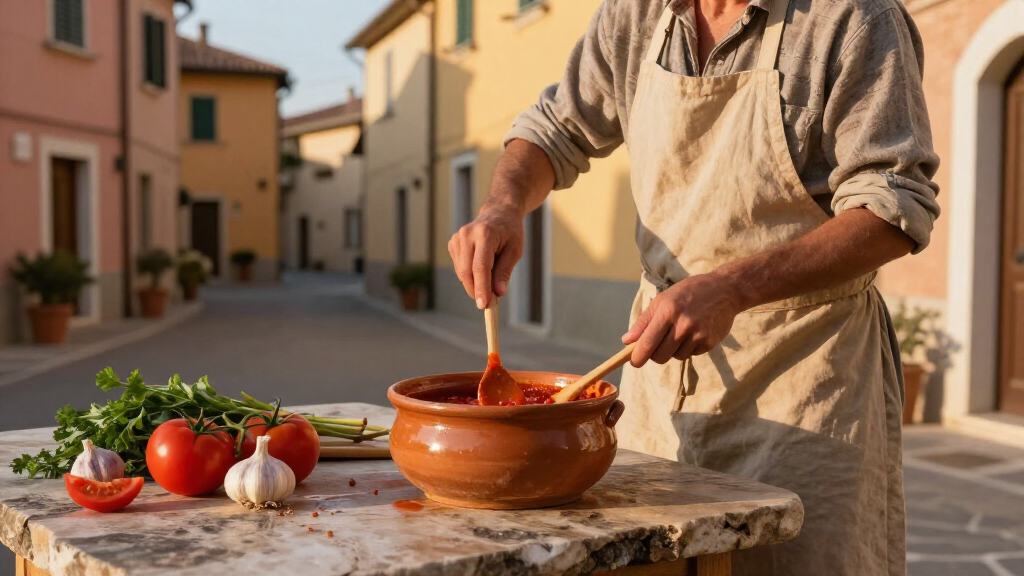
Tell Real Ribollita From Ordinary Bean-and-Kale Soup
Ribollita is a rested and reheated Tuscan bread soup, while ordinary bean-and-kale soup is usually served as soon as its vegetables become tender. Both can taste wonderful, but ribollita has a thicker, more cohesive body because stale bread becomes part of the soup rather than sitting on top as garnish.
| Feature | Ribollita | Bean-and-kale soup |
|---|---|---|
| Bread | Mixed or layered into the soup | Optional toast or croutons on top |
| Timing | Rested for hours, then reheated | Often served immediately |
| Texture | Thick, cohesive, close to stew | Brothy, with separate ingredients |
| Defining green | Cavolo nero is characteristic | Any kale or leafy green |
| Finish | Raw extra-virgin olive oil | Oil, cheese, herbs, or croutons |
Suppose you order a bowl at a trattoria near Florence’s Sant’Ambrogio market. If you can identify clear broth around separate cubes of bread, beans, and kale, you are probably eating a related vegetable soup. Convincing ribollita looks almost rough-plastered, with bread binding the vegetables into dark, glossy folds.
The distinction does not mean every bowl must follow one fixed formula. A family in the Florentine countryside may add Savoy cabbage, while a cook farther west may use chard or less tomato. The shared identity rests on white beans, bread, vegetables, rest, and reheating, not an exact gram-by-gram rule.
Ribollita also shares family traits with pancotto, bread cooked in liquid, and acquacotta, a vegetable-and-bread soup linked especially with southern Tuscany and the Maremma. Think of these dishes as cousins at a long farmhouse table: related through thrift and bread, yet carrying different local accents.
Those are the key facts about ribollita that protect its identity without freezing it in place. You can swap a green or adjust the tomato, but skipping the bread’s rest changes the dish’s basic character. Authenticity here lives in the method as much as the shopping list.
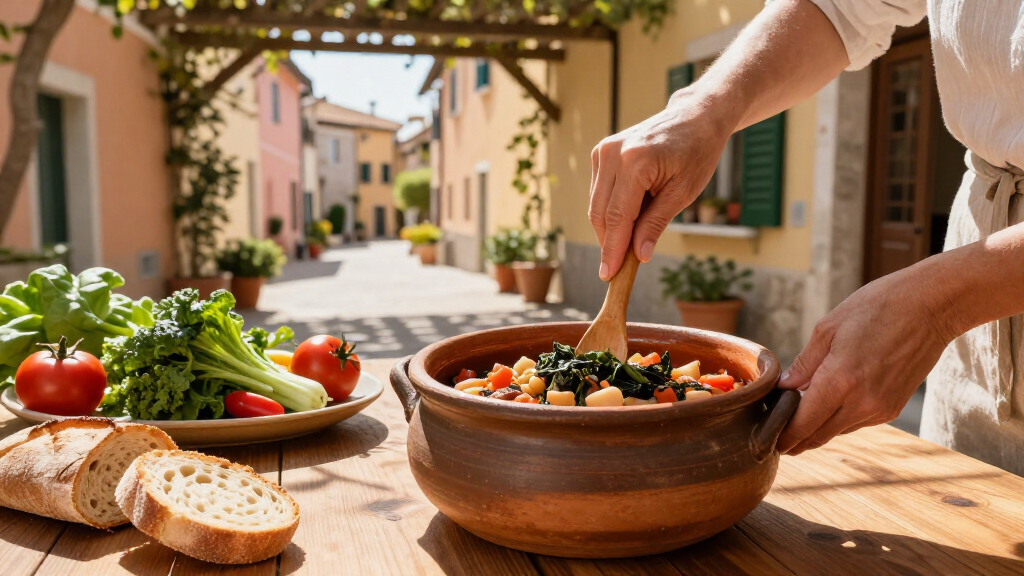
Make Smart Substitutions Without Losing the Tuscan Character
Ribollita can adapt to your pantry when you preserve its working structure: mild white beans supply creaminess, sturdy greens add bitterness, dry bread absorbs the broth, and olive oil finishes the bowl. A substitution succeeds when it performs the same job, not merely when it resembles the original ingredient.
If you cannot find cavolo nero, use curly kale, Savoy cabbage, Swiss chard, or a mixture. Curly kale needs a longer simmer, while chard softens quickly and tastes sweeter. In a Boston kitchen in February, half kale and half cabbage will give you a closer balance than tender baby spinach, which disappears into the pot.
Great Northern beans can replace cannellini because they are mild and creamy. Navy beans also work, though their smaller size makes the mixture feel smoother. Chickpeas bring a nuttier flavor and firmer bite, but they move the dish away from its familiar Tuscan profile, so keep at least half the beans white and creamy.
Traditional ribollita can be naturally vegan, with no need for cream, butter, or meat stock. Some household versions include pancetta, a prosciutto rind, or meat broth, yet meat does not define the dish. If you are cooking for vegans, check the stock and bread labels; milk, butter, or honey sometimes appear in packaged loaves.
Parmesan is common in modern bowls, but it is optional. The more regionally expressive finish is good extra-virgin olive oil, added after cooking so its grassy aroma remains clear. If you use Parmigiano Reggiano DOP, treat it as a personal addition and flag milk as an allergen.
The bread brings the main allergen concern because standard Tuscan-style loaves contain wheat and gluten. A dense gluten-free country loaf can work if you dry it thoroughly and test a small portion first; many gluten-free breads break down faster. Anyone with celiac disease also needs beans, stock, and preparation surfaces free from cross-contact.
Store and Reheat Your Pot Safely for Better Weeknight Meals
Ribollita keeps for three to four days in a covered refrigerator container and should be reheated to 165°F, the USDA temperature for leftovers [2]. Cool it promptly, refrigerate it within two hours, and avoid leaving a heavy pot on the counter all evening while the dense center remains warm.
A wide, shallow container cools thick soup faster than a deep stockpot. If you cook six portions on Sunday, divide them between two containers rather than packing everything into one hot crock. Label them with the date, then reheat only what you plan to eat so the entire batch does not cycle through warm and cold temperatures.
Ribollita thickens aggressively in the refrigerator because its bread keeps absorbing liquid. Place a portion in a saucepan with two to four tablespoons of water or stock, cover it, and warm it over medium-low heat. Stir from the bottom every few minutes; bean starch and bread can catch against hot metal like paste.
For freezing, the best plan is to freeze the bean-and-vegetable base before adding bread. It will keep its texture more cleanly, and you can add dried bread while reheating. If you freeze completed ribollita, it remains edible, but the thawed bread may feel softer and more uniform.
Here is a useful workweek rhythm: cook the base Sunday, turn half into ribollita for Monday and Tuesday, and freeze the remaining base for a wet evening next month. You get three dinners from one round of chopping, yet each serving can feel fresh with black pepper, sliced red onion, or a new olive oil.
Serve the bowl steaming rather than furiously bubbling, and add raw oil at the table. If adults pour a glass of Chianti Classico DOCG beside it, keep the pairing modest and drink responsibly. The wine’s bright acidity can meet the beans and greens, but the soup remains the warm center of the meal.
Frequently Asked Questions
What does ribollita mean in English?
Ribollita means “reboiled” or “boiled again.” The name refers to resting and reheating a bread-and-vegetable soup, often on the following day. A gentle second heating is enough; you do not need a hard boil.
Is ribollita a soup or a stew?
Ribollita begins as soup but finishes with the thickness of a loose stew. Stale bread absorbs the broth and binds the beans and vegetables together. A finished bowl should feel substantial, not like thin broth with floating croutons.
Can you make ribollita with canned beans?
Canned cannellini beans work well for a weeknight ribollita. Rinse them unless you deliberately want to use their liquid, and purée about one-quarter with stock to mimic the body supplied by dried beans and their cooking broth.
Do you have to use cavolo nero?
Cavolo nero is the most characteristic green, but it is not your only workable choice. Curly kale, Savoy cabbage, or chard can replace it. For a close match, combine kale’s sturdy bite with cabbage’s gentle sweetness.
Does authentic ribollita contain meat or Parmesan?
Meat and Parmesan are not required for ribollita. Many traditional-style versions rely only on beans, vegetables, bread, and olive oil, making them naturally vegan. Some households add cured pork or meat stock, which reflects family variation rather than a universal rule.
What bread works best for ribollita?
Use stale, dense, crusty country bread without sugar or rich additions. Unsalted Tuscan bread is traditional, while rustic sourdough makes a practical substitute. Dry fresh pieces in a 250°F oven until firm if you do not have a stale loaf.
Conclusion
The lesson of ribollita is simple: do not rush the second day. Cook the vegetables until sweet, choose bread dry enough to hold its shape, and let the pot rest before reheating it slowly. That pause turns inexpensive beans, winter greens, and yesterday’s loaf into a complete Tuscan supper.
When the next cold rain taps against your windows, save the crusty end of the bread instead of throwing it away. Set a pot on the stove, fold in cavolo nero, and leave tomorrow’s dinner to gather flavor overnight. By evening, one spoonful of peppery oil over the dark, steaming bowl will tell you that ribollita weather has arrived.
Fall Picks
fall essentials
As an affiliate, we earn on qualifying purchases.