
TL;DR

Get kitchen staples and gadgets delivered free — and shop member deals
- Fast, free delivery on millions of items
- Access to Prime Big Deal Days deals on October 6–7
- Prime Video, Amazon Music and more included
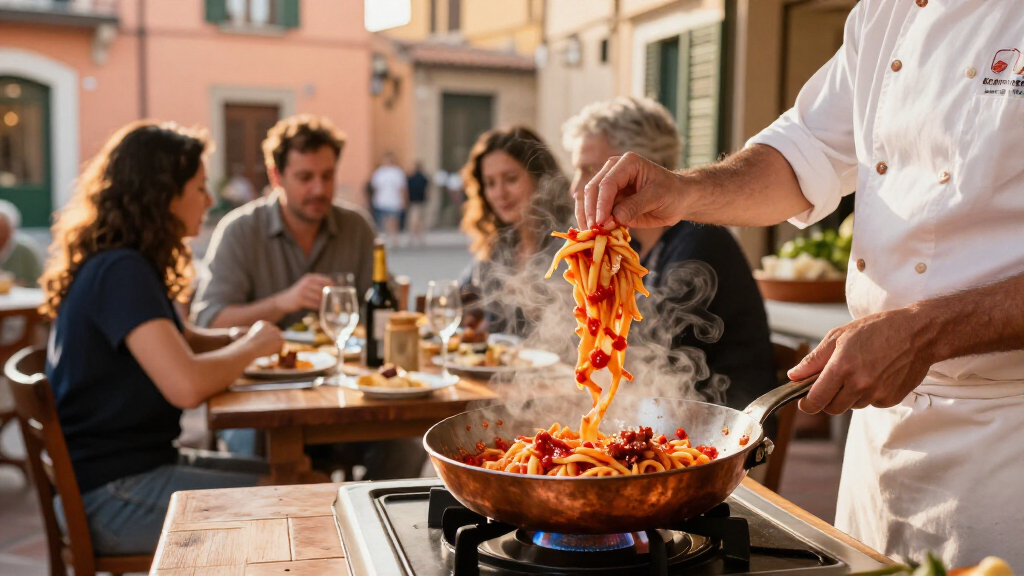
Pasta all’Amatriciana is a classic sauce associated with Amatrice, a town in Lazio, built on four defining ingredients: guanciale (cured pork jowl), tomatoes, Pecorino Romano, and pasta. Success comes from gentle rendering, simmering the tomatoes until sweet and rounded, and finishing off the heat with cheese and starchy pasta water. Substitutions like pancetta work; the onion-and-garlic debate is optional, not essential.
There are pasta sauces you improvise on a Tuesday, and there are pasta sauces with a birth certificate. Amatriciana has one: it belongs to Amatrice, a small hill town in Lazio on the border with Abruzzo, where shepherds once carried cured pork jowl and aged sheep’s cheese into the mountains. The tomato came later. The dish never apologized for the addition.
Here’s the thing most recipes bury: amatriciana is a, at its heart, a four-ingredient dish — guanciale, tomatoes, Pecorino Romano, and pasta. No cream. No garlic requirement. No onion obligation. When those four ingredients are handled well, the sauce tastes rounded and faintly sweet without a single pinch of sugar. When they’re handled badly, you get greasy pork swimming in acidic tomato, and a clotted wad of cheese at the bottom of the pan.
In this guide you’ll learn the key facts and technique behind a genuinely good amatriciana: how to render guanciale so it crackles, how to cook tomatoes until their sharpness melts away, how to melt Pecorino without clumps, and which parts of the “authenticity” debate you can safely ignore. You’ll also get straight answers on substitutions, because not everyone can find cured pork jowl on a Thursday.
Amatriciana’s four defining ingredients are guanciale, tomatoes, Pecorino Romano, and pasta — garlic, onion, and even chili are optional, not essential.
Render guanciale over moderate heat for 8–10 minutes so it crisps at the edges while staying meaty; aggressive frying makes it tough.
Simmer the tomatoes 15–20 minutes until the raw taste fades — this delivers the ‘sweet’ balance without any added sugar.
Add Pecorino Romano off the heat, gradually, with warm pasta water to prevent clumping; taste before salting since the pork and cheese are both salty.
Pancetta substitutes fine for guanciale; smoked bacon works in a pinch but adds smoke that reshapes the dish.
Make the sauce ahead (3–4 days refrigerated) but always cook pasta fresh; reheat sauce to 165°F (74°C).
Pasta all’Amatriciana: Sweet Tomato, Crisp Guanciale, No Debate
A four-ingredient dish with a birth certificate from Amatrice, a hill town in Lazio. Guanciale, tomatoes, Pecorino Romano, and pasta — handled well, it tastes rounded and faintly sweet without a single pinch of sugar.
“Remove one ingredient and you’re cooking a different dish — gricia without tomato, arrabbiata without pork.”
The Fixed CoreFour Ingredients and a Town
Shepherds once carried cured pork jowl and aged sheep’s cheese into the mountains near Amatrice. The tomato came later — in the 1800s — and the dish never apologized for the addition.
Guanciale
Cured pork jowl — richer and more aromatic than bacon because of the cut and the cure. Render gently so the fat melts and the pieces crisp at the edges while staying meaty and faintly pink inside.
Tomatoes
Good-quality canned peeled tomatoes, crushed by hand, or passata. Cooked until the raw taste fades, they balance the salty pork and sharp cheese — rounded, never sugary.
Pecorino Romano
Salt and tang in one. Grate finely, add off the heat, gradually, loosened with warm pasta water so it melts into the sauce instead of a clotted wad at the bottom of the pan.
Pasta
Bucatini or spaghetti are classic; rigatoni’s ridges and hollow center catch sauce too. Pull it a minute before al dente — the starchy cooking water is liquid gold, the emulsifier of the whole dish.
Chili, garlic, onion, olive oil debates — garnish on a fixed core. One Rome cook tossed in a whole sliced onion as gospel; two neighborhoods over, another omitted it with equal conviction. Both plates were good.
Guanciale vs. Pancetta vs. Bacon
Not everyone can find cured pork jowl on a Thursday. Here’s what each swap actually does to the plate.
| Pork | What It Is | Flavor Effect | Verdict |
|---|---|---|---|
| Guanciale | Cured pork jowl | Rich, sweet-spiced, melts into silk | ✓ First choice |
| Pancetta | Cured pork belly | Milder, slightly less lush | ~ Fine substitute |
| Smoked bacon | Smoked pork belly | Smokey, salty, louder | ✗ Last resort — works in a pinch |
If your guanciale comes with the rind on, slice it off and drop it into the rendered fat while it warms — pull it out before adding tomatoes. Old Roman cooks do this with beans and sauces; the rind gives up gentle body.
Render, Simmer, Marry, Finish
About 40 minutes, one pan, one pasta pot. Follow it once exactly, then adjust to your taste forever after.
Cut guanciale into ¼-inch matchstick batons and start it in a cold pan over moderate heat — melting, not frying.
Prep · 5 minGolden edges, meaty centers, a small pool of liquid fat. If the pan spits within two minutes, you’re frying, not rendering.
8–10 minA pinch of dried chili in the warm fat for thirty seconds — fat carries aroma far better than dry heat.
30 secCrush tomatoes in by hand. Done when a dragged spoon leaves a trail that closes slowly, like wet sand.
15–20 minFinish barely-al-dente pasta in the sauce with a splash of starchy water, tossing until glossy. Listen for rain on a window.
1–2 minGradually add finely grated Pecorino with warm pasta water. Taste before salting — pork and cheese are both salty.
Off heatThe Roman Pasta Family Tree
Amatriciana is simply gricia plus tomato. The lineage tells you exactly where the flavor lives.
Gricia
The ancestor: guanciale and cheese, no tomato. Shepherds’ mountain food, pre-1800s.
Amatriciana
Gricia plus tomato — the version that emerged after tomatoes entered Italian cooking in the 19th century, and never apologized.
Arrabbiata
Drop the pork, lean on garlic and chili — a different dish from the same family.
Common Questions, No Debate
Should Amatriciana contain onion or garlic?
Recipes differ — they are not essential to the core of guanciale, tomato, Pecorino, and pasta. Local practice and household preference vary.
Why is my sauce too acidic?
Simmer it longer to mellow and concentrate the tomatoes. A little pasta water softens the texture; taste before considering any other adjustment.
Why did my Pecorino clump?
The sauce was likely too hot or too dry. Take the pan off the heat, add finely grated cheese gradually, and loosen with warm pasta water.
How do I keep the guanciale crisp?
Render gently and avoid simmering it in the sauce too long. Reserve some crisp pieces to scatter over the finished pasta.
Can I make it ahead?
The sauce keeps 3–4 days refrigerated — but always cook pasta fresh. Reheat the sauce to 165°F (74°C) before marrying.
What Is Amatriciana, Really? Four Ingredients and a Town
Pasta all’Amatriciana is a classic sauce associated with Amatrice, a town in Lazio, and its defining ingredients are exactly four: guanciale, tomatoes, Pecorino Romano, and pasta. Everything else — chili, garlic, onion, olive oil debates — is negotiable garnish on a fixed core. The dish is essentially gricia (a pasta of guanciale and cheese, no tomato) with tomatoes added, a variation that developed only after tomatoes became part of Italian cooking in the 1800s.
That lineage matters because it tells you where the flavor lives. The pork fat is the sauce’s backbone; the tomato is the bright counterweight; the Pecorino is the salty, tangy finish. Remove one and you’re cooking a different dish — gricia if you drop the tomato, arrabbiata if you drop the pork and lean on garlic and chili.
I once watched a cook in Rome toss an entire sliced onion into the pan first, treat it as gospel, and insist anyone who skipped it “didn’t understand Rome.” Two neighborhoods over, another cook omitted it with equal conviction. Both plates were good. That’s the honest truth about this dish: local practice varies, household preference varies, and claims about one universally authentic recipe are routinely overstated.
The title of this piece promises no debate, and here’s why that’s fair: the sweet-tomato balance the title points to a useful cooking idea — let ripe, well-cooked tomatoes balance the salty pork and sharp cheese so the sauce tastes rounded, never sugary. That goal is shared by every version worth eating.

Guanciale vs. Pancetta vs. Bacon: Which Pork to Buy
Guanciale is cured pork jowl, and it is the traditional fat for amatriciana — richer and more aromatic than bacon because of the cut and the cure. Pancetta (cured pork belly) is a reasonable substitute that changes the flavor modestly. Smoked bacon changes it much more noticeably, because the smoke rides roughshod over the tomato and cheese.
| Pork | What it is | Flavor effect | Verdict |
|---|---|---|---|
| Guanciale | Cured pork jowl | Rich, sweet-spiced, melts into silk | First choice |
| Pancetta | Cured pork belly | Milder, slightly less lush | Fine substitute |
| Smoked bacon | Smoked pork belly | Smokey, salty, louder | Last resort — works in a pinch |
Cut the guanciale into batons about the thickness of a matchstick, roughly ¼ inch wide. Thick slabs stay rubbery; thin lardoons dissolve entirely. You want the middle ground: pieces that turn glassy and crisp at the edges while staying meaty and faintly pink inside.
If your guanciale comes with the rind on, slice it off and drop it into the rendered fat while it warms — pull it out before adding tomatoes. Old Roman cooks do this with beans and sauces; the rind gives up gentle body. Waste nothing.

How to Cook the Sauce: A Step-by-Step That Gets the Balance Right
Amatriciana comes together in about 40 minutes with one pan and one pasta pot. The method below follows the traditional sequence: render, simmer, marry, finish. Follow it once exactly, then adjust to your taste forever after.
- Slice the guanciale into ¼-inch batons while the pan is still cold. Start it over moderate heat — never aggressive frying. Think of it like melting butter for scrambled eggs: low and slow, so nothing browns before the fat has a chance to leave the meat. If the pan is spitting within two minutes, you’re frying, not rendering.
- Render 8–10 minutes until the pieces are golden at the edges and the pan holds a small pool of liquid fat — about two or three tablespoons for a 150-gram piece of guanciale, roughly the size of a deck of cards. Spoon off the excess if there’s a great deal, but keep enough to flavor the sauce — the fat is the bridge between tomato and cheese, the same way a vinaigrette needs oil to carry the vinegar.
- Add a pinch of chili (whole dried or flakes) to the warm fat for thirty seconds, just until fragrant. This blooms the heat without scorching it — the same logic as toasting spices for curry: fat carries aroma far better than dry heat.
- Pour in the tomatoes — good-quality canned peeled tomatoes, crushed by hand, or passata. Crush them directly into the pan with your fingers, the way Roman cooks do, so you get irregular chunks instead of machine-smooth pulp. Simmer 15–20 minutes, breaking the tomatoes down, until the raw taste fades and the sauce thickens and darkens slightly. A visual cue: when a spoon dragged across the pan bottom leaves a trail that closes slowly, like wet sand at the beach, the sauce is ready.
- Boil the pasta in well-salted water until barely al dente — pull it a minute before the box says. Bucatini or spaghetti are classic. Reserve a mug of starchy cooking water before draining; that cloudy water is liquid gold, the emulsifier that will bind fat, tomato, and cheese into one sauce instead of a greasy puddle topped with tomato.
- Marry them: finish the pasta in the sauce for a minute with a splash of pasta water, tossing so each strand is coated and glossy. The pan should sound like rain on a window as you toss — that hiss means the starch and fat are emulsifying.
- Finish off the heat with finely grated Pecorino Romano, added gradually and loosened with pasta water so it melts into a creamy veil rather than clumping. If you’ve ever seen cacio e pepe turn into a stringy mess, you’ve seen what high heat does to cheese and starch — this is the same physics, avoided in advance.
Here’s the detail that separates good from great: taste before adding any salt. Both guanciale and Pecorino Romano are aggressively salty — imagine adding salt to a dish that already contains prosciutto and feta, and you get the picture. Season at the end, not the start, or you risk a brine you cannot fix.
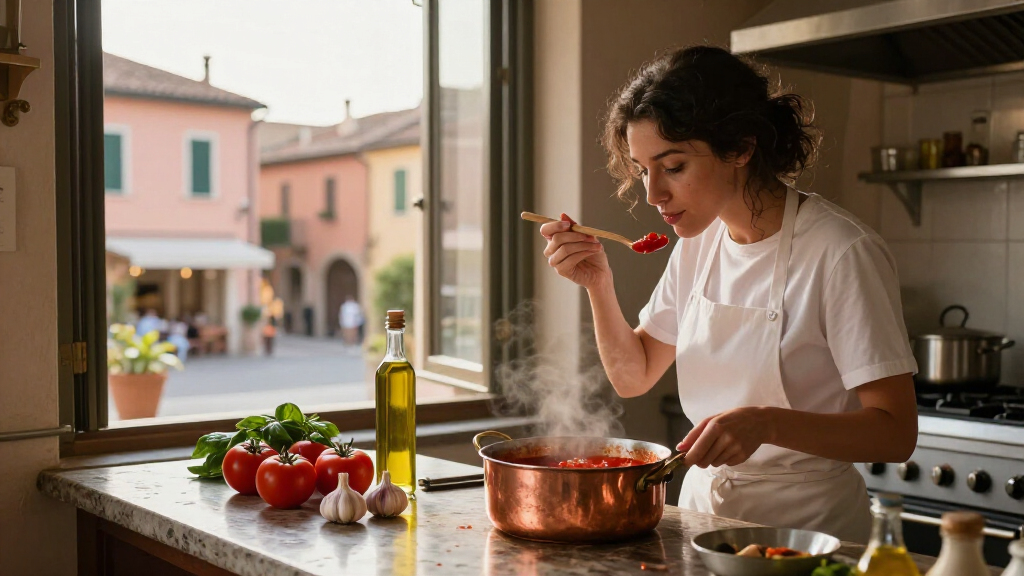
If the guanciale is browning fast and spitting within two minutes, your heat is too high. Lower it, and let the fat render like slow butter rather than frying like bacon.
Why “Sweet Tomato” Means Technique, Not Sugar
The sweetness in a proper amatriciana comes from cooking, not from a sugar bowl. When tomatoes simmer long enough, their acidity mellows and their natural sugars concentrate — the sauce turns from bright and sharp to rounded and deep. This is the single most common failure in home versions: undercooked tomatoes that taste tinny and raw.
Choose canned peeled tomatoes (pelati) or passata from a brand you trust — in Italy, San Marzano DOP tomatoes are the benchmark, grown in the volcanic soil near Mount Vesuvius. A good canned tomato tastes like August in a can; a bad one tastes like the can. Since the tomato is a quarter of this dish, it’s worth spending an extra dollar.
The guanciale fat does quiet work here too. Fat coats the tongue and softens the perception of acidity — the same reason butter tames a sharp tomato sauce. When the rendered pork fat emulsifies with the tomato and the starchy pasta water, you get a sauce that tastes sweet at the front and savory underneath, without a grain of added sugar.
If your sauce still tastes sharp after 20 minutes, keep simmering — five more minutes usually solves it. Only if it remains stubbornly acidic should you reach for a pinch of sugar, and even then, start with less than a quarter teaspoon for a sauce serving four. Usually patience is the only fix needed.
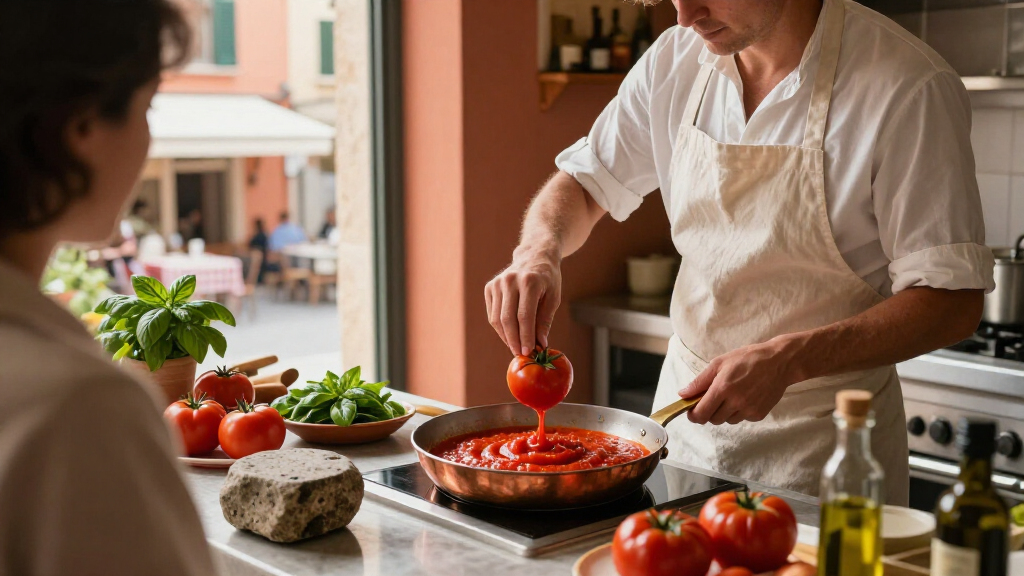
Pecorino Romano Without the Clumps: The Finish That Trips Everyone Up
Clumped Pecorino happens for two reasons: the sauce was too hot, or it was too dry. Fix both and the cheese melts into a glossy, creamy coating instead of forming stringy balls. Pecorino Romano DOP — a salty, tangy sheep’s milk cheese aged at least five months — is the traditional choice, and its sharpness is not optional flavor; it’s structural, cutting through the richness of the pork fat.
The technique: take the pan off the heat entirely. Wait a beat. Then add the finely grated cheese a handful at a time, tossing constantly, with a splash of warm pasta water. The starchy water lowers the temperature gently and gives the cheese proteins something to cling to instead of each other. Think of it as a rustic, one-pan cousin of cacio e pepe emulsification — same physics, same rescue.
Grate the cheese finely on a microplane or the finest holes of a box grater. Coarse shreds melt unevenly and clump first. And grate it fresh: pre-grated Pecorino contains anti-caking starches that turn grainy in warm sauce.
How much? For 400 grams (about 14 ounces) of pasta, start with 60–80 grams (2–3 ounces) of Pecorino, added in stages. You can always add more at the table — in fact, a final dusting of grated Pecorino over each plate is exactly how it’s served in trattorie across Rome and Lazio, where the dish long ago became a pillar of the city’s four classic pastas.

Gricia, Arrabbiata, Amatriciana: The Family Tree in One Table
The difference between these three Roman-area sauces is simple: gricia is guanciale and Pecorino with no tomato, amatriciana adds tomato, and arrabbiata is a spicy tomato sauce built on garlic and chili with no cured pork at all. Knowing the family tree helps you improvise intelligently when the pantry runs short.
| Sauce | Guanciale | Tomato | Pecorino | Signature |
|---|---|---|---|---|
| Gricia | Yes | No | Yes | Pork-fat luxury, pre-tomato era |
| Amatriciana | Yes | Yes | Yes | The balanced middle child |
| Arrabbiata | No | Yes | Sometimes | Garlic and chili heat, often vegetarian |
Practically, this gives you a week of dinners from one shopping trip. No tomatoes? You’re making gricia — render the guanciale, toss the pasta in the fat with Pecorino and pasta water, done in twenty minutes. No guanciale? Arrabbiata with garlic, chili, and good tomatoes carries the night.
The amatriciana sits in the middle because it’s the complete statement: fat, acid, salt, and starch in one bowl. Some cooks describe it as gricia that learned about tomatoes, and historically that’s roughly true — the tomato version spread through Rome in the 19th century and stuck. Whether a little onion belongs in the pan was argued then and is argued now. Cook it both ways once and pick your side quietly.

Storage, Leftovers, and Making It Ahead Without Ruining It
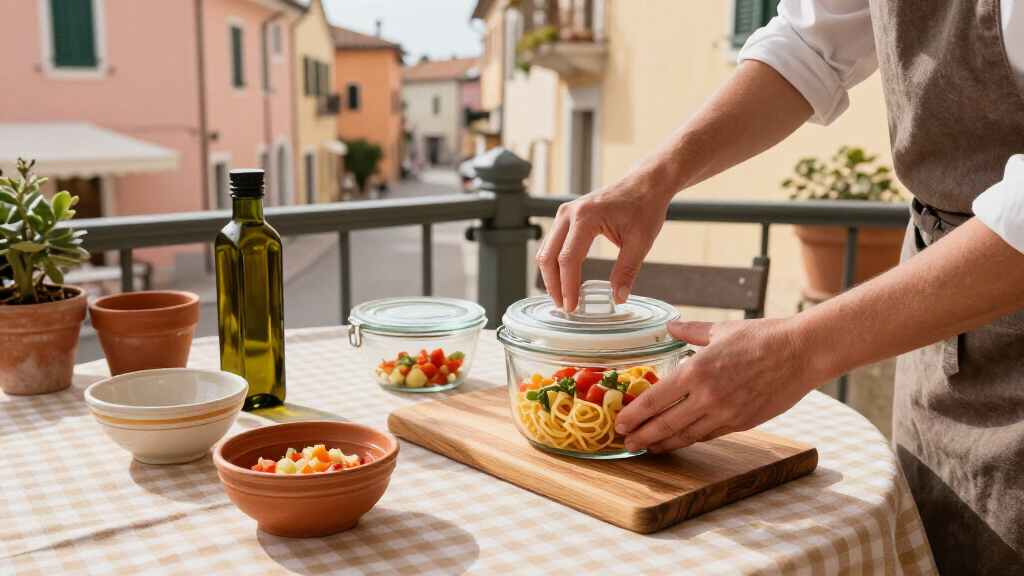
The sauce keeps; the pasta doesn’t. That’s the whole strategy. Amatriciana sauce refrigerates well for 3–4 days in a covered container, and some cooks swear day-two sauce is better, since the tomato and pork fat have had time to settle into each other. Cook the pasta fresh, always.
For food safety, refrigerate the sauce within two hours of cooking, and reheat it to a steady simmer — hot throughout, roughly 165°F (74°C) at the center — before tossing with pasta. Add a splash of water when reheating, because the sauce tightens in the cold.
If you have leftovers of the combined dish, accept reality: the pasta will soften and the guanciale loses its crispness. A gentle reheat in a pan with a splash of water, rather than a microwave blast, preserves the most texture. A quick trick: reserve a handful of crisp guanciale batons when you first render them, and scatter them over reheated portions so at least some crunch returns.
Freezing works for the sauce alone — up to about three months, thawed overnight in the fridge. The rendered fat may separate slightly on thawing; a vigorous stir while reheating pulls it back together. Guanciale and Pecorino both contain dairy-curing and cured-pork components worth noting for anyone cooking for guests with pork or dairy allergies, and the dish is never suitable for vegetarians as traditionally made.
Frequently Asked Questions
What is the difference between Amatriciana and gricia?
Gricia is guanciale, Pecorino Romano, and pasta with no tomato — it’s the older, pre-tomato sauce. Amatriciana is essentially gricia plus tomatoes. If your tomatoes are missing, you’re making gricia; if they’re in the pan, you’re making amatriciana.
Can I use pancetta or bacon instead of guanciale?
Yes. Pancetta (cured pork belly) is a reasonable substitute that changes the flavor modestly. Smoked bacon works in a pinch but adds noticeable smoke that competes with the tomato and Pecorino. Guanciale remains first choice for its distinctive richness from the jowl cut.
Why did my Pecorino clump in the sauce?
The sauce was likely too hot or too dry. Take the pan off the heat, add finely grated Pecorino gradually while tossing, and loosen with warm pasta water. The starchy water helps the cheese melt smoothly instead of forming strings or balls.
Should Amatriciana contain onion or garlic?
Recipes differ. Onion and garlic appear in some Roman versions and are omitted in others — they’re not essential to the core combination of guanciale, tomato, Pecorino, and pasta. Claims of one universally authentic recipe are overstated; cook the version you prefer.
Why is my Amatriciana sauce too acidic?
Simmer it longer — usually five to ten more minutes mellows and concentrates the tomatoes and removes the raw, tinny edge. A little pasta water softens the texture. Taste before reaching for sugar; long cooking fixes most acidity on its own.
Which pasta shape is best for Amatriciana?
Bucatini and spaghetti are the classic choices. Rigatoni is also popular because its ridges and hollow center trap the sauce. Any pasta that holds a slick, emulsified sauce will work — save a mug of starchy cooking water to bind everything together.
Conclusion
Cook amatriciana once as written — gentle render, patient simmer, off-heat cheese — and you’ll understand why a mountain town’s shepherds’ lunch became one of Rome’s four canonical pastas. The dish rewards restraint: four ingredients, one pan, and the willingness to let time make the tomatoes sweet instead of a sugar spoon. Everything beyond that is conversation, not requirement.
The next time someone insists you must use onion, or bucatini only, or that real amatriciana comes from one nonna’s kitchen, you can smile and keep tossing your pan. The town of Amatrice holds a festival for this sauce every August; the rest of us can hold a place at our own tables. Boil the water.
Fall Picks
fall essentials
As an affiliate, we earn on qualifying purchases.