
TL;DR

Get kitchen staples and gadgets delivered free — and shop member deals
- Fast, free delivery on millions of items
- Access to Prime Big Deal Days deals on October 6–7
- Prime Video, Amazon Music and more included
Guanciale, pancetta, and lardo are all cured pork, but they come from different parts of the animal: guanciale is pork jowl (cheek), pancetta is pork belly, and lardo is cured back fat. That single difference explains everything about how you use them — guanciale renders into Roman pasta sauces like carbonara and amatriciana, pancetta is the versatile all-purpose cooking cure, and lardo is sliced paper-thin and eaten raw on warm bread rather than cooked.
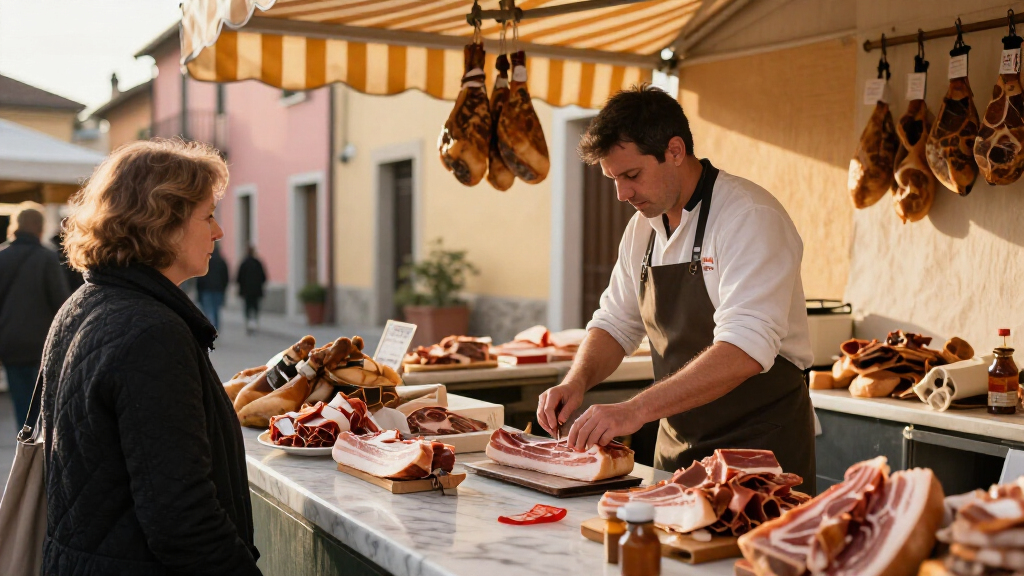
The first time you stand at an Italian salumi counter and ask for guanciale, the person behind the glass may ask a question back: “Pancetta won’t do?” It’s not rudeness. It’s a real distinction, and Italians treat it seriously. These three Italian specialties are all made from pork fat, but they come from different parts of the animal, and swapping one for another changes your dish more than you might expect.
Here’s the short version: guanciale is cheek, pancetta is belly, lardo is back fat. Everything else — texture, flavor, price, and the best way to cook each one — flows from those three cuts.
In this guide you’ll learn where each one comes from, which protected names to look for at the store (and why DOP and IGP labels matter), how to cook with each of them, and how to store them safely once you get them home.
Guanciale is pork cheek, pancetta is pork belly, and lardo is cured back fat — the cut alone determines how each behaves in the kitchen.
Use guanciale, rendered slowly in a dry cold-start pan, for authentic carbonara, amatriciana, and gricia; pancetta is the accepted substitute, smoked bacon is…
Never cook lardo crisp — slice it paper-thin and lay it over warm bread or beans as a finishing ingredient, the way it’s served in Colonnata.
Look for Lardo di Colonnata IGP and Pancetta Piacentina DOP when you want guaranteed provenance, but remember unprotected artisan products can be equally good.
All three are high-fat, high-sodium seasoning ingredients — use them in small amounts, refrigerate sliced versions, and follow each producer’s storage window.
Guanciale, Pancetta, Lardo: Italy’s Cured Pork Fat Family Explained
Three cured pork specialties, three different cuts of the same animal. The cheek, the belly, and the back — and why that single difference determines everything about how each one lands on your plate, from Roman carbonara to a Tuscan slice on warm bread.
Cheek, Belly, or Back: One Look Settles It
All three are cured pork fat, but each comes from a different part of the pig — and the cut alone determines texture, flavor, price, and the best way to cook it.
Guanciale
Rich, firm fat threaded with streaks of muscle; seasoned with salt, pepper, and sometimes spices. Yields per pig are small — which is why it’s the priciest and hardest to find.
Pancetta
Alternating ribbon-like layers of fat and lean, cured with salt and aromatics rather than smoked. Sold rolled (arrotolata) or flat (stesa). Cheap, versatile, everywhere.
Lardo
Nearly pure fat, cured with herbs and silky enough to slice like butter. The most delicate of the three — and useless for cooking, because it simply melts away.
The Comparison That Settles the Counter Question
When the person behind the salumi glass asks “Pancetta won’t do?” — this is the difference they’re defending. Fat concentrates flavor during aging; muscle browns and provides bite. That physics drives every row below.
| Specialty | Cut | Character | In the Pan | Best Use |
|---|---|---|---|---|
| Guanciale | Pork jowl (cheek) | Rich, firm fat with meaty streaks; deep, almost sweet savoriness | Leaves golden, chewy strips swimming in flavorful fat | Rendered for the four great Roman pastas |
| Pancetta | Pork belly | Layered fat and lean; quiet salt cure, no smoke imposition | Leaves crisp-edged nuggets with cleaner, thinner fat | Diced for pasta, soups, sauces, braises |
| Lardo | Back fat | Almost pure fat, cured with herbs; aromatic and delicate | Would vanish if you tried to fry it | Eaten raw, paper-thin, on warm bread or vegetables |
“A Roman cook would no more fry lardo for carbonara than a Tuscan would melt guanciale over warm crostini. Each cut has a job.”
Key Insight — No Cut Is “Better,” Only Different RolesHow to Cook Each One Without Ruining It
The method matters as much as the ingredient — in each case the technique exists because of what the fat physically does under heat.
Render the Guanciale
Cut matchstick-wide strips. Start in a dry, cold pan over low heat — 10 minutes or more. The fat melts into a shimmering pool; strips turn golden at the edges but stay tender. That fat becomes the sauce base. No oil, no butter.
Dice the Pancetta
Choose stesa (flat slab) for even dicing into soups and sauces; choose arrotolata (rolled) for round slices. Pancetta seasons a dish without imposing a flavor identity on it.
Slice the Lardo Thin
Paper-thin, laid over warm bread, crostini, or beans so it just softens. Never fry it — pure back fat melts to almost nothing. Treat it like the finishing ingredient it is.
Why Fat Content Decides Everything
Fat is where flavor compounds concentrate during aging — so the fattier the cut, the more aromatic and delicate it becomes; the more muscle it carries, the deeper and more savory it reads.
The Memory Trick
guancia = cheekThe word guanciale comes from guancia, Italian for “cheek.” Remember that one word and you’ll never confuse it with pancetta at the counter again.
Why Roman Cooks Insist
In carbonara there is no cream and no oil — the emulsion of egg, pecorino, and pork fat only works if the fat is flavorful and melts smoothly. Jowl fat renders at a lower temperature than belly fat and carries a deeper savoriness. Belly fat works, but the plate tastes noticeably flatter: the difference between a dish that tastes of pork and one that merely contains it.
Which Labels to Look For at the Store
Protected designations identify products tied to a particular place and production specification — but unprotected artisan products can be equally good. The label guarantees provenance, not universal superiority.
Lardo di Colonnata
The celebrated Tuscan style, traditionally aged in Carrara marble basins with salt and aromatics. Unlike guanciale or pancetta, it’s a finishing ingredient served in thin slices rather than rendered.
Pancetta Piacentina
A protected pancetta from Piacenza with guaranteed provenance and production rules. Look for it when you want a labeled guarantee — and remember that regional styles vary, with some versions lightly cooked or smoked.
The Five Things Worth Remembering
The cut is everything. Guanciale is pork cheek, pancetta is pork belly, and lardo is cured back fat — the cut alone determines how each behaves in the kitchen.
Render guanciale patiently. Cold-start dry pan, low heat, ten minutes or more for authentic carbonara, amatriciana, and gricia. Pancetta is the accepted substitute; smoked bacon changes the dish.
Never cook lardo crisp. Slice it paper-thin and lay it over warm bread or beans as a finishing ingredient, the way it’s served in Colonnata.
Labels guarantee place, not quality gaps. Look for Lardo di Colonnata IGP and Pancetta Piacentina DOP for provenance — but unprotected artisan products can be equally good.
Treat them as seasoning. All three are high-fat, high-sodium ingredients — use in small amounts, refrigerate sliced versions, and follow each producer’s storage window.
Cheek, Belly, or Back: One Table That Settles the Difference
Guanciale, pancetta, and lardo differ by cut, curing method, texture, and use — and the cut is what drives everything else. The jowl carries dense, firm fat threaded with streaks of muscle. The belly alternates ribbon-like layers of fat and lean. The back is nearly pure fat, soft enough to slice like butter.
| Specialty | Cut | Character | Best use |
|---|---|---|---|
| Guanciale | Pork jowl (cheek) | Rich, firm fat with meaty streaks; seasoned with salt, pepper, sometimes spices | Rendered for carbonara, amatriciana, gricia |
| Pancetta | Pork belly | Layered fat and lean; sold rolled (arrotolata) or flat (stesa) | Diced for pasta, soups, sauces, braises |
| Lardo | Back fat | Almost pure fat, cured with herbs; silky when thinly sliced | Eaten raw on bread, crostini, warm vegetables |
Why does the cut matter so much? Because fat and muscle behave completely differently under cure and under heat. Fat is where flavor compounds concentrate during aging, so a fattier cut like back fat becomes more aromatic and delicate, while a muscle-threaded cut like jowl develops a deeper, more savory character. In the pan, lean streaks brown and provide bite; pure fat melts away to almost nothing. That’s why guanciale leaves behind golden, chewy strips swimming in fat, pancetta leaves crisp-edged nuggets, and lardo would simply vanish if you tried to fry it.
Notice what’s missing from that table: any mention of one being “better.” A Roman cook would no more fry lardo for carbonara than a Tuscan would melt guanciale over warm crostini. Each cut has a job, and the tradeoffs are real — guanciale gives you the richest rendering fat but costs more and is hard to find; pancetta is cheap and everywhere but leaner; lardo is the most delicate of the three but useless for cooking. Choosing among them is really a question of what role you need the fat to play.
A quick memory trick: the word guanciale comes from guancia, Italian for “cheek.” If you remember that one word, you’ll never confuse it with pancetta again at the counter.
Top picks for "guanciale pancetta lardo"
As an affiliate, we earn on qualifying purchases.
Why Roman Cooks Refuse Carbonara Without Guanciale
Guanciale is cured pork jowl, and it is the defining ingredient of the four great Roman pastas: carbonara, amatriciana, gricia, and cacio e pepe’s richer cousins. The jowl’s fat renders at a lower temperature than belly fat and carries a deeper, almost sweet savoriness that the pan absorbs and hands back to the pasta.
Why is this specificity worth defending? Because in these dishes, the rendered guanciale fat is the sauce. Carbonara has no cream and no oil — the emulsion of egg, pecorino, and pork fat only works if the fat is flavorful and melts smoothly. Belly fat renders thinner and cleaner but less aromatic; the emulsion comes together, yet the finished plate tastes noticeably flatter. This is the difference between a dish that tastes of pork and a dish that merely contains it.
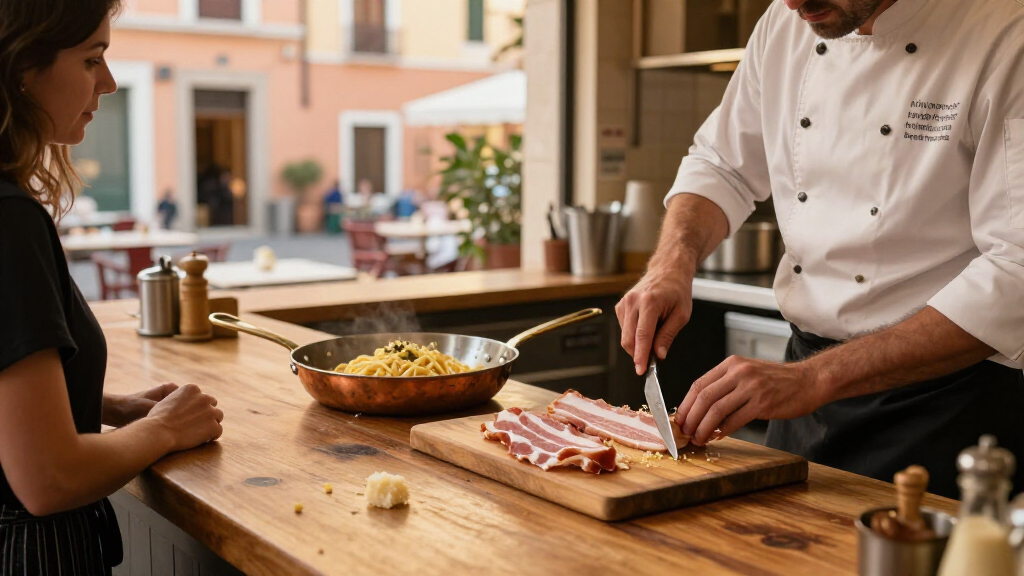
Watch a cook in Testaccio, Rome’s old slaughterhouse district, make gricia. They cut guanciale into strips about the width of a matchstick, then cook it slowly in a dry pan. The fat melts out into a shimmering pool; the strips turn golden at the edges but stay tender in the middle. That rendered fat becomes the sauce’s base. No olive oil, no butter — the pig provides everything.
The classic technique is patient: low heat, a cold pan, ten minutes or more. The reasoning is physical, not fussy: fat renders gradually as temperature rises, but muscle fibers seize and brown quickly. Start hot and the outside browns before the fat has melted — you get greasy, rubbery strips and a pan with barely any fat to emulsify. Rush it and you lose the silky texture that makes the dish. Amatriciana, from the hill town of Amatrice in Lazio, follows the same principle, then adds tomato and chili.
Restatement for the impatient: guanciale is not bacon with an Italian accent. It’s a specific cut, cured a specific way, that melts instead of crisping into shards.
Guanciale is also the hardest of the three to find outside Italy, and often the priciest — a reflection of how little jowl each pig yields compared to belly or back. That scarcity is the practical tradeoff: authenticity versus availability. If you’re cooking for yourself on a Tuesday, pancetta is a defensible call; if you’re trying to understand why Romans consider carbonara theirs, only guanciale answers the question.
Pancetta: The Workhorse You Can Use Almost Anywhere
Pancetta is cured pork belly — the same cut as streaky bacon, but cured with salt and aromatics rather than smoked, in the classic Italian style. That difference matters more than it sounds. Smoke is a loud flavor: it announces itself and pulls every dish it touches toward American barbecue. Salt curing is quiet — pancetta seasons a dish without imposing a flavor identity on it, which is exactly why Italian cooking uses it the way French cooking uses salt pork. It adds savor without redirecting the recipe.
It comes in two main forms, and the choice has practical consequences. Pancetta arrotolata is rolled into a cylinder with a spiral pattern when sliced — the round slices are what you want for laying flat or eating as-is. Pancetta stesa lies flat, like a slab — easier to dice evenly, which makes it the better buy for cooking into soups and sauces. Some regional versions are also lightly cooked or smoked, so the old assumption that pancetta is never smoked doesn’t hold everywhere — read the label rather than assuming, because a smoked pancetta will quietly turn your carbonara toward bacon territory.
In practice, pancetta is the ingredient you reach for midweek. Dice it and start a pot of pasta e fagioli with it. Lay a slice over a roast chicken breast to baste it. Toss cubes into sautéed peas, as they do across Lazio and Liguria. The fat coats, the lean browns, and the whole pan smells like a trattoria within minutes. Its real virtue is flexibility: unlike guanciale (specialist) or lardo (finishing garnish), pancetta improves almost anything that benefits from fat, salt, and browned meat, which is most savory cooking.
It also earns its place as the practical substitute for guanciale. When you can’t find jowl, pancetta gets you most of the way in carbonara — expect a slightly leaner, less melting result, because belly fat carries less aroma and the muscle browns faster than jowl muscle. Smoked bacon goes further astray: it works, but the smoke reshapes the dish. The tradeoff ladder, in other words, runs guanciale, then pancetta, then unsmoked salt pork, and only then smoked bacon.
For a protected-name option, look for Pancetta Piacentina DOP from Piacenza in Emilia-Romagna, a flat-cured style with a firm texture and a peppery finish that’s excellent sliced onto bread. It costs more than supermarket pancetta, and whether that premium is worth it depends on use: cook it into a soup and the difference fades; eat it sliced, where the curing quality is the whole point, and it earns its price.
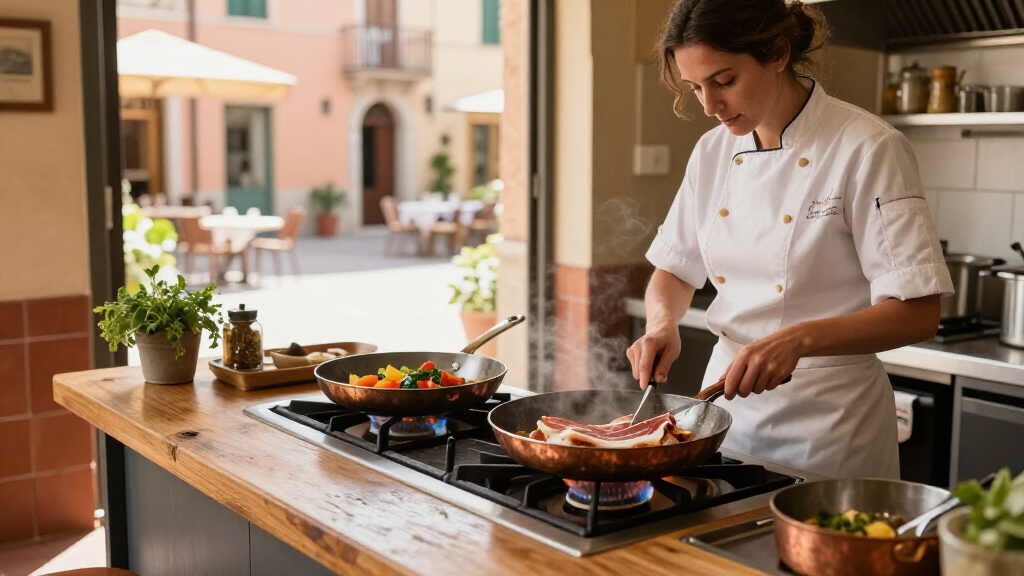
Lardo Is Not Lard: Meet Italy’s Silkiest Cured Fat
Lardo is cured pork back fat, aged with salt, herbs, and spices until it transforms from raw white fat into something translucent, aromatic, and soft enough to melt on contact with warm bread. It is not the same thing as lard — rendered lard is pork fat melted and clarified for cooking; lardo is a whole cured product you slice and eat. The distinction is worth internalizing because it explains their opposite roles: lard is a neutral cooking medium you heat deliberately, while lardo is a flavored product whose entire value lies in surviving intact until the moment of serving.
The most famous version is Lardo di Colonnata IGP, from a marble-quarrying village in the Apuan Alps above Carrara, Tuscany. There, producers cure the fat in basins carved from local Carrara marble, layering it with salt, black pepper, garlic, rosemary, and other aromatics, then leave it to age for six months or more. The marble matters, not just as tradition: it conducts heat slowly, keeping the basins cool in summer and steady in winter, so the fat cures evenly instead of melting at its surface. The seasonings sink slowly inward over the months, which is why a well-aged lardo tastes seasoned throughout rather than salty on the outside and bland at the center.
Serve it the way Colonnata’s quarrymen did, taking lardo in their lunches for centuries — and the logic of that history is instructive. Mine workers needed dense calories that survived a shift without refrigeration, and they discovered that fat cured this way was best eaten against warm bread from the morning fire. Slice it paper-thin — a sharp knife and a firm hand — and lay it over warm, lightly toasted bread. The heat softens it into a glossy film that tastes of pepper, herbs, and clean sweetness. It’s equally good over warm cannellini beans or a roasted chestnut in autumn.
- Don’t cook it crisp — heat drives off the delicate aromatics developed over months of curing and destroys the texture that makes it special; you’d be paying lardo prices for ordinary fried fat
- Treat it as a finishing ingredient, added at the end, like good olive oil — the residual warmth of the dish is enough to release its aroma
- Let it come to room temperature before slicing — cold fat is hard and brittle and shatters under the knife instead of cutting cleanly; fifteen minutes on the counter changes everything
The name lardo trips up English speakers constantly, but once you’ve tasted Colonnata’s version over hot bread, the confusion ends permanently.
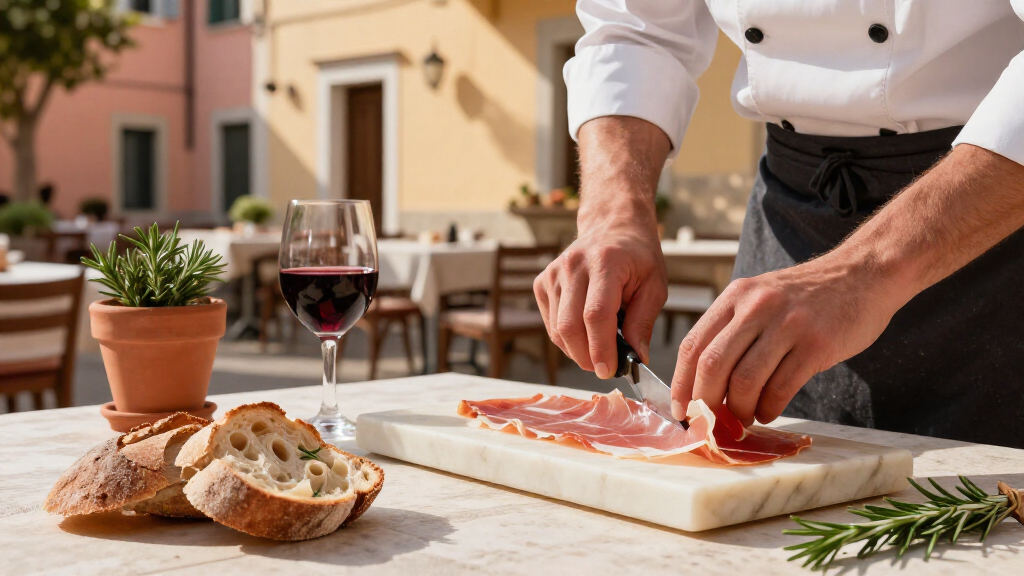
How to Cook Each One Without Ruining It: Three Step-by-Step Methods
Each of the three wants different treatment in the pan, and the method matters as much as the ingredient — in each case, the technique exists to protect something the cut does well. Follow these sequences and you’ll get the result the dish was designed around.
Guanciale, for Roman pasta
- Cut into strips or small batons, removing any tough rind first — the rind never softens and will fight you in every bite.
- Start the pieces in a cold, dry pan over medium-low heat. The cold start lets fat render before muscle browns; starting hot does the reverse and seals the fat in.
- Cook gently for 8–12 minutes, letting the fat render until the pan holds a shallow pool of it and the strips are golden at the edges but still pliable. You’re aiming for strips that bend, not shatter — that pliability is the texture Romans prize.
- Remove the strips, toss your drained pasta in the rendered fat, then return the guanciale and finish the sauce (egg and pecorino for carbonara, tomato and chili for amatriciana). Taking the strips out first keeps them from overcooking while you build the sauce.
Pancetta, for everyday cooking
- Dice it small and evenly so it browns at the same rate — uneven cubes mean some burn while others stay raw.
- Render over medium heat until the edges crisp and the fat runs clear. Unlike guanciale, you want browning here, because pancetta’s job is flavor, not emulsion.
- Build the rest of the dish — soup, sauce, braised greens — directly on that base. Deglazing the browned bits with wine or stock carries the flavor through the whole pot.
Lardo, for serving
- Chill it well, then slice as thinly as you can manage — firm cold fat slices more cleanly than room-temperature fat, even though you’ll warm it after.
- Let the slices warm for a few minutes at room temperature so the aroma blooms.
- Lay over hot bread, beans, or vegetables and let the heat do the melting. No pan required — the moment lardo hits direct heat, you’ve undone everything the cure built.
One common mistake: crowding guanciale or pancetta in a hot pan. The pieces steam instead of rendering, because trapped moisture lowers the pan temperature and blocks browning — you end up with gray, rubbery meat swimming in unrendered fat. Give the fat time and space, and if you’re cooking a large batch, work in two rounds rather than one.
Reading Labels and Buying Well: DOP, IGP, and What to Ask Your Butcher
Not every package labeled guanciale, pancetta, or lardo is made the same way, and Italian law protects only certain versions by name. Lardo di Colonnata IGP and Pancetta Piacentina DOP are the two protected designations most worth knowing here: IGP (Indicazione Geografica Protetta, protected geographical indication) ties the product to a place and process, while DOP (Denominazione di Origine Protetta, protected designation of origin) adds stricter requirements, typically covering the entire production chain from raw material origin to aging method.
It’s worth understanding what these labels actually guarantee, because they’re often misread as a quality seal. They guarantee provenance and method: that your lardo really was aged in Colonnata marble basins, under rules that producers outside the zone cannot legally copy on the label. They do not guarantee that every batch tastes better than every unprotected alternative. A skilled local butcher curing guanciale in-house may make a product you prefer — the designation simply tells you where and how it was made, which is most valuable when you’re buying blind and can’t taste first. The tradeoff is predictability versus potential: protected names minimize risk; artisan products offer a wider range of outcomes, both directions.
When you shop, ask three questions — each one tells you something real:
- Where was it cured, and for how long? Longer aging usually means deeper flavor and firmer texture, because water leaves slowly and flavor concentrates; shorter cures taste saltier and wetter for the same reason.
- Is it sliced or whole? Whole pieces keep longer and slice better at home — slicing dramatically increases surface area, which speeds oxidation and flavor loss. Pre-sliced is convenient but is always a compromise on freshness.
- Does it need refrigeration? Some traditional cures are shelf-stable wrapped in paper; vacuum-sliced versions are not. This distinction reflects water content and packaging, and it determines how you store the product from the moment you leave the shop.
Expect to pay more for guanciale than pancetta — the jowl is a small cut, and demand from carbonara-minded cooks outpaces supply outside Italy. If your supermarket stocks none of the three, an Italian grocer or a serious butcher can usually order guanciale within a week. Ask; it works more often than you’d think, and building that relationship with a butcher pays off well beyond a single ingredient.

Fat, Salt, and Safety: What to Know Before You Eat Them Regularly
All three are rich in fat and high in sodium, and Italian home cooking treats them accordingly: as seasoning ingredients used in modest amounts, not protein portions. A carbonara for four people uses a few ounces of guanciale; the rest of the dish is eggs, pecorino, and pasta. That ratio is the tradition, not a modern correction — and it’s worth noticing why it works. Because these cures are so concentrated, a small quantity seasons a whole dish, which means the per-serving fat and sodium load stays moderate. The trouble starts only when cured pork is treated as the main event rather than the seasoning, which is a modern habit, not an Italian one.
Exact nutrition varies by producer and cut, so treat the numbers on the specific label as your source, not general charts. As a rule of thumb, a 30-gram serving of any of the three delivers a concentrated hit of sodium — something to keep in mind if you’re watching salt, and a reason to taste before adding extra salt to a dish built on them. One practical implication: when a recipe starts with guanciale or pancetta, the sauce is often salty enough that you should season the pasta water, not the sauce.
On safety: curing preserves, but it doesn’t make a product last forever. Curing works by drawing out water and loading in salt, which slows bacterial growth — it doesn’t stop it, and once a piece is cut, the protected interior is exposed to air and moisture. Storage strategy follows from that.
- Whole, uncut pieces: often keep for weeks wrapped in butcher paper or cloth in the fridge; check the label. The intact surface is the barrier — don’t rewrap in plastic, which traps moisture and encourages mold where the cure can’t defend.
- Sliced or vacuum-packed: always refrigerate, and use within the printed window once opened. Vacuum sealing is doing real preservation work; the clock starts when the seal breaks.
- Opened slices: wrap tightly, keep them away from strong-smelling foods — fat absorbs odors readily — and eat within a few days.
Lardo and guanciale are cured and traditionally eaten without cooking, but buy from reputable sources and follow the producer’s storage instructions — home curing is a separate craft with its own risks, and these products are made under controlled conditions. The distinction matters: commercial curing controls temperature, humidity, and salt concentration precisely, which is what makes raw consumption safe. Replicating that at home without equipment and knowledge is genuinely risky, particularly for whole-muscle cures.
None of these carry the common top allergens themselves, but packaged versions may share facilities with nuts or dairy — check the label if allergies are in play, and note that classic pairings (pecorino, bread) do bring dairy and gluten to the table.
Frequently Asked Questions
Is guanciale the same as pancetta?
No. Guanciale is made from pork jowl or cheek; pancetta is made from pork belly. Both are cured, but they differ in texture, fat-to-meat ratio, and flavor — guanciale is richer and melts more readily, which is why Roman pasta sauces call for it specifically.
Can I substitute pancetta for guanciale in carbonara?
Yes, especially when guanciale is unavailable. Pancetta is the standard substitute and produces a good dish, though slightly leaner and less melting. Smoked bacon changes the flavor more noticeably because of the smoke, so it’s the least traditional option.
Is lardo the same thing as lard?
No. Lardo is cured pork back fat, aged with salt and aromatics and eaten in thin slices. Lard is pork fat that has been rendered — melted and clarified — for cooking. One is a salumi you serve; the other is a cooking fat you cook with.
Can you eat lardo raw, without cooking it?
Yes, lardo is traditionally served without cooking after its curing and aging — sliced thin over warm bread or vegetables. Buy it from a reputable source, follow the storage instructions on the package, and keep refrigerated products refrigerated.
Where can I buy guanciale, pancetta, and lardo?
Try Italian grocers, butcher shops, and specialty food stores first; well-stocked supermarkets sometimes carry pancetta and occasionally guanciale. If your butcher doesn’t stock guanciale, ask whether they can order or even cure it — the jowl cut is often available on request.
How should I store cured pork after opening?
Follow the package instructions. In general, refrigerate anything labeled for refrigeration, wrap opened whole pieces in butcher paper or cloth so they can breathe, and use opened sliced product within a few days. Curing extends life but doesn’t make these products shelf-stable indefinitely.
Conclusion
If you remember one thing, make it this: the cut is the code. Cheek melts into sauce, belly browns into everything, back fat dissolves over warm bread. Once you know which part of the pig you’re holding, the right dish suggests itself.
Start small this week: buy a chunk of guanciale from an Italian grocer, render it slowly, and make gricia — just pasta, pecorino, and that shimmering fat. You’ll understand in one bite why Romans argue about this the way they do.

Fall Picks
fall essentials
As an affiliate, we earn on qualifying purchases.