AIThis post was created with the assistance of artificial intelligence (AI).
TL;DR
Erbazzone, also called scarpazzoun in the local dialect, is a savory pie from Reggio Emilia in Emilia-Romagna. Its defining combination is a tender, leafy filling—usually chard with Parmigiano Reggiano—inside simple pastry, with pancetta or lard common in traditional versions. You can serve it warm or at room temperature, and household recipes vary in their greens, fats, and toppings.
A slice of erbazzone can turn a handful of sturdy greens into the kind of snack you keep reaching for: salty, tender, and tucked beneath crisp pastry. This savory pie from Reggio Emilia, in Emilia-Romagna, is often called scarpazzoun in the local dialect. Its name is related to erbe, or greens, and the filling tells you why.
Before you orderOffer from Amazon
Get kitchen staples and gadgets delivered free with Prime
You’ll usually find chard, Parmigiano Reggiano, and a simple pastry made with flour, water, fat, and salt. Some family versions add pancetta or lard; others skip meat or fold in spinach, ricotta, or whatever greens the season brings. There isn’t one household recipe that stands for them all.
Here, you’ll learn what gives erbazzone its regional character, how to keep a homemade filling from turning watery, and when to choose butter, olive oil, or lard. Whether you’re planning an Emilia-Romagna food stop or making an appetizer for friends, the pie is a practical way to bring a taste of Reggio Emilia to your table.
At a glance
Erbazzone: Reggio Emilia’s Chard and Cheese Pie
Key insight
Erbazzone is associated with Reggio Emilia and is recognized as a traditional food product in Italy, but that recognition does not impose one legally fixed recipe; household and local versions vary.
Key takeaways
1
Erbazzone is associated with Reggio Emilia in Emilia-Romagna and is also called scarpazzoun in local dialect.
2
Chard and Parmigiano Reggiano form the characteristic filling; spinach, ricotta, and other greens appear in some variations.
3
Traditional preparations may use pancetta or lard, while meat-free versions are also common; check the pastry as well as the filling.
4
For a crisp result, cook excess moisture out of the greens, squeeze thawed frozen chard, and cool the filling before assembly.
5
Serve the pie warm or at room temperature, and refrigerate covered leftovers.
Step by step
1
Make erbazzone at home without a soggy bottom
To make erbazzone successfully, cook excess water out of the greens, cool the filling, then bake it inside a thin layer of pastry until the…
Regional food · Briefing
Erbazzone Reggio Emilia’s chard-and-Parmigiano pie
This savory pie pairs leafy greens and Parmigiano Reggiano in thin, rustic pastry. Its family recipes vary, but its regional roots remain clear.
A pie shaped by its place
Known locally as scarpazzoun, erbazzone belongs to the home-cooking tradition of Reggio Emilia.
Erbazzone is a savory pie from Reggio Emilia, a city in Emilia-Romagna, with a thin, rustic pastry wrapped around greens and cheese. In many local and family versions, chard meets Parmigiano Reggiano, while pancetta or lard contributes richness. The proportions matter because greens bring moisture and a mild earthiness, cheese brings salt and depth, and fat rounds out both; if any one dominates, the pie loses its balance. The exact proportions and extras change from kitchen to kitchen.
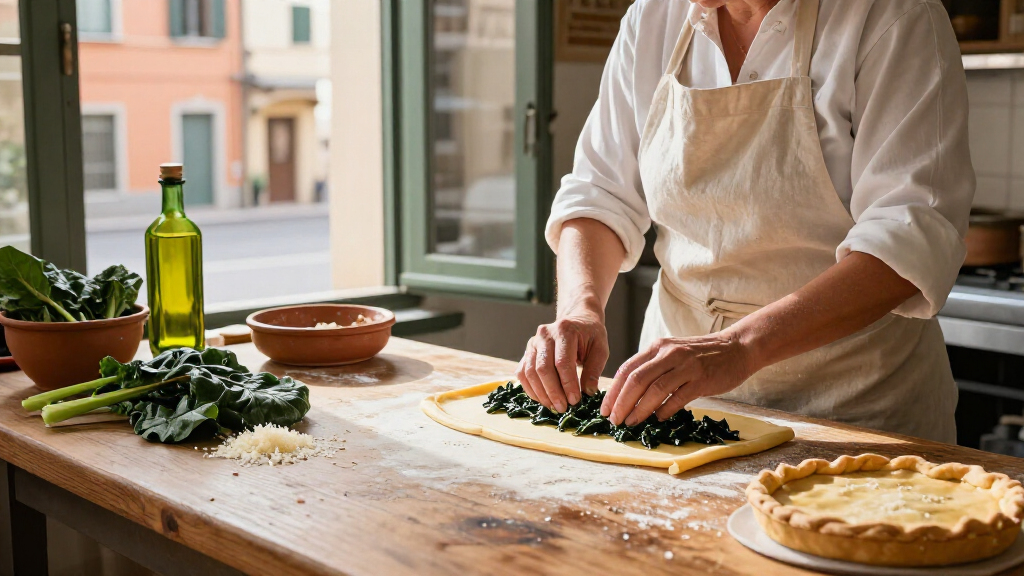
The name is related to erbe, meaning herbs or greens, though the filling is often built around leafy vegetables such as chard rather than a mix of delicate herbs. Think of a market bunch of chard: dark green leaves, pale stems, and a clean, earthy smell after you chop them. Leaves soften quickly, while the thicker stems stay firmer and release water as they cook. Separating them helps each reach tenderness without leaving the leaves limp. Spinach or other greens can join in, especially when cooks work with what they have, but substitutions shift the flavor and moisture, so the filling may need more cooking or draining.
Parmigiano Reggiano gives the filling a deep, savory edge. The cheese is a protected DOP product—Denominazione di Origine Protetta, or Protected Designation of Origin—tied to a defined production area and method. A generous grating melts through the greens and seasons them; its concentrated flavor means the filling may need less added salt than expected. Ricotta or other cheeses appear in some family recipes, but they soften the sharper, drier character of Parmigiano and can make the filling wetter, so they change both the taste and the way the pastry bakes.
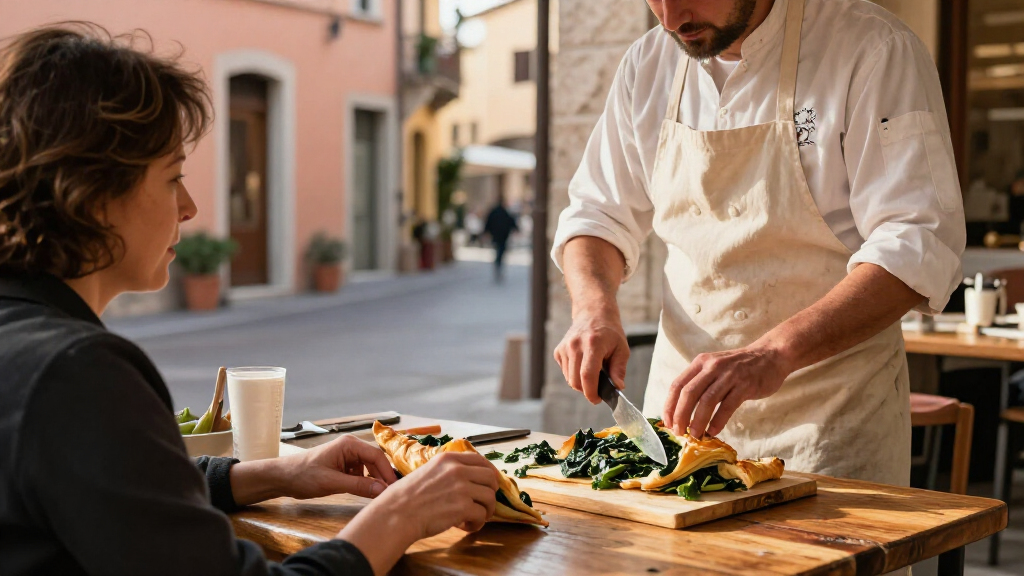
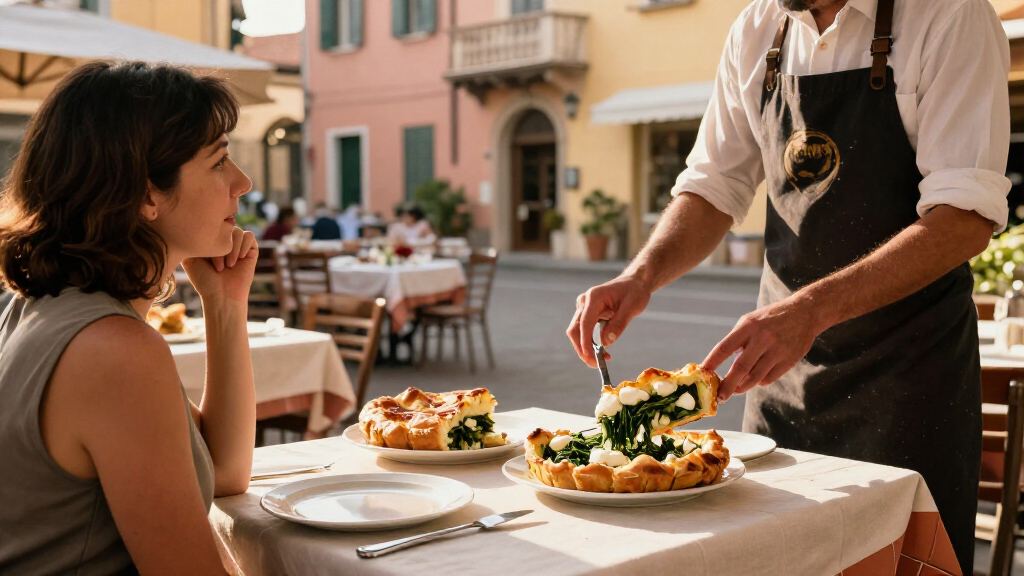
That flexibility is part of the pie’s identity. Erbazzone is home cooking, not a single formula with one mandatory topping. If you order a slice in Reggio Emilia, you may find pastry strips laid across the greens; at home, a plain pastry lid can be easier to roll. An open or lattice-style top lets more steam escape and shows the filling, while a full lid protects it and makes assembly simpler. Both approaches can lead to a crisp edge and a soft, savory middle when excess moisture is cooked away.
Products Worth Considering
Dyson Car+Boat Cordless Handheld Vacuum
Levoit Core 300S-P Smart WiFi Air Purifier
Shark PowerPro Reveal Plus Cordless Stick Vacuum, Charcoal, IZ376H
As an affiliate, we earn on qualifying purchases.
Choose greens and cheese for a savory, balanced filling
The filling works when the greens are tender but not wet, and when Parmigiano Reggiano seasons them without drowning out their fresh, leafy flavor. Chard is the characteristic choice; spinach can join it, but a pie made only with spinach will taste different. Chard’s stems bring a mild, almost celery-like bite and its leaves hold their shape; spinach cooks down more quickly and tastes softer. This savory pie from Reggio Emilia gets much of its identity from that meeting of greens, cheese, and pastry.
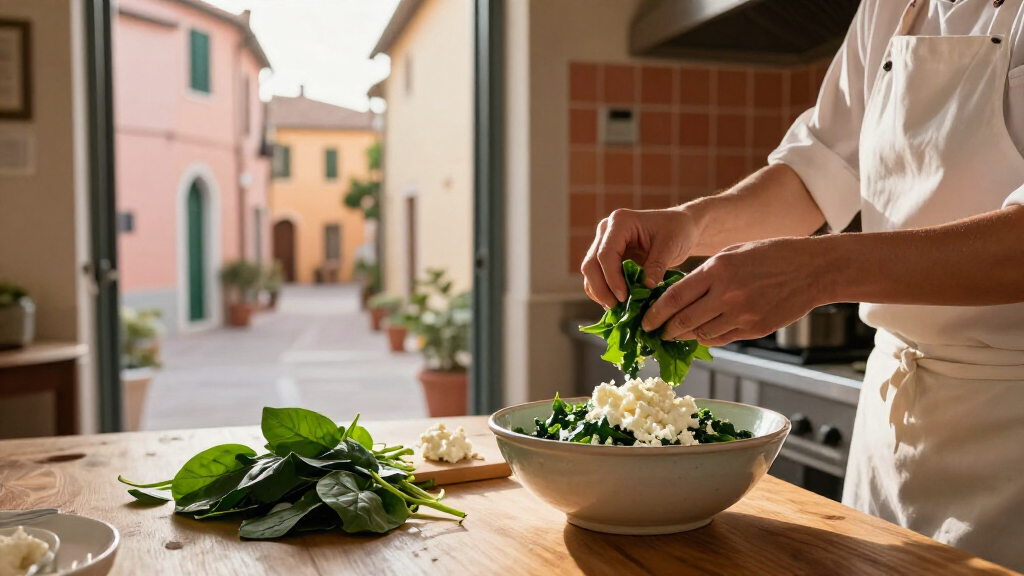
For a practical home batch, picture a market bunch of chard after a quick rinse: leaves chopped into ribbons, stems sliced thin so they cook at the same pace. Sauté the stems first, then add the leaves when they begin to soften. Cook off moisture before you stir in the cheese; a puddle at the bottom of the pan can seep into the pastry and leave it soft. This step also concentrates the greens’ flavor, so the filling tastes savory rather than diluted. If the pan is crowded, the vegetables steam instead of releasing moisture efficiently; cook in batches or use a wider pan.
Parmigiano Reggiano brings salt and a nutty, concentrated flavor, so taste the mixture before adding more salt. A small amount of ricotta can soften the filling, but it also adds moisture and changes the texture. That tradeoff can be welcome if you want a gentler, creamier interior, though it makes draining and cooling especially important. If you use frozen chard, thaw it fully and squeeze it firmly in a clean towel or with your hands before cooking; frozen greens are convenient, but they release more water as they thaw and can weaken the crust if that water stays in the filling.
Keep seasoning simple enough to let the greens speak. Garlic is a familiar partner, while black pepper adds warmth. For instance, if your chard is especially tender and sweet, a little more Parmigiano may bring balance; if the greens taste earthy, garlic and pepper can lift them without turning the filling into something unrecognizable. Add seasoning gradually: cheese and any pancetta already contribute salt, and it is easier to add a little more than to correct an overly salty filling.
Kitchen cue: Before the filling goes into the pastry, it should look moist and glossy, not leave liquid behind when you tilt the pan. That small distinction matters: moisture keeps the greens pleasant to eat, but free liquid turns the crust soft.
Pick a pastry fat that fits your table
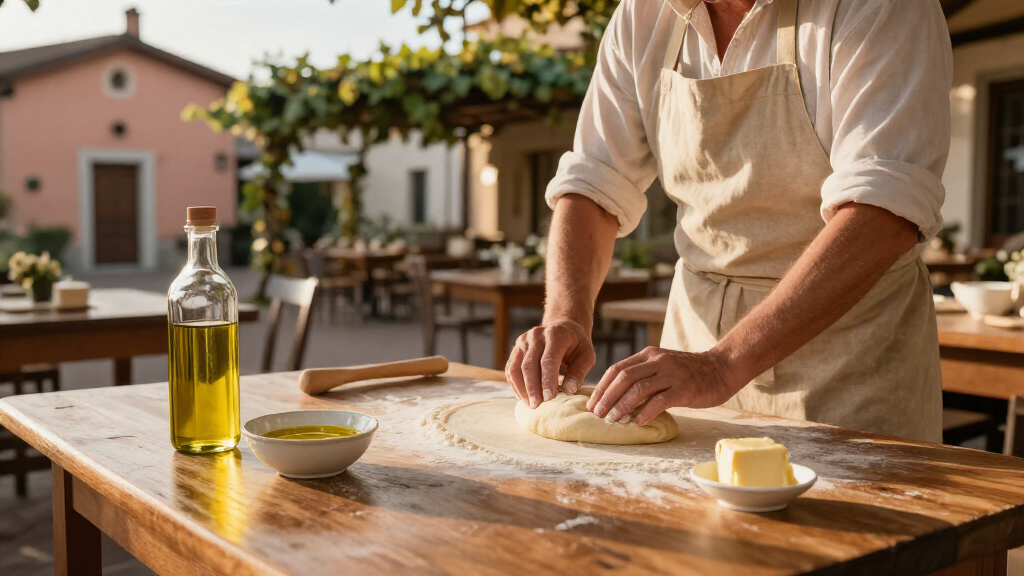
Erbazzone pastry is usually simple: flour, water, fat, and salt form a thin, rustic shell. Traditional versions may use lard, while many modern home cooks choose butter or olive oil. Because the crust is thin and relatively plain, the fat has a noticeable effect on its flavor and texture. The pastry’s job is to hold the filling and brown around it, not compete with the greens.
Lard gives pastry a savory, tender quality and connects to familiar traditional preparations. Pancetta or lard can also appear in the filling, sautéed with garlic and greens. That richness suits an appetizer spread on a cool evening, when you might serve small squares alongside a bowl of soup. Using pork fat in both places builds a fuller, more savory pie, but can obscure the fresh taste of the greens; using it only in the crust or filling keeps that richness more restrained. If you are cooking for someone who avoids pork, check both the filling and the pastry: lard is an animal fat, even when it is not visible in the finished pie.
Butter gives the crust a rounded dairy flavor and is easy to find in many home kitchens. Olive oil makes a straightforward alternative, especially when you want a meat-free pie; choose a mild oil so its grassy notes don’t crowd out the Parmigiano. These fats create different results, but the choice is also practical: butter firms when cool and can make a more crumbly pastry, while oil is easy to mix and roll but gives a less buttery flavor. Ready-made pastry can save time, though it changes the handmade character and may contain ingredients you don’t expect.
There’s no need to make every version a debate about authenticity. In Reggio Emilia, family practice and the cook’s choices matter. If you’re baking for a mixed table, olive-oil pastry and a pancetta-free filling are a clear option; if you want to explore a richer traditional direction, use lard while keeping the greens and cheese at the center. Either way, match the choice to the people eating and the flavor you want, then keep the filling dry enough that the pastry can do its job.
Make erbazzone at home without a soggy bottom
To make erbazzone successfully, cook excess water out of the greens, cool the filling, then bake it inside a thin layer of pastry until the crust turns golden. The filling needs to be savory and cohesive before it goes into the pan. This sequence keeps steam from softening the pastry while the pie bakes. It also makes the filling easier to spread evenly, so the center and edges finish cooking at roughly the same time.
Prepare the greens. Wash and chop chard, keeping thick stems separate from the leaves. If using frozen greens, thaw them and squeeze out as much water as you can.
Cook the filling. Soften garlic in your chosen fat; add stems, then leaves. Cook until the greens are tender and excess liquid has evaporated. Stir in grated Parmigiano Reggiano and season to taste.
Cool before assembling. Spread the filling on a plate or shallow tray for a few minutes. A hot filling can soften the pastry before it reaches the oven.
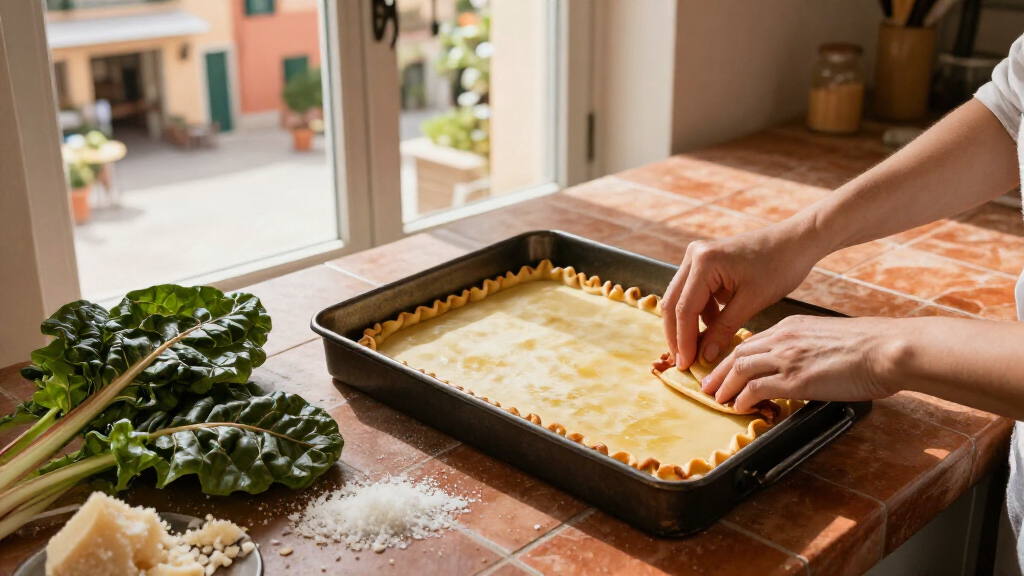
Line and fill the pan. Roll the pastry thinly, set it in a baking pan, and add the cooled greens. Fold over the edges or cover with a second sheet. You can add strips of pastry across the top to leave glimpses of green showing.
Bake until browned. Use your recipe’s oven temperature and timing as a guide; pastry thickness and pan size affect how fast the pie cooks. Look for a browned top and a set filling, then let the pie rest before slicing.
For example, if you prepare the greens the night before a picnic, keep them covered in the refrigerator and assemble the pie the next day. The short rest after baking matters too: cut it immediately and the hot filling may slump; wait a little, and you’ll get neat squares that travel well. A thicker pie may need more time to set, so judge doneness by the pastry and filling rather than the clock alone.
Serve it warm, pack it for a picnic, or save a slice
Erbazzone is good warm, at room temperature, or cold, which makes it an easy appetizer to plan ahead. Warm from the oven, the crust is crisp and the Parmigiano-scented filling is soft. After it rests, the pie firms up and slices cleanly into squares or wedges. Serving temperature changes the experience: warmth emphasizes the cheese and soft greens, while a cooled slice is firmer and easier to carry.
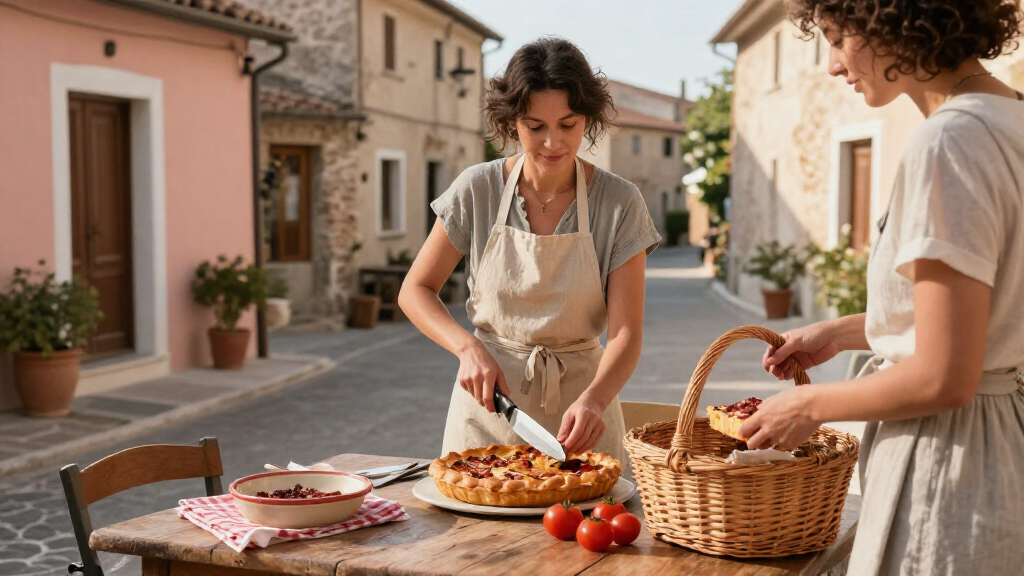
For a casual Emilia-Romagna-inspired spread, cut small squares and set them beside olives, seasonal vegetables, or a simple salad. The pie is substantial enough to anchor a light lunch, but it also works as a snack between meals. Imagine packing a few cooled squares for a train ride from Reggio Emilia toward Parma: they’re compact, filling, and less fussy than a dish that needs to be eaten piping hot. A fresh, crisp side also balances the pastry’s richness, making the meal feel less heavy.
If you make it ahead, cool the baked pie and store leftovers covered in the refrigerator. Reheat gently until warmed through, or bring a portion to room temperature for serving rather than leaving it out for an extended period. Follow safe food handling for cooked leftovers, especially when the filling contains cheese and meat. Gentle reheating helps preserve the crust; aggressive heat can brown it further before the center is warm.
Allergens deserve a quick check before you serve it. The usual pastry contains wheat, and Parmigiano Reggiano and ricotta contain milk; ready-made pastry can include additional ingredients. If someone at your table has an allergy, read every label and avoid cross-contact with utensils and work surfaces. Ingredient checks matter because family variations and packaged pastry can make two slices with the same name quite different for someone managing an allergy.
Know what changes when you order erbazzone
Erbazzone names a regional preparation, not one legally fixed recipe, so the pie you order may differ from the version you make at home. It is recognized as a traditional food product in Italy, but that recognition does not prescribe one exact combination of greens, fat, cheese, or pastry arrangement. In practice, the name tells you where the dish comes from and the kind of pie to expect, while the baker’s recipe determines its richness, texture, and ingredients.
That matters when you’re comparing it with torta salata, the broad Italian term for savory pie. Torta salata can describe many fillings and crusts across Italy; erbazzone points more specifically to Reggio Emilia and its leafy filling. A spinach pie may overlap in spirit, yet characteristic chard, Parmigiano Reggiano, and the local pastry tradition make erbazzone its own thing. The distinction is useful when ordering: the broader term leaves the filling open, while erbazzone gives you a regional cue, though not a guarantee of one exact recipe.
The name scarpazzoun is a regional dialect name for erbazzone. The precise explanation of that word is not consistently established, so it’s best to use it as a local name rather than claim a definite translation. If you visit a bakery, asking for erbazzone or scarpazzoun can help you spot the same Reggio Emilia specialty.
Recipes also reflect season and household preference. One baker may use pancetta, another may offer a meat-free version; one cook may mix chard with spinach, while another keeps the greens simple. When traveling, ask what is in the filling and pastry, especially if you avoid pork, dairy, or gluten. That question is practical as well as cultural: the answer tells you how rich, soft, or crisp that particular slice will be, and whether it fits your dietary needs. It tells you more about that particular pie than a rigid authenticity checklist ever could.
Frequently Asked Questions
Is erbazzone the same as spinach pie?
Not exactly. Chard is characteristic of erbazzone, though some versions include spinach or other greens. Parmigiano Reggiano and the Reggio Emilia pastry tradition also shape its flavor and texture.
Does erbazzone contain meat?
Many traditional preparations use pancetta or lard, but meat-free versions are commonly made. Ask about the pastry too, since it may contain lard even when the filling has no meat.
Can I use frozen chard?
Yes. Thaw it fully and squeeze it dry before cooking so excess water doesn’t soften the pastry. Cook the greens until the filling looks moist but no liquid pools in the pan.
What cheese should I use for erbazzone?
Parmigiano Reggiano is the signature choice, adding salty, savory depth to the greens. Some household recipes add ricotta or other cheese, but those additions make a softer, different filling.
Can I make erbazzone ahead?
Yes. Bake it ahead, cool it, and store it covered in the refrigerator; serve it gently reheated or at room temperature. Refrigerate leftovers promptly, especially if the pie contains pancetta or extra dairy.
What does scarpazzoun mean?
Scarpazzoun is a local dialect name for erbazzone. The word’s precise explanation is not consistently given, so it’s safest to treat it as a regional name rather than assign it a definite translation.
Conclusion
When you make erbazzone, keep the greens tender, the filling relatively dry, and the Parmigiano Reggiano easy to taste. Those choices carry the pie’s character more reliably than insisting on one family’s exact proportions or pastry fat.
Start with chard, a simple crust, and a good handful of cheese. Let the browned pastry crackle as you cut the first square, and you’ll have Reggio Emilia at the table.
Search interest in ‘Bruschette di lattuga con insalata alla greca’ is rising, driven by growing curiosity about healthy, Mediterranean-inspired dishes, though details remain unconfirmed.
Herby Chicken Meatballs With Yogurt Sauce: a Tasty Appetizer
Feast on succulent herby chicken meatballs with velvety yogurt sauce—a flavorful appetizer that will elevate your taste buds and leave you craving more.