TL;DR
Pasta water carries salt and starch from the noodles, so a small splash can help oil, butter, cheese, or thick tomato sauce cling to pasta. Save a cup before draining, add it a little at a time as you toss the pasta in its sauce, and taste before adding more salt. Its strength varies, so let the pan tell you when to stop.
The best finishing touch for a pan of pasta may already be in the pot. Pasta water carries salt and starch from the noodles, and a small splash can help a sauce cling in a glossy coat instead of pooling at the bottom of your bowl.

Get kitchen staples and gadgets delivered free with Prime
- Fast, free delivery on millions of items
- Prime Video, Amazon Music and more included
- Member-only deals all year
That does not mean you need to follow a magic salt ratio or pour in a whole ladle. The water changes from pot to pot, and salty pecorino, anchovies, olives, or cured meat can quickly push a dish too far. In this guide, you’ll learn how to season the water, when to save it, and how to finish pasta in the pan without making dinner watery.
These small moves are useful whether you’re tossing spaghetti with olive oil in a Roman-style dish or loosening a thick tomato sauce on a chilly weeknight. Think of the water as a seasoning and texture tool. A teaspoon at a time can make the difference between sauce that slides off and sauce that settles into every curve.
Salt pasta water to season the noodles, then taste the finished dish before adding more salt.
Save a cup near the end of cooking, before draining; a few tablespoons may be enough for a few servings.
Add water gradually while tossing pasta with sauce over heat until the noodles look coated, not wet.
Use pasta water most readily with oil, butter, cheese, and thick tomato sauces; thin sauces may need none.
Skip rinsing pasta for most hot dishes, and refrigerate leftover water briefly in a clean container.
Pasta Water Is an Ingredient Salt, Save, Finish
Starchy cooking water can help sauce cling to pasta. Save some before draining, then add it gradually and taste as you go.
Why a splash works
Starch helps water and fat combine into a smoother coating that follows the noodles.
Bring it together
Tossing pasta with starchy water helps oil coat the noodles more evenly.
Aim for smooth
Add water gradually and toss; fierce heat can make cheese clump.
Loosen thick sauce
A small splash can help thick sauce move into pasta ridges.
A simple finishing rhythm
Have the sauce ready and transfer pasta while it is still slightly firm.
Scoop out a mugful near the end of cooking.
Toss pasta and sauce over heat with a little reserved water.
Add more only if the sauce looks tight or clumped.
Stop when sauce clings and the pasta is cooked to your liking.
Season with the whole dish in mind
Pasta water carries salt, and its strength varies from pot to pot.
- Salt the water to season the pasta.
- Reserve some near the end, before draining.
- Remember that less water can make it more concentrated.
- Add the water a little at a time.
- Taste before adding more salt.
- Use less if the sauce is already loose or salty.
Match the sauce
Use pasta water to adjust texture; it cannot make every sauce creamy or fix every balance.
| Sauce | How pasta water can help |
|---|---|
| Oil or butter | Helps the sauce coat pasta evenly |
| Cheese | Supports a smooth, cohesive finish |
| Thick tomato | Loosens sauce so it moves into ridges |
| Already thin | May dilute flavor; use little or none |
Why a splash of pasta water helps sauce cling
Pasta water is a cooking liquid that holds salt and starch released by the noodles. When you add a little to a sauce and toss everything together, the starch helps water and fat combine into a cohesive coating. The payoff is a smoother finish that clings to the pasta rather than leaving oil or liquid behind in the bowl.
Think of the starch as a bridge between ingredients that otherwise tend to part ways. In a simple garlic-and-olive-oil sauce, the oil can look slick and separate; a splash of starchy water and steady tossing help it coat the noodles more evenly. In a butter sauce, that same motion can turn a thin puddle into a soft sheen. The water does not magically make every sauce creamy, and it cannot rescue a sauce with the wrong balance of ingredients.
Use it to adjust texture, not merely to thin the sauce. If a thick tomato sauce sits heavily on rigatoni, a small addition can help it move into the ridges. If your sauce is already loose, extra liquid may only dilute its flavor. Picture the pan as a small workshop: heat, fat, water, and movement do the finishing work together.
The method fits a broader Italian habit of finishing pasta in its sauce. When you eat cacio e pepe in Rome, the sauce should coat the tonnarelli rather than gather as a dry cheese clump or a watery pool. Pasta water can help you approach that texture at home, though cheese temperature and tossing matter just as much.
Products Worth Considering

Dyson Cyclone V10 Origin Cordless Vacuum

Philips Hue Play Gradient Light Tube, Large, Black

Google Nest Thermostat E Smart Thermostat with Temperature Sensor Bundle – White
As an affiliate, we earn on qualifying purchases.
Salt the water to season the noodles, not by a rigid rule
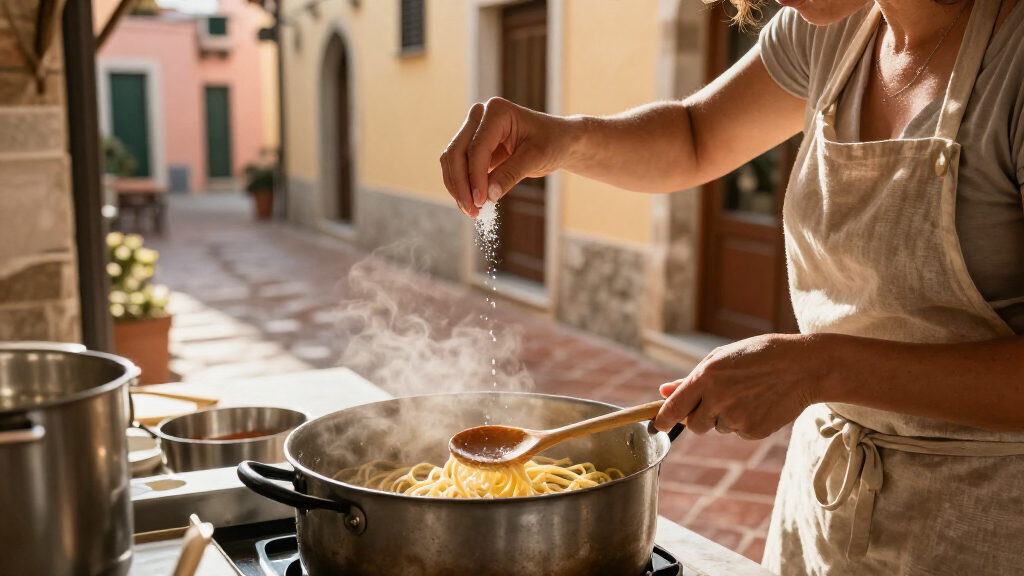
Salt pasta water to season the pasta as it cooks, then adjust the finished dish to taste. Salt levels vary in the rest of the recipe, so one universal ratio can steer you wrong. Pecorino Romano, anchovies, olives, pancetta, and prepared broth all bring their own salt to the pot.
For a practical example, imagine making spaghetti with garlic, olive oil, and a generous shower of pecorino. You want the noodles to taste seasoned before the cheese goes in, but you should taste the finished sauce before adding a final pinch. The same caution applies to a puttanesca-style sauce with olives and anchovies: well-salted pasta water can add up quickly once those ingredients join the pan.
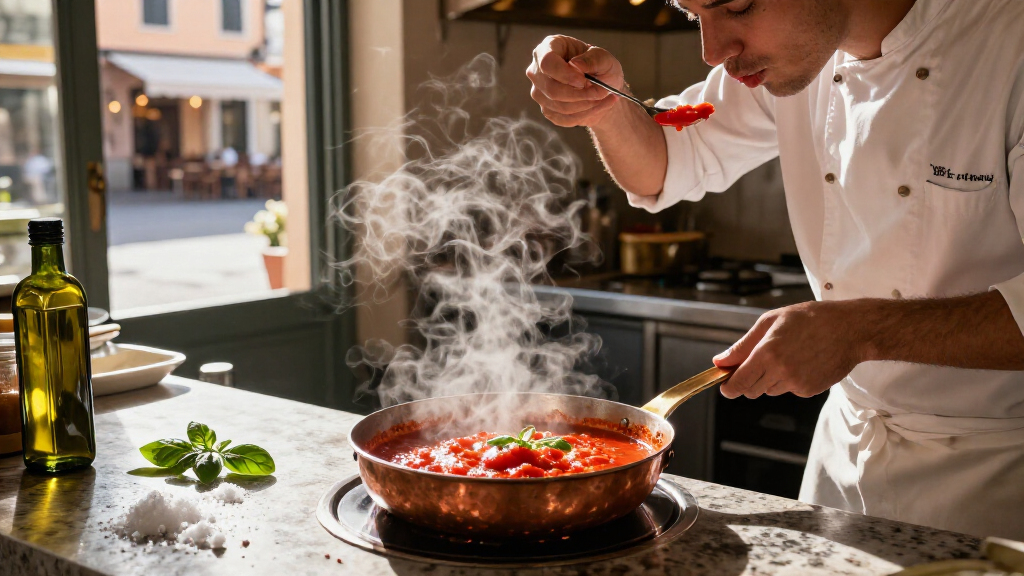
Season the cooking water, then taste at the end. If you are new to a dish, begin with a moderate amount of salt rather than treating an internet rule as law. Taste a noodle near the end of cooking, and remember that some water will reduce and concentrate in the pan. If the sauce already tastes assertive, add less pasta water or dilute a small amount with unsalted water.
Salt does not replace seasoning in the sauce, and it does not make every noodle taste identical. Fresh pasta and dried pasta cook differently, and the liquid around them changes as they simmer. Let your palate make the final call, especially when you are cooking with salty cheese or cured meat.
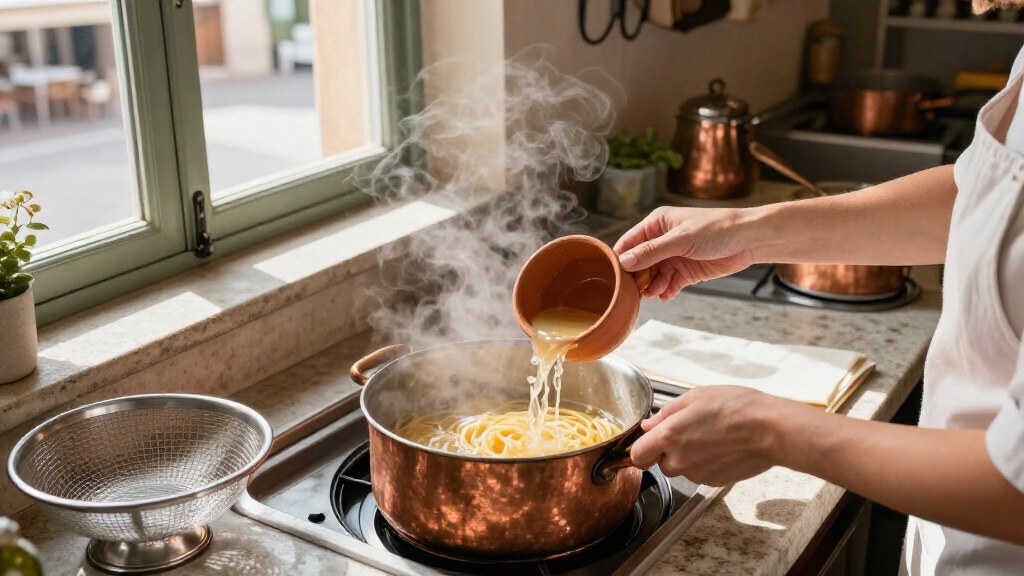
Save a cup before you drain the pasta
Reserve pasta water near the end of cooking, before you drain or transfer the noodles. By then, the water has picked up starch, and you can keep some on hand to loosen the sauce in the pan. A cup is often plenty for a few servings; you may use only a few tablespoons.
Set a heat-safe measuring cup or mug beside the stove before the pasta finishes. When the spaghetti is almost ready, scoop out some water, then move the noodles into the sauce. That simple habit prevents the familiar mistake of looking at an empty, steaming pot after the water has gone down the drain. If you use a colander, place your cup where you can reach it without rushing.
The water’s strength depends on how you cooked the pasta. Dried and fresh pasta release different amounts of starch, while the volume of water and length of cooking also affect concentration. Using somewhat less water can make it starchier, within reason, but the noodles still need room to cook and should be stirred to prevent sticking.
For example, if you cook a small batch of dried penne in a modest pot, the saved water may feel thicker than the water from a large pot of fresh tagliatelle. There is no guaranteed texture or concentration. Save a cup, but treat it as an ingredient to test a little at a time, not a measured product with a fixed strength.
Finish pasta in the pan for a glossy, even coating
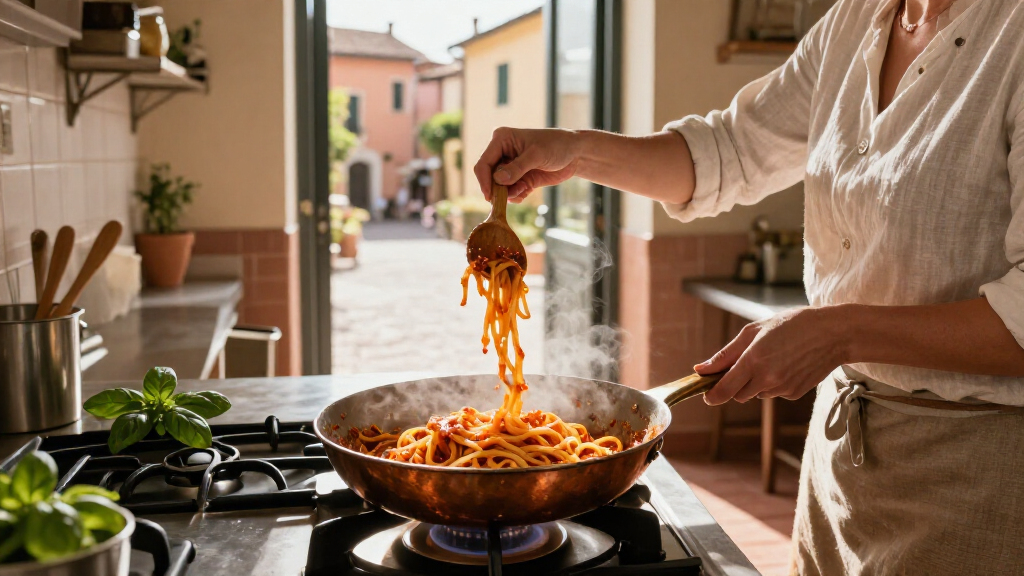
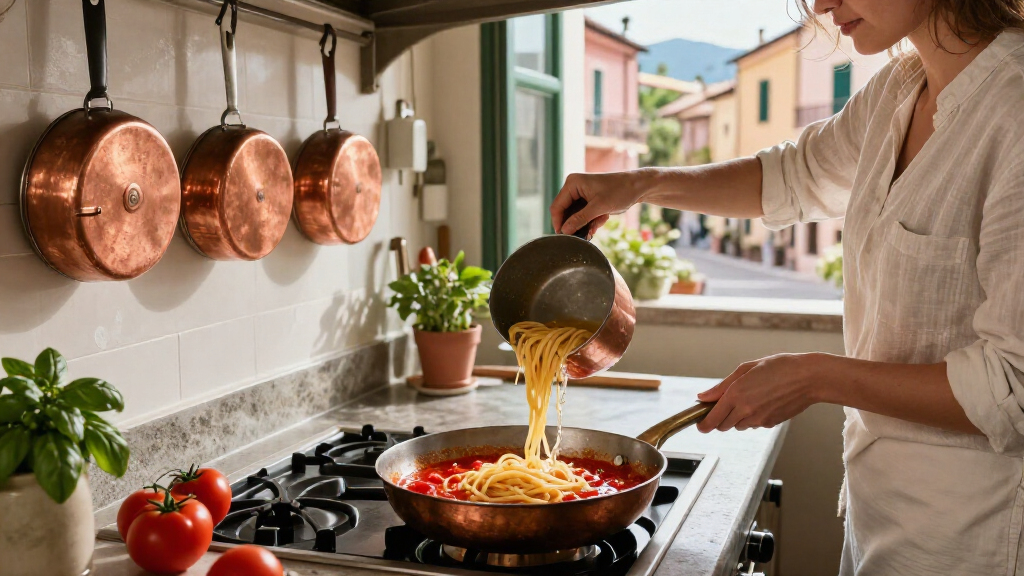
Transfer the pasta to its sauce while it is still slightly firm, then toss with a splash of reserved water over heat. The pasta finishes cooking in the pan as the sauce coats it. Add more water only if the mixture looks tight or the noodles still need help picking up the sauce.
- Start the sauce first. Have the garlic oil, tomato sauce, or butter ready in a pan wide enough to hold the pasta.
- Move the pasta before it turns soft. Use tongs or a spider strainer to transfer it while it still has a little bite.
- Add a small splash. Start with a tablespoon or two, then toss or stir over gentle heat.
- Check the coating. If the pasta looks dry or the sauce gathers in a thick clump, add another splash and keep tossing.
- Taste before serving. Stop when the sauce clings and the noodles are cooked to your liking.
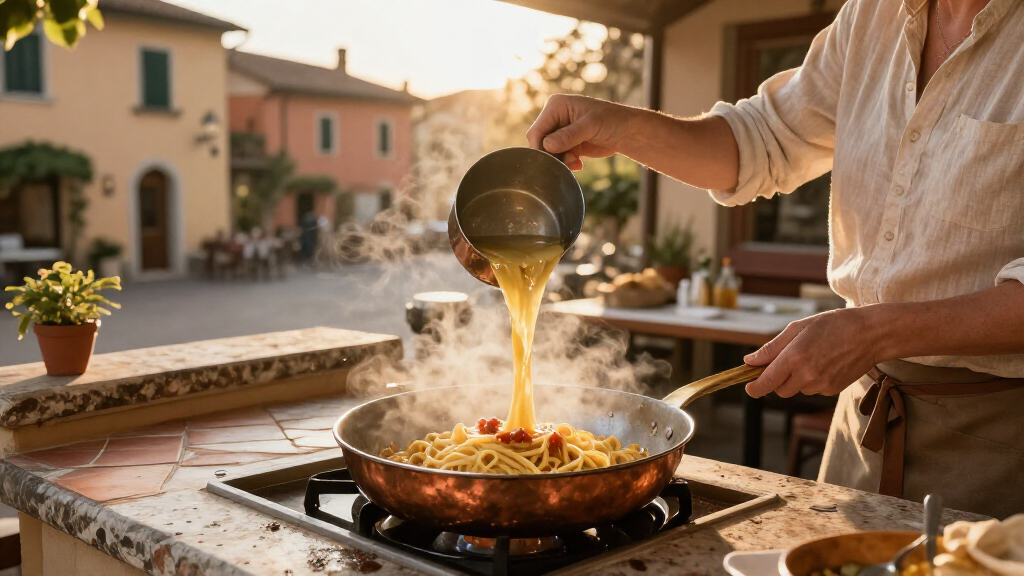
This is especially helpful for oil-, butter-, and cheese-based sauces, which can separate or turn stiff if handled carelessly. For cacio e pepe, for instance, remove the pan from fierce heat before adding the cheese mixture; hot water and relentless heat can make the cheese clump. Add the reserved water gradually and toss until the sauce looks smooth enough to coat each strand.
Each pan has its own rhythm. You may need less liquid for a small portion of spaghetti aglio e olio (garlic and oil) than for a larger batch of thick tomato sauce. The goal is a sauce that follows the pasta, not a thin layer of broth at the bottom.
Match pasta water to the sauce you are making
Pasta water works best when a sauce needs help combining or moving around the noodles. Oil, butter, and cheese sauces often benefit because the starch helps form a cohesive coating as you toss. A thick tomato sauce can also loosen, while an already thin sauce may need no extra liquid at all.
Consider three weeknight pans. For spaghetti with olive oil and garlic, starchy water can soften the sharp edge of the oil and help it coat the strands. For a butter-and-Parmesan sauce, start with a little water and stir until the butter looks glossy. For a robust tomato sauce on rigatoni, a splash can help the sauce reach into the pasta’s ridges instead of sitting in a heavy mound.
Some sauces need restraint. A sauce built around a precise reduction or a thin broth may lose its balance if you add pasta water without checking. If you are making soup-like pasta e ceci (pasta with chickpeas), for example, the cooking liquid may already be part of the dish’s intended texture. Taste and look before you pour.
Fresh pasta water can behave differently from water left by dried pasta, and gluten-free pasta water varies by brand and type. It can still help, but the result may be thicker, thinner, or cloudier than expected. Treat the first addition as a test: toss, observe, and add another small splash only if the sauce needs it.
Avoid watery sauce, oversalting, and other common mistakes
Add pasta water gradually, because too much can make a dish watery or overly salty. The liquid also becomes more concentrated as it reduces in the pan. Taste the sauce before adding extra salt, and keep a small cup of unsalted water nearby if you need to dilute a salty splash.
A common example: you cook pasta with a salty cheese sauce, pour in a full ladle of reduced pasta water, then add more pecorino. The sauce can become both loose and aggressively salty. Add a little water, toss, and pause. The change may take a few seconds to show up, so give the pan a moment before reaching for more.
For most hot pasta dishes, skip rinsing the noodles. Rinsing washes away surface starch that helps sauce cling. It makes sense for some cold pasta salads or when a specific recipe asks for it, but it usually works against a hot pan sauce. Likewise, avoid draining every drop of water into the sauce without tasting; the reserved liquid is useful, but it is not automatically the right seasoning for every dish.
If your pasta water tastes too salty, use less of it, dilute it with unsalted water, or skip it and adjust the sauce another way. These are ordinary kitchen corrections, not failures. Even in a Roman-inspired cacio e pepe, a small amount of water and attentive tossing beat a dramatic pour.
Use fresh water for the best finish and store leftovers carefully
Fresh pasta water is easiest to use while you finish the dish. It is warm, close at hand, and ready to mix into the sauce. You can refrigerate leftover water briefly in a clean, covered container, but it is not a shelf-stable pantry ingredient and will not keep indefinitely.
Say you save more than you need while cooking Sunday dinner. Let the leftover water cool, transfer it to a clean container, and refrigerate it promptly. Discard it if it has sat out too long or if it looks or smells off. When you use refrigerated water, reheat it as part of the sauce and judge its texture; starch can settle or thicken as it cools.
Choose the water based on the pasta you cooked. If you cooked gluten-free pasta, the liquid may still help loosen a sauce, but its starchiness and texture vary by type. Start with a teaspoon or tablespoon, toss, and assess. A brand that releases little starch may not give the same coating as a pot of wheat spaghetti.
For a quick meal after a trip through Bologna’s Emilia-Romagna food traditions, you might toss fresh tagliatelle with butter and Parmigiano Reggiano. Save a little cooking water before draining, then add just enough to help the butter coat the ribbons. Keep any unused water chilled and use sound food-storage judgment; the pan is where it does its best work.
Frequently Asked Questions
How much salt should I add to pasta water?
There is no single amount that suits every pasta dish. Salt the water enough to season the noodles, then account for salty ingredients such as pecorino, anchovies, olives, or cured meat when you taste the finished sauce.
How much pasta water should I add to sauce?
Start with a small splash, toss the pasta with the sauce, and add more only if the coating looks too tight or dry. The amount depends on the portion, sauce, and concentration of the water; you may need only a few tablespoons.
Why use pasta water instead of plain water?
Plain water can thin a sauce, but starchy pasta water can help it coat noodles more evenly, especially alongside oil, butter, or cheese. It still needs gradual additions and tossing to work well.
Does pasta water make every sauce creamy?
No. Pasta water can help some sauces become smoother and more cohesive, but it does not replace cream or guarantee a creamy result. The ingredients, heat, and tossing all affect the texture.
Should I rinse pasta before adding the sauce?
Usually not for a hot pasta dish, because rinsing removes surface starch that helps the sauce cling. Rinsing can suit a cold pasta salad or a recipe that specifically calls for it.
Can I save pasta water for later?
You can refrigerate leftover water briefly in a clean, covered container, but it is best used fresh during the same cooking session. Discard it if it has been left out too long or looks or smells off.
Conclusion
Save the water, then let the pan decide how much to use. Salt and starch make pasta water a useful finishing ingredient, but its strength changes with the pasta and the pot. Add a small splash, toss, taste, and stop when the sauce clings.
Next time you drain spaghetti, keep a cup beside the stove. The sauce should shine on the noodles, not wait at the bottom of the bowl.