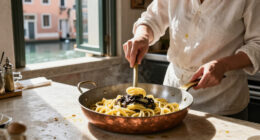
Italian espresso machines range from hands-on portafilter machines to push-button brewers and stovetop moka pots, so the right choice depends on how much control and effort you want. My best overall pick is the De’Longhi La Specialista Touch, which pairs a built-in grinder with guided espresso preparation. The Gaggia Classic E24 is a stronger fit for buyers who want a traditional, hands-on setup, while the De’Longhi Magnifica Duo favors convenience with automatic brewing. The main tradeoff is control versus simplicity, with counter space, milk preparation, and upkeep also shaping the decision. Read on for the full breakdown and guidance on matching a machine to your routine.

Get kitchen staples and gadgets delivered free with Prime
- Fast, free delivery on millions of items
- Prime Video, Amazon Music and more included
- Member-only deals all year
Complete the kit


Key Takeaways
- The La Specialista Touch offers the most balanced feature set: its integrated grinder and guided workflow make it a practical starting point for hands-on espresso without requiring a separate grinder.
- The Gaggia Classic E24 and Diletta Bello+ favor learning and control: both suit buyers who want to manage more of the brewing process, while the Bello+ adds PID temperature control, a shot timer, and programmable preinfusion.
- Automatic convenience comes with a different kind of compromise: the Magnifica Duo reduces hands-on preparation, but it is less suited to buyers who want to develop a traditional portafilter routine.
- The two moka pots are the simpler, lower-fuss alternatives: the Bialetti Moka Express and Primula Classic brew stovetop coffee rather than espresso from a pump machine, so buyers should not expect the same drink or workflow.
- Milk needs and counter space can reshape the ranking: built-in or adjustable frothers add convenience, while semi-automatic machines and their accessories can ask for more room and cleanup than a compact stovetop brewer.
| De’Longhi La Specialista Touch Semi-Automatic Espresso Machine with Grinder |  | Best for Guided Customization | Type: Semi-automatic espresso machine | Display: 3.5-inch high-resolution touchscreen | Preset drink recipes: 10 | VIEW LATEST PRICE | See Our Full Breakdown |
| Gaggia Classic E24 Semi-Automatic Espresso Machine, Brushed Stainless Steel | 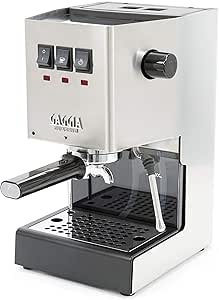 | Best for Hands-On Traditional Espresso | Origin: Made in Italy | Type: Semi-automatic espresso machine | Pressure: 9 bar | VIEW LATEST PRICE | See Our Full Breakdown |
| Bialetti Moka Express Stovetop Espresso Maker, 6 Cups, Silver |  | Best Iconic Italian Stovetop Brewer | Origin: Made in Italy | Type: Manual moka pot | Capacity: 6 espresso cups | VIEW LATEST PRICE | See Our Full Breakdown |
| Primula Classic Stovetop Espresso Maker, 6 Cups |  | Best Stovetop Pick for Broad Cooktop Compatibility | Type: Manual moka pot | Capacity: 6 cups | Material: Cast aluminum | VIEW LATEST PRICE | See Our Full Breakdown |
| De’Longhi Magnifica Duo Fully Automatic Espresso Machine with Milk Frother, Silver |  | Best for One-Touch Drink Variety | Machine type: Fully automatic espresso machine | Drink recipes: 20 preset hot and iced drinks | Grinder: Integrated conical burr grinder | VIEW LATEST PRICE | See Our Full Breakdown |
| De’Longhi Classic Signature Espresso Machine with Adjustable Milk Frother |  | Best for Simple, Compact Espresso | Machine type: Espresso machine | Pump pressure: 15 bar | Power: 1350 watts | VIEW LATEST PRICE | See Our Full Breakdown |
| Diletta Bello+ Semi-Automatic Espresso Machine with PID, Shot Timer, and Programmable Preinfusion |  | Best for Hands-On Espresso Control | Machine type: Semi-automatic espresso machine | Boiler configuration: Dual boiler | Temperature control: PID | VIEW LATEST PRICE | See Our Full Breakdown |
| Italian espresso machine | Dimensions | Type | Weight |
|---|---|---|---|
| De’Longhi La Specialista Touch | — | Semi-automatic espresso machine | — |
| Gaggia Classic E24 Semi-Automa | 8 in D × 9.5 in W × 14.2 in H | Semi-automatic espresso machine | 20 pounds |
| Bialetti Moka Express Stovetop | — | Manual moka pot | 1 kg |
| Primula Classic Stovetop Espre | 4.06 × 6.34 × 7.48 in | Manual moka pot | — |
| De’Longhi Magnifica Duo Fully | 19.69 × 12.2 × 16.14 inches | — | 20.8 pounds |
| De’Longhi Classic Signature Es | 11.22 x 13.98 x 15.94 inches | — | 9.3 pounds |
| Diletta Bello+ Semi-Automatic | 17.75 x 11 x 14.5 inches (D x W x H) | — | — |
More Details on Our Top Picks
De’Longhi La Specialista Touch Semi-Automatic Espresso Machine with Grinder
The La Specialista Touch makes the most sense for buyers who want recipe guidance without giving up control of espresso preparation. Its touchscreen, Bean Adapt technology, and 15-setting grinder help tune brewing to different beans, while saved profiles make repeat drinks easier. Unlike the simpler Gaggia Classic E24, it also offers automatic milk frothing alongside manual steaming, plus cold brew in under five minutes. That range is useful if the household switches between espresso, milk drinks, and cold coffee. The tradeoff is that it remains semi-automatic: grinding and guided prompts do not remove hands-on prep, and the many settings add a learning curve. I’d choose it over the fully automatic Magnifica Duo when customization matters more than one-touch convenience.
Pros:- Bean Adapt guidance helps tailor grind, dose, pre-infusion, and brew temperature to the beans.
- Six saved bean profiles and customizable recipes support repeatable personal preferences.
- Automatic and manual frothing offer different levels of control for dairy and plant-based milk.
- Cold Extraction Technology prepares cold brew in under five minutes.
Cons:- Semi-automatic brewing still requires hands-on preparation and adjustment.
- The touchscreen and range of settings may take time to learn.
Best for: Home espresso drinkers who want guided adjustments, saved bean profiles, and both manual and automatic milk frothing.
Not ideal for: Buyers who want espresso and milk drinks prepared with minimal hands-on work, or who prefer a simple, low-setting machine.
- Type:Semi-automatic espresso machine
- Display:3.5-inch high-resolution touchscreen
- Preset drink recipes:10
- Saved bean profiles:6
- Grinder:Italian-made conical burr grinder with 15 settings
- Milk adjustment:4 temperature settings and 5 froth levels
- Cold brew time:Under 5 minutes
Our verdict“Choose the La Specialista Touch if you want guided control and drink variety; pick the Magnifica Duo instead for a more automated routine.”
Gaggia Classic E24 Semi-Automatic Espresso Machine, Brushed Stainless Steel
The Gaggia Classic E24 is the choice here for buyers who want a traditional espresso workflow and a machine made in Italy, rather than a touchscreen doing the decision-making. Its 58 mm commercial-style portafilter and steam wand support a hands-on routine that can also extend to milk texture and latte art. A pressurized basket gives newcomers another way to use pre-ground coffee or ESE pods, although the machine still asks for more involvement than De’Longhi’s La Specialista Touch, which includes guided brewing and an integrated grinder. The E24’s 2.1-liter water capacity and compact footprint suit a dedicated counter spot, but its 20-pound weight makes moving it less convenient. It is a more focused espresso pick than either moka pot here, with less flexibility for quick, varied drinks than the Magnifica Duo.
Pros:- Made in Italy with a 58 mm commercial-style portafilter.
- Steam wand supports manual milk frothing and latte art.
- Includes commercial-style baskets plus a pressurized basket for pre-ground coffee or ESE pods.
- Updated boiler is designed to resist scale buildup and corrosion.
Cons:- Semi-automatic operation requires hands-on espresso preparation.
- No built-in grinder, so users need ground coffee or a separate grinder.
- At 20 pounds, it is less convenient to move than a moka pot.
Best for: Home baristas who want an Italian-made machine with a commercial-style portafilter, manual milk steaming, and room to build skills.
Not ideal for: Buyers who need a built-in grinder, one-touch milk drinks, or a machine they can easily move between storage and counter.
- Origin:Made in Italy
- Type:Semi-automatic espresso machine
- Pressure:9 bar
- Portafilter:58 mm commercial-style
- Water capacity:2.1 liters
- Wattage and voltage:1200 watts; 120 V
- Dimensions:8 in D × 9.5 in W × 14.2 in H
- Weight:20 pounds
Our verdict“Pick the Gaggia Classic E24 if you want a traditional, skill-building espresso setup and are willing to handle grinding and brewing yourself.”
Bialetti Moka Express Stovetop Espresso Maker, 6 Cups, Silver
The Bialetti Moka Express is the most direct fit for buyers drawn to Italian stovetop coffee rather than electric espresso machines. Its manual aluminum design needs no power, and the reusable filter keeps the routine straightforward. Compared with the Primula Classic, the Moka Express is distinguished by its named Italian-made design and a specific compatibility caveat: it works on gas and electric stovetops, but induction needs a separate adapter plate. Both pots make a concentrated stovetop brew, not the same drink or workflow as the Gaggia Classic E24’s pump-driven espresso. The Bialetti’s six-cup capacity can serve several small demitasse portions, though the maker requires more care than a dishwasher-friendly appliance: rinse with water and avoid detergents and machine washing. It suits simplicity, not automation or milk drinks.
Pros:- Italian-made aluminum moka pot with a reusable filter.
- Six-cup capacity can produce several small demitasse servings.
- Patented safety valve and ergonomic handle support stovetop use.
- Works on gas and electric stovetops.
Cons:- Induction cooking requires a separate Bialetti adapter plate.
- Manual brewing requires a stovetop and ground coffee.
- Cleaning calls for rinsing without detergent; dishwasher use is not recommended.
Best for: Coffee drinkers who want a recognizable Italian-made moka pot for concentrated stovetop coffee and have a gas or electric stove.
Not ideal for: Induction-only households without an adapter, or buyers seeking pump espresso, automatic brewing, or dishwasher cleanup.
- Origin:Made in Italy
- Type:Manual moka pot
- Capacity:6 espresso cups
- Material:Aluminum
- Stovetop compatibility:Gas and electric; induction with a separate adapter plate
- Filter:Reusable
- Weight:1 kg
- Warranty:1 year manufacturer warranty
Our verdict“Choose the Moka Express for classic stovetop coffee and a simple manual routine, but skip it if you need true pump espresso or induction compatibility without an adapter.”
Primula Classic Stovetop Espresso Maker, 6 Cups
The Primula Classic is a practical moka-pot choice for buyers whose cooktop is electric, ceramic, or gas. That stated compatibility gives it an advantage over the Bialetti Moka Express for ceramic-stove users, while the Bialetti lists gas and electric use and requires an adapter for induction. Both are manual stovetop brewers, so neither can match the Gaggia Classic E24 for pump-driven espresso or the Magnifica Duo for one-touch drinks. Primula’s cast-aluminum body and heat-resistant handle and knob suit a straightforward brewing-and-pouring routine, and its six-cup capacity serves multiple small portions. The tradeoff is upkeep: it needs ground coffee, a stovetop, and rinsing and drying after use. It makes more sense for simple stovetop coffee than for buyers seeking advanced espresso controls or automatic milk frothing.
Pros:- Compatible with electric, ceramic, and gas stovetops.
- Six-cup capacity suits multiple demitasse servings.
- Cast-aluminum body is designed to distribute heat evenly.
- Heat-resistant handle and knob pair with a safety-release valve.
Cons:- Requires ground coffee and stovetop attention rather than automatic brewing.
- Components need rinsing and drying after use.
- The listed cooktop compatibility does not include induction.
Best for: Households with gas, electric, or ceramic cooktops that want a manual moka pot for several small servings.
Not ideal for: Induction-only kitchens, buyers who want pump-brewed espresso, or anyone seeking automated preparation and low-effort cleanup.
- Type:Manual moka pot
- Capacity:6 cups
- Material:Cast aluminum
- Stovetop compatibility:Electric, ceramic, and gas
- Filter:Reusable
- Safety feature:Safety-release valve
- Dimensions:4.06 × 6.34 × 7.48 in
Our verdict“Choose the Primula if you want a six-cup moka pot for a gas, electric, or ceramic cooktop and prefer simple stovetop brewing over machine-made espresso.”
De’Longhi Magnifica Duo Fully Automatic Espresso Machine with Milk Frother, Silver
The Magnifica Duo is the clearest choice for households that value convenience and drink range over hands-on espresso technique. Its 20 preset hot and iced drinks, built-in conical burr grinder, and LatteCrema Hot and Cool systems cover much more than a basic espresso routine; cold brew takes under three minutes. Compared with the semi-automatic La Specialista Touch, the Duo asks less from the user during preparation but offers less of that model’s guided, hands-on tuning. It also dwarfs the Moka Express and Primula in versatility, though those stovetop brewers are simpler and don’t need counter space or electricity. The Duo is a substantial countertop appliance at nearly 20 inches long and over 20 pounds, and its listed 120-volt power may not suit other electrical systems. Choose it for range and automation, not a compact setup.
Pros:- Offers 20 preset hot and iced drink recipes.
- Integrated conical burr grinder handles grinding within the machine.
- LatteCrema Hot and Cool systems froth dairy and plant-based milk.
- Cold Extraction Technology prepares cold brew in under three minutes.
Cons:- Its 19.69-inch length and 20.8-pound weight call for a dedicated counter spot.
- Fully automatic preparation offers less hands-on control than the La Specialista Touch.
- The listed 120-volt specification may limit use in regions with different electrical standards.
Best for: Busy households that want a built-in grinder, automatic hot or cold milk frothing, and a broad menu of espresso, coffee, and cold drinks.
Not ideal for: Buyers with limited counter space, those who prefer manual control, or people in regions where 120-volt equipment is incompatible.
- Machine type:Fully automatic espresso machine
- Drink recipes:20 preset hot and iced drinks
- Grinder:Integrated conical burr grinder
- Milk system:LatteCrema Hot and Cool
- Cold brew:Cold Extraction Technology; under 3 minutes
- Wattage and voltage:1450 watts; 120 volts
- Dimensions:19.69 × 12.2 × 16.14 inches
- Weight:20.8 pounds
- Warranty:2 years plus 1 extra year with product registration
Our verdict“Pick the Magnifica Duo if you want a wide menu of largely automated drinks; choose the La Specialista Touch for more direct control over espresso preparation.”
De’Longhi Classic Signature Espresso Machine with Adjustable Milk Frother
The De’Longhi Classic Signature suits buyers who want espresso and milk drinks without taking on the routine of a fully manual machine. Its one-touch single and double shot presets simplify brewing, while the pressure gauge offers a visual cue that the Gaggia Classic E24’s more hands-on approach does not provide. The dual-mode frother can handle dairy and plant-based milk, and the adjustable tray makes room for different cup heights.
At 9.3 pounds and about 16 inches tall, it is easier to fit into many home or office setups than the larger Diletta Bello+. The tradeoff is that it uses ground coffee rather than an integrated grinder, so buyers must prepare grounds separately. Its 120-volt design also limits it to compatible outlets, and the preset workflow offers less control than the Bello+’s manual brew and steam operation.
Pros:- Single- and double-shot presets reduce steps for everyday brewing.
- Visual pressure gauge gives a quick brewing reference.
- Dual-mode frother accommodates dairy and plant-based milk.
- Adjustable drip tray fits different cup heights.
Cons:- Requires separately prepared ground coffee rather than grinding beans in the machine.
- Preset operation offers less hands-on brewing control than the Diletta Bello+.
- Designed for 120-volt power, limiting use to compatible outlets.
Best for: Home or office users who want preset espresso shots, milk-frothing flexibility, and a relatively light machine for a compact counter setup.
Not ideal for: Buyers who want a built-in grinder or detailed manual control over brewing and steaming; the Diletta Bello+ is better suited to hands-on espresso preparation.
- Machine type:Espresso machine
- Pump pressure:15 bar
- Power:1350 watts
- Voltage:120 volts
- Coffee input:Ground coffee
- Dimensions:11.22 x 13.98 x 15.94 inches
- Weight:9.3 pounds
- Special features:Auto shut-off, milk frother, removable tank
Our verdict“Choose the De’Longhi Classic Signature for convenient preset drinks and flexible frothing, but pick the Diletta Bello+ if manual control matters more than simplicity.”
Diletta Bello+ Semi-Automatic Espresso Machine with PID, Shot Timer, and Programmable Preinfusion
The Diletta Bello+ is the lineup’s pick for buyers who want a more involved espresso routine and fine control over brewing. Its dual boilers support separate brew and steam functions, while the front-mounted PID display also serves as a shot timer. Programmable passive preinfusion, adjustable up to 10 seconds, gives experienced home baristas another way to shape extraction. The machine is hand-built in Milan, with a stainless steel case, frame, and boiler.
Compared with the De’Longhi Classic Signature, the Bello+ offers more manual control and a larger 3-liter water capacity, but it asks more of its owner: brewing and steaming use manual controls rather than one-touch presets. Its 17.75-inch depth also takes substantially more counter space than the compact De’Longhi. Buyers seeking quick, automated drinks may find that extra control and footprint hard to justify; those who enjoy dialing in shots have a more capable platform here.
Pros:- Dual boilers support separate brewing and steaming tasks.
- PID display doubles as a shot timer.
- Programmable passive preinfusion allows up to 10 seconds of adjustment.
- Stainless steel case, frame, and boiler pair with a deeper drip tray.
Cons:- Manual brew and steam controls require hands-on operation.
- Its 17.75-inch depth demands substantial counter space.
- Offers a more involved workflow than preset-focused machines such as the De’Longhi Classic Signature.
Best for: Experienced home espresso makers who want PID temperature control, programmable preinfusion, and separate brew and steam capability.
Not ideal for: Beginners seeking one-touch drinks or buyers with shallow counters; the De’Longhi Classic Signature is simpler and more compact.
- Machine type:Semi-automatic espresso machine
- Boiler configuration:Dual boiler
- Temperature control:PID
- Preinfusion:Programmable, up to 10 seconds
- Power:1500 watts
- Voltage:120 volts
- Water capacity:3 liters
- Dimensions:17.75 x 11 x 14.5 inches (D x W x H)
- Manufacturing location:Milan, Italy
Our verdict“Choose the Bello+ if you want hands-on control and room to refine your shots, but opt for the De’Longhi Classic Signature for simpler, more compact daily brewing.”
How We Picked
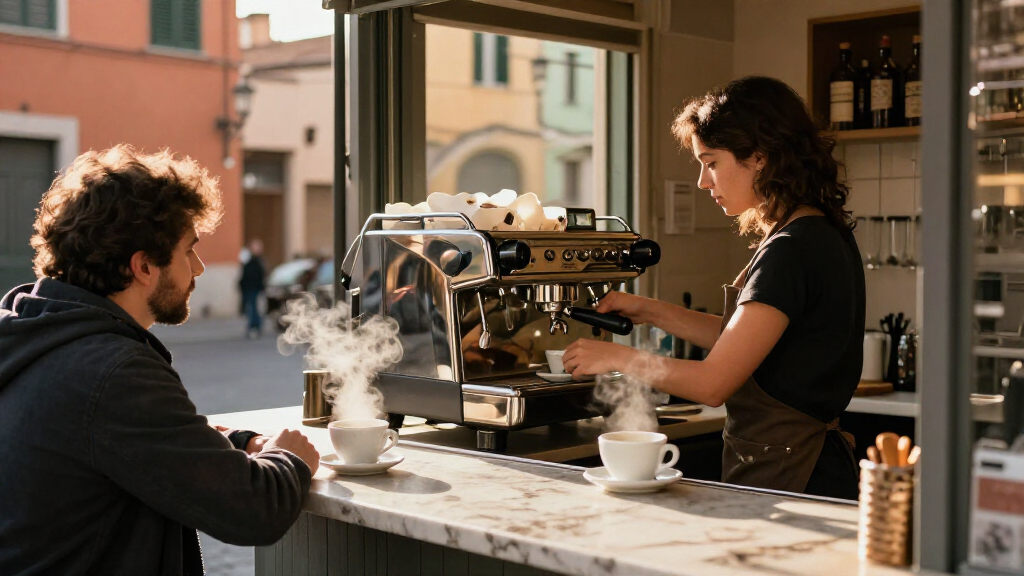
I compared these seven Italian-brand options by the kind of coffee they make and the work they ask from the owner. The main criteria were brewing format, level of control, grinder inclusion, milk preparation, ease of daily use, cleaning demands, and the usefulness of each machine’s features for its intended buyer. I treated moka pots as a distinct stovetop category rather than judging them as equivalent to pump-driven espresso machines.
The ranking gives the highest placement to options that balance capability with an approachable routine. The La Specialista Touch leads for its combination of grinding and guided preparation; the Gaggia Classic E24 and Diletta Bello+ follow for buyers who value manual control, with the Bello+’s additional temperature and shot tools better suited to experienced users. The Magnifica Duo ranks for convenience, the De’Longhi Classic Signature for a more focused semi-automatic setup, and the Bialetti and Primula for simple stovetop brewing. These are different roles, not interchangeable machines, so the best match depends on the drinks and workflow a buyer wants.
| Italian espresso machine | Type |
|---|---|
| De’Longhi La Specialista Touch | Semi-automatic espresso machine |
| Gaggia Classic E24 Semi-Automa | Semi-automatic espresso machine |
| Bialetti Moka Express Stovetop | Manual moka pot |
| Primula Classic Stovetop Espre | Manual moka pot |
| De’Longhi Magnifica Duo Fully | — |
| De’Longhi Classic Signature Es | — |
| Diletta Bello+ Semi-Automatic | — |
Factors to Consider When Choosing Italian Espresso Machines
Before choosing among Italian espresso machines, I would start with the morning routine you want, not the longest feature list. These broader tradeoffs can help you avoid paying for control you will not use—or choosing convenience that limits the drinks you want to make.
Choose the Brewing Format Before the Brand
A pump-driven espresso machine and a stovetop moka pot make different styles of coffee, even when both are associated with Italian coffee culture. A moka pot is compact and straightforward, but it does not produce pump espresso, so recipes and expectations should match the method. Semi-automatic machines give you a portafilter workflow and more control, while fully automatic models handle more of the preparation. A common mistake is buying a moka pot expecting café-style espresso or buying a manual machine expecting one-button convenience. Decide which drink you actually want in the cup before comparing accessories or finishes.
Be Honest About How Much Control You Want
Manual control can make espresso preparation more flexible, but it also creates more steps and more chances to adjust technique. Buyers who enjoy learning may value control over grind, dosing, tamping, and extraction; anyone who wants a quick, repeatable cup may prefer an automatic workflow. A built-in grinder can simplify the setup, though it also ties the grinder and brewer into one appliance rather than letting you choose them separately. PID controls and programmable preinfusion are useful only if you plan to learn what those adjustments do. Paying for advanced controls without wanting to use them can add complexity rather than improve your routine.
Count the Whole Setup, Not Just the Machine
A semi-automatic machine may need a grinder, scale, tamper, knock box, and space for beans and accessories. A model with an integrated grinder can reduce the number of separate devices, but it still needs room for preparation and cleaning. Measure counter depth as well as width, and check whether you can comfortably access the water tank and grounds area. Buyers often focus on the machine’s footprint and forget the space needed to work around it. A stovetop brewer takes less counter space, but it needs a compatible heat source and room to handle a hot pot safely.
Match Milk Features to the Drinks You Make
If you regularly make cappuccinos or lattes, pay attention to how milk is frothed and how much practice the process may require. A manual or adjustable frother can offer more control, but it asks you to steam and texture milk yourself. Automatic milk handling reduces effort, though it may give you less influence over texture and requires attention to cleaning the milk path. Buyers who mostly drink straight espresso may not benefit from paying for a more elaborate milk setup. Think about how many milk drinks you make on a typical day, since even a useful frother can become extra work if it is rarely used.
Plan for Cleaning and Routine Maintenance
Daily cleanup is part of the ownership experience, not an occasional chore. Portafilters, drip trays, steam wands, grinders, and automatic milk systems each have different care needs, so check the manufacturer’s maintenance instructions before settling on a format. A simpler stovetop brewer avoids many machine components but still needs washing and proper drying. Automatic features can save preparation time while adding parts or pathways that need regular cleaning. Consider who will maintain the machine and how much time you are willing to spend after each drink, not only how quickly it makes one.
Pay More for a Need, Not a Spec Sheet
Extra controls make sense when they solve a problem you actually have, such as wanting finer control over extraction or more repeatable temperature management. If you are new to espresso, a guided workflow or automatic brewing may help more than advanced adjustments. If you already enjoy refining a shot, features such as a PID or programmable preinfusion can support a more deliberate process. Do not treat a higher-feature machine as an automatic upgrade: added control can mean a steeper learning curve and more involved preparation. Choose the feature that changes your daily experience, then accept the tradeoffs attached to it.
Frequently Asked Questions
Does a moka pot count as an espresso machine?
A moka pot is a stovetop coffee maker, not a pump-driven espresso machine. It makes concentrated coffee using heated water and steam pressure, but the result differs from espresso brewed through a portafilter machine. That distinction matters for drink recipes, texture, and expectations around extraction. The Bialetti Moka Express and Primula Classic make sense if you want a simple stovetop method, not if you specifically want machine-brewed espresso. Choose a pump machine if that espresso style is your priority.
Should I choose a built-in grinder or buy a separate one?
A built-in grinder can make a setup simpler by combining two key steps in one appliance, which is useful when space and ease of use matter. A separate grinder gives you more freedom to choose or replace that part without changing the espresso machine. The tradeoff is extra counter space and another device to learn and clean. The La Specialista Touch is the clearest all-in-one option in this lineup, while the Gaggia Classic E24 and Diletta Bello+ suit buyers willing to build a more modular setup. Base the decision on your available space and interest in adjusting the process.
Is a semi-automatic machine a good choice for a first espresso setup?
It can be, if you are willing to practice grinding, preparing the portafilter, and learning how small changes affect a shot. A semi-automatic machine offers more involvement than the Magnifica Duo, which may appeal if the preparation is part of the enjoyment. The La Specialista Touch adds guided features and a grinder, while the Gaggia Classic E24 represents a more traditional hands-on route. For a first setup, account for the learning curve and any tools the machine does not include. If you want coffee with minimal decisions each morning, an automatic machine may suit you better.
Which features matter most if I mainly make milk drinks?
Start by checking how the machine froths milk and whether you are comfortable doing that step yourself. A manual or adjustable frother offers hands-on control, while an automatic approach can reduce effort but may involve more cleaning of milk-contact parts. Also think about how often you make milk drinks, since frequent use makes frothing convenience more valuable. The De’Longhi Magnifica Duo emphasizes an easier automatic routine, while the Classic Signature offers an adjustable frother for a more involved approach. If milk drinks are occasional, a simpler machine may be a better fit than paying for features you rarely use.
When is a premium semi-automatic machine worth choosing over an automatic one?
A premium semi-automatic machine is a better match when you want to shape the brewing process and are prepared to spend time learning it. Tools such as PID temperature control, a shot timer, and programmable preinfusion can support a more deliberate workflow, but they do not remove the need for preparation or technique. The Diletta Bello+ fits that control-focused role, whereas the Magnifica Duo puts more emphasis on convenience. If you value repeatable drinks at the press of a button, the automatic route may be more satisfying day to day. Choose the premium manual option for the process and control, not just its extra features.
Conclusion
For the strongest balance of guidance and hands-on espresso preparation, I recommend the De’Longhi La Specialista Touch as the best overall pick. The best value in this lineup’s different brewing styles depends on what you mean by espresso: choose the Bialetti Moka Express for a simple stovetop routine, or the Gaggia Classic E24 if you want a traditional pump-machine setup and are ready for more involvement. For a premium, control-focused choice, the Diletta Bello+ adds temperature and shot-management tools. Beginners who prioritize convenience should look at the De’Longhi Magnifica Duo, while the Primula Classic suits buyers seeking a straightforward stovetop alternative. If milk drinks are your focus and you want adjustable frothing, consider the De’Longhi Classic Signature. Choose by the workflow you want to repeat every day—not by the word “espresso” alone.