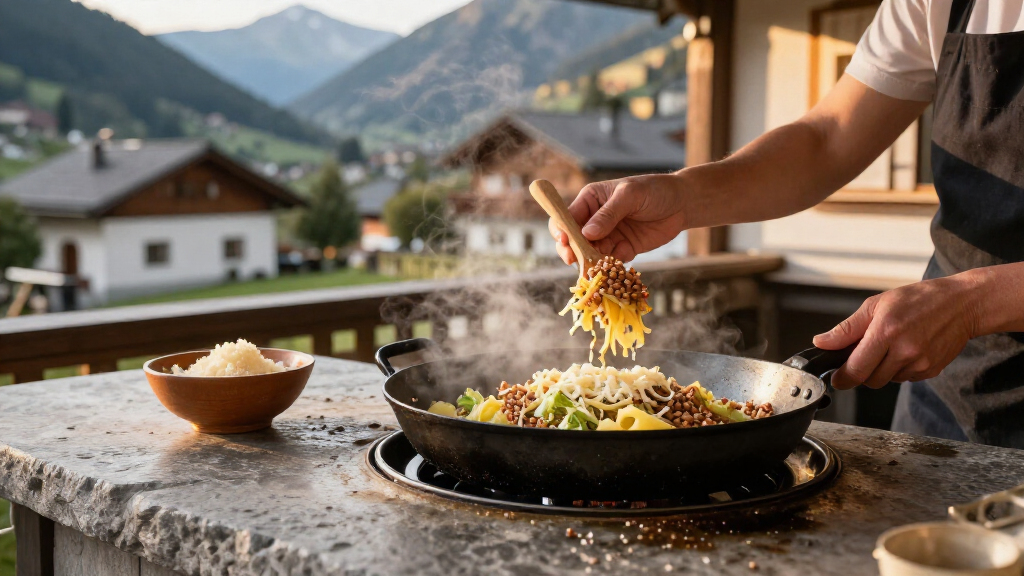
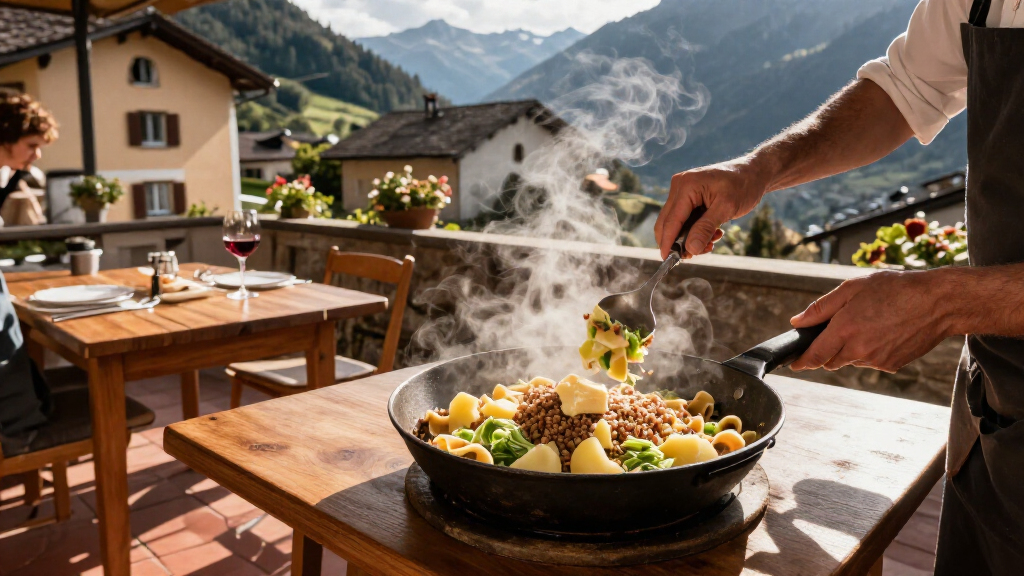
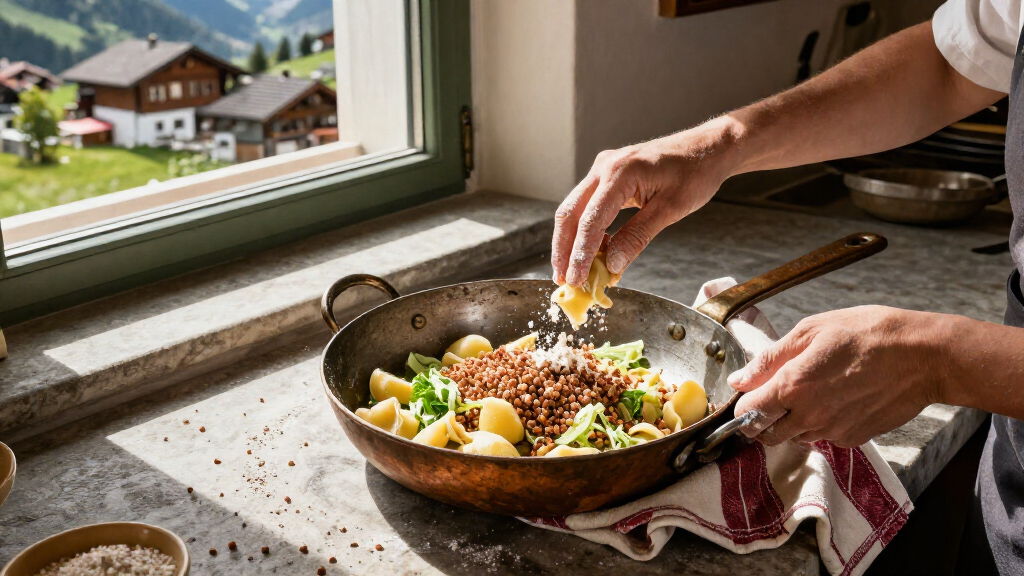
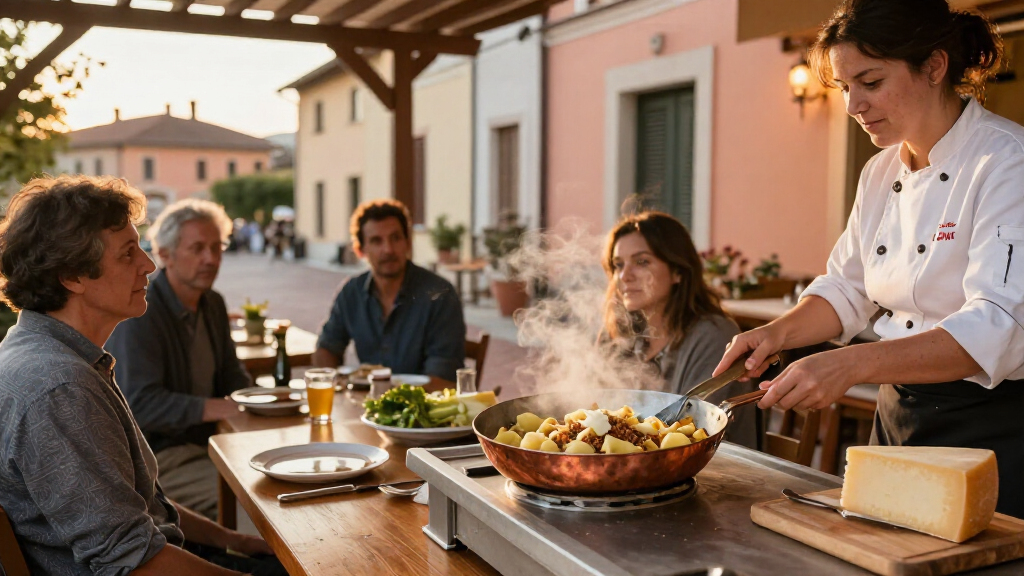
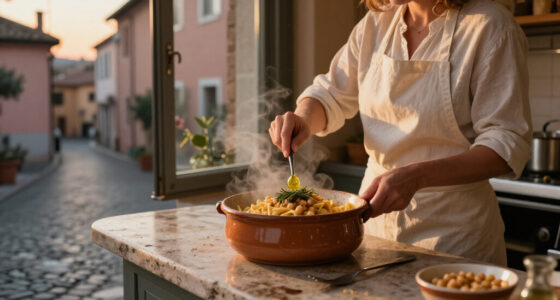
Pizzoccheri della Valtellina are short, sturdy ribbons made traditionally with buckwheat and wheat flour, cooked with potatoes and cabbage, then layered with Valtellina Casera DOP and garlic-scented butter. For a good home version, cook the vegetables and pasta together in stages, drain them well, and assemble everything while hot so the cheese softens without turning greasy.
A forkful of pizzoccheri della Valtellina brings together the earthy bite of buckwheat, sweet cabbage, soft potato, and cheese that melts into the folds. The dish comes from Valtellina, an Alpine valley in Lombardy, where those filling ingredients make a warming meal for cold-weather days.
This guide shows you what belongs in a classic bowl, why Teglio is closely tied to the dish, and how to cook a practical version at home. You’ll also learn what to look for in the pasta and cheese, how to adapt the greens, and why the familiar recipe is not automatically gluten-free.
If you find yourself in northern Lombardy, try pizzoccheri in Valtellina and notice how the sturdy ribbons hold their shape under cabbage and cheese. At home, you can make the same comforting combination with fresh or packaged pasta and a few careful steps.
At a glance
Pizzoccheri della Valtellina: How to Cook Them
Key insight
The buckwheat in traditional pizzoccheri gives the pasta its earthy flavor, but the usual addition of wheat flour means the pasta is not gluten-free.
Key takeaways
1
Traditional pizzoccheri use both buckwheat and wheat flour, so they are not gluten-free.
2
Valtellina Casera DOP is the classic cheese; Bitto is another local option.
3
Cook potatoes, cabbage, and pasta in stages so they finish tender together.
4
Drain well and layer the hot ingredients promptly so the cheese softens without becoming watery.
5
Pizzoccheri bianchi from the Chiavenna tradition are different from buckwheat-based Teglio-style pizzoccheri.
Step by step
1
Cook the Pasta and Vegetables in Stages for Better Texture
Cook pizzoccheri by timing the potatoes, cabbage, and pasta so each finishes tender at the same moment.
Pizzoccheri della Valtellina: Buckwheat Ribbons, Cabbage, and Cheese
Alpine table · Lombardy, Italy
Pizzoccheri della Valtellina
Buckwheat ribbons meet cabbage, potato, Valtellina Casera DOP, and garlic-scented butter in a warming dish from the Alpine valley of Valtellina.
Pasta base
2 floursBuckwheat + wheat
Classic cheese
CaseraValtellina Casera DOP
Historic home
TeglioIn the Valtellina valley
Gluten status
ContainsTraditional dough includes wheat
01 / The anatomy of a bowl
What makes it so hearty?
Each ingredient has a clear role: sturdy ribbons carry the vegetables, while local cheese and butter bring the layers together. The result is a complete, sustaining meal shaped by Alpine food traditions.
01 · Foundation
Earthy ribbons
Buckwheat gives the pasta its rustic, nutty character. Wheat flour is usually part of the dough too, so traditional pizzoccheri are not gluten-free.
02 · Substance
Potato + cabbage
Potatoes turn soft and filling; Savoy cabbage adds gentle sweetness. Short, flat ribbons hold their shape alongside both.
03 · Finish
Cheese + garlic butter
Valtellina Casera DOP softens between the hot layers. Butter scented with garlic brings everything together.
Key insight
Buckwheat is a gluten-free seed, but traditional pizzoccheri pasta usually combines it with wheat flour. Anyone who must avoid gluten needs a verified wheat-free recipe and careful cross-contamination control.
02 / Place & tradition
Why Teglio belongs in the story
Valtellina is an Alpine valley in Lombardy, northern Italy. Its mountain setting helps explain the combination of buckwheat, potatoes, cabbage, dairy, and butter: simple ingredients that make a warming, substantial meal.
Teglio is closely associated with the dish and is often described as its historic home. The name Pizzoccheri della Valtellina also has an EU Protected Geographical Indication (PGI) designation linking the recognized product to its place of origin.
A home-cooked bowl can follow the familiar regional style without matching every detail of a certified product. Check current product specifications and labeling rules before making claims about exact requirements.
03 / Build the balance
Choose ingredients with purpose
Start with the familiar regional combination. Home substitutions can work well, but each one shifts the flavor or texture.
Ingredient
Classic choice
Useful home adjustment
Pasta
Buckwheat and wheat ribbons
Packaged dried pizzoccheri; follow the package timing
Cheese
Valtellina Casera DOP
Bitto, or a semi-hard cheese that melts well
Greens
Savoy cabbage
Another cabbage or leafy green; adjust its cooking time
Finish
Butter and garlic
Use less butter for a lighter bowl
04 / Flavor balance
Why the layers work
A good bowl balances earthy pasta with sweet greens and rich dairy. These flavor cues are a guide to the dish, not measured nutritional values.
Buckwheat
Earthy · nutty
Cabbage
Mild · sweet
Potato
Soft · filling
Cheese + butter
Savory · rich
05 / Cook by timing
One pot, staged for texture
Time the potatoes, cabbage, and pasta so they finish tender together. Drain well and assemble promptly while everything is hot.
01Start
Soften potatoes
Cut into bite-sized pieces. Boil in salted water until they begin to soften.
02Add greens
Cook the cabbage
Add cabbage after the potatoes have started softening. Cook until tender, not limp.
03Finish the pot
Time the pasta
Add pizzoccheri according to its package or recipe timing. Stir gently to separate ribbons.
04Layer hot
Drain, cheese, butter
Drain well. Layer pasta and vegetables with cheese, then pour over garlic-scented butter.
06 / Serve & adapt
Keep the texture generous
Choose a good melt
Casera is the classic choice; Bitto is another local option. If neither is available, use a semi-hard cheese that melts well. A sharper cheese can overpower the buckwheat.
Assemble just before serving
Prepared components can be made ahead, but fully assembled pizzoccheri may turn dense as pasta absorbs moisture and the cheese sets. Layer everything while hot for a softer finish.
The bowl, in sequence
From valley pantry to fork
01Buckwheat ribbons
→
02Potato + cabbage
→
03Casera layers
→
04Garlic butter
What Makes Valtellina Pizzoccheri So Hearty?
Pizzoccheri della Valtellina are short, flat ribbons made with buckwheat and wheat flour, cooked with potatoes and cabbage, then finished with local cheese and butter. The pasta is more substantial than a delicate egg noodle, so it can stand up to vegetables and a generous, melting finish. That sturdy texture is part of what makes the dish feel like a full meal.
Buckwheat gives the ribbons their earthy, slightly nutty flavor. Despite its name, buckwheat is a seed, not a type of wheat; still, the traditional dough usually includes wheat flour too. For instance, a bowl made with a buckwheat-and-wheat pasta will have that deep, rustic taste, but it will not be safe for someone who must avoid gluten.
The other ingredients balance that flavor. Potatoes soften into creamy bites, cabbage brings a mild sweetness, and cheese adds savory depth. Garlic-scented butter ties the layers together. Think of it as a mountain pantry in one bowl: each ingredient is simple, but together they feel generous.
The pasta’s shape also has a practical purpose. The ribbons are cut into short strips, often several centimeters long, so you can lift them with a fork alongside a bit of potato and cabbage. If you buy dried pizzoccheri, look for flat, dark ribbons and cook them according to the package directions; fresh pasta may cook much faster.
Remember: Buckwheat gives pizzoccheri its character, but traditional buckwheat-and-wheat pasta contains gluten.
Products Worth Considering
Ring Outdoor Cam 4K Plus Battery Security Camera, 3-Pack, White
Ring Battery Doorbell (1st Gen), 2-Pack, Satin Nickel
Ring Floodlight Cam 2K Wired Security Camera, 3-Pack, Black
As an affiliate, we earn on qualifying purchases.
Why Teglio and the Alpine Valley Belong in Every Bowl
Valtellina pizzoccheri are tied to Teglio, a town in Lombardy often described as the dish’s historic home. The valley’s mountain setting helps explain the combination: buckwheat, potatoes, cabbage, dairy, and butter create sustaining food from ingredients suited to an Alpine table. The dish is not just pasta with toppings; it reflects a local way of cooking for cold weather.
Imagine arriving in Teglio on a chilly afternoon after walking through the valley. A steaming dish of short noodles, soft cabbage, and melted cheese makes sense after that walk in a way a light summer pasta might not. At home, the same logic works on a rainy evening: serve pizzoccheri as the main course, with a crisp salad to cut through the richness.
The name Pizzoccheri della Valtellina also has an EU Protected Geographical Indication, or PGI, designation. That designation links the recognized product to its place of origin and sets production requirements. A home-cooked bowl can follow the familiar regional style without being identical in every detail to a certified product, so check the current product specification and labeling rules before making claims about exact requirements.
You can find the dish well beyond the valley now, including packaged pasta for home kitchens. That convenience brings Valtellina flavors to a weeknight table, though the atmosphere changes: eating it in the valley connects the ingredients to the place around you. Either way, knowing where the dish comes from makes the cabbage, butter, and buckwheat feel like a deliberate combination rather than a random list.
Choose Pasta, Cheese, and Greens That Keep the Dish Balanced
Use buckwheat-and-wheat pizzoccheri, Valtellina Casera DOP, Savoy cabbage, and potatoes for a familiar regional-style bowl. Each ingredient has a job: the pasta brings earthy flavor, Casera melts into the layers, cabbage adds sweetness, and potatoes make the dish filling. You can adapt the recipe when you cannot find an ingredient, but the result will shift in flavor.
Valtellina Casera DOP is the classic cheese choice, a semi-hard cow’s-milk cheese from the valley. Bitto, another local cheese, may also appear, sometimes alongside Casera. If neither is available, choose a semi-hard cheese that melts well. That swap can be delicious, but it is a home variation rather than an exact regional version.
Savoy cabbage is a common green, with crinkled leaves that soften without disappearing into the pasta. Other cabbage varieties or leafy greens can work too. For instance, if you have tender greens in the refrigerator, add them near the end so they wilt rather than overcook. Expect a different flavor and texture from the classic cabbage version.
Ingredient
Classic choice
Useful home adjustment
Pasta
Buckwheat and wheat ribbons
Packaged dried pizzoccheri; follow the cooking time on the pack
Cheese
Valtellina Casera DOP
A semi-hard cheese that melts well
Greens
Savoy cabbage
Another cabbage or leafy green, added to suit its cooking time
Finish
Butter and garlic
Use less butter for a lighter bowl
Keep the balance in mind when you make substitutions. A mild, melty cheese will blend quietly, while a sharper one can dominate the buckwheat. Likewise, delicate greens need less cooking time than cabbage. Start with small adjustments, taste as you go, and let the pasta’s earthy flavor remain clear.
Cook the Pasta and Vegetables in Stages for Better Texture
Cook pizzoccheri by timing the potatoes, cabbage, and pasta so each finishes tender at the same moment. The potato needs time to soften, while fresh pasta may cook quickly; treating every ingredient as if it needs the same boil can leave you with mushy greens or underdone potatoes. A little staging keeps the pieces distinct.
Cut the potatoes into bite-sized pieces and bring them to a boil in salted water.
Add the cabbage once the potatoes have started to soften. Give the leaves enough time to become tender but not limp.
Add the pizzoccheri according to the package timing, or the recipe timing if you made fresh pasta. Stir gently so ribbons do not clump.
Warm the butter with garlic in a small pan while the pasta cooks. Let the garlic scent the butter, then remove it if you prefer a milder finish.
Drain carefully and layer hot pasta and vegetables with cheese, then pour the garlic butter over the top.
For example, when using dried pasta on a winter weeknight, start the potatoes first, then read the packet and time the cabbage and pasta around its stated cooking time. Fresh noodles can be more variable, so taste a ribbon rather than relying on the clock alone. You want a tender bite with enough structure to hold up when you layer the dish.
Drain the mixture well. Extra water can thin the melted cheese and make the finished bowl soupy instead of cohesive. Work while everything is hot: the heat softens the cheese and lets the butter settle over the ribbons. Keep the pan and serving bowls warm if you can, especially when you are cooking for several people.
Texture tip: Pizzoccheri should feel tender and sturdy, with cabbage and potato still recognizable in each forkful.
Serve Pizzoccheri Hot, and Plan Ahead Around the Cheese
Serve pizzoccheri as soon as you layer the hot pasta, vegetables, cheese, and butter. The warmth softens the cheese and brings the ingredients together, but the dish can become dense as it sits because the pasta absorbs moisture and the cheese firms. A quick trip from pot to table gives you the most inviting texture.
If you want to get ahead for dinner, prepare the vegetables and other ingredients in advance, then cook and assemble the pasta shortly before serving. For instance, wash and slice the cabbage earlier in the day, cut the potatoes, and measure the cheese and butter. When guests arrive, you can focus on cooking and layering instead of chopping at the last minute.
Because pizzoccheri are rich and filling, serve a moderate portion with a simple salad or lightly dressed vegetables. Crisp leaves, a little acidity, and a clean dressing give your palate a break from butter and cheese. In Valtellina, local wines make a natural regional pairing; if you choose wine, keep alcohol for adults and enjoy it responsibly.
For food safety, refrigerate leftovers promptly in a covered container and keep your refrigerator at 40°F (4°C) or below. Reheat leftovers until steaming hot throughout; a splash of water can loosen the pasta if the cheese has tightened. Refrigerate perishable food within two hours, or within one hour when the temperature is above 90°F (32°C).
Consider allergens before serving. Traditional pasta contains wheat, and Casera and Bitto are dairy cheeses. If someone at your table has celiac disease or a serious allergy, check every label and avoid cross-contact; a casual pasta substitution may not be enough.
Know When a Variation Still Tastes Like Valtellina
You can adapt pizzoccheri to the ingredients you have, but buckwheat pasta, potatoes, greens, local-style cheese, and butter give the dish its recognizable shape. Traditional home recipes vary in their proportions, and cooks may use another cabbage, change the cheese blend, or reduce the butter. The result still belongs to the same family of comforting pasta dishes, even as each kitchen leaves its mark.
Suppose your market has no Valtellina Casera DOP. A semi-hard cheese that melts well can help you make a satisfying dinner, though it cannot reproduce the exact local flavor. Or perhaps you prefer a less rich meal: use a lighter hand with butter and serve extra greens. You will change the balance, so taste the cheese and pasta together before adding more.
One variation needs special care: gluten-free cooking. Buckwheat itself is gluten-free, but traditional pizzoccheri usually combine it with wheat flour. A wheat-free version needs a suitable pasta recipe and careful prevention of cross-contamination from flour, boards, colanders, and utensils. If you are cooking for someone with celiac disease, check labels and kitchen practices rather than relying on the word “buckwheat.”
Also keep pizzoccheri distinct from pizzoccheri bianchi, or “white pizzoccheri,” commonly associated with Chiavenna. They are a different pasta tradition, made with white flour rather than the buckwheat-based ribbons associated with Teglio-style pizzoccheri. If you see the name on a menu during a Lombardy trip, ask what flour the kitchen uses; the answer may lead you to a different but equally local bowl.
Frequently Asked Questions
Are pizzoccheri gluten-free?
Traditional pizzoccheri are usually not gluten-free because the pasta combines buckwheat flour with wheat flour. Buckwheat is a gluten-free seed, but that does not make the finished pasta gluten-free. For celiac disease, use a verified wheat-free pasta and prevent cross-contact.
What does buckwheat pasta taste like?
Buckwheat pasta has an earthy, nutty flavor that pairs especially well with sweet cabbage, potatoes, butter, and cheese. Think of the difference between a mild white noodle and a darker grain with a more pronounced, toasty taste. That character is why a strongly flavored cheese can change the balance of the bowl.
Which cheese should I use for pizzoccheri?
Valtellina Casera DOP is the classic choice, and some versions also use Bitto. If you cannot find either, use a semi-hard cheese that melts well and treat it as a home variation. Taste it first; a very sharp cheese may overpower the buckwheat.
Can I use something besides Savoy cabbage?
Yes. Other cabbage varieties or leafy greens can work, though the flavor and texture will change. Add tender greens later than potatoes so they wilt without turning limp. For a familiar bowl, choose greens that can hold their shape beside the pasta.
Can I make pizzoccheri ahead?
You can prepare the cabbage, potatoes, cheese, and butter ahead, but assemble the cooked pasta shortly before serving. Fully assembled pizzoccheri tend to become dense as the noodles absorb moisture and the cheese sets. Refrigerate leftovers promptly and reheat until steaming hot throughout.
What is the difference between pizzoccheri and pizzoccheri bianchi?
Pizzoccheri bianchi are a different pasta tradition, commonly associated with Chiavenna and made with white flour. The short, buckwheat-based ribbons described here are associated with Teglio and Valtellina. If you see both on a Lombardy menu, ask which flour the kitchen uses.
Conclusion
For a bowl that tastes rooted in Valtellina, start with buckwheat ribbons, potatoes, cabbage, and Casera, then cook and layer everything while hot. Keep the pasta sturdy and the butter fragrant; that simple balance is what makes a mountain meal so satisfying.
When you lift a forkful, look for a little of everything: earthy noodle, soft potato, sweet cabbage, and melting cheese. That is Valtellina in a bowl.