TL;DR

Get kitchen staples and gadgets delivered free — and shop member deals
- Fast, free delivery on millions of items
- Access to Prime Big Deal Days deals on October 6–7
- Prime Video, Amazon Music and more included
Choosing a pizza oven for home is about matching the oven to how you cook, where you’ll use it, and how much tending you’ll tolerate — not chasing the highest advertised temperature. Fuel type, indoor/outdoor rating, heat recovery, and total cost of ownership (peel, fuel, stand, cover) determine whether the oven becomes a weekly ritual or garage clutter. Match the oven to your pizza style: Neapolitan needs 750–900°F blasts, while pan and New York-style pies bake better at lower, steadier heat.
The pizza oven that cooks a perfect Neapolitan pizza in 90 seconds and the one that gently bakes a thick Detroit-style pan pie are not the same machine. Yet most shopping guides treat them as if they were, ranking ovens by a single number: maximum temperature. That number tells you almost nothing about whether your crust will scorch while your mozzarella stays cold.
I’ve stood in enough Naples pizzerias — where the verace pizza napoletana tradition was born and where ovens run around 850°F — to know that even professionals care less about peak heat than about how evenly the floor bakes and how fast the oven recovers between pizzas. That’s what actually separates a great oven from a disappointing one.
So here’s a useful article built around what matters when choosing a pizza oven for home: fuel, placement, heat control, capacity, preheating, portability, and the costs that hide behind the sticker price. By the end, you should be able to choose an oven with confidence — and skip the ones that would spend more time stored than firing.
Maximum advertised temperature matters less than even surface heating, fast heat recovery, and independent top/bottom heat control.
Choose fuel by lifestyle: electric for indoor simplicity, gas for fast weeknight control, wood for smoke and tradition — and never run an outdoor oven indoors.
Match the oven to your pizza style: Neapolitan wants 750–900°F and 60–90 second bakes; pan and New York-style pizzas need 450–550°F and longer cooking.
The stone or steel lags behind the air temperature — budget for an infrared thermometer (under $30) and check the surface, not the ready-light.
Compare total ownership cost: peel, stand, cover, fuel, thermometer, and serviceable parts can double the first-year price of a budget oven.
Choosing a Pizza Oven for Home: What Actually Matters
The oven that bakes a Neapolitan pizza in 90 seconds and the one that gently cooks a Detroit pan pie are not the same machine. Forget the peak-temperature arms race — fuel, placement, heat recovery, and hidden costs decide whether your oven becomes a weekly ritual or garage clutter.
Electric, Gas, or Wood: Which Fits Your Real Life?
The best fuel is the one you’ll actually use on a Tuesday night. Electric is the subway — reliable, no decisions. Gas is the car — flexible and quick. Wood is the bicycle — romantic, but sometimes more effort than the trip justifies. Never run an outdoor oven indoors: outdoor gas and wood models produce carbon monoxide.
Electric
Plug in, dial up, cook indoors if rated. Simplest path for beginners and small kitchens.
Gas
High heat fast with a twist of a knob. Adjustable, repeatable, and forgiving for beginners.
Wood
Smoke flavor and the ritual that made Naples famous. Demands fire management the entire cook.
Multi-fuel
Some deliver on the promise of everything — at a price in cost, weight, and cleaning.
| Fuel | Best for | Main tradeoff |
|---|---|---|
| Electric | Indoor use, small kitchens, beginners | Lower ceiling heat in household models |
| Gas | Fast weeknight pizza, precise control | Outdoor use only; propane or gas line |
| Wood | Smoke flavor, Neapolitan style, tradition | Fire management, storage, more cleanup |
| Multi-fuel | Tinkerers who want options | Higher cost and complexity |
Why Maximum Temperature Is the Least Important Number
Your pizza cooks from two directions: the floor (stone or steel) browns the base while radiant chamber heat melts toppings and blisters the cornicione. An oven that claims 950°F but drops 200 degrees the moment cold dough touches the stone leaves you waiting ten minutes between pies. Independent top and bottom controls are the sleeper feature — a dial doing the job a pizzaiolo does with a turning peel.
Check heat recovery
Can it cook three pizzas back-to-back without the temperature sagging while guests hover, hungry and unimpressed?
Check surface evenness
Is one side of the stone hotter than the other? Uneven floors mean one half of every pie bakes faster.
Check independent control
Are top and bottom heat adjustable separately? That’s what prevents a charred base with cold mozzarella.
Trust a thermometer, not a light
An oven that “reads ready” can still produce pale, underbaked bases. Aim an infrared gun at the stone, not the air.
Match the Oven to the Pizza You Actually Eat
Buying a blistering-hot oven for thick pan pizza is like buying a race car for school drop-off: technically possible, wrong tool.
| Pizza style | Temperature | Bake time | Capacity note |
|---|---|---|---|
| Neapolitan | 750–900°F | 60–90 seconds | Turn frequently — flame-side heat is stronger |
| New York–style | 500–600°F | 5–8 minutes | Steady, moderate heat beats raw blast |
| Pan (Detroit / Sicilian) | 450–550°F | 6–12 minutes | Needs even, gentle floor heat |
The Friday-Night Test
Scenario: pizza every Friday for four people. A single-pizza oven means 40 minutes of staggered cooking while the first eaters finish before the last are served. A larger floor — or fast recovery — turns that into a flowing 15-minute affair. That’s the difference between an oven you love and one you resent.
“Room-temperature dough, modest sauce, and a hot surface beat expensive equipment every time. A cold, wet dough dragged from the fridge will underperform in any machine.”
Dough, toppings & thickness matter as much as the ovenA 5-Step Process to Choose Without Regret
Choose methodically, in the order the decisions actually matter.
Pick your fuel
Electric indoors, gas for weeknights, wood for ritual. Start simple; add wood later if romance calls.
Fix your placement
Indoor or outdoor rating is safety, not fine print. Stable heat-resistant surface, clearance, weather cover.
Match pizza style
750–900°F blasts for Neapolitan; 450–550°F steady heat for pan and New York–style pies.
Test recovery & control
Even floor, fast bounce-back, independent top/bottom dials. Verify with an IR thermometer.
Price total ownership
Peel, stand, cover, fuel, thermometer, serviceable parts — then buy with confidence.
The Sticker Price Is Only the Beginning
Accessories and upkeep can double the first-year cost of a budget oven. Compare totals, not price tags — and check whether the burner, stone, and other parts are serviceable.
Peel & Thermometer
A peel that fits the oven mouth and an infrared gun (under $30) make a noticeable difference in results.
Stand & Cover
Heat-resistant surface, stable stand, and weather protection for outdoor models — never an unprotected wooden table.
Fuel & Parts
Propane, wood storage, and replacement stones or burners. Check how the cooking surface is cleaned.
Electric, Gas, or Wood: Which Fuel Fits Your Real Life
The best fuel for a home pizza oven is the one you’ll actually use on a Tuesday night. Electric ovens are the simplest: plug in, dial up, cook indoors if the model is rated for it. The tradeoff is that household electric models often top out lower than outdoor ovens, which matters if your dream is a leopard-spotted Neapolitan crust. Gas hits high heat fast with a twist of a knob — adjustable, repeatable, and forgiving for beginners. Wood delivers the smoke and ritual that made Naples famous, but it demands stacking, lighting, and feeding a flame for the entire cook.
Think of it like commuting. Electric is the subway: reliable, no decisions. Gas is the car: flexible and quick. Wood is the bicycle: wonderful, romantic, and sometimes more effort than the trip justifies after a long day.
Multi-fuel ovens promise everything, and some deliver. But that flexibility usually adds cost, weight, and one more thing to clean. If you’ve never cooked with wood before, honest advice: start with gas or electric, learn dough handling, and add wood later if the romance calls.
| Fuel | Best for | Main tradeoff |
|---|---|---|
| Electric | Indoor use, small kitchens, beginners | Lower ceiling heat in household models |
| Gas | Fast weeknight pizza, precise control | Outdoor use only; needs propane or gas line |
| Wood | Smoke flavor, Neapolitan style, tradition | Requires fire management, fuel storage, more cleanup |
| Multi-fuel | Tinkerers who want options | Higher cost and complexity |
Indoor and outdoor ovens are not interchangeable. Use each only in the setting specified by its manufacturer — running an outdoor gas or wood oven inside risks carbon monoxide exposure.
As an affiliate, we earn on qualifying purchases.
Why Maximum Temperature Is the Least Important Number on the Box
A pizza oven’s advertised maximum temperature does not guarantee an evenly cooked pizza. What matters is whether the oven heats its cooking surface evenly and recovers quickly after each pizza goes in. An oven that claims 950°F but loses 200 degrees the moment cold dough touches the stone will leave you waiting ten minutes between pizzas while guests hover, hungry and unimpressed.
Here’s the physics, simply: your pizza cooks from two directions. The floor (stone or steel) browns the base; the chamber’s radiant heat melts toppings and blister the cornicione — the puffy rim, in Neapolitan terms. A great oven balances both. A mediocre one gives you a charred bottom and pale top, or vice versa.
That’s why independent top and bottom heat controls are the sleeper feature of modern ovens. In Naples, a pizzaiolo manages this by moving the pie closer to the flame with a turning peel. At home, a dial does the same job with far less skill required.
Buy an infrared thermometer — usually under $30 — and aim it at the stone, not the air. The stone lags well behind the chamber temperature, sometimes by 10–20 minutes of preheating. This one habit will improve your pizza more than any premium oven upgrade.

- Check heat recovery: can the oven cook three pizzas back-to-back without sagging?
- Check surface evenness: is one side of the stone hotter than the other?
- Check control: are top and bottom heat adjustable separately?
- Trust a thermometer over the oven’s ready-light.
Match the Oven to the Pizza You Actually Want to Eat
The right oven depends on the pizza style you cook most often. Neapolitan-style pies — thin, soft-centered, with San Marzano DOP tomato and fior di latte — want 750–900°F and a 60–90 second bake. New York-style and pan pizzas, from a Sicilian sfincione to a Detroit square, need lower temperatures (450–550°F) and longer bakes, often 6–12 minutes. Buying a blistering-hot oven for thick pan pizza is like buying a race car for school drop-off: technically possible, wrong tool.
Capacity follows the same logic. A compact oven that fits a 10-inch pie suits one or two people beautifully. Host a family and you’ll want a larger surface, because a bigger floor makes launching and turning easier — cramped ovens are where beginners fold pizzas into accidental calzones.
Scenario: you make pizza every Friday for four people. A single-pizza oven means 40 minutes of staggered cooking while the first eaters finish before the last are served. A larger floor, or fast recovery, turns that into a flowing 15-minute affair. That’s the difference between an oven you love and one you resent.
Also remember that dough, toppings, and thickness affect results as much as the oven does. A cold, wet dough dragged from the fridge will underperform in any machine. Room-temperature dough, modest sauce, and a hot surface beat expensive equipment every time.
Indoor or Outdoor: Placement Rules That Keep You Safe (and Legal)
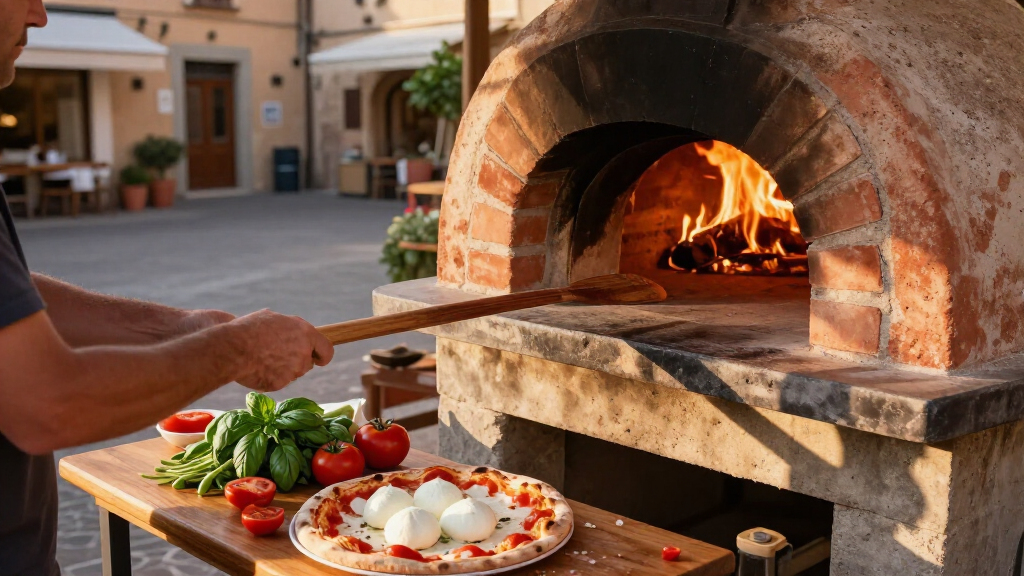
Only use a pizza oven in the setting its manufacturer approves — and that rating isn’t fine print, it’s safety. Outdoor gas and wood ovens produce carbon monoxide and must never run indoors, in a garage, or under a covered porch without the clearances the manual specifies. Indoor-rated electric countertop ovens are the exception, designed and certified for kitchen use.
Outdoor models need three things: a stable, heat-resistant surface (stone, metal stand, or concrete — never a wooden table without protection), clearance from buildings and combustible materials, and weather protection. Check your manufacturer’s minimum distances; they exist because heat radiates further than most people expect.
Measure before you buy. The oven’s footprint is only part of it — add required clearances, fuel storage (a propane tank needs its own sheltered spot), and somewhere to keep the peel, cover, and accessories when not in use. An oven that dominates your patio may get evicted to the shed, and ovens in sheds don’t make pizza.
Portability deserves honest scrutiny too. A light portable oven is tempting for camping and tailgating, but weigh it against cooking area, stability, and wind sensitivity. A gusty evening can drop a lightweight oven’s temperature dramatically or, worse, tip a lit one. If you’ll move it often, look for a carry case, latching fuel door, and a low center of gravity.

Follow the manufacturer’s installation and safety directions exactly — clearances, surfaces, and fuel handling aren’t suggestions. When in doubt, contact the manufacturer before first fire-up.
The Hidden Costs: What a Pizza Oven Really Costs to Own
The sticker price of a pizza oven is rarely the full price. To choose an oven honestly, add up the accessories and fuel before you decide what ‘affordable’ means. A $300 oven that needs a $100 stand, $40 cover, $30 peel, $25 thermometer, and ongoing propane can cost double its price in year one.
Here’s the realistic shopping list beyond the oven itself:
- Peel — correctly sized to your oven’s mouth; a 12-inch peel in an 8-inch opening is useless
- Turning peel — smaller, for rotating the pie mid-bake
- Infrared thermometer — for checking stone temperature
- Stand or heat-safe surface — if not included
- Weatherproof cover — outdoor models
- Fuel — propane refills, hardwood, or pellets
- Replacement stone or burner — check whether parts are serviceable before buying
Upkeep matters as much as purchase. Ask how the cooking surface is cleaned (most stones need dry brushing, never soap and water), whether the burner is serviceable, and how available replacement parts are. A stone that cracks in year two and can’t be replaced turns your oven into a planter.
Finally, the honesty test: an oven that takes 45 minutes to set up and 30 minutes to clean will not get used, no matter how good it is. A simpler oven that gets used weekly beats an elaborate one used twice a year. When setup and cleanup are easy, pizza night happens. When they’re a chore, delivery wins.

A 5-Step Process to Choose Your Oven Without Regret
Here’s how to choose an oven methodically, in the order the decisions actually matter. Work through these five steps and you’ll narrow hundreds of models down to two or three that genuinely fit.
- Decide where it lives. Indoor kitchen or outdoor patio? This single choice eliminates roughly half the market immediately.
- Pick your fuel. Match it to your tolerance for tending: gas for convenience, wood for flavor and ritual, electric for indoor simplicity.
- Define your pizza style. Neapolitan demands high heat; pan and NY-style need lower, longer bakes. Write down your top two styles.
- Check recovery and controls. Read reviews specifically for back-to-back pizza performance and independent top/bottom heat control.
- Price the whole package. Oven + accessories + first year of fuel. Compare that total across your finalists.
Before buying, verify current model availability, prices, safety certifications, and warranty terms — these change frequently, and advertised temperatures or cook times may not reflect typical results. According to madtasting.com’s shopping guidance, performance claims deserve the same skepticism you’d give any appliance marketing: look for third-party reviews and consistent user reports rather than the box’s boldest number.
One last beginner tip: reliable temperature control and straightforward operation will produce better pizza than the hottest or most traditional model. The pizzaioli of Naples spent years learning fire management. You shouldn’t need to.
Frequently Asked Questions
Which is better for home use: electric, gas, or wood-fired?
It depends on location, convenience, and how much fire management you want. Electric suits indoor kitchens and beginners; gas offers quick, adjustable outdoor heat; wood adds smoke and tradition but needs active tending. Multi-fuel ovens offer flexibility at added cost and complexity.
Can I use a pizza oven indoors?
Only if the specific model is designed and certified for indoor use — most are compact electric countertop units. Outdoor gas and wood ovens produce carbon monoxide and should never be operated inside homes, garages, or enclosed spaces.
How hot does a home pizza oven need to get?
It depends on your pizza style. Neapolitan-style pizzas benefit from roughly 750–900°F with short 60–90 second bakes, while New York-style and pan pizzas bake better at 450–550°F for 6–12 minutes. Compare usable temperature range and heat control, not just the maximum figure.
How long does preheating take?
It varies by oven, fuel, weather, and cooking surface — and the stone or steel typically needs longer than the air inside the chamber, sometimes 10–20 minutes more. Use an infrared thermometer aimed at the cooking surface to confirm readiness rather than trusting an indicator light.
What accessories do I actually need?
A correctly sized pizza peel is the first priority — measure your oven’s opening before buying. A turning peel, a dry brush for the stone, and an infrared thermometer make cooking noticeably more consistent. Add a weatherproof cover and stable stand for outdoor models.
How do I avoid burning the base or toppings?
Let the cooking surface fully reach temperature, use top/bottom heat controls if your oven has them, and turn the pizza during baking — heat is usually stronger near the flame or element. Fast-cooking pizzas almost always need at least one rotation.
How much should I spend on a home pizza oven?
Compare total ownership cost — oven plus peel, stand, cover, fuel, and thermometer — against how often you’ll realistically use it. A simpler oven that fires up weekly delivers better value than an elaborate one whose setup and cleanup discourage you from using it at all.
Conclusion
If you remember one thing: choose an oven for the pizza you actually cook and the effort you’ll actually make, not the biggest number on the box. Fuel that fits your routine, a surface that heats evenly, controls you can adjust mid-bake, and easy cleanup will put real pizza on your table for years — while a headline temperature claim never cooked anything.
Picture your first Friday night with it: dough at room temperature, stone verified hot with a quick infrared check, pizza launched, turned once, pulled in 90 seconds with a blistered rim worthy of a Naples side street. That evening starts with the decision you make at the checkout page. Make it count.

Fall Picks
fall essentials
As an affiliate, we earn on qualifying purchases.