TL;DR

Get kitchen staples and gadgets delivered free with Prime
- Fast, free delivery on millions of items
- Prime Video, Amazon Music and more included
- Member-only deals all year
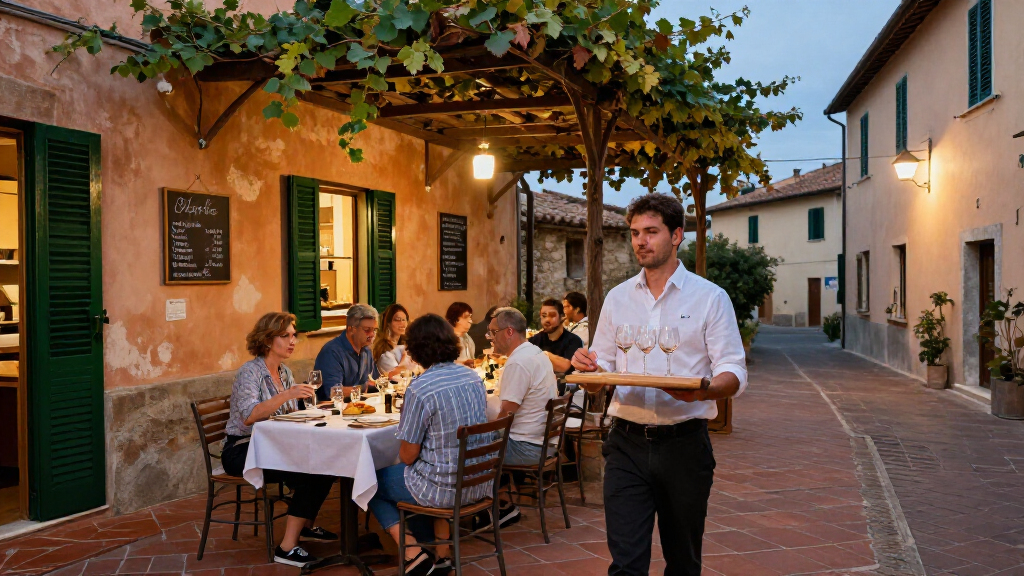
Tuscany has 158 establishments in Slow Food Editore’s 2027 Osterie d’Italia guide, second nationally behind Piedmont’s 169. It has 26 Chiocciola awardees, tied for third place, while Siena leads the region’s provincial count with six.
Tuscany has 158 establishments in the 2027 edition of Osterie d’Italia, placing it second among Italy’s regions for the number of traditional eateries featured, according to figures announced at the guide’s regional presentation in Florence. The region has 26 Chiocciola (Snail) distinctions, ranking third alongside Emilia-Romagna and Puglia.
The figures were presented at the headquarters of Tuscany’s regional tourism promotion agency. Piedmont leads the national count with 169 establishments, while Campania is third with 155. For the Chiocciola distinction, Campania leads with 34 awardees, followed by Piedmont with 31. Tuscany shares third place at 26 with Emilia-Romagna and Puglia.
Within Tuscany, Siena has the highest provincial count, with six Chiocciola-awarded eateries. Florence and Lucca follow with four apiece. The guide’s recognition covers more than a regional ranking: the Chiocciola is awarded to establishments whose cooking, hospitality and overall approach to dining reflect Slow Food’s philosophy, including quality, sustainability and ties to local communities.
A separate national award, Dispensa in Osteria (“The Osteria Pantry”), went to Roberta Polloni of Casa e Ciliegie in Loro Ciuffenna, near Arezzo. The report describes the restaurant as operating from a stone farmhouse and using home-produced, locally sourced and sustainable ingredients. It also makes its own cheeses and bread baked in a traditional wood-fired oven.
What the Rankings Show
The counts put Tuscany among the regions with the largest presence in a guide focused on traditional Italian eateries, while the Chiocciola figures provide a separate measure of recognition under Slow Food’s criteria. The distinction is not simply a tally of restaurants: according to the source report, it considers cuisine, hospitality and an establishment’s relationship with its community, alongside quality and sustainability.
For readers choosing where to eat, the results offer a guide to places recognized for those qualities, while the provincial figures show that the awardees are distributed across Tuscany rather than concentrated only in Florence. Siena leads locally, with establishments also listed in provinces including Arezzo, Grosseto, Livorno and Lucca. The ranking may also be relevant to regional tourism, although the source report does not provide visitor or economic-impact data.
Products Worth Considering

Dyson Supersonic Travel Hair Dryer

Bose Lifestyle Ultra Soundbar and Ultra Subwoofer Bundle

Philips Hue Festavia 65-Foot Smart LED String Lights, 250 Color-Changing Mini LEDs
As an affiliate, we earn on qualifying purchases.
How the Guide Measures Osterie
Osterie d’Italia is a food guide published by Slow Food Editore. The 2027 edition’s regional figures were announced at a presentation in Florence on November 9, 2026, according to The Florentine. The reported national rankings compare the number of establishments included in the guide and the number that receive the Chiocciola distinction.
The two figures should not be confused: 158 is Tuscany’s total number of listed establishments, while 26 is its number of Chiocciola awardees. The guide’s stated award criteria connect dining with sustainability and local community, but the source report does not give a full scoring method or explain how establishments are assessed. It identifies the ranking and award results, rather than claiming that the counts measure every traditional eatery in each region.
“The Snail distinction recognizes establishments whose cuisine, hospitality and overall approach to dining reflect Slow Food’s philosophy.”
— The Florentine, describing the Chiocciola distinction
Limits of the Published Figures
The reported figures do not include a year-to-year comparison, so it is not clear whether Tuscany gained or lost places in the guide or how its Chiocciola count changed. The source also does not detail the selection process, assessment criteria beyond the broad description of the distinction, or the complete national totals across all regions.
The rankings refer to establishments featured in the guide, not to a census of every osteria operating in Italy or Tuscany. No information was provided about the number of applicants, how restaurants are reviewed, or the wider economic effect of the recognition. Those points cannot be established from the announcement alone.
The 2027 Guide’s Listings
The next step for readers is to consult the 2027 Osterie d’Italia guide for its full listings and establishment information. The source report provides Tuscany’s headline totals, the leading provincial counts and the special award recipient, but does not state when the guide will go on sale or whether further regional presentations are planned.
Any fuller assessment of changes in Tuscany’s standing will require comparable figures from earlier editions. Until those are available, the confirmed picture is the 2027 guide’s ranking: Tuscany is second by total listings and tied for third by Chiocciola awards.
Key Questions
How many Tuscan establishments are in the 2027 guide?
The 2027 Osterie d’Italia guide lists 158 establishments in Tuscany, according to figures reported at the regional presentation.
Which region ranks first for the number of listed eateries?
Piedmont ranks first, with 169 establishments. Tuscany is second with 158, followed by Campania with 155.
How many Tuscan eateries received the Chiocciola distinction?
Twenty-six Tuscan establishments received the Chiocciola distinction. Tuscany shares third place nationally with Emilia-Romagna and Puglia.
Which Tuscan province has the most Chiocciola awardees?
Siena leads with six. Florence and Lucca each have four awardees, according to the reported provincial breakdown.
Who received the Dispensa in Osteria award?
The national award went to Roberta Polloni of Casa e Ciliegie in Loro Ciuffenna, near Arezzo. The report highlights the establishment’s locally sourced ingredients and production of its own cheeses and wood-fired bread.
Source: theflorentine.net