
TL;DR

Get kitchen staples and gadgets delivered free — and shop member deals
- Fast, free delivery on millions of items
- Access to Prime Big Deal Days deals on October 6–7
- Prime Video, Amazon Music and more included
Fresh egg pasta needs just flour and eggs — the classic Bolognese ratio is one 100-gram egg per 100 grams of flour — rested for 30 minutes, then rolled progressively through a machine to setting 6 or 7. From one dough you cut tagliatelle (about 7 mm wide), pappardelle (2–3 cm), or leave sheets whole for lasagne. This guide covers dough, rolling technique, cutting, drying, and safe storage.
The first time you turn a crank and watch a rough ball of dough emerge from steel rollers as a silk sheet, something clicks. That’s the moment most home cooks get hooked on fresh pasta — and it usually happens on a weekend, because weekday evenings don’t leave room for dough that needs resting, rolling, and cutting by hand.
This is your playbook for that weekend. You’ll make one classic egg pasta dough from Emilia-Romagna, the region that gave the world tagliatelle, and turn it into three shapes: tagliatelle (ribbons about 7 mm wide), pappardelle (broad 2–3 cm strands), and sfoglie — the sheets for lasagne alla bolognese.
No pasta machine yet? A rolling pin works, but the machine gives you the uniform thinness that ragù clings to. Either way, by Sunday dinner you’ll have pasta that beats anything from a dried box — and the know-how to repeat it whenever you want.
Use the Bolognese ratio of 1 medium egg (about 50 g) per 100 g of ’00’ flour, kneaded 8–10 minutes and rested at least 30 minutes before rolling.
Laminate the dough 3–4 times at the widest setting before stepping down one notch at a time; stop at setting 6–7 for tagliatelle and pappardelle, 5–6 for lasag…
Match width to sauce weight: tagliatelle (7 mm) for ragù alla bolognese, pappardelle (2–3 cm) for chunky braises like wild boar, uncut sheets for layered lasag…
Fresh egg pasta cooks in 90 seconds to 3 minutes — pull it a minute early and finish it in the sauce; refrigerate nests up to 2 days or freeze without thawing.
Never wash the pasta machine with water; clean with a dry brush and pull trapped dough out with a scrap sheet.
The Pasta Machine Weekend
One dough from Bologna — flour and eggs in a strict 1:2 ratio — becomes tagliatelle, pappardelle, and lasagne sheets. Rest it, laminate it, roll it to setting 6–7, and by Sunday dinner you’ll have pasta that beats anything from a dried box. This is your playbook for that weekend.
One Recipe, Three Shapes
Fresh egg pasta is flour and eggs, nothing more. The Bolognese standard — one medium egg per 100 grams of soft-wheat flour ’00’ — gives a dough soft enough to roll thin without snapping back. Mound the flour, hollow a well, crack in the eggs, and beat with a fork while pulling in flour from the walls. Knead until it feels like a firm earlobe, then wrap and rest: this relaxes the gluten so the dough rolls instead of fighting you.
Rolling Without Tearing: The Machine Sequence
Pass the dough through progressively narrower settings — start at the widest, fold and repeat, then step down one notch at a time without folding. The sheet should be translucent enough to read newsprint through — the test Italian grandmothers actually use.
Divide & Flatten
Cut the rested dough into 4 pieces; keep the others covered so they don’t dry out.
Setting 0–1 / WidestLaminate 3–4×
Fold the strip in thirds like a letter, turn 90°, pass again. This replaces hand-kneading.
Same wide settingStep Down
Stop folding. One pass per notch, dusting with flour only if the sheet feels sticky.
One notch at a timeFinish & Test
At target thickness, lay sheets on a floured towel. If it tears, go back one setting and retry.
Setting 5–7 / 1–1.5 mmWhich Cut for Which Sauce
Tagliatelle is the narrow ribbon, pappardelle its wide cousin, lasagne sheets the uncut rectangle. Width follows the weight of the sauce — narrow ribbons grab finely minced ragù, wide strands stand up to chunky braises. It isn’t tradition for its own sake; it’s physics.
The official measure: in 1972 the Bologna Chamber of Commerce deposited an official tagliatelle width of 8 mm cooked — jokingly the 12,270th part of the Torre degli Asinelli tower. Playful, yes, but the point stands: tagliatelle is not fettuccine and definitely not spaghetti. One sheet is lasagna; the layered dish is lasagne — plural, always, in Italy.
Shape, Setting & Sauce Pairing
| Shape | Width | Machine setting | Best sauces |
|---|---|---|---|
| Tagliatelle | ~7 mm | 6–7 | Ragù alla bolognese, prosciutto e panna, butter and sage |
| Pappardelle | 2–3 cm | 6–7 | Wild boar ragù (Tuscan cinghiale), duck ragù, mushroom sauces |
| Lasagne sheets | Uncut rectangles | 5–6 | Béchamel, ragù, spinach-ricotta layers — they soften further in the oven |
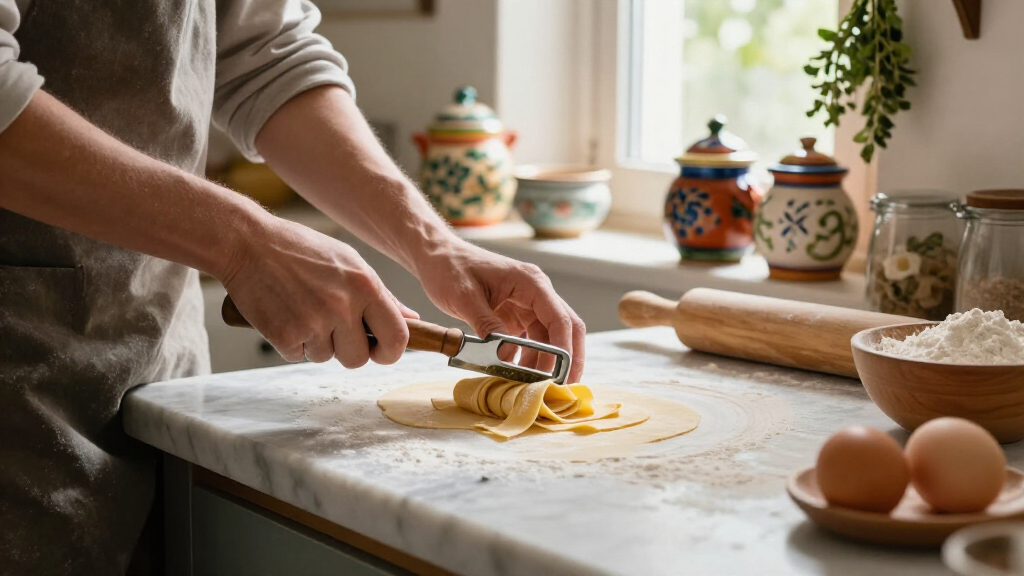
Most machines ship with a double cutter around 6–7 mm — exactly right for tagliatelle. Pappardelle, a Tuscan shape built for autumn wild boar, are best cut by hand with a pizza wheel or fluted cutter for clean, wide strips.
So It Doesn’t Stick — or Spoil
Salt the water until it tastes like mild broth, use at least 4 litres in a big pot, stir in the first 30 seconds, and pull the pasta one minute early to finish in the sauce. Skip the oil — it does nothing for sticking and stops sauce from clinging.
Air dry
Same-day cooking: let cut strands dry on a floured surface, then dust off excess flour before nesting.
Refrigerate
Twirl small handfuls into loose nests on a semolina-dusted tray. Keep below 40°F (4°C) — raw eggs demand it.
Freeze
Freeze nests solid on the tray, then bag. Cook straight from the freezer, no thawing — add about 30 seconds.
The Weekend in Five Rules
One medium egg (~50 g) per 100 g of ’00’ flour. Knead 8–10 minutes; rest at least 30 before rolling.
3–4 folds at the widest setting, then step down one notch at a time. Stop at 6–7 for ribbons, 5–6 for lasagne.
Tagliatelle for ragù bolognese, pappardelle for chunky braises, uncut sheets for layered lasagne.
90 seconds to 3 minutes. Pull a minute early and finish in the sauce.
Never wash the machine with water — clean with a dry brush and pull trapped dough out with a scrap sheet.
The Dough That Does It All: One Recipe, Three Shapes
Fresh egg pasta is flour and eggs, nothing more — the Bolognese standard is one medium egg per 100 grams of flour, so a typical batch for four people is 400 g of ’00’ soft-wheat flour and 4 eggs (about 200 g out of shell). That yields roughly 600 g of dough, which serves four generously at about 150 g per person.
’00’ flour is finely milled and low in gluten strength compared to bread flour. That softness is what lets the sheet roll thin without snapping back. If you can’t find it, all-purpose flour works; the dough just needs a minute or two of extra kneading to come smooth. In the northern tradition, some cooks use a blend with fine semola (durum wheat) for a slightly chewier bite — that’s more Tuscan than Bolognese, and both are legitimate.
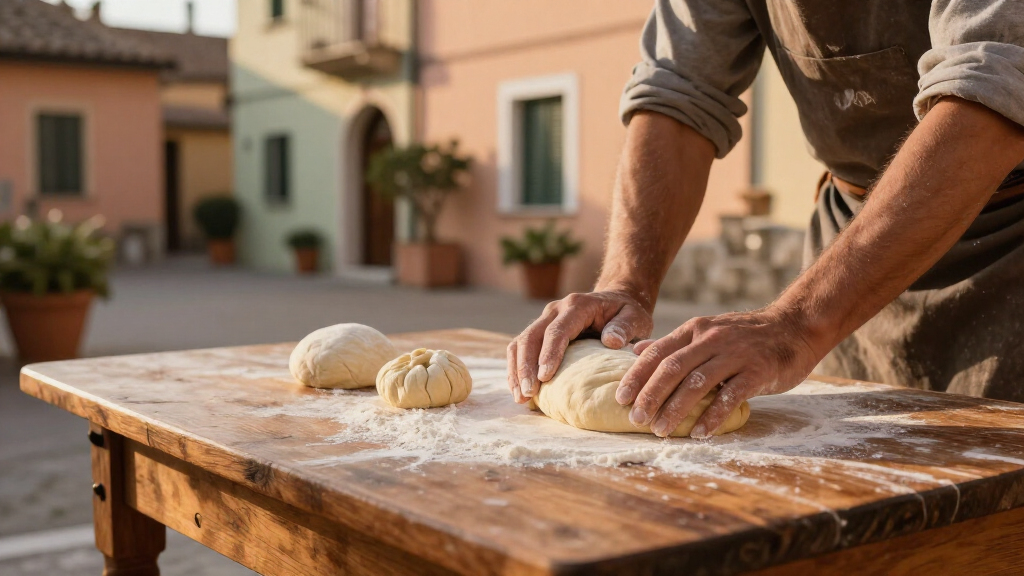
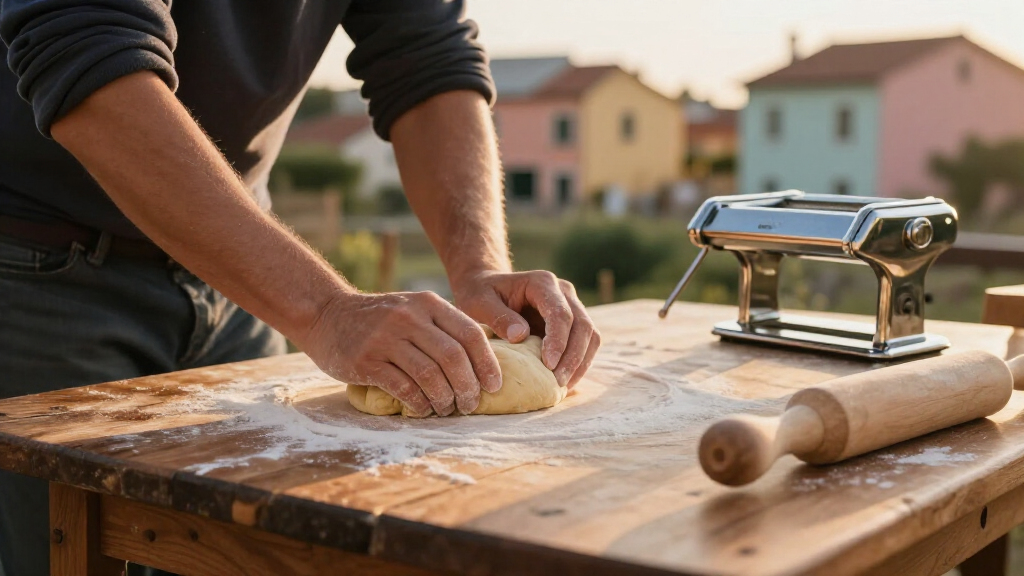
Mound the flour, hollow a well, crack in the eggs, and beat with a fork while pulling in flour from the walls. When it gets too thick to stir, switch to your hands. Knead for a full 8–10 minutes — the dough should feel like a firm earlobe, smooth and barely tacky.
Then wrap it tightly and rest it at room temperature for at least 30 minutes. This relaxes the gluten so the dough rolls instead of fighting you. Skip the rest and the sheet will shrink back through every pass. Contains eggs and wheat — the two most common allergens in one bowl.
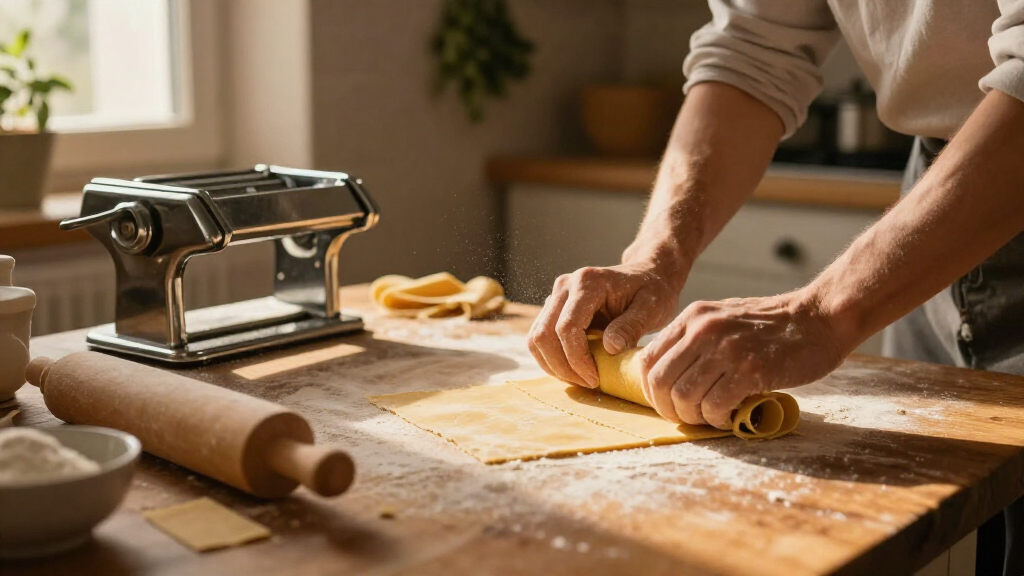
manual pasta machine for fresh egg pasta
As an affiliate, we earn on qualifying purchases.
As an affiliate, we earn on qualifying purchases.
How to Roll Pasta Through the Machine Without Tearing It
Rolling successfully means passing the dough through progressively narrower settings — start at the widest, fold and repeat, then work down one notch at a time without folding. Most manual machines (the classic Marcato Atlas style) have settings from 0 or 1 (widest) to 9 (thinnest). For tagliatelle and pappardelle, stop at setting 6 or 7 — about 1–1.5 mm thick. For lasagne sheets, 5 or 6 is right, because they soften further in the oven.
- Cut your rested dough into 4 pieces. Keep the others covered so they don’t dry out.
- Flatten one piece into a rough rectangle and pass it through the widest setting.
- Fold the strip in thirds like a letter, turn it 90 degrees, and pass it through again. Repeat this lamination 3–4 times with the machine at the same wide setting — this replaces hand-kneading and builds a smooth, elastic sheet.
- Now stop folding. Pass the sheet through each narrower setting once, dusting lightly with flour only if it feels sticky.
- At the target thickness, lay the sheet on a floured towel. It should be translucent enough to read newsprint through — the test Italian grandmothers actually use.
If the sheet tears, the dough was too dry or too thick at that pass. Go back one setting, dust off excess flour, and try again. Long sheets get unwieldy past 60 cm, so cut them in half and manage two manageable lengths rather than one enormous one draped over your shoulder like a Roman
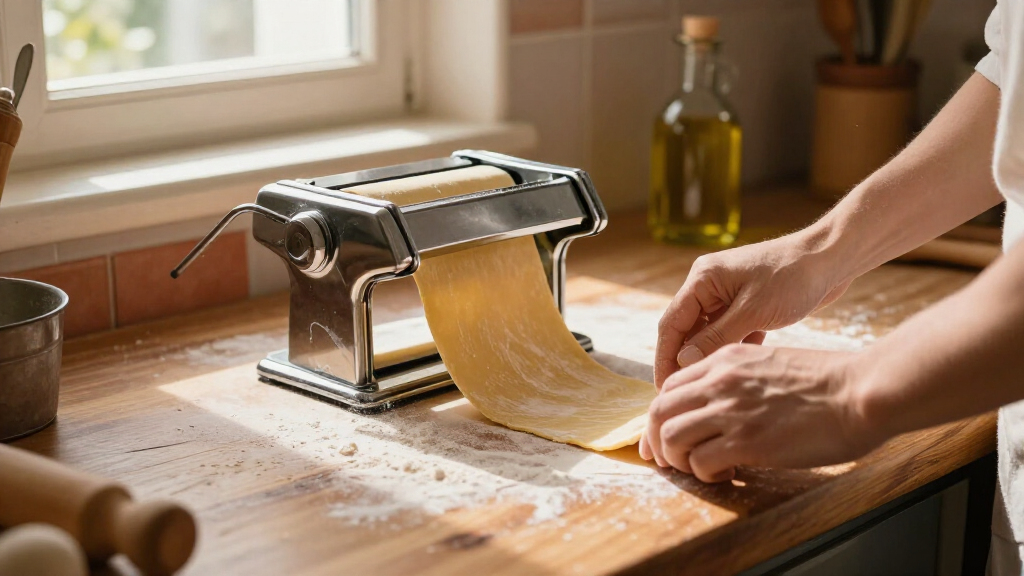
Tagliatelle vs. Pappardelle vs. Lasagne Sheets: Which Cut for Which Sauce
Tagliatelle is the narrow ribbon, pappardelle is its wide cousin, and lasagne sheets are the uncut rectangle — and the width you choose should follow the weight of the sauce. This isn’t tradition for its own sake; it’s physics. Narrow ribbons grab finely minced ragù, while wide strands stand up to chunky braises.
| Shape | Width | Machine setting | Best sauces |
|---|---|---|---|
| Tagliatelle | ~7 mm | 6–7 | Ragù alla bolognese, prosciutto e panna, butter and sage |
| Pappardelle | 2–3 cm | 6–7 | Wild boar ragù (Tuscan cinghiale), duck ragù, mushroom sauces |
| Lasagne sheets | Uncut rectangles | 5–6 | Béchamel, ragù, spinach-ricotta layers |
The Bologna Chamber of Commerce deposited an official tagliatelle measurement in 1974: 8 mm when cooked, equivalent to the 12,270th part of the Torre degli Asinelli tower. Playful, yes — but the point stands that tagliatelle is not fettuccine and definitely not spaghetti. Most machines come with a double cutter around 6–7 mm, which is exactly right.
Pappardelle come from Tuscany, where fall means wild boar. Cut them by hand with a pizza wheel or fluted cutter for clean, wide strips. And a note on the word: one sheet is lasagna, the layered dish is lasagne — plural, always, in Italy.
Drying, Nesting, and Cooking Fresh Pasta So It Doesn’t Stick
Fresh egg pasta cooks in 90 seconds to 3 minutes — a fraction of the 9–11 minutes dried pasta needs — because it’s already soft and hydrated. Salt your water generously (it should taste like a mild broth), use a big pot with at least 4 liters of water, and pull the pasta one minute before you think it’s done so it finishes in the sauce.
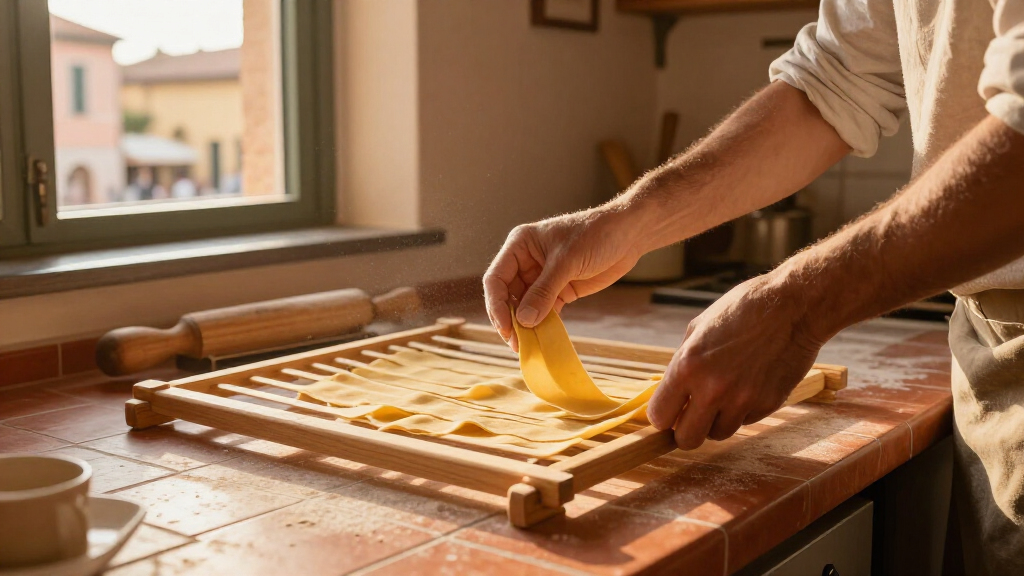
If you’re cooking your batch the same day, let the cut strands dry on a floured surface for 15–30 minutes, then dust off excess flour. Skip the oil in the cooking water — it does nothing for sticking and stops sauce from clinging. What prevents sticking is water volume, a stir in the first 30 seconds, and not overcrowding the pot.
To store tagliatelle and pappardelle, twirl small handfuls into loose nests and place them on a semolina-dusted tray. Refrigerate for up to 2 days or freeze the nests solid on the tray, then bag them. Cook frozen nests straight from the freezer — no thawing — adding about 30 seconds to the cooking time.
Food safety note: fresh egg pasta contains raw eggs. Keep the dough and cut pasta refrigerated below 40°F (4°C) when not actively working with it, and don’t leave cut pasta at room temperature beyond a few hours of drying time.
Lasagne sheets can be used two ways: boiled briefly for 30 seconds then laid on damp towels, or — the easier Bolognese method — layered straight from dry into the assembled dish with a slightly looser sauce. The sheets absorb liquid as they bake.
The Weekend Schedule: How to Split the Work Across Two Days
The smartest way to run a pasta weekend is to make and cut everything Saturday, then cook and assemble Sunday — the dough improves overnight in the fridge and you’re not rolling dough while guests sip aperitivo. Realistic timing: dough and kneading take 20 minutes, resting adds 30, and rolling plus cutting a four-person batch takes about 45 minutes with a manual machine.
Here’s a schedule that has worked for many home cooks running their first pasta weekend:
- Saturday, 10:00 — Mix and knead the dough. Rest, wrapped, 30 minutes on the counter.
- Saturday, 11:00 — Roll all sheets, cut tagliatelle and pappardelle, cut lasagne rectangles. Dust with semolina.
- Saturday, 12:00 — Nest and refrigerate the strands; stack lasagne sheets between parchment. If your ragù isn’t made yet, start it now — a proper ragù alla bolognese wants 2–3 hours of slow simmering.
- Sunday — Assemble lasagne in the morning (it’s better after a rest), boil tagliatelle at dinner in 2 minutes, sauce, serve.
One practical caution: clean the machine with a dry brush or cloth only, never water. Water rusts the rollers and seizes the gears, and trapped dough flakes out on its own once dry. Flour the cutter ends lightly before storing.
If you want the full experience, this is also a good structure for a culinary workshop or home class format — many Italian cooking schools in Bologna run exactly this arc, from sfoglia to dinner, in a single afternoon at places like a traditional sfogline demonstration.

Common Pasta Machine Mistakes (And the Fix for Each)
Most failed pasta sessions trace back to four fixable errors: dough that’s too dry, skipping the rest, rushing the settings, and cooking in a small pot. Each has a simple cure, and knowing them in advance saves an entire batch.
- Crumbly dough that won’t hold together: too much flour or too-large eggs. Wet your hands and keep kneading — add water a teaspoon at a time, never pour it in.
- Sheet shrinks back after rolling: gluten hasn’t rested. Wrap the dough and wait another 20 minutes. This is the single most common beginner error.
- Sheet tears or has jagged edges: you jumped settings. Go back, fold, and laminate at a wider setting, then step down one notch at a time.
- Strands fuse into a clump when cooked: too little water, or excess flour on the pasta. Dust off loose flour before cooking and use the biggest pot you own.
- Machine squeaks or drags: trapped dry dough in the cutters. Run a small scrap of dough through repeatedly to pull it out, like cleaning a pepper mill.
None of these ruin the dough itself — even a torn sheet becomes maltagliati (‘badly cut’), a legitimate Emilian shape traditionally served with beans or lentils. In Italy, pasta mistakes are just dinner with a different name.
Frequently Asked Questions
Do I need a pasta machine, or can I use a rolling pin?
You can absolutely use a rolling pin — it’s how sfogline (traditional pasta makers) in Bologna have worked for generations. The tradeoff is effort and consistency: a machine gives you uniform 1–1.5 mm sheets quickly, while a pin takes practice and a long rolling surface. If you use a pin, roll from the center outward, rotate the dough frequently, and aim for the newspaper-transparency test.
How thin should I roll the dough for each shape?
Roll to setting 6 or 7 (about 1–1.5 mm) for tagliatelle and pappardelle so the ribbons have body but cook quickly. For lasagne sheets, setting 5 or 6 is enough because the pasta softens further while baking. Sheets that are too thin turn mushy in lasagne; sheets too thick stay tough at the edges.
How long does homemade egg pasta keep?
Cut pasta stored as dusted nests keeps 1–2 days in the refrigerator and up to a month in the freezer. Because it contains raw egg, keep it below 40°F (4°C) and don’t leave it at room temperature beyond a few hours of drying. Cook frozen nests directly from the freezer, adding about 30 seconds to the cooking time.
Can I make this pasta gluten-free?
Yes, though egg pasta is harder to substitute than most. Blends of rice flour, chickpea flour, and a binder like psyllium or xanthan gum come closest to the ’00’ texture. Expect a more fragile dough — laminate gently at wide settings and treat it as sheets rather than long strands. Many pasta workshops now teach a dedicated gluten-free session for exactly this reason.
Why did my dough tear or shrink while rolling?
Shrinking means the gluten hasn’t rested — wrap the dough and wait another 20 minutes. Tearing usually means you skipped settings or the dough is too dry. Go back to a wider setting, fold the sheet in thirds, laminate a few passes, then step down one notch at a time. If the dough is genuinely dry, wet your hands while kneading rather than adding water directly.
Conclusion
One dough, one machine, one free afternoon — and you come out the other side with the three shapes that carry the whole egg-pasta tradition of Emilia-Romagna. Start Saturday morning with 400 grams of flour and four eggs, and by Sunday dinner you’ll be tossing tagliatelle with ragù while the lasagne browns under its béchamel. The machine does the precision; you supply the patience and the sauce.
The first sheet you roll that you can read a newspaper through — that’s the one you’ll remember. After that, the dried box in your pantry starts looking like a backup plan.
Fall Picks
fall essentials
As an affiliate, we earn on qualifying purchases.