TL;DR

Get kitchen staples and gadgets delivered free with Prime
- Fast, free delivery on millions of items
- Prime Video, Amazon Music and more included
- Member-only deals all year
Italian home cooking works because of ten simple habits, not secret recipes: shopping seasonally and in small quantities, building a modest pantry of DOP staples, cooking few-ingredient dishes, salting pasta water aggressively, tasting constantly, and using heat and timing with restraint. Adopt these behaviors — most drawn directly from ordinary kitchens in Emilia-Romagna, Campania, and Puglia — and your food starts tasting Italian because you are cooking the way Italians actually cook.
Ask an Italian grandmother for her recipe and you’ll get a shrug, a pinch of air between her fingers, and the phrase quanto basta — “however much is enough.” There is no widely recognized book or publication titled “Nonna’s Kitchen Rules” collecting these habits. The real rules live in kitchens from Bologna to Bari, passed along by watching, not writing.
That’s actually good news for you. Recipes are fixed; habits are portable. Once you understand how a nonna shops, salts, tastes, and sequences a meal, you can apply the same logic to whatever is seasonal where you live — which is, not coincidentally, exactly how regional Italian cooking developed in the first place.
Here are ten habits that make Italian home cooking work, each one tied to a real place, a real dish, and something specific you can do in your own kitchen this week.
Shop small and seasonal — twice-weekly trips for peak produce beat one weekly mega-haul for flavor.
Keep ingredient lists short (three to five components) and spend selectively on the two or three items that carry the dish, choosing DOP staples like San Marza…
Salt pasta water at roughly 7 grams per liter and finish the pasta in the sauce with a splash of starchy cooking water for the final 1–2 minutes.
Taste at every stage and cook with restraint — gentle soffritto, one clove of garlic, low heat, moderate portions.
Treat leftovers and stale bread as ingredients (ribollita, panzanella, cheese rinds in soup) — cucina povera is both the cheapest and most creative Italian hab…
Nonna’s Kitchen Rules: Ten Habits That Make Italian Home Cooking Work
Ask an Italian grandmother for her recipe and you’ll get a shrug, a pinch of air between her fingers, and quanto basta — “however much is enough.” Recipes are fixed; habits are portable. These ten behaviors, drawn from ordinary kitchens in Emilia-Romagna, Campania, and Puglia, are why the food tastes Italian — not secret ingredients.
Shop Small, Shop Seasonal — or the Whole Thing Falls Apart
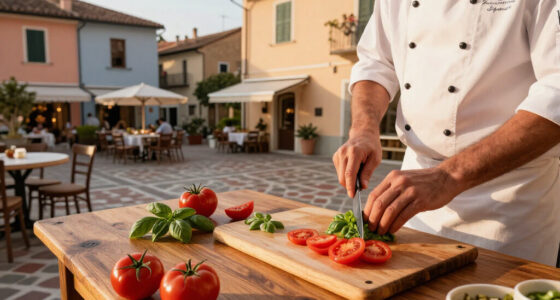
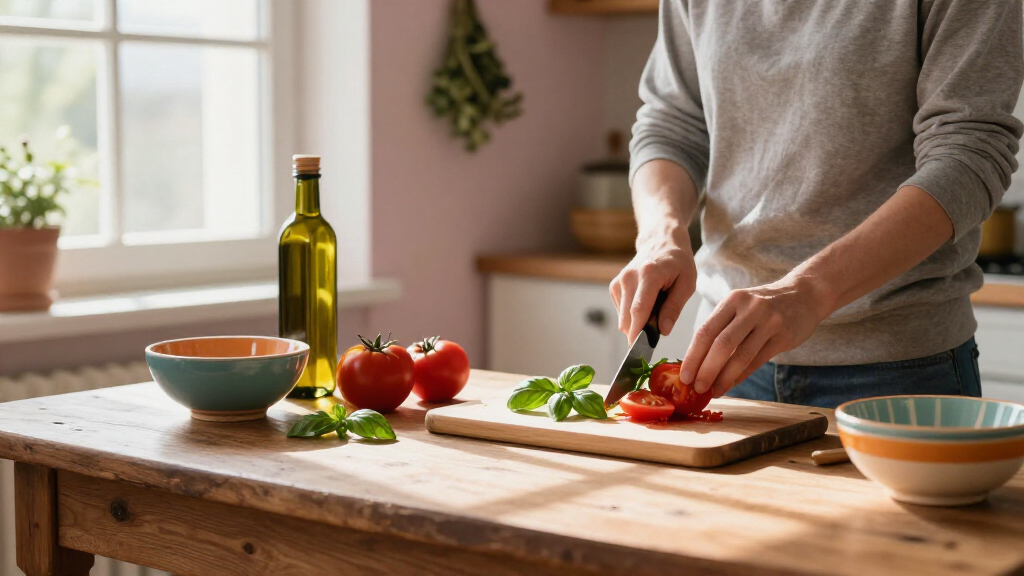
Italian home cooking starts at the market, not the stove. Nonnas buy small quantities several times a week — a handful of zucchini flowers, two ripe peaches, 200 grams of guanciale — because peak ingredients hold their flavor for only a few days. A tomato bought out of season is like a postcard of a place you’ve never been: technically accurate, emotionally empty.
Winter Pantry Logic
Radicchio, borlotti, and stale-bread soups like ribollita define the cold months. Learn three or four anchor dishes per season and rotate.
August Peak
Tomatoes and basil hit their ceiling the same week — pasta alla Norma season. Plan meals around what’s peaking, not around a February recipe.
Cucina Povera
Leftovers and stale bread are ingredients: panzanella, ribollita, cheese rinds in soup — the cheapest and most creative Italian habit.
A String Quartet, Not an Orchestra
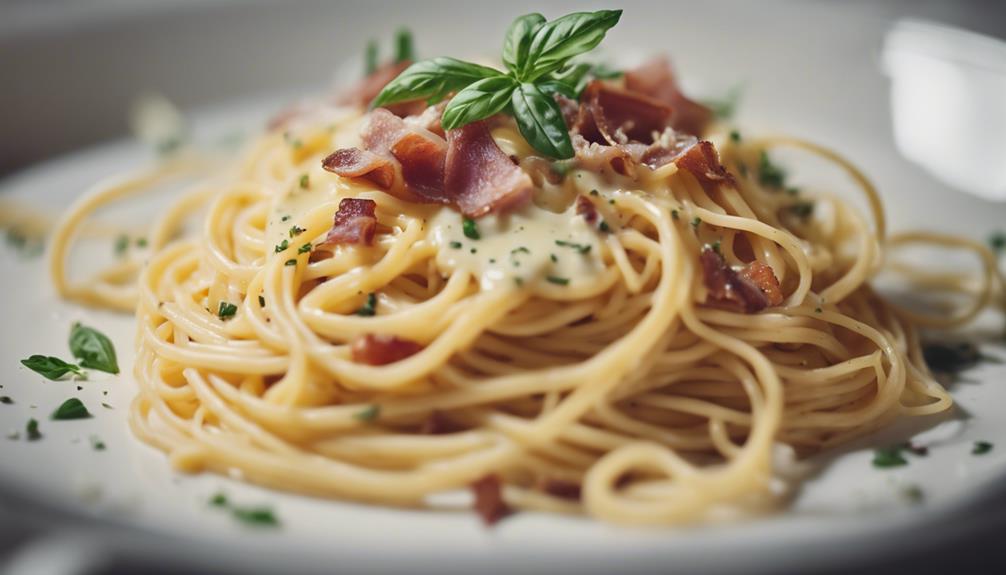
A proper pasta alla gricia is four things: pasta, guanciale, pecorino romano, black pepper. Aglio e olio is five. With only four players, every one is audible in the final dish — which is exactly why Italians obsess over DOP designation labels.
Rule of thumb: if a dish has fewer than six ingredients, one of them had better be excellent. Spend selectively — bronze-die pasta, San Marzano DOP tomatoes, real Grana Padano — and stay cheap everywhere else.
Salt Like the Sea. Finish Pasta IN the Sauce.
Two moves separate restaurant-quality pasta from home pasta: aggressively salted water — about 7 g of fine salt per liter — and finishing the pasta in its sauce with a splash of starchy cooking water, whose starch emulsifies with the sauce’s fat into something glossy that clings to every ridge of rigatoni.
Rolling Boil
Bring well-salted water (7 g/L) to a rolling boil; add pasta.
Wide Pan
Set your sauce simmering in a wide pan nearby.
Drain Early
Pull pasta 1–2 minutes before package time; reserve a mug of water.
Toss Hard
Finish in the sauce over medium heat, splashing water until glossy.
Serve Now
Warm bowls, immediately. Pasta waits for no one.
Fifteen Boring Things That Make Dinner Possible Any Night
A nonna’s pantry is boring in the best way: the same fifteen things, always there, always dependable. When your pantry is stable, weeknight cooking stops requiring decisions — you shop for one or two fresh things and everything else is already waiting.
| Pantry Staple | Look For | What It Unlocks |
|---|---|---|
| Canned tomatoes | San Marzano DOP or high-quality peeled plum | Quick sauces, pizza, braises |
| Dried pasta | Bronze-die (trafilata al bronzo), rough texture | Any night, in under 15 minutes |
| Olive oil | Extra virgin, robust Italian — cool, dark cupboard | Cooking base and raw finishing |
| Hard cheese | Grana Padano or Parmigiano Reggiano DOP | Finishing, sauces, eating in shards |
| Cured pork | Guanciale or pancetta | Amatriciana, carbonara, flavor base |
| Anchovies · capers · olives | Salt-packed or jarred (refrigerate once open) | Puttanesca, southern vegetable dishes |
| Dried legumes | Borlotti, cannellini, lentils | Zuppa, Tuscan ribollita, winter dinners |
Taste Constantly. Cook With Restraint.
Nonnas taste everything, constantly — raw soffritto, simmering sauce, the pasta water itself. The rest of the habit is knowing when to stop: a gentle soffritto, one clove of garlic, low heat, moderate portions. Enthusiasm adds; restraint lets each ingredient be heard.
Shop small and seasonal
Twice-weekly trips for peak produce beat one weekly mega-haul for flavor, every single time.
Short lists, selective spend
Keep ingredient lists to 3–5 components and put money into the two or three items that carry the dish — DOP where it counts.
Salt, then finish in the pan
7 g of salt per liter; drain 1–2 minutes early and toss in the sauce with starchy water until glossy.
Restraint is the recipe
Gentle soffritto, one clove of garlic, low heat, moderate portions — and taste at every single stage.
Nothing is waste
Ribollita, panzanella, cheese rinds in soup — cucina povera turns leftovers into the most creative dishes in the repertoire.
Quanto basta
The habits are portable: apply the same logic to whatever is seasonal where you live — exactly how regional Italian cooking developed in the first place.
There is no book called “Nonna’s Kitchen Rules.” The real rules live in kitchens from Bologna to Bari, passed along by watching, not writing.
That’s good news — recipes are fixed, habits are portableHabit 1–2: Shop Small, Shop Seasonal, or the Whole Thing Falls Apart
Italian home cooking starts at the market, not the stove. Nonnas buy small quantities several times a week — a handful of zucchini flowers, two ripe peaches, 200 grams of guanciale — because ingredients bought at peak hold their flavor for only a few days. Contrast that with the weekly mega-shop, where produce sits in a fridge losing aroma until Thursday. In Italy, the produce aisle changes the way a wardrobe changes: artichokes in winter, tomatoes and basil in August, radicchio di Treviso (IGP) when the first frost hits the Veneto.
Seasonality is also why there is no single “Italian” cuisine. What a grandmother in Sicily cooks in January — oranges, fennel, sardines — shares nothing with what a grandmother in Alto Adige cooks the same week: canederli bread dumplings, speck, cabbage. The habit to steal is simpler than memorizing regional calendars.
- Buy less, more often. Twice-weekly shopping beats one giant haul for flavor.
- Plan meals around what’s peaking, not around a recipe you found in February that demands summer tomatoes.
- Learn three or four seasonal anchor dishes per season — pasta alla Norma in late summer, ribollita in the cold months.
A tomato bought out of season is like a postcard of a place you’ve never been: technically accurate, emotionally empty.

As an affiliate, we earn on qualifying purchases.
Habit 3: Fewer Ingredients, Chosen Better, Beat Any Long Recipe
The single most surprising habit for newcomers is how short real Italian ingredient lists are. A proper pasta alla gricia is four things: pasta, guanciale, pecorino romano, black pepper. Aglio e olio is five. The philosophy is that each ingredient must earn its place, and with only four players, every one of them is audible in the final dish — like a string quartet instead of an orchestra.
This is why Italians obsess over designation labels. San Marzano DOP tomatoes really do taste sweeter and less acidic than generic canned plum tomatoes. Grana Padano DOP and Parmigiano Reggiano DOP carry a savory depth that bagged “parmesan” powder cannot touch, because the wheels age a minimum of 12 months under controlled rules. Guanciale (cured pork jowl) renders into a richer, silkier fat than bacon ever will in carbonara.
You don’t need to buy everything imported. You need to spend selectively: put your money into the two or three ingredients that carry the dish, and stay cheap everywhere else. Plain dried pasta — a good bronze-die brand like a trafilata al bronzo — costs a dollar more and grips sauce noticeably better.

The rule of thumb: if a dish has fewer than six ingredients, one of them had better be excellent.
Habit 4–5: Salt Your Pasta Water Like the Sea, and Finish the Pasta IN the Sauce
Two techniques separate restaurant-quality Italian pasta from home pasta more than anything else: aggressively salted water and finishing the pasta in its sauce. Salt the water at roughly 7 grams of fine salt per liter — about a heaping tablespoon for a standard pot. The pasta absorbs seasoning as it hydrates, and no amount of salty sauce afterwards can fix bland pasta at its core.
Then, the move almost everyone skips: pull the pasta out of the boiling water one to two minutes before the package time, drop it into the simmering sauce, and toss hard for those final minutes with a splash of starchy pasta water. The water is liquid gold — its starch and the sauce’s fat emulsify into something glossy that clings to every ridge of rigatoni instead of pooling at the bottom of the bowl.
Picture the scene in any Roman trattoria: the cook pulling spaghetti from the pot with a fork swirl, dropping it into a pan of bubbling cacio e pepe, and working the pan like a man shaking a cocktail. That pan, that motion — that’s the entire technique.

- Bring well-salted water to a rolling boil; add pasta.
- Set your sauce simmering in a wide pan nearby.
- Drain the pasta 1–2 minutes early, reserving a mug of cooking water.
- Toss pasta in the sauce over medium heat, adding splashes of water until glossy.
- Serve immediately, in warm bowls — pasta waits for no one.
Habit 6: The Modest Pantry That Makes Dinner Possible Any Night
A nonna’s pantry is boring in the best way: the same fifteen things, always there, always dependable. That repetition is the habit. When your pantry is stable, weeknight cooking stops requiring decisions — you shop for one or two fresh things and everything else is already waiting.
Here is the core list, with the Italian anchor for each:
| Pantry Staple | Look For | What It Unlocks |
|---|---|---|
| Canned tomatoes | San Marzano DOP or high-quality peeled plum | Quick sauces, pizza, braises |
| Dried pasta | Bronze-die, rough texture | Any night, in under 15 minutes |
| Olive oil | Extra virgin, ideally a robust Italian one | Cooking base and raw finishing |
| Hard cheese | Grana Padano or Parmigiano Reggiano DOP | Finishing, sauces, eating in shards |
| Cured pork | Guanciale or pancetta | Amatriciana, carbonara, flavor base |
| Anchovies, capers, olives | Salt-packed or jarred | Puttanesca, southern vegetable dishes |
| Dried legumes | Borlotti, cannellini, lentils | Zuppa, Tuscan ribollita, winter dinners |
Store olive oil in a cool, dark cupboard away from the stove — heat and light turn it rancid within weeks. Keep canned tomatoes at room temperature, and once a tin of anchovies is opened, refrigerate and use within a couple of months.

Habit 7–8: Taste Constantly, and Cook With Restraint Instead of Enthusiasm
Nonnas taste everything, constantly, with a small spoon kept by the stove. The habit sounds obvious and almost nobody does it. Soups get salted once at the start; sauces get seasoned by the recipe’s clock instead of by the tongue. Italian cooking rewards tasting at every stage — raw soffritto, mid-simmer, final reduction — because seasoning needs change as water cooks off and flavors concentrate.
The twin habit is restraint. Restraint with garlic: one clove, sliced and gently warmed in oil, then often removed — a technique central to agiolio-based dishes that leaves aroma without harshness. Restraint with heat: a soffritto of onion, carrot, and celery sweats patiently for 15–20 minutes over low flame, never browning, building the sweet base of ragù alla Bolognese. Restraint with quantity: three courses served modestly, not one plate piled like a ski slope.
Over-garlicked, over-heated, over-crowded cooking is the tell of an eager beginner. Italian food is quietly confident food — bold flavors achieved through patience, not volume. Slow simmering also matters for safety and texture: keep slow-cooked meat sauces at a gentle bubble, and refrigerate leftovers within two hours in shallow containers.

Habit 9: Waste Nothing — Stale Bread and Leftovers Are Ingredients
Old bread is not garbage in an Italian kitchen; it is a raw material. Tuscany’s ribollita — a twice-boiled soup of cavolo nero, cannellini beans, and stale bread — exists because farm kitchens refused to throw away a heel of loaf. Pappa al pomodoro, panzanella, Roman pangrattato (toasted breadcrumbs) over pasta: an entire tradition of great dishes built entirely from things you were about to toss.
This habit, sometimes called cucina povera (“cooking of the poor”), is now celebrated as sustainable cooking, but it began as necessity. Adopting it changes how you shop and how you think. Stale bread becomes thickener, crunch, or the body of a salad. Yesterday’s white beans become bruschetta topping with olive oil and rosemary. Hard cheese rinds drop into minestrone and melt into savory depth — fish them out before serving.
- Freeze bread slices and revive them directly in a hot oven.
- Save parmesan rinds in the freezer for soups and broths.
- Turn wilting greens into a pasta sauce with garlic, chili, and a splash of pasta water.
Reduce waste and you will also, strangely, cook better — because leftovers force creativity, and creativity with constraints is exactly how half of Italy’s classic dishes were born.

Habit 10: Cook for the Table, Not for Instagram
The final habit is the least technical and the most important: Italian home cooking is built around people sitting down together. Picture a Sunday pranzo in a home outside Naples: the grandmother rolls the lasagna sheets on Thursday, assembles it Saturday, and at 1 p.m. Sunday the family gathers — pasta comes out first as its own course, then braciole with contorni of broccoli rabe, then a bowl of peeled fruit and a wedge of cheese, then espresso, then the long walk. The structure is the menu: courses exist so the meal lasts, and the meal lasts because the company deserves it.
Contrast that with the familiar modern scenario: one giant plate stacked with chicken, pasta, and vegetables, photographed under kitchen lights, eaten in twelve minutes while scrolling. The food may be identical, but the experience — and honestly, the attention paid to cooking it — is not.
You can import this without a nonna. Set the table before you start cooking — a small ritual, but it forces you to finish prep before guests arrive instead of cooking through dinner. Serve the pasta as its own course instead of plopping everything on one plate; think spaghetti al pomodoro first, then a simple second course of lemony chicken and greens, rather than both fighting for space on one dish. Pour the wine — adults only, and in moderation — a little at a time. Keep portions moderate so there’s room for the next thing and nobody leaves the table in pain.
There’s a practical payoff too. When you cook in courses, you plate each dish at its moment — pasta hot and sauced at the second of perfection rather than dying under a heat lamp of good intentions. Think of it like a stage play instead of a variety show: each scene gets its own spotlight. Food tastes better served this way, and the cook gets to sit down, which is the whole point. A meal eaten standing over the sink can be delicious. A meal eaten slowly, with other people, becomes a memory.

The Five Mistakes That Undo All Ten Habits
Knowing the habits is half the work; here are the errors that quietly sabotage them. Each one is fixable tonight, and none requires new equipment.
- Rinsing cooked pasta. You wash off the starch that binds sauce to noodle. Never do it.
- Oil in the pasta water. It sits on the surface and coats drained pasta, repelling sauce. Salt is the only addition.
- Overcrowding the pan. Vegetables steam instead of browning; zucchini become soggy. Cook in batches.
- Adding cheese to boiling-hot pasta off the heat incorrectly. Direct high heat scrambles pecorino into clumps in carbonara — remove from heat, toss with a splash of pasta water first.
- Substituting carelessly. Bacon for guanciale, powder for DOP cheese, “Italian seasoning” for real herbs — each swap moves the dish another step from itself. It still tastes fine. It just stops tasting Italian.
The pattern behind all five: shortcuts that save two minutes and cost the soul of the dish. Nonnas are not slow because they lack blenders or impatience. They’re slow because they know where speed ruins things.
Frequently Asked Questions
Do I need expensive imported ingredients to cook authentic Italian food?
No. Spend selectively instead of universally. A $3 can of good peeled tomatoes, a wedge of real Parmigiano Reggiano DOP, and decent bronze-die dried pasta will carry dozens of meals. Save money by skipping gourmet salt, imported flour, and pre-made sauces — plain local vegetables, eggs, and olive oil do most of the work in real Italian home cooking.
How much salt should I actually put in pasta water?
About 7 grams of fine salt per liter of water — roughly one heaping tablespoon for a standard large pot. The water should taste distinctly salty, like a mild sea. Pasta absorbs seasoning as it cooks, and bland pasta cannot be fully fixed by salting the sauce afterwards.
Why does restaurant pasta taste better than mine?
Almost always the finishing technique. Restaurants drain pasta early and toss it in the simmering sauce with starchy pasta water for the last minute or two, emulsifying fat and starch into a glossy coating. Home cooks typically boil pasta to death, drain it fully, and spoon sauce on top. Fix the finish and the gap closes dramatically.
Can I make real Italian dishes with basic supermarket equipment?
Yes. A large pot, one wide skillet or sauté pan, a cutting board, and a sharp knife cover nearly everything — pasta, soups, braises, vegetables. A rolling pin and a bench scraper help if you venture into fresh pasta or focaccia, but none of the ten habits here require special tools. Italian home cooking was built by people with one burner and two pots.
What are quick Italian dinners for busy weeknights?
Lean on pantry staples: pasta aglio e olio (15 minutes), puttanesca with canned tomatoes, anchovies, capers, and olives (20 minutes), or white beans with rosemary, garlic, and olive oil over toasted bread. The stable pantry habit means you only need one fresh item — a bunch of parsley, a lemon — to make dinner happen any night.
Conclusion
If you adopt only one habit this week, make it the pasta one: salt the water properly, pull the pasta early, and finish it in the pan with its sauce. That single change upgrades every pasta you cook from now on, and it teaches the core Italian lesson — that technique, not ingredient count, does the heavy lifting.
The rest follows naturally. Shop a little smaller, taste a little more, waste a little less, and sit down longer at the table. Nobody in Italy was born knowing these rules either. They learned them the same way you are now: by watching, repeating, and eating the results.

Halloween Picks
halloween
As an affiliate, we earn on qualifying purchases.