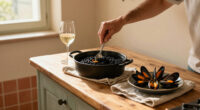
TL;DR
Cicchetti are small Venetian snacks traditionally eaten with an ombra — a modest glass of house wine — at a bacaro, the city’s standing-room wine bar. Together they form one of Venice’s most distinctive social rituals: you order one or two bites at the counter, drink standing up, then move on to the next bar. This guide covers what to order, what it costs, the phrases to use, and how the giro d’ombre (bacaro tour) actually works.
Somewhere between a bridge and a canal in Cannaregio, a man in a work jacket stands at a wooden counter, holding a small glass of white wine in one hand and half a fried mozzarella sandwich in the other. He’s been there ten minutes. He’ll be gone in ten more. This is cicchetti — one of Venice’s oldest and least pretentious food rituals — and it costs less than a cappuccino in a tourist café on St. Mark’s Square.
Cicchetti are small Venetian snacks traditionally eaten with an ombra, a modest glass of wine. The place you eat them is a bacaro, and the habit of hopping between several of them is a giro d’ombre — literally a ’round of shadows.’ It’s affordable, fast, social, and completely woven into how Venetians actually live in their city.
In this guide, you’ll learn what cicchetti are (and what they’re not), why the wine is called a shadow, exactly how to order at a bacaro without feeling like an outsider, and how to plan your own giro d’ombre — plus how to bring a taste of it home to your own kitchen.
Cicchetti are small Venetian snacks traditionally eaten with an ombra — a modest glass of still house wine — at a bacaro, and they are distinct from both Spani…
A proper giro d’ombre means one or two cicchetti and one ombra per stop across three or four bacari; late morning or early evening is the traditional timing.
Cannaregio, San Polo, Santa Croce, Dorsoduro, and Castello offer the most authentic bacaro scenes; judge a bacaro by local customers, fast food turnover, and a…
Prices vary sharply by neighborhood — a euro or two per cicchetto in residential areas, considerably more near major sights — and tipping is optional; check fo…
You can recreate the signature cicchetto at home: baccalà mantecato, whipped salt cod served on polenta or bread, requires 24–72 hours of cold soaking in the r…
Cicchetti and Ombra: The Venetian Art of Bar Snacks and Small Glasses
A man in a work jacket stands at a wooden counter in Cannaregio, a small glass of white wine in one hand and half a fried mozzarella sandwich in the other. This is cicchetti — one of Venice’s oldest and least pretentious food rituals — and it costs less than a cappuccino in a tourist café on St. Mark’s Square.
What Cicchetti Actually Are
Cicchetti are defined by scale, setting, and purpose — not by any fixed recipe. There is no definitive cicchetti menu; every bacaro has its own specialties, and that’s the whole point. Seafood dominates because Venice sits in a lagoon and was a maritime republic for a thousand years. The sweet-and-sour notes, spices, and dried fruit are the edible memory of Venice’s spice-trading past.
Baccalà Mantecato
Whipped salt cod pounded with olive oil into something like a fishy cloud, spread on polenta or bread. Requires 24–72 hours of cold soaking before whipping.
Sarde in Saor
Sardines with sweet-and-sour onions, raisins, and pine nuts — a dish that tastes directly of Venice’s centuries as a spice-trading power, born from preserving fish before refrigeration.
Polpette
Small fried meatballs, sometimes made with salt cod or vegetables. Pair beautifully with a lighter red like Valpolicella.
Crostini
Toasted bread topped with anchovies, cured meats, cheese, or vegetables — the most flexible item under the glass counter.
Mozzarella in Carrozza
A fried cheese sandwich occasionally hiding an anchovy inside — the Venetian answer to fast food, without the fast-food shame.
Fried Seafood & Octopus
Fried seafood, marinated octopus, halved eggs with anchovy, and tramezzini — crustless small sandwiches — round out the counter.
Why Venetians Call Their Wine a “Shadow”
An ombra is a small glass of simple wine — usually a local white, though red is equally traditional. The word literally means “shadow” in Venetian dialect, and the story behind it is one of the best pieces of culinary folklore in Italy. It’s hard to verify historically. It’s also hard not to want it to be true.
L’ombra
Roughly a third of a standard restaurant pour — imagine a generous espresso cup of wine. The smallness is a feature: it encourages moderation and, more importantly, movement. Order an ombra and you look like a local.
A Spritz
A mixed drink — Prosecco, a bitter liqueur like Aperol or Select, and a splash of soda, with an orange slice. Venetians drink both, but they are different orders. Order a spritz and you look like everyone else in the piazza.
Pairing logic: dry local whites (Pinot Grigio, Tocai) suit seafood cicchetti like baccalà mantecato; lighter reds like Valpolicella suit polpette and cured meats. And no — nobody obliges you to drink alcohol. Water, beer, or a soft drink alongside cicchetti is completely normal.
Cicchetti vs. Tapas vs. Aperitivo
Three rituals involving small food and drinks — but they are three different traditions.
| Aspect | Cicchetti (Venice) | Tapas (Spain) | Aperitivo (Italy-wide) |
|---|---|---|---|
| Setting | ✓ The bacaro counter | Andalusian bar culture | Pre-dinner drinking occasion |
| Food model | ✓ Individually prepared, selected & paid per piece | ~ Broader bar tradition, often complimentary or ordered in rations | ~ Buffet or complimentary snacks included in drink price |
| Signature drink | ✓ Ombra — small still house wine | Sherry, beer, tinto de verano | Spritz, negroni, cocktails |
| Rhythm | ✓ Standing, 10–15 min, hop to the next bacaro | ✗ Typically settled at one bar | ✗ Single pre-dinner sitting |
| Flavor repertoire | ✓ Lagoon fish, polenta, baccalà — exists nowhere else | ✗ Distinctly Spanish ingredients | ✗ Snacks are generic, not the point |
How a Giro d’Ombre Actually Works
One or two cicchetti and one ombra per stop, across three or four bacari. Less like settling into a pub for the evening, more like a progressive dinner where each course is a neighborhood away — in a city with no cars, where every journey happens on foot.
Enter & observe
Look at the glass counter, check the clientele — locals and fast turnover mean good cicchetti.
Order at the counter
“Un’ombra, per favore” plus one or two cicchetti. Ask “Cosa mi consiglia?” if unsure.
Eat standing
Ten to fifteen minutes at the counter. Conversation at the bar is part of the meal.
Pay & check
Pay as you go; tipping is optional. “Quanto costa?” is always fair play.
Walk three bridges
Move on to the next bacaro. Repeat 3–4 times. That’s the giro.
When to Go, and What You’ll Pay
Traditional timing is late morning or early evening — the hours when bacari serve Venetian workers on their break. Popular items sell out; go early for the best choice.
Late morning
Afternoon pause
Early evening giro
Recreate the Ritual in Your Own Kitchen
The signature cicchetto — baccalà mantecato — is a project, not a scramble. Whip it properly, pour a small glass of something crisp, and stand at your own counter.
Soak the salt cod
24–72 hours of cold soaking in the fridge, changing the water — patience is the main ingredient.
Poach & whip
Poach gently, then pound with olive oil in a steady stream until it becomes a fishy cloud.
Serve small
Spread on a slice of polenta or grilled bread. Small portions, standing up, no ceremony.
Pour an ombra
100 ml of still white wine in a small tumbler. Done — your kitchen is now a bacaro.
What Cicchetti Actually Are — Small Bites, Big Venetian History
Cicchetti are small snacks defined by scale, setting, and purpose rather than by any fixed recipe. A single one is a cicchetto (pronounced roughly chee-KET-toh); the plural is cicchetti. There is no definitive cicchetti menu — every bacaro has its own specialties, and that’s the whole point.
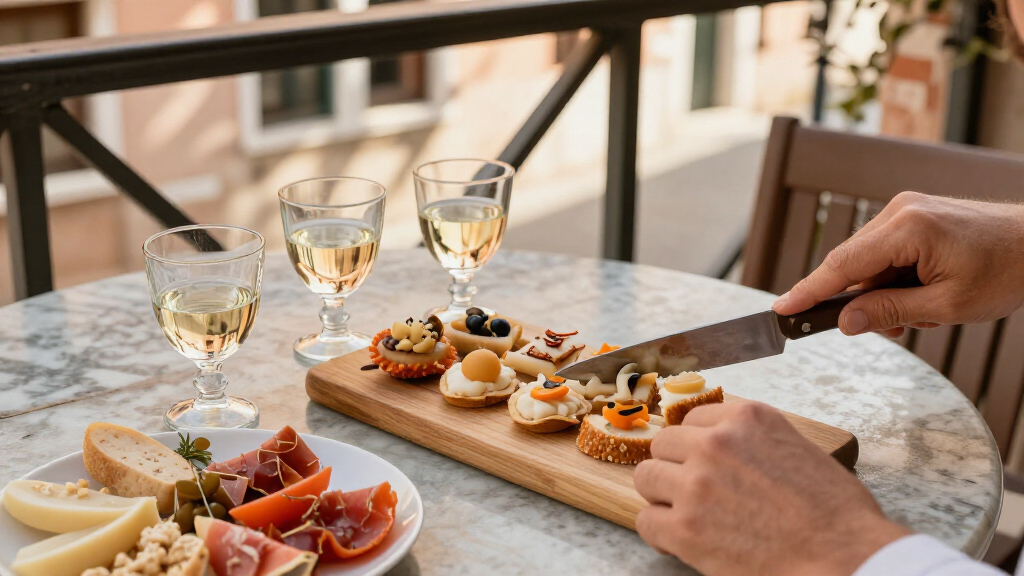
What you’ll typically find under the glass counter of a bacaro:
- Baccalà mantecato — whipped salt cod, pounded with olive oil into something like a fishy cloud, spread on a slice of polenta or bread. The undisputed king of cicchetti.
- Sarde in saor — sardines with sweet-and-sour onions, raisins, and pine nuts, a dish that tastes directly of Venice’s trading past.
- Crostini topped with anchovies, cured meats, cheese, or vegetables.
- Polpette — small fried meatballs, sometimes made with salt cod or vegetables.
- Fried seafood, marinated octopus, halved eggs with anchovy, tramezzini (crustless small sandwiches), and mozzarella in carrozza, a fried cheese sandwich occasionally hiding an anchovy inside.
Seafood dominates because Venice sits in a lagoon and was a maritime republic for a thousand years. The sweet-and-sour flavors, spices, and dried fruit in dishes like sarde in saor aren’t random — they’re the edible memory of Venice’s centuries as a spice-trading power, and of a world before refrigeration, when preserving fish in vinegar and onions was survival, not a trend.
One clarification worth making: cicchetti are not miniature versions of full dishes, and they’re not Venice’s answer to Spanish tapas, whatever the guidebooks say. Tapas belong to Andalusian bar culture; cicchetti belong to the bacaro, and to a repertoire of flavors — lagoon fish, polenta, baccalà — that exists nowhere else.
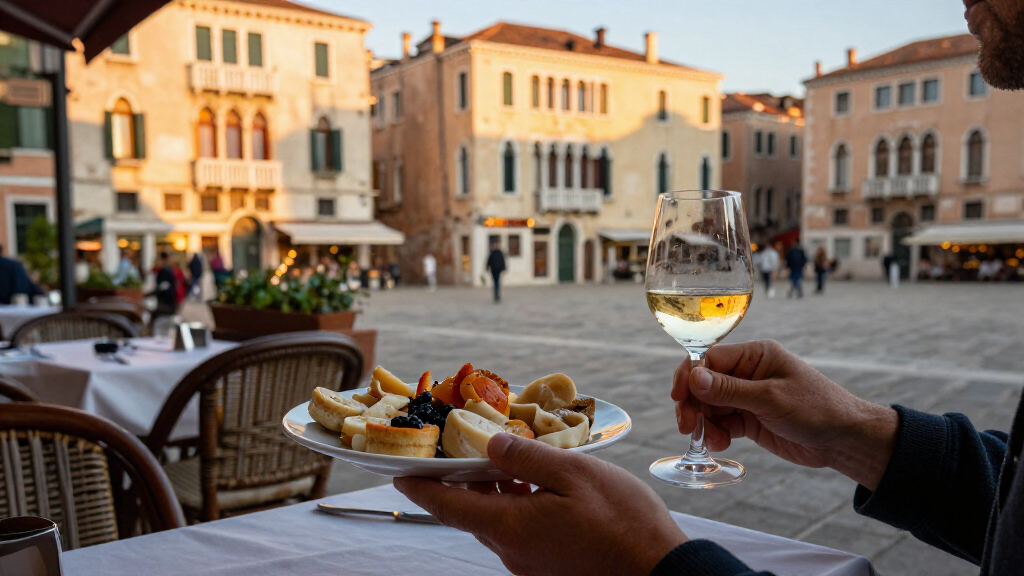
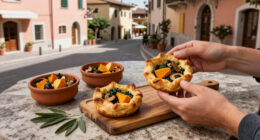
Venetian cicchetti serving platter
As an affiliate, we earn on qualifying purchases.
As an affiliate, we earn on qualifying purchases.
Why Venetians Call Their Wine a ‘Shadow’ — The Story Behind the Ombra
An ombra is a small glass of simple wine — usually a local white, though red is equally traditional. Think of it as the Venetian equivalent of a ‘house pour’ at a neighborhood bar: nothing fancy, reliably drinkable, and gone in a few sips. The word literally means ‘shadow’ or ‘shade’ in Venetian dialect, and the story behind it is one of the best pieces of culinary folklore in Italy.
Picture the scene: it’s the 1600s, and wine sellers around St. Mark’s Square set up portable stalls on casks near the campanile, the great bell tower. As the sun swung across the sky, the sellers would shift their stalls to follow the tower’s shadow — the only cool spot in a stone square. A customer wanting a drink would drift toward the shade and ask for wine all’ombra — ‘in the shadow.’ Eventually the shadow itself became the order: un’ombra, please. Like many origin stories, it’s hard to verify historically. It’s also hard not to want it to be true.
What matters practically: ordering un’ombra today means requesting a small, uncomplicated glass of house wine, not a sommelier-poured tasting measure. Concretely, if you’re at the counter of a bacaro in Cannaregio, you might say ‘un’ombra de bianco’ (a shadow of white) and receive roughly 100 ml of whatever the owner pours by default — perhaps a crisp local Pinot Grigio or a Tocai — for a euro or two. It is not a spritz. A spritz is a mixed drink — sparkling wine, a bitter liqueur like Aperol or Select, and a splash of soda, served in a large stemmed glass with an orange slice. An ombra is simply wine, served in a small tumbler. Venetians drink both, but they are different orders — order an ombra and you’ll look like a local; order a spritz and you’ll look like everyone else in the piazza.
The smallness of the glass is a feature, not a stinginess. An ombra is roughly a third of a standard restaurant pour — imagine a generous espresso cup of wine rather than a goblet. That smallness encourages moderation and, more importantly, movement: you finish your ombra, finish your cicchetto, and walk three bridges down to the next bacaro. The drink is designed for a city with no cars, where every journey happens on foot and every bar is a fifteen-minute stop, not a destination. It’s bar-hopping logic, Venetian-style — less like settling into a pub for the evening and more like a progressive dinner where each course is a neighborhood away.
Dry local whites pair best with seafood cicchetti like baccalà mantecato; lighter reds suit meatballs and cured meats — a Valpolicella alongside polpette, for example, works beautifully. Prosecco is everywhere in Venice, but an ombra traditionally implies still house wine rather than sparkling. And no — nobody obliges you to drink alcohol. Water, beer, or a soft drink alongside your cicchetti is completely normal; you’ll see Venetian workers ordering a small beer with their afternoon cicchetto all the time.
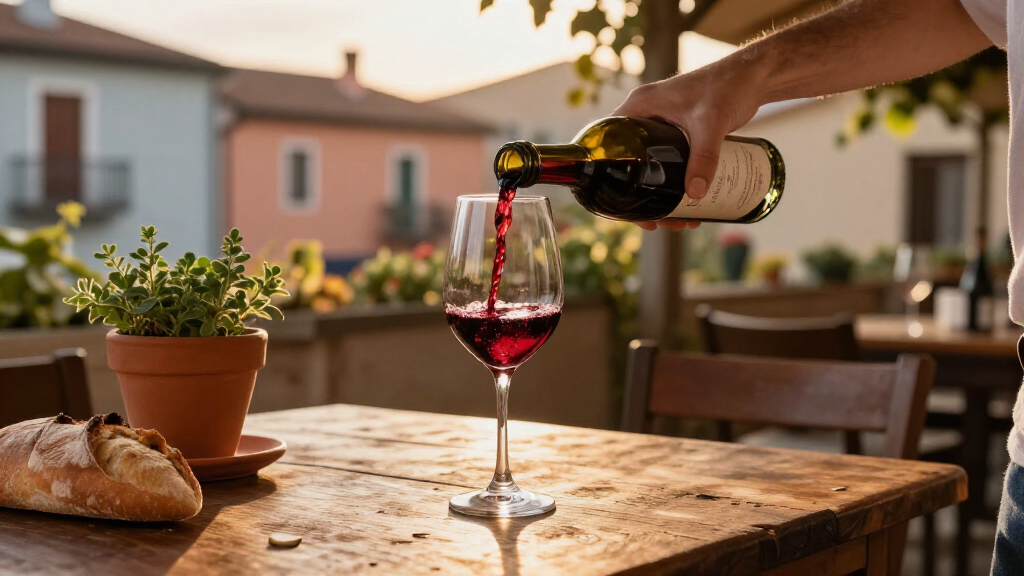
Cicchetti vs. Tapas vs. Aperitivo — Which Tradition You’re Actually Eating
Cicchetti, Spanish tapas, and the Italian aperitivo all involve small food and drinks, but they are three different rituals. Cicchetti are individually prepared bites you select and pay for at a bacaro counter; tapas are a broader Spanish bar tradition; aperitivo is a pre-dinner drinking occasion found throughout Italy, often with complimentary snacks or a buffet included in the price of your drink.
The differences matter because they change how you order, what you pay, and how long you stay:
| Feature | Cicchetti (Venice) | Tapas (Spain) | Aperitivo (rest of Italy) |
|---|---|---|---|
| Where | Bacaro counter, often standing | Taberna or bar, table or counter | Cafés and bars, usually seated |
| Where | Bacaro counter, often standing | Taberna or bar, table or counter | Cafés and bars, usually seated |
| How you pay | Per cicchetto, ordered individually | Per dish, or sometimes free with a drink | Often buffet included with one drink |
| When | Midday and early evening | Lunch through late night | Pre-dinner, roughly 6–8 pm |
| Signature bite | Baccalà mantecato, sarde in saor | Jamón, tortilla, gambas | Chips, olives, focaccia, small buffet |
| The drink | Ombra (small still wine) | Cerveza, sherry, tinto de verano | Spritz, negroni, prosecco |
The deeper difference is rhythm. Aperitivo is a pause before dinner. Tapas can stretch into the night. A bacaro visit is short by design — one or two bites, one small glass, some conversation with whoever is next to you at the counter, then onward. Historically, cicchetti fed workers, merchants, and travelers who needed quick, sustaining food between obligations. That working-class speed is still baked into the experience.
So when a menu outside Italy advertises ‘Venetian tapas,’ you now know the phrase is a translation compromise. What you’re looking for is a bacaro — or, if you’re in a regular bar, ask whether they serve cicchetti at all.
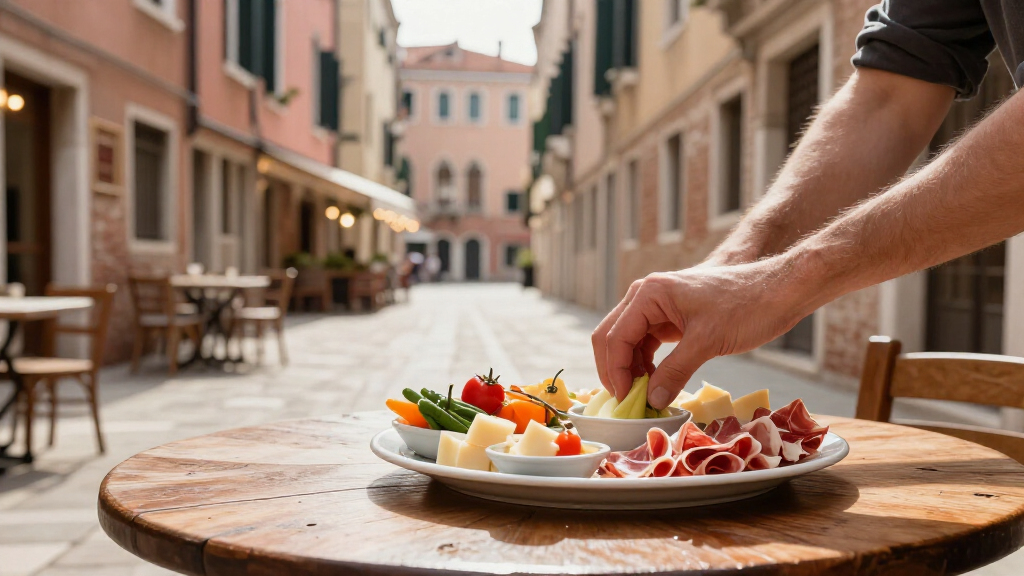
How to Do a Bacaro Crawl: A Step-by-Step Giro d’Ombre
A giro d’ombre — a bacaro tour — means visiting three or four bacari in one outing, having one ombra and one or two cicchetti at each stop. Done right, it replaces a sit-down dinner, costs less than most restaurant meals, and shows you more of Venice in two hours than any vaporetto ride.
Here’s the sequence, the way Venetians actually do it:
- Pick your time. Late morning, before lunch, or late afternoon into early evening fits the traditional rhythm. Avoid very late — popular items sell out, and food sitting under display glass all day is less appealing.
- Choose your neighborhood. Cannaregio, San Polo, Santa Croce, Dorsoduro, and Castello all have deep bacaro traditions and more resident customers than the area around St. Mark’s.
- Look for the right signals. A small, crowded bacaro with strong local patronage, visible food turnover, and a short, focused selection beats an empty one with an enormous menu.
- Enter and look first. The food is displayed under glass or on the counter. Look, then order at the counter — there is no table service in a traditional bacaro.
- Order with the phrases below. One or two cicchetti and un’ombra is a proper order.
- Eat standing, near the counter. If there’s a bench or a canal-side spot, use it. Make room for others; don’t block narrow entrances.
- Move on. Pay, say grazie, and walk to the next bacaro. The movement is the tradition.
Four phrases will carry you through the whole evening:
- Un’ombra, per favore — a small glass of wine, please.
- Un cicchetto di baccalà — one salt-cod cicchetto.
- Cosa mi consiglia? — what do you recommend?
- Quanto costa? — how much does it cost?
The single biggest etiquette mistake visitors make: treating a crowded bacaro as an all-evening, table-service restaurant. It isn’t. Order concisely, eat efficiently, share the space, and let the crawl do what it’s meant to do — keep you moving through the city.
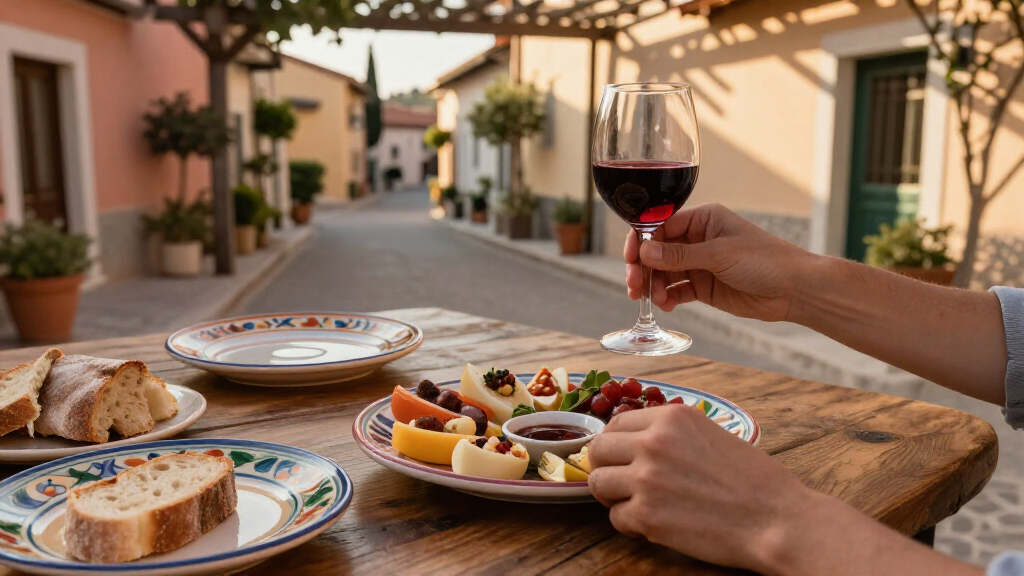
Two or three cicchetti per stop is a reasonable pace. Across four bacari, that’s a full dinner you’ll remember longer than any restaurant menu.
What Cicchetti Cost — and How to Spot the Real Bacari
Cicchetti began as inexpensive working-class bar food, and in residential neighborhoods they largely still are — often a euro or two per piece, with an ombra close behind. But Venice lives on tourism, and prices vary enormously between a bacaro in Cannaregio frequented by residents and a spot two bridges from the Rialto serving the same polpette at triple the price.
Serving sizes, portion generosity, and wine quality vary for the same reasons. A bacaro whose customers come back daily has to be fair; a bar whose customers come back never doesn’t. That’s the simplest pricing logic in the city, and it applies to the ombra as much as to the food.
A few honest ways to read a bacaro before you commit:
- Who’s standing at the counter? Delivery workers, older residents, shopkeepers: excellent sign.
- How fast does the food turn over? Fresh cicchetti replaced through the evening mean quality; a static display at 9 pm means skip it.
- Is the selection short? A concise list of house specialties usually beats a long one.
- Is the menu only in English with photos? Not automatically bad, but a mixed-language, hand-written board is a better omen.
On tipping: Italy doesn’t have a percentage-based tipping culture. Check whether a coperto (cover charge) or service fee appears on the bill first; leaving a small extra for genuinely good service at the counter is welcome but never obligatory.
There’s also a responsible-tourism angle worth knowing. In recent years, Venice has seen the arrival of polished contemporary wine bars, creative toppings, natural wines, and chef-driven cicchetti — a genuine evolution, since the tradition survives partly because it changes. But commercialization has pushed some cicchetti away from their inexpensive neighborhood roots. Local advocates consistently give the same advice: walk ten minutes beyond the busiest routes and spend your money at independently run bacari where Venetians still stop after work.
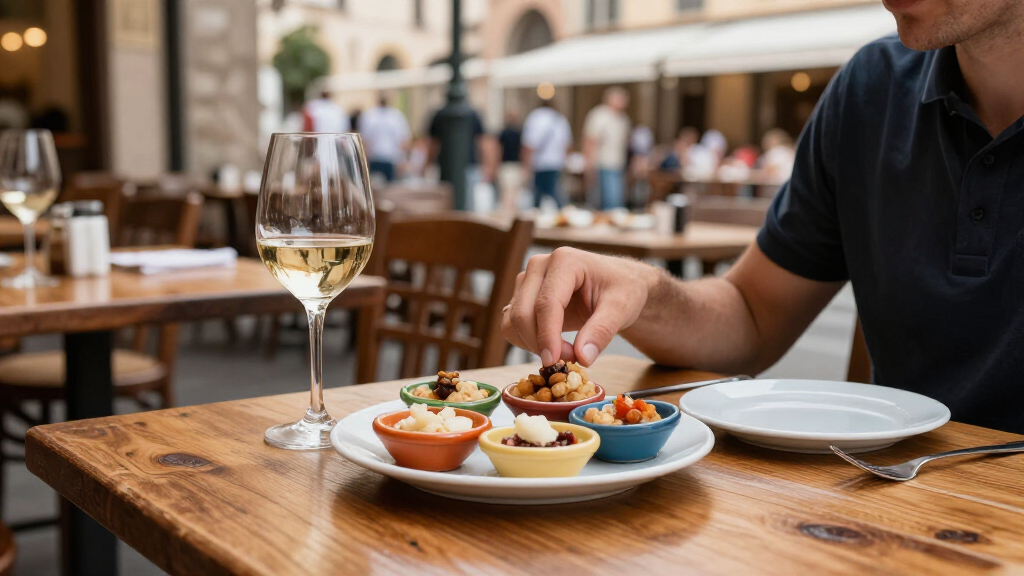
Make Baccalà Mantecato at Home: The Cicchetto You Can Cook Tonight
The best way to understand cicchetti is to eat one, and the best cicchetto to make yourself is baccalà mantecato — whipped salt cod on polenta or grilled bread. It requires one ingredient, patience, and a strong arm (or a food processor). Every bacaro in Venice has a version, and every Venetian has an opinion about whose is best.
Traditional baccalà mantecato is made from stockfish (stoccafisso) or salt cod (baccalà) that is soaked in cold water for one to three days, changing the water several times, until the salt is drawn out and the fish rehydrates. Once soaked, the fish is simmered gently, then whipped — traditionally with a wooden spoon in a heavy pot — with a slow stream of olive oil until it becomes pale, airy, and spreadable, like a savory, oceanic mousse.
The practical method at home:
- Soak the salt cod in cold water in the refrigerator for 24–72 hours, changing the water at least 2–3 times daily.
- Simmer the drained fish in fresh water until it flakes — keep the heat low; a hard boil makes it tough.
- Flake the fish, removing skin and bones.
- Whip with warm olive oil, added a spoonful at a time, using a wooden spoon, stand mixer, or food processor until pale and creamy. Some cooks work in a little of the poaching liquid or a warm milk splash for lightness.
- Season with pepper — taste before salting; the cod may still carry enough.
- Serve at room temperature on grilled polenta or crusty bread, with a glass of dry white wine. That last part is not optional in spirit.
Safety notes: keep the soaking fish refrigerated at 40°F (4°C) or below, and discard soaking water rather than reusing it. Because the dish contains fish, refrigerate leftovers within two hours and eat them within two days. Allergens: contains fish; serve on polenta for a gluten-free base rather than bread, and always confirm with guests about fish allergies before serving.
If you want a shortcut, some Italian delis sell pre-soaked salt cod, and a few brands of whipped baccalà are shelf-stable. But the first time you lift the lid on a bowl of mantecato you whipped yourself and spread it on warm polenta, you’ll understand why an entire city built a daily ritual around it. It’s not a complicated dish. It’s a patient one.
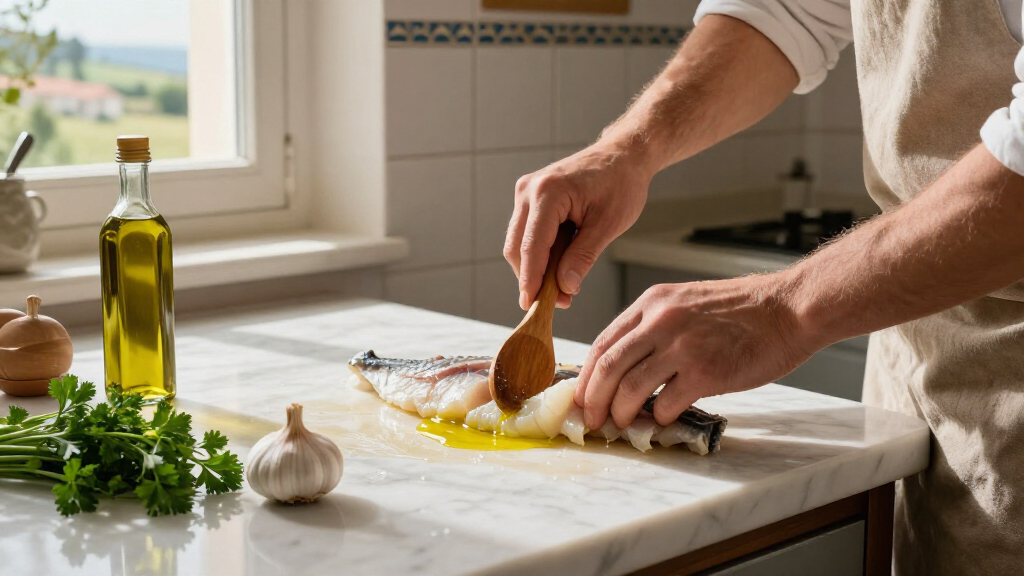
Dietary Questions Answered: Vegetarian, Gluten-Free, and Alcohol-Free Cicchetti
Vegetarians can usually eat well at a bacaro, though the selection varies — look for toppings of artichokes, mushrooms, grilled or marinated vegetables, cheese, and eggs. Contemporary bacari increasingly offer creative vegetarian options, so the situation is better than it was a decade ago. But always ask: anchovy hides everywhere in Venetian cooking, including in sauces and apparently vegetable-based dishes, so confirm before assuming.
Gluten-free is trickier. Some seafood, egg, polenta, and vegetable cicchetti are naturally gluten-free, but fried items share oil and surfaces with breaded ones, so cross-contamination is a real risk. If you have celiac disease rather than a preference, ask explicitly (‘senza glutine, per celiachia’) rather than judging by appearance. Vegan options remain inconsistent — vegetable and polenta dishes are your best bets, but don’t expect dedicated menus.
If you don’t drink alcohol, you lose nothing socially. Water, soft drinks, and beer all appear alongside cicchetti, and the ritual — the counter, the standing, the moving between bars — doesn’t require wine to work. Venetians care far more that you order a cicchetto and make room for the next person than what’s in your glass. And for anyone drinking, the reminder stands: an ombra is small by design, adults only, and the tradition itself is built on moderation and pacing across multiple stops — a good model for drinking responsibly anywhere.
Frequently Asked Questions
Are cicchetti a meal or just a snack?
They can be either. One or two cicchetti make a snack; five or six ordered across multiple bacari can easily replace lunch or dinner. Most Venetians treat a giro d’ombre as an evening meal in warm weather, moving between bars rather than sitting down anywhere.
How many cicchetti should I order per person?
Two or three is a reasonable starting point at a single bacaro. On a crawl, order only one or two at each stop so you can visit three or four bars without overeating — or overspending. You can always order more at the counter if something looks irresistible.
What wine should I drink with cicchetti?
Dry local white wines pair best with seafood cicchetti like baccalà mantecato and sarde in saor; light reds suit meatballs and cured meats. An ombra traditionally means still house wine rather than sparkling, so Prosecco is common in Venice but not the classic order. A spritz, meanwhile, is a mixed drink — not an ombra.
Are cicchetti served hot or cold?
Both. Crostini, marinated seafood, and baccalà mantecato are typically served at room temperature, while fried seafood and polpette are best eaten warm. A busy bacaro with steady turnover will serve both kinds at their best; late in the evening, warm items may be finished and the display tired.
When is the best time to do a bacaro tour in Venice?
Late morning before lunch or late afternoon into early evening follows the traditional rhythm — roughly 11 am to 1 pm or 5 to 8 pm. Many bacari close earlier than restaurants, and the most popular cicchetti sell out, so starting earlier rewards you with the full selection.
Is tipping expected at a bacaro in Venice?
No. Italy has no percentage-based tipping culture, and at a bacaro counter it’s unusual. First check whether a cover or service charge appears on your bill; leaving a small extra for genuinely good service is appreciated but entirely optional.
Conclusion
Do this on your next trip to Venice: skip one restaurant dinner and spend the same evening on a giro d’ombre — four bacari, an ombra at each, whatever cicchetto looks best under the glass. Go before 8 pm, order in Italian even if imperfectly, and walk ten minutes away from St. Mark’s before you start. You’ll eat better, spend less, and share a counter with people who’ve done this every day of their working lives.
Cicchetti culture has survived a thousand years because it stays small — a shadow of wine, a bite of whipped cod, a few minutes standing next to a stranger. In a city slowly drowning in its own popularity, the humblest meal is also the most Venetian one.