
TL;DR

Get kitchen staples and gadgets delivered free with Prime
- Fast, free delivery on millions of items
- Prime Video, Amazon Music and more included
- Member-only deals all year
Fig season in Italy runs from June into October, with the main harvest from August through September. Fresh figs are eaten at peak ripeness with minimal preparation, paired with salty cheeses and cured meats, or baked and preserved for winter. Because figs barely ripen after picking, you should buy soft, fragrant fruit and use it within two or three days.
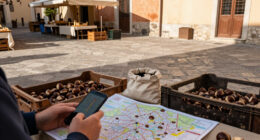
The best fig you will ever eat in Italy probably involves no cooking at all. A vendor in a Sicilian market hands you a dark, splitting Brogiotto Nero, still warm from the morning sun, and you eat it standing right there. That is the whole dish. Everything else Italians do with figs builds outward from that moment.
Fresh fig season in Italy is a short, highly anticipated part of late-summer cooking. The fruit bruises easily, barely ripens after picking, and refuses to ship well, which is exactly why tree-ripened figs taste nothing like the firm, disappointingly bland ones sold in most supermarkets far from the Mediterranean.
In this guide you will learn when figs are actually in season across Italy’s regions, which varieties and DOP products to look for, how to select and store fragile fresh figs, and the sweet and savory preparations Italians actually use, from prosciutto-wrapped antipasti to crostate and fig mostarda.
Italian fig season has two harvests: fioroni from June to early July on old wood, and the sweeter, more abundant forniti main crop from August through Septembe…
Fresh figs do not ripen meaningfully after picking, so buy only soft, fragrant fruit and refrigerate it in a single layer for no more than two or three days.
Look for Dottato, Brogiotto Nero, and Brogiotto Bianco varieties fresh, and Fico Bianco del Cilento DOP, Fichi di Cosenza DOP, and Fico Secco di Carmignano as…
Savory fig dishes need salt, fat, and acid, think prosciutto, aged pecorino, and balsamic, to keep the sweetness in balance.
Overripe or split figs are not waste: roast them with honey, or turn them into jam, mostarda, or frozen cooking fruit.
People with latex allergies should be cautious with fresh figs and fig sap, which can cause reactions.
Fig Season in Italy: Sweet & Savory Ways to Use Fresh Figs
Italy’s fig season runs from June into October across two distinct harvests. Because figs barely ripen after picking, the best ones never see a kitchen — and everything Italians cook builds outward from that first sun-warmed bite.
“A vendor in a Sicilian market hands you a dark, splitting Brogiotto Nero, still warm from the morning sun — and you eat it standing right there. That is the whole dish.”
The Fig ExperienceTwo Harvests, Not One
Fioroni
The first, smaller crop grows on the previous year’s branches. Larger and fewer — prized by locals who know the main crop is still weeks away.
Forniti (Peak)
The main crop develops on new growth: sweeter, more abundant. Roadside stands, breakfast ricotta at agriturismi, trees so loaded that split fruit falls.
Southern Tail
Later varieties keep markets stocked in Sicily, Calabria, Campania, and Puglia — the warmer south owns the fig culture.
Dried & Preserved
DOP dried figs, jams, and mostarda carry the season through winter, anchored by Christmas-table specialties like Fico Secco di Carmignano.
Varieties Worth Knowing by Name
| Variety | Skin / Flesh | Flavor Profile | Best Use |
|---|---|---|---|
| Dottato | Pale green / amber | Honeyed, balanced | Eating fresh, drying, jam |
| Brogiotto Nero | Dark purple / red | Intense, rich | Fresh eating, roasting |
| Brogiotto Bianco | Green / pale pink | Delicate, sweet | Salads, fresh cheese pairings |
| Verdino | Small green / pink | Concentrated sweetness | Snacking, preserves |
| Nero di Caromb | Dark / aromatic | Deep, perfumed | Fresh eating |
Pick, Store & Prep
A fig is not a conventional fruit — it’s a syconium
A hollow structure lined with hundreds of tiny flowers; those soft seed-like bits inside are the flowers’ mature structures. And no, not every fig contains a dead wasp — many cultivated varieties set fruit without any pollination at all.
Handling Without Heartbreak
Do
- Choose plump figs that yield to gentle pressure and smell honeyed
- Look for a slight droop at the neck or a bead of nectar at the base
- A minor dry crack often signals full ripeness, not a flaw
- Refrigerate in a single layer; use within two or three days
- Rinse briefly just before eating, then pat dry
- Bring chilled figs to room temperature — cold mutes flavor
- Freeze halves on a tray for later sauces, baking, and preserves
Don’t
- Buy hard figs, even at a discount — they won’t ripen at home
- Wash before storage; added moisture speeds spoilage
- Accept mold, fermentation smells, or sour, alcoholic notes
- Ignore large wet patches — the fruit is splitting badly
- Handle firmly: a bruised fig ferments within a day
- Expect thawed figs to work for fresh serving — texture is lost
- Forget: latex allergies can react to fresh figs and fig sap
Sweet & Savory, the Italian Way
The Simple Desserts
Simple preparations showcase delicate figs better than heavily flavored recipes.
- Mascarpone or ricotta, honey, toasted pistachios
- Roasted with butter, orange zest, cinnamon, or vin santo
- Fresh figs spooned over gelato or panna cotta
- Poached in red wine or spiced syrup
The Bakery Counter
Overripe or split figs are not waste — they become the winter pantry.
- Crostate, rustic galettes, almond tarts
- Fig jam with lemon and little added sugar
- Folded into semifreddo, served with zabaglione
- Paired with dark chocolate, hazelnuts, walnuts
The Antipasti Table
Savory fig dishes need salt, fat, and acid to keep sweetness in balance.
- Prosciutto-wrapped figs; antipasto platters
- Gorgonzola, pecorino, Taleggio, burrata, Parmigiano
- Grilled halves alongside pork, duck, or sausages
- Fig mostarda, chutney, or agrodolce for roasted meats
The Flavor-Balance Chain
Sweet Fig
Ripe, honeyed fruit — high sugar, high moisture, delicate texture.
Add Salt & Fat
Prosciutto, aged pecorino, burrata, whipped ricotta.
Brighten with Acid
Balsamic dressing, lemon, agrodolce, black pepper.
Finish with Aroma
Rosemary, orange zest, toasted nuts, honey drizzle.
When Fig Season in Italy Actually Happens (Two Harvests, Not One)
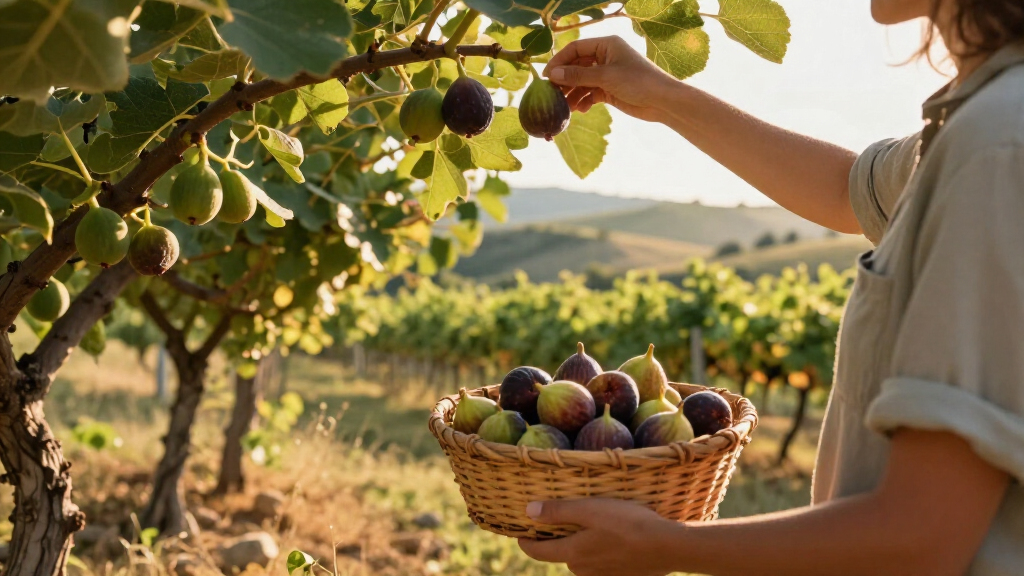
Fig season in Italy runs from June into October, but it arrives in two waves rather than one continuous stretch. The first, smaller harvest, called fioroni, appears from June to early July on branches that grew the previous year. The main crop, known as forniti or simply fichi (figs), runs from August through September, develops on new growth, and is generally sweeter and more abundant.
In the warmer southern regions, Sicily, Calabria, Campania, and Puglia, later varieties keep markets stocked well into October. Central Italy, especially Tuscany and the Cilento coast, follows a similar rhythm a touch later at higher elevations. Fig trees also grow in warm, sheltered pockets farther north, but the south owns the culture.
Imagine you are planning a trip around figs. If you can only travel in June, you will find fioroni, which are larger and fewer, prized by locals who know the wait for the main crop is still weeks away. If you travel in early September, you will hit the peak: roadside stands, agriturismi serving figs with breakfast ricotta, and trees so loaded that split fruit falls to the ground. August and September offer the greatest abundance and the best eating.
One essential fact that surprises most shoppers: fresh figs do not ripen meaningfully after picking. A hard, underripe fig may soften slightly on your counter, but it will never develop the honeyed complexity of fruit ripened on the tree. Buy figs that are already soft and fragrant, or not at all.
As an affiliate, we earn on qualifying purchases.
The Italian Fig Varieties Worth Knowing by Name
Walk through an Italian market in September and you will see figs in green, violet, and near-black, all labeled with local names. Italy grows dozens of cultivars, and names shift from region to region, but a handful appear again and again. Knowing them changes how you shop, because variety determines sweetness, color, and best use.
The Dottato fig is the workhorse of the south: pale green to yellow-green skin, amber flesh, and a distinctly honeyed flavor. Brogiotto Nero is its dramatic dark cousin, purple-skinned with rich red flesh and an intense, almost jammy taste. Brogiotto Bianco is green-skinned and delicately sweet, while the small Verdino concentrates its sugar into a compact, intensely sweet package. Nero di Caromb, a dark aromatic variety, shows how deeply specific figs are tied to individual towns and microclimates.
Two protected products anchor Italian fig identity. Fico Bianco del Cilento DOP, from the coast south of Salerno, and Fichi di Cosenza DOP, from Calabria, are both built on the Dottato fig and are best known as dried products. Tuscany adds the Fico Secco di Carmignano, traditionally dried, flavored with anise, and pressed into flattened fig “eights” that show up at Christmas tables.
| Variety | Skin / Flesh | Flavor Profile | Best Use |
|---|---|---|---|
| Dottato | Pale green / amber | Honeyed, balanced | Eating fresh, drying, jam |
| Brogiotto Nero | Dark purple / red | Intense, rich | Fresh eating, roasting |
| Brogiotto Bianco | Green / pale pink | Delicate, sweet | Salads, fresh cheese pairings |
| Verdino | Small, green / pink | Concentrated sweetness | Snacking, preserves |
A quick botanical aside that will win you dinner-party arguments: a fig is not a conventional fruit. It is a syconium, a hollow structure lined with hundreds of tiny flowers, and those soft seed-like bits inside are the flowers’ mature structures. And the internet’s favorite claim, that every fig contains a dead wasp, is misleading. Some fig types do depend on a specialized fig wasp for pollination, but many commercially cultivated varieties set fruit without any pollination at all.
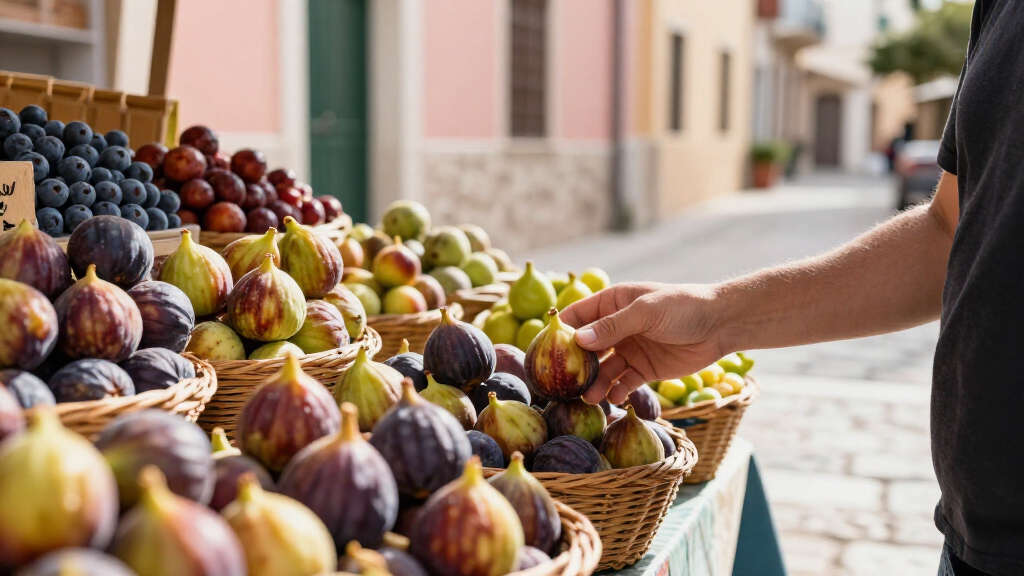
How to Pick, Store, and Prep Figs So They Don’t Disappoint
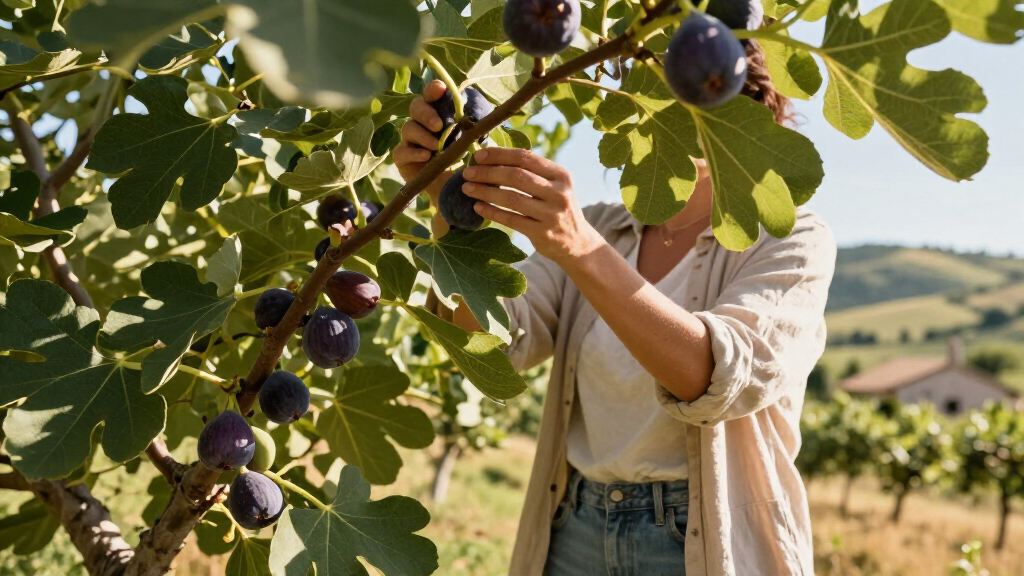
Selecting a ripe fig comes down to touch and smell, because looks alone will fool you. A ripe fig feels plump and gently soft, never hard, and gives off an aromatic, honeyed scent. The skin should show rich color appropriate to the variety and remain intact, though a minor dry crack often signals full ripeness rather than a flaw. Pass over anything with mold, fermentation smells, sour or alcoholic notes, or large wet patches, all signs the fruit is past its prime or splitting badly.
- Choose plump, fragrant figs that yield to gentle pressure. A slight droop at the neck or a bead of nectar at the base signals ripeness.
- Skip hard figs, even at a discount. They will not ripen properly at home.
- Refrigerate immediately in a single layer, unless you are eating them the same day.
- Use within two or three days. Fresh figs have high moisture and sugar content and spoil fast.
- Rinse briefly under cool water just before eating, then pat dry. Washing before storage adds moisture and speeds spoilage.
- Bring chilled figs to near room temperature before serving; cold mutes their flavor.
The skin is edible and usually needs no peeling, though some people peel thick-skinned varieties. Trim the tough tip of the stem if it feels woody. That is the entire prep. Handle ripe figs like ripe peaches, because they bruise at the slightest pressure, and a bruised fig becomes a fermented fig within a day.
If you have more figs than you can eat, freeze halves or quarters on a tray first, then transfer them to a container. Thawed figs lose their firm texture, so plan on using them for sauces, baking, smoothies, or preserves rather than fresh serving.
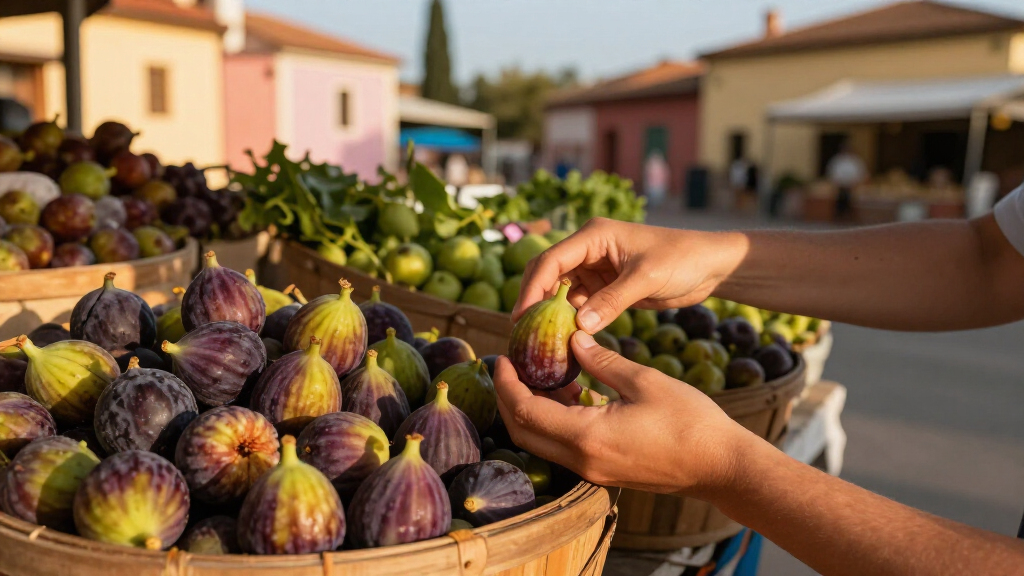
Sweet Ways Italians Actually Use Fresh Figs
The sweet side of Italian fig cooking leans on dairy, nuts, honey, citrus, and pastry, and the best preparations are almost embarrassingly simple. Fresh figs are naturally sweet and delicate, so heavy spices and complicated techniques tend to bury them. The Italian instinct is restraint.
The fastest dessert in the repertoire: quarter ripe figs and serve them with mascarpone or fresh ricotta, a thread of honey, and toasted pistachios. It takes five minutes and tastes like something from a serious restaurant. From there, the possibilities widen:
- Slice figs over yogurt, granola, morning porridge, or a set panna cotta.
- Bake them into a crostata (rustic tart), a galette, almond cakes, or simple fig-and-walnut loaves.
- Roast halved figs with butter, honey, orange zest, cinnamon, or a splash of Vin Santo, the Tuscan dessert wine.
- Poach figs in red wine or a spiced syrup for a spoon dessert that keeps for days.
- Make fig jam with lemon juice and relatively little added sugar; the fruit supplies most of the sweetness.
- Pair figs with dark chocolate, hazelnuts, or almonds, or fold chopped figs into a semifreddo (semi-frozen cream).
A September evening scenario: you have a basket of overripe Brogiotto Nero too soft for the cheese board. Halve them, roast with honey and lemon zest for fifteen minutes at 375°F (190°C), and spoon the collapsed, caramelized figs over vanilla gelato. This is also the honest answer to the low-waste question of what to do with cosmetically imperfect fruit.
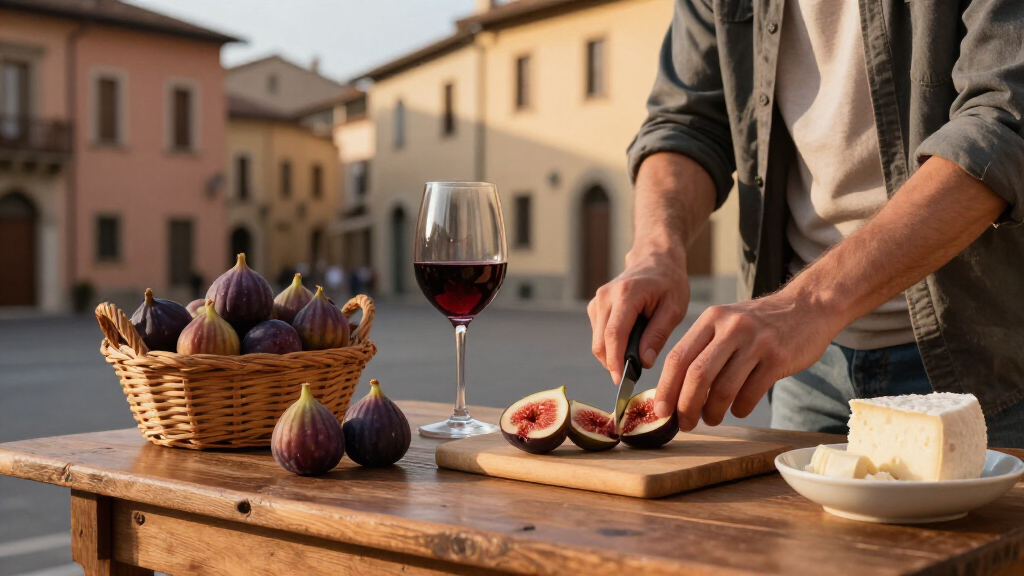
The Savory Side: Why Salt, Fat, and Acid Make Figs Sing
The combination of sweet figs, salty cheese, cured meat, black pepper, and acidity sits at the heart of Italian fig cookery. Sweetness needs a counterweight, and once you taste figs against aged pecorino or prosciutto, plain sugary fig desserts start to feel one-dimensional.
The classic entry point is the simplest: fresh figs wrapped in or served alongside prosciutto as an antipasto. From there, the cheese pairings multiply, ricotta and mascarpone for mild creaminess, pecorino and Parmigiano Reggiano for salt, Gorgonzola and Taleggio for a stronger sweet-savory push, and burrata when you want lush against jammy.
- Quarter figs into salads with arugula or radicchio, walnuts, and a good balsamic dressing.
- Top focaccia or pizza with figs, cheese, prosciutto, and rosemary after baking.
- Grill halved figs and serve them with pork, duck, sausages, or roast chicken.
- Make crostini with whipped ricotta, fig quarters, black pepper, and honey.
- Cook a fig mostarda or agrodolce (sweet-sour condiment) for cheese boards and roasted meats.
- Toss figs into farro grain salads with herbs and toasted nuts.
- For the adventurous: pair figs with salty anchovies or aged cheese.
Acid is the secret lever in savory fig dishes. A squeeze of lemon, wine vinegar, or genuine balsamic keeps figs from tipping a dish into cloying territory.
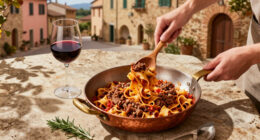
Vegetarians can skip the prosciutto without losing the effect. Aged pecorino, Gorgonzola, olives, capers, balsamic-marinated onions, and toasted nuts supply the same salty-tangy tension. The easiest complete Italian-style plate: quartered ripe figs, ricotta or aged pecorino, a few drops of balsamic, black pepper, and good bread.
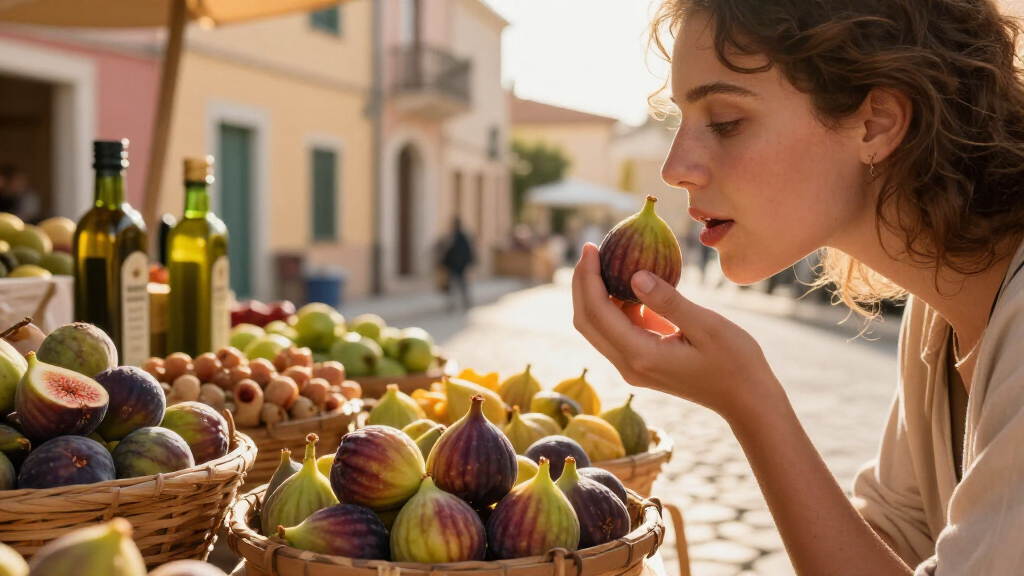
Preserving the Season: Drying, Jam, and a Bit of History
Because figs spoil so quickly, Italians have spent millennia figuring out how to stretch the harvest into winter. Figs have grown around the Mediterranean for thousands of years, and rural Italy valued them for practical reasons: the trees tolerate dry conditions, need modest care once established, and produce energy-rich fruit. Drying turned that fruit into a pantry staple long before refrigeration existed.
That history explains the protected products. Fichi di Cosenza DOP and Fico Bianco del Cilento DOP are fundamentally dried-fig traditions, and the Fico Secco di Carmignano, split, anise-flavored, and pressed into eights, remains a Christmas specialty in Tuscany. Dried figs once filled breads, biscuits, and filled pastries through the winter months.
Your modern options cover the same ground: dry figs in the sun or a dehydrator, make jam or fruit paste, freeze cut figs for cooking, preserve them in syrup or grappa (an adult-only ingredient, best enjoyed responsibly), or cook a fig-and-onion relish for cheese. Overripe and split figs, the ones you cannot serve fresh, become the best jam you will make all year.
Even the Italian language carries the fig’s old importance. The expression non capire un fico secco, literally “not to understand a dried fig,” means to understand nothing at all. You do not build an idiom around a food unless that food once sat at the center of everyday life.
Nutritionally, fresh figs offer fiber, potassium, small amounts of calcium and magnesium, and beneficial plant compounds. They contain far more water than dried figs, so their calories and sugars are much less concentrated by weight. Two notes of caution: figs can have a mild laxative effect in quantity, and people with latex allergies sometimes react to fresh figs or the milky sap, which can also irritate sensitive skin.
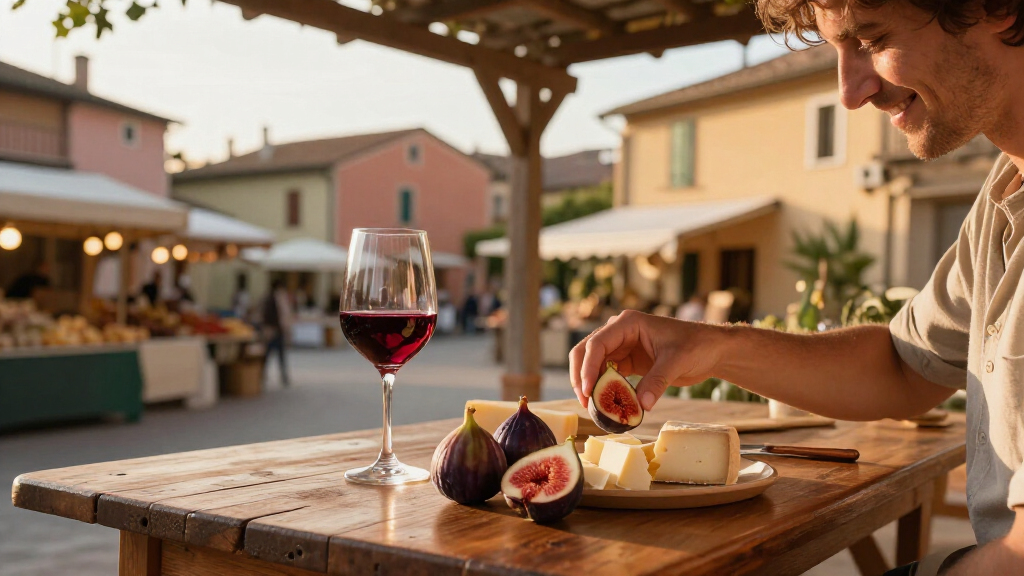
Pairing Figs With Wine and Cheese Without Guessing
Fresh fig season in Italy pairs naturally with two other Italian traditions, cheese and wine, and a little structure saves you from guessing. The rule of thumb: match the intensity of the fig dish, not the fig itself. Light, fresh fig preparations want lighter wines; baked, syrupy fig desserts want concentrated sweet ones.
| Dish | Cheese Partner | Wine Partner |
|---|---|---|
| Prosciutto-wrapped figs | Burrata, fresh ricotta | Dry sparkling wine (Franciacorta, Prosecco) |
| Fig and arugula salad | Pecorino, goat cheese | Crisp white (Vermentino, Falanghina) |
| Roasted figs with honey | Gorgonzola, Taleggio | Vin Santo or passito |
| Fig crostata or tart | Mascarpone | Moscato d’Asti |
| Grilled figs with pork or duck | Aged Parmigiano | Medium-bodied red (Chianti, Aglianico) |
Wine pairings involve alcohol, so keep these pairings for adults and serve them with food and moderation in mind. For a non-alcoholic route, strong black coffee or an almond milk granite does the same balancing work against sweet figs.
The tradeoff worth knowing: the boldest pairing (Gorgonzola with roasted figs) is also the least forgiving. If your guests prefer gentle flavors, stay on the ricotta-mascarpone end of the cheese spectrum and let the figs lead.
Frequently Asked Questions
When is the best time to eat fresh figs in Italy?
The broad season runs from June into October, but August and September offer the greatest abundance and the best flavor. Exact timing depends on the region and variety, with southern regions like Sicily and Calabria extending the season furthest into autumn.
Do figs ripen after they are picked?
Not meaningfully. Hard figs may soften slightly at room temperature, but they will not develop the sweetness and complexity of tree-ripened fruit. Buy figs that are already soft, fragrant, and richly colored.
Should fresh figs be refrigerated?
Yes, unless you are eating them the same day. Store them in a single layer in the refrigerator and use them within two or three days. Let chilled figs come close to room temperature before serving, since cold mutes their flavor.
What cheeses pair best with fresh figs?
Ricotta and mascarpone provide mild creaminess, pecorino and Parmigiano Reggiano add saltiness, and Gorgonzola and Taleggio create the strongest sweet-savory contrast. Burrata works beautifully with prosciutto-wrapped figs.
Can you eat fig skin, and should figs be washed?
Yes, the skin is edible and usually needs no peeling, though some people peel thick-skinned varieties. Rinse figs briefly under cool water just before eating and pat them dry; washing before storage adds moisture and accelerates spoilage.
Does every fig really contain a wasp?
No. Some fig varieties rely on a specialized fig wasp for pollination, but many commercially cultivated varieties set fruit without pollination entirely. The claim that every fig contains a wasp is misleading.
Can fresh figs be frozen?
Yes. Freeze them whole or cut, ideally on a tray first and then in a container. Thawed figs become soft, so use them for sauces, baking, smoothies, or preserves rather than fresh serving.
Conclusion
If you remember one thing, make it this: buy figs already ripe, and do almost nothing to them. The entire Italian fig tradition, from prosciutto pairings to honeyed ricotta breakfasts, is built on the conviction that a tree-ripened fig needs a salty or creamy partner and nothing more. Complexity belongs to the preserving kitchen, not the September table.
Plan around the season rather than fighting it. In August and September, eat them fresh by the basketful, standing over the sink if you have to. In October, buy the last southern figs and cook them down. And in December, when you find anise-scented Carmignano figs pressed into eights, you will understand why Italians once organized their whole winter pantry around this one fragile fruit.
Halloween Picks
halloween
As an affiliate, we earn on qualifying purchases.