TL;DR

Get kitchen staples and gadgets delivered free with Prime
- Fast, free delivery on millions of items
- Prime Video, Amazon Music and more included
- Member-only deals all year
A sagra della castagna is a local festival tied to the chestnut harvest, usually held sometime in autumn; dates, food, and activities vary by village and year. Look at towns such as Soriano nel Cimino or Vallerano in Lazio, and Marradi or Castel del Piano in Tuscany, then confirm the current program, transport, and access before booking. Arrive early, dress for cool or wet weather, and leave room in your itinerary for a woodland walk or a slow meal.
Chestnut festivals usually take place in autumn, often October or November; confirm the town’s current dates before booking.
Soriano nel Cimino and Vallerano are Lazio options to investigate; Marradi and Castel del Piano are Tuscan starting points.
Festival menus vary: look for caldarroste and local chestnut dishes, but don’t expect every town to serve castagnaccio.
Check parking, road closures, tickets, transport, and return times with current organizer or municipal information.
Wear layers and grippy shoes, check trail conditions, and ask locally before collecting chestnuts.
Autumn field guide · Lazio + Tuscany
Sagra della Castagna Weekend: Plan a Chestnut Trip
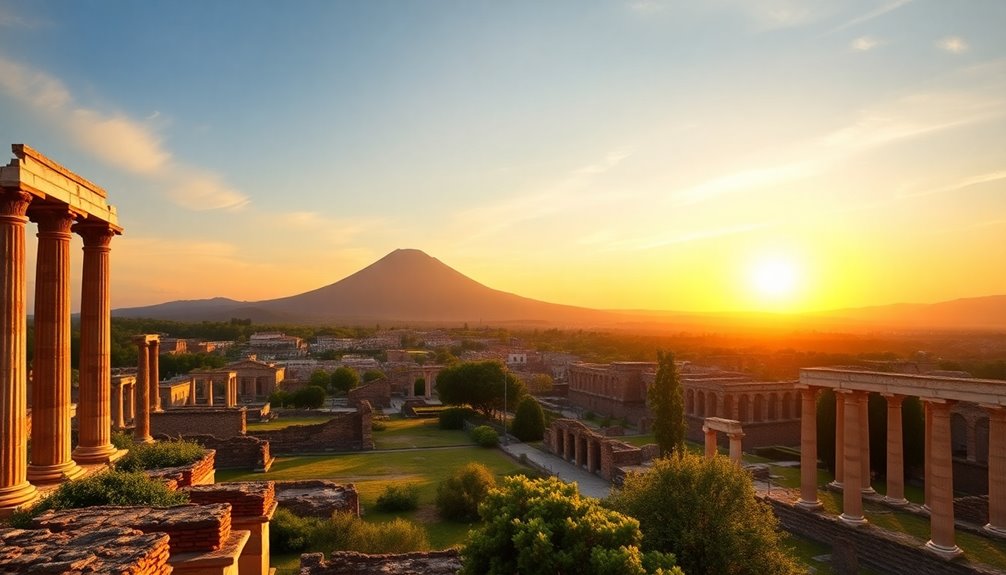
Follow the harvest to a village festival, then leave space for a woodland walk, an unhurried meal, and the small details that make a weekend feel local. Dates and programs vary by town and year, so confirm the latest plan before you book.
Often autumn; exact dates vary.
Soriano nel Cimino · Vallerano
Marradi · Castel del Piano
Festival day + flexible outing
01 / Choose your base
Four starting points, one seasonal tradition
These towns are useful places to investigate, not a promise of a fixed event date or format. Let the current announcement guide your choice.
Soriano nel Cimino
A village to consider for chestnut celebrations in the Cimini Mountains. Check the current program, access, and any meal arrangements.
Historic center + hillsVallerano
A second Lazio starting point associated with chestnut traditions. Compare confirmed dates and the day’s activities before choosing.
Harvest countryMarradi
Explore the event listing and nearby routes in this Tuscan Apennine area. Seasonal schedules can shift from one year to another.
Mountain settingCastel del Piano
Use the local program to see what is happening, then pair the festival with a village wander or an Amiata viewpoint.
Amiata districtCalendar rule: there is no single Lazio-and-Tuscany festival weekend. Each village sets its own dates, food, activities, and arrangements; check the municipality or organizer for the current year.
02 / A simple planning sequence
Confirm first. Then build the weekend around it.
A short checklist keeps the festival day enjoyable without filling every hour.
Pick a town
Compare the confirmed event, your starting point, and the setting you want.
Check the listing
Confirm dates, hours, tickets, meals, and the official program before booking.
Plan the journey
Check parking, closures, public transport, and a workable return time.
Add one extra
Keep a block open for a walk, historic center, meal, or weather change.
03 / Before you book
Turn the announcement into a practical plan
Small inland towns can have limited access options on busy weekends. Check the details that affect your whole day.
Check before you go
- ✓Official dates, opening hours, and the latest weather or cancellation updates.
- ✓Whether meals, tastings, activities, or entry require tickets or reservations.
- ✓Parking locations, road closures, shuttle details, and public transport in both directions.
- ✓Return options after evening events; an overnight stay may make the trip easier.
- ✓Trail conditions and local rules before walking or collecting chestnuts.
Keep the pace comfortable
Parking and food stalls can be busiest around lunchtime and on weekends. Arriving early can make it easier to park, browse, and settle in.
Autumn weather, crowds, and seasonal opening hours can change the pace. Keep an alternative close by rather than stacking the schedule.
04 / At the table
Follow the village menu, not a checklist
Chestnuts have been eaten fresh or roasted, dried for storage, and milled into flour. The recipes and pairings are part of each place’s story.
Caldarroste
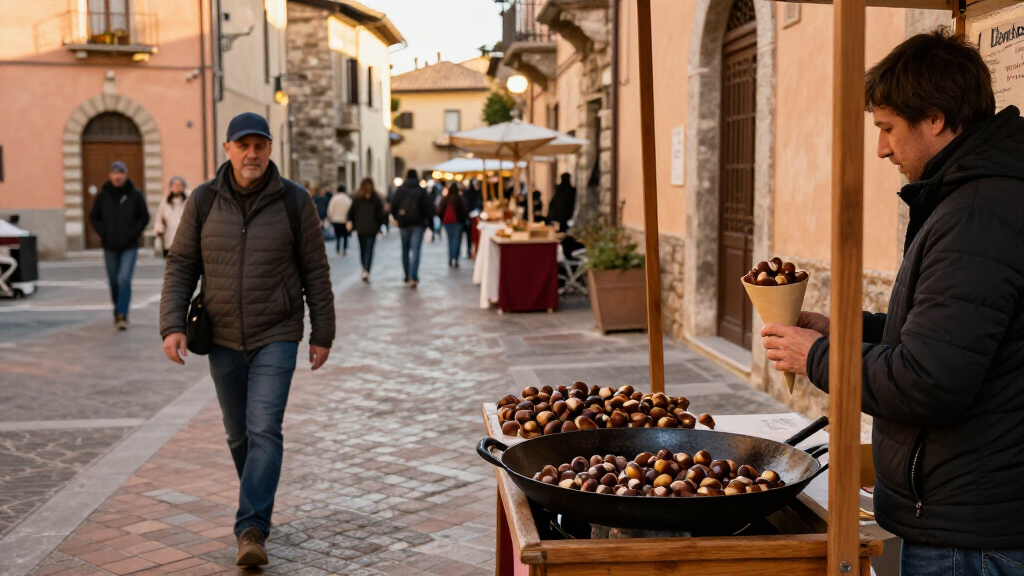
Roasted chestnuts are a familiar festival taste. Ask what is being served locally and enjoy them while they are warm.
Chestnut flour
Look for local pasta, polenta, or other dishes made with chestnut flour. Menus and recipes differ by village.
Castagnaccio
This chestnut-flour cake is found in parts of central Italy, but it is not served at every festival. Ask about the local version.
Food allergies: ask stallholders about ingredients and cross-contact before eating. Festival kitchens may prepare many dishes in shared spaces; read packaged-product labels.
05 / Make it a weekend
Give the festival day a little breathing room
A two-day shape lets you enjoy the celebration and still see the landscape around it.
Arrive curious, not rushed
Choose one easy extra
06 / Pack for the season
Comfort makes room for spontaneity
Cool or wet weather and uneven village streets are part of the autumn setting. A few practical choices help the day flow.
Layers
Temperatures can change through the day. Bring a warm layer and a rain-ready outer shell.
Grippy shoes
Festival streets may be uneven or crowded; woodland paths can be wet underfoot.
Local trail advice
Verify conditions before setting out, and follow local guidance on access and foraging.
Flexible timing
Leave breathing room around meals, travel, and any activity with a fixed start time.
Choose a festival by the weekend you want
A sagra della castagna is a village festival celebrating the chestnut harvest, with food and activities that vary from town to town. In Lazio, Soriano nel Cimino and Vallerano are associated with chestnut celebrations in the Cimini Mountains area; in Tuscany, Marradi and Castel del Piano are places to investigate in the Apennine and Amiata districts. These names give you a starting point, not a promise that a particular event runs on the same dates or in the same format every year. The kind of festival you choose shapes the whole day. A program centered on food stalls and shared meals may mean a lively square and queues at peak lunch hours; a smaller event can offer a quieter village visit but fewer scheduled activities. If woodland scenery matters most, compare nearby trails and access as carefully as the festival program. You could spend Saturday at the celebration, then reserve Sunday morning for a walk or historic center. That spreads the day’s crowds and gives you an alternative if the festival feels busy. A sagra is usually more local and seasonal than a ticketed food fair. You may find roasted chestnuts, market stalls, music, or a communal meal, but none of those details are guaranteed at every event. Decide whether you value a lively crowd, a long lunch, a village stroll, or a mix; that preference helps you judge whether the confirmed program is worth the travel. Choosing from an old listing or an assumed tradition can leave you with a town that is open but an event that is not. Let the current schedule guide the decision.As an affiliate, we earn on qualifying purchases.
Check the dates before you book an autumn weekend
Chestnut festivals in Lazio and Tuscany generally fall in autumn, often from October into November, but each town sets its own dates around its harvest and local program. There is no single regional calendar you can rely on for both regions. Confirm the current announcement from the municipality or festival organizer before booking a nonrefundable stay or planning a long drive. This matters because the festival is the fixed point of the trip: if its dates shift, every connected reservation and journey can become inconvenient or costly to change. Start by checking the event’s dates and daily hours. Next, see whether meals, tastings, or special activities require tickets or reservations. Then check road access, parking, public transport, and any shuttle information. These details determine how much of the day you can actually spend at the festival. A late arrival might mean missing a booked meal, while arriving too early without a plan could leave you waiting before stalls open. On busy weekends, temporary road closures can also turn a short drive into a longer walk from parking. For instance, if the event runs into the evening, staying overnight nearby may cost more than a day trip but avoid a stressful drive back on unfamiliar country roads after dinner. If you’re relying on public transport, check the entire trip in both directions: a train or bus that gets you there may not offer a convenient return after the program ends. Look again shortly before departure for weather changes, cancellations, or updated access rules. The schedule is a planning framework, not a guarantee against local changes, so leave some flexibility around meals and travel.Taste the chestnut dishes each village actually serves
Festival food depends on the village, so treat the posted menu as a better guide than a generic chestnut festival list. You may encounter caldarroste (roasted chestnuts), chestnut flour in pasta or polenta, cakes, and other local dishes. The smell of shells cracking over a brazier is reason enough to pause, but a festival plate can also show you how a rural ingredient became flour for everyday cooking. Asking what is made locally can reveal more than ordering the first chestnut dish you recognize: the menu may reflect local methods, available ingredients, and family traditions. Chestnuts have long been eaten fresh or roasted, dried for storage, and ground into flour in parts of central Italy. Drying and milling made the harvest useful beyond the few weeks when fresh chestnuts were available. One familiar example is castagnaccio, a chestnut-flour cake found in parts of central Italy; it is not served at every festival. If you spot it, ask how that village makes it. Recipes and pairings differ, so one version may be plain and earthy while another includes additions such as dried fruit or nuts. That variation is part of the experience: a dish’s ingredients and texture can tell you more about local taste than its name alone. Use the meal as a way to notice local differences rather than hunting for one required dish. A visitor in Vallerano might choose roasted chestnuts and a festival meal, while a traveler near the Tuscan Amiata could look for the local menu and ask whether chestnut flour features in the day’s dishes. If you have allergies, ask stallholders about ingredients and cross-contact before eating; recipes can include nuts, wheat, dairy, or eggs. Festival kitchens may serve many dishes in a shared space, so an answer about listed ingredients may not establish whether cross-contact is possible. For packaged products, read the label rather than assuming the dish is allergen-free.Reach small inland towns with a realistic transport plan
A car is often the easiest way to reach small inland towns and nearby woodland trails, but driving only works well if you check parking and road access first. Festival streets can be crowded or closed, and your map’s usual route may not take temporary restrictions into account. Find the organizer’s current parking advice, note the walk from parking to the center, and arrive early if browsing before the lunch rush matters to you. The tradeoff is convenience on the rural leg against the time and effort of parking outside the center; a short walk can be easier than circling narrow streets when crowds arrive. Without a car, check train and bus connections for the complete journey, including the final leg into town and your return. Do not assume a festival shuttle exists; verify it with the organizer. A traveler visiting Marradi, for example, should check what public transport serves the town on the chosen weekend, when the last departure leaves, and whether the event hours fit those connections. The same homework matters in smaller villages across Lazio’s Cimini area. A connection that works on paper may still leave a long wait or walk, so compare the timetable with the program’s opening and closing hours before deciding that public transport is practical. If you plan to drink wine with a meal, make a sober transport plan before you arrive. Alcohol is for adults; drink responsibly and do not drive after drinking. An overnight stay can turn an awkward late return into a relaxed evening, especially if the event includes a long meal or music, though it adds lodging cost and needs advance booking on popular weekends. If you are walking from a distant car park, carry only what you need and wear shoes that handle uneven paving.Pack for damp paths and crowded village streets
Pack comfortable walking shoes, a warm layer, and rain protection for an autumn chestnut weekend. Mornings can feel cool, and rain can leave woodland paths muddy while village paving stays uneven underfoot. A lightweight waterproof jacket and shoes with a reliable grip beat dress shoes if you plan to wander beyond the festival stalls. The right footwear also gives you more choice during the day: you can take a nearby path or walk from an outer car park without needing to turn back because the ground is slick. Keep your day bag simple: water, a portable layer, cash if you prefer having it, and a note of your parking location or return timetable. Check the weather shortly before leaving, since an outfit that works in a sunny town square may feel thin on a shaded trail. If you’re bringing children, confirm whether the current program offers family activities and whether facilities meet your needs; events differ in crowd size and setup. These checks help you decide how long to stay and whether to bring extra food, rest breaks, or a stroller suited to uneven streets. For example, you might arrive early, walk through the historic center while it is quieter, then visit food stalls around lunchtime. If rain makes a trail unpleasant, swap it for a longer café stop or an indoor visit that is open that day. Autumn opening hours can be seasonal, so check before building the plan around a museum or producer visit. Keep one part of the schedule flexible: a fixed booking can make a rainy day feel rushed, while an optional stop lets you adapt without losing the point of the trip.Build a weekend around the festival, not just the food queue
Pair the festival with one nearby experience—a marked woodland trail, a historic center, a local food producer, or a lake or mountain viewpoint—and you’ll come away with a clearer sense of the region. Chestnut growing belongs to rural life in parts of central Italy, where the nut could be roasted, dried, or milled into flour. Seeing the hills and village streets around the event makes that food tradition tangible. A second stop also changes the rhythm of the trip: you can step away from the busiest hours instead of spending the entire day waiting for food or browsing stalls. In Lazio, the Cimini Mountains and towns around Lake Vico offer a natural starting point for looking at scenery near festival towns such as Soriano nel Cimino and Vallerano. In Tuscany, consider the Amiata area or Garfagnana as chestnut districts to explore, with Marradi and Castel del Piano among towns associated with celebrations. These are broad regional ideas, not a guarantee that a particular trail, winery, or attraction will be open on your dates. Check distance and travel time as well as opening hours; a scenic stop that requires a long detour can make a relaxed weekend feel like a driving itinerary. A simple plan could be Saturday for the festival and historic center, then a short, clearly marked walk on Sunday morning before lunch. Check trail conditions and local guidance, and don’t assume you may collect chestnuts: foraging rules depend on land ownership and local regulations. Ask locally before picking anything. If rain or crowds change the day, keep the nearby stop optional. This balance lets you enjoy the celebration while still leaving space for the landscape that gives the harvest its context.Use this short checklist to plan without overpacking the day
The easiest way to plan a chestnut weekend is to confirm the event, solve transport, and leave one flexible block in your schedule. This order prevents the common mistake of booking a room or arranging a return journey around details that the organizer has not confirmed. Work through the steps below before you set off.- Confirm the current dates and hours with the municipality or organizer, then recheck shortly before travel.
- Check tickets and reservations for meals or activities; ask whether walk-ins are welcome.
- Plan the full journey, including parking, road closures, public transport, and the return trip.
- Pack for autumn with layers, rain protection, and comfortable shoes for uneven streets or muddy paths.
- Choose one nearby extra, such as a historic center or marked trail, and check current access and hours.
Frequently Asked Questions
When is chestnut festival season in Lazio and Tuscany?
Most chestnut festivals take place in autumn, often sometime from October into November, around the local harvest. Each village chooses its own dates, so check the current municipality or organizer announcement before booking.Which chestnut festival should I choose?
Start with confirmed dates, your starting point, and transport. Soriano nel Cimino or Vallerano are Lazio towns to investigate; Marradi and Castel del Piano are Tuscan options. Then compare the current program to see whether you want food stalls, local history, or nearby walks.Can I reach a chestnut festival without a car?
Possibly, but public transport to small inland towns can be limited, especially on weekends. Check the full outward and return journey, and confirm any shuttle directly with the organizer rather than assuming one runs.Do I need tickets or a meal reservation?
It depends on the event and activity. Some meals or special activities may require booking or tickets, while stalls and other parts may be open to walk-ins; check the current program for the town you choose.What should I wear to a chestnut festival?
Wear comfortable shoes for uneven village streets and possible muddy paths, plus layers and rain protection for changeable autumn weather. Check the forecast before leaving and adjust your plan if trails are wet.Can I pick chestnuts in the woods?
Do not assume you can forage. Rules depend on land ownership and local regulations, so use marked public trails and ask locally before collecting chestnuts.Conclusion
Choose the town whose confirmed dates, transport, and atmosphere fit your weekend, then leave space for the unexpected: a smoky cone of caldarroste, a quiet lane, or a view over chestnut-covered hills. Check the current program before booking, and let the village set the pace. The best souvenir may be the smell of roasted chestnuts lingering in your scarf on the ride home.Halloween Picks
halloween
As an affiliate, we earn on qualifying purchases.