
TL;DR

Get kitchen staples and gadgets delivered free with Prime
- Fast, free delivery on millions of items
- Prime Video, Amazon Music and more included
- Member-only deals all year
Seasonal Italian cooking is less a formal rule than a practical tradition built around ingredients when they are most flavorful, plentiful, and affordable. You can follow it by checking what grows near you, choosing a flexible Italian dish, and using preserved foods when fresh produce has passed its peak.
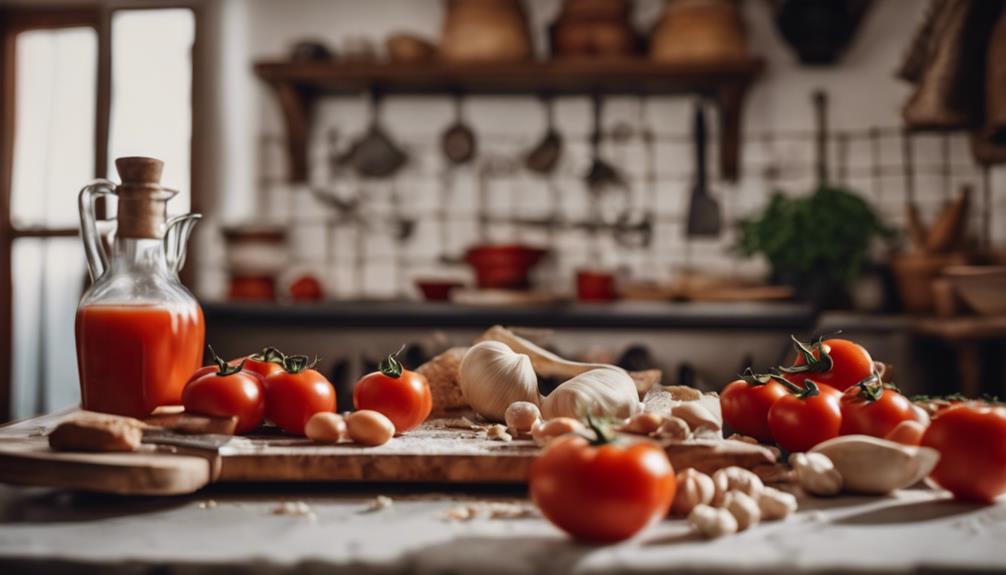
A tomato in August can perfume your kitchen before your knife touches its skin. The same fruit in January may feel firm, watery, and strangely silent. That contrast gets to the heart of why Italians eat by the calendar: timing can do more for flavor than a complicated recipe ever will.
Seasonal Italian cooking begins with what looks and smells good now, then turns that ingredient into lunch. A Roman shopper might bring home spring artichokes for carciofi alla romana, while a cook in Sicily reaches for eggplant earlier in the year and someone in Trentino waits longer for local summer produce. Italy’s cuisines grew from these differences in climate, altitude, farming, fishing, preservation, and religious custom.
You do not need an Italian market outside your door to cook this way. You need a few flexible dish formulas, a willingness to replace a weak ingredient, and enough curiosity to ask where your food came from. This guide gives you a usable seasonal map, shows you how regionality changes it, and helps you bring Italian market logic into your own kitchen without treating tradition like a rigid rulebook.
Choose two or three ingredients that smell, look, and taste good now, then fit them into pasta, risotto, soup, salad, or frittata.
Use regional calendars as flexible guides because Sicily, Lazio, the Po Valley, and Alpine regions reach the same harvest at different times.
Use passata or quality canned tomatoes in winter instead of weak fresh tomatoes; preservation belongs to authentic Italian seasonality.
Substitute by function: replace a bitter green with another bitter green or a tender spring vegetable with a similar local crop.
Treat DOP and IGP as origin and production labels, not proof that a food is local to you, freshly harvested, or currently in season.
Why Italians Eat by the Calendar
A beginner’s guide to seasonal Italian cooking: begin with what is ripe, fragrant, and abundant, then let a flexible dish turn it into lunch. Timing often creates more flavor than complexity ever could.
A flexible framework, not four rigid deadlines.
Excellent ingredients are enough to shape one meal.
Main ingredients make quality easy to taste.
Regional conditions always modify the map.
What to watch for, season by season
Use this map as a starting point. Sicily may reach a harvest weeks before Lazio, the Po Valley, Piedmont, or Trentino. Local weather matters more than a printed date.
Spring
Look for
Artichokes, asparagus, peas, fava beans, agretti, spring onions, strawberries, and tender greens.
Cook
Carciofi alla romana, asparagus risotto, fava beans with pecorino, spring minestrone, or torta pasqualina.
Fresh · green · herbaceousSummer
Look for
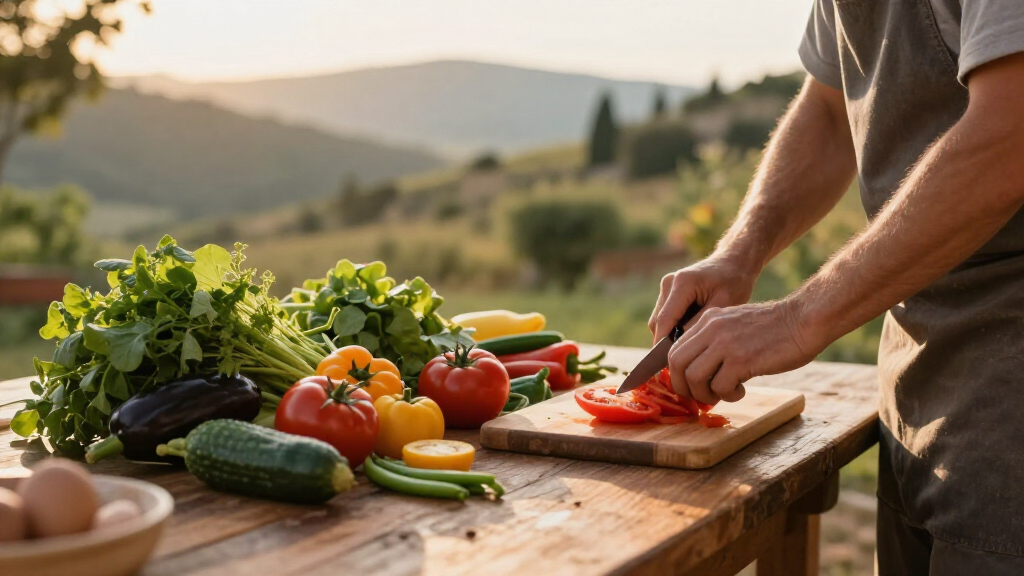
Tomatoes, zucchini, peppers, eggplant, green beans, basil, peaches, figs, melons, and seafood.
Cook
Pasta al pomodoro, panzanella, Caprese salad, pasta alla Norma, parmigiana di melanzane, or granita.
Ripe · bright · minimalAutumn
Look for
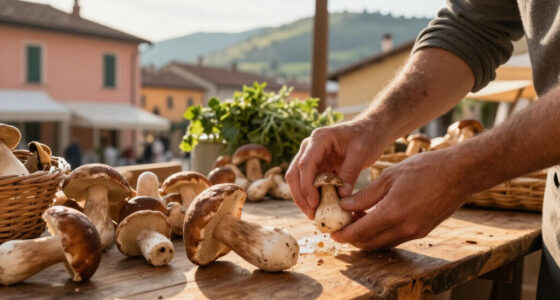
Porcini, squash, chestnuts, grapes, apples, pears, radicchio, truffles, nuts, and new olive oil.
Cook
Pumpkin tortelli, mushroom risotto, radicchio risotto, castagnaccio, or polenta with mushrooms.
Earthy · toasted · deepWinter
Look for
Cabbage, cavolo nero, chicory, fennel, broccoli, leeks, potatoes, legumes, citrus, and preserved tomatoes.
Cook
Ribollita, pasta e fagioli, polenta, broccoli pasta, fennel and orange salad, or slow-cooked dishes.
Sturdy · warming · preservedLet one market visit decide the next Italian meal
Seasonal cooking becomes practical when you delay the recipe decision until you have inspected the produce.
Scan first
Walk the whole produce area. Notice large displays and ingredients appearing at several stalls.
Test quality
Look for natural fragrance, suitable texture, lively color, and a named farm or growing region.
Ask locally
Ask what is best this week, where it grew, and how the vendor cooks it at home.
Choose a format
Fit the ingredients into pasta, risotto, soup, frittata, salad, or roasted vegetables.
Plan the echo
Use stems, leaves, cooked vegetables, or leftover bread in a second meal.
Swap one bitter green for another, or one tender spring vegetable for a comparable local crop.
Ripe produce may need only olive oil, salt, herbs, acidity, and a carefully chosen cheese.
If asparagus is dry and scentless, change dinner instead of forcing the original plan.
Read quality signals together
No single clue proves that an ingredient is seasonal, local, affordable, or delicious. Combine aroma, abundance, condition, origin, and price.
| Signal | What it can tell you | Best response | What it cannot prove |
|---|---|---|---|
| Strong natural aroma | ✓ Often signals ripeness and developed flavor. | Build a simple dish that keeps the ingredient recognizable. | It does not confirm local origin or a low price. |
| Large market displays | ✓ Can indicate current abundance. | Compare several stalls and ask what arrived recently. | Imported or greenhouse produce may also be plentiful. |
| Low seasonal price | ~ Abundance can make good produce more affordable. | Buy only what you can use and preserve any surplus. | Short-season truffles, porcini, or wild asparagus may remain costly. |
| DOP or IGP label | ✓ Identifies protected origin or production standards. | Use it as an origin clue and check harvest timing separately. | ✗ It does not prove the food is local to you, fresh, or in season. |
| Perfect appearance | ~ May indicate careful handling. | Prioritize scent, texture, taste, and provenance over symmetry. | ✗ Beauty alone does not guarantee flavor. |
Key: ✓ useful evidence ~ partial evidence ✗ not established
The same harvest arrives at different times
This relative scale illustrates how warmer, coastal conditions can bring some produce forward while higher altitude and northern climates delay it. It is a practical pattern, not a fixed national timetable.
Follow the logic, not a rigid rulebook
Italian seasonality connects landscape, harvest, market judgment, cooking technique, and preservation. Each link changes with place and weather.
In winter, quality passata or canned tomatoes made during the summer harvest are often the more seasonal and more Italian choice.
Why the Calendar Gives Simple Italian Food More Flavor
Seasonal Italian cooking tastes vivid because produce harvested near ripeness develops fuller sweetness, aroma, acidity, and texture. Peak abundance can also lower the price, letting you buy better ingredients without spending more. When a dish contains only four or five main ingredients, that difference is easy to taste.
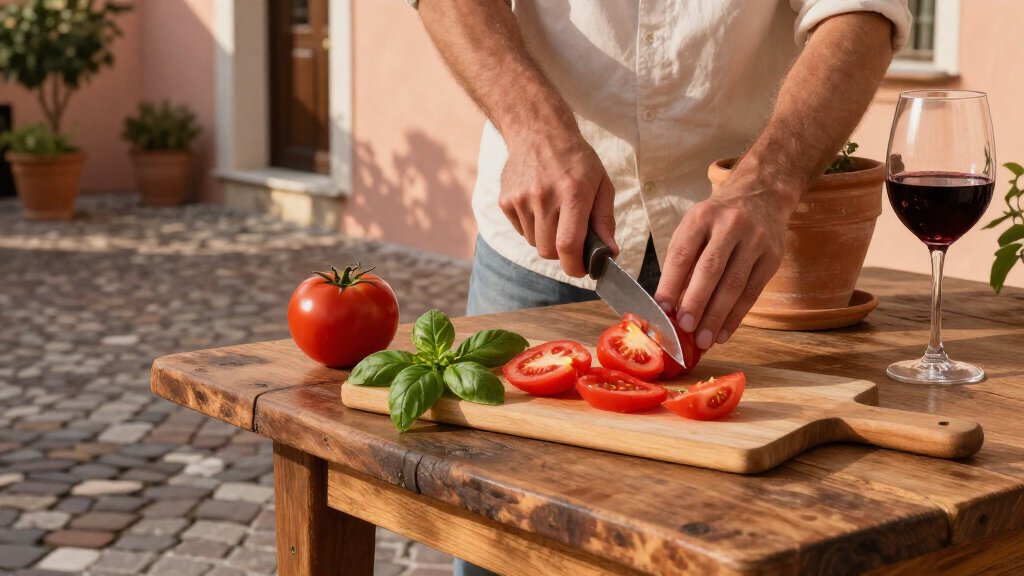
Take pasta al pomodoro. In August, ripe tomatoes collapse into a glossy sauce with olive oil, garlic, basil, and salt; you may need no sugar and very little cooking. In February, traditional cooks reach for passata or canned tomatoes made during the summer harvest instead of forcing pale fresh tomatoes to perform a job they cannot do.
This is why seasonal cooking is less a formal rule than a practical tradition. Ingredients are usually at their most generous when farms and gardens have plenty of them. A market stall piled with zucchini is not merely attractive; it tells you that zucchini risotto, grilled zucchini, or a frittata will probably taste better that week than a dish built around tired imported asparagus.
Seasonal cooking means letting quality choose the recipe. You start with what is good, then decide whether it wants pasta, rice, bread, eggs, or a slow simmer.
That habit grew from necessity. Before refrigerated trucks and global distribution, a Ligurian household cooked the green beans and basil arriving in summer, while a Tuscan family relied on dried beans, cabbage, stale bread, and preserved tomatoes through winter. Dishes such as ribollita, a Tuscan bread-and-bean soup, turned limits into something fragrant, thick, and deeply comforting.
The tradeoff is that seasonal does not automatically mean cheap or humble. White truffles, wild asparagus, and porcini can remain expensive during their short seasons because supply is limited and demand is fierce. Treat abundance, aroma, origin, and price as clues together; no single sign tells the whole story.
As an affiliate, we earn on qualifying purchases.
Use This Four-Season Map Without Treating Italy as One Climate
Seasonal Italian cooking follows a regional map, not one national timetable. Sicily’s warmth, the damp Po Valley, the central Apennines, Alpine valleys, and two long coastlines create different harvest windows. Use the seasons below as starting points, then adjust for your location, weather, and altitude.
| Season | Ingredients to watch for | Italian dishes that use them well |
|---|---|---|
| Spring | Artichokes, asparagus, peas, fava beans, agretti, strawberries, tender greens | Carciofi alla romana, asparagus risotto, fava beans with pecorino, torta pasqualina |
| Summer | Tomatoes, zucchini, peppers, eggplant, basil, peaches, figs, melons | Panzanella, pasta alla Norma, parmigiana di melanzane, Caprese salad, granita |
| Autumn | Porcini, squash, chestnuts, grapes, radicchio, apples, truffles, new olive oil | Pumpkin tortelli, mushroom risotto, castagnaccio, polenta with mushrooms |
| Winter | Cabbage, cavolo nero, fennel, broccoli, leeks, legumes, citrus, preserved tomatoes | Ribollita, pasta e fagioli, polenta, fennel and orange salad |
In Rome and Lazio, spring brings heaps of artichokes, including the rounded Carciofo Romanesco del Lazio IGP. You might eat them slowly braised with mint and garlic as carciofi alla romana, or crisp and bronze as carciofi alla giudia, the Jewish-Roman preparation associated with the city’s historic Jewish community. The same week, an Alpine market may still lean on stored apples, potatoes, cheese, and sturdy greens.
Summer in Campania makes a strong case for restraint. Ripe tomatoes, basil, extra-virgin olive oil, and Mozzarella di Bufala Campana DOP can become a meal with bread and salt. Move south to eastern Sicily, and eggplant meets tomato, basil, and salted ricotta in pasta alla Norma, a dish closely tied to Catania.
Autumn smells darker: damp leaves, toasted chestnuts, mushrooms, and the peppery bite of olio nuovo, freshly pressed olive oil. In Emilia-Romagna, pumpkin fills tortelli; in Veneto, radicchio may tint risotto burgundy. Winter then shifts the kitchen toward beans, grains, cabbage, citrus, and preserved summer produce.
Artichokes show why the calendar needs flexibility. Different varieties and climates can create autumn, winter, and spring harvests, even though many guides call them a spring vegetable. Ask what is local this week rather than rejecting an ingredient because a simplified chart assigns it to another month.
Let One Market Visit Decide Your Next Italian Meal
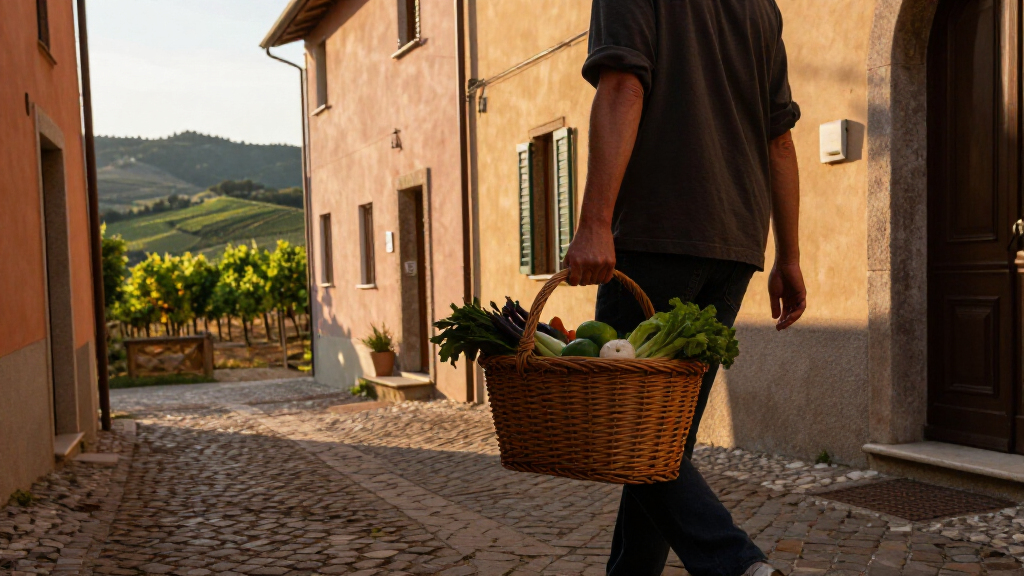
Shopping seasonally gets easier when you delay choosing the exact recipe until you see the produce. Look for large displays, strong natural fragrance, firm or tender textures appropriate to the ingredient, and signs naming the farm or growing region. Then build dinner around two or three excellent finds.
- Scan before buying. Walk the whole produce area once and notice what appears on several stalls.
- Ask what is best this week. Also ask where it grew and how the vendor cooks it at home.
- Choose a flexible format. Pasta, risotto, soup, frittata, salad, or roasted vegetables can accept many seasonal ingredients.
- Add one regional anchor. Pair fava beans with Pecorino Romano DOP, radicchio with risotto rice, or tomatoes with good durum-wheat pasta.
- Buy only what you can use. Plan a second meal for stems, leaves, leftover bread, or cooked vegetables.
Suppose you planned asparagus risotto, but the asparagus at the store has dry ends and almost no scent. Beside it sits a mound of glossy young zucchini with fresh blossoms. Buy the zucchini, keep the risotto method, and finish the rice with Parmigiano Reggiano DOP and torn basil; you have followed Italian logic more closely than if you had clung to the original recipe.
Price can help you read the moment. A sudden abundance of peas, tomatoes, or local peaches often pushes prices down, while the first tiny box of the season may carry a premium. Wait a week or two when an early crop looks expensive and underdeveloped; flavor often improves as the main harvest arrives.
Challenge yourself to shop without a fixed main vegetable once a month. If the best item is bitter chicory, sauté it with garlic and olive oil, then serve it beside beans or fold it through pasta. If it is cauliflower, cook pasta con i broccoli and let the softened florets form the sauce rather than sitting stiffly on top.
This method also cuts waste. Beet greens, fennel fronds, broccoli stems, stale bread, and leftover cooked beans are not scraps by default; they are possible soups, fillings, pestos, or breadcrumb toppings. Seasonal Italian cooking often defines thrift as seeing a second meal before food reaches the bin.
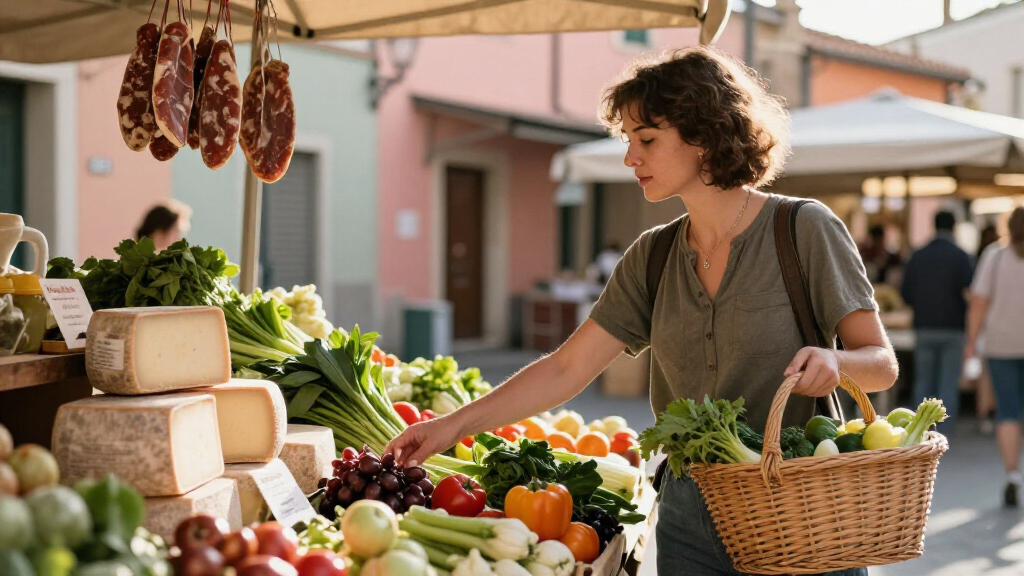
Master Four Flexible Dishes and Cook Every Season
Seasonal Italian cooking becomes manageable when you learn adaptable formats instead of collecting dozens of rigid recipes. Pasta, risotto, soup, and frittata each give seasonal produce a different texture and level of richness. Master those four dependable structures, and market surprises stop feeling inconvenient.
- Pasta: Match delicate vegetables with quick sauces and sturdier produce with longer cooking.
- Risotto: Add a vegetable purée or small cooked pieces while the rice absorbs hot stock.
- Soup: Combine legumes, grains, greens, and preserved tomatoes according to the weather.
- Frittata: Fold cooked vegetables, herbs, and a modest amount of cheese into beaten eggs.
In spring, blanch peas for two or three minutes and toss them with pasta, spring onion, olive oil, and Pecorino Romano DOP. In summer, rub ripe tomato over toasted bread for a simple pane e pomodoro. Autumn squash can melt into risotto, while winter cavolo nero gives bean soup a dark, mineral edge.
Think about function when substituting. If a recipe calls for radicchio, another bitter leafy green can provide the contrast the dish needs. Tender broad beans can stand in for peas, and sturdy kale can replace cavolo nero when the Tuscan variety is unavailable. You preserve the recipe’s balance without importing a poor version of the named ingredient.
Simple dishes still require careful timing. Add tender herbs near the end, salt eggplant before cooking when you want a firmer texture, and give dried beans enough time to become creamy. A frittata containing eggs should reach 160°F or 71°C in the center; seafood should reach 145°F or 63°C, unless a trusted preparation uses a different validated safety standard.
Flag allergens when you cook for others. Pasta and bread commonly contain wheat or gluten; risotto stock may contain celery; pesto often contains tree nuts and dairy; frittata contains eggs; pecorino and mozzarella contain milk; seafood dishes contain fish or shellfish. Ask guests directly, check package labels, and prevent cross-contact with clean utensils and work surfaces.
For a practical Sunday example, roast two trays of autumn squash. Use one tray in risotto that evening and refrigerate the second within two hours for soup or pasta the next day. One seasonal ingredient gives you two distinct meals without making the week taste repetitive.
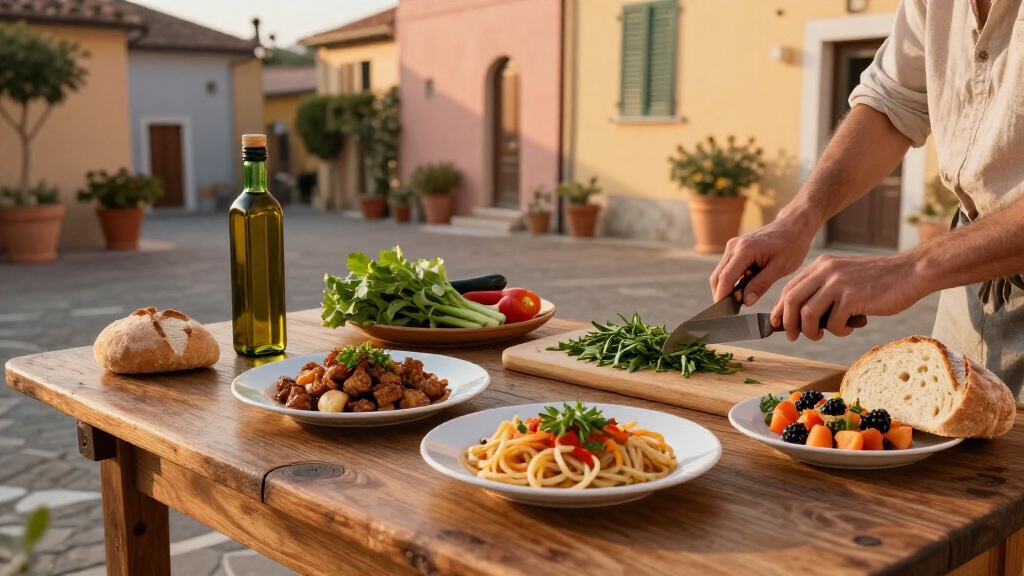
Keep Peak Produce Safely After Its Short Season Ends
Preservation extends the Italian calendar by capturing abundance when flavor and price are favorable. Passata, dried mushrooms, jams, frozen peas, pickled vegetables, and produce packed sott’olio, meaning under oil, carry harvest flavors into leaner months. Safe preservation is part of the cooking method, not an optional detail.
The clearest example is the tomato. Families across Italy have long turned summer tomatoes into bottled passata or preserved whole fruit for winter sauces. Opening a jar in January releases a deep, sweet tomato aroma that a hard supermarket tomato rarely offers; using preserved tomatoes is authentic seasonal cooking, not a compromise.
Home canning needs tested processing times, verified acidity, clean equipment, and jars designed for canning. Oil alone does not make garlic, mushrooms, herbs, or vegetables shelf-stable; low-acid food in an oxygen-poor jar can support the bacteria that cause botulism. Follow a tested government or university-extension recipe, and refrigerate quick homemade sott’olio preparations rather than guessing at room-temperature storage.
Never taste food from a bulging, leaking, spurting, cracked, or strangely smelling jar. Discard suspect preserves without sampling them.
Freezing is easier for beginners. Blanch peas, green beans, or chopped leafy greens briefly, cool them in ice water, dry them well, and freeze them at 0°F or −18°C. Label each package with the ingredient and date; flat bags stack neatly and thaw faster than thick containers.
Refrigerate cooked dishes and cut produce within two hours, or within one hour when the surrounding temperature rises above 90°F or 32°C. Keep the refrigerator at 40°F or 4°C or colder, and reheat soups, beans, and casseroles to 165°F or 74°C. These numbers matter when a large pot of ribollita sits steaming on the counter after dinner.
Preservation also changes an ingredient in useful ways. Dried porcini bring a concentrated woodland scent to risotto, stale Tuscan bread thickens ribollita, and dried beans become creamy after soaking and simmering. The goal is not to imitate fresh produce forever; it is to let each preserved form do its own job.
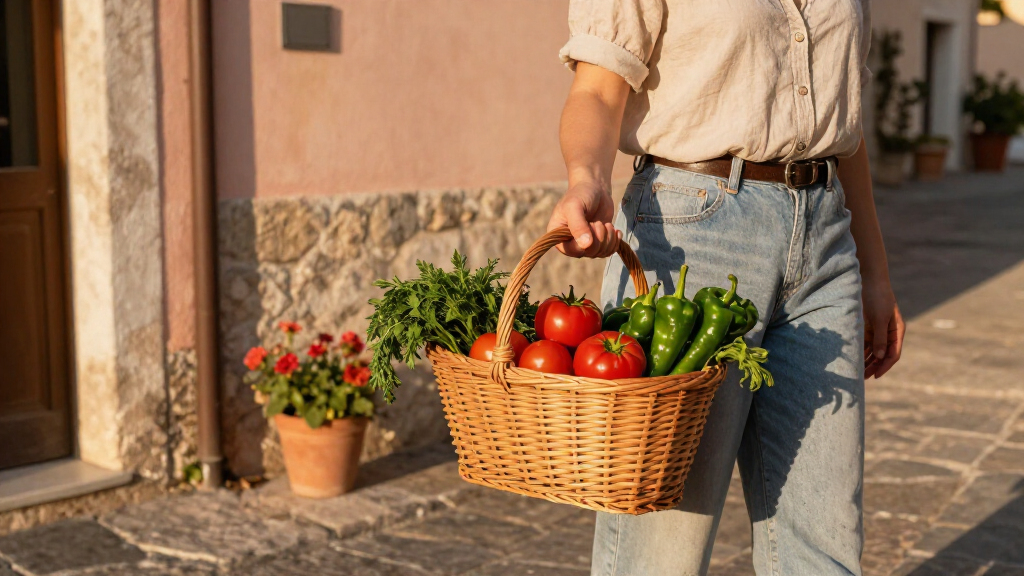
Read DOP, IGP, and Seasonal Claims Without Getting Fooled
Seasonal Italian cooking, local food, and protected origin are three different ideas. Seasonal describes a natural growing, fishing, or production period; local describes distance from you; DOP and IGP describe geographical links and production rules. One label cannot prove all three qualities.
According to the European Commission’s geographical-indications framework, DOP products have the strongest link to their named place because production, processing, and preparation occur in the defined area [1]. IGP requires at least one production stage to take place there [1]. Neither designation promises that a product is fresh, near the buyer, or in its natural season.
A wedge of Parmigiano Reggiano DOP illustrates the distinction. Its designation verifies origin and regulated production, while maturation gives it year-round usefulness; it does not operate like a June peach. Likewise, a local tomato grown in a heated greenhouse during winter can be local without following the crop’s natural outdoor season.
Production cycles also reach beyond plants. Seafood availability changes with migration, spawning, weather, fishing closures, and regional waters. Cheese, cured meat, and game can follow breeding, aging, or legal hunting calendars. If you visit coastal Puglia, ask what the boats landed and check local sustainability guidance instead of assuming every Mediterranean fish belongs on every menu.
Modern Italian households also buy imported citrus, greenhouse vegetables, frozen peas, and supermarket produce. The tradition survives as a preference and a way of judging quality, not universal refusal. That nuance explains why Italians eat a fresh tomato salad in summer yet happily use passata for a December ragù.
Climate change makes old calendars less predictable. The European Environment Agency reports that changing temperatures and extreme weather affect growing conditions, crop development, and harvest patterns across Europe [2]. In practice, grape, olive, wheat, and tomato harvests may shift, while drought, heat, hail, or heavy rain can reduce supply.
Use a calendar as a conversation starter rather than a command. Ask growers what arrived early, what struggled, and what tastes good now. When a restaurant in Tuscany advertises olio nuovo in autumn, try it on toasted bread; if the olive harvest ran late, let the producer’s actual season matter more than a printed chart.
Reference markers: [1] European Commission, geographical indications and quality schemes. [2] European Environment Agency, climate impacts on European agriculture and growing conditions.
Frequently Asked Questions
Do Italians refuse to eat food out of season?
No. Modern Italians use supermarkets, imports, greenhouses, freezers, and canned foods much like shoppers elsewhere. Seasonal expectations remain influential among market shoppers, experienced home cooks, growers, and traditional restaurants, but they operate as a preference for quality rather than a universal ban.
A Roman cook may buy zucchini in winter, yet still wait for spring to make artichokes the center of a meal. The point is not culinary purity; it is knowing when an ingredient will repay a simple preparation with better flavor.
Is there one official seasonal food calendar for all of Italy?
No single calendar accurately covers the whole country. Latitude, altitude, rainfall, coastal weather, and yearly conditions create different harvest windows in Sicily, Campania, Lazio, Piedmont, Trentino-Alto Adige, and other regions.
Use a regional calendar, then compare it with local market displays. If several nearby farms offer the same ripe ingredient at a fair price, that evidence matters more than a nationwide month-by-month graphic.
Are canned tomatoes authentic in Italian cooking?
Yes. Canned tomatoes and passata preserve the summer crop for sauces, soups, braises, and ragù during colder months. A good preserved tomato usually gives winter cooking more sweetness, acidity, color, and aroma than a pale fresh tomato shipped a long distance.
Check the label for a short ingredient list, and refrigerate opened tomatoes in a clean covered container. Use them within the manufacturer’s stated period; if no guidance appears, three to five refrigerated days is a sensible household range.
Is seasonal food always less expensive?
Seasonal abundance often lowers prices, especially for everyday crops such as tomatoes, zucchini, peaches, beans, and citrus. Price can stay high when a product has a short supply, requires skilled harvesting, or attracts luxury demand.
Fresh porcini, white truffles, and wild asparagus can be both seasonal and costly. Compare several stalls and wait for the main harvest when early produce looks scarce, expensive, or short on aroma.
What Italian dish should a beginner cook first?
Start with pasta, risotto, soup, or frittata built around one seasonal vegetable. These dishes teach heat, timing, salt, and texture without hiding your main ingredient under a long shopping list.
Try zucchini risotto in summer or pasta e fagioli in winter. If you make frittata, remember the egg allergen, check any cheese for milk, prevent cross-contact for guests, and cook the center to 160°F or 71°C.
Can seasonal Italian cooking be vegetarian?
Yes, many regional Italian dishes are naturally vegetarian or easy to adapt. Pasta, rice, polenta, legumes, vegetables, bread, cheese, and eggs support meals such as ribollita, mushroom risotto, pasta alla Norma, and fava beans with pecorino.
Check stocks, cheeses, and sauces because some contain meat or animal-derived rennet. Common allergens include milk, eggs, wheat, celery, and tree nuts, depending on the dish.
Does seasonal eating apply to Italian wine and seafood?
Yes, though their calendars work differently from a vegetable harvest. Seafood follows migration, spawning, weather, fishing rules, and local waters, while wine reflects an annual grape harvest followed by fermentation and aging.
Ask fishmongers about the catch area and current restrictions. Wine is for adults of legal drinking age; serve it with food, keep portions moderate, never drink before driving, and choose a nonalcoholic pairing whenever that suits you better.
Conclusion
Your most useful habit is simple: choose the ingredient before the recipe. Find what is abundant and fragrant, learn where it grew, and give it a straightforward Italian format. A sweet August tomato needs bread, oil, and salt; a January kitchen calls for beans, bitter greens, citrus, and the summer tomatoes preserved in a jar.
Start with your next shopping trip. Leave one vegetable undecided, ask what is best that week, and build dinner around the answer. That small change turns seasonal Italian cooking from an attractive idea into a practical tradition you can taste—one that lets your kitchen smell of artichokes in spring, basil in summer, chestnuts in autumn, and slow-simmered beans when winter darkens the windows.
Halloween Picks
halloween
As an affiliate, we earn on qualifying purchases.