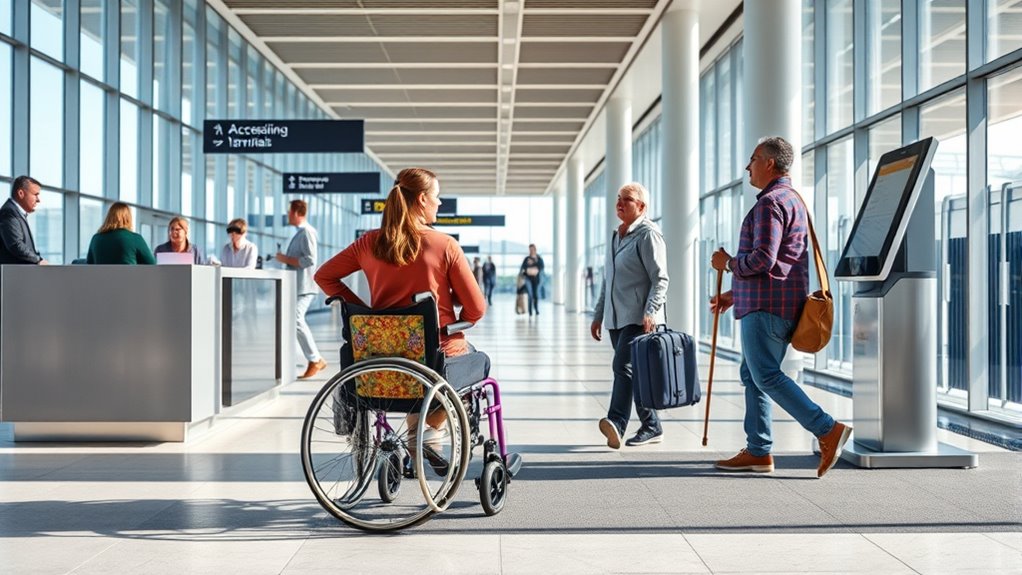

Planning accessible travel means choosing accommodations with clear features like wheelchair-accessible bathrooms and wider doorways to guarantee comfort. It’s key to book reliable transportation options such as accessible taxis or shuttles, and to familiarize yourself with city maps that highlight ramps and curb cuts. Using accessible technology can help navigate easily and plan ahead. With thoughtful preparation, you’ll feel more confident on your journey. Continue exploring to discover all the steps that make your trip smoother.
Key Takeaways
- Research and select accommodations with verified accessibility features to ensure comfort and meet specific needs.
- Book accessible transportation options in advance, confirming they have proper equipment and trained staff.
- Utilize accessible technology for navigation, assistance, and real-time information to enhance independence during travel.
- Plan routes using online guides or apps that highlight accessible infrastructure like ramps and curb cuts.
- Focus on inclusive planning, removing barriers, and empowering confidence for a smooth, independent travel experience.
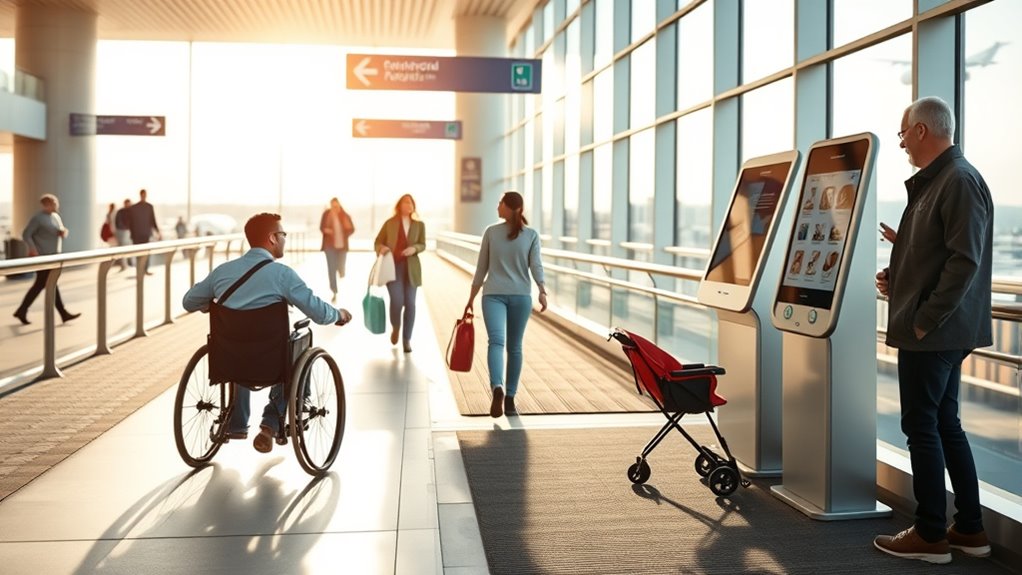
Have you ever wondered what it truly means to travel without barriers? It’s about more than just reaching your destination; it’s about feeling comfortable and confident throughout your journey. When you plan ahead and prioritize accessibility, you open a world of possibilities that might otherwise feel out of reach. One of the first steps is understanding the importance of adaptive accommodations. These are specially designed or modified lodgings that cater to your specific needs, whether it’s a wheelchair-accessible bathroom, lowered countertops, or wider doorways. By selecting accommodations that are truly adaptive, you ensure that your stay is comfortable and that you can move freely within your space. It’s worth researching hotels, rentals, or resorts that explicitly state their accessibility features or have verified reviews from travelers with similar needs. This extra effort guarantees a smoother experience and allows you to settle in without unnecessary stress.
Another critical aspect of accessible travel planning involves transportation. Not all transportation options are created equal, so it’s essential to look for wheelchair-friendly transportation options in your destination. Many cities now offer specialized services like wheelchair-accessible taxis, shuttles, or public transit systems equipped to handle mobility devices. Booking these in advance helps avoid last-minute surprises and ensures you won’t be left stranded. Additionally, when arranging airport transfers or local travel, confirm that the service providers have the necessary equipment and training to assist you properly. This proactive approach can save you time and prevent frustration on the day of your journey. Remember, transportation isn’t just about getting from point A to point B; it’s about feeling safe, respected, and supported along the way. Incorporating accessible technology can further enhance your travel experience by providing real-time assistance and information tailored to your needs.
Planning your route with accessibility in mind also involves considering your daily needs and potential obstacles. Check maps and resources that highlight accessible routes, curb cuts, and ramps. Many cities have online guides or apps that provide detailed information about accessible infrastructure. Carrying a list of emergency contacts and local disability organizations can also be helpful should you need assistance. By taking these steps, you’re not only ensuring smoother logistics but also empowering yourself to navigate your trip confidently.
Ultimately, accessible travel is about inclusivity and planning thoughtfully to accommodate your needs. When you prioritize adaptive accommodations and wheelchair-friendly transportation, you remove many common barriers, allowing you to focus on the experience and enjoyment of your journey. With proper preparation, travel becomes an enriching adventure—one where you’re in control and free to explore the world on your terms.

Wheelchair Accessible Portable Shower Stall Standard Model
As an affiliate, we earn on qualifying purchases.
As an affiliate, we earn on qualifying purchases.
Frequently Asked Questions
How Early Should I Book Accessible Accommodations?
You should book accessible accommodations at least 3 to 6 months in advance, especially during peak travel seasons. This allows you to secure the best accessible hotel tips and meet booking deadlines, ensuring your needs are met. Early booking gives you more options and peace of mind, so don’t wait until the last minute. Planning ahead makes your trip smoother and more enjoyable, with all your accessibility requirements perfectly arranged.
Are There Travel Insurance Options for Accessibility Needs?
Imagine peace of mind on your trip—yes, travel insurance options do cater to accessibility needs. You can find policies that include accessibility coverage, guaranteeing your special requirements are protected. It’s smart to explore these options early, so you’re covered if plans change. Shop around for travel insurance tailored to your needs, and don’t hesitate to ask providers about their accessibility coverage to ensure your journey is smooth and worry-free.
How Do I Find Local Accessible Transportation?
You can find local accessible transportation by searching online for public transportation options that offer accessibility features, such as ramps or audio announcements. Many cities also have accessible taxis or ride-sharing services equipped with wheelchair lifts and other accommodations. Check with local transit authorities or visit their websites to get schedules, routes, and contact information. Calling ahead guarantees you’ll have the necessary support and can confirm accessibility options for your specific needs.
Can I Request Special Assistance at Airports?
Yes, you can request special assistance at airports, and it’s like having a personal guide through a bustling maze. Contact your airline in advance to arrange wheelchair assistance or support with mobility aids. When booking your ticket, specify your needs, and arrive early on the day of travel. Airport staff are trained to guarantee your journey is smooth, helping with boarding, deplaning, and guiding through terminals.
What Should I Pack for Accessible Travel?
When packing for accessible travel, focus on packing tips that include essential accessible gear like portable ramps, hearing aids, or adapted utensils. Bring any required medications, comfortable clothing, and chargers for electronic devices. Don’t forget to pack copies of important documents and a list of emergency contacts. Keep everything organized in easy-to-reach compartments, ensuring you have what you need for a smooth, comfortable trip.

Accessible Public Transportation
As an affiliate, we earn on qualifying purchases.
As an affiliate, we earn on qualifying purchases.
Conclusion
Planning accessible travel guarantees everyone can enjoy new experiences. Remember, over 15% of the world’s population lives with some form of disability, yet many destinations still lack proper accommodations. By taking these basics into account, you’re helping break down barriers and creating more inclusive adventures. Your effort makes a difference—every step toward accessible travel opens doors for others to explore and connect, making the world a more welcoming place for all.

Travel Channel GO
Stream live TV when you link your pay TV provider
As an affiliate, we earn on qualifying purchases.
As an affiliate, we earn on qualifying purchases.

Avantree Relay – Premium Airplane Bluetooth Adapter with Advanced Qualcomm Chipset, 2 Headphones Support, 25hrs Play Time, aptX Adaptive & HD Audio Transmitter for Airpods, Bose & Travel Flight
【Built For Airplane Seat Screens】 This Bluetooth adapter connects directly to airplane entertainment systems using a standard 3.5mm…
As an affiliate, we earn on qualifying purchases.
As an affiliate, we earn on qualifying purchases.