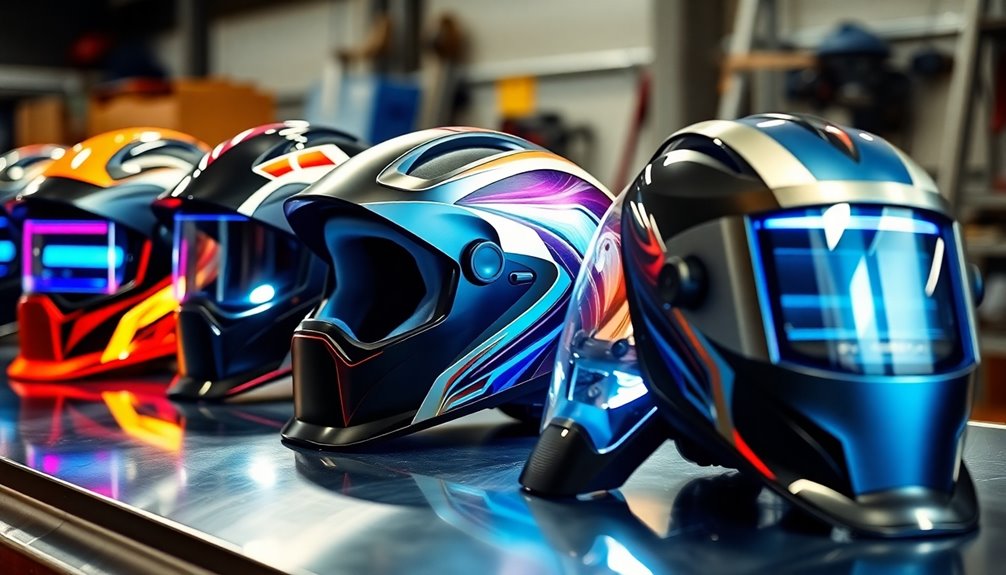
The right welding helmet changes everything: it protects your eyes, reduces fatigue, and lets you actually see your weld pool. After comparing 15 of the most popular auto-darkening helmets on the market, the Lincoln Electric VIKING 3350 stands out as my best overall pick thanks to its exceptional 4C lens clarity and extra-large viewing area. If your budget is tighter, the YESWELDER LYG-L600A delivers true-color optics and a 1/1/1/1 optical rating at a fraction of the price, while the ESAB Sentinel A60 is the premium choice for professionals who weld all day. The main tradeoff in this category comes down to optical quality and sensor count versus cost — the budget ARCCAPTAIN models offer huge viewing screens but can’t match the lens fidelity of Lincoln, ESAB, or Miller. Keep reading for the full breakdown, including which models suit beginners, which to skip, and where spending more actually pays off.

Get kitchen staples and gadgets delivered free with Prime
- Fast, free delivery on millions of items
- Prime Video, Amazon Music and more included
- Member-only deals all year
Key Takeaways
- Optical clarity ratings (1/1/1/1) separated the top tier from the budget tier more than any other spec — the YESWELDER LYG-L600A and Lincoln VIKING 3350 both hit the maximum rating, while several cheaper ARCCAPTAIN models leave it unspecified.
- Viewing area alone doesn’t equal visibility: the ARCCAPTAIN 180° hood has one of the largest windows here, but its true-color rendering doesn’t match the Lincoln 4C or Miller ClearLight lenses.
- Sensor count and reaction speed matter most for out-of-position and tack welding — the MIGVAN‘s four sensors and the ARCCAPTAIN‘s 1/25,000s response outperform two-sensor budget hoods that occasionally miss quick strikes.
- The Lincoln K4983-1 ‘No Rules No Limits’ trades a smaller viewing area for lighter weight and a genuine grind mode, making it the better pick for fabricators who switch tasks constantly.
- Four of the fifteen helmets are near-identical ARCCAPTAIN 3.94″ x 3.66″ models differentiated mainly by extras (lights, sensor speed) — worth comparing closely before buying, since the base versions undercut their own siblings on value.
| YESWELDER Auto Darkening Welding Helmet 1/1/1/1 True Color, LYG-L600A |  | Best Value Auto-Darkening | Shade Range: 3.5 / 9-13 | Viewing Area: 3.64″ x 1.67″ | Optical Clarity: 1/1/1/1 | VIEW ON AMAZON | See Our Full Breakdown |
| ARCCAPTAIN Auto Darkening Welding Helmet, 3.94″×3.66″ |  | Best Large-View Upgrade | Viewing Screen: 3.94″ x 3.66″ | Switching Time: 1/25,000 seconds | Light / Dark State: DIN 4 / DIN 5-9 and 9-13 | VIEW ON AMAZON | See Our Full Breakdown |
| ARCCAPTAIN Intelligent Auto-Darkening Welding Helmet, 180° True Color Hood |  | Best Premium Smart Pick | Lens: Auto-darkening true-color panoramic | Viewing Area: 7.2″ x 3.2″ | Optical Clarity: 1/1/1/1 | VIEW ON AMAZON | See Our Full Breakdown |
| TOPDC Welding Helmet 3.86″x1.61″, Flip Front Shade 11 |  | Best Budget Passive Pick | Viewing Area: 3.86″ x 1.61″ | Shade: Fixed 11 | Lens Type: Passive with flip-front | VIEW ON AMAZON | See Our Full Breakdown |
| ARCCAPTAIN Auto Darkening Welding Helmet, 3.94″ x 3.66″ Large Viewing Screen |  | Best for Beginners | Viewing Area: 3.94″ x 3.66″ | Light State: DIN 4 | Dark State: DIN 5-9 / 9-13 | VIEW ON AMAZON | See Our Full Breakdown |
| BESTCLUB True Color Solar Powered Auto Darkening Welding Helmet with Adjustable Shade 4/9-13 |  | Best Solar-Powered Value | Optical Clarity: 1/1/1/2 | Sensor Count: 4 | Shade Range: DIN 4 / 9-13 | VIEW ON AMAZON | See Our Full Breakdown |
| Lincoln Electric K3034-4 VIKING 3350 Auto Darkening Welding Helmet with 4C Lens Technology, Matte Black, Extra Large |  | Best Premium Pick | Lens Technology: 4C | Viewing Area: 12.5 square inches | Color: Matte Black | VIEW ON AMAZON | See Our Full Breakdown |
| ARCCAPTAIN Auto Darkening Welding Helmet with Light, 3.94″ x 3.66″ Large View |  | Best for Dark Workspaces | Viewing Area: 3.94″ x 3.66″ | Darkening Shades: 4 / 5-8 / 9-13 | Sensors: 4 arc sensors | VIEW ON AMAZON | See Our Full Breakdown |
| YESWELDER LYG-M800H Auto Darkening Welding Helmet, Large View |  | Best Overall | Viewing Area: 3.93″ x 3.66″ | Optical Clarity: 1/1/1/1 True Color | Arc Sensors: 4 | VIEW ON AMAZON | See Our Full Breakdown |
| ARCCAPTAIN Auto Darkening Welding Helmet, 3.94″ x 3.66″ Large Viewing Screen |  | Best Certified All-Rounder for Safety Compliance | Viewing Screen: 3.94″ x 3.66″ | Shade Range: DIN 4 (light) / 9-13 (dark) | Optical Clarity: 1/1/1/1 | VIEW ON AMAZON | See Our Full Breakdown |
| Lincoln Electric No Rules No Limits Welding Helmet K4983-1 |  | Best Brand-Name Value | Shade Range: 7-13 | Viewing Area: 4.33 x 3.54 inches | Weight: 17.5 oz | VIEW ON AMAZON | See Our Full Breakdown |
| ESAB Sentinel A60 Welding Helmet |  | Best Optics for Precision Work | Viewing Area: 4.65 x 2.80 inches | Shade Range: DIN 3/5-13 | Arc Sensors: 4 | VIEW ON AMAZON | See Our Full Breakdown |
| Miller Classic Series Welding Helmet, ClearLight |  | Best Beginner Auto-Darkening Helmet | Viewing Area: 6 square inches | Lens Technology: ClearLight | Weld Shades: 8-13 | VIEW ON AMAZON | See Our Full Breakdown |
| ARCCAPTAIN Auto Darkening Welding Helmet, 1/25000s Response |  | Best Value True-Color Helmet | Auto-Darkening Response Time: 1/25,000 seconds | Shade Range: 4/9-13 | Viewing Size: 3.86 x 1.69 inches | VIEW ON AMAZON | See Our Full Breakdown |
| MIGVAN Auto Darkening Welding Helmet, True Color Large Viewing Screen |  | Best for Multi-Process Versatility | Shade Range: 4/5-13 | Arc Sensors: 4 | Power Source: Solar and rechargeable battery | VIEW ON AMAZON | See Our Full Breakdown |
| welding helmet | Viewing Area | Shade Range | Optical Clarity |
|---|---|---|---|
| YESWELDER Auto Darkening Weldi | 3.64" x 1.67" | 3.5 / 9-13 | 1/1/1/1 |
| ARCCAPTAIN Auto Darkening Weld | — | — | — |
| ARCCAPTAIN Intelligent Auto-Da | 7.2" x 3.2" | — | 1/1/1/1 |
| TOPDC Welding Helmet 3.86"x1.6 | 3.86" x 1.61" | — | — |
| ARCCAPTAIN Auto Darkening Weld | 3.94" x 3.66" | — | — |
| BESTCLUB True Color Solar Powe | — | DIN 4 / 9-13 | 1/1/1/2 |
| Lincoln Electric K3034-4 VIKIN | 12.5 square inches | — | — |
| ARCCAPTAIN Auto Darkening Weld | 3.94" x 3.66" | — | 1/1/1/1 |
| YESWELDER LYG-M800H Auto Darke | 3.93" x 3.66" | DIN 3 / 5-9 / 9-13 | 1/1/1/1 True Color |
| ARCCAPTAIN Auto Darkening Weld | — | DIN 4 (light) / 9-13 (dark) | 1/1/1/1 |
| Lincoln Electric No Rules No L | 4.33 x 3.54 inches | 7-13 | — |
| ESAB Sentinel A60 Welding Helm | 4.65 x 2.80 inches | DIN 3/5-13 | — |
| Miller Classic Series Welding | 6 square inches | — | — |
| ARCCAPTAIN Auto Darkening Weld | — | 4/9-13 | 1/1/1/1 |
| MIGVAN Auto Darkening Welding | Large | 4/5-13 | True Color |
More Details on Our Top Picks
YESWELDER Auto Darkening Welding Helmet 1/1/1/1 True Color, LYG-L600A
This is the pick that makes the most sense for buyers who want true 1/1/1/1 optical clarity without paying premium-brand money. The blue light blocking technology genuinely reduces eye fatigue on long fabrication days, and the 1/30,000-second switching speed means no flash between arcs. Compared with the ARCCAPTAIN 3.94″ x 3.66″ model, the YESWELDER trades screen size for a lighter, simpler package — its 3.64″ x 1.67″ viewport is noticeably smaller, but the controls are easier to master in a single session. It lacks the panoramic sweep of the ARCCAPTAIN Intelligent 180° hood, yet for everyday MIG and stick work that difference matters less than the sub-premium price and the proven DIN 9-13 range. The two-sensor array is the real compromise: in tight or odd-angle positions, a four-sensor helmet like the ARCCAPTAIN B0BV6RYWV9 tracks the arc more reliably.
Pros:- True 1/1/1/1 optical clarity with blue light blocking for reduced eye strain
- Fast 1/30,000-second auto-darkening response
- Wide 9-13 dark shade range covers MIG, TIG, and stick
- Solar assist extends battery life for all-day sessions
Cons:- Only 2 arc sensors — less reliable arc tracking at odd angles than four-sensor rivals
- Smaller viewing area than comparably priced large-screen helmets
Best for: Hobbyists and part-time fabricators who want top-tier optical clarity and true-color viewing at a mid-range price
Not ideal for: Welders who frequently work in awkward positions or on high-amperage jobs — the two sensors and smaller viewport will feel limiting
- Shade Range:3.5 / 9-13
- Viewing Area:3.64″ x 1.67″
- Optical Clarity:1/1/1/1
- Sensors:2
- Power Source:Solar panel with replaceable CR2450 battery
- Standards:ANSI Z87.1, CSA Z94.3
Our verdict“The smart default choice for serious hobbyists who prioritize lens quality over screen size.”
ARCCAPTAIN Auto Darkening Welding Helmet, 3.94″×3.66″
Where the YESWELDER LYG-L600A asks you to accept a narrow window, this ARCCAPTAIN gives you a 3.94″ x 3.66″ panorama that changes how you position your head — less craning, better bead visibility on long seams. The 5-9 and 9-13 dual dark ranges also open up low-amperage TIG work that fixed-shade helmets like the TOPDC 800B simply can’t handle. Compared with the other ARCCAPTAIN large-screen model (B0BV6RYWV9), this version adds dual solar panels and DIN 16 UV/IR protection, making it the more robust choice for daily shop abuse. The tradeoff is weight and complexity: all that screen and hardware sits heavier on the head, and the sensitivity plus delay controls take a learning curve before they feel intuitive. For occasional DIY welders, that extra capability may be more helmet than needed.
Pros:- Extra-large 3.94″ x 3.66″ true-color viewing screen
- Adjustable 5-9/9-13 dark shades suit both low-amp TIG and heavy MIG
- DIN 16 UV/IR protection with dual solar panels plus battery backup
- Eco-friendly PP shell rated for demanding shop conditions
Cons:- Heavier than basic helmets due to the large lens and dual power system
- Multiple sensitivity and delay controls require a learning curve
Best for: Regular MIG and TIG welders who want a big true-color viewport for precise bead placement and all-day visibility
Not ideal for: Occasional DIY users — the weight and multi-control interface are overkill for occasional tack welds and repairs
- Viewing Screen:3.94″ x 3.66″
- Switching Time:1/25,000 seconds
- Light / Dark State:DIN 4 / DIN 5-9 and 9-13
- UV/IR Protection:DIN 16
- Battery:CR2450 lithium with dual solar panels
- Operating Temperature:-5°C to 55°C
- Material:Eco-friendly polypropylene
Our verdict“The best middle ground between budget helmets and premium panoramic models for welders who live behind the hood.”
ARCCAPTAIN Intelligent Auto-Darkening Welding Helmet, 180° True Color Hood
This is the most technically ambitious helmet in the lineup, and it earns the premium slot through automation rather than raw screen size alone. The auto-adjusting shade and sensitivity remove the guesswork that cheaper helmets demand — compared with manually tuning the ARCCAPTAIN 3.94″ x 3.66″, this hood senses the arc and sets itself, which matters when you switch between 30-amp TIG and heavy stick in one session. Seven arc sensors dwarf the two on the YESWELDER LYG-L600A, and the 7.2″ panoramic viewport with the built-in LED work light makes dark-corner jobs far safer. The compromises are real: the feature set demands a learning curve, the 180-day warranty is shorter than what established brands like Lincoln Electric typically offer, and the unspecified weight raises comfort questions for all-day wear.
Pros:- Automatic shade and sensitivity adjustment across processes
- 7 arc sensors for unmatched arc-tracking reliability
- Massive 7.2″ x 3.2″ panoramic true-color view at 1/1/1/1 clarity
- Rechargeable battery with solar assist and integrated LED work light
Cons:- Steepest learning curve in the lineup — smart modes take time to configure
- Only a 180-day warranty versus longer coverage from legacy brands
- Weight is unspecified, a comfort unknown for full-shift wear
Best for: Professional and advanced welders who jump between processes and amperages daily and want the hood to adapt automatically
Not ideal for: Beginners or set-and-forget users — the intelligent features and controls add complexity and cost that a basic auto-darkening helmet covers just fine
- Lens:Auto-darkening true-color panoramic
- Viewing Area:7.2″ x 3.2″
- Optical Clarity:1/1/1/1
- Response Time:1/30,000s
- Sensors:7 arc sensors
- Battery:Rechargeable 500mAh with solar assist
- Operation Time:Up to 1,200 hours (no LED) / 500 hours (with LED)
- Warranty:180 days
Our verdict“For professionals who want the hood to do the thinking, this is the most capable option here — everyone else is paying for features they’ll never touch.”
TOPDC Welding Helmet 3.86″x1.61″, Flip Front Shade 11
In a roundup dominated by auto-darkening lenses, this passive shade-11 helmet serves a different buyer entirely — one who wants a cheap, dead-simple backup or a first hood for occasional repairs. The flip-front design is its one clever trick: flip up to grind or inspect your work without removing the helmet, something no auto-darkening model here does as mechanically. There’s no battery to die, no sensors to malfunction, and no controls to learn, which makes it more dependable in a pinch than the YESWELDER LYG-L600A — but far less convenient, since you’ll be flipping and repositioning constantly. The fixed shade 11 also rules out the low-amperage flexibility that the ARCCAPTAIN 3.94″ x 3.66″ offers with its adjustable 5-9/9-13 range. Note that replacement lenses aren’t included, so factor that in before the first spatter-covered week.
Pros:- Flip-front design for instant switching between welding, grinding, and inspection
- No batteries or electronics to fail — always ready
- Adjustable headgear fits comfortably for occasional use
- Versatile enough for plasma cutting and cosplay projects
Cons:- Fixed shade 11 can’t adapt to different amperages or processes
- Replacement lenses not included and must be removed for cleaning
Best for: Budget-conscious DIYers and shop owners who need a no-batteries backup helmet for occasional stick welding or plasma cutting
Not ideal for: Anyone welding regularly or doing TIG — the fixed shade 11 and manual flipping become tedious and limit low-amp work
- Viewing Area:3.86″ x 1.61″
- Shade:Fixed 11
- Lens Type:Passive with flip-front
- Material:Plastic
- Applications:Welding, plasma cutting, DIY projects
- Model:800B
Our verdict“A dependable, zero-maintenance backup hood — just don’t make it your primary helmet if you weld more than occasionally.”
ARCCAPTAIN Auto Darkening Welding Helmet, 3.94″ x 3.66″ Large Viewing Screen
For a first auto-darkening helmet, the priorities are simple: a big clear view, forgiving operation, and safety certification — and this model checks all three without overwhelming the user. The 3.94″ x 3.66″ screen matches its pricier ARCCAPTAIN sibling (B0DDJ482WW) while trimming complexity, and at 2 pounds it’s noticeably lighter on the neck during a learning session full of head repositioning. The four arc sensors actually outnumber the YESWELDER LYG-L600A’s two, giving new welders more forgiveness when their angle slips — a common beginner mistake. Where it falls short of the Intelligent 180° hood is automation and accessories: no auto-shade, no work light, and only single solar-assist battery power. ANSI Z87.1, EN379, and CSA compliance mean it meets the same safety bars as helmets costing far more, which is the reassurance a newcomer actually needs.
Pros:- Four arc sensors offer forgiving arc tracking for imperfect technique
- Large true-color viewing area builds confidence for beginners
- Lightweight 2-pound design reduces neck fatigue during practice sessions
- Triple certified to ANSI Z87.1, EN379 CE, and CSA Z94.3
Cons:- CR2450 battery will eventually need replacement
- Fewer features and accessories than step-up models in the same family
Best for: New welders and students who want a certified, lightweight auto-darkening helmet with a forgiving large view and simple controls
Not ideal for: Experienced welders with process-specific needs — there’s no auto-shade intelligence or advanced tuning to grow into
- Viewing Area:3.94″ x 3.66″
- Light State:DIN 4
- Dark State:DIN 5-9 / 9-13
- Sensors:4 arc sensors
- Weight:2 pounds
- Power Source:Solar cell with CR2450 lithium battery
- Standards:ANSI Z87.1, EN379 CE, CSA Z94.3
Our verdict“The easiest entry point into auto-darkening welding — big view, light feel, and proper certifications at a beginner-friendly level.”
BESTCLUB True Color Solar Powered Auto Darkening Welding Helmet with Adjustable Shade 4/9-13
This option stands out for its True Color optics and four arc sensors at a budget-friendly position, which is a combination usually reserved for pricier hoods. Compared with the YESWELDER LYG-M800H, the BESTCLUB offers similar sensor coverage and clarity but leans entirely on solar charging, so there’s no replaceable battery to swap out mid-project. The flame-retardant shell and adjustable modes for welding, grinding, and cutting make it a genuinely versatile pick for hobbyists who jump between processes. Where it falls short of premium options like the Lincoln Electric VIKING 3350 is in refinement — there’s no documented delay adjustment for the darkening response, and shade control tops out at a fixed light state of 4, which limits fine-tuning for sensitive low-amp TIG work.
Pros:- True Color technology delivers a clear view of the weld puddle
- Four arc sensors catch the arc quickly from odd angles
- Dedicated welding, grinding, and cutting modes
- Flame-retardant, high-impact shell holds up in rough shop conditions
Cons:- No delay adjustment for the darkening-to-clear transition
- Battery life documentation is thin, and solar-only power can lag in dim shops
Best for: Hobbyist and DIY welders who want true-color clarity and multi-mode versatility without managing a replaceable battery
Not ideal for: Precision low-amp TIG welders who need adjustable delay and a wider range of light-state shades
- Optical Clarity:1/1/1/2
- Sensor Count:4
- Shade Range:DIN 4 / 9-13
- Power Source:Solar
- Modes:Welding, Grinding, Cutting
- Shell Material:High-impact, flame-retardant
Our verdict“A solid choice for multi-process hobbyists who prioritize solar convenience and true-color optics over fine-grained controls.”
Lincoln Electric K3034-4 VIKING 3350 Auto Darkening Welding Helmet with 4C Lens Technology, Matte Black, Extra Large
When the question is all-day professional performance, the VIKING 3350 answers with Lincoln’s 4C lens technology and a class-leading 12.5-square-inch viewing area — noticeably larger than the 3.94″ x 3.66″ screens on both ARCCAPTAIN models, which translates directly into better puddle control without constantly repositioning your head. The 5-year warranty is the longest backing in this lineup and reflects the build quality: adjustable headgear sized from 6 1/2 to 8 keeps the fit secure through long shifts. The tradeoff is weight — compared with the ~1.32 lb YESWELDER LYG-M800H, this helmet runs heavier and can fatigue neck muscles during overhead work. Buyers also sacrifice battery-and-solar hybrid flexibility for a more traditional professional platform.
Pros:- 12.5 sq in extra-large viewing area is the biggest in this lineup
- 4C lens technology provides accurate color and clarity of arc and base material
- Headgear adjusts across a wide 6 1/2 – 8 size range
- 5-year warranty signals long-haul build confidence
Cons:- Heavier than lightweight competitors like the YESWELDER LYG-M800H
- Premium positioning may exceed what occasional welders need to spend
Best for: Professional fabricators and production welders who spend full days under the hood and need maximum visibility plus warranty protection
Not ideal for: Casual weekend welders or those doing frequent overhead work who will feel the extra weight and don’t need pro-grade capacity
- Lens Technology:4C
- Viewing Area:12.5 square inches
- Color:Matte Black
- Head Size Range:6 1/2 – 8
- Warranty:5 years
Our verdict“The pick for full-time welders who want the largest, clearest view available and warranty coverage that matches daily use.”
ARCCAPTAIN Auto Darkening Welding Helmet with Light, 3.94″ x 3.66″ Large View
This model’s defining feature is the integrated USB-powered LED light — something no other helmet in this roundup offers — which lights up your workpiece in dim garages, under trucks, or inside fabricated structures. The core package is competitive: 1/1/1/1 optical clarity, a 3.94″ x 3.66″ true-color view, and a 1/25,000-second switching speed that matches the standalone ARCCAPTAIN 3.94″ model. Its shade options span 4/5-8/9-13, giving it a low-amp band the BESTCLUB lacks, making it friendlier for thin-material TIG. The compromises are real, though: the LED arrives uninstalled, so expect some assembly, and the hybrid solar-plus-CR2450 power system means eventual battery replacement. At 1 lb, it’s also lighter than the 2 lb sibling ARCCAPTAIN, easing neck strain.
Pros:- Integrated LED light is unique in this lineup and genuinely useful in dark environments
- 1/1/1/1 optical clarity with fast 1/25,000 sec switching
- Shade 5-8 low band supports thin-material and low-amp work
- 1 lb weight is among the lightest here for all-day wear
Cons:- LED light ships uninstalled and requires setup
- Hybrid solar/lithium power eventually needs battery replacement
- Lighter plastic (PP) construction feels less rugged than premium shells
Best for: Welders who frequently work in poorly lit spaces — garages, field repairs, or under-vehicle jobs — and need built-in task lighting
Not ideal for: Buyers who want a fully assembled, plug-and-play helmet straight out of the box, or who work exclusively in well-lit shops where the LED adds nothing
- Viewing Area:3.94″ x 3.66″
- Darkening Shades:4 / 5-8 / 9-13
- Sensors:4 arc sensors
- Optical Clarity:1/1/1/1
- Protection:DIN 16 UV/IR
- Power Source:Solar panels and CR2450 lithium battery
- Weight:1 lb
- Light:USB-powered LED (uninstalled)
Our verdict“The right choice if your welding happens in the dark and you want the hood to solve that problem for you.”
YESWELDER LYG-M800H Auto Darkening Welding Helmet, Large View
Of everything in this batch, the LYG-M800H hits the broadest balance of clarity, speed, and versatility. Its 1/30,000-second switching speed is faster than the ARCCAPTAIN with Light’s 1/25,000 spec, and its DIN 3 light state with 5-9 and 9-13 shade ranges covers TIG, MIG, Stick, cutting, and grinding — a wider process spread than the BESTCLUB’s fixed shade-4 light state. The 1/1/1/1 true-color lens matches the best optical ratings here, and at 1.32 lbs it stays comfortable through long sessions. What keeps it from premium territory is simplicity: there’s no grind-mode-specific interface like the Lincoln VIKING 3350 offers, and the CR2450 battery will need replacing eventually. Still, cheater-lens compatibility is a thoughtful touch for welders needing magnification.
Pros:- 1/30,000 sec switching is the fastest in this batch
- DIN 3 light state and dual shade ranges (5-9/9-13) cover nearly every process
- 1/1/1/1 true-color clarity at a mid-tier position
- Compatible with cheater lenses for magnification
Cons:- CR2450 battery requires eventual replacement
- Feature set is basic next to premium hoods — no specialty modes or premium warranty
Best for: Multi-process welders — especially those switching between low-amp TIG and heavier MIG/Stick work — who want top-tier optics and speed in one hood
Not ideal for: Welders who want premium-bucket refinements like extended warranties or the absolute largest viewing area — the Lincoln VIKING 3350 serves that better
- Viewing Area:3.93″ x 3.66″
- Optical Clarity:1/1/1/1 True Color
- Arc Sensors:4
- Switching Speed:1/30,000 second
- Shade Range:DIN 3 / 5-9 / 9-13
- Weight:1.32 lbs (600 g)
- Battery:CR2450 lithium (replaceable)
- Applications:TIG, MIG, Stick, Cutting, Grinding
Our verdict“The all-rounder I’d point most welders toward first: fast, clear, versatile, and comfortable without premium pricing.”
ARCCAPTAIN Auto Darkening Welding Helmet, 3.94″ x 3.66″ Large Viewing Screen
This model’s strongest argument is its certification stack — ANSI Z87.1, EN379, CE, and CSA Z94.3 — which is the most thorough compliance documentation in this batch and matters if you weld on job sites that inspect PPE. Optically it matches the YESWELDER LYG-M800H with 1/1/1/1 clarity and the same 3.94″ x 3.66″ true-color window, though its solar-plus-CR2450 power and shade 4 light state mirror the BESTCLUB’s limitations rather than the YESWELDER’s more flexible DIN 3 base. The shock- and flame-resistant shell with breathable padding makes it a comfortable daily driver, but at 2 lbs it’s the heaviest auto-darkening option here, outweighing even the pro-oriented Lincoln VIKING 3350’s comfort advantage in light-duty contexts.
Pros:- Certified to ANSI Z87.1, EN379, CE, and CSA Z94.3 for job-site acceptance
- 1/1/1/1 optical clarity with a large true-color viewing screen
- Shock-resistant and flame-resistant construction
- Adjustable headgear with breathable padding for long sessions
Cons:- At 2 lbs, heavier than nearly every comparable helmet in this lineup
- Shade 4 light state limits visibility options compared with DIN 3 alternatives
- Solar/CR2450 hybrid power requires eventual battery swaps
Best for: Shop and site welders who need documented multi-standard safety certification and a durable, padded helmet for daily use
Not ideal for: Welders sensitive to helmet weight — at 2 lbs it’s heavier than most auto-darkening alternatives here
- Viewing Screen:3.94″ x 3.66″
- Shade Range:DIN 4 (light) / 9-13 (dark)
- Optical Clarity:1/1/1/1
- Weight:2 lbs
- Material:Polypropylene (PP)
- Compliance:ANSI Z87.1, EN379, CE, CSA Z94.3
- Power Source:Solar cell with CR2450 lithium battery
Our verdict“The safest-on-paper pick for certified work environments, provided you can live with its weight and fixed light state.”
Lincoln Electric No Rules No Limits Welding Helmet K4983-1
This Lincoln model stands out as the most affordable path into a trusted professional brand without paying flagship prices. Compared with budget helmets like the BESTCLUB or TOPDC options, the K4983-1 brings Lincoln’s build quality, a practical grind mode, and included impact-resistant cover lenses — accessories that cheaper helmets often leave you to buy separately. Its hard hat compatibility is a genuine differentiator for shop and industrial work where hard hats are mandatory, something none of the ARCCAPTAIN models in this lineup emphasize. The tradeoff is the smaller viewing area relative to the ESAB Sentinel A60, so welders who need a wide field of view for precise TIG work may feel cramped. At 17.5 oz, it also sits on the heavier side compared with the 1 lb ARCCAPTAIN. This pick makes the most sense for buyers who prioritize brand reliability and jobsite versatility over maximum optics.
Pros:- Grind mode eliminates constant helmet swapping between tasks
- Hard hat compatible for jobsites with mandatory head protection
- Includes extra impact-resistant lenses out of the box
- Adjustable shade 7-13 covers Stick, MIG, TIG, flux core and gouging
Cons:- Viewing area is smaller than large-screen rivals like the ESAB Sentinel A60
- 17.5 oz weight becomes noticeable during long overhead welding sessions
- Battery will eventually need replacement
Best for: Tradespeople and serious hobbyists who want a reputable brand helmet with grind mode and hard hat compatibility for mixed shop and jobsite work
Not ideal for: Precision TIG welders who need a large viewing area — the modest window and 2-sensor-class performance lag behind dedicated large-view hoods
- Shade Range:7-13
- Viewing Area:4.33 x 3.54 inches
- Weight:17.5 oz
- Shell Material:Nylon
- Safety Certification:ANSI Z87.1
- Hard Hat Compatible:Yes
- Modes:Weld and Grind
- Batteries Included:Yes
Our verdict“A dependable brand-name workhorse for welders who value versatility and jobsite compliance over cutting-edge optics.”
ESAB Sentinel A60 Welding Helmet
The Sentinel A60 earns its place through optical clarity and sensing speed that most helmets in this roundup can’t match. Its 4.65 x 2.80-inch viewport is among the largest here, and the true color lens makes low-amperage TIG arcs far easier to read than the Miller Classic’s smaller 6-square-inch window. Four arc sensors with a 0.08 millisecond switching time mean the lens catches starts from awkward angles — a real safety advantage over two-sensor helmets like the Miller Classic when welding out of position or around tight corners. Memory settings let you jump between saved configurations for different processes, which production welders will use daily. The tradeoffs: it sits at a higher price point than value options like the ARCCAPTAIN 4/9-13, and the CR2450 battery will need periodic replacement despite the solar assist common on rivals. ESAB is also vague on weight specifications, which matters for all-day wear.
Pros:- One of the largest viewing areas in this roundup at 4.65 x 2.80 inches
- True color lens renders arc and puddle detail with exceptional clarity
- Four arc sensors with 0.08 ms switching for reliable detection
- Multiple memory settings for quick process changes
Cons:- Premium price puts it out of reach for hobbyist budgets
- Replaceable CR2450 battery adds long-term maintenance
- No published weight or detailed comfort specifications
Best for: Professional TIG and production welders who need top-tier clarity, fast sensing, and saved settings for switching between processes
Not ideal for: Budget-conscious buyers or occasional welders — the premium optics are wasted on infrequent stick and flux-core projects
- Viewing Area:4.65 x 2.80 inches
- Shade Range:DIN 3/5-13
- Arc Sensors:4
- Switching Time:0.08 milliseconds
- Lens Technology:True Color
- Battery:CR2450 (replaceable)
- Design:Low-profile
Our verdict“The pick for welders whose livelihood depends on seeing the puddle perfectly — if the price fits the budget.”
Miller Classic Series Welding Helmet, ClearLight
For someone buying their first auto-darkening helmet, the Miller Classic hits a sweet spot between brand trust and approachable simplicity. Unlike the feature-dense ESAB Sentinel A60, this model keeps controls straightforward while still offering digital adjustment of shade, delay, and sensitivity — enough to learn on without overwhelming a newcomer. The ClearLight lens technology delivers noticeably cleaner light-state visibility than generic budget hoods like the TOPDC flip-front, which still relies on a fixed shade 11. Its 1/23,000 second switching speed means eyes are protected even on the very first strike, and a 3-year warranty provides peace of mind that no budget brand here matches. The compromises are real, though: only two arc sensors, a smallish 6-square-inch viewing area, and a TIG rating limited to 5 amps and below. This option is better suited to learning MIG and stick than fine TIG work.
Pros:- ClearLight high-definition optics give a bright, clear light state
- Fast 1/23,000 second switching protects eyes on every strike
- Adjustable digital controls for shade, delay and sensitivity
- Backed by a 3-year warranty from an established brand
Cons:- Only 2 arc sensors — fewer than the 4-sensor ESAB or MIGVAN
- TIG rated only for 5 amps and below
- Nylon shell is less rugged for abusive shop environments
Best for: Beginners and students buying their first auto-darkening helmet for MIG or stick welding practice
Not ideal for: Low-amperage TIG welders — the 2-sensor setup and 5-amp TIG rating can miss or lag on faint arc starts
- Viewing Area:6 square inches
- Lens Technology:ClearLight
- Weld Shades:8-13
- Cut Shades:5-8
- Grind Shade:3
- Switching Speed:1/23,000 second
- Arc Sensors:2
- Standards:ANSI Z87.1+, CSA, CE
- Warranty:3 years
Our verdict“The smart first helmet for new welders who want Miller reliability and a real warranty without flagship cost.”
ARCCAPTAIN Auto Darkening Welding Helmet, 1/25000s Response
This ARCCAPTAIN model is the value pick of the roundup, pairing a 1/1/1/1 optical clarity rating — the highest classification — with a 1/25,000 second response time that outpaces even the Miller Classic’s 1/23,000 spec. Compared with the MIGVAN, it costs less while matching the four-sensor-class performance story and adding three replacement cover lenses in the box, which offsets consumable costs from day one. The solar-assisted power with replaceable CR2450 backup means it keeps running for years with minimal attention. Where it falls short is the viewport: at 3.86 x 1.69 inches, the viewing window is noticeably narrower than the ESAB Sentinel A60’s widescreen layout, which matters for welders who track long seams. The shade range of 4/9-13 also skips the intermediate cutting shades some multi-process users want. This pick makes the most sense for hobbyists and weekend fabricators who want premium clarity on a modest budget.
Pros:- 1/1/1/1 optical clarity rating — the highest classification available
- 1/25,000 second darkening response among the fastest in this lineup
- Solar power plus replaceable CR2450 battery for long service life
- Includes 3 replacement lenses, adjustable padded headgear
Cons:- Narrow viewing window compared with wide-screen rivals
- Shade range 4/9-13 omits intermediate cutting shades
- CR2450 battery requires eventual replacement
Best for: Weekend fabricators and hobbyists who want true-color 1/1/1/1 optics and fast switching without flagship pricing
Not ideal for: Production welders needing a wide panoramic view — the narrow 3.86 x 1.69-inch window is restrictive on long seams
- Auto-Darkening Response Time:1/25,000 seconds
- Shade Range:4/9-13
- Viewing Size:3.86 x 1.69 inches
- Optical Clarity:1/1/1/1
- Power Source:Solar cells and CR2450 lithium battery
- Material:PA (Polyamide)
- Weight:1 lb
- Standards:ANSI Z87.1, EN379, CE, CSA Z94.3
- Included:Helmet, 3 replacement lenses, manual, stickers
Our verdict“The best clarity-per-dollar choice for hobbyists who refuse to squint through a murky budget lens.”
MIGVAN Auto Darkening Welding Helmet, True Color Large Viewing Screen
The MIGVAN claims the multi-process versatility slot thanks to a wide 4/5-13 shade range that covers welding, cutting, and grinding in one hood — a broader usable span than the ARCCAPTAIN 4/9-13’s narrower band. Four arc sensors give it detection coverage comparable to the ESAB Sentinel A60 at a friendlier price, and the true color optics keep the light state bright enough for torch positioning between welds. The solar-plus-rechargeable-battery power system is also more sustainable than the Miller Classic’s battery-only approach. The compromises: it can run heavier than basic helmets, and the layered shade/sensitivity adjustments take some practice to dial in — newcomers may prefer the simpler Miller Classic. It also lacks published optical-class ratings like the ARCCAPTAIN’s certified 1/1/1/1, so clarity is claimed rather than classified. This model is better suited to a welder juggling cutting, grinding, and welding than to a single-process specialist.
Pros:- Wide 4/5-13 shade range spans weld, cut and grind applications
- Four arc sensors for dependable arc detection at awkward angles
- True color optics with a large viewing screen
- Solar and rechargeable battery power for extended run time
Cons:- Heavier than basic single-process helmets
- Adjustment system has a learning curve for new welders
- No certified optical clarity rating like the ARCCAPTAIN’s 1/1/1/1
Best for: Multi-process welders who switch between welding, cutting, and grinding and want one helmet with a broad shade range
Not ideal for: Beginners who want simple controls — the layered shade and sensitivity adjustments take time to learn
- Shade Range:4/5-13
- Arc Sensors:4
- Power Source:Solar and rechargeable battery
- Optical Clarity:True Color
- Viewing Area:Large
- Applications:Welding, cutting, grinding
- Included:Helmet, inner lenses, outer lenses, manual, storage bag
- Headband:Adjustable, one size
Our verdict“A solid one-helmet solution for fabricators who cut, grind, and weld in the same session.”

How We Picked
I evaluated each helmet against four buyer-relevant criteria, weighted by how much they affect day-to-day welding. Optical performance came first: clarity ratings, true-color lens technology, shade range, and how distortion-free the view is during a weld. Safety responsiveness was second — sensor count, reaction speed, and whether the helmet reliably darkens on angled or brief arc strikes. Comfort and usability covered weight, headgear adjustability, viewing area, and practical extras like grind mode or flip-front designs. Finally, I weighed value: what each helmet gives up relative to its price tier, and whether those compromises are ones a real buyer would feel.
The ranking logic favors helmets that make the fewest meaningful compromises for their intended buyer. A premium helmet with flawless optics ranks above a budget helmet with a bigger screen but weaker clarity, because eye strain and weld quality compound over a career. Where two helmets are nearly identical — as with the ARCCAPTAIN siblings — I ranked the version with genuinely useful differentiators (like the faster 1/25,000s response or built-in lighting) higher, and flagged the redundant options so readers don’t overpay for the same shell.
Factors to Consider When Choosing Welding Helmets
Before settling on a helmet, it helps to understand what actually separates a helmet you’ll keep for years from one you’ll replace within months. These are the factors that shaped my rankings — and the mistakes I see buyers make most often.Optical Clarity Ratings Explained
Auto-darkening lenses carry a four-digit optical rating (like 1/1/1/1) that measures optical accuracy, light diffusion, angular dependence, and luminous homogeneity. Each digit ranges from 1 (best) to 3, and the differences aren’t cosmetic: a lower rating means less blurriness, fewer visible defects, and a clearer view when you tilt your head off-axis — which you do constantly during real welds. Cheap helmets often omit this rating entirely, which is itself a red flag. If you weld professionally or for hours at a stretch, spending more for top-rated optics pays off in reduced eye fatigue and better weld placement. Hobbyists doing occasional repairs can get away with mid-tier lenses, but should still avoid unrated imports.
Sensor Count and Reaction Speed
The arc sensors are what keep your eyes safe, and their quantity and placement matter as much as their speed. Two-sensor helmets can fail to trigger when you strike an arc at a steep angle or during very short tacks — a momentary flash that adds up to real eye strain. Four-sensor helmets like the MIGVAN or premium models from Lincoln and ESAB provide redundant coverage from every welding position. Reaction speed, measured in fractions of a second, ranges from around 1/3,600s on budget hoods to 1/25,000s on the best ones. If you do production tack welding or work in tight positions where the arc is partially obstructed, prioritize sensors over screen size.
Viewing Area vs. Actual Visibility
A bigger window isn’t automatically better, and this is where marketing misleads buyers most. A 3.94″ x 3.66″ screen with mediocre optics shows you a larger blur; a smaller window with a true-color, low-distortion lens shows you a sharper weld pool. What you actually need is enough peripheral view to see your workpiece edges and leading edge of the puddle without moving your head. Larger windows also add weight and can reduce lens durability at the corners. Match the viewing area to your work: detailed TIG benefits from clarity-first lenses, while general fab work benefits from a wider field of view.
Shade Range and Grind Mode
Most auto-darkening helmets cover shades 9–13 for welding plus shade 4 for the light state, but low-amp TIG welders should verify the helmet darkens reliably below 40 amps — not all budget sensors do. Adjustable shade control matters more than people expect, since the right shade for 200-amp stick will leave you blind on thin-sheet TIG. Grind mode is the underrated feature: it locks the lens light so you can use the same helmet for angle grinding without flipping it up. Helmets like the Lincoln K4983-1 and TOPDC flip-front handle this elegantly. If you move between welding and grinding constantly, skipping grind mode means constantly removing your helmet — a productivity and safety cost that adds up daily.
Power Source and Battery Reality
Nearly every modern helmet is solar-assisted, but the implementation differs in ways that affect longevity. Some run purely on solar with no replaceable battery — fine for regular use, but the lens can struggle after long storage in a dark toolbox. Others combine solar charging with a replaceable or rechargeable battery, which is more forgiving for occasional welders. The common mistake is assuming ‘solar powered’ means never think about power again; batteries do degrade, and a dying battery causes delayed darkening before it causes outright failure. Check whether the battery is user-replaceable before buying, because a sealed design effectively caps the helmet’s lifespan.
Weight, Headgear, and All-Day Comfort
A helmet that weighs a few ounces more than another sounds trivial until you’re under it for six hours; neck strain is the most common complaint among full-time welders. Weight distribution matters as much as the number — a well-balanced heavier helmet can feel lighter than a poorly balanced light one. Look for multiple adjustment points (head circumference, crown height, tilt angle) and ratcheting mechanisms that hold their setting. Sweat-absorbing forehead padding is a small comfort that makes a real difference in hot shops. If you’re a hobbyist welding for 20 minutes at a time, this factor can slide down your priority list; if welding is your job, it belongs near the top.
Frequently Asked Questions
Is an expensive welding helmet actually worth it for a hobbyist?
For occasional home use, a well-built budget helmet like the YESWELDER LYG-L600A with a true 1/1/1/1 optical rating covers your safety needs without the premium price tag. Where spending more genuinely helps is optical fidelity, sensor redundancy, and headgear comfort — factors that matter most over long sessions. A hobbyist doing a few hours a month won’t feel the difference between a Lincoln 4C lens and a good budget true-color lens the way a full-time fabricator will. The one place I wouldn’t economize is sensors: a helmet that misses a low-amp arc strike isn’t cheaper in any meaningful sense. So buy a solid mid-range helmet with a verified optical rating, and skip the professional tier until your welding hours justify it.
Can I use one helmet for TIG, MIG, and stick welding?
Yes, as long as the helmet has an adjustable shade range and sensitive-enough sensors, and most of the helmets in this roundup qualify. The catch is low-amp TIG: welding below roughly 40 amps produces a dimmer arc that cheaper sensors can fail to detect, causing the lens to stay light when it should darken. Look for a model with adjustable sensitivity control — the ARCCAPTAIN 1/25,000s and Lincoln models handle this well. For MIG and stick at typical amperages, any helmet with shades 9–13 works. If you primarily TIG thin material, prioritize sensitivity and clarity over viewing area, since seeing a small precise puddle is the whole game.
Why do several of these helmets look identical? Are the ARCCAPTAIN models the same?
Four helmets in this lineup share the same 3.94″ x 3.66″ ARCCAPTAIN shell, and the differences are narrower than the listings suggest. One adds a built-in work light, one boasts a faster 1/25,000s reaction speed, and the others are functionally the base model. That means comparison shopping within the brand matters — paying more for the light-equipped or high-speed version only makes sense if you’ll use those features. The core lens and shell are comparable across all four, so the cheapest base version is often the better value. My rankings reflect this: I elevated the differentiated versions only where the extra feature solves a real problem.
How long do auto-darkening helmets last, and what fails first?
Most quality auto-darkening helmets last five to ten years of regular use, and the failure order is predictable: battery, then sensors, then the LCD lens itself. Solar-assisted helmets with replaceable batteries have the longest service life because you can refresh the power source yourself. Sealed units effectively have a countdown clock starting the day they leave the factory. Headgear is the other common failure point, though it’s usually replaceable separately — worth checking before you buy, since a cracked headband shouldn’t doom an otherwise healthy lens. Storage matters too: leaving a helmet in a hot truck or dark toolbox accelerates battery drain and LCD degradation.
What does a true-color lens actually do differently?
Standard auto-darkening lenses render the weld zone in a heavy green tint, which is protective but makes it harder to distinguish the puddle from surrounding metal. True-color technology — like Lincoln’s 4C, Miller’s ClearLight, or the YESWELDER and ARCCAPTAIN true-color lenses — filters the arc into a more neutral tone, so colors look closer to reality. The practical benefit is easier puddle reading, better joint tracking, and less eye fatigue over a long shift. It doesn’t change the protection level; the shade number determines that. Once you’ve welded with a good true-color lens, going back to a green-tinted one feels like working through a colored filter — which, mechanically speaking, is exactly what you’d be doing.
Conclusion
The right choice here depends less on which helmet is ‘best’ and more on how you weld. For most buyers, the Lincoln Electric VIKING 3350 is my best overall pick — its 4C lens technology, extra-large view, and professional-grade reliability justify the premium if welding is a regular part of your life. If value is the priority, the YESWELDER LYG-L600A is the clear winner: a legitimate 1/1/1/1 optical rating and true-color lens at a budget-friendly price make it the smartest spend-per-dollar in the lineup. On the premium end, the ESAB Sentinel A60 suits full-time professionals who want low-profile ergonomics and all-day comfort.
For beginners, the BESTCLUB or MIGVAN solar-powered helmets offer forgiving, low-maintenance operation with enough shade range to learn on, without a painful investment if welding doesn’t stick. Task-specific buyers should split further: constant welders-and-grinders will appreciate the Lincoln K4983-1’s grind mode and light weight, detail-oriented TIG welders get the most from the Miller Classic’s ClearLight lens, and anyone wanting maximum screen real estate on a budget should compare the ARCCAPTAIN variants — choosing the 1/25,000s or light-equipped model over the redundant base versions. Whatever you pick, verify the optical rating and sensor count before you buy; those two specs separate the helmets that protect and perform from the ones that merely darken.
Halloween Picks
halloween
As an affiliate, we earn on qualifying purchases.