

For adults who want a strategy card game with sharp decisions and easy replay, Coup is my best overall pick for its bluffing and deduction in a compact format. Here to Slay adds character-driven tactics, while Risk Strike suits groups who want familiar territory battles in a faster card-and-dice package. The main tradeoff is depth versus accessibility: heavier choices can reward repeat play but take longer to teach, while lighter games welcome more people but rely on luck or quick rounds. Group size, tolerance for take-that moves, and playtime matter as much as the rules. Read on for how all 11 options compare and which one fits your table.

Get kitchen staples and gadgets delivered free — and shop member deals
- Fast, free delivery on millions of items
- Access to Prime Big Deal Days deals on October 6–7
- Prime Video, Amazon Music and more included
Key Takeaways
- Coup leads for adults who value deduction and bluffing over elaborate components; its short format makes it easier to bring out than a longer tactical game.
- Here to Slay and Doomlings offer more card-driven variety, but their distinct themes and effects suit groups willing to learn more than a simple party game requires.
- Flip 7 and SKYJO favor quick turns and broad accessibility, so they work well when the group includes casual players, though neither offers the same bluffing depth as Coup.
- Risk Strike is the pick for players drawn to territory conflict, while Cover Your Assets centers on collecting and stealing sets; their interaction styles will appeal to different groups.
- Oh Crud, Twisted Cryptids, Overlap, and PAYBACK broaden the lineup with varied family and chaos-oriented play, making theme, player mix, and tolerance for luck key deciding factors.
| Oh Crud Deluxe Edition Card and Dice Game |  | Best for Large Groups | Game type: Card and dice game | Players: 2 to 12 | Objective: Avoid points | VIEW ON AMAZON | See Our Full Breakdown |
| Unstable Games Here to Slay Base Card Game |  | Best for Fantasy-Themed Strategy | Brand: Unstable Games (TeeTurtle) | Model number: TEE4867HSBSG1 | Play time: 30–60 minutes | VIEW ON AMAZON | See Our Full Breakdown |
| Doomlings Card Game – Base Game (Classic Edition) |  | Best for Replayable Card Variety | Players: 2–6 | Age range: 8 and up | Play time: 20–45 minutes | VIEW ON AMAZON | See Our Full Breakdown |
| Twisted Cryptids Board Game – Strategy Card Game for Adults and Kids |  | Best for Spooky Take-That Play | Players: 2–4 | Ages: 12 and up | Game duration: Approximately 60 minutes | VIEW ON AMAZON | See Our Full Breakdown |
| USAOPOLY Flip 7 Card Game |  | Best for Quick Press-Your-Luck Decisions | Players: 3 or more | Age range: 8 and up | Play time: About 20 minutes | VIEW ON AMAZON | See Our Full Breakdown |
| Hasbro Gaming Risk Strike Cards and Dice Game for Adults, Teens, and Kids |  | Best for Risk Fans Short on Time | Players: 2–5 | Recommended age: 10+ | Game duration: 20 minutes | VIEW ON AMAZON | See Our Full Breakdown |
| Magilano SKYJO Card Game | 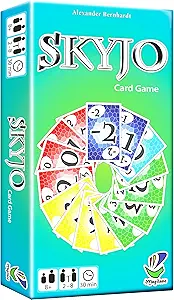 | Best for Casual Group Strategy | Players: 2–8 | Recommended age: 8 years and up | Playing time: Approximately 30 minutes | VIEW ON AMAZON | See Our Full Breakdown |
| Overlap Card Game for Adults & Families |  | Best for Quick Spatial Decisions | Players: 2–8 | Learning time: Under 2 minutes | Game type: Card game combining card shedding and spatial overlapping | VIEW ON AMAZON | See Our Full Breakdown |
| Grandpa Beck’s Games Cover Your Assets Card Game |  | Best for Take-That Competition | Players: 2–6 | Recommended age: 7+ | Playtime: 20–40 minutes | VIEW ON AMAZON | See Our Full Breakdown |
| Indie Boards & Cards Coup Card Game |  | Best for Bluffing and Deduction | Game type: Social deduction card game | Players: 2–6 (per standard Coup rules) | Playtime: Approximately 15 minutes | VIEW ON AMAZON | See Our Full Breakdown |
| PAYBACK Original Edition – Fun Family Card Game with Strategy and Chaos |  | Best for Quick, Lighthearted Rounds | Players: 2–6 | Playtime: About 10 minutes per round | Learning curve: About 2 minutes to learn | VIEW ON AMAZON | See Our Full Breakdown |
| strategy card games for adult | Players |
|---|---|
| Oh Crud Deluxe Edition Card an | 2 to 12 |
| Unstable Games Here to Slay Ba | — |
| Doomlings Card Game | 2–6 |
| Twisted Cryptids Board Game | 2–4 |
| USAOPOLY Flip 7 Card Game | 3 or more |
| Hasbro Gaming Risk Strike Card | 2–5 |
| Magilano SKYJO Card Game | 2–8 |
| Overlap Card Game for Adults & | 2–8 |
| Grandpa Beck’s Games Cover You | 2–6 |
| Indie Boards & Cards Coup Card | 2–6 (per standard Coup rules) |
| PAYBACK Original Edition | 2–6 |
More Details on Our Top Picks
Oh Crud Deluxe Edition Card and Dice Game
Oh Crud Deluxe Edition is the strongest fit here when the main challenge is getting a big group into one game. It supports 2 to 12 players, a wider range than Doomlings or Here to Slay, and its card-and-dice format adds some tactical choices to quick rounds built around avoiding points. Quick reference cards and a tutorial video can help new players join without a long rules explanation, while the compact box suits travel and parties.
The tradeoff is that the supplied details don’t specify play time or explain how much control players have over dice results. Compared with Flip 7, which has a clearer press-your-luck hook and stated short duration, Oh Crud is harder to judge for pacing. Choose it for flexible group size and portability; skip it if you want a well-documented strategy system.
Pros:- Accommodates groups from 2 to 12 players
- Quick reference cards and a tutorial video support an easier teach
- Compact travel-size box suits parties and trips
- Combines cards and dice with the goal of avoiding points
Cons:- Play duration and detailed gameplay are not specified
- Dice rolling may make outcomes feel less controlled for strategy-focused players
- Requires at least two players
Best for: Hosts who need a compact, easy-to-teach card-and-dice game that can accommodate gatherings of up to 12 players
Not ideal for: Players seeking a clearly described, highly tactical game or a known session length
- Game type:Card and dice game
- Players:2 to 12
- Objective:Avoid points
- Included:Instructions, quick reference cards, QR code for tutorial video
- Portability:Compact travel-size box
- Materials:Cards and sturdy box
Our verdict“Choose Oh Crud for a portable game that can include a large, mixed-experience group, provided you are comfortable with limited detail about its strategy and pacing.”
Unstable Games Here to Slay Base Card Game
Here to Slay gives adult groups a more overt tactical theme than the lighter push-your-luck feel of Flip 7. Players build a party of heroes, take on monsters, and use items and magic, so decisions sit inside a playful fantasy contest rather than a simple race to collect points. Its 30–60 minute sessions leave room for a fuller game-night arc, and the stated age range of 10 and up makes it accessible to mixed-age groups.
That accessibility comes with a tradeoff: the base game’s variety may feel limited to groups that want a large pool of changing strategies, though expansion packs are available. Compared with Doomlings, which relies on a broad set of unique cards, Here to Slay centers its choices on party-building and monster fights. It suits players who want approachable fantasy conflict; skip it if you prefer grounded themes or a tighter, shorter game.
Pros:- Hero parties, monsters, items, and magic give decisions a clear fantasy context
- 30–60 minute play time supports a fuller game-night session
- Rules are described as easy to learn for mixed-skill groups
- Expansion packs offer a path to add variety
Cons:- The base game may offer less variety for groups seeking a larger card pool
- Fantasy combat theme may not appeal to players who prefer realistic settings
- Play can run up to an hour
Best for: Adult game-night groups who enjoy fantasy themes, party-building choices, and sessions long enough for a developed contest
Not ideal for: Players who want a grounded theme, very short rounds, or extensive variety from the base game alone
- Brand:Unstable Games (TeeTurtle)
- Model number:TEE4867HSBSG1
- Play time:30–60 minutes
- Recommended age:10 and up
- Included components:Illustrated cards and custom dice
- Model year:2020
Our verdict“Pick Here to Slay if your group wants accessible fantasy party-building and is open to expansions for added variety.”
Doomlings Card Game – Base Game (Classic Edition)
Doomlings Classic Edition earns its place for groups who want many distinct card effects to shape repeated games. Its 167 unique cards, with no duplicates, create a broader range of possibilities than the base set of Here to Slay, whose central focus is assembling heroes and fighting monsters. Sessions last 20–45 minutes, making it easier to fit into an evening than a longer strategy game, and the listed age range of 8 and up can bring adults and younger players to the same table.
The main tradeoff is that card variety does not guarantee consistent strategic control: Catastrophe cards can introduce luck that frustrates players who want plans to dominate. The Classic Edition also stands on its base set, with expansions sold separately. I’d choose it for fresh combinations and approachable play, but look to a more deliberate game if minimizing randomness is the priority.
Pros:- 167 unique cards provide many different abilities and combinations
- 20–45 minute sessions are manageable for a game night
- Listed for ages 8 and up, allowing mixed-age play
- Portable design suits travel
Cons:- Catastrophe cards can disrupt plans through luck
- The base game does not include expansion content
- A broad card pool may make outcomes feel less predictable
Best for: Adults who enjoy discovering varied card abilities across short sessions and want a game that can also include younger players
Not ideal for: Strategy players who dislike luck-driven setbacks or expect the base box to include expansion content
- Players:2–6
- Age range:8 and up
- Play time:20–45 minutes
- Included components:167 unique cards, 1 Mystery Holofoil Card, official rulebook
- Edition:Base Game (Classic Edition)
- Material:Cardboard
- Model number:BGZ115926-EU
Our verdict“Choose Doomlings for varied card combinations and short, accessible sessions if you can accept some luck-driven swings.”
Twisted Cryptids Board Game – Strategy Card Game for Adults and Kids
Twisted Cryptids suits groups who want a spooky theme and direct interaction, with cryptid characters, action cards, and take-that mechanics driving the contest. Its tarot-sized cards and cryptid meeples give it a more substantial table presence than compact, card-focused Flip 7, while its 2–4 player limit makes the group feel more focused than Oh Crud Deluxe Edition, which can host up to 12. The approximately 60-minute duration also points toward a fuller sit-down session.
This is a lighter strategy choice, though, and the limited player count narrows its fit for parties. Take-that effects may appeal to adults who enjoy disrupting opponents, but they can frustrate players who prefer to build a plan without interference. Choose it for small groups who like spooky competition and tactile components; skip it if you want deeper planning or a larger table.
Pros:- Cryptid theme gives the game a distinct spooky identity
- Action cards and take-that mechanics create direct player interaction
- Meeples and tarot-sized cards provide tactile table components
- Additional packs can expand the game
Cons:- Limited to 2–4 players
- Strategy may feel too light for experienced strategy gamers
- Take-that effects can frustrate players who dislike interference
- Approximately 60 minutes is a longer commitment than Flip 7
Best for: Small groups of adults and older kids who enjoy spooky themes, tactical interruptions, and a longer shared game
Not ideal for: Large gatherings, players seeking deep strategy, or groups that dislike take-that interactions
- Players:2–4
- Ages:12 and up
- Game duration:Approximately 60 minutes
- Components:Cryptid meeples, tarot-sized cards, action cards
- Theme:Cryptid, spooky
- Mechanics:Light strategy and take-that
Our verdict“Choose Twisted Cryptids for a small group that wants spooky, interactive play and is comfortable with a lighter strategy level.”
USAOPOLY Flip 7 Card Game
Flip 7 is the quick, social pick for adults who like weighing a risk as it happens. Players aim to reach 200 points by revealing cards without repeating a number; a duplicate ends that player’s round, while action and modifier cards such as Freeze and Second Chance add ways to affect the outcome. At about 20 minutes, it is a quicker commitment than Here to Slay, whose sessions run 30–60 minutes, and its simple central choice makes it easier to bring casual players along.
That same simplicity limits the strategic depth: much of the tension comes from deciding whether to press on, and the duplicate rule can punish risk-takers abruptly. It also requires at least three players, so it cannot fill the two-player slot available to Doomlings. Choose it for brisk group decisions, not sustained tactical planning.
Pros:- About 20 minutes per game suits short gatherings
- Press-your-luck decisions create immediate tension
- Action and modifier cards add variation to the basic reveal choice
- Accessible age range supports mixed-age groups
Cons:- A duplicate number can abruptly end a player’s round
- At least three players are required
- Press-your-luck play offers less sustained tactical depth than Here to Slay
Best for: Groups of three or more who want a short, accessible game built around risk decisions and changing card effects
Not ideal for: Two-player households, risk-averse players, or adults seeking layered strategy over luck and tension
- Players:3 or more
- Age range:8 and up
- Play time:About 20 minutes
- Game type:Press-your-luck card game
- Target:First to reach 200 points
- Action and modifier cards:Flip Three, Freeze, Second Chance, Score Modifier
Our verdict“Pick Flip 7 for quick group fun centered on risk-taking, provided your group has at least three players and welcomes sudden busts.”
Hasbro Gaming Risk Strike Cards and Dice Game for Adults, Teens, and Kids
Risk Strike adapts continent conquest into a roughly 20-minute card-and-dice contest, so it suits adults who want the familiar tug of war without committing to a long board-game session. Its tactics cards and domination coins give turns more direction than a simple dice brawl, while the dice keep outcomes uncertain. Compared with Coup, which builds tension through bluffs and challenges, Risk Strike focuses on territory and tactical choices; compared with SKYJO, it offers a more direct contest between players. That shorter format is also its limit: experienced Risk players may miss the longer planning and map control of the original, and dice luck can undo a good decision. I’d choose it for a quick, competitive session, not for deep strategic development.
Pros:- Territory competition and tactics cards give players meaningful choices in a short session
- Designed for 2–5 players, making it usable with smaller groups
- Compact card-and-dice format suits travel and quick game nights
Cons:- Less strategically layered than traditional Risk
- Dice rolls and tactics cards can outweigh careful planning
- A roughly 20-minute game may feel too brief for players wanting a longer contest
Best for: Risk fans and mixed-age groups who want a portable territory contest that fits into a short game night break.
Not ideal for: Experienced strategy players seeking long-term planning or groups who dislike dice-driven swings in outcomes.
- Players:2–5
- Recommended age:10+
- Game duration:20 minutes
- Continent cards:42
- Domination coins:6
- Other components:Tactics cards
Our verdict“Choose Risk Strike for a quick, portable taste of Risk-style conquest; skip it if your group wants the depth of a full-length strategy game.”
Magilano SKYJO Card Game
SKYJO makes its strategy approachable: players uncover and exchange cards while trying to finish with a low score. The choices revolve around memory, probability, and when to keep or replace what is in front of you, rather than direct attacks. That makes it a gentler adult pick than Cover Your Assets, where opponents can steal and defend stacks, and a more arithmetic-focused alternative to Risk Strike. Support for up to eight players and flexible rounds helps it fit casual gatherings, though the accessible rules and family-friendly pace may leave experienced gamers wanting more control or interaction. The listed instructions span several languages, but English availability is not guaranteed by the product information, so I’d check the edition before buying if that matters to your group.
Pros:- Supports groups of 2 to 8 players
- Simple rules make it easy to introduce to casual players
- Card exchanges reward memory and probability estimates
- Round-based play can fit different amounts of available time
Cons:- Less direct player interaction than games such as Cover Your Assets
- The accessible decisions may feel light for strategy hobbyists
- English instructions are not guaranteed in the supplied edition information
Best for: Adults who want a relaxed, low-conflict card game for larger mixed-age groups and enjoy weighing simple probabilities.
Not ideal for: Players looking for direct confrontation, bluffing, or a language-confirmed English rulebook without checking the edition.
- Players:2–8
- Recommended age:8 years and up
- Playing time:Approximately 30 minutes
- Playing cards:150
- Additional contents:Game pad and instruction booklet
- Listed languages:German, English, French, Spanish, Italian
- Made in:Germany
Our verdict“Pick SKYJO for approachable, low-pressure decisions with a large group, but choose a more confrontational game if interaction is your priority.”
Overlap Card Game for Adults & Families
Overlap pairs card shedding with a spatial puzzle: players place cards so their shapes overlap, adding a visual decision to the race to play out a hand. Its under-two-minute learning time and 2–8 player range make it easier to bring to a casual gathering than Coup, which asks players to bluff and read one another. The spatial element also gives it a different flavor from SKYJO’s low-score card management. The tradeoff is a meaningful one for strategy-focused adults: luck is part of play, and players who want decisions to dominate every outcome may find that frustrating. Its travel-friendly format and mix of tactics and chance suit quick rounds, while the listed awards offer context rather than a guarantee that every group will enjoy its style.
Pros:- Under two minutes to learn lowers the barrier for new players
- Supports 2–8 players
- Spatial overlapping adds a distinct decision layer to card shedding
- Travel-friendly format suits outings and game nights
Cons:- Luck can influence results more than some strategy-focused adults will prefer
- Quick, accessible play may not satisfy groups seeking sustained strategic depth
Best for: Adults and families who want a compact, easy-to-teach card game with visual placement choices for groups of varying sizes.
Not ideal for: Players who want a luck-free contest or deep strategic planning across a longer session.
- Players:2–8
- Learning time:Under 2 minutes
- Game type:Card game combining card shedding and spatial overlapping
- Travel-friendly:Yes
- Listed recognition:American Mensa Recommended
- Listed recognition:Academics’ Choice Brain Toy
- Listed recognition:Sparks Play Strategic Thinking
Our verdict“Choose Overlap for quick visual tactics and broad group flexibility, but look elsewhere if chance undercuts the kind of strategy you enjoy.”
Grandpa Beck’s Games Cover Your Assets Card Game
Cover Your Assets turns set collection into a contest of building valuable stacks, stealing from rivals, and defending what you have. Those attacks make its choices more personal than the low-score decisions in SKYJO, while its accessible rules make it a lighter entry point than Coup’s bluff-and-challenge mind games. The result suits adults who enjoy lively table talk and risk management more than quiet calculation. Its stated playtime ranges from 20 to 40 minutes, giving a group room for a few rounds, though the description does not give a precise component list or more detailed mechanics to distinguish strategies. The game also requires at least two players, so it won’t serve as a solo option. I’d pick it when interaction matters more than a purely tactical puzzle.
Pros:- Stealing and defending create direct interaction
- Set collection gives players a clear tactical objective
- Rules are described as easy to learn
- Listed playtime of 20–40 minutes fits a short gathering
Cons:- Requires at least two players
- Direct attacks may frustrate players who prefer undisturbed planning
- The supplied product details give limited information about components and strategic variety
Best for: Adults hosting family or friend groups who enjoy set collection with direct stealing and defending between players.
Not ideal for: Solo players or anyone who prefers low-conflict card play without opponents disrupting their plans.
- Players:2–6
- Recommended age:7+
- Playtime:20–40 minutes
- Game type:Set collection card game
Our verdict“Choose Cover Your Assets for accessible, interactive set collection, especially if your group enjoys disrupting one another’s plans.”
Indie Boards & Cards Coup Card Game
Coup puts its strategy in the gaps between what players claim and what opponents believe. Bluffing, challenges, and timing create a compact social deduction game where each turn can change how the table reads you. Compared with Risk Strike, its tension comes from people rather than dice and territory; unlike Cover Your Assets, it centers on hidden information instead of building and defending collections. That makes it a stronger fit for adults who enjoy reading behavior, but a poor match for players who want open information and decisions based on cards alone. Its roughly 15-minute playtime and small box make repeated rounds easy to fit into a gathering. The lean component list supports portability, though some buyers may expect more physical content.
Pros:- Bluffing and challenges create layered choices from a compact ruleset
- Short playtime makes repeat rounds practical
- Small box is easy to bring to gatherings or travel
- Players stay involved by tracking claims and deciding whether to challenge
Cons:- Bluffing is central and may not suit every group
- Social reads can matter more than pure strategic calculation
- Minimal components may feel sparse to buyers expecting a fuller game set
Best for: Adults who enjoy bluffing, deduction, and reading opponents in quick, repeatable rounds.
Not ideal for: Players who dislike bluffing, prefer transparent strategic puzzles, or want a game with more physical components.
- Game type:Social deduction card game
- Players:2–6 (per standard Coup rules)
- Playtime:Approximately 15 minutes
- Components:Minimal cards
- Box:Small, portable box
Our verdict“Choose Coup if your group enjoys testing claims and reading opponents; skip it if you want strategy without bluffing.”
PAYBACK Original Edition – Fun Family Card Game with Strategy and Chaos
PAYBACK suits adults who want quick tactical choices and table banter without a long rules teach. Its rounds take about 10 minutes, and the listed two-minute learning curve makes it easier to bring to a mixed-experience group than a game with more layered tactics, such as Coup. The tradeoff is that luck and simple play can limit the sense of control; players looking for deeper bluffing or sharper strategic tension may prefer Coup or Here to Slay. PAYBACK’s 2–6 player range and magnetic box make it handy for travel or a casual game night, though six players still caps the group size. The quirky, hand-drawn artwork adds personality, but the light family-friendly tone may not satisfy adults seeking a more competitive, strategy-first card game.
Pros:- About 10-minute rounds fit neatly into short game sessions
- Two-minute learning curve makes it accessible to new and casual players
- Magnetic box and compact format suit travel and parties
- Humorous twists and distinctive hand-drawn artwork give the game a playful tone
Cons:- Luck can reduce the impact of strategic decisions
- Simple play may feel thin beside more tactical choices in Coup or Here to Slay
- The 2–6 player limit rules it out for larger gatherings
Best for: Adults who want a portable, easy-to-teach filler game for mixed-experience gatherings and short breaks
Not ideal for: Strategy-focused adults seeking sustained tactical depth, or hosts who need a game for groups larger than six
- Players:2–6
- Playtime:About 10 minutes per round
- Learning curve:About 2 minutes to learn
- Materials:Tarot-sized cards
- Storage:Magnetic box
- Artwork:Hand-drawn MS Paint style
Our verdict“Choose PAYBACK for portable, quick rounds with light strategy and humor; choose a deeper bluffing game if tactical control matters more.”
How We Picked
I compared these games by how much meaningful choice they offer, how quickly a new group can learn the rules, and whether the play style suits adults looking for strategy rather than a purely random card game. I also weighed interaction, replay variety, likely table energy, and how well each game’s format fits casual gatherings. The ranking gives more weight to a clear strategic identity and repeatable decisions than to theme alone.
Coup ranks first because its bluffing and deduction create direct, compact decisions that work well for adult groups. The next tier favors games with more card combinations or familiar tactical goals, such as Here to Slay, Doomlings, and Risk Strike. Lighter options such as Flip 7 and SKYJO remain useful picks for mixed-experience tables, but they rank lower for strategy depth. I treat family-friendly positioning as a sign of accessibility, not proof that a game will satisfy every adult group.
Factors to Consider When Choosing Strategy Card Games For Adults
The right game depends on the kind of decisions your group enjoys and the mood you want at the table. Before choosing a title, I’d match its interaction, learning curve, and session shape to the people who will actually play.
Choose the kind of strategy your group enjoys
Strategy can mean reading opponents, planning several turns ahead, managing a hand, or deciding when to take a risk. Those skills create different table experiences even when games share the same card format. Ask whether your group enjoys bluffing, direct conflict, tactical combos, or collecting sets before buying. A common mistake is to equate more rules with more satisfying strategy; a clean decision can be more engaging than a long chain of exceptions. If players like testing each other’s tells, prioritize deduction and bluffing. If they prefer building a plan from cards in hand, seek games with more combinations and a stronger focus on sequencing.
Match the learning curve to the least experienced player
A game is only as approachable as the explanation the group can comfortably absorb. Look at how many distinct actions, card effects, and exceptions players must remember after the first round. A short teach can make a game easier to bring out repeatedly, especially when guests rotate in. Avoid choosing solely for the most experienced player at the table: a steep opening lesson can leave everyone else watching instead of making decisions. For a regular group, a longer learning curve may pay off as people discover tactics over several sessions. For occasional gatherings, clear turns and visible goals often matter more than a broad strategic ceiling.
Think about how much direct conflict feels fun
Take-that effects, stealing, attacks, and bluffs can make a game lively, but they also change how comfortable people feel taking risks. Some groups enjoy being targeted because it creates stories and comeback chances. Others prefer competition where players can plan without having their progress repeatedly disrupted. Ask whether your friends welcome playful sabotage before selecting a highly interactive game. A common buying mistake is treating all interaction as the same: deduction puts pressure on claims, while attacks can directly remove or disrupt progress. Pick a style that fits your group’s sense of humor and appetite for confrontation.
Balance replay variety with rule overhead
Variable cards and changing objectives can keep repeat sessions fresh, but every added effect asks players to learn and remember more. Consider whether your group wants new combinations to explore or a familiar game they can teach quickly. A small rule set can still support varied decisions when players respond differently to one another. Conversely, a large deck does not guarantee that every round feels distinct. If you meet often, a game with evolving tactics may justify a deeper teach. If you play sporadically, prioritize rules that are easy to recall after a gap.
Plan around group size and session length
Check the player count and expected duration against the gatherings you host, rather than assuming a game will work for every group. A compact game can be a good opener or a second activity, while a longer session may suit a dedicated game night. Player count can also change how much interaction the game creates, so read the supported range carefully. One frequent mistake is buying for an ideal group that rarely meets. Think about whether players will join late, leave early, or want to play several rounds. The best fit is often the title that matches your usual table, not the one with the most ambitious scope.
Decide whether you want adult depth or mixed-age flexibility
Games presented for families can still entertain adults, but the appeal may depend more on pace and social interaction than on deep planning. If adults are the only players, look for decisions that stay interesting after everyone understands the rules. For mixed-age groups, clear goals and readable turns can help younger or newer players participate without constant coaching. Do not assume a family label makes a game effortless, or that an adult label guarantees complexity. Consider who will explain the game and how patient the group is with early mistakes. That helps you choose between a broadly accessible night and a more demanding session.
Frequently Asked Questions
Which game here is the best fit if my group enjoys bluffing?
Coup is my clearest choice for a group that enjoys reading claims and deciding when to challenge them. Its appeal comes from uncertainty between players, so it works best when people are comfortable making bold moves and being called out. Here to Slay offers a different kind of interaction through card effects and character play. If your group prefers tactical disruption over guessing whether someone is bluffing, that may be a better match. Choose based on whether social deduction or card-driven conflict sounds more fun.
Can these games work for adults who rarely play modern card games?
Yes, but I’d favor games with clear turns and a short explanation for an occasional group. Flip 7 and SKYJO are approachable choices for players who want to get started without learning a dense set of effects. Coup can also work for newcomers if they enjoy social deduction and the group is willing to explain the bluffing rules as they play. More tactical titles may ask for extra patience during the first session. Choose a game whose central decision is easy to describe in one sentence.
What should I choose if our group dislikes being targeted?
Pay close attention to how a game’s interaction works before choosing it. Titles built around stealing, attacks, or challenging other players’ claims can feel personal to a group that prefers independent planning. A lighter game with turns focused on hand or card choices may be more comfortable, even if it has less direct conflict. Ask your group whether playful take-that moves are part of the fun or a source of frustration. That conversation can prevent a mismatch better than choosing by theme alone.
Is a family-friendly strategy game likely to satisfy an adults-only group?
It can, if the adults enjoy quick decisions, social play, or a relaxed session. The family positioning usually signals accessibility, but it does not tell you how much strategic depth your group will find satisfying. Compare the kind of decisions the game asks players to make with what your group enjoys, such as planning combos or reading opponents. For a more deduction-focused adult session, Coup has a clearer strategic identity. For a casual mixed-age night, a more accessible option may be the better fit.
Should I choose a longer tactical game or a shorter game with simpler turns?
Choose based on how much time your group wants to spend learning and playing in one sitting. A longer tactical game can reward repeated sessions as players discover new approaches, but that value depends on the group returning to it. Shorter games are easier to fit into casual gatherings and can leave time for another round or another activity. Do not judge strategic quality by session length alone; a brief game can still create hard choices. If attendance changes from week to week, a shorter teach may be the safer purchase.
Conclusion
For a single adult-focused pick, I recommend Coup as the best overall because its bluffing and deduction deliver focused interaction in a compact game. Flip 7 is my best value-style choice for groups that want a simple, quick option to bring out often, while Here to Slay is the stronger pick for players seeking a more tactical card game with character-driven variety. For beginners, I’d start with SKYJO or Flip 7, depending on whether the group prefers managing cards or taking quick risks. If your group wants territory conflict, choose Risk Strike; if it enjoys social reads, choose Coup. The best fit comes down to whether your table wants a brisk shared activity or a game built around testing each other’s decisions.
Fall Picks
fall essentials
As an affiliate, we earn on qualifying purchases.