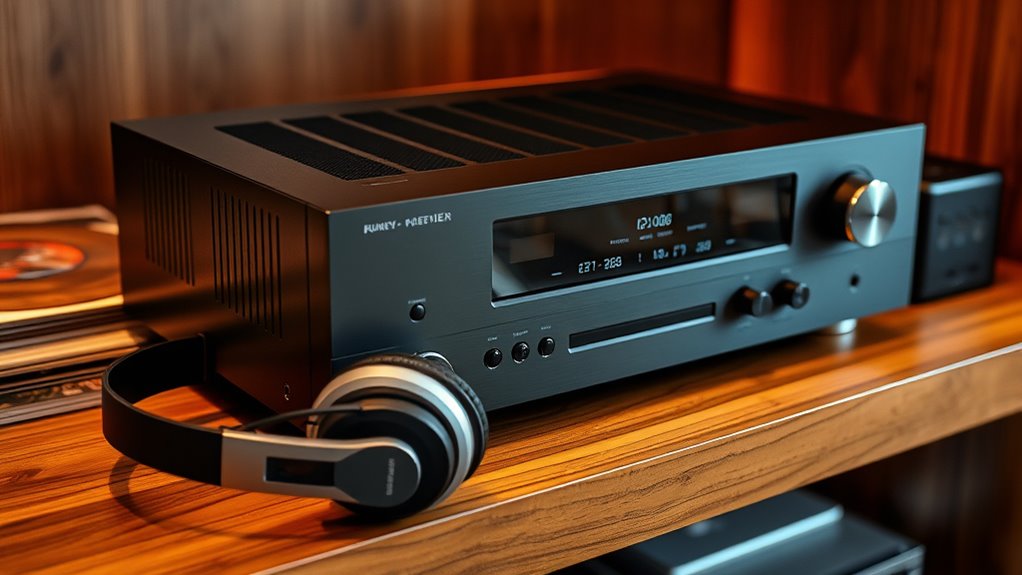

Among these stereo receivers, I’d name the Yamaha R-S202BL the best overall choice for straightforward two-channel listening, while the Sony STR-DH190 stands out for vinyl with its phono input and the Denon AVR-X1700H for a feature-rich home theater. The main choice is between a simpler stereo design for music and a multichannel AV receiver for surround sound, HDMI devices, and future system expansion. Bluetooth appears across several picks, but it does not replace features such as a phono stage, room for more speakers, or newer HDMI support. Some listings are similar models or bundles, so I weigh their core receiver capabilities rather than treating packaging as a performance advantage. Continue reading for the full breakdown and guidance on which tradeoffs fit your system.

Get kitchen staples and gadgets delivered free with Prime
- Fast, free delivery on millions of items
- Prime Video, Amazon Music and more included
- Member-only deals all year
Key Takeaways
- The Yamaha R-S202BL is the clearest match for uncomplicated stereo listening: it focuses on two-channel use instead of adding home-theater connections you may never need.
- The Sony STR-DH190 separates itself with vinyl support: its phono input makes it a more direct fit for a turntable than the Yamaha R-S202 models.
- The Denon AVR-X1700H is the most expandable AV option here: its 7.2-channel layout and HEOS support suit buyers planning a larger theater and networked listening.
- Several products are AV receivers rather than stereo receivers: the RX-V385, AVR-S570BT, STRDH590, RX300A, and AVR-X1700H prioritize multichannel systems and HDMI connections.
- Similar names do not always mean identical listings: the two Sony STR-DH190 entries differ by the stated speaker-wire bundle, while the Yamaha R-S202 renewed and R-S202BL listings differ in condition or model designation.
| Yamaha R-S202 Stereo Receiver with Bluetooth, 100W per Channel, Black (Renewed) |  | Best for Straightforward Stereo Listening | Product type: Stereo receiver | Channels: 2 | Power output: 100 watts per channel at 8 ohms | VIEW ON AMAZON | See Our Full Breakdown |
| Yamaha RX-V385 5.1-Channel 4K Ultra HD AV Receiver with Bluetooth |  | Best for Entry-Level 4K Surround | Channels: 5.1 | Video support: 4K Ultra HD, HDR10, Dolby Vision | HDMI connections: 4 inputs, 1 output | VIEW ON AMAZON | See Our Full Breakdown |
| Denon AVR-S570BT 5.2-Channel AV Receiver with 8K HDMI |  | Best for 8K Source Connectivity | Channels: 5.2 | Output power: 70 watts per channel | HDMI connections: 5 total: 4 inputs and 1 output | VIEW ON AMAZON | See Our Full Breakdown |
| Sony STRDH590 5.2 Channel Surround Sound Home Theater Receiver |  | Best for Basic 4K HDR Home Theater | Channels: 5.2 | HDMI inputs: 4 | Supported video: 4K HDR, HDCP 2.2 | VIEW ON AMAZON | See Our Full Breakdown |
| Yamaha RX300A 5.2-Channel Home Theater AV Receiver with Dolby Atmos, 4K/120 and 8K/60 HDMI, and Bluetooth Multipoint |  | Best for Compact Atmos and Gaming Systems | Channels: 5.2 | Output power: 70 watts | Supported speaker layout: Up to 3.1.2-channel | VIEW ON AMAZON | See Our Full Breakdown |
| Sony STRDH190 2-Ch Stereo Receiver with Bluetooth, Phono Inputs, and Speaker Wire Bundle |  | Best Bundle for a Vinyl Starter System | Model: STRDH190 | Channels: 2 | Connectivity: Bluetooth, phono inputs | VIEW ON AMAZON | See Our Full Breakdown |
| Yamaha R-S202BL Bluetooth Stereo Receiver |  | Best for Radio Listening | Channels: 2 | Output power: 85 watts | Bluetooth: Yes | VIEW ON AMAZON | See Our Full Breakdown |
| Sony STR-DH190 2-Channel Stereo Receiver with Phono Inputs and Bluetooth |  | Best Overall Stereo Receiver | Channels: 2 | Output power: 100 watts × 2 at 8 ohms, 1 kHz | Inputs: Phono, 4 stereo RCA, 3.5 mm | VIEW ON AMAZON | See Our Full Breakdown |
| Denon AVR-X1700H 7.2-Channel 8K AV Receiver with HEOS Built-In |  | Best for Stereo Plus Home Theater Expansion | Channels: 7.2 | Output power: 80 watts per channel | HDMI inputs: 6 | VIEW ON AMAZON | See Our Full Breakdown |
| stereo receiver | Channels | Connectivity | Output power |
|---|---|---|---|
| Yamaha R-S202 Stereo Receiver | 2 | RCA, Bluetooth | — |
| Yamaha RX-V385 5.1-Channel 4K | 5.1 | — | — |
| Denon AVR-S570BT 5.2-Channel A | 5.2 | Bluetooth | 70 watts per channel |
| Sony STRDH590 5.2 Channel Surr | 5.2 | Bluetooth, HDMI | — |
| Yamaha RX300A 5.2-Channel Home | 5.2 | — | 70 watts |
| Sony STRDH190 2-Ch Stereo Rece | 2 | Bluetooth, phono inputs | — |
| Yamaha R-S202BL Bluetooth Ster | 2 | — | 85 watts |
| Sony STR-DH190 2-Channel Stere | 2 | Bluetooth | 100 watts × 2 at 8 ohms, 1 kHz |
| Denon AVR-X1700H 7.2-Channel 8 | 7.2 | Bluetooth, Ethernet, HDMI, USB, Wi-Fi | 80 watts per channel |
More Details on Our Top Picks
Yamaha R-S202 Stereo Receiver with Bluetooth, 100W per Channel, Black (Renewed)
I’d choose the Yamaha R-S202 for a traditional two-speaker setup where music, radio, and simple wireless playback matter more than home-theater features. Its stated 100 watts per channel at 8 ohms and multiple RCA connections give it more stereo-focused appeal than the 5.1- and 5.2-channel AV receivers here, including the Yamaha RX-V385. Bluetooth and FM/AM presets add convenient listening options without requiring a streaming ecosystem. The tradeoff is a firm two-channel limit: it cannot anchor the surround layouts or modern video switching offered by the Denon AVR-S570BT. It is also listed as renewed, so buyers should be comfortable with refurbished condition rather than assuming the consistency of a new unit. I’d pick it for music-first systems, not mixed TV-and-cinema rooms.
Pros:- Rated at 100 watts per channel at 8 ohms for stereo speaker setups
- Built-in Bluetooth supports wireless audio playback
- Multiple RCA inputs and outputs accommodate traditional audio components
- Front-panel 1/4-inch headphone output offers private listening
Cons:- Two-channel stereo output cannot support a surround-speaker layout
- Renewed condition may vary, which may not suit buyers who prefer new equipment
- No HDMI video connections are listed
Best for: Listeners building a two-speaker music system who want Bluetooth, radio presets, and RCA connections without an AV receiver’s surround features.
Not ideal for: Home-theater buyers who need surround channels, HDMI video switching, or a new-condition product.
- Product type:Stereo receiver
- Channels:2
- Power output:100 watts per channel at 8 ohms
- Connectivity:RCA, Bluetooth
- Audio output mode:Stereo
- Headphone output:Front-panel 1/4-inch jack
- Radio feature:FM/AM preset tuning
- Condition:Renewed
Our verdict“Choose this renewed Yamaha for Bluetooth-enabled two-channel listening, but skip it if your system needs surround sound or HDMI switching.”
Yamaha RX-V385 5.1-Channel 4K Ultra HD AV Receiver with Bluetooth
The Yamaha RX-V385 suits buyers moving beyond stereo into a basic surround system while keeping 4K video connections in the same receiver. Its 5.1-channel layout, Bluetooth, and YPAO auto-calibration make it a more complete home-theater starting point than the two-channel Yamaha R-S202, which is focused on music playback and lacks HDMI video support. YPAO can help match the system to the room, while HDR10 and Dolby Vision support fit compatible 4K sources. The main limitation is its older, simpler feature set beside the Denon AVR-S570BT and Yamaha RX300A: it supports fewer channels and does not list the newer gaming features found on those models. I’d favor it for a straightforward 4K TV-and-surround setup, not for a room built around advanced gaming or future speaker expansion.
Pros:- 5.1-channel support provides a clear step up from stereo receivers
- Supports 4K Ultra HD, HDR10, and Dolby Vision
- YPAO auto-calibration helps tailor speaker output to the room
- Bluetooth supports wireless audio playback
Cons:- Limited to a 5.1-channel configuration
- No built-in Wi-Fi is listed
- Does not list the newer gaming features offered by the Yamaha RX300A and Denon AVR-S570BT
Best for: First-time home-theater buyers who want a 5.1 speaker system, Bluetooth, and 4K HDR video support with automatic room calibration.
Not ideal for: Gamers seeking listed 4K/120, VRR, or ALLM support, or buyers planning to expand beyond 5.1 channels.
- Channels:5.1
- Video support:4K Ultra HD, HDR10, Dolby Vision
- HDMI connections:4 inputs, 1 output
- HDMI standard:HDMI 2.1 with HDCP 2.2
- Wireless connectivity:Bluetooth
- Auto-calibration:YPAO
- Audio delay:Adjustable from 0 to 500 ms
Our verdict“Pick the RX-V385 for a basic calibrated 5.1 system with 4K HDR support, but choose a newer feature set for advanced gaming or expansion.”
Denon AVR-S570BT 5.2-Channel AV Receiver with 8K HDMI
I’d shortlist the Denon AVR-S570BT when HDMI capability is a bigger priority than adding more speaker channels. It offers four 8K HDMI inputs, eARC, and support for HDR formats, giving it a stronger video-connection story than the Sony STRDH590, which is specified for 4K HDR. Dolby TrueHD and DTS-HD Master Audio support cover common high-definition movie soundtracks, while VRR, QFT, and ALLM speak to compatible gaming setups. Its five-channel limit, however, keeps it below the seven-channel Denon AVR-X1700H in expansion potential, and the Yamaha RX300A adds Dolby Atmos support in a similarly compact channel class. The Denon’s 70-watt-per-channel rating and Bluetooth streaming make it a practical mixed-use receiver, but buyers wanting a larger surround layout should look higher in Denon’s range.
Pros:- Four 8K-capable HDMI inputs and eARC support
- Supports Dolby TrueHD and DTS-HD Master Audio
- VRR, QFT, and ALLM support suits compatible gaming devices
- On-screen setup assistant plus app and remote control options
Cons:- Five-channel speaker layout offers less expansion than the Denon AVR-X1700H
- Bluetooth streaming requires a compatible source device
- 70 watts per channel is below the Yamaha R-S202’s stated stereo output, though the ratings apply to different receiver types
Best for: Owners of 8K-capable sources or modern game consoles who want multiple high-bandwidth HDMI inputs in a 5.2-channel system.
Not ideal for: Buyers planning a 7.1-channel or larger setup, or those who want built-in Wi-Fi streaming rather than Bluetooth-based playback.
- Channels:5.2
- Output power:70 watts per channel
- HDMI connections:5 total: 4 inputs and 1 output
- HDMI support:8K, HDMI 2.1
- Audio formats:Dolby TrueHD, DTS-HD Master Audio
- Video formats:HDR, HLG, Dolby Vision, HDR10+, Dynamic HDR
- Gaming features:VRR, QFT, ALLM
- Connectivity:Bluetooth
- Control options:App and remote
Our verdict“Choose the AVR-S570BT for a feature-rich 8K HDMI hub in a 5.2 system, not for a larger expandable surround setup.”
Sony STRDH590 5.2 Channel Surround Sound Home Theater Receiver
The Sony STRDH590 is a simple route from TV speakers to a 5.2-channel setup, with four HDMI inputs, 4K HDR support, and Bluetooth. That makes it a more direct home-theater fit than the stereo-only Yamaha R-S202, while its virtual surround feature offers a way to broaden the presentation when a full speaker layout is not in place. Compared with the Denon AVR-S570BT, though, the Sony’s listed HDMI support stops at 4K HDR rather than 8K, and its product data does not name advanced room calibration or newer gaming functions. The published power figures also include both 725W and 145W without clarifying their measurement conditions, so I would not compare them directly with another receiver’s per-channel rating. This is best for buyers who want the basics; feature-focused shoppers should look at the newer Denon or Yamaha RX300A.
Pros:- Supports 4K HDR and HDCP 2.2
- Four HDMI inputs connect multiple video sources
- Bluetooth enables wireless audio playback
- Virtual surround sound can broaden the presentation beyond standard stereo
Cons:- No advanced room-calibration feature is listed
- The supplied power figures are not clearly defined as per-channel ratings
- 4K HDR support is less current than the Denon AVR-S570BT’s listed 8K HDMI capability
Best for: TV owners assembling a straightforward 5.2-channel system who need 4K HDR, several HDMI inputs, and Bluetooth.
Not ideal for: Buyers seeking 8K HDMI, listed auto-calibration, advanced gaming features, or clearly specified per-channel power figures.
- Channels:5.2
- HDMI inputs:4
- Supported video:4K HDR, HDCP 2.2
- Connectivity:Bluetooth, HDMI
- Power figures listed:725W and 145W; measurement conditions not specified
- Surround sound:Yes; virtual surround sound feature described
- Control method:Remote
- Power requirements:AC 120V 60Hz / 230V 50Hz
Our verdict“Choose the Sony for a basic 4K HDR surround setup, but favor the Denon AVR-S570BT or Yamaha RX300A for newer video and gaming features.”
Yamaha RX300A 5.2-Channel Home Theater AV Receiver with Dolby Atmos, 4K/120 and 8K/60 HDMI, and Bluetooth Multipoint
The Yamaha RX300A is the most feature-forward pick here for buyers building a compact surround system around immersive audio and modern gaming. Its support for Dolby Atmos and DTS Virtual:X, including speaker layouts up to 3.1.2, gives it a height-effects option that the Yamaha RX-V385 and Sony STRDH590 do not list. It also handles 4K/120 and 8K/60 video, with VRR and ALLM, and includes automatic room correction. The tradeoff is the same 5.2-channel ceiling that limits the Denon AVR-S570BT: this is not the pick for someone planning a larger speaker array. Bluetooth Multipoint can keep two sources paired, but it is less useful to buyers who want network streaming features. I’d choose it over the older basic models for gaming and Atmos; the Denon AVR-X1700H is the better direction for more channels.
Pros:- Dolby Atmos and DTS Virtual:X support, with layouts up to 3.1.2
- Supports 4K/120 and 8K/60 video, plus Dolby Vision and HDR10+
- Automatic room correction uses an included setup microphone
- Bluetooth Multipoint allows two source devices to stay paired
Cons:- 5.2-channel limit restricts expansion compared with the Denon AVR-X1700H
- Bluetooth Multipoint supports two paired sources, which may not cover a larger collection of devices
- No built-in Wi-Fi or network streaming services are listed
Best for: Console gamers and movie fans who want Atmos-capable audio, room correction, and high-refresh video support in a 5.2-channel receiver.
Not ideal for: Buyers planning a larger-than-5.2 system or those who need built-in Wi-Fi and network streaming services.
- Channels:5.2
- Output power:70 watts
- Supported speaker layout:Up to 3.1.2-channel
- Audio formats:Dolby Atmos, DTS Virtual:X
- Video support:4K/120, 8K/60
- HDR formats:Dolby Vision, HDR10+
- HDMI connections:5 total: 4 inputs and 1 output
- Wireless feature:Bluetooth Multipoint for two source devices
- Room correction:Automatic calibration with included setup microphone
Our verdict“Pick the RX300A for a compact Atmos-and-gaming system with room correction, but choose a higher-channel receiver for broader expansion.”
Sony STRDH190 2-Ch Stereo Receiver with Bluetooth, Phono Inputs, and Speaker Wire Bundle
This bundle suits buyers building a straightforward stereo system around both a turntable and wireless music. The phono input and Bluetooth make it easy to switch between vinyl and streaming, while the included 50 feet of speaker wire and five pairs of banana plugs reduce the extra setup shopping. Compared with the standalone Sony STR-DH190, this package is more convenient if you need wiring and connectors, but the supplied extras do not add more power or expand the receiver beyond two-channel playback. Its four analog inputs offer room for several wired sources, though source changes are manual. Choose it for a simple stereo setup; skip it if you need Wi-Fi, surround sound, or a more automated listening system.
Pros:- Phono input connects a compatible turntable directly
- Bluetooth supports wireless music streaming
- Bundle includes 50 feet of speaker wire and five pairs of banana plugs
- Four analog inputs accommodate multiple wired sources
Cons:- Two-channel design cannot power a surround sound setup
- No Wi-Fi connectivity is listed
- Switching between sources requires manual operation
Best for: First-time stereo buyers connecting a turntable and Bluetooth device who also need speaker wire and banana plugs for setup.
Not ideal for: Home theater builders and listeners who want Wi-Fi streaming or surround sound; this receiver is limited to two channels and Bluetooth.
- Model:STRDH190
- Channels:2
- Connectivity:Bluetooth, phono inputs
- Audio inputs:4 analog
- Audio outputs:1
- Speaker wire:50 feet
- Banana plugs:5 pairs
Our verdict“Choose this bundle if you need a vinyl-friendly two-channel receiver and basic speaker wiring in one package.”
Yamaha R-S202BL Bluetooth Stereo Receiver
The R-S202BL is the clearest fit here for listeners who still use broadcast radio alongside Bluetooth. Its AM/FM tuner and 40 station presets make saving and revisiting stations simple, while connections for two speaker systems offer flexibility for a second pair of speakers. Compared with the Sony STR-DH190, the Yamaha foregrounds radio and speaker-system switching rather than a dedicated phono input, so vinyl owners should favor the Sony. The included remote and headphone terminal also make everyday listening easier. Its limits are straightforward: it is a two-channel receiver, and Wi-Fi streaming is not specified. The listed dimensions are fairly substantial, so I would check cabinet space before choosing it over a slimmer stereo component.
Pros:- AM/FM tuner stores up to 40 station presets
- Bluetooth supports streaming from compatible devices
- Speaker connections support two systems
- Includes a remote control and headphone terminal
Cons:- Two-channel output is not suited to surround sound
- Wi-Fi connectivity is not specified
- Listed dimensions may make placement difficult in compact cabinets
Best for: Radio listeners who want saved AM/FM stations, Bluetooth streaming, and the option to connect two speaker systems.
Not ideal for: Turntable owners seeking a listed phono input, or buyers who need Wi-Fi streaming or multichannel home theater audio.
- Channels:2
- Output power:85 watts
- Bluetooth:Yes
- Tuner:AM/FM
- Preset stations:40
- Speaker systems:2
- Dimensions:20 × 15 × 8 in
- Weight:14.8 lb
Our verdict“Pick the Yamaha if radio presets and two speaker-system connections matter more than a phono input.”
Sony STR-DH190 2-Channel Stereo Receiver with Phono Inputs and Bluetooth
This standalone STR-DH190 is the most balanced choice for a traditional stereo system in this group. It pairs a phono input for a turntable with Bluetooth for wireless listening, and its four stereo RCA inputs plus 3.5 mm input leave room for other sources. Unlike the bundled Sony STRDH190, it does not include speaker wire or banana plugs, but it offers a defined 100 watts per channel at 8 ohms and A/B switching for up to four speakers. That switching adds speaker flexibility, not extra surround channels. The low-profile 5 1/4-inch height helps it fit conventional AV cabinets. Choose it over the Yamaha R-S202BL if vinyl input matters; choose the Yamaha if AM/FM presets and two speaker systems are the priority.
Pros:- Phono input supports direct connection of a turntable
- Bluetooth adds wireless music playback
- A/B switching supports up to four speakers
- Low-profile design fits conventional AV cabinets
Cons:- Two-channel output does not provide surround sound
- No Wi-Fi connectivity is listed
- Speaker wire and banana plugs are not included
Best for: Stereo listeners who want one receiver for a turntable, Bluetooth playback, several wired sources, and A/B speaker switching.
Not ideal for: Buyers seeking surround sound, Wi-Fi streaming, or an all-in-one setup bundle with speaker wire and connectors.
- Channels:2
- Output power:100 watts × 2 at 8 ohms, 1 kHz
- Inputs:Phono, 4 stereo RCA, 3.5 mm
- Outputs:Stereo RCA
- Connectivity:Bluetooth
- Speaker switching:A/B; supports up to 4 speakers
- Radio:FM with 30 station presets
- Height:5 1/4 inches
Our verdict“Choose this Sony for a flexible two-channel system centered on vinyl, Bluetooth, and multiple wired sources.”
Denon AVR-X1700H 7.2-Channel 8K AV Receiver with HEOS Built-In
The AVR-X1700H is the outlier for buyers who want stereo listening now but expect to build a full home theater. Its 7.2-channel amplification supports Dolby Atmos and DTS:X formats, while six HDMI inputs accommodate multiple video sources, including support for 8K/60Hz and select 4K/120Hz pass-through. That makes it far more capable for movies and gaming than the two-channel Sony STR-DH190 or Yamaha R-S202BL, but also a different kind of purchase: the extra channels and HDMI features matter little if music through two speakers is the whole plan. HEOS, AirPlay 2, Wi-Fi, and voice-assistant support add streaming flexibility absent from the stereo models. One limitation is that 8K pass-through applies only to select inputs.
Pros:- Supports Dolby Atmos and DTS:X immersive audio
- Six HDMI inputs include 8K and select 4K/120Hz pass-through
- HEOS Built-in and AirPlay 2 support wireless streaming
- Works with several listed voice assistants
Cons:- Seven amplified channels may be unnecessary for a stereo-only system
- 8K pass-through is limited to select inputs
- Its multichannel focus makes it less direct than a dedicated two-channel receiver for a basic stereo setup
Best for: Buyers planning a multichannel home theater who also want wireless music streaming and stereo listening from one receiver.
Not ideal for: Listeners building only a simple two-speaker music system; its surround, video, and network features may be unnecessary for that setup.
- Channels:7.2
- Output power:80 watts per channel
- HDMI inputs:6
- HDMI outputs:1
- Video support:8K/60Hz and select 4K/120Hz pass-through
- Audio formats:Dolby Atmos, Dolby Atmos Height Virtualization, DTS:X, DTS Virtual:X
- Connectivity:Bluetooth, Ethernet, HDMI, USB, Wi-Fi
- Streaming:HEOS Built-in, AirPlay 2
- Voice assistants:Amazon Alexa, Google Assistant, Apple Siri, Josh.ai
Our verdict“Choose the Denon if you want a receiver that can handle stereo music and grow into an Atmos home theater.”

How We Picked
I ranked these options by how well each receiver fits a clear buyer need: two-channel music, turntable playback, entry-level home theater, or a more expandable AV setup. I weighed channel configuration, useful connections, stated video support, Bluetooth or network features, and how much setup complexity each product adds. A stereo model gets credit for keeping music listening direct; an AV receiver earns its place when its extra channels and HDMI features solve a real system need.
The order favors versatility and a distinct use case, not the longest feature list. The Yamaha R-S202BL leads as a straightforward stereo choice, while the Sony STR-DH190 is a stronger fit for vinyl and the Denon AVR-X1700H brings the broadest stated theater and streaming capabilities. The Yamaha R-S202 renewed listing and the bundled Sony STR-DH190 remain useful alternatives, but condition, package contents, and the overlap between close models make them less compelling as separate first choices. I also distinguish stereo receivers from AV receivers so buyers do not mistake multichannel features for a requirement.
| stereo receiver | Connectivity |
|---|---|
| Yamaha R-S202 Stereo Receiver | RCA, Bluetooth |
| Yamaha RX-V385 5.1-Channel 4K | — |
| Denon AVR-S570BT 5.2-Channel A | Bluetooth |
| Sony STRDH590 5.2 Channel Surr | Bluetooth, HDMI |
| Yamaha RX300A 5.2-Channel Home | — |
| Sony STRDH190 2-Ch Stereo Rece | Bluetooth, phono inputs |
| Yamaha R-S202BL Bluetooth Ster | — |
| Sony STR-DH190 2-Channel Stere | Bluetooth |
| Denon AVR-X1700H 7.2-Channel 8 | Bluetooth, Ethernet, HDMI, USB, Wi-Fi |
Factors to Consider When Choosing Stereo Receivers
Before choosing among these stereo receivers and AV alternatives, I’d start with the system you intend to connect—not the feature list. A two-speaker music setup has different needs from a living-room theater with a TV, console, subwoofer, and surround speakers. These choices affect compatibility, setup effort, and whether you pay for capabilities your system can use.
Choose Stereo or Multichannel Before Comparing Features
A stereo receiver drives two main channels and is usually the simpler route for music-focused systems. An AV receiver adds center and surround channels, often with subwoofer outputs and video switching, which matter when building a theater around a TV. Buying an AV model for a two-speaker setup can add menus and connections without improving the basic stereo task you care about. The reverse mistake is choosing a two-channel model and later discovering it cannot support the center or surround speakers you want. Decide how many speakers you expect to use over the next few years, not only how many are connected today. That choice narrows this roundup more effectively than comparing brand names.
Match Inputs to Every Source You Own
Make a source list before shopping: turntable, TV, disc player, game console, phone, or network streamer. A phono input is designed for a turntable’s low-level signal; without one, you may need a separate phono preamp. Bluetooth is convenient for casual playback, but it does not provide the same connection path as a wired source or a dedicated network feature. For a TV-centered system, check the receiver’s HDMI features and the audio connections your display supports rather than assuming any AV receiver will fit. Leave spare inputs for a likely future device, since an extra connection can be more useful than an advanced feature you never use. This is especially relevant when comparing stereo-focused Yamaha and Sony models with the HDMI-equipped AV receivers here.
Check Speaker Compatibility as a System
Receiver power figures are only one part of speaker matching; speaker impedance, sensitivity, room size, and listening distance also shape the result. Avoid treating a published watts-per-channel number as a direct guarantee of louder or better sound, since manufacturers may measure output under different conditions. Check the receiver’s supported speaker impedance and the requirements listed for your speakers. A compact room with efficient speakers may not call for a high-output theater receiver, while a larger room or demanding speakers can make system matching more important. For multichannel setups, account for every planned speaker and subwoofer connection, not just the front pair. If the specifications are unclear, confirm compatibility with the speaker maker before buying.
Treat HDMI Standards as a Fit Check, Not a Future-Proof Promise
AV receiver HDMI support matters most when the receiver sits between a TV and sources such as a current game console or media player. Compare the resolution and refresh-rate needs of those devices with the receiver’s stated HDMI capabilities, and check whether the TV has a suitable return-audio connection if you plan to send TV sound back to the receiver. A newer HDMI specification can be useful, but it does not automatically improve music playback or fix a mismatch elsewhere in the chain. Buyers with no HDMI sources may get more value from a simpler stereo receiver. Buyers building a gaming or film system should verify the exact input and output behavior they need rather than relying on a format name alone. This keeps video support tied to an actual use case.
Decide Whether You Need Network Audio or Just Bluetooth
Bluetooth works well when you want to send audio from a nearby phone without building a connected system. Network audio features can suit households that play music from services or devices across a home, but they add setup and depend on a stable network. The Denon AVR-X1700H’s HEOS feature makes it more relevant to buyers who want connected listening alongside home theater, while the simpler stereo picks emphasize direct playback. Do not pay for network features if your listening is mostly from a turntable or one phone. Conversely, if several people will stream from different rooms, check app compatibility and the services supported before choosing. The right feature is the one that matches how your household actually selects music.
Factor in Setup, Condition, and What the Listing Includes
More channels and connection options can make an AV receiver more flexible, but they also bring more setup choices and speaker wiring. A two-channel receiver is often easier to place and configure for a basic music system. Read the exact listing details for condition and included accessories, especially when a model is marked renewed or sold as a bundle. In this group, the renewed Yamaha R-S202 and the Sony STR-DH190 bundle should be compared with their standard counterparts based on condition and package contents, not assumed to be different receiver designs. Check whether the needed remote, power cord, antenna, and speaker wire are included or must be supplied separately. A little listing scrutiny can prevent a mismatch between the receiver you chose and the system you can connect on arrival.
Frequently Asked Questions
Do I need a stereo receiver or an AV receiver for a two-speaker music setup?
For two speakers and music as the main use, a stereo receiver is usually the more direct fit. It avoids paying attention to surround channels and HDMI features that may not be part of your system. In this roundup, the Yamaha R-S202BL and Sony STR-DH190 are the clearest stereo choices, with the Sony offering a phono input for a turntable. An AV receiver can still work with two speakers, especially if you expect to add a TV-centered theater later. Choose one for that expansion plan, rather than assuming more channels automatically improve a two-speaker music system.
Can I connect a turntable to any of these receivers?
No: first check whether the receiver has a dedicated phono input or whether your turntable has a built-in phono preamp. The Sony STR-DH190 models in this roundup explicitly list phono inputs, making them straightforward candidates for compatible turntables. If you use a receiver without a phono input, a separate phono preamp can provide the needed signal. Do not connect a turntable directly to a standard line input unless the turntable’s preamp is enabled. Also confirm whether your cartridge type matches the phono input’s specifications.
Should I choose an 8K-capable AV receiver if my TV is 4K?
Not automatically. An 8K-capable receiver may still be useful if you want newer HDMI support or plan to connect devices with higher video demands, but your current TV and sources determine whether those features matter now. The Denon AVR-S570BT and AVR-X1700H list 8K HDMI, while the Yamaha RX-V385 is positioned around 4K support. Check the exact resolution, refresh-rate, and audio-return needs of your devices before paying for capabilities outside your setup. For music-only use, HDMI resolution should rarely decide the purchase.
What is the practical difference between the two Sony STR-DH190 listings?
Both listings identify a two-channel Sony STR-DH190 with Bluetooth and phono support, so the stated receiver role is much the same. One listing specifies a speaker-wire bundle, which may save a separate accessory purchase if the included wire suits your room and speakers. The other listing describes the receiver without that bundle, so check its included contents rather than assuming the package is identical. Compare condition, included accessories, and the exact product details before selecting between them. The bundle itself does not establish a difference in the receiver’s core audio capabilities.
When does a 7.2-channel receiver make more sense than a 5.2-channel model?
A 7.2-channel receiver makes more sense when you intend to build a larger surround system or want additional channel flexibility beyond a basic five-speaker layout. In this roundup, the Denon AVR-X1700H is the 7.2-channel choice and also lists HEOS, which suits buyers combining theater and networked music. A 5.2-channel receiver may be simpler and sufficient for a conventional living-room surround setup with a subwoofer. More channels do not create a benefit if you will not add the speakers or use the supported configurations. Plan your room and speaker layout before choosing the channel count.
Conclusion
For the best overall stereo fit, I’d choose the Yamaha R-S202BL if you want uncomplicated two-channel listening. The best value in functionality for vinyl-focused beginners is the Sony STR-DH190, since its phono input and Bluetooth cover two common sources without requiring an AV setup; compare the bundle listing if you also need speaker wire. For the best premium, expandable theater option in this lineup, the Denon AVR-X1700H offers 7.2 channels and HEOS. Beginners who want a basic music system should favor a stereo receiver, while first-time home-theater builders can look at the 5.2-channel AV choices and select based on their HDMI needs. For a renewed alternative, the Yamaha R-S202 listing may suit buyers comfortable checking condition and included items; for wider connected theater use, the Denon is the stronger match. Choose by speaker plan and source connections first, then let convenience features break a close call.