Shopping for sewing machines in 2026 means choosing between three main camps: mechanical workhorses, budget-friendly beginners’ models, and computerized machines loaded with stitches and quilting features. The Brother CS7000X stands out as the best overall pick for balancing a wide stitch library, an LCD display, and quilting-friendly accessories at a midrange price. If raw power through denim and canvas matters more, the Singer 4423 Heavy Duty is the stronger choice, while the Brother XM2701 makes the most sense for first-time sewists who want simplicity at a low cost. The core tradeoff in this category is mechanical simplicity and power versus computerized versatility and precision — and paying more usually buys convenience, not better seams. Read on for the full breakdown of all 14 models, including who each one suits and who should skip it.

Get kitchen staples and gadgets delivered free — and shop member deals
- Fast, free delivery on millions of items
- Access to Prime Big Deal Days deals on October 6–7
- Prime Video, Amazon Music and more included
Key Takeaways
- The Singer 4423, 4432, and 4452 are nearly identical mechanically — the differences are stitch count and included accessories, so choosing between them comes down to features, not performance.
- Brother dominates the under-$200 segment: the XM2701, XM3700, and GX37 offer similar stitch counts but differ in included feet and ease-of-use touches, making accessory bundles the real differentiator.
- Every computerized model here (XR9550, CS5055, CS7000X, Quantum Stylist 9960) adds an LCD screen and automatic buttonholes, but only the CS7000X and 9960 include the extension table and walking foot that quilters actually need.
- The VASPOW FHSM-700 is the only true budget mini machine in the lineup — fine for occasional mending, but it cannot compete with full-size machines on denim or sustained sewing.
- Heavy-duty Singer models outperform Brother‘s ST371HD on thick fabric thanks to a stronger motor and metal frame, but the Brother wins on stitch variety and included presser feet.
| Singer 4423 Heavy Duty Sewing Machine, Meltwater Blue |  | Best Overall | Stitch applications: 97 | Maximum sewing speed: 1,100 stitches per minute | Frame: Metal | VIEW ON AMAZON | See Our Full Breakdown |
| Brother XM3700 Sewing Machine with 37 Built-in Stitches |  | Best for Beginners | Built-in stitches: 37 | Buttonhole: One-step auto-size | Needle threader: Automatic | VIEW ON AMAZON | See Our Full Breakdown |
| Brother XR9550 Computerized Sewing and Quilting Machine |  | Best for Quilting and Versatility | Built-in stitches: 165 (110 utility/decorative/heirloom, 55 alphanumeric) | Buttonholes: 8 styles of auto-size buttonholes | Display: LCD screen | VIEW ON AMAZON | See Our Full Breakdown |
| SINGER 4432 High-Speed Heavy Duty Sewing Machine with Accessory Kit, Black | 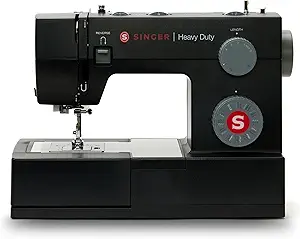 | Best Heavy-Duty Workhorse | Sewing speed: Up to 1,100 stitches per minute | Motor: Heavy-duty, 60% stronger than standard machines | Built-in stitches: 32 | VIEW ON AMAZON | See Our Full Breakdown |
| Brother CS5055 Computerized Sewing Machine with LCD Display |  | Best Value Computerized Pick | Built-in stitches: 60 | Buttonhole styles: 7 one-step auto-size | Display: LCD | VIEW ON AMAZON | See Our Full Breakdown |
| Brother XM2701 Portable Sewing Machine, 27 Built-in Stitches |  | Best Budget Starter Pick | Model: XM2701 | Built-in Stitches: 27 | Needle Threader: Automatic | VIEW ON AMAZON | See Our Full Breakdown |
| SINGER Quantum Stylist 9960 Computerized Sewing & Quilting Machine |  | Best Premium Feature Machine | Built-in Stitches: 600 | Stitch Applications: 1,172 | Buttonhole Styles: 13 one-step automatic | VIEW ON AMAZON | See Our Full Breakdown |
| Singer 4452 Heavy Duty Sewing Machine, Grey |  | Best for Thick Fabrics | Model: 4452 | Built-in Stitches: 32 | Stitch Applications: 110 | VIEW ON AMAZON | See Our Full Breakdown |
| Brother CS7000X Sewing and Quilting Machine with LCD Display |  | Best for Beginner Quilters | Built-in Stitches: 70 | Buttonhole Styles: 7 one-step auto-size | Needle Threader: Automatic | VIEW ON AMAZON | See Our Full Breakdown |
| Brother ST371HD Heavy Duty Sewing Machine, 37 Built-in Stitches, 6 Included Feet | 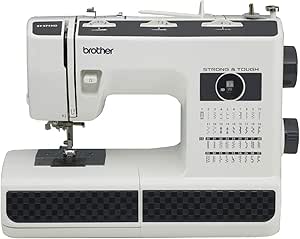 | Best Versatile Heavy-Duty Value | Model: ST371HD | Type: Mechanical heavy-duty sewing machine | Built-in Stitches: 37 | VIEW ON AMAZON | See Our Full Breakdown |
| VASPOW FHSM-700 Portable Sewing Machine for Home Mending & Denim |  | Best Budget Pick for Denim Mending | Brand: VASPOW | Model: FHSM-700 | Power: 12V/24W corded motor (DC adapter, no battery mode) | VIEW ON AMAZON | See Our Full Breakdown |
| Singer 4432 Heavy Duty Sewing Machine with Accessory Kit |  | Best for Heavy-Duty Speed | Model: Singer 4432 | Weight: 14.6 lbs | Dimensions: 15.5 × 6.25 × 12 in | VIEW ON AMAZON | See Our Full Breakdown |
| Brother GX37 Sewing Machine with 37 Built-in Stitches |  | Best for Beginners | Built-in Stitches: 37 | Buttonhole: Auto-size | Needle Threader: Automatic | VIEW ON AMAZON | See Our Full Breakdown |
| Brother XR3774 Sewing and Quilting Machine with 37 Stitches |  | Best Value for Sewing and Quilting | Built-in Stitches: 37 (blind hem, decorative, quilting) | Buttonhole: 1-step | Needle Threader: Automatic | VIEW ON AMAZON | See Our Full Breakdown |
| sewing machine | Built-in stitches | Included accessories | Needle threader |
|---|---|---|---|
| Singer 4423 Heavy Duty Sewing | — | — | Automatic |
| Brother XM3700 Sewing Machine | 37 | Accessory pouch, 5 sewing feet, 3-piece needle set, twin needle, 4 bobbins, user manual | Automatic |
| Brother XR9550 Computerized Se | 165 (110 utility/decorative/heirloom, 55 alphanumeric) | Protective hard cover, wide table, 8 presser feet | — |
| SINGER 4432 High-Speed Heavy D | 32 | Presser feet, bobbins, needles, seam ripper, quilting guide, dust cover | — |
| Brother CS5055 Computerized Se | 60 | 7 sewing feet, 4 bobbins, needle set, trilingual user manual | Automatic |
| Brother XM2701 Portable Sewing | 27 | 6 sewing feet, 3-piece needle set, twin needle, 4 bobbins | Automatic |
| SINGER Quantum Stylist 9960 Co | 600 | — | — |
| Singer 4452 Heavy Duty Sewing | 32 | Walking foot, non-stick foot, clearance plate, heavy-duty needles, zipper and button feet, quilting guide, bobbins, tools | — |
| Brother CS7000X Sewing and Qui | 70 | Wide table, 10 sewing feet, quilt guide, protective hard case | Automatic |
| Brother ST371HD Heavy Duty Sew | 37 | — | Automatic |
| VASPOW FHSM-700 Portable Sewin | 16 preset stitches | — | — |
| Singer 4432 Heavy Duty Sewing | — | — | — |
| Brother GX37 Sewing Machine wi | 37 | 6 sewing feet, needle set, bobbins, manual | Automatic |
| Brother XR3774 Sewing and Quil | 37 (blind hem, decorative, quilting) | Wide table, machine cover, 8 sewing feet, instructional DVD | Automatic |
More Details on Our Top Picks
Singer 4423 Heavy Duty Sewing Machine, Meltwater Blue
When one machine has to handle denim hemming on Monday and delicate cotton on Tuesday, this is the pick that makes the most sense. The full metal frame and stainless-steel bedplate give it a stability that lightweight plastic-bodied machines like the Brother XM3700 simply can’t match, and the 1,100 stitches-per-minute motor chews through multiple layers of canvas without bogging down. Compared with the Singer 4432, the 4423 trades 13 fewer stitch applications for a slightly simpler dial-based workflow, which most sewists will appreciate mid-project. The adjustable presser foot pressure is the hidden gem here — it lets you fine-tune feeding for tricky fabrics instead of fighting them. The tradeoff: you’ll be managing thread tension yourself, and Singer doesn’t clearly spell out the accessory bundle.
Pros:- Metal frame and stainless-steel bedplate handle denim, canvas, and leather in multiple layers
- 1,100 stitches-per-minute motor powers through heavy projects quickly
- Adjustable presser foot pressure fine-tunes fabric feeding for delicate and thick materials alike
- Automatic needle threader and transparent drop-in bobbin cut setup friction
Cons:- Manual thread tension control requires user adjustment rather than automatic regulation
- Included accessories are not clearly specified at purchase
Best for: All-purpose sewists who regularly move between heavy denim or canvas and everyday garment fabrics
Not ideal for: Buyers who want a fully automated set-it-and-forget-it experience — manual tension adjustment demands some learning
- Stitch applications:97
- Maximum sewing speed:1,100 stitches per minute
- Frame:Metal
- Bedplate:Stainless steel
- Buttonhole:One-step
- Bobbin system:Top drop-in with transparent cover
- Needle threader:Automatic
- Presser foot pressure:Adjustable
- Free arm:Built-in
Our verdict“The most balanced machine in this lineup — tough enough for heavy fabric, forgiving enough for everyday sewing.”
Brother XM3700 Sewing Machine with 37 Built-in Stitches
Learning to sew is mostly about removing reasons to quit, and this model strips away the most common frustrations. The jam-resistant drop-in bobbin means new sewists spend time stitching rather than untangling nests of thread, and the automatic needle threader eliminates the squint-and-fumble ritual that scares off plenty of beginners. Compared with the mechanical Singer 4423, the XM3700 gives up raw power and heavy-fabric muscle, but in exchange it’s lighter, more approachable, and generously accessorized — five presser feet, a twin needle, and bobbins come in the box, so a first project doesn’t require a shopping trip. Thirty-seven stitches cover mending, garment construction, and light decoration without overwhelming a newcomer the way the Brother XR9550’s 165 options might.
Pros:- Jam-resistant drop-in bobbin prevents the thread tangles that frustrate beginners most
- 37 built-in stitches offer room to grow beyond basic mending
- Includes five presser feet, twin needle, needle set, and bobbins right out of the box
- Free arm makes cuffs, sleeves, and children’s clothing manageable
Cons:- 120-volt US-only design with warranty voided outside the intended market
- Lightweight construction limits its ability to handle heavy or layered fabrics
Best for: First-time sewists and casual menders who want a forgiving, well-equipped starter machine
Not ideal for: Heavy-duty projects — this lightweight build isn’t designed for multiple layers of denim or leather, and international buyers face a voided warranty outside the US
- Built-in stitches:37
- Buttonhole:One-step auto-size
- Needle threader:Automatic
- Bobbin system:Jam-resistant drop-in top bobbin
- Free arm:Yes
- Included accessories:Accessory pouch, 5 sewing feet, 3-piece needle set, twin needle, 4 bobbins, user manual
- Voltage:120 volts (US only)
Our verdict“The easiest on-ramp into sewing in this lineup — approachable, well-equipped, and hard to jam.”
Brother XR9550 Computerized Sewing and Quilting Machine
Quilters live and die by workspace and stitch variety, and this model delivers both. The included wide table gives quilts room to spread out — something no tabletop-only machine in this lineup, including the Brother CS5055, can match — while drop feed enables free-motion quilting for those ready to move beyond straight lines. With 165 built-in stitches spanning utility, decorative, heirloom, and alphanumeric styles, plus eight auto-size buttonhole options, the LCD screen becomes genuinely useful rather than decorative. The 25-year limited warranty signals confidence in the build that mechanical options like the Singer 4432 don’t offer in the same way. Be realistic about the learning curve, though: this depth of options rewards experimentation but can overwhelm someone who just wants to hem pants, and it’s strictly a 120-volt US machine.
Pros:- Wide table, free arm, and drop feed provide genuine quilting capability
- 165 built-in stitches include decorative, heirloom, and alphanumeric options
- Eight auto-size buttonhole styles cover nearly any garment need
- Includes hard cover and eight presser feet with a 25-year limited warranty
Cons:- Large stitch library and feature set create a real learning curve for casual users
- US-only 120-volt design limits international usability
Best for: Hobbyist quilters and creative sewists who want maximum stitch variety and room to grow
Not ideal for: Occasional menders and sewists who want simplicity — the sheer option count adds complexity, and international users face the 120-volt limitation
- Built-in stitches:165 (110 utility/decorative/heirloom, 55 alphanumeric)
- Buttonholes:8 styles of auto-size buttonholes
- Display:LCD screen
- Needle threading:Automatic needle threader
- Bobbin:Jam-resistant drop-in top bobbin
- Quilting features:Wide table, free arm, and drop feed
- Included accessories:Protective hard cover, wide table, 8 presser feet
- Warranty:25-year limited
Our verdict“The most capable all-around creator’s machine here — buy it if quilting or decorative sewing is in your future, skip it if you only mend.”
SINGER 4432 High-Speed Heavy Duty Sewing Machine with Accessory Kit, Black
Where the Singer 4423 is the balanced all-rounder, the 4432 leans all the way into muscle. Its motor is rated 60% stronger than standard machines, which translates directly into smoother stitching through multiple denim layers and less laboring under canvas — repair-heavy households will feel the difference immediately. What sets this version apart from other heavy-duty Singers in the roundup is the bundled accessory kit: presser feet, bobbins, needles, a seam ripper, quilting guide, and dust cover arrive together, sparing you the piecemeal shopping that the 4423’s unclear accessory list forces. With 110 stitch applications, it covers stretch, decorative, and repair work without stepping into computerized territory. The honest drawback: for someone hemming a curtain twice a year, this much power and speed is overkill, and there’s a learning curve to exploiting it all.
Pros:- Motor rated 60% stronger than standard machines handles thick, layered fabrics with ease
- Full accessory kit included — feet, bobbins, needles, seam ripper, quilting guide, and dust cover
- 110 stitch applications cover utility, stretch, decorative, and repair sewing
- Works for both beginners and advanced users across everyday and heavy-duty projects
Cons:- High-speed heavy-duty performance is more machine than casual sewers need
- Abundant stitch options and accessories demand time to learn fully
Best for: Frequent sewers and DIYers who repair denim, canvas, and upholstery and want a complete accessory kit included
Not ideal for: Light or occasional users — the power and stitch options exceed what casual mending requires, and mastery takes time
- Sewing speed:Up to 1,100 stitches per minute
- Motor:Heavy-duty, 60% stronger than standard machines
- Built-in stitches:32
- Stitch applications:110
- Buttonhole:One-step
- Free arm:Yes
- Included accessories:Presser feet, bobbins, needles, seam ripper, quilting guide, dust cover
- Skill level:Beginners and advanced users
Our verdict“The strongest fabric-mover in this batch — ideal for serious repair work, excessive for occasional mending.”
Brother CS5055 Computerized Sewing Machine with LCD Display
This model occupies a smart middle ground: it delivers the computerized conveniences of the pricier Brother XR9550 — LCD stitch selection, push-button consistency — without that machine’s overwhelming 165-stitch library. Sixty stitches and seven auto-size buttonholes cover the practical needs of garment sewing and home décor, and the LED-lit needle-to-arm workspace is larger than you’d expect at this tier, helpful for bigger panels and bag-making. Against the mechanical Singer 4432, the CS5055 trades raw heavy-fabric muscle for precision: the fixed needle bar and metal frame support cleaner, more consistent stitching on light-to-medium fabrics. Like every Brother in this roundup, it’s built for 120-volt US use only — international sewists should look elsewhere, and those sewing leather or heavy canvas will want the Singer’s stronger motor.
Pros:- 60 stitches and 7 one-step auto-size buttonholes handle diverse garment projects
- Metal frame and fixed needle bar promote cleaner, more consistent stitching
- Large LED-lit workspace suits bigger projects like bags and panels
- 25-year limited warranty backs the build
Cons:- US-only 120-volt design with warranty concerns outside the intended market
- Lacks the motor strength for heavy or layered fabrics that mechanical heavy-duty models offer
Best for: Intermediate sewists who want computerized precision and stitch variety for garments and home décor without paying for excess features
Not ideal for: Heavy-denim and leather sewers who need a stronger motor, plus international buyers limited by the US-only 120-volt design
- Built-in stitches:60
- Buttonhole styles:7 one-step auto-size
- Display:LCD
- Needle threader:Automatic
- Bobbin system:Jam-resistant drop-in top
- Frame:Metal with fixed needle bar
- Workspace:Large needle-to-arm, LED-lit
- Included accessories:7 sewing feet, 4 bobbins, needle set, trilingual user manual
- Warranty:25-year limited
Our verdict“The smartest way to step into computerized sewing — precise and versatile for garments, just not built for heavy-duty work.”
Brother XM2701 Portable Sewing Machine, 27 Built-in Stitches
For anyone who wants a dependable first machine without paying for features they won’t touch for a year, the Brother XM2701 nails the basics. Its 27 built-in stitches cover mending, hemming, and light garment work, and the automatic needle threader plus jam-resistant drop-in bobbin remove the two most common sources of beginner frustration. Compared with the Brother CS7000X, it gives up the LCD display, wide quilting table, and 43 extra stitches — but that’s the point. This model is for people sewing curtains and school costumes, not quilts. The tradeoff is ceiling: unlike the Singer 4452, there’s no heavy-duty motor for denim stacks or leather, and anyone who catches the sewing bug will eventually outgrow it. Lifetime technical support softens the landing for novices who get stuck mid-project.
Pros:- 27 built-in stitches cover everyday utility and decorative needs
- Automatic needle threader and jam-resistant drop-in bobbin reduce beginner headaches
- Lightweight and easy to store or transport
- Lifetime technical support via phone, chat, and online
Cons:- US-only 120V operation; using a converter elsewhere may void the warranty
- Too basic for advanced garment sewing, quilting, or specialty techniques
Best for: First-time sewers and casual menders who want an affordable, forgiving machine for household projects
Not ideal for: Quilters and denim or leather sewers — the lightweight motor and small throat space won’t handle thick layers or bulky projects
- Model:XM2701
- Built-in Stitches:27
- Needle Threader:Automatic
- Bobbin:Jam-resistant drop-in top
- Free Arm:Yes
- Included Accessories:6 sewing feet, 3-piece needle set, twin needle, 4 bobbins
- Voltage:120V (US only)
- Support:Free lifetime technical support
Our verdict“A sensible, low-risk first machine for casual home sewing that you’ll outgrow only if you become serious about the craft.”
SINGER Quantum Stylist 9960 Computerized Sewing & Quilting Machine
The Quantum Stylist 9960 is the feature ceiling of this lineup: 600 built-in stitches, 1,172 stitch applications, monogramming fonts, and pedal-free sewing via a start/stop button with adjustable speed control. Next to the Brother CS7000X‘s 70 stitches, it’s a different league — crafters who personalize projects, sew elaborate decorative work, or want maximum creative room will find the jump worthwhile. The 13 included presser feet and extension table make it quilting-ready out of the box. The honest tradeoffs: the body leans on plastic construction, so it feels less tank-like than the Singer 4452‘s full metal frame, and the sheer menu depth can overwhelm a newcomer who just wants a straight stitch. This is a machine for sewists who already know what they want to make.
Pros:- 600 stitches and 1,172 applications give near-unlimited creative range
- Speed control and start/stop button allow pedal-free sewing
- 13 presser feet plus extension table cover quilting and specialty work
- One-step automatic buttonholes in 13 styles
Cons:- Mostly plastic housing feels less durable than metal-frame heavy-duty models
- Feature-rich interface has a real learning curve
Best for: Enthusiast sewists, monogrammers, and decorative-stitch lovers who want maximum creative options in one machine
Not ideal for: Absolute beginners — the interface depth is more machine than a first-timer needs, and it may stall learning rather than speed it up
- Built-in Stitches:600
- Stitch Applications:1,172
- Buttonhole Styles:13 one-step automatic
- Presser Feet Included:13
- Dimensions:15″ x 6.25″ x 12″
- Weight:14.6 lbs
- Power:84 Watts, 120 Volts, 60 Hz
- Warranty:90 day / 2 yr / 25 yr
Our verdict“The pick for experienced makers who will actually use hundreds of stitches and monogramming, not for casual mending.”
Singer 4452 Heavy Duty Sewing Machine, Grey
When the job is multiple layers of denim, canvas, or upholstery, the Singer 4452 is the workhorse of this group. Its full metal frame and stronger motor keep the needle punching through fabric stacks that would stall a lightweight model like the Brother XM2701. With 32 stitches and 110 applications, it stays mechanically simple — dials and levers rather than menus — which means fewer electronics to fail and less to learn. The included walking foot, non-stick foot, and heavy-duty needles are exactly what thick-fabric work demands, where the Brother ST371HD‘s kit is geared more toward everyday garment versatility. The tradeoff is stitch selection and finesse: it’s not the machine for heirloom decorative work, and the accessory kit is overkill if you only hem pants. It earns its slot on muscle, not features.
Pros:- Stronger motor powers through multiple layers and thick fabrics
- Full metal frame keeps the machine stable at high speed
- One-step buttonhole and clear-view drop-in bobbin keep operation simple
- Accessory kit includes a walking foot and non-stick foot for demanding materials
Cons:- Accessory kit may be more than basic sewers need
- 32 stitches limits decorative and specialty work compared with computerized models
Best for: Home decorators, denim sewers, and repair-focused makers who regularly push through heavy or layered fabrics
Not ideal for: Decorative and delicate garment sewers — its strengths are power and durability, not stitch variety or finesse
- Model:4452
- Built-in Stitches:32
- Stitch Applications:110
- Buttonhole:One-step
- Bobbin:Top drop-in with clear-view cover
- Frame:Full metal
- Included Accessories:Walking foot, non-stick foot, clearance plate, heavy-duty needles, zipper and button feet, quilting guide, bobbins, tools
Our verdict“The muscle pick — buy it for denim, canvas, and repairs, and look elsewhere if your projects are decorative.”
Brother CS7000X Sewing and Quilting Machine with LCD Display
The CS7000X occupies a smart middle ground: more capable than the Brother XM2701 but far less overwhelming than the Singer Quantum Stylist 9960. Its 70 built-in stitches and LCD display make stitch selection visual and simple, which is exactly what a developing sewist wants, while the large needle-to-arm workspace and included wide table give quilts room to spread out — something no compact starter model offers. Seven one-step auto-size buttonholes handle garment work cleanly. The protective hard case is a genuinely useful inclusion for storing a growing accessory collection. Tradeoffs exist: the fixed needle bar limits some specialized techniques, it’s US-market 120V only, and all those feet and the wide table demand storage space. Still, for a quilter-in-progress, the balance of guidance and capability is hard to beat here.
Pros:- 70 stitches span utility, decorative, heirloom, and quilting categories
- Wide table and large needle-to-arm workspace suit quilts and big projects
- LCD display makes stitch selection straightforward
- Hard case plus 10 presser feet round out a complete starter-quilting package
Cons:- Fixed needle bar limits flexibility for certain specialized techniques
- US-only 120V intended market
- Accessory set and case require extra storage space
Best for: Ambitious beginners and intermediate sewists moving into quilting who want room to grow without a steep learning curve
Not ideal for: International buyers and minimalists — it’s US 120V only, and the accessory load needs dedicated storage space
- Built-in Stitches:70
- Buttonhole Styles:7 one-step auto-size
- Needle Threader:Automatic
- Bobbin System:Jam-resistant drop-in top
- Display:LCD
- Workspace:Large needle-to-arm area
- Frame:Metal
- Included Accessories:Wide table, 10 sewing feet, quilt guide, protective hard case
- Voltage:120 V (US)
Our verdict“The best bridge machine for someone starting to quilt who wants computerized convenience without 600-stitch overload.”
Brother ST371HD Heavy Duty Sewing Machine, 37 Built-in Stitches, 6 Included Feet
Where the Singer 4452 is a blunt instrument for thick fabric, the Brother ST371HD is the more rounded heavy-duty option — it chews through denim and leather yet still sews lightweight silk cleanly, a range few machines in this price bracket manage. Its 37 stitches, spring-action zigzag foot, and metal needle plate make it a genuine everyday machine for mending and alterations, not just a powerhouse. Compared with computerized options like the Brother CS7000X, its mechanical dials mean no screen — slower stitch selection, but fewer electronics to worry about. The 25-year limited warranty and lifetime phone support give it a longevity argument that budget models can’t match. The honest cost: mechanical controls are less convenient, and if your sewing is purely straight-stitch mending, some of its capability goes unused.
Pros:- Handles everything from heavyweight denim and leather to lightweight silk
- 37 utility and decorative stitches plus six purposeful sewing feet
- Automatic needle threader and jam-resistant drop-in bobbin simplify daily use
- 25-year limited warranty with lifetime technical support
Cons:- Mechanical controls are slower and less convenient than computerized stitch selection
- More capability than very basic mending requires
Best for: Households that mix heavy mending with everyday garment sewing and want one durable, do-everything machine
Not ideal for: Sewers who want push-button stitch selection and decorative variety — mechanical dials and 37 stitches cap its convenience and creativity
- Model:ST371HD
- Type:Mechanical heavy-duty sewing machine
- Built-in Stitches:37
- Needle Threader:Automatic
- Bobbin System:Jam-resistant drop-in top
- Included Feet:6 (spring action zigzag, nonstick, blind stitch, zipper, buttonhole, button sewing)
- Free Arm:Yes
- Maximum Sewing Speed:800 stitches per minute
- Warranty:25-year limited
Our verdict“The best single-machine household choice if you need heavy-duty muscle without giving up everyday garment finesse.”
VASPOW FHSM-700 Portable Sewing Machine for Home Mending & Denim
Most inexpensive machines quietly give up the moment you stack two layers of denim — this one doesn’t. The metal chassis and 24W corded motor are what separate the FHSM-700 from typical budget portables, letting it push through 3–4 layers of 12oz fabric without the needle stalling mid-seam. At 450 stitches per minute, it’s slower than the Singer 4432, but for mending jeans and hemming trousers that pace is actually an advantage: it’s easier to control on thick seams. The pre-threaded, ready-out-of-the-box setup is a genuine convenience for someone who wants to fix a torn pocket tonight rather than fight a manual. The tradeoff is simplicity — 16 fixed stitches with no tension adjustment means no fine-tuning for delicate fabrics, and the lack of battery power keeps it tethered to an outlet.
Pros:- Corded 24W motor powers through 3–4 layers of 12oz denim without stalling
- Metal chassis delivers stable, vibration-free stitching rare at this price
- Arrives pre-threaded with a 42-piece accessory kit for true out-of-the-box use
- Free arm handles sleeves, cuffs, and pant hems
Cons:- No battery mode — always requires the 12V DC adapter and an outlet
- Only 16 preset stitches with no manual tension or dial adjustments
Best for: Home menders and denim repair hobbyists who need thick-fabric power on a tight budget
Not ideal for: Project sewists wanting stitch variety and adjustable tension — the 16 fixed stitches and no manual controls will feel limiting fast
- Brand:VASPOW
- Model:FHSM-700
- Power:12V/24W corded motor (DC adapter, no battery mode)
- Sewing Speed:450 stitches per minute
- Built-in Stitches:16 preset stitches
- Frame:Metal chassis with aluminum alloy inner frame
- Fabric Capacity:Up to 3–4 layers of 12oz denim
- Included:42-piece sewing kit, 4 presser feet, foot pedal, dust cover
Our verdict“A sensible buy if your sewing is mostly heavy-fabric mending rather than creative projects.”
Singer 4432 Heavy Duty Sewing Machine with Accessory Kit
Where the VASPOW FHSM-700 handles denim at a gentle pace, the 4432 attacks it. With a motor reaching 1,100 stitches per minute and a full metal frame, this is the machine for people who sew canvas, upholstery, or garment batches and need throughput, not just capability. The 100+ stitch applications and one-step buttonhole put it well ahead of budget portables in versatility, while the top drop-in bobbin with a clear-view cover means you can see your thread running low instead of discovering it mid-project. Adjustable presser-foot pressure is the quiet differentiator — it lets you fine-tune feeding on everything from sheer cotton to heavy twill, something fixed-setup machines can’t do. The tradeoff is weight and noise: at 14.6 lbs with a high-speed motor, it’s louder and less desk-portable than Brother’s lightweight models, and there’s no automatic needle threader to speed up setup.
Pros:- 1,100 spm motor powers through heavy fabrics at production-like speed
- Full metal frame provides long-term durability and stability at high speeds
- Over 100 stitch applications cover utility, decorative, and stretch sewing
- Adjustable presser-foot pressure plus a full accessory kit of presser feet
Cons:- Louder and heavier (14.6 lbs) than portable Brother models like the GX37
- No automatic needle threader — threading is manual
Best for: Frequent sewists and crafters working with heavy fabrics who need speed and stitch variety
Not ideal for: Apartment dwellers wanting a quiet, portable machine for occasional lightweight mending — it’s heavy and loud
- Model:Singer 4432
- Weight:14.6 lbs
- Dimensions:15.5 × 6.25 × 12 in
- Maximum Speed:1,100 stitches per minute
- Stitch Applications:Over 100
- Frame:Metal
- Bobbin:Top drop-in with clear-view cover
- Key Features:Adjustable presser-foot pressure, built-in needle threader, one-step buttonhole
Our verdict“The pick when raw speed and heavy-fabric muscle matter more than quiet convenience.”
Brother GX37 Sewing Machine with 37 Built-in Stitches
Learning to sew fails for two reasons: frustrating threading and jammed bobbins. The GX37 is designed around eliminating both, with an automatic needle threader and a jam-resistant drop-in top bobbin that spare beginners the two most common quitting points. Compared with the Brother XR3774, the GX37 gives up the wide quilting table and two of the presser feet, but keeps the same 37 stitches and auto-size buttonhole in a simpler, lighter package that’s less intimidating to set up. The free lifetime technical support from Brother — phone, chat, or online — is the feature that genuinely matters for a first machine, because a stuck novice with a real human to call keeps sewing. The realistic limits: it’s 120V US-only, so international buyers void the warranty, and advanced sewists will eventually outgrow the stitch selection and want a computerized model like the Brother CS5055.
Pros:- Automatic needle threader removes the most frustrating beginner hurdle
- Jam-resistant drop-in bobbin prevents the classic thread-nest meltdown
- 37 stitches with auto-size buttonhole provide genuine room to grow
- Free lifetime technical support via phone, chat, or online
Cons:- 120V US-only — use elsewhere voids the warranty
- Too basic for advanced users who want more stitch and control options
Best for: First-time sewists who want forgiving setup, help on call, and room to grow into 37 stitches
Not ideal for: Experienced quilters and garment makers — no wide table, and the feature set will feel basic within a year
- Built-in Stitches:37
- Buttonhole:Auto-size
- Needle Threader:Automatic
- Bobbin:Jam-resistant drop-in top
- Included Accessories:6 sewing feet, needle set, bobbins, manual
- Voltage:120V (US only)
- Support:Free lifetime Brother technical support
Our verdict“The most forgiving entry point in this lineup for someone threading their first needle.”
Brother XR3774 Sewing and Quilting Machine with 37 Stitches
The XR3774 occupies a smart middle ground: it shares the same 37 stitches, automatic needle threader, and jam-resistant bobbin as the Brother GX37, but adds the two things a developing quilter actually needs — a wide extension table for supporting quilt bulk and eight presser feet instead of six. That wide table is the real story: dragging a large quilt through a standard arm is exhausting, and the extra surface changes the experience for anyone moving beyond small projects. The included instructional DVD is more useful than it sounds for sewists who learn better by watching than by reading a manual. Against the Singer 4432, it trades raw speed for gentler, more feature-complete convenience — one-step buttonholes and easier threading. The limitation is shared with other Brothers here: it’s strictly a 120V US machine, and there’s no LCD screen or stitch customization for tech-minded buyers.
Pros:- Wide extension table supports quilts and large fabric panels comfortably
- Eight included presser feet cover quilting, zippers, buttonholes, and more
- One-step buttonhole and automatic needle threader speed up garment work
- Instructional DVD shortens the learning curve for visual learners
Cons:- US-only at 120V — no safe international use
- No LCD display or stitch customization compared with computerized models
Best for: Growing sewists and beginner quilters who want the wide table and foot collection without paying for a computerized machine
Not ideal for: Anyone outside the US on 220V power, or sewists who want an LCD display and programmable stitches
- Built-in Stitches:37 (blind hem, decorative, quilting)
- Buttonhole:1-step
- Needle Threader:Automatic
- Bobbin:Jam-resistant drop-in top
- Free Arm:Yes
- Included Accessories:Wide table, machine cover, 8 sewing feet, instructional DVD
- Voltage:120V (US use only)
Our verdict“The best-equipped mechanical option here for quilters on a mid-range budget.”
How We Picked
I evaluated these 14 sewing machines against the criteria that actually change a buying decision: motor power and fabric-handling range, stitch selection and utility, ease of learning and setup, build durability, and the value of included accessories. Mechanical models were judged on frame construction and needle-piercing power, while computerized models were compared on interface clarity, buttonhole automation, and whether the bundled feet and extension table justify the price jump. Machines that duplicate each other closely — like the three Singer Heavy Duty variants and Brother’s trio of 37-stitch models — were ranked against their siblings to isolate what the extra money actually buys.
The ranking order reflects a simple logic: versatile, midrange computerized machines lead because they serve the widest range of sewists, followed by heavy-duty mechanicals for power-focused buyers, then dedicated beginner models, and finally niche picks like the portable VASPOW. Every machine kept a spot only if it earned one for a specific buyer type — no filler entries.
Factors to Consider When Choosing Sewing Machines
Before narrowing down a specific model, it helps to understand what actually separates sewing machine categories and where buyers most often regret their choice. These are the factors I weighed most heavily when ranking the 14 machines above.Mechanical vs. Computerized: Which Serves You Better
Mechanical machines like the Singer Heavy Duty line use dials and levers, which means fewer things can break and repairs are cheaper, but every setting is manual. Computerized models such as the Brother CS7000X handle stitch selection, tension presets, and buttonholes automatically, which flattens the learning curve for decorative work and precise quilting. The mistake I see most often is beginners buying a highly computerized machine for features they never use — and then paying for circuit board repairs years later. A reasonable rule: if you plan mostly straight-stitch construction and heavy fabrics, go mechanical; if you want decorative stitching, quilting, or one-step buttonholes, computerized pays off quickly.
Motor Power and the Denim Test
Motor strength determines whether a machine sews through multiple layers of denim, canvas, or upholstery without stalling or skipping stitches. The Singer Heavy Duty models run around 1,100 stitches per minute with an interior metal frame, which is why they punch through thick seams that stall lighter machines. A common buyer error is assuming any machine labeled “heavy duty” is equal — Brother’s ST371HD, for instance, trades some motor strength for stitch variety and bundled feet. If your projects lean toward home décor, denim repairs, or bag-making, prioritize motor and frame over stitch count. Garment sewers working with quilting cotton and lawn can safely spend their budget elsewhere.
Stitch Count vs. Stitches You Will Actually Use
Stitch counts range from under 20 on basic models to 600 on the Singer Quantum Stylist 9960, but the practical difference is smaller than the numbers suggest. Most sewists rely on a straight stitch, zigzag, blind hem, and a couple of stretch stitches for the majority of their work. Where high counts genuinely matter is quilting (decorative stitches for embellishment) and garment finishing (multiple buttonhole styles). When comparing machines at similar prices, I weighted included presser feet and buttonhole automation more heavily than raw stitch numbers, because feet are what you’d otherwise buy separately at real cost.
Build Quality and Longevity Signals
An interior metal frame, metal gears, and a substantial body weight all predict how a machine will hold up over a decade of use — and they explain why the Singer Heavy Duty line has such durable reputations despite basic feature sets. Plastic-bodied lightweight machines like the Brother XM2701 or the VASPOW mini are not worse products, but they are built for occasional use rather than weekly projects. Check the warranty length as a proxy for manufacturer confidence, and remember that computerized machines add a failure point no mechanical machine has: the circuit board. Buyers who sew infrequently but want longevity should lean mechanical; frequent sewists who want automation should accept the electronics tradeoff and buy from brands with strong service networks like Brother and Singer.
Included Accessories: The Hidden Value Multiplier
Two machines at the same price can differ by $80–100 in accessories: a walking foot alone often runs $30–40, and extension tables and quilting feet add more. This is why the Brother CS7000X and XR3774 rank above siblings with similar stitch counts — their bundled feet and tables mean a quilter can start immediately instead of shopping for parts. Before choosing, list the feet your projects require (walking foot for layered fabrics, buttonhole foot, zipper foot, free-motion foot for quilting) and check the included list against aftermarket prices. Sometimes the “more expensive” machine is cheaper once you tally the accessories you would have bought anyway.
Weight, Portability, and Where You Will Sew
If you sew at a dedicated table and never move the machine, weight is purely a stability benefit — heavier machines vibrate less at high speeds. But if you take machines to classes, retreats, or pull the machine out of a closet for each project, a 25-pound metal-framed Singer becomes a real burden. The Brother XM3700 and GX37 hit a middle ground at manageable weights with full-size capability, while the VASPOW mini is the only option that genuinely travels well. Be honest about your sewing setup before buying: the best machine on paper is worthless if it stays boxed because it’s too heavy to retrieve.
Frequently Asked Questions
Is the Singer 4423, 4432, or 4452 the right heavy-duty model for me?
The three share the same heavy-duty motor and metal frame, so sewing performance is effectively identical. The 4423 offers 23 stitches and suits most utility sewing, the 4432 adds stretch stitches and a one-step buttonhole that garment sewers will appreciate, and the 4452 bundles extra accessories including a walking foot and more presser feet, making it the best value if you’d otherwise buy those separately. If you only hem jeans and mend household items, the 4423 is enough machine. Garment constructors should step up to the 4452 for the accessory bundle alone.
Do I need a computerized machine as a beginner?
Not necessarily, and this is where many beginners overspend. Computerized machines like the Brother CS5055 do make learning easier — automatic tension, speed control, and a needle threader reduce frustration — but mechanical machines like the Brother XM2701 teach you fundamentals with fewer electronics to worry about. If your budget is tight, a simple mechanical with 20-30 stitches will handle years of learning. Choose computerized from the start only if you already know you want quilting or decorative stitching within your first year.
Can these machines actually sew denim and leather?
Denim, yes — the Singer Heavy Duty line handles multiple layers of denim reliably thanks to its 1,100 SPM motor and metal interior frame, and the Brother ST371HD manages reasonably well too. Leather is a different question: domestic machines can sew thin garment leather with the right needle, but anything substantial overloads hobby machines and requires an industrial model. If leatherwork is your goal, none of these 14 are the right purchase. For denim, canvas, and home-décor weight fabrics, the heavy-duty Singers are the clear picks.
What makes the Brother CS7000X better than the cheaper CS5055 or XR3774?
The CS7000X sits at the sweet spot because it combines the wider stitch library of the higher-end XR models with the accessory bundle quilters need — including the extension table, walking foot, and quilt guide. The CS5055 is lighter on accessories and stitches but fine for garment sewing, while the XR3774 includes quilting-focused extras but a more basic interface. Essentially, the CS7000X removes the need to buy aftermarket feet, which closes most of the price gap within your first few quilting projects. Skip it only if you’ll never quilt.
Are mini machines like the VASPOW FHSM-700 a real alternative?
Only for very limited use cases. Mini machines handle lightweight mending — hemming curtains, fixing a shirt seam, simple crafts — and their portability is genuinely useful for travel or tiny apartments. But they struggle with denim despite the marketing, have limited presser foot clearance, and aren’t built for regular use. If you sew even once a month on varied projects, a full-size budget model like the Brother XM2701 costs modestly more and delivers dramatically better results. The mini makes sense strictly as a second, emergency machine.
Conclusion
After comparing all 14 machines, the right choice maps cleanly to buyer type. For best overall, the Brother CS7000X wins for its rare combination of computerized convenience, quilting accessories, and broad capability. The best value pick is the Brother GX37, which delivers 37 stitches and reliable performance at an entry-level price. For beginners, the Brother XM2701 keeps things simple enough to learn on without feeling limiting. The best premium option is the Singer Quantum Stylist 9960, whose 600 stitches and expansive feature set suit ambitious garment and decorative sewists. For specific needs: choose the Singer 4452 for denim and heavy fabrics, the Brother XR3774 for quilting on a budget, and the VASPOW mini only as a portable backup for light mending. Match the machine to your actual projects, not the feature list, and you’ll be sewing happily for years.
Fall Picks
fall essentials
As an affiliate, we earn on qualifying purchases.