
A portable WiFi hotspot device can share a cellular connection with your laptop, phone, or travel group, but the right pick depends on where you need service and how you plan to pay for data. I’d start with the AT&T Turbo Hotspot 3 for its unlocked design and support for up to 16 devices; the SIMO Solis PRO is a stronger fit for travelers seeking 5G and global data, while the TP-Link Roam 7 suits people who want a travel router rather than a cellular modem. The main tradeoffs are network compatibility, data costs, battery life, and the number of devices you’ll connect. Some models include data or eSIM service, while others require a compatible SIM and plan. Read on for the full breakdown and help matching a hotspot to your trips and connectivity needs.

Get kitchen staples and gadgets delivered free with Prime
- Fast, free delivery on millions of items
- Prime Video, Amazon Music and more included
- Member-only deals all year
Key Takeaways
- AT&T Turbo Hotspot 3 is the most straightforward general-purpose pick among the listed cellular hotspots, with an unlocked design and support for up to 16 connected devices; check band and carrier compatibility before relying on it.
- SIMO Solis PRO stands apart for 5G and included global data, but its service terms and ongoing data needs matter more than the headline allowance.
- RoamWiFi and M4 models make SIM-free travel simpler through bundled or eSIM-based data, though included allowances may not cover sustained work or streaming.
- TP-Link Roam 7 is a different kind of travel connectivity tool: Wi-Fi 7 can improve local wireless sharing, but it does not replace a cellular hotspot or provide mobile data by itself.
- SIM-slot hotspots such as the Franklin T9 and unlocked Qualcomm-based option give buyers more control over carrier choice, with extra responsibility for checking bands, plans, and activation.
| RoamWiFi 4G LTE Mobile Hotspot with 10GB US Data and 1GB Global Data |  | Best for SIM-Free Travel | Connectivity: 4G LTE, UMTS, Wi-Fi | Device capacity: Up to 10 devices | Included data: 10GB US, Canada, and Mexico; 1GB global | VIEW ON AMAZON | See Our Full Breakdown |
| Franklin Wireless T9 4G LTE Mobile Hotspot for T-Mobile |  | Best for T-Mobile Groups | Model: RT717 | Network: 4G LTE | Carrier compatibility: Locked to T-Mobile | VIEW ON AMAZON | See Our Full Breakdown |
| 4G LTE Mobile WiFi Hotspot Unlocked, Portable Travel Router with SIM Card Slot, Qualcomm Chipset, Up to 300Mbps WiFi, 3000mAh Battery, Connects 15 Devices, WPA3 Security |  | Best for Bring-Your-Own-SIM Flexibility | Connectivity: 4G | Data transfer rate: Up to 300 Mbps | Wi-Fi band: Single-band | VIEW ON AMAZON | See Our Full Breakdown |
| 4G LTE Hotspot WiFi with 1GB Global Data, WiFi 6, No SIM Required, Supports 10 Devices, Portable for Travel |  | Best Compact Wi-Fi 6 Travel Pick | Connectivity: LTE | Wi-Fi generation: Wi-Fi 6 | Included data: 1GB free high-speed data | VIEW ON AMAZON | See Our Full Breakdown |
| FOSA 4G Portable Wi-Fi Hotspot Router with SIM Card Slot |  | Best for USB-C-Powered SIM Use | Connectivity: 4G LTE and Wi-Fi 802.11b/g/n | LTE bands: B1, B3, B5, B40 | Maximum data rate: Up to 300 Mbps, depending on network conditions | VIEW ON AMAZON | See Our Full Breakdown |
| AT&T Turbo Hotspot 3 – Prepaid Mobile Hotspot, Unlocked, Dual Band Wi-Fi, Connects Up to 16 Devices |  | Best for AT&T Prepaid Users | Wi-Fi: Dual band | Battery: 3000 mAh; over 15 hours of use | Device capacity: Up to 16 devices | VIEW ON AMAZON | See Our Full Breakdown |
| RoamWiFi Mobile Hotspot Pocket WiFi – Portable WiFi No SIM Card Needed (MiFi) |  | Best for International Travel | Coverage: Over 160 countries and regions | Device capacity: Up to 10 devices | Wi-Fi standard: 802.11ac | VIEW ON AMAZON | See Our Full Breakdown |
| SIMO Solis PRO, 5G WiFi Hotspot with 1GB/Month + 30GB Global Data | 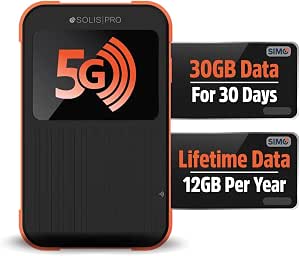 | Best Premium Pick | Wi-Fi standard: Wi-Fi 6E (802.11ax) | Cellular connectivity: LTE listed in connectivity protocols | Device capacity: Up to 20 devices | VIEW ON AMAZON | See Our Full Breakdown |
| M4 4G LTE Mobile Hotspot, eSIM Portable WiFi Device for Travel, No SIM Card Needed, Connects Up to 10 Devices, 1GB Free US Data Monthly, White |  | Best for Light US and Mexico Travel | Cellular: 4G LTE | SIM: eSIM; no SIM card required | Included data: 1 GB US data monthly, lifetime | VIEW ON AMAZON | See Our Full Breakdown |
| TP-Link Roam 7 BE3600 Wi-Fi 7 Portable Travel Router |  | Best for Shared Public Wi-Fi | Wi-Fi standard: Wi-Fi 7 | Bands: Dual band; no 6 GHz band | Device capacity: Up to 90 devices | VIEW ON AMAZON | See Our Full Breakdown |
| FIRSTNUM M5 Mobile Hotspot for Travel, White |  | Best for Frequent Short Trips | Connectivity: 4G LTE, Wi-Fi | Global coverage: 160+ countries | Included data: 1GB per month | VIEW ON AMAZON | See Our Full Breakdown |
| M6 Mobile Hotspot for Travel, 1GB Monthly Free Global Data, Blue |  | Best for Flexible Group Travel | Connectivity: LTE, Wi-Fi | Included data: 1GB global data per month | Maximum connected devices: 10 | VIEW ON AMAZON | See Our Full Breakdown |
| RoamWiFi Mobile Hotspot, 4G LTE Portable Wi-Fi | | Best for Regional Trips | Connectivity: LTE, Wi-Fi | Coverage: 170+ countries | Included data: 1GB local data | VIEW ON AMAZON | See Our Full Breakdown |
| portable wifi hotspot device | Device capacity | Connectivity | Included data |
|---|---|---|---|
| RoamWiFi 4G LTE Mobile Hotspot | Up to 10 devices | 4G LTE, UMTS, Wi-Fi | 10GB US, Canada, and Mexico; 1GB global |
| Franklin Wireless T9 4G LTE Mo | Up to 15 devices | — | — |
| 4G LTE Mobile WiFi Hotspot Unl | Up to 15 devices | 4G | — |
| 4G LTE Hotspot WiFi with 1GB G | Up to 10 devices | LTE | 1GB free high-speed data |
| FOSA 4G Portable Wi-Fi Hotspot | Up to 10 devices | 4G LTE and Wi-Fi 802.11b/g/n | — |
| AT&T Turbo Hotspot 3 | Up to 16 devices | — | — |
| RoamWiFi Mobile Hotspot Pocket | Up to 10 devices | — | — |
| SIMO Solis PRO | Up to 20 devices | — | 1 GB monthly plus one-time 30 GB global pack |
| M4 4G LTE Mobile Hotspot | Up to 10 devices | — | 1 GB US data monthly, lifetime |
| TP-Link Roam 7 BE3600 Wi-Fi 7 | Up to 90 devices | — | — |
| FIRSTNUM M5 Mobile Hotspot for | — | 4G LTE, Wi-Fi | 1GB per month |
| M6 Mobile Hotspot for Travel | — | LTE, Wi-Fi | 1GB global data per month |
| RoamWiFi Mobile Hotspot | — | LTE, Wi-Fi | 1GB local data |
More Details on Our Top Picks
RoamWiFi 4G LTE Mobile Hotspot with 10GB US Data and 1GB Global Data
I’d choose the RoamWiFi 4G LTE Mobile Hotspot when avoiding a local SIM purchase matters more than having a large data allowance. It comes with 10GB for the US, Canada, and Mexico plus 1GB of global data, and automatic network selection across more than 170 countries can simplify short trips. It also supports up to 10 devices, enough for a small family or work group. Compared with the Franklin Wireless T9, it is aimed at travelers crossing borders rather than buyers who already have T-Mobile service. The tradeoff is that its included data lasts only 30 days and the global portion is small, so regular streaming or a long trip may call for additional data. Its 4G connection also lacks the newer 5G option found in some alternatives.
Pros:- Includes 10GB of data for the US, Canada, and Mexico plus 1GB of global data
- Works in more than 170 countries with automatic network selection
- Connects up to 10 devices
- Does not require a SIM card
Cons:- Included data expires after 30 days
- The 1GB global allowance can run out quickly
- Limited to 4G LTE connectivity
Best for: International travelers taking short trips who want a hotspot with data included and no SIM setup.
Not ideal for: Frequent streamers or extended travelers who need a large, long-lasting data allowance.
- Connectivity:4G LTE, UMTS, Wi-Fi
- Device capacity:Up to 10 devices
- Included data:10GB US, Canada, and Mexico; 1GB global
- Data validity:30 days
- Coverage:More than 170 countries
- Wi-Fi standard:802.11ac
- Security:WPA3
- Control:App
Our verdict“Pick this RoamWiFi model for short, multi-country trips where included SIM-free data matters more than a generous allowance.”
Franklin Wireless T9 4G LTE Mobile Hotspot for T-Mobile
The Franklin Wireless T9 is a straightforward choice for buyers who already use T-Mobile and want to share that network with a group. Its 15-device capacity exceeds the 10-device limit on the RoamWiFi models here, while the removable 2,450 mAh battery gives owners the option to carry a spare or replace a depleted pack. That makes it more flexible for a day out than a hotspot with a fixed battery. The catch is the carrier lock: unlike the unlocked 4G LTE Mobile WiFi Hotspot, this model is tied to T-Mobile and won’t work with CDMA carriers such as Verizon or Sprint. Wi-Fi 4 and 5 support is listed, but the product data gives no included travel data, so buyers should plan around their T-Mobile service.
Pros:- Supports up to 15 connected devices
- Removable 2,450 mAh battery
- Compact design for travel
- Supports 802.11 b/g/n/ac Wi-Fi
Cons:- Locked to T-Mobile
- Not compatible with CDMA carriers such as Verizon and Sprint
- Uses a micro USB charging port
Best for: T-Mobile customers who need a compact hotspot for a family, crew, or small work group.
Not ideal for: Travelers who need carrier flexibility, international SIM options, or a hotspot that works with Verizon or Sprint.
- Model:RT717
- Network:4G LTE
- Carrier compatibility:Locked to T-Mobile
- Device capacity:Up to 15 devices
- Wi-Fi:802.11 b/g/n/ac
- Maximum data transfer rate:Up to 150 Mbps
- Battery:Removable 2,450 mAh Li-Ion
- Charging port:Micro USB
Our verdict“Choose the T9 if you have T-Mobile service and value group capacity and a replaceable battery over carrier flexibility.”
4G LTE Mobile WiFi Hotspot Unlocked, Portable Travel Router with SIM Card Slot, Qualcomm Chipset, Up to 300Mbps WiFi, 3000mAh Battery, Connects 15 Devices, WPA3 Security
For buyers who want to choose their own carrier, this unlocked 4G LTE hotspot offers more flexibility than the T-Mobile-locked Franklin T9. It takes a compatible SIM, supports up to 15 devices, and lists a 3,000 mAh battery, a useful combination for travelers who want to select local service and share it across a group. The stated rate of up to 300 Mbps is a maximum, not a promise of real-world performance; coverage and carrier conditions still matter. Compared with the RoamWiFi 4G LTE Mobile Hotspot, it does not include travel data, so buyers need to arrange a SIM and plan. Its single-band Wi-Fi also offers less band flexibility than the Franklin’s listed 802.11 b/g/n/ac support.
Pros:- Unlocked for use with compatible carrier SIM cards
- Supports up to 15 devices
- Lists a 3,000 mAh battery
- WPA3 security
Cons:- Requires a compatible SIM and separate data plan
- Single-band Wi-Fi
- No 5G support is listed
Best for: Travelers who prefer to buy a local compatible SIM and share its connection with up to 15 devices.
Not ideal for: People who want included data, automatic international network selection, or dual-band Wi-Fi.
- Connectivity:4G
- Data transfer rate:Up to 300 Mbps
- Wi-Fi band:Single-band
- Device capacity:Up to 15 devices
- Battery:3,000 mAh
- Security:WPA3
- SIM:SIM card required
- Compatible devices:Laptop, monitor, smartphone, tablet
Our verdict“Choose this model if you want to bring your own SIM and need a 15-device hotspot without a carrier lock.”
4G LTE Hotspot WiFi with 1GB Global Data, WiFi 6, No SIM Required, Supports 10 Devices, Portable for Travel
This hotspot pairs Wi-Fi 6 with a SIM-free setup, making it a distinct option for travelers who want a newer local Wi-Fi standard without managing a SIM card. It supports up to 10 devices and lists a 2,700 mAh battery with USB-C charging, which suits a small travel group carrying modern phones and tablets. Like the RoamWiFi 4G LTE Mobile Hotspot, it includes global data without requiring a SIM, but the listed free allowance is only 1GB. That is a small starting allotment for maps, messaging, and light browsing, and the product says additional plans are needed for continued use. Unlike the unlocked SIM-based model in this roundup, buyers cannot simply bring their own compatible SIM; battery runtime is also unspecified.
Pros:- Wi-Fi 6 support
- No SIM required
- USB-C charging
- Supports up to 10 devices
Cons:- Includes only 1GB of free data
- Additional data plans are needed for extended use
- Battery life duration is not specified
Best for: Light-data travelers who want a SIM-free hotspot with Wi-Fi 6 and USB-C charging.
Not ideal for: Heavy data users or travelers who want to choose a local SIM plan and know expected battery runtime.
- Connectivity:LTE
- Wi-Fi generation:Wi-Fi 6
- Included data:1GB free high-speed data
- Device capacity:Up to 10 devices
- Battery:2,700 mAh
- SIM requirement:No SIM required
- Charging:USB-C
- Region compatibility:Global, including the US, Canada, Mexico, Europe, and Asia
Our verdict“Consider this hotspot for light travel use when Wi-Fi 6 and SIM-free setup matter more than data volume.”
FOSA 4G Portable Wi-Fi Hotspot Router with SIM Card Slot
The FOSA 4G Portable Wi-Fi Hotspot is a basic SIM-based option for buyers who want to power a hotspot over USB-C as well as use its built-in battery. Its listed LTE bands are B1, B3, B5, and B40, so compatibility depends on whether a chosen carrier uses those bands in the places you travel. The claimed maximum rate of 300 Mbps is network-dependent, and the product data gives conflicting battery capacities: 2,100 mAh in the description and 3,200 mAh in the title. Compared with the unlocked 4G LTE Mobile WiFi Hotspot, it supports fewer devices and has WPA2 rather than WPA3 security. It may fit a simple setup, but I’d check carrier band support and battery details before relying on it away from a power source.
Pros:- SIM card slot for mobile data
- Supports up to 10 connected devices
- Can run on its built-in battery or USB-C power
- Lists LTE bands B1, B3, B5, and B40
Cons:- Battery capacity is inconsistent between the title and description
- Maximum data rate depends on network conditions
- WPA2-PSK security rather than WPA3
Best for: Buyers with a compatible SIM who can use USB-C power and need to connect up to 10 devices.
Not ideal for: Travelers who need verified battery runtime, broad carrier band coverage, or the newer WPA3 security listed on another option.
- Connectivity:4G LTE and Wi-Fi 802.11b/g/n
- LTE bands:B1, B3, B5, B40
- Maximum data rate:Up to 300 Mbps, depending on network conditions
- Device capacity:Up to 10 devices
- Battery capacity:2,100 mAh in description; 3,200 mAh in title
- Battery life:Over 10 hours claimed
- Power supply:USB-C
- Security:WPA2-PSK
Our verdict“Choose FOSA if its listed LTE bands match your carrier and USB-C power is useful, but verify the battery capacity first.”
AT&T Turbo Hotspot 3 – Prepaid Mobile Hotspot, Unlocked, Dual Band Wi-Fi, Connects Up to 16 Devices
The AT&T Turbo Hotspot 3 makes the most sense for travelers or households already planning to use an AT&T prepaid plan. Its 15-plus-hour battery and support for up to 16 devices give it more room for a full day of shared use than the M4, which lists up to six hours. A color screen also makes basic status checks easier without opening an app. The tradeoff is flexibility: although the listing calls it unlocked, operation still requires an AT&T prepaid plan, so it is a less straightforward choice for someone seeking RoamWiFi’s built-in international data setup. The description does not specify cellular speed, either. I’d choose it for battery endurance and device capacity within the AT&T ecosystem, and skip it if carrier choice matters most.
Pros:- Supports up to 16 connected devices
- Listed battery life exceeds 15 hours
- Compact, pocket-sized design
- Color LCD and WebUI provide status and network management
Cons:- Requires an AT&T prepaid plan to operate
- Cellular data speed is not specified
- Included accessories are not described
Best for: AT&T prepaid customers who need a pocket hotspot for a workday and several phones, tablets, or laptops.
Not ideal for: Travelers who want built-in international data or the freedom to select a different carrier.
- Wi-Fi:Dual band
- Battery:3000 mAh; over 15 hours of use
- Device capacity:Up to 16 devices
- Display:1.77-inch color LCD
- Size:Pocket-sized
- Management:WebUI
- Plan requirement:AT&T prepaid plan required
- Unlock status:Listed as unlocked
Our verdict“Choose this if you want long battery life and room for a group on AT&T prepaid, but look elsewhere for built-in global data or clearer speed details.”
RoamWiFi Mobile Hotspot Pocket WiFi – Portable WiFi No SIM Card Needed (MiFi)
For trips across several countries, the RoamWiFi Mobile Hotspot keeps setup simple with built-in data and no SIM card to source or swap. Its listing describes coverage in over 160 countries and regions, with support for up to 10 devices and app control. That makes it easier to pack for a multi-country itinerary than the AT&T Turbo Hotspot 3, which depends on an AT&T prepaid plan. The convenience comes with a data ceiling: the listed allowance is 50 GB for the US, Canada, and Mexico plus 1 GB global, and data expires 60 days after activation. Remote-area service still depends on local cellular coverage. I’d favor this for travelers who value a ready-to-activate connection, while heavy data users should check the plan terms before relying on it.
Pros:- Built-in data plans avoid SIM swapping
- Listed coverage spans over 160 countries and regions
- Connects up to 10 devices
- App control and automatic network selection simplify setup
Cons:- Listed 1 GB global allowance may not cover heavy use
- Data expires 60 days after activation
- Performance depends on local cellular coverage
Best for: International travelers who want one pocket hotspot for phones and tablets across multiple destinations without managing a SIM card.
Not ideal for: Heavy streamers or remote-area travelers who need generous ongoing data or dependable service beyond local network coverage.
- Coverage:Over 160 countries and regions
- Device capacity:Up to 10 devices
- Wi-Fi standard:802.11ac
- Wi-Fi bands:Dual band
- Security:WPA3
- Control:App; Android and iOS controllers listed
- Listed data:50 GB US/Canada/Mexico and 1 GB global
- Data validity:60 days after activation
Our verdict“Pick RoamWiFi for convenient multi-country travel if its data allowance and expiration window fit your itinerary.”
SIMO Solis PRO, 5G WiFi Hotspot with 1GB/Month + 30GB Global Data
The SIMO Solis PRO is the feature-rich choice here for buyers who want a hotspot that can also charge a phone. Its 8000 mAh power bank, support for up to 20 devices, and carrier selection across 300-plus networks in over 140 countries give it a broader role than the M4, which is a simpler 4G travel device for US and Mexico. Wi-Fi 6E is listed, while cellular connectivity is described as LTE, so the 5G in the product title is not supported by the supplied connectivity specs. The included data is also limited: 1 GB monthly plus a one-time 30 GB global pack may leave frequent users buying more. I’d choose it for shared travel use and backup charging, but not for a lean setup or predictable heavy data needs.
Pros:- 8000 mAh capacity can serve as a power bank
- Supports up to 20 connected devices
- SignalScan selects among 300-plus carriers in over 140 countries
- Includes 1 GB monthly and a one-time 30 GB global data pack
Cons:- Supplied connectivity specs list LTE, despite 5G in the title
- No physical SIM slot; service relies on virtual eSIM
- Monthly included data is limited and continuous hotspot use can drain the battery
Best for: Frequent international travelers or small groups who want broad carrier selection, many device connections, and backup phone charging in one unit.
Not ideal for: Buyers who need clearly specified 5G cellular service, a physical SIM slot, or substantial included monthly data.
- Wi-Fi standard:Wi-Fi 6E (802.11ax)
- Cellular connectivity:LTE listed in connectivity protocols
- Device capacity:Up to 20 devices
- Power bank:8000 mAh
- Coverage:Over 140 countries; 300-plus carriers
- Included data:1 GB monthly plus one-time 30 GB global pack
- Frequency band:Dual band, 5 GHz listed
- Firmware:SIMO proprietary
Our verdict“Choose the Solis PRO for group travel and built-in backup power if its data terms and LTE connectivity fit your needs.”
M4 4G LTE Mobile Hotspot, eSIM Portable WiFi Device for Travel, No SIM Card Needed, Connects Up to 10 Devices, 1GB Free US Data Monthly, White
The M4 4G LTE Mobile Hotspot suits travelers who need a modest connection for a few devices in the US or Mexico, with no SIM card to manage. Its 1 GB monthly data and automatic network switching provide a simple fallback for maps, messages, and occasional browsing. Compared with the RoamWiFi Mobile Hotspot, its stated coverage is narrower, but the M4 offers a stated lifetime monthly allowance rather than a 60-day post-activation data window. That benefit has limits: one gigabyte is easy to use up, and the listed battery life is only up to six hours, far below the AT&T Turbo Hotspot 3’s over 15 hours. I’d treat it as a light-use travel connection, not a dependable all-day internet source for a group.
Pros:- No SIM card required
- Listed coverage includes the US and Mexico
- Supports up to 10 devices
- Automatic network switching across listed carriers
Cons:- Monthly free data is limited to 1 GB
- Battery life is listed at up to six hours
- Additional data options are not described
Best for: Occasional travelers in the US and Mexico who need basic connectivity for up to 10 devices and want a small monthly data allowance.
Not ideal for: All-day users, frequent video streamers, or international travelers who need broader stated coverage and more included data.
- Cellular:4G LTE
- SIM:eSIM; no SIM card required
- Included data:1 GB US data monthly, lifetime
- Battery:3000 mAh; up to 6 hours
- Device capacity:Up to 10 devices
- Charging:Type-C fast charge
- Coverage:US and Mexico
- Listed networks:T-Mobile, Verizon, AT&T, Telmex, America Movil
Our verdict“Choose the M4 for light travel use in the US or Mexico, but plan to recharge and keep data consumption low.”
TP-Link Roam 7 BE3600 Wi-Fi 7 Portable Travel Router
The TP-Link Roam 7 serves a different travel need from cellular hotspots: it turns an existing public Wi-Fi or wired connection into a private network, with VPN support and capacity for up to 90 devices. That makes it a stronger fit for a remote-work group than the SIMO Solis PRO, which connects through cellular networks and supports up to 20 devices. The Roam 7’s Wi-Fi 7 label does not mean it provides cellular service, and the supplied specs say it lacks the 6 GHz band. It also needs an external USB-C or 5V PD power source, so it is less self-contained than the battery-powered options. I’d pick it for network sharing and VPN use where internet access is already available, not as a standalone hotspot for areas without Wi-Fi or wired service.
Pros:- Creates a private network from public Wi-Fi
- Supports up to 90 devices
- Multiple modes include router, hotspot, access point, repeater, and client
- Supports OpenVPN and WireGuard
Cons:- Requires an external USB-C or 5V PD power source
- Does not provide standalone cellular connectivity in the supplied specs
- Does not support the 6 GHz Wi-Fi band
Best for: Remote workers, families, or small teams sharing hotel or public Wi-Fi who want a private network and VPN support.
Not ideal for: Travelers who need standalone cellular internet or a hotspot with its own listed battery.
- Wi-Fi standard:Wi-Fi 7
- Bands:Dual band; no 6 GHz band
- Device capacity:Up to 90 devices
- WAN port:1 x 2.5 Gbps
- LAN port:1 x 1 Gbps
- USB:USB 3.0
- VPN protocols:OpenVPN, WireGuard, PPTP, L2TP
- Power:USB-C or 5V PD source
Our verdict“Choose the Roam 7 to share and secure an existing connection across many devices, but use a cellular hotspot when you need internet access on its own.”
FIRSTNUM M5 Mobile Hotspot for Travel, White
The FIRSTNUM M5 suits travelers who want a small hotspot with a modest monthly data allowance already included. Its 1GB of global data per month can cover maps, messages, and occasional browsing across more than 160 countries, while prepaid plans let you add data without a contract. It supports up to 10 devices, like the M6, but this listing gives clearer battery and speed details for planning a travel day: up to six hours of battery life and a stated maximum transfer rate of 150 Mbps. That battery capacity is the main compromise; a full day away from an outlet may call for a power bank. Compared with RoamWiFi’s 30-day local data offer for the US, Canada, and Mexico, the M5’s monthly global allowance is more suited to travelers crossing borders, though the included data remains limited.
Pros:- Includes 1GB of global data per month across 160+ countries
- Compact 4-ounce design is easy to carry
- Supports up to 10 connected devices
- USB Type-C charging and prepaid plans without a contract
Cons:- Battery is rated for up to six hours, which may not cover a long travel day
- Poor local signal can prevent network registration
- The included 1GB allowance is limited for video or frequent browsing
Best for: International travelers who want a pocketable hotspot for light daily use and a small monthly data allotment.
Not ideal for: Remote workers or streaming-heavy travelers who need all-day battery life or more than 1GB of included monthly data.
- Connectivity:4G LTE, Wi-Fi
- Global coverage:160+ countries
- Included data:1GB per month
- Maximum connected devices:10
- Battery:3000mAh; up to 6 hours
- Charging port:USB Type-C
- Wi-Fi generation:Wi-Fi 6
- Weight:4 ounces
Our verdict“Choose the M5 for light, recurring data use across international trips if you can recharge during the day.”
M6 Mobile Hotspot for Travel, 1GB Monthly Free Global Data, Blue
The M6 is a practical pick for families or small travel groups who want one hotspot to share and the choice to add data as needed. Its 10-device capacity, app or button controls, and WPA2 security make it straightforward to connect phones, tablets, and other gear on the move. Like the FIRSTNUM M5, it includes 1GB of global data each month and offers prepaid options without a contract; the M6 also lists US unlimited plans for travelers who need a heavier-use option at home. The tradeoff is that its single-band wireless setup may limit performance compared with more capable dual-band hotspots, and the product details do not state battery life or a transfer rate. RoamWiFi’s 4G LTE model lists WPA3 and a 30-day regional data allowance, while the M6’s monthly global data may suit repeat trips better.
Pros:- Connects up to 10 devices simultaneously
- Includes 1GB of global data each month
- Prepaid data packages and US unlimited options are available without a contract
- WPA2-PSK security and app or push-button controls
Cons:- The included global data is limited to 1GB per month
- Single-band wireless may constrain performance compared with multi-band devices
- Performance depends on available local carrier signal
Best for: Families or small groups who need to connect several devices and want flexible prepaid data options for travel.
Not ideal for: Travelers who need documented all-day battery life, multi-band performance, or a larger included data allowance.
- Connectivity:LTE, Wi-Fi
- Included data:1GB global data per month
- Maximum connected devices:10
- Wi-Fi generation:Wi-Fi 6
- Wireless band:Single-band
- Security:WPA2-PSK
- Controls:App, push button
- Color:Sky blue
Our verdict“Pick the M6 if your group needs shared connectivity and you value flexible data add-ons over specified battery or speed figures.”
RoamWiFi Mobile Hotspot, 4G LTE Portable Wi-Fi
For trips centered on the US, Canada, and Mexico, the RoamWiFi Mobile Hotspot makes its included data easy to understand: 1GB of local data valid for 30 days. Its coverage extends to more than 170 countries, and the no-SIM, no-contract setup keeps the device simple to carry and activate. The listed WPA3 security is a stronger protocol than the M6’s WPA2, while the M6 offers recurring monthly global data and optional US unlimited plans. RoamWiFi instead emphasizes a defined regional allowance, so it fits a short trip better than someone seeking a continuing monthly allotment. Its Wi-Fi 5 specification also trails the Wi-Fi 6 M5 and M6 on generation, though all three support up to 10 devices. The main limitation is the small included data pool; continued use requires an additional plan.
Pros:- Includes 1GB of local data valid for 30 days in the US, Canada, and Mexico
- Coverage listed in more than 170 countries
- Connects up to 10 devices
- WPA3 security and app control
Cons:- Included data is limited to 1GB and expires after 30 days
- Additional data plans may be needed for continued use
- Uses Wi-Fi 5, while the FIRSTNUM M5 and M6 list Wi-Fi 6
Best for: Travelers taking a short trip in the US, Canada, or Mexico who want a clearly defined local data allowance.
Not ideal for: Frequent international travelers who need recurring monthly data or heavy users who would quickly use 1GB.
- Connectivity:LTE, Wi-Fi
- Coverage:170+ countries
- Included data:1GB local data
- Data validity:30 days
- Maximum connected devices:10
- Wi-Fi generation:Wi-Fi 5
- Security:WPA3
- Control method:App
Our verdict“Choose RoamWiFi for a short North American trip where its 30-day local data window fits your plans.”

How We Picked
I compared the 13 devices by how well they serve the central job: giving phones, computers, and other devices a usable internet connection while away from fixed broadband. The main criteria were cellular access and carrier flexibility, included or eSIM data, stated connected-device limits, wireless standards, battery details where provided, and how much setup a buyer should expect. I also separated cellular hotspots from the TP-Link Roam 7, which is a travel router and needs an existing internet source.
The ranking favors options with a clear path to connectivity and a useful balance of flexibility, group support, and travel convenience. Models with bundled global or monthly data earn a distinct role for travelers, while SIM-slot devices are more appealing when buyers want to choose a carrier. Specs alone do not confirm real-world coverage, speed, battery endurance, or service value, so buyers should verify network compatibility and current data terms before choosing.
| portable wifi hotspot device | Device capacity |
|---|---|
| RoamWiFi 4G LTE Mobile Hotspot | Up to 10 devices |
| Franklin Wireless T9 4G LTE Mo | Up to 15 devices |
| 4G LTE Mobile WiFi Hotspot Unl | Up to 15 devices |
| 4G LTE Hotspot WiFi with 1GB G | Up to 10 devices |
| FOSA 4G Portable Wi-Fi Hotspot | Up to 10 devices |
| AT&T Turbo Hotspot 3 | Up to 16 devices |
| RoamWiFi Mobile Hotspot Pocket | Up to 10 devices |
| SIMO Solis PRO | Up to 20 devices |
| M4 4G LTE Mobile Hotspot | Up to 10 devices |
| TP-Link Roam 7 BE3600 Wi-Fi 7 | Up to 90 devices |
| FIRSTNUM M5 Mobile Hotspot for | — |
| M6 Mobile Hotspot for Travel | — |
| RoamWiFi Mobile Hotspot | — |
Factors to Consider When Choosing Portable Wifi Hotspot Device
Before choosing a hotspot, map your actual connection needs: where you travel, how much data you use, and whether you need one device or a shared connection for a group. These decisions can matter more than a maximum speed figure or the newest Wi-Fi label.
Check Coverage Before Comparing Speed
A hotspot can only use the cellular networks its hardware supports and its data plan can access. Start with the places you regularly visit, including rural routes, airports, and international destinations, then check carrier coverage there. An unlocked label does not mean a device supports every carrier band or will accept every plan. SIM-free products simplify setup, but their roaming footprint and service rules still define where they work. Choose a network path you can verify for your destinations before treating advertised speed as a deciding factor.
Estimate Data Use Across All Connected Devices
Monthly data allowances can disappear quickly when several devices share a connection. Video calls, operating system updates, cloud backups, and streaming can use far more data than messaging or web browsing. Estimate usage for the whole group, not just the phone or laptop you use most. Included data is useful for setup or occasional travel, but it may not cover a work week or long trip. Check what happens when an allowance runs out, including refill options, throttling, and expiration rules.
Match the Device Limit to Real Use
A stated maximum number of connected devices is a capacity claim, not a promise that every device will get a fast connection at once. A solo traveler may prefer a compact model with a modest limit, while a family or small work team may need more headroom. Count background connections too, such as tablets and backup phones. More connected devices divide the available cellular connection, especially when several people stream or join calls together. For shared use, prioritize reliable coverage and a suitable data plan alongside the device limit.
Decide Whether You Need Cellular or a Travel Router
A cellular hotspot connects to a mobile network through a SIM, eSIM, or bundled service. A travel router such as the TP-Link Roam 7 manages or shares an internet connection it receives from another source; Wi-Fi 7 does not provide cellular service on its own. This distinction is easy to miss when shopping by the word “portable.” A router can be useful for organizing connections in hotels or other settings with existing internet, while a cellular hotspot is the tool for getting online where you have mobile coverage. If you need both jobs, check whether your phone’s tethering or a separate hotspot can supply the router’s internet connection.
Compare Total Service Terms, Not Just Included Data
“No SIM required” and “free data” describe a setup or allowance, not necessarily unlimited access. Read how long included data lasts, which countries it covers, whether it renews, and what additional data costs or restrictions apply. With a SIM-slot device, the hardware purchase and cellular plan are separate decisions, giving you more carrier choice but also more setup work. Bundled service can be easier for a first trip, while a local SIM or recurring plan may suit frequent travel better. Compare the full cost and rules over the period you expect to own and use the hotspot.
Treat Battery Claims as a Trip-Planning Detail
A battery rating alone cannot tell you how long a hotspot will last in your conditions. Cellular signal strength, the number of connected devices, and sustained data use all affect power consumption. If you will rely on a hotspot through a full workday, look for a stated runtime and a charging method that fits your routine, then plan a backup power source for longer stretches. Small travel devices can be convenient to carry but may require more frequent charging. Avoid assuming that a high wireless speed or a large device limit also means long battery life.
Frequently Asked Questions
Should I choose a hotspot with included data or one that takes my own SIM?
Included or eSIM data can reduce setup steps, which is handy when you need connectivity as soon as you arrive. A SIM-slot hotspot gives you more say over the carrier and plan, but you need to check device bands, activation rules, and local coverage. Compare the included allowance and its expiration or refill terms with your expected use. If you travel often, flexibility may matter more than a small starter allowance. For occasional trips, bundled service may be the easier fit if its coverage matches your itinerary.
Will an unlocked hotspot work with any carrier?
Not necessarily. “Unlocked” generally means the device is not restricted to one carrier, but it still needs compatible network bands and a plan that permits hotspot use. Confirm the model’s supported bands against the carrier’s requirements in the country where you plan to use it. Also check whether the carrier requires a specific activation process or device registration. A compatibility check before buying can prevent a hotspot from arriving ready to power on but unable to connect.
Is a portable travel router the same as a mobile hotspot?
No. A mobile hotspot connects to cellular service and shares that internet connection over Wi-Fi. A travel router typically shares or manages internet it gets from another source, such as hotel Wi-Fi or a separate hotspot. Wi-Fi 6 or Wi-Fi 7 describes the local wireless link between the router and your devices; it does not mean the router has cellular data. Choose a cellular hotspot for independent mobile access, or a travel router when you want to organize an internet connection you already have.
How much data should I plan for a week of travel?
There is no reliable single allowance for every traveler because video calls, streaming, and cloud syncing can change usage sharply. List the activities you expect and the devices that will connect, then check their data settings before the trip. A week of maps, email, and browsing can require far less than a week of remote work with calls and file transfers. Set large updates and photo backups to wait for trusted Wi-Fi if your allowance is limited. Keep a refill option or backup connection in mind if work access cannot be interrupted.
Can one hotspot reliably serve a family or small work group?
It can, provided the cellular coverage, data plan, and device capacity suit the group’s use. A published connection limit indicates how many devices may join, but it does not guarantee that several simultaneous video calls or streams will run smoothly. Count each person’s phones, tablets, and computers, then account for background syncing. A stronger coverage match and adequate data allowance usually matter more than simply choosing the biggest device limit. For work that cannot tolerate a shared connection slowing down, keep a separate backup connection available.
Conclusion
For a general-purpose cellular hotspot, I’d choose the AT&T Turbo Hotspot 3 if its carrier bands and service terms match your needs. Travelers prioritizing broader international access should compare the SIMO Solis PRO and RoamWiFi options against their destinations and data requirements; the included allowances make setup easier, but buyers should confirm what continued use entails. For a more flexible SIM-based setup, consider the Franklin Wireless T9 or the unlocked Qualcomm-based hotspot after checking carrier compatibility. The M4 is a more approachable travel pick for buyers who value eSIM setup, while the TP-Link Roam 7 suits people who need a portable router for an existing connection. Choose by travel coverage and data first, then narrow the options by device count, setup, and battery needs.
Fall Picks

eufy Security Essential 7-Piece Alarm System
As an affiliate, we earn on qualifying purchases.