For most solo podcasters, the RØDE PodMic USB is the strongest all-around fit, pairing USB-C convenience with an XLR connection for a future studio setup. The Logitech Blue Yeti suits hosts who want multiple pickup patterns, while the FIFINE AM8 offers a straightforward USB/XLR path for a tighter setup. The main choice is between a desk microphone that favors a consistent speaking position and a wireless lavalier that frees you to move or record guests. USB models simplify setup; XLR models can grow with a mixer or interface, but need extra gear. Read on for the full breakdown and guidance on matching a mic to your recording style.

Get kitchen staples and gadgets delivered free with Prime
- Fast, free delivery on millions of items
- Prime Video, Amazon Music and more included
- Member-only deals all year
Complete the kit


Key Takeaways
- The PodMic USB stands out for combining USB-C recording now with XLR connectivity for a later studio upgrade.
- The Blue Yeti offers four pickup patterns, making it more adaptable to different recording arrangements than the single-speaker-focused dynamic desk mics.
- FIFINE’s AM8 family brings USB and XLR flexibility across several kits, so compare included accessories and controls before choosing among similar models.
- Wireless lavaliers from Occiam, PQRQP, MAYBESTA, and Saramonic Air SE suit mobile interviews and two-person recording better than a fixed desk mic, but require attention to device compatibility and wireless workflow.
- USB condenser models such as the MAONO A04 and Blue Yeti can capture a detailed voice, while dynamic desk mics are often a more practical starting point in rooms with everyday background noise.
| FIFINE AmpliGame AM8PROT Gaming Microphone Kit, XLR/USB Dynamic PC Mic |  | Best Complete Kit for Growing Podcasters | Audio sampling rate: 48kHz/24-bit | Microphone pattern: Cardioid | Connections: XLR, USB-A, USB-C | VIEW ON AMAZON | See Our Full Breakdown |
| ZealSound Podcast Microphone for PC, Noise Cancellation USB Mic with Gain, Volume Adjustment & Mute Button, Monitoring & Echo, for YouTube, TikTok, Podcasting, Streaming, iPhone, iPad, Android, Mac |  | Best for Mobile-Friendly USB Recording | Frequency response: 40Hz–18kHz | Sampling rate: 46kHz | Sensitivity: –45dB ±3dB | VIEW ON AMAZON | See Our Full Breakdown |
| RØDE PodMic USB Dynamic Broadcast Microphone, XLR + USB-C |  | Best for Broadcast-Style Voice Processing | Connections: XLR, USB-C | Sound processing: APHEX DSP with compression and presence | Monitoring: Zero-latency | VIEW ON AMAZON | See Our Full Breakdown |
| FIFINE AmpliGame AM8 USB/XLR Dynamic Microphone for Gaming Streaming |  | Best Budget-Friendly Dual-Connection Desk Mic | Connectivity: USB, XLR | Polar pattern: Unidirectional | Frequency response: 50Hz–16kHz | VIEW ON AMAZON | See Our Full Breakdown |
| MAONO A04 USB Microphone, 192kHz/24Bit Condenser Mic Kit for PC Podcast |  | Best All-in-One Condenser Kit | Connectivity: USB, USB Type-C | Sampling specification: 192kHz/24-bit | Polar pattern: Cardioid | VIEW ON AMAZON | See Our Full Breakdown |
| TONOR Gaming Microphone Set with Boom Arm | 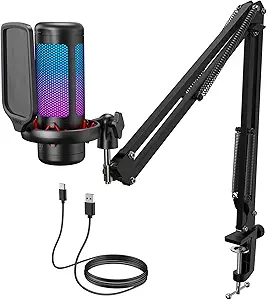 | Best for Desk-Based Streaming Podcasts | Connectivity: USB-A | Microphone type: USB condenser | Polar pattern: Unidirectional | VIEW ON AMAZON | See Our Full Breakdown |
| Occiam Mini Lavalier Microphone for iPhone & Android |  | Best for Long-Range Mobile Recording | Connectivity: Wireless | Connectors: Lightning and USB Type-C | Microphone type: Lavalier | VIEW ON AMAZON | See Our Full Breakdown |
| PQRQP 3-in-1 Wireless Lavalier Microphone |  | Best for Simple Cross-Device Recording | Microphone type: Wireless lavalier | Polar pattern: Omnidirectional | Receiver: 3-in-1 universal receiver | VIEW ON AMAZON | See Our Full Breakdown |
| Logitech Blue Yeti USB Microphone, Blackout | 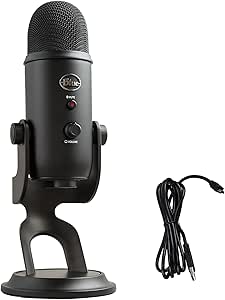 | Best for Multi-Format Home Podcasts | Connectivity: USB | Pickup patterns: Cardioid, omnidirectional, bidirectional, stereo | Software: Blue VO!CE | VIEW ON AMAZON | See Our Full Breakdown |
| Wireless Lavalier Mini Microphone for iPhone and Android, 2 Pack |  | Best for Two-Person Phone Interviews | Pack size: 2 microphones | Connectivity: USB-C and Lightning | Noise reduction: DSP noise reduction | VIEW ON AMAZON | See Our Full Breakdown |
| FIFINE AmpliGame AM8T XLR/USB Gaming Microphone Set, Dynamic PC Mic |  | Best for Flexible Desk Setups | Connectivity: USB and XLR | Microphone type: Dynamic | Polar pattern: Cardioid | VIEW ON AMAZON | See Our Full Breakdown |
| FIFINE AmpliGame A6V USB Gaming Microphone with RGB Lighting |  | Best for USB Beginners | Connectivity: USB | Sampling rate: 192 kHz | Polar pattern: Cardioid | VIEW ON AMAZON | See Our Full Breakdown |
| MAYBESTA Wireless Mini Microphone for iPhone and Android – 2 Pack Lavalier Lapel Mic for Content Creation |  | Best for Two-Person Mobile Interviews | Microphone type: Wireless lavalier lapel mic | Pack configuration: 2 microphones | Compatibility: iPhone, Android phones, tablets, and laptops | VIEW ON AMAZON | See Our Full Breakdown |
| Saramonic Air SE Wireless Lavalier Microphone for iPhone & Android with Dual Receiver |  | Best Compact Wireless System | Wireless channels: Dual | Outputs: USB-C and Lightning | Audio resolution: 48 kHz / 24-bit | VIEW ON AMAZON | See Our Full Breakdown |
| microphones for podcaster | Connectivity | Polar pattern |
|---|---|---|
| FIFINE AmpliGame AM8PROT Gamin | — | — |
| ZealSound Podcast Microphone f | USB-C; Lightning adapter included | — |
| RØDE PodMic USB Dynamic Broadc | — | — |
| FIFINE AmpliGame AM8 USB/XLR D | USB, XLR | Unidirectional |
| MAONO A04 USB Microphone | USB, USB Type-C | Cardioid |
| TONOR Gaming Microphone Set wi | USB-A | Unidirectional |
| Occiam Mini Lavalier Microphon | Wireless | Omnidirectional |
| PQRQP 3-in-1 Wireless Lavalier | — | Omnidirectional |
| Logitech Blue Yeti USB Microph | USB | — |
| Wireless Lavalier Mini Microph | USB-C and Lightning | — |
| FIFINE AmpliGame AM8T XLR/USB | USB and XLR | Cardioid |
| FIFINE AmpliGame A6V USB Gamin | USB | Cardioid |
| MAYBESTA Wireless Mini Microph | — | — |
| Saramonic Air SE Wireless Lava | — | — |
More Details on Our Top Picks
FIFINE AmpliGame AM8PROT Gaming Microphone Kit, XLR/USB Dynamic PC Mic
The AM8PROT gives a new podcaster a ready-to-position dynamic mic, boom arm, and windscreen, while its USB and XLR connections leave room to move from a simple computer setup to an audio interface later. Its cardioid pickup pattern is suited to a host speaking from one direction, and the included monitoring controls help keep recording adjustments close at hand. Compared with the RØDE PodMic USB, this kit includes the boom arm, while the RØDE adds APHEX processing and a more broadcast-focused feature set. The tradeoff is that the AM8PROT can take more adjustment to get the sound right, and its RGB features work only over USB. It makes sense for podcasters who also stream and want a flexible setup, but may feel busy for someone seeking the simplest possible recording chain.
Pros:- USB and XLR connectivity supports both computer recording and a later interface-based setup
- Included boom arm and windscreen reduce the need to source basic positioning accessories
- Cardioid pattern focuses capture toward the speaking host
- 48kHz/24-bit audio specification suits detailed voice recording
Cons:- Getting the sound dialed in may take adjustment, especially for first-time mic users
- RGB lighting is available only when connected by USB
- The gaming-oriented lighting and feature set may be unnecessary for audio-only podcasting
Best for: Solo podcasters who also stream and want an included boom arm plus the option to add XLR gear later
Not ideal for: Beginners who want a minimal setup with few controls, or XLR users who expect the RGB lighting to remain available
- Audio sampling rate:48kHz/24-bit
- Microphone pattern:Cardioid
- Connections:XLR, USB-A, USB-C
- Signal-to-noise ratio:75dB
- Maximum SPL:115dB
- Boom arm extension:30 inches
- Cable length:8.2 feet
- RGB lighting:240+ combinations; USB connection required
Our verdict“Choose the AM8PROT if you want an included boom arm and a path from USB recording to XLR, and skip it if you prefer a simpler, audio-only setup.”
The ZealSound K66 is the most adaptable pick here for a podcaster who records across a computer and mobile devices. Its USB-C and included Lightning adapters make it easier to connect compatible phones and tablets than the XLR-capable FIFINE AM8PROT, which is better suited to someone planning a more expandable desk setup. On-mic gain, mute, monitoring, and echo controls give the host direct access to recording adjustments, and zero-latency monitoring helps with live voice checks. The tradeoff is that all those controls can add setup decisions, while its USB-only connection leaves no route to an XLR interface. Its noise reduction mode may help in a less controlled room, but it does not replace a quiet recording space. Choose it for flexible device access; skip it if you want a conventional XLR upgrade path.
Pros:- USB-C and Lightning adapters support a broad range of listed devices
- Physical gain, mute, monitoring, and echo controls are accessible during recording
- Zero-latency monitoring supports real-time voice checks
- Noise reduction mode offers an additional tool for less controlled recording spaces
Cons:- USB-only connectivity does not support an XLR interface
- Multiple controls and modes may take time for a beginner to configure
- Echo control may be unnecessary for straightforward spoken-word podcasting
Best for: Podcast hosts who record on a mix of computers, iPhones, iPads, or Android devices and want physical controls
Not ideal for: Podcasters building an XLR interface setup or beginners who would rather avoid multiple on-mic adjustments
- Frequency response:40Hz–18kHz
- Sampling rate:46kHz
- Sensitivity:–45dB ±3dB
- Connectivity:USB-C; Lightning adapter included
- Device compatibility:Windows, Mac, iPhone, iPad, Android, PS4, PS5
- Monitoring:Zero-latency
- Audio controls:Adjustable gain, echo control, mute button
- Noise feature:Noise Reduction Mode
Our verdict“Pick the K66 if mobile device compatibility and on-mic controls matter more than XLR expandability.”
RØDE PodMic USB Dynamic Broadcast Microphone, XLR + USB-C
The RØDE PodMic USB suits podcasters who want a broadcast-oriented microphone that can start on USB-C and later join an XLR setup. Its standout difference is APHEX DSP processing, including compression and presence, which gives the host onboard tools for shaping speech. Zero-latency headphone monitoring also supports a direct check while recording. Compared with the FIFINE AM8PROT, the PodMic USB emphasizes broadcast processing over an included boom arm; its listed package has a swing mount, cable, and pouch, so arm or stand needs should be checked before buying. An XLR setup may also require extra equipment, adding complexity for a first-time podcaster. This is a stronger fit for someone prioritizing voice processing and a long-term dual-connection mic than for a buyer seeking an all-in-one desk kit.
Pros:- USB-C and XLR connections support both direct computer use and interface-based recording
- APHEX DSP includes compression and presence processing for voice shaping
- Zero-latency monitoring supports real-time listening
- Listed package includes a swing mount, USB-C cable, and pouch
Cons:- Professional XLR use may require additional recording equipment
- No microphone arm or stand is listed among the included items
- Broadcast-focused processing may be more than a basic solo setup needs
Best for: Podcast hosts who want onboard broadcast-style processing and plan to use either USB-C or an XLR recording chain
Not ideal for: New podcasters who need a complete stand-and-mic setup or do not want to add equipment for XLR recording
- Connections:XLR, USB-C
- Sound processing:APHEX DSP with compression and presence
- Monitoring:Zero-latency
- Intended uses:Broadcast, streaming, podcasting
- Compatibility:Mac, PC, iPad, Android
- Included accessories:Swing mount, USB-C cable, pouch
Our verdict“Choose the PodMic USB if onboard voice processing and dual USB-C/XLR use are priorities, and budget for a separate arm or stand.”
FIFINE AmpliGame AM8 USB/XLR Dynamic Microphone for Gaming Streaming
The FIFINE AmpliGame AM8 gives podcasters a straightforward way to begin with USB while keeping an XLR option available for a later interface. Its unidirectional pickup pattern and built-in mute and headphone monitoring controls suit a host recording at a desk. Compared with the newer AM8PROT, the AM8’s supplied details do not list a boom arm or an audio sampling rate, so buyers should plan for positioning accessories and avoid assuming equivalent kit contents. The gaming features also have limits for podcast use: RGB and function keys are inactive over XLR, and an XLR cable is not included. That makes this a practical dual-connection choice for a host who values simple desk controls, but less compelling for someone who expects every feature to carry over when changing connection types.
Pros:- USB and XLR connectivity allow different recording setups
- Built-in mute and headphone monitoring controls are convenient at a desk
- Unidirectional pattern is suited to a single host speaking toward the mic
- Metal is included in the listed enclosure materials
Cons:- XLR cable is not included
- RGB lighting and function keys do not work over XLR
- The listed product details do not include a boom arm
Best for: Desk-based solo podcasters who want USB recording now and the option of XLR later
Not ideal for: Hosts seeking a complete mic-and-arm kit or those who want lighting and function controls active over XLR
- Connectivity:USB, XLR
- Polar pattern:Unidirectional
- Frequency response:50Hz–16kHz
- Signal-to-noise ratio:80dB
- Power source:Corded electric
- Enclosure materials:ABS plastic, metal
- Color:Black
Our verdict“Choose the AM8 for desk recording with a USB-to-XLR path, provided you are comfortable sourcing any missing positioning gear and XLR cable.”
MAONO A04 USB Microphone, 192kHz/24Bit Condenser Mic Kit for PC Podcast
The MAONO A04 is a useful starting kit for a podcaster who wants a condenser microphone and common positioning accessories in one package. It includes a pop filter, foam windscreen, shock mount, and adjustable arm stand, which can make a desk recording space easier to assemble than with the RØDE PodMic USB, whose listed package includes a swing mount but no arm. Its large-diaphragm capsule and cardioid pattern are aimed at focused voice capture, while USB connection keeps setup direct. The tradeoff is that a condenser may pick up more of the surrounding room than a dynamic mic such as the RØDE or FIFINE models, so this kit is better suited to a quieter recording space. The listed device compatibility excludes Xbox, and the arm setup may take adjustment. Choose it for a furnished USB desk setup, not a noisy room.
Pros:- Includes pop filter, foam windscreen, shock mount, and adjustable arm stand
- USB plug-and-play design supports a direct computer recording setup
- Cardioid pattern focuses capture toward the host
- Listed compatibility includes PC, Mac, PS4, PS5, and mobile phones
Cons:- Condenser design may capture more room noise than the dynamic options in this roundup
- Not compatible with Xbox according to the supplied product details
- The arm and accessory setup may take adjustment for a comfortable position
Best for: First-time podcasters recording at a quiet desk who want a USB condenser and common accessories together
Not ideal for: Hosts recording in noisy or echo-prone rooms, or Xbox users who need listed console compatibility
- Connectivity:USB, USB Type-C
- Sampling specification:192kHz/24-bit
- Polar pattern:Cardioid
- Capsule:16mm
- Microphone form factor:Large diaphragm
- Frequency range:30Hz–16kHz
- Signal-to-noise ratio:70dB
- Included accessories:Pop filter, foam windscreen, shock mount, adjustable arm stand
Our verdict“Pick the MAONO A04 for a quiet desk and a bundled USB condenser setup; choose a dynamic alternative if room noise is a concern.”
TONOR Gaming Microphone Set with Boom Arm
The TONOR TC310+ suits podcasters who record at a desk and want the microphone, arm, and live controls in one kit. Its unidirectional pickup focuses on the speaker, while the tap mute and gain controls make quick adjustments easier during a recording. Compared with the Logitech Blue Yeti, it gives up the Yeti’s multiple pickup patterns, so it is less flexible for interviews with several people around one mic. In return, the included boom arm helps keep the mic positioned near the speaker without taking up the same desktop footprint as a stand. RGB lighting is useful for a visible streaming setup but adds little to audio. The USB connection and initial arm setup also make this a more desk-dependent choice than either wireless lavalier option.
Pros:- Included adjustable boom arm helps position the mic close to the speaker.
- One-tap mute and gain controls are accessible during live recording.
- Unidirectional pickup is suited to a single speaker at a desk.
- Plug-and-play USB connection works with listed desktop and laptop platforms.
Cons:- Single pickup pattern is less adaptable than the Blue Yeti for interviews or group recording.
- Requires a USB connection and a desk setup.
- The arm and clamp can take time to position.
Best for: Solo podcasters who record at a computer desk and want an included boom arm with quick mute and gain controls.
Not ideal for: Guests recording around one microphone, or mobile podcasters who need a portable, battery-powered setup.
- Connectivity:USB-A
- Microphone type:USB condenser
- Polar pattern:Unidirectional
- Signal-to-noise ratio:78 dB
- Controls:One-tap mute, volume, RGB effect, brightness
- Compatible devices:Desktop computers, laptops, Mac OS, PS4, PS5
- Included positioning:Adjustable boom arm and clamp
Our verdict“Choose the TONOR if you record solo at a desk and want an included arm and live controls; choose the Blue Yeti for more pickup-pattern flexibility.”
Occiam Mini Lavalier Microphone for iPhone & Android
The Occiam Mini Lavalier is aimed at podcasters who record standing, presenting, or moving away from a phone or computer. Its stated 328-foot wireless range and lightweight lavalier form let the speaker move freely, while omnidirectional pickup captures voice without careful mic aiming. Compared with the PQRQP 3-in-1 Wireless Lavalier, the Occiam advertises substantially more range and longer battery life, which may suit extended sessions in larger spaces. That convenience comes with format-specific limits: it connects through Lightning or USB-C, and the supplied compatibility notes exclude some action cameras and OnePlus devices. An omnidirectional mic also picks up sound from around the speaker, so it may capture more room noise than a desk mic such as the TONOR TC310+. Check device compatibility before choosing it for a fixed podcast workflow.
Pros:- Wireless lavalier design supports hands-free recording.
- Advertised transmission range reaches 328 feet.
- Listed total battery life is 54 hours.
- Lightweight 7 g form factor is easy to wear discreetly.
Cons:- Lightning and USB-C connections limit compatibility with other device ports.
- Listed exclusions include Insta360, GoPro, Akaso, and OnePlus devices.
- Omnidirectional pickup can capture surrounding room noise.
Best for: Mobile podcasters and educators recording on supported Lightning or USB-C phones who need hands-free movement and long sessions.
Not ideal for: Podcasters using unsupported phones or action cameras, or those recording in noisy rooms who want focused single-speaker pickup.
- Connectivity:Wireless
- Connectors:Lightning and USB Type-C
- Microphone type:Lavalier
- Polar pattern:Omnidirectional
- Wireless transmission range:Up to 328 feet
- Battery life:54 hours
- Audio format:48 kHz / 24-bit
- Weight:7 g
Our verdict“Pick the Occiam for long, mobile recordings on a compatible phone, but favor a directional desk mic if room noise is a concern.”
PQRQP 3-in-1 Wireless Lavalier Microphone
The PQRQP 3-in-1 is a practical fit for podcasters who switch between a phone and a camera and want an automatically paired wireless lavalier. Its 3-in-1 receiver and noise reduction aim to simplify on-the-go recording, while charging the receiver during use can help keep a session going when power is available. Compared with the Occiam Mini Lavalier, PQRQP offers a shorter stated range of 65 feet and seven hours of battery life, but its receiver is described for phone, camera, and laptop compatibility. That laptop support has a caveat: it does not support laptop audio input through 3.5 mm. The omnidirectional capsule is convenient when clipped to clothing, though it is not as focused on one voice as the TONOR TC310+ directional desk mic. Android users may also need to configure OTG manually.
Pros:- 3-in-1 receiver is designed for phones, cameras, and laptops.
- Automatic pairing avoids app or Bluetooth setup.
- Receiver supports charging while in use.
- Noise reduction is included for mobile recording.
Cons:- 65-foot range is shorter than the Occiam Mini Lavalier’s stated range.
- Seven-hour battery life may not cover long recording days.
- Does not support laptop audio input through 3.5 mm, and some Android devices require manual OTG setup.
Best for: Vloggers and mobile podcasters who alternate between compatible phones and cameras and want automatic pairing.
Not ideal for: People recording through a laptop’s 3.5 mm input or needing longer range and all-day battery life.
- Microphone type:Wireless lavalier
- Polar pattern:Omnidirectional
- Receiver:3-in-1 universal receiver
- Wireless range:Up to 65 feet
- Battery life:Up to 7 hours
- Pairing:Automatic pairing
- Android support:OTG support
- Receiver charging:Supports charging while in use
Our verdict“Choose the PQRQP for straightforward phone-and-camera recording, provided its range and laptop-input limitations fit your setup.”
Logitech Blue Yeti USB Microphone, Blackout
The Logitech Blue Yeti is the most adaptable desk microphone in this group for podcasters who sometimes record solo and sometimes bring another speaker into the room. Its four patterns—cardioid, omnidirectional, bidirectional, and stereo—let the same USB mic handle different layouts, unlike the single-pattern TONOR TC310+ or the clip-on lavaliers. Onboard gain, mute, and headphone controls keep common recording adjustments close at hand. That flexibility makes the Yeti a stronger choice for a changing home setup, though it occupies more desk space than the TONOR with its boom arm and is far less portable than the Occiam. Full use of Blue VO!CE effects requires Logitech G HUB software, adding setup overhead for anyone who wants a bare-plug-and-record workflow. Its desktop format also calls for deliberate mic placement in untreated rooms.
Pros:- Four pickup patterns suit solo, interview, and stereo recording setups.
- Onboard mute, gain, pattern, and headphone controls.
- USB plug-and-play connection for PC and Mac.
- Blue VO!CE software provides additional audio effects.
Cons:- Bulkier desktop design takes up more space than the TONOR boom-arm setup.
- Full Blue VO!CE functionality requires Logitech G HUB software.
- Desktop placement is less convenient than wireless lavaliers for mobile recording.
Best for: Home podcasters who record solo and interviews at a desk and want multiple pickup patterns in one USB microphone.
Not ideal for: Mobile hosts or people with very limited desk space who want a small, wearable mic.
- Connectivity:USB
- Pickup patterns:Cardioid, omnidirectional, bidirectional, stereo
- Software:Blue VO!CE
- Onboard controls:Headphone volume, pattern selection, mute, gain
- Stand:Desktop stand included
- Compatibility:PC and Mac
Our verdict“Choose the Blue Yeti if one desk mic needs to handle several podcast formats; pick a lavalier for portable recording.”
Wireless Lavalier Mini Microphone for iPhone and Android, 2 Pack
This two-pack of mini lavalier microphones is the clearest choice here for phone-based interviews with two people, since each speaker can wear a mic rather than sharing one desk microphone. The included USB-C and Lightning connectivity targets common iPhone and Android setups, and the listed DSP noise reduction and windshields address some of the challenges of recording away from a treated room. Compared with the single Occiam Mini Lavalier, having two mics better fits a co-host format, but the stated battery life is only six hours per charge versus the Occiam’s 54-hour total-use claim. The product description also calls it wireless while listing a physical device connection, so the receiver still needs to attach to the phone. That makes it compact, but less suitable for a laptop-first podcast than the Blue Yeti.
Pros:- Two microphones support separate capture for two speakers.
- USB-C and Lightning connectivity covers many phones.
- DSP noise reduction and included windshields support mobile recording.
- Listed weight is under one ounce.
Cons:- Up to six hours of battery life may limit long recording sessions.
- Receiver attaches physically to the device, reducing placement flexibility.
- Phone-oriented connections are less suited to a laptop desk setup than the Blue Yeti.
Best for: Two-person interviewers and co-hosts recording directly to a compatible iPhone or Android device.
Not ideal for: Laptop-first podcasters or hosts who record sessions longer than six hours without a charging break.
- Pack size:2 microphones
- Connectivity:USB-C and Lightning
- Noise reduction:DSP noise reduction
- Wind protection:Windshields and deadcat windshields
- Battery life:Up to 6 hours
- Charging time:1 hour
- Weight:Under 1 oz
Our verdict“Choose this two-pack for short, two-person phone interviews; choose the Blue Yeti for a laptop-centered desk podcast.”
FIFINE AmpliGame AM8T XLR/USB Gaming Microphone Set, Dynamic PC Mic
The FIFINE AmpliGame AM8T suits podcasters who want to start over USB and keep an XLR upgrade path. Its dynamic cardioid capsule focuses on the speaker in front, while the included boom arm helps position it close to the mouth and keep it off the desk. Compared with the USB-only FIFINE AmpliGame A6V, the AM8T can join an XLR recording setup later; it also includes practical mute, gain, and headphone monitoring controls. The tradeoff is that XLR use requires a separately purchased cable, and the supplied clamp only fits desks up to two inches thick. RGB lighting favors a gaming-style workspace, so this is a better match for desk-based solo shows than for a restrained studio look.
Pros:- USB and XLR connectivity support different recording setups
- Included boom arm allows close, flexible mic placement
- Mute button, gain knob, and headphone monitoring offer hands-on control
- Dynamic cardioid design focuses pickup toward the speaker
Cons:- XLR cable must be purchased separately
- Included desk clamp only fits desktops up to two inches thick
- Customizable RGB lighting may not suit a low-key recording space
Best for: Desk-based solo podcasters who want USB recording now and the option to move to an XLR setup later
Not ideal for: Podcasters with desks thicker than two inches or anyone who needs a complete XLR connection out of the box
- Connectivity:USB and XLR
- Microphone type:Dynamic
- Polar pattern:Cardioid
- Sensitivity:-50 dB
- Lighting:Customizable RGB
- Included accessories:Boom arm stand, C-clamp, USB-C cable, user manual, and external windscreen
- Desk clamp capacity:Desktop thickness up to 2 inches
Our verdict“Choose the AM8T if you want an included boom arm and a path from USB podcasting to XLR recording, and your desk fits its clamp.”
FIFINE AmpliGame A6V USB Gaming Microphone with RGB Lighting
For a podcaster who wants a straightforward USB desk mic, the FIFINE AmpliGame A6V keeps setup simple with a cardioid pickup pattern, gain control, and a mute button. Its included shock mount and pop filter help manage desk vibration and plosive sounds without piecing together accessories. The listed 192 kHz sampling rate is a recording specification, though it does not by itself guarantee better-sounding speech. Unlike the FIFINE AmpliGame AM8T, the A6V has no XLR connection, so it cannot move into an XLR-based mixer or interface setup. RGB lighting and a tripod stand make it more gaming-oriented than a conventional broadcast mic, and USB dependence limits it to compatible devices with a port and power.
Pros:- USB connection provides a simple computer recording setup
- Cardioid pattern favors the speaker directly in front of the mic
- Included shock mount and pop filter address common desk and speech noise
- Mute button and gain control are easy to reach
Cons:- USB-only connectivity offers no XLR upgrade path
- Requires a USB port for power and data
- RGB lighting may be distracting in a subdued recording setup
Best for: New podcasters recording at a computer who want a USB mic with basic controls and useful included accessories
Not ideal for: Creators planning to use an XLR mixer or interface, or those recording without access to a USB port
- Connectivity:USB
- Sampling rate:192 kHz
- Polar pattern:Cardioid
- Signal-to-noise ratio:70 dB
- Lighting:Gradient RGB with 7 colors
- Cable length:6.6 feet
- Compatibility:Windows, Mac OS, PS4, PS5, desktop, and laptop
Our verdict“Pick the A6V for an accessory-rich USB start at a computer, but choose the AM8T if you need XLR flexibility.”
MAYBESTA Wireless Mini Microphone for iPhone and Android – 2 Pack Lavalier Lapel Mic for Content Creation
The MAYBESTA two-pack is aimed at podcasters who record interviews on phones and want each speaker to wear a small lavalier mic. Its wireless automatic pairing and broad phone, tablet, and laptop compatibility can make location recording less dependent on a desk setup. Compared with the Saramonic Air SE, the MAYBESTA listing does not specify audio resolution, noise-cancellation modes, or a line-of-sight range, so buyers have less detail for judging recording limits before purchase. Omnidirectional pickup can capture voices from different directions, but may also admit more surrounding sound than a close-focused dynamic mic such as the FIFINE AmpliGame AM8T. Wireless range and interference remain factors, and some device ports need specific adapters.
Pros:- Two microphones suit interviews and co-hosted recordings
- Automatic pairing is designed to simplify setup
- Compatible with a range of phones, tablets, and laptops
- Rechargeable battery supports recording away from a desk
Cons:- Wireless range and interference can affect recording reliability
- Specific device ports may require adapters
- Battery life varies with use and is not quantified in the supplied specs
Best for: Mobile podcasters recording two-person conversations on compatible phones or tablets
Not ideal for: Creators who need documented range and audio specifications, or who record in crowded wireless environments
- Microphone type:Wireless lavalier lapel mic
- Pack configuration:2 microphones
- Compatibility:iPhone, Android phones, tablets, and laptops
- Connection:Wireless with automatic pairing
- Pickup:Omnidirectional
- Noise handling:Noise reduction
- Battery:Rechargeable
Our verdict“Choose this pair for convenient phone-based interviews, but favor the Saramonic Air SE if you need more published audio and range specifications.”
Saramonic Air SE Wireless Lavalier Microphone for iPhone & Android with Dual Receiver
The Saramonic Air SE is the more specified wireless choice here for podcasters recording interviews or on-camera segments with a phone. Its dual channels and USB-C and Lightning outputs accommodate different phone connections, while 48 kHz/24-bit audio and two AI noise-cancellation modes give buyers concrete recording options. Compared with the two-mic MAYBESTA set, Saramonic lists a 200 m line-of-sight range and mounting choices, including clip-on, handheld, and magnetic use; actual range can fall short when obstacles intervene. The roughly five-gram weight keeps the system discreet, but full feature access requires app control. Battery life details are not provided, which makes it harder to plan longer remote sessions.
Pros:- Dual channels support two-speaker recordings
- USB-C and Lightning outputs cover common phone connections
- 48 kHz/24-bit audio and two noise-cancellation modes are specified
- Clip, handheld, and magnetic mounting options suit varied recording setups
Cons:- Real-world wireless range can be reduced by obstacles
- App control is required for full feature access
- Battery life details are not specified
Best for: Mobile interviewers and on-camera podcasters who need a compact dual-channel system with USB-C and Lightning outputs
Not ideal for: Podcasters who avoid app-based controls or need confirmed battery runtime for long recording sessions
- Wireless channels:Dual
- Outputs:USB-C and Lightning
- Audio resolution:48 kHz / 24-bit
- Signal-to-noise ratio:80 dB
- Maximum SPL:120 dB
- Line-of-sight range:200 m
- Noise cancellation:AI neural-network with Strong and Weak modes
- Weight:Approximately 5 g
- Mounting options:Clip-on, handheld, and magnetic
Our verdict“Choose the Air SE for a lightweight, feature-detailed mobile interview setup, provided app control and unspecified battery runtime fit your workflow.”

How We Picked
I ranked these microphones by how well their connection, pickup style, controls, and included setup fit common podcast workflows. USB simplicity matters for a first solo show; XLR connectivity matters when a host expects to add an interface or mixer; and wireless lavaliers earn their place for mobile recording and paired speakers. I also weighed practical factors such as monitoring, mute and gain controls, included mounting gear, and the tradeoff between a focused voice pickup and more flexible patterns.
The ranking favors products with a clear podcast use case and a useful balance of setup convenience and room to grow. The PodMic USB leads because it supports both immediate USB recording and an XLR path. Blue Yeti ranks for pattern versatility, while the AM8 models offer a more focused dynamic alternative with USB/XLR options. Condenser and gaming-oriented models follow where their feature sets can be useful but are less directly tailored to spoken-word recording; compact wireless models rank for specific mobile needs rather than as universal desk replacements. Product names alone do not establish sound quality, so buyers should also match mic type and accessories to their room, device, and recording format.
| microphones for podcaster | Polar pattern |
|---|---|
| FIFINE AmpliGame AM8PROT Gamin | — |
| ZealSound Podcast Microphone f | — |
| RØDE PodMic USB Dynamic Broadc | — |
| FIFINE AmpliGame AM8 USB/XLR D | Unidirectional |
| MAONO A04 USB Microphone | Cardioid |
| TONOR Gaming Microphone Set wi | Unidirectional |
| Occiam Mini Lavalier Microphon | Omnidirectional |
| PQRQP 3-in-1 Wireless Lavalier | Omnidirectional |
| Logitech Blue Yeti USB Microph | — |
| Wireless Lavalier Mini Microph | — |
| FIFINE AmpliGame AM8T XLR/USB | Cardioid |
| FIFINE AmpliGame A6V USB Gamin | Cardioid |
| MAYBESTA Wireless Mini Microph | — |
| Saramonic Air SE Wireless Lava | — |
Factors to Consider When Choosing Microphones For Podcasters
Before choosing a microphone, map out where you record, how many people speak at once, and what connects to your computer or phone. A podcast mic is only one part of the chain: the room, placement, stand, and recording workflow shape whether the setup is easy to use consistently.
Choose USB, XLR, or Both
USB connects directly to a computer or compatible device, which keeps a first recording setup simple. XLR mics need an audio interface or mixer, adding equipment and setup steps but giving you a path to expand inputs and controls. A dual USB/XLR mic can bridge those stages, though you still need to decide which connection suits each session. Avoid buying XLR solely because it sounds more professional; the connector alone does not determine recording quality. Check the exact ports and device compatibility before ordering, especially if you plan to record on a phone or tablet. If your format is one host at a desk, USB may be all you need; recurring co-host sessions can make an interface worthwhile.
Match the Mic to Your Room
A quiet, treated room gives you more freedom to use a sensitive condenser mic, while a lively room with fans, traffic, or hard surfaces makes positioning and background sound harder to manage. A dynamic mic used close to the mouth can help keep the voice prominent, but it will not erase room echo or other sounds. Think about whether you can control the space before buying extra software features advertised as noise cancellation. A carpet, curtains, and a consistent mic position can improve a recording more than switching models. Test the room at the time you normally record, since household noise changes through the day. If you share a room or record on location, prioritize a setup that stays close to the speaker and is easy to reposition.
Plan for Speakers and Movement
For a solo host seated at a desk, one mic positioned near the mouth is often the simplest arrangement. Two people sharing one microphone need a pickup pattern and seating layout that cover both voices; two separate mics usually offer more control in editing. Lavaliers make sense when speakers move, stand, or record away from a desk, but wireless links add batteries, transmitters, receivers, and possible connection checks. A two-pack can simplify paired recording only if both transmitters work with the receiver and device you intend to use. Consider how much movement your format really involves rather than choosing wireless just for convenience. Every additional speaker also adds a need to monitor levels and reduce room noise.
Check Controls and Monitoring
A physical mute button is useful when you need to cough, pause, or handle an interruption without editing the audio later. Gain control helps you adjust input level at the mic, while headphone monitoring can reveal clipping, hum, or a loose connection as it happens. These controls are valuable only if they are easy to reach and behave predictably in your chosen connection mode. Echo effects and RGB lighting may suit streaming presentation, but they do not replace clean voice capture for a podcast. Before recording a full episode, make a short sample and listen through headphones for plosives, room noise, and level changes. A compact control set that you will actually use can beat a long feature list.
Budget for the Whole Setup
Think of the microphone, stand or boom arm, pop filter, interface, and headphones as one recording setup. An included arm or mount can save the trouble of sourcing compatible hardware, but verify that it fits your desk and holds the mic securely. A desk stand may be adequate for a fixed position, while a boom arm can free space and help keep the mic close to your mouth. XLR expansion can add useful control, but it also brings cables and another device to configure. Mobile recording has its own extras, including phone adapters, charged transmitters, and a safe way to attach a lavalier. Pay more when a specific workflow need is solved, such as adding XLR flexibility or recording two mobile speakers, rather than for decorative features alone.
Frequently Asked Questions
Should I choose a dynamic or condenser microphone for a home podcast?
Choose based on the room and how closely you can speak into the mic. A dynamic desk mic is often a practical match for an untreated home office because close placement can keep your voice prominent relative to room sound. A condenser can suit a quieter, controlled space and may work well when you want a broader pickup, but it can also capture more of the room. Neither type fixes echo or poor placement by itself. Record a short sample in your actual space before committing to a full episode workflow.
Is a USB microphone enough for a podcast with two hosts?
It can work if both hosts can sit within the microphone’s useful pickup area and the mic supports a pattern suited to the seating arrangement. A model with multiple pickup patterns, such as the Blue Yeti, gives more placement options, but one shared mic can make level balance and background noise harder to manage. Two individual microphones usually provide more control in editing, though they add hardware and setup. Confirm that your recording software can capture the inputs you plan to use. For regular remote co-hosting, recording each person locally with a separate mic is often easier to mix.
When does an XLR microphone make sense over USB?
XLR makes sense when you already have an interface or mixer, need multiple mic inputs, or expect to expand your studio setup. It gives you more options for managing several speakers and routing audio, but requires extra hardware, cables, and configuration. For a solo show recorded straight to a laptop, USB can be simpler and fully adequate. Dual-connection options such as the PodMic USB or AM8 series let you start over USB and use XLR later, although you should check the model’s controls and included accessories. Choose XLR for a real workflow need, not as a shortcut to better sound.
Can I use a wireless lavalier as my main podcast microphone?
Yes, if your show involves walking interviews, on-location conversations, or hosts who cannot stay at a desk. Lavaliers keep the microphone close to each speaker and avoid a shared desk mic, but wireless recording adds batteries, a receiver, and another connection to check. Confirm that the kit works with your specific phone, camera, or computer and supports the number of speakers you plan to record. Wind and clothing rustle can also affect speech, so placement matters. For a stationary solo podcast, a desk mic is usually a more direct setup.
Do I need noise cancellation or a multi-pattern microphone?
Noise cancellation can help with certain steady sounds, but it is not a substitute for reducing room noise or placing the mic well. A multi-pattern microphone is useful when you change between solo speech, face-to-face conversations, or group setups; it adds little if you always record one person at a desk. Those features can also make it easier to select the wrong setting for a session. Start by identifying whether the challenge is background sound, speaker count, or changing placement. Buy the feature that solves that specific problem and keep a consistent test recording to check the result.
Conclusion
For the broadest mix of easy setup and room to grow, I recommend the RØDE PodMic USB as best overall. The FIFINE AM8 is a strong value choice for a podcaster who wants USB and XLR flexibility, while the Blue Yeti is my premium pick for hosts who will use its multiple pickup patterns. Beginners who want direct USB recording can start with the MAONO A04 kit, provided their room is reasonably quiet. For mobile interviews or two-person recording away from a desk, look at the Saramonic Air SE or a compatible two-transmitter lavalier set. Pick according to your room and recording format first; those choices matter more than gaming lights or extra effects.
Fall Picks

eufy Security Essential 7-Piece Alarm System
As an affiliate, we earn on qualifying purchases.