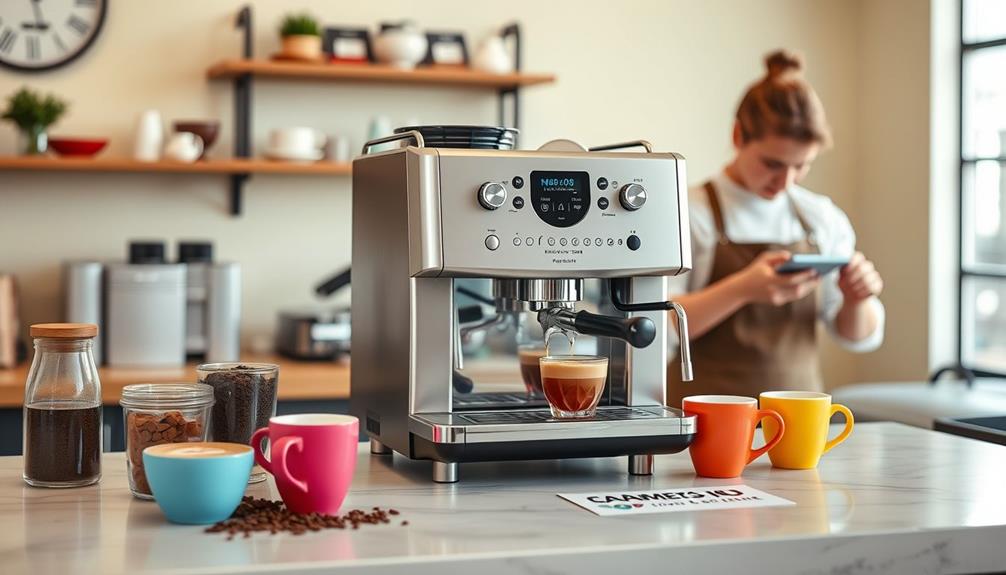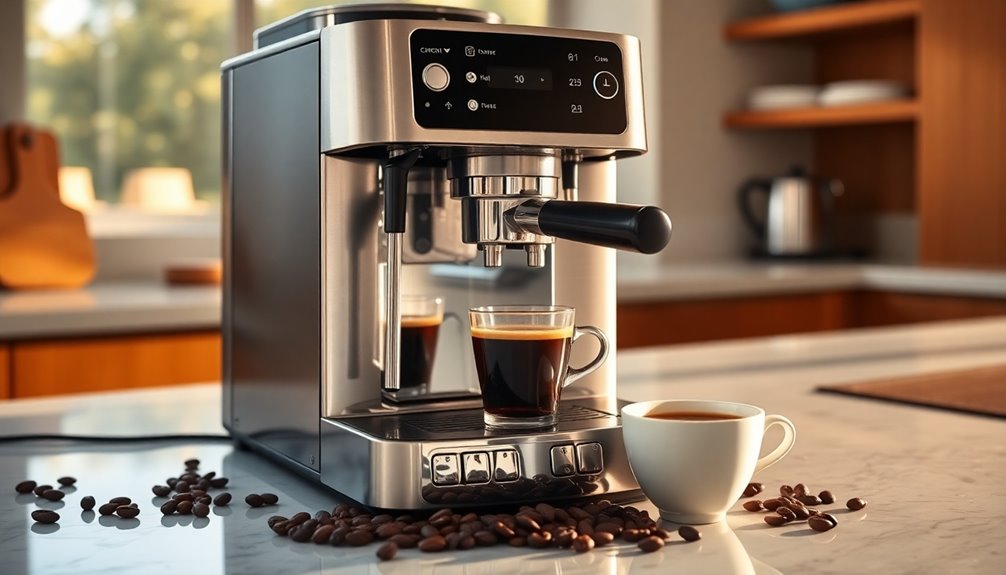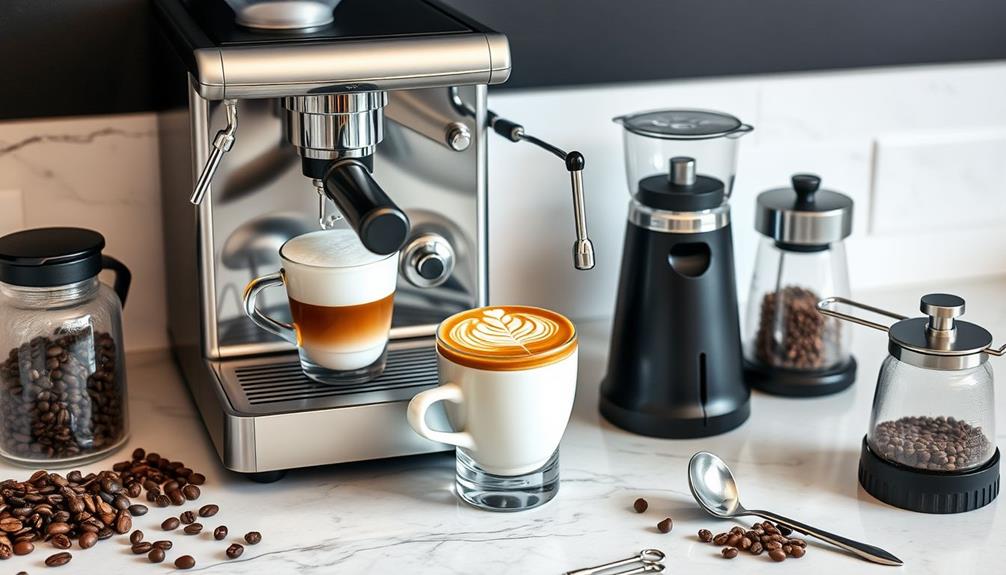

Choosing among Italian espresso machine brands starts with a basic distinction: a pump machine makes espresso, while a moka pot brews a strong, concentrated coffee on the stove. I’d start with the De’Longhi Classic Signature for a compact electric machine with presets and an adjustable frother, or the Gaggia Classic Evo Pro if hands-on control and Italian-made construction matter more. For a simpler stovetop ritual, the Bialetti Moka Express is the heritage pick. These options differ in more than brand: convenience, milk-drink capability, counter space and the amount of preparation you want all shape the right choice.

Get kitchen staples and gadgets delivered free with Prime
- Fast, free delivery on millions of items
- Prime Video, Amazon Music and more included
- Member-only deals all year
My ranking puts electric espresso machines ahead for readers seeking café-style drinks, then distinguishes the moka pots by heritage and practical fit. I also include the GROSCHE Milano because it is described as made in Italy, while noting that this does not make GROSCHE an Italian-founded brand. The key tradeoff is clear: pump-machine control and convenience versus stovetop simplicity and tradition.
Complete the kit


Key Takeaways
- The De’Longhi Classic Signature is my strongest all-round pick here for buyers who want electric espresso, dose presets and a two-setting steam wand.
- The Gaggia Classic Evo Pro offers a more hands-on route, with a 58 mm portafilter, commercial-style wand and Italian-made construction.
- The De’Longhi Stilosa takes less counter space and keeps milk frothing manual, but it lacks the Classic Signature’s stated dose presets and pressure gauge.
- The Bialetti Moka Express is an iconic Italian stovetop brewer, not a pump espresso machine; it needs an adapter plate for induction.
- The GROSCHE Milano is an Italian-made moka pot with a burn-guard handle, but its induction performance is a weak point and its brand identity is not Italian.
| De’Longhi Classic Signature Espresso Machine, Adjustable Milk Frother |  | Best Overall | Machine type: Semi-automatic espresso machine | Pump pressure: 15 bar | Heating: Thermoblock technology | VIEW ON AMAZON | See Our Full Breakdown |
| Gaggia Classic Evo Pro Espresso Machine, Brushed Stainless Steel |  | Best for Hands-On Espresso and Italian Construction | Machine type: Semi-automatic espresso machine | Country of origin: Italy | Portafilter: 58 mm | VIEW ON AMAZON | See Our Full Breakdown |
| De’Longhi Stilosa Compact Manual Espresso Machine with Milk Frother | 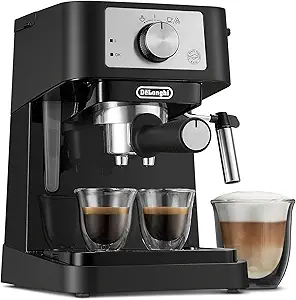 | Best Compact Pick for Manual Brewing | Machine type: Manual espresso machine | Boiler: Stainless steel | Milk frother: Manual | VIEW ON AMAZON | See Our Full Breakdown |
| Bialetti Moka Express Stovetop Espresso Maker, 6 Cups |  | Best Classic Italian Stovetop Brewer | Brewing style: Stovetop moka pot | Capacity: Six espresso cups | Made in: Italy | VIEW ON AMAZON | See Our Full Breakdown |
| GROSCHE Milano Stovetop Espresso Maker Moka Pot (6 Cup, White) |  | Best Italian-Made Moka Pot with a Burn-Guard Handle | Brewing style: Manual stovetop moka pot | Capacity: Six cups; 9.3 oz | Material: Food-grade anodized aluminum | VIEW ON AMAZON | See Our Full Breakdown |
| italian espresso machine brand | Machine type | Coffee input |
|---|---|---|
| De’Longhi Classic Signature Es | Semi-automatic espresso machine | Ground coffee |
| Gaggia Classic Evo Pro Espress | Semi-automatic espresso machine | Ground coffee and ESE pods |
| De’Longhi Stilosa Compact Manu | Manual espresso machine | Ground coffee |
| Bialetti Moka Express Stovetop | — | — |
| GROSCHE Milano Stovetop Espres | — | — |
More Details on Our Top Picks
De’Longhi Classic Signature Espresso Machine, Adjustable Milk Frother
The De’Longhi Classic Signature is my best overall choice for someone who wants a recognizable Italian brand and a single machine for everyday espresso drinks. Its single- and double-shot presets reduce repeat button work, while the adjustable two-setting steam wand gives milk drinkers a choice between steamed milk and denser foam. A visual pressure gauge adds a useful cue during brewing, though it does not replace learning how grind, dose and tamp affect the cup.
Compared with the Gaggia Classic Evo Pro, this De’Longhi leans toward guided convenience rather than a commercial-style portafilter setup. Its thermoblock heating and preset recipes suit people who want a quicker, less involved routine; the Gaggia’s 58 mm portafilter and self-serviceable design speak more directly to owners who want to learn and maintain a traditional machine. Against the smaller Stilosa, the Classic adds more visible feedback and preset dosing, making it the more capable daily choice for varied drinks.
The tradeoff is that it remains a semi-automatic machine, not a fully hands-off coffee maker: you still prepare ground coffee and manage the portafilter and milk. Its stated 15-bar figure describes pump pressure, not a guarantee of a particular espresso result. I’d choose this first for a household that wants espresso and milk drinks with some built-in convenience, but skip it if you want the tactile simplicity of a moka pot or the more traditional component format of the Gaggia.
Pros:- Customizable single- and double-espresso presets
- Two-setting steam wand supports different milk textures
- Thermoblock heating and a visual pressure gauge
- Compact stainless-steel design with adjustable drip tray
Cons:- Still requires manual portafilter preparation and milk steaming
- 15-bar pump specification alone does not indicate brew quality
Best for: Home coffee drinkers who want a compact electric machine with espresso presets, adjustable milk frothing and visual pressure feedback.
Not ideal for: Buyers seeking a fully automatic bean-to-cup machine, a stovetop brewer or the more traditional serviceable setup of the Gaggia.
- Machine type:Semi-automatic espresso machine
- Pump pressure:15 bar
- Heating:Thermoblock technology
- Milk frother:Adjustable two-setting steam wand
- Presets:Customizable single and double espresso
- Coffee input:Ground coffee
- Dimensions:11.14 × 8.89 × 12 in (D × W × H)
- Power:1350 W, 120 V
Our verdict“I’d pick the Classic Signature for a balanced mix of guided espresso preparation, milk-drink flexibility and compact Italian-brand design.”
Gaggia Classic Evo Pro Espresso Machine, Brushed Stainless Steel
The Gaggia Classic Evo Pro is the pick I’d move up the list for someone who values Italian manufacture and wants a more traditional espresso-machine format. Its 58 mm commercial-style portafilter gives it a different feel from the compact De’Longhi machines, and the commercial-style steam wand supports milk frothing and latte-art practice. It also accepts ground coffee and ESE pods, giving owners a simple alternative when they do not want to prepare loose grounds.
Compared with the Classic Signature, Gaggia offers fewer stated convenience cues: the supplied details do not list preset recipes or thermoblock heating. In exchange, it has a reusable filter, self-serviceable design and a 2.1-liter water capacity. That combination makes it a more appealing long-term project for a curious owner, while the De’Longhi is easier to recommend to someone who values presets and quick everyday operation. At 20 pounds, it is also substantially heavier than the 9-pound Classic Signature, a consideration if the machine will be moved or stored between uses.
There is a meaningful learning curve here. A commercial-style portafilter does not make espresso preparation automatic, and the machine asks the owner to build skill with dosing, tamping and steaming. The description lists no specific cons, but I would not confuse that with a no-compromise choice: the hands-on workflow and heavier body are real fit issues. Choose Gaggia over the Stilosa if component style, serviceability and Italian manufacture matter more than the smallest footprint.
Pros:- Made in Italy with stainless-steel housing
- 58 mm commercial-style portafilter
- Commercial-style steam wand for frothing and latte art
- Accepts ground coffee and ESE pods; described as self-serviceable
Cons:- Manual preparation asks for more practice than the De’Longhi Classic
- At 20 pounds, it is heavier than the other listed electric machines
- No preset recipes or rapid-heating feature are listed in the supplied specifications
Best for: Espresso hobbyists who want an Italian-made semi-automatic machine with a 58 mm portafilter, steam wand and serviceable design.
Not ideal for: People who want preset dosing, a lightweight machine or a low-effort route to milk drinks.
- Machine type:Semi-automatic espresso machine
- Country of origin:Italy
- Portafilter:58 mm
- Extraction pressure:9 bar
- Steam wand:Commercial-style
- Coffee input:Ground coffee and ESE pods
- Water capacity:2.1 liters
- Dimensions and weight:8 × 9.5 × 14.2 in; 20 lb
Our verdict“I recommend the Gaggia to buyers who value Italian-made construction and hands-on control more than built-in convenience.”
De’Longhi Stilosa Compact Manual Espresso Machine with Milk Frother
The De’Longhi Stilosa makes the most sense when counter space and straightforward manual preparation matter more than automation. It has a stainless-steel boiler, a portafilter with single- and double-shot filters, and a manual milk frother for cappuccinos, lattes and flat whites. Its two-level cup holder is a practical touch: different cup heights can fit without making every drink setup awkward.
Compared with the more feature-rich Classic Signature, the Stilosa gives up stated presets, thermoblock heating and a visual pressure gauge. That makes it a simpler fit for buyers who want to participate in each step, not the strongest match for anyone looking for a guided routine. The Classic Signature is the more versatile electric pick for repeated milk drinks, while the Stilosa’s compact design is its clearest advantage. Against the Gaggia, it asks for less commitment to a heavier, commercial-style machine, but does not offer the same stated 58 mm portafilter or self-serviceable design.
Manual operation is both the point and the limitation. You prepare the coffee and control the frothing yourself, so drinks take attention and practice. That can suit a curious beginner better than relying on one-touch automation, but a user who wants fast drinks with little involvement should look at the Classic Signature instead. I’d also pass on it if Italian manufacture is a firm requirement: the supplied details identify De’Longhi as the brand but do not specify this model’s country of manufacture.
Pros:- Compact footprint suits smaller counters
- Manual frother covers several milk-based drinks
- Includes single- and double-shot filter baskets
- Two-level cup holder accommodates varied cup heights
Cons:- Manual brewing and milk preparation take attention
- Does not list the Classic Signature’s presets or pressure gauge
- Country of manufacture is not specified in the supplied details
Best for: Space-conscious beginners who want an electric De’Longhi espresso machine and are willing to learn manual brewing and frothing.
Not ideal for: Buyers who want presets, minimal hands-on work, or confirmed Italian manufacture for this particular model.
- Machine type:Manual espresso machine
- Boiler:Stainless steel
- Milk frother:Manual
- Portafilter filters:Single and double shot
- Cup holder:Two-level
- Coffee input:Ground coffee
Our verdict“I’d choose the Stilosa for compact, hands-on espresso at home, but not when convenience features or confirmed Italian manufacture lead the checklist.”
Bialetti Moka Express Stovetop Espresso Maker, 6 Cups
The Bialetti Moka Express earns its place through Italian coffee heritage and a simple stovetop format, not through electric-machine features. Its design dates to 1933, and the six-cup capacity suits people who want to brew several small servings in one round. Add water and ground coffee, heat the pot, then remove it when brewing reaches its familiar gurgling finish. For a buyer drawn to Italian coffee tradition, this is a far more direct fit than either De’Longhi pump machine.
The distinction matters: moka coffee is concentrated, but the Moka Express does not use an electric pump to make espresso. It cannot froth milk on its own, so cappuccinos and lattes need a separate frother. Compared with the GROSCHE Milano, the Bialetti has the stronger historical identity as an Italian maker and straightforward compatibility with gas and electric stovetops. GROSCHE adds a soft-touch handle with a burn guard, but its stated slow induction heating is a less appealing match for some kitchens.
The Bialetti requires a little care after brewing: rinse it with water, and avoid detergents and the dishwasher. Induction users also need the specified Bialetti adapter plate. Those limits are manageable if the traditional method is part of the appeal, but they make this a poor substitute for a convenient pump machine. I’d rank it below the electric picks for anyone searching specifically for modern espresso equipment, and above them for a buyer whose priority is a classic, compact stovetop ritual.
Pros:- Italian design dating back to 1933
- Six-cup capacity for multiple small servings
- Patented safety valve and ergonomic handle
- Works on gas and electric stovetops
Cons:- Induction requires a Bialetti adapter plate
- Must be rinsed by hand without detergent
- Brews moka coffee rather than pump espresso and has no milk frother
Best for: Fans of traditional Italian coffee who want a simple stovetop moka pot for several small servings.
Not ideal for: Anyone seeking true pump espresso, built-in milk frothing, dishwasher cleaning or direct induction use without an adapter.
- Brewing style:Stovetop moka pot
- Capacity:Six espresso cups
- Made in:Italy
- Stovetop compatibility:Gas and electric; induction with Bialetti adapter plate
- Safety:Patented safety valve
- Cleaning:Rinse with water; no detergent or dishwasher
Our verdict“I’d pick the Moka Express for Italian stovetop tradition, not as a replacement for an electric espresso machine.”
GROSCHE Milano Stovetop Espresso Maker Moka Pot (6 Cup, White)
The GROSCHE Milano is a stovetop alternative for buyers who like moka coffee but want a handle designed with heat protection in mind. It is described as made in Italy, built from food-grade anodized aluminum and fitted with a soft-touch handle and burn guard. A safety valve is included to limit pressure buildup. Those practical touches give it a different appeal from the heritage-led Bialetti: GROSCHE puts more of its case on handling and materials than on a long-running Italian design story.
I rank it fifth because the search is for Italian espresso machine brands, and brand origin deserves a clear distinction. The product is described as made in Italy, but GROSCHE is not presented here as an Italian-founded brand; it is also a moka pot rather than a pump espresso machine. Compared with the Bialetti Moka Express, its handle protection is a useful point of difference, while the Bialetti has the stronger Italian brand heritage and clearly stated gas and electric compatibility. GROSCHE lists gas, electric and propane use, with slow heating on induction.
At 9.3 ounces, its stated capacity may be easier to read as a total brewed volume than as six full mugs; the six-cup label refers to small moka servings. It still requires stovetop attention, and the aluminum body is not magnetic, so induction is a compromise. I’d choose it over Bialetti if the soft-touch handle is a priority and the stove is compatible. Skip it if you want a pump machine, hands-free brewing or the most direct example of an established Italian brand.
Pros:- Described as made in Italy from anodized aluminum
- Soft-touch handle includes a burn guard
- Safety valve helps prevent excessive pressure buildup
- Works with gas, electric and propane stovetops
Cons:- Heats slowly on induction because the aluminum is non-magnetic
- Manual stovetop brewing requires attention
- Moka brewing is not the same as pump espresso
Best for: Moka-pot buyers who value an Italian-made aluminum brewer with a burn-guard handle and use gas, electric or propane.
Not ideal for: Induction-first households, buyers seeking an Italian-founded maker, or anyone wanting electric pump espresso and milk frothing.
- Brewing style:Manual stovetop moka pot
- Capacity:Six cups; 9.3 oz
- Material:Food-grade anodized aluminum
- Origin:Made in Italy
- Stovetop compatibility:Gas, electric and propane; slow on induction
- Safety:Safety valve
- Dimensions:4 × 6.5 × 7.5 in (D × W × H)
Our verdict“I’d choose the Milano for its handle design and Italian manufacture, while favoring Bialetti for clearer Italian brand heritage and induction adapter support.”

How We Picked
I ranked these five products by how well each fits the search for Italian espresso machine brands, not by treating every coffee maker as the same kind of machine. Brand and manufacturing details matter: the lineup includes Italian brands such as De’Longhi, Gaggia and Bialetti, alongside the GROSCHE Milano, which is described as made in Italy but is not presented as an Italian-founded brand. I kept that difference visible rather than treating country of manufacture and brand origin as interchangeable.
Next, I compared the brewing method and the work it asks of the owner. The two De’Longhi machines and the Gaggia use electric pump-machine formats suited to espresso and milk drinks. The Bialetti and GROSCHE are stovetop moka pots, which make a concentrated coffee but do not reproduce pump espresso. I gave the De’Longhi Classic the top spot for combining a compact footprint, customizable single- and double-shot presets, temperature control and an adjustable wand. Gaggia follows for buyers who value a more traditional, serviceable setup and are willing to operate it more manually.
I also weighed counter space, milk preparation, cup flexibility, stovetop compatibility and upkeep. Product descriptions do not establish every performance detail or long-term ownership outcome, so I avoid claims that go beyond the supplied specifications. A missing listed drawback is not proof that a product has none: I call out the practical limits that follow from each design, including manual preparation, induction compatibility and moka-pot cleaning.
| italian espresso machine brand | Machine type | Coffee input |
|---|---|---|
| De’Longhi Classic Signature Es | Semi-automatic espresso machine | Ground coffee |
| Gaggia Classic Evo Pro Espress | Semi-automatic espresso machine | Ground coffee and ESE pods |
| De’Longhi Stilosa Compact Manu | Manual espresso machine | Ground coffee |
| Bialetti Moka Express Stovetop | — | — |
| GROSCHE Milano Stovetop Espres | — | — |
Factors to Consider When Choosing Italian Espresso Machine Brands
I’d narrow this lineup by deciding what you mean by espresso, how involved you want to be, and whether Italian brand heritage or Italian manufacture is your priority.Pump espresso or moka coffee?
The De’Longhi and Gaggia machines are electric pump-style espresso makers. They use a portafilter and can steam milk, making them the closer fit for espresso drinks such as cappuccinos and lattes. The Bialetti and GROSCHE are stovetop moka pots. They brew concentrated coffee through a different process and do not provide the same pump-machine setup or built-in milk steaming. I’d choose a moka pot for its compact, stove-based ritual, not because it imitates every capability of a pump machine.
Choose how much control you want
The Classic Signature’s customizable presets simplify repeating a single or double dose, and its adjustable wand supports different milk textures. The Stilosa is also manual, but its description centers on straightforward brewing and frothing rather than presets and visual pressure feedback. Gaggia takes the more traditional hands-on route, pairing a 58 mm portafilter and commercial-style wand with a self-serviceable design. I’d favor De’Longhi for guided convenience and Gaggia for hands-on learning; neither removes the need to prepare coffee and operate the machine.
Separate brand heritage from manufacturing origin
These are not interchangeable claims. De’Longhi, Gaggia and Bialetti are Italian brands represented here, and the Gaggia and two moka pots are specifically described as made in Italy. The supplied details do not state where the Stilosa is manufactured. GROSCHE’s Milano is described as Italian-made, but that alone does not make GROSCHE an Italian-founded company. If brand heritage is your main reason for shopping this category, Bialetti, Gaggia or De’Longhi is the clearer match; if product origin is the deciding point, check the specific model’s stated manufacturing information.
Match capacity and stovetop to your kitchen
A moka pot’s cup count refers to small servings, not oversized mugs. Both stovetop options in this roundup have six-cup listings, but the GROSCHE also states a 9.3-ounce total volume. On induction, the Bialetti requires an adapter plate; the GROSCHE is listed as compatible but heats slowly because its aluminum body is non-magnetic. If your kitchen uses induction, that difference matters more than color or handle style. For electric machines, compare the Gaggia’s 20-pound weight and listed dimensions with the Classic Signature’s lighter 9-pound body and compact measurements.
Frequently Asked Questions
Which option is the best all-round Italian espresso machine here?
I’d choose the De’Longhi Classic Signature for the broadest mix of pump espresso, single- and double-shot presets, an adjustable steam wand and a compact footprint. The Gaggia is a better fit for buyers who prefer a more hands-on, traditional setup, while the moka pots serve a different brewing style altogether.
Are the Bialetti Moka Express and GROSCHE Milano espresso machines?
They are stovetop moka pots, not electric pump espresso machines. Both brew concentrated coffee, but neither includes a pump, portafilter-based espresso workflow or milk-steaming wand. I’d select one for stovetop moka coffee rather than expecting it to make the same drinks as the De’Longhi or Gaggia machines.
Which machine is best for cappuccinos and lattes?
The De’Longhi Classic Signature, Gaggia Classic Evo Pro and De’Longhi Stilosa all list a steam or manual frothing option. The Classic Signature has a two-setting adjustable wand and preset espresso doses; Gaggia’s commercial-style wand suits a more hands-on owner, while the Stilosa keeps the setup compact and manual. Neither moka pot has a built-in frother.
Can I use these moka pots on an induction stove?
The Bialetti Moka Express needs a Bialetti adapter plate for induction. GROSCHE lists induction compatibility with slow heating, since its aluminum body is non-magnetic. I’d check the stove and brewer guidance before buying for an induction kitchen, and choose gas or electric compatibility as the simpler match where possible.
Which pick is best for someone new to home espresso?
For a beginner who wants electric espresso, the De’Longhi Stilosa is a compact way to learn manual brewing and milk frothing; the Classic Signature is a better fit if presets and extra feedback are more appealing. For someone who wants less equipment and accepts moka-style coffee rather than pump espresso, Bialetti offers a simple stovetop process.
Conclusion
For most buyers seeking an electric machine from an Italian brand, I’d start with the De’Longhi Classic Signature: it pairs espresso presets and adjustable frothing in a compact format. Choose the Gaggia Classic Evo Pro if Italian manufacture, a 58 mm portafilter and a serviceable, hands-on machine matter more than convenience. The Stilosa is my compact pick for learning manual preparation without moving up to Gaggia’s heavier style of machine.
If your priority is stovetop coffee rather than pump espresso, choose the Bialetti Moka Express for Italian brand heritage and the classic moka routine. Pick the GROSCHE Milano when its burn-guard handle appeals and your stove suits its compatibility limits. My main advice is to choose by brewing method first, then compare workflow, milk capability and origin; that prevents a moka pot from being mistaken for a small electric espresso machine.
Fall Picks
fall essentials
As an affiliate, we earn on qualifying purchases.