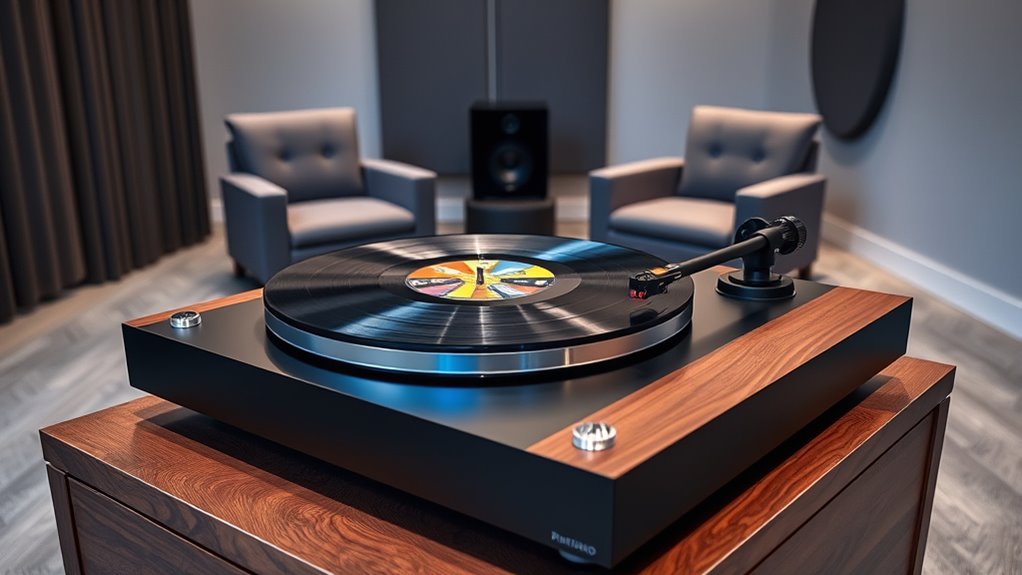

High-end vinyl record players balance record playback quality with the setup, connectivity, and maintenance their owners are willing to manage. My best overall pick is the Fluance RT87 Reference, which pairs an adjustable carbon-fiber tonearm with a 2M Blue cartridge and acrylic platter. The Audio-Technica AT-LPW50BT stands out for rosewood styling and wireless flexibility, while the AT-LP120XUSB offers direct drive and USB output for hands-on listeners. The main tradeoffs are manual control versus automatic ease, upgrade-focused hardware versus built-in convenience, and wireless features versus a simpler signal path. Read on for how the eight models compare and which one fits your listening setup.

Get kitchen staples and gadgets delivered free with Prime
- Fast, free delivery on millions of items
- Prime Video, Amazon Music and more included
- Member-only deals all year
Key Takeaways
- The Fluance RT87 Reference ranks first because its adjustable tonearm and 2M Blue cartridge make it the strongest sound-focused choice in this lineup without adding wireless features that some listeners do not need.
- The two RT87 listings describe the same core turntable; the stated difference is finish, so choose between the standard and walnut versions by appearance and listing details rather than expecting a different performance tier.
- The AT-LP120XUSB and AT-LP120XBT-USB share a direct-drive, manual foundation, while the latter adds wireless listening options; choose based on whether Bluetooth matters more than keeping the setup straightforward.
- The AT-LP60X is the easiest entry point because full-auto playback removes much of the handling involved in cueing records, but its convenience-first design is less suited to buyers seeking broad setup adjustment.
- The RT81 and AT-LP120XUSB make different value arguments: the RT81 offers a built-in preamp and adjustable counterweight, while the Audio-Technica adds direct drive, three speeds, and USB conversion.
| Fluance RT87 Reference High Fidelity Turntable Vinyl Record Player |  | Best for Fine-Tuning Sound | Platter: 22 mm anti-static acrylic | Tonearm: 9-inch carbon fiber, VTA adjustable | Cartridge: Ortofon 2M Blue nude elliptical | VIEW ON AMAZON | See Our Full Breakdown |
| Sony PS-LX3BT Wireless Bluetooth Turntable with Full Auto Playback |  | Best for Wireless Convenience | Drive type: Belt drive | Speeds: 33 1/3 and 45 rpm | Connectivity: Wired and Bluetooth wireless | VIEW ON AMAZON | See Our Full Breakdown |
| Audio-Technica AT-LP120XUSB-BK Direct-Drive Turntable |  | Best for Manual Control and Archiving | Drive type: Direct drive | Operation: Fully manual | Speeds: 33, 45, and 78 RPM | VIEW ON AMAZON | See Our Full Breakdown |
| Audio-Technica AT-LP60X-BK Fully Automatic Belt-Drive Stereo Turntable | 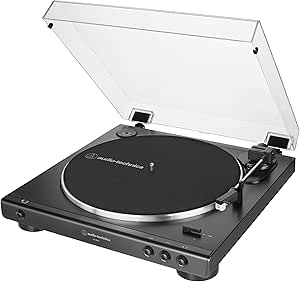 | Best Entry-Level Automatic Pick | Drive type: Belt drive | Operation: Fully automatic | Speeds: 33 1/3 and 45 RPM | VIEW ON AMAZON | See Our Full Breakdown |
| Audio-Technica AT-LPW50BT-RW Manual Belt-Drive Turntable |  | Best for Bluetooth Hi-Fi Setups | Drive type: Belt drive | Operation: Fully manual | Speeds: 33 1/3 and 45 RPM | VIEW ON AMAZON | See Our Full Breakdown |
| Fluance RT81 Elite High Fidelity Vinyl Turntable with Audio Technica AT95E Cartridge, Belt Drive, Built-in Preamp, Adjustable Counterweight, Walnut MDF Plinth |  | Best Entry to Serious Analog Listening | Drive type: Belt drive | Cartridge: Audio-Technica AT95E | Built-in preamp: Yes | VIEW ON AMAZON | See Our Full Breakdown |
| Fluance RT87 Reference High Fidelity Turntable Vinyl Record Player, Walnut |  | Best Premium Audiophile Pick | Model: RT87WVM95MLEU | Cartridge: Audio-Technica AT-VM95ML | Tonearm: 9-inch carbon fiber with VTA adjustment | VIEW ON AMAZON | See Our Full Breakdown |
| Audio-Technica AT-LP120XBT-USB-BK Wireless Direct-Drive Turntable (Analog, Wireless & USB), Fully Manual, 3 Speed, Convert Vinyl to Digital, Built-in Pre-Amp, Black |  | Best for Format and Connection Flexibility | Drive type: Direct drive | Speeds: 33, 45, and 78 RPM | Cartridge: Audio-Technica AT-VM95E Dual Magnet | VIEW ON AMAZON | See Our Full Breakdown |
| highend vinyl record player | Platter | Cartridge | Drive type | Speeds |
|---|---|---|---|---|
| Fluance RT87 Reference High Fi | 22 mm anti-static acrylic | Ortofon 2M Blue nude elliptical | — | — |
| Sony PS-LX3BT Wireless Bluetoo | Aluminum | Moving magnet | Belt drive | 33 1/3 and 45 rpm |
| Audio-Technica AT-LP120XUSB-BK | Die-cast aluminum with felt mat | AT-VM95E with elliptical stylus | Direct drive | 33, 45, and 78 RPM |
| Audio-Technica AT-LP60X-BK Ful | Die-cast aluminum | — | Belt drive | 33 1/3 and 45 RPM |
| Audio-Technica AT-LPW50BT-RW M | Die-cast aluminum with rubber mat | — | Belt drive | 33 1/3 and 45 RPM |
| Fluance RT81 Elite High Fideli | — | Audio-Technica AT95E | Belt drive | — |
| Fluance RT87 Reference High Fi | 22 mm anti-static acrylic | Audio-Technica AT-VM95ML | — | — |
| Audio-Technica AT-LP120XBT-USB | — | Audio-Technica AT-VM95E Dual Magnet | Direct drive | 33, 45, and 78 RPM |
More Details on Our Top Picks
Fluance RT87 Reference High Fidelity Turntable Vinyl Record Player
The Fluance RT87 is the most setup-focused pick here, pairing an Ortofon 2M Blue cartridge with a carbon-fiber tonearm whose VTA adjustment gives experienced listeners room to refine cartridge alignment. Its acrylic platter and dual-plinth isolation are aimed at reducing unwanted vibration, a useful advantage in systems where clarity and stable playback matter more than push-button convenience. Compared with the Audio-Technica AT-LPW50BT-RW, the RT87 puts more emphasis on isolation and detailed physical setup, while the LPW50BT-RW adds Bluetooth for easier connection to compatible wireless speakers. The tradeoff is that the RT87 lacks the listed wireless convenience and asks more of its owner during setup. I’d choose it for a carefully matched hi-fi system, not as a casual, ready-to-play first turntable.
Pros:- Ortofon 2M Blue cartridge is suited to detailed, high-fidelity playback.
- VTA-adjustable carbon-fiber tonearm supports more precise cartridge setup.
- Dual-plinth isolation helps limit vibration reaching the stylus.
- Acrylic platter is designed for stable playback and reduced unwanted resonance.
Cons:- More involved setup can frustrate listeners who want simple operation.
- No Bluetooth connectivity is listed, unlike the Audio-Technica AT-LPW50BT-RW.
- Its audiophile-focused adjustments may go unused in a basic speaker system.
Best for: Experienced vinyl listeners building a wired hi-fi system who want adjustable tonearm geometry, vibration isolation, and a detailed cartridge.
Not ideal for: Beginners seeking automatic playback or listeners who want Bluetooth without adding separate equipment.
- Platter:22 mm anti-static acrylic
- Tonearm:9-inch carbon fiber, VTA adjustable
- Cartridge:Ortofon 2M Blue nude elliptical
- Isolation:Dual-plinth vibration isolation
- Speed control:Motor with speed adjustment
- Turntable type:High-fidelity vinyl turntable
Our verdict“Choose the RT87 if careful setup and isolation matter more to you than automatic operation or wireless listening.”
Sony PS-LX3BT Wireless Bluetooth Turntable with Full Auto Playback
The Sony PS-LX3BT is the convenience-first choice: press once and its full-auto playback handles the tonearm, while Bluetooth lets you send audio to a compatible wireless device. That makes it a sharp contrast with the fully manual Audio-Technica AT-LP120XUSB-BK, which offers pitch control, a 78 RPM setting, and USB conversion but requires more hands-on operation. Sony also supplies wired output and a switchable phono EQ, so wireless listening is an option rather than the only connection path. The tradeoffs are real: Bluetooth depends on a compatible receiver and its range, and the supplied information does not list built-in speakers. Its moving-magnet cartridge and automatic operation suit everyday listening, but buyers seeking extensive manual adjustments or record-digitizing tools should look at the Audio-Technica instead.
Pros:- Full-auto operation simplifies starting and ending a listening session.
- Offers both Bluetooth wireless and wired connectivity.
- Switchable phono EQ supports connection to a range of audio systems.
- Aluminum platter and dust cover suit regular home listening.
Cons:- Bluetooth playback requires a compatible device and is limited by wireless range.
- No built-in speakers are specified, so a separate playback system is needed.
- Automatic operation offers less hands-on control than the AT-LP120XUSB-BK.
Best for: Listeners who want one-button record playback and the choice of connecting to Bluetooth speakers or a wired audio system.
Not ideal for: Hands-on hobbyists wanting pitch adjustments, USB archiving, or extensive manual control.
- Drive type:Belt drive
- Speeds:33 1/3 and 45 rpm
- Connectivity:Wired and Bluetooth wireless
- Phono EQ:Built-in, switchable
- Platter:Aluminum
- Tonearm:Pivot-bearing aluminum
- Cartridge:Moving magnet
- Wireless audio:Qualcomm aptX Adaptive, up to approximately 96 kHz/24-bit
- Dust cover:Transparent cover included
Our verdict“Pick the Sony if effortless automatic playback and flexible wireless or wired connections matter more than advanced manual controls.”
Audio-Technica AT-LP120XUSB-BK Direct-Drive Turntable
For listeners who want more control than a straightforward home player provides, the Audio-Technica AT-LP120XUSB-BK combines direct drive with pitch adjustment, anti-skate control, and playback at 33, 45, and 78 RPM. That broader speed range makes it the most versatile choice here for collections that include older 78s, while USB output gives owners a route to digitizing records. Compared with the Sony PS-LX3BT, this Audio-Technica is firmly hands-on: Sony starts records automatically and adds Bluetooth, but it doesn’t offer the same listed pitch and USB tools. The AT-LP120XUSB-BK also includes a built-in phono preamp, which can simplify connection to compatible systems. Its tradeoff is a more involved setup and operation, and it lacks the RT87’s listed acrylic platter and dual-plinth isolation.
Pros:- Direct-drive design and variable pitch control give listeners hands-on speed adjustment.
- Three speeds include 78 RPM for compatible records.
- USB output supports converting vinyl to digital files.
- Built-in phono preamp and RCA output provide flexible wired connection options.
Cons:- Fully manual operation requires more involvement than the Sony PS-LX3BT.
- Setup and adjustment may be a hurdle for first-time turntable owners.
- Its felt mat and die-cast platter offer a different isolation approach from the RT87’s acrylic platter and dual plinth.
Best for: Vinyl collectors who want manual control, occasional 78 RPM playback, and a USB connection for creating digital copies.
Not ideal for: Listeners who want full-auto playback, wireless convenience, or a setup with few adjustments.
- Drive type:Direct drive
- Operation:Fully manual
- Speeds:33, 45, and 78 RPM
- Cartridge:AT-VM95E with elliptical stylus
- Platter:Die-cast aluminum with felt mat
- Connectivity:USB and RCA output
- Built-in preamp:Yes
- Controls:Anti-skate and variable pitch
- Power:100–240 V, 50/60 Hz; 2.75 W
Our verdict“Choose this Audio-Technica if you value manual control, 78 RPM playback, and USB archiving more than automatic or wireless operation.”
Audio-Technica AT-LP60X-BK Fully Automatic Belt-Drive Stereo Turntable
The Audio-Technica AT-LP60X-BK is the simplest route into this lineup: its fully automatic operation starts and returns the tonearm for you, and a switchable built-in preamp helps it connect to compatible systems without a separate phono stage. It plays the common 33 1/3 and 45 RPM formats, but keeps its feature set intentionally basic. That places it well below the Fluance RT87 for adjustability and isolation, and below the Sony PS-LX3BT for Bluetooth convenience. Its appeal is not audiophile fine-tuning; it’s removing the manual steps that can put off a new listener. The limits follow from that simplicity: there’s no listed wireless connection, 78 RPM support, or advanced setup control, and the enclosure may feel less substantial than more ambitious models.
Pros:- Automatic operation reduces the effort and handling involved in playing records.
- Built-in switchable phono preamp supports connection to compatible systems.
- Plays both 33 1/3 and 45 RPM records.
- Includes a dust cover, detachable RCA cable, and 45 RPM adapter.
Cons:- Basic feature set lacks the manual adjustment options of the RT87 and AT-LP120XUSB-BK.
- No Bluetooth or wireless connectivity is listed.
- Plastic enclosure may feel less substantial than the more ambitious models in this lineup.
Best for: New vinyl listeners who want automatic playback and a built-in preamp for a straightforward wired setup.
Not ideal for: Experienced listeners seeking cartridge adjustments, wireless playback, 78 RPM support, or a more substantial high-end build.
- Drive type:Belt drive
- Operation:Fully automatic
- Speeds:33 1/3 and 45 RPM
- Platter:Die-cast aluminum
- Built-in preamp:Switchable
- Connections:Detachable RCA cable
- Included accessories:45 RPM adapter and dust cover
- Warranty:1 year
Our verdict“Choose the AT-LP60X-BK if ease of use is your priority and you’re comfortable trading high-end adjustment options for simplicity.”
Audio-Technica AT-LPW50BT-RW Manual Belt-Drive Turntable
The Audio-Technica AT-LPW50BT-RW suits listeners who want a manual, two-speed player but would rather send audio wirelessly than build their system around cables. Its Bluetooth connectivity separates it from the Fluance RT87, which puts its emphasis on VTA adjustment and dual-plinth isolation, and from the Sony PS-LX3BT, which adds full-auto operation. Here, the owner handles the tonearm manually and can adjust dynamic anti-skate, gaining more involvement than with the Sony while keeping a wireless listening option. The die-cast aluminum platter and rubber mat support a more substantial playback setup than the basic AT-LP60X-BK. Still, this model is not automatic, has no listed 78 RPM speed, and does not include built-in speakers. It makes the most sense when Bluetooth convenience and hands-on playback both matter.
Pros:- Bluetooth supports wireless listening with compatible audio equipment.
- Adjustable dynamic anti-skate gives the owner control over tonearm tracking.
- Die-cast aluminum platter with rubber mat provides a solid playback platform.
- Manual operation offers more direct involvement than the Sony PS-LX3BT.
Cons:- Manual playback requires the owner to handle the tonearm.
- Limited to 33 1/3 and 45 RPM records.
- No built-in speakers are listed, so a separate audio device is required.
Best for: Listeners who want manual record handling, adjustable anti-skate, and Bluetooth connection to compatible speakers or headphones.
Not ideal for: Buyers seeking one-touch automatic playback, 78 RPM support, or an all-in-one player with built-in speakers.
- Drive type:Belt drive
- Operation:Fully manual
- Speeds:33 1/3 and 45 RPM
- Connectivity:Bluetooth wireless technology
- Platter:Die-cast aluminum with rubber mat
- Anti-skate:Adjustable dynamic anti-skate
Our verdict“Choose the AT-LPW50BT-RW if you want manual playback and adjustable tracking with the flexibility of Bluetooth listening.”
Fluance RT81 Elite High Fidelity Vinyl Turntable with Audio Technica AT95E Cartridge, Belt Drive, Built-in Preamp, Adjustable Counterweight, Walnut MDF Plinth
The Fluance RT81 makes sense for listeners who want a conventional hi-fi setup without buying a separate phono preamp. Its included Audio-Technica AT95E cartridge and built-in preamp provide a straightforward starting point, while the MDF plinth is designed to limit unwanted vibration. Compared with the more elaborate Fluance RT87, the RT81 has a simpler construction and fewer calibration features, so it is less suited to shoppers chasing fine tonearm adjustments or a more resolving stylus. That simpler setup is part of its appeal, though it still requires assembly and cartridge calibration rather than offering push-button operation. The tradeoffs are its lack of 78 RPM playback and its substantial 14.1-pound weight. I’d choose it for a focused 33/45 RPM system, not for broad format flexibility.
Pros:- Included AT95E cartridge provides a ready-made starting point for stereo playback.
- Built-in preamp allows connection to systems without a dedicated phono input.
- MDF plinth is designed to reduce vibration reaching the playback assembly.
- Includes dust cover, 45 adapter, rubber platter mat, and RCA cable with ground wire.
Cons:- Playback is limited to 33 and 45 RPM, with no 78 RPM option.
- Setup and calibration take more effort than on a fully automatic turntable.
- At 14.1 pounds, it is less convenient to move than a lighter, compact deck.
Best for: Vinyl listeners building their first dedicated stereo system who want a built-in preamp and a supplied cartridge without moving up to the RT87’s more involved setup.
Not ideal for: Collectors with 78 RPM records, shoppers seeking automatic operation, or listeners who want advanced tonearm adjustment and the RT87’s higher-spec cartridge and platter.
- Drive type:Belt drive
- Cartridge:Audio-Technica AT95E
- Built-in preamp:Yes
- Maximum rotational speed:45 rpm
- Plinth material:MDF wood
- Signal-to-noise ratio:60 dB
- Dimensions:13.75 × 16.5 × 5.5 inches
- Weight:14.1 pounds
- Warranty:2 years
Our verdict“Choose the RT81 for accessible, component-based 33/45 RPM listening; step up to the RT87 for more adjustment and a higher-spec playback platform.”
Fluance RT87 Reference High Fidelity Turntable Vinyl Record Player, Walnut
The Fluance RT87 is the most adjustment-focused choice in this batch, pairing a dual-plinth isolation design with an acrylic platter and a carbon-fiber tonearm with VTA adjustment. Those elements give careful listeners more scope to manage resonance and calibrate cartridge geometry than the RT81 offers. Its supplied Audio-Technica AT-VM95ML cartridge is another step toward detailed playback, but that precision brings a setup burden: shoppers should be ready to work through alignment and tonearm adjustments rather than simply connect the deck and play. The RT81 is the more approachable Fluance option, while the RT87 is aimed at buyers who value refinement over simplicity. It is also less versatile than the AT-LP120XBT-USB, which supports 78 RPM and digital outputs. I’d pick the RT87 for a dedicated, carefully configured analog system.
Pros:- AT-VM95ML cartridge is supplied for detailed, low-distortion playback.
- Dual-plinth construction is designed to isolate the playback assembly from vibration.
- VTA-adjustable carbon-fiber tonearm gives experienced users added calibration control.
- 22 mm anti-static acrylic platter adds mass and avoids a separate platter mat.
Cons:- Careful setup and cartridge calibration can be demanding for newer vinyl listeners.
- Does not offer the AT-LP120XBT-USB’s 78 RPM playback, Bluetooth, or USB connection.
- The supplied information lists walnut as the only color option.
Best for: Experienced vinyl listeners who already have a suitable stereo system and want VTA adjustment, vibration isolation, and a detailed supplied cartridge.
Not ideal for: First-time buyers who want a quick setup, listeners who need 78 RPM playback or USB recording, and shoppers who prefer automatic operation or multiple color choices.
- Model:RT87WVM95MLEU
- Cartridge:Audio-Technica AT-VM95ML
- Tonearm:9-inch carbon fiber with VTA adjustment
- Platter:22 mm anti-static acrylic
- Construction:Dual-plinth vibration isolation
- Color:Walnut
- Warranty:2-year manufacturer warranty
Our verdict“Choose the RT87 for a carefully tuned analog system and advanced adjustment options; pick the RT81 for a simpler, less calibration-heavy Fluance setup.”
Audio-Technica AT-LP120XBT-USB-BK Wireless Direct-Drive Turntable (Analog, Wireless & USB), Fully Manual, 3 Speed, Convert Vinyl to Digital, Built-in Pre-Amp, Black
The Audio-Technica AT-LP120XBT-USB earns its place by doing more than playing standard LPs: it supports 33, 45, and 78 RPM, plus Bluetooth and USB alongside RCA output. That makes it a better fit than either Fluance model for listeners with shellac records, wireless speakers, or a plan to digitize their collection. Its direct-drive motor also contrasts with the belt-driven RT81 and RT87, while the supplied AT-VM95E cartridge gives it a capable starting point. The extra connections come with a different priority, however: this is a fully manual deck, and its feature set favors flexibility over the RT87’s dual-plinth isolation and VTA adjustment. The external power adapter adds another piece to the setup, and its one-year warranty is shorter than the Fluance models’ two-year coverage. I’d choose it for mixed-format listening and recording, not a minimalist analog system.
Pros:- Supports 33, 45, and 78 RPM records, unlike the two Fluance models listed here.
- Bluetooth, USB, and RCA connections accommodate wireless listening, digitizing, and standard stereo systems.
- Direct-drive design and adjustable anti-skate suit hands-on playback and control.
- Includes an AT-VM95E cartridge and stylus target light.
Cons:- Fully manual operation requires the listener to cue and manage playback.
- External AC adapter adds a separate component to the setup.
- One-year warranty is shorter than the two-year coverage listed for the Fluance models.
Best for: Collectors with 78 RPM records, listeners using Bluetooth audio gear, and vinyl owners who want USB output for recording records to a computer.
Not ideal for: Buyers seeking automatic playback, a simple analog-only setup, or the RT87’s more advanced tonearm adjustment and vibration-isolation design.
- Drive type:Direct drive
- Speeds:33, 45, and 78 RPM
- Cartridge:Audio-Technica AT-VM95E Dual Magnet
- Connectivity:Bluetooth, USB, RCA
- Built-in preamp:Yes
- Platter material:Die-cast aluminum
- Operation:Fully manual
- Power supply:External AC adapter
- Warranty:1 year
Our verdict“Pick the AT-LP120XBT-USB for broad speed and connection support; choose the RT87 instead if analog refinement and tonearm adjustment matter more than versatility.”

How We Picked
I ranked these high-end vinyl record players by how well their hardware and features serve distinct listening needs, rather than treating every extra feature as an upgrade. I weighed the cartridge and tonearm setup, drive system, speed options, adjustment potential, built-in preamp, and connectivity. I also considered how much setup and hands-on operation each model asks of its owner, since an elaborate manual turntable is a poor match for someone who wants one-button playback.
The Fluance RT87 Reference takes the lead for its sound-focused components and adjustment flexibility. The direct-drive Audio-Technica models rank well for speed control and digital or wireless options, while the RT81 offers a simpler feature mix with useful built-in amplification. The AT-LP60X ranks lower for ambitious tweaking, but higher for ease of use; that is a deliberate distinction, not a judgment that every buyer needs a fully manual deck. The two RT87 listings are treated as one core model with a finish difference, not as separate performance levels.
| highend vinyl record player | Cartridge | Drive type | Connectivity | Operation |
|---|---|---|---|---|
| Fluance RT87 Reference High Fi | Ortofon 2M Blue nude elliptical | — | — | — |
| Sony PS-LX3BT Wireless Bluetoo | Moving magnet | Belt drive | Wired and Bluetooth wireless | — |
| Audio-Technica AT-LP120XUSB-BK | AT-VM95E with elliptical stylus | Direct drive | USB and RCA output | Fully manual |
| Audio-Technica AT-LP60X-BK Ful | — | Belt drive | — | Fully automatic |
| Audio-Technica AT-LPW50BT-RW M | — | Belt drive | Bluetooth wireless technology | Fully manual |
| Fluance RT81 Elite High Fideli | Audio-Technica AT95E | Belt drive | — | — |
| Fluance RT87 Reference High Fi | Audio-Technica AT-VM95ML | — | — | — |
| Audio-Technica AT-LP120XBT-USB | Audio-Technica AT-VM95E Dual Magnet | Direct drive | Bluetooth, USB, RCA | Fully manual |
Factors to Consider When Choosing Highend Vinyl Record Players
Before choosing among these models, I would start with the system around the turntable and the way you actually play records. A deck can have capable components and still be a poor fit if it needs a phono stage you do not own or asks for more manual setup than you want. These broader checks help separate genuinely useful features from extras that may go unused.
Match the Turntable to Your Amplifier or Speakers
Check whether your existing receiver or powered speakers have a phono input before choosing a turntable with a built-in preamp. A phono input applies the required equalization and amplification, while a line input expects that work to be done elsewhere. Connecting a turntable’s line-level output to a phono input can make playback sound overly loud or distorted; using a phono-only output with a regular line input can sound weak. A built-in preamp gives you more connection options, but it does not mean you must use it if your system has a preferred external stage. Decide how you will connect the turntable before paying for a feature your setup may not need.
Choose Manual or Automatic Based on How You Listen
Manual operation gives you more direct control over cueing and often comes with a more adjustment-oriented design, but it asks you to place and lift the tonearm yourself. Full-auto playback can reduce handling and make casual listening easier, especially when several people share the system. Neither approach guarantees better sound on its own; cartridge alignment, isolation, and the rest of the playback chain matter too. A common mistake is buying a fully manual deck for its upgrade potential, then resenting the extra steps every time you play a record. Think about whether you listen attentively to full albums or often want quick, low-effort playback.
Understand What Drive Type Changes
Belt-drive designs separate the motor from the platter with a belt, while direct-drive models connect the motor more directly to the platter. The practical choice is about the operating feel and features you want, not a simple ranking of sound quality. Direct drive can suit listeners who value steady, convenient operation and features such as pitch control; belt-drive owners may need to replace the belt as it ages. Do not assume a belt-drive deck is automatically quieter or that direct drive is automatically more accurate in every system. Consider how much maintenance you will accept and whether speed adjustment or other manual controls matter to you.
Treat USB and Bluetooth as Separate Convenience Choices
USB output is useful when you want to digitize records, but the quality of the finished files also depends on your recording software, computer setup, and capture settings. Bluetooth is better suited to convenient wireless listening than to a purist’s simplest wired chain, and the receiving speaker or headphones still shape the result. These features solve different problems, so do not pay attention to a combined feature list without asking which one you will use. If you already own a capable wired system, extra wireless functions may add little. If flexibility matters, confirm that the turntable’s output options match your intended speakers and recording workflow.
Look Beyond the Cartridge Name
A supplied cartridge affects playback, but the tonearm, cartridge alignment, tracking force, and condition of the record all contribute to the result. A more capable cartridge can be wasted if it is poorly aligned or paired with a system that masks its strengths. Before planning an upgrade, check what adjustments the turntable supports and whether replacement cartridges are compatible with its tonearm. Stylus wear is also part of ownership: a worn stylus can damage records, so replacement access matters more than a long feature list. Buyers who do not want to learn setup may be better served by a deck that works well as supplied.
Budget for the Whole Playback Chain
The turntable is only one part of a vinyl system; speakers, amplification, a phono stage, isolation, and record care all affect the listening experience. A higher-spec deck can be a sensible long-term choice if the rest of the system can reveal its strengths and you expect to upgrade around it. If not, a simpler model plus good speakers may make a more noticeable difference than spending everything on the turntable. Place the deck on a stable surface away from speaker vibration, since feedback and skipping can spoil playback regardless of the model. Make a list of the gear you already own and the accessories you still need before settling on a feature tier.
Frequently Asked Questions
Is the Fluance RT87 available in two versions, or are the two listings different turntables?
The supplied product names identify both as the Fluance RT87 Reference and list the same core features, including the 2M Blue cartridge, adjustable carbon-fiber tonearm, acrylic platter, and speed-control motor. One listing specifies a walnut finish, while the other does not state that finish in its name. I would treat them as the same performance tier and compare the exact listing details, finish, and included items before ordering. There is no information here establishing a functional difference between the two.
Should I choose the AT-LP120XUSB or the AT-LP120XBT-USB?
Both are fully manual, direct-drive Audio-Technica turntables with three-speed playback and USB conversion. The AT-LP120XBT-USB adds wireless connectivity and a built-in preamp, making it a more flexible match for systems that may change or lack a phono input. The standard AT-LP120XUSB is the simpler choice if you mainly want wired playback and USB digitizing. Check the full connection details for your setup, then choose wireless only if you expect to use it.
Can I use the RT81 or RT87 with powered speakers that have no phono input?
The RT81 has a built-in preamp, which can let it connect to a powered speaker’s line-level input. The supplied RT87 feature list does not state that it includes a built-in preamp, so check its exact connection requirements before pairing it with speakers that lack a phono stage. If the turntable’s output is phono-level, you will need a separate phono preamp between it and the speakers. Confirm whether the speaker input is labeled line, AUX, or phono; the labels determine which connection path is appropriate.
Is a fully automatic turntable a poor choice for someone buying a high-end player?
No. Full-auto operation addresses convenience rather than automatically defining sound quality, and the AT-LP60X may suit listeners who value simple playback over tonearm adjustments. It is less appealing if your priority is broad setup control or a more upgrade-oriented platform. A manual model asks for more involvement but can better fit a listener who enjoys cueing records and adjusting the setup. I would choose based on how you want to use the deck, not on the assumption that manual always means better.
Does Bluetooth make sense if I care most about sound quality?
Bluetooth can be useful when convenience or speaker placement matters, but it adds a wireless link that a wired connection does not require. The result also depends on the turntable’s wireless implementation, the receiving device, and the rest of your system. For a focused home setup with compatible wired components, a wired connection is the more direct choice. If you want to listen through wireless speakers or headphones, the convenience may outweigh that preference. In this lineup, the AT-LPW50BT and AT-LP120XBT-USB offer wireless flexibility, but neither feature replaces checking the rest of your signal path.
Conclusion
For most buyers seeking a sound-focused, adjustment-friendly deck, I recommend the Fluance RT87 Reference as the best overall pick; choose the walnut listing if that finish suits your room. The Fluance RT81 is my best value choice for listeners who want a built-in preamp and adjustable counterweight without prioritizing the RT87’s higher-spec cartridge setup. For a premium, style-conscious option with wireless flexibility, consider the Audio-Technica AT-LPW50BT. Beginners who value easy operation should look at the AT-LP60X, while the AT-LP120XUSB is better for hands-on listeners who want direct drive and USB conversion. Pick the AT-LP120XBT-USB if you want those digital features plus Bluetooth, and treat the two RT87 listings as finish alternatives rather than separate performance recommendations.