
If you are comparing family board games, I rank Hasbro Connect 4 as the best overall because its short rules, brisk rounds, and visible strategy suit a broad mix of ages. Its two-player limit is the main catch, so Mattel UNO makes more sense for larger gatherings and offers the strongest value in the lineup. For families who prefer energetic wordplay, The Original TAPPLE creates more excitement than slower vocabulary games without requiring a long setup. The main choice is between accessible luck, head-to-head strategy, physical play, and games that depend on reading or confident conversation. Continue reading for my full breakdown of which option fits each type of family game night.

Get kitchen staples and gadgets delivered free with Prime
- Fast, free delivery on millions of items
- Prime Video, Amazon Music and more included
- Member-only deals all year
Key Takeaways
- I place Connect 4 at the top because it offers the cleanest balance of simple rules, meaningful choices, fast rematches, and appeal beyond one age group.
- I found UNO delivers the best value for larger families, while its take-that cards make it more confrontational than calmer choices such as Yahtzee.
- For young children, Candy Land is the easiest entry point, but its luck-led play gives it a shorter useful lifespan than Guess Who? or Connect 4.
- I see Sorry! and Trouble as the closest substitutes in this group; most families need only one, chosen by whether they prefer card-driven movement or the Pop-O-Matic die roller.
- The word and party picks split clearly: TAPPLE favors speed, Scrabble rewards deeper vocabulary, Hedbanz encourages playful guessing, and Do You Really Know Your Family? depends on personal conversation.
| Hasbro Gaming Guess Who? Plus |  | Best Two-Player Travel Game | Number of Players: 2 | Recommended Age: 6+ | Character Sets: People and pets | VIEW ON AMAZON | See Our Full Breakdown |
| Hasbro Gaming Candy Land Kingdom of Sweet Adventures |  | Best for Preschoolers | Recommended Age: 3 and up | Players: 2 or more | Game Type: Board game | VIEW ON AMAZON | See Our Full Breakdown |
| Do You Really Know Your Family? |  | Best Conversation Starter | Brand: DO YOU REALLY KNOW YOUR FAMILY? | Item Type: Card game | Included Components: Cards | VIEW ON AMAZON | See Our Full Breakdown |
| Hasbro Gaming Jenga with Digital Die |  | Best for Mixed-Age Groups | Number of Blocks: 54 | Block Material: Wood | Recommended Age: 6+ | VIEW ON AMAZON | See Our Full Breakdown |
| Sorry! Board Game |  | Best Overall | Recommended Age: 6 and up | Game Type: Family board game | Player Pieces: 4 pawns per player | VIEW ON AMAZON | See Our Full Breakdown |
| Hasbro Gaming Battleship with Planes Strategy Board Game |  | Best Head-to-Head Strategy Game | Ages: 7 and up | Players: 2 | Game Type: Strategy board game | VIEW ON AMAZON | See Our Full Breakdown |
| Hasbro Gaming Yahtzee Game |  | Best Dice Game | Players: 2 or more | Ages: 8 and up | Game Type: Dice game | VIEW ON AMAZON | See Our Full Breakdown |
| Hasbro Gaming Trouble Board Game for Kids Ages 5 and Up |  | Best for Younger Kids | Players: 2-4 | Ages: 5 and up | Game Type: Board game | VIEW ON AMAZON | See Our Full Breakdown |
| Hasbro Connect 4 Game (2025 Edition) |  | Best for Travel | Edition: 2025 | Ages: 6 and up | Players: 2 | VIEW ON AMAZON | See Our Full Breakdown |
| Mattel Games UNO Card Game |  | Best for Large Families | Players: 2-10 | Ages: 7 and up | Game Type: Card game | VIEW ON AMAZON | See Our Full Breakdown |
| Hedbanz Picture Guessing Game for Family Game Night |  | Best Mixed-Age Icebreaker | Number of Players: 2-6 | Recommended Age: 6 years and up | Headbands: 6 | VIEW ON AMAZON | See Our Full Breakdown |
| Hasbro Gaming Scrabble Board Game |  | Best Strategic Word Game | Number of Players: 2-4 | Recommended Age: 8 years and up | Game Type: Word-building board game | VIEW ON AMAZON | See Our Full Breakdown |
| USAOPOLY The Original TAPPLE, Family Word Game |  | Best Fast-Paced Word Game | Game Type: Word game | Main Component: 1 Tapple wheel | Timer: Built into the wheel | VIEW ON AMAZON | See Our Full Breakdown |
| family board game | Game Type | Recommended Age | Players |
|---|---|---|---|
| Hasbro Gaming Guess Who? Plus | — | 6+ | — |
| Hasbro Gaming Candy Land Kingd | Board game | 3 and up | 2 or more |
| Do You Really Know Your Family | — | 8-10 years | — |
| Hasbro Gaming Jenga with Digit | — | 6+ | 1+ |
| Sorry! Board Game | Family board game | 6 and up | — |
| Hasbro Gaming Battleship with | Strategy board game | — | 2 |
| Hasbro Gaming Yahtzee Game | Dice game | — | 2 or more |
| Hasbro Gaming Trouble Board Ga | Board game | — | 2-4 |
| Hasbro Connect 4 Game | — | — | 2 |
| Mattel Games UNO Card Game | Card game | — | 2-10 |
| Hedbanz Picture Guessing Game | — | 6 years and up | — |
| Hasbro Gaming Scrabble Board G | Word-building board game | 8 years and up | — |
| USAOPOLY The Original TAPPLE | Word game | — | — |
More Details on Our Top Picks
Hasbro Gaming Guess Who? Plus
I rank Guess Who? Plus as the best choice for one-on-one play because its people and pet card sets add welcome variety to a familiar deduction format. Unlike Candy Land, it asks children to form useful questions and narrow possibilities, giving ages six and up a more active mental challenge. The folding case also makes it easier to carry and set up than Sorry!, which needs more table space and additional players to feel lively. That convenience comes with firm limits: only two people can participate, repeated characters may become predictable, and the visual comparison at the heart of play may frustrate children who struggle to distinguish facial details. I would choose it for siblings, parent-child rounds, or travel—not for a full-family centerpiece.
Pros:- Two character sets provide more variety than a single-board edition
- Question-based play develops basic deduction and classification skills
- Fold-up case supports fast setup and portable storage
- Simple rules suit short parent-child or sibling matches
Cons:- Strictly limited to two players
- Character combinations can become predictable after frequent play
- Visual-detail-based guessing may be inaccessible for some children
Best for: Families seeking a portable, quick-playing deduction game for one child and one parent or two siblings ages six and up
Not ideal for: Families who regularly play with three or more people, since every round is restricted to two participants
- Number of Players:2
- Recommended Age:6+
- Character Sets:People and pets
- Included Cards:People face cards and pet face cards
- Setup:Easy-load design
- Case:Fold-up travel case
- Game Style:Visual deduction and guessing
Our verdict“Choose Guess Who? Plus for portable two-person deduction, but pick a group game if everyone needs to play together.”
Hasbro Gaming Candy Land Kingdom of Sweet Adventures
I place Candy Land highest for preschool players because its no-reading-required card system lets children ages three and up participate without an adult translating every turn. Compared with Guess Who? Plus, it supports more than two players and asks less of developing language and deduction skills. The colorful path and simple race structure also make the game easier to introduce than Sorry!, where collisions and setbacks carry more strategic weight. Simplicity is both its appeal and its ceiling: choices are largely determined by drawn cards, so older children may lose interest, and repeated sessions offer little tactical variation. I see it as an inviting first lesson in turn-taking, matching colors, and handling setbacks, but not as a lasting challenge for a mixed-age household.
Pros:- No reading is required for independent participation by young children
- Color matching provides an approachable first-game mechanic
- Supports two or more players for small family groups
- Bright destinations help hold preschoolers’ attention
Cons:- Drawn cards leave players with very little control
- Older children may quickly outgrow the basic race format
- Limited tactical variety reduces long-term replay value
Best for: Families introducing children ages three to five to turn-taking, color matching, and shared tabletop play
Not ideal for: Households centered on older children or experienced players who want meaningful choices and varied outcomes
- Recommended Age:3 and up
- Players:2 or more
- Game Type:Board game
- Theme:Candy Land
- Reading Requirement:None
- Primary Mechanic:Color-card movement
- Objective:Race to the castle
Our verdict“Candy Land is a strong first board game for preschoolers, though families with older children will want more player choice.”
Do You Really Know Your Family?
I give Do You Really Know Your Family? the conversation-focused slot because questions and silly challenges turn play into shared stories and family discoveries. Sorry! creates interaction through competition, while this card game works better when the goal is getting children, teens, and adults talking across age gaps. Its compact cardstock deck is also simpler to pack than Jenga’s 54-block tower. The tradeoff is weaker game structure: enjoyment depends heavily on players embracing personal prompts and playful tasks, and reserved family members may feel put on the spot. A single card set can also lose surprise once familiar questions return. I would select it for occasional gatherings, holidays, or families that value laughter over tactical depth, while frequent game-night groups may prefer a system with more changing decisions.
Pros:- Questions encourage family members to learn more about one another
- Silly challenges create interaction across child, teen, and adult age groups
- Rules are easy to introduce during casual gatherings
- Card-only format is compact enough for trips and holidays
Cons:- Prompts can feel awkward or unappealing to reserved players
- A single fixed deck becomes familiar after repeated sessions
- Offers less tactical depth than a conventional board game
Best for: Families with children eight and up who want prompts that encourage stories, laughter, and cross-generational conversation
Not ideal for: Reserved groups or strategy-focused players who dislike personal questions, performance challenges, or repeated prompts
- Brand:DO YOU REALLY KNOW YOUR FAMILY?
- Item Type:Card game
- Included Components:Cards
- Material:Cardstock
- Number of Packs:1
- Unit Count:1
- Recommended Age:8-10 years
Our verdict“Pick this for a talkative family gathering where connection matters more than strategy or sustained replay value.”
Hasbro Gaming Jenga with Digital Die
I rank Jenga with Digital Die as the strongest mixed-age activity here because its physical stacking challenge needs little reading and remains understandable across generations. Compared with Sorry!, it accommodates solo practice as well as group play, while the digital die introduces alternate challenges when standard tower-building starts to feel familiar. The 54 genuine wooden blocks give each turn visible tension without requiring players to memorize rules. Still, the added mode depends on scanning a QR code or accessing a web app, which makes the package less self-contained than traditional Jenga. Younger children may also struggle with the fine motor control needed to remove blocks, and longtime fans may see the digital layer as unnecessary. I would choose it for flexible, lively gatherings where accessibility matters more than strategy.
Pros:- Physical rules are easy for different generations to understand
- Digital die adds challenges beyond standard tower play
- Supports both solo and group sessions
- Fifty-four genuine wooden blocks provide a durable tactile set
Cons:- Digital modes require a QR scan or web app connection
- Fine motor demands can exclude or frustrate younger children
- Added digital features may not appeal to traditional Jenga fans
Best for: Mixed-age families and party hosts who want a physical game that supports solo practice and group participation
Not ideal for: Screen-free households or families with very young children who may find careful block removal frustrating
- Number of Blocks:54
- Block Material:Wood
- Recommended Age:6+
- Players:1+
- Digital Component:Digital die
- Digital Access:QR code or web app
- Included Accessory:Stacking sleeve
- Play Modes:Solo and party play
Our verdict“Choose this Jenga edition for adaptable mixed-age fun, provided app access and dexterity demands suit the household.”
Sorry! Board Game
I put Sorry! first overall because it balances simple family accessibility with more consequential choices than Candy Land. Players race four pawns home, use slides, and send rivals back to start, creating direct interaction that works for children ages six and up without reducing every turn to pure color matching. Compared with Jenga, it offers more planning and less dependence on steady hands; compared with Guess Who? Plus, it is better suited to a shared table rather than a two-person match. The same confrontational mechanic can also cause frustration when a child repeatedly loses progress, and card-driven movement adds luck that may overwhelm careful decisions. Sessions may feel familiar after many plays. Even so, I see it as the most balanced pick for families seeking approachable rules, rivalry, and enough tactical choice to keep adults involved.
Pros:- Straightforward rules bridge younger players and adults
- Slides and pawn collisions create meaningful interaction
- Moving four pawns introduces light tactical choices
- Familiar race format works well for regular family game nights
Cons:- Sending pawns back to start can upset conflict-sensitive children
- Card draws can outweigh strategic planning
- Core race pattern may become repetitive with frequent play
Best for: Families with children six and up who want an approachable competitive game with direct interaction and light strategy
Not ideal for: Conflict-sensitive children or two-person households that dislike luck-driven setbacks and repeated pawn collisions
- Recommended Age:6 and up
- Game Type:Family board game
- Player Pieces:4 pawns per player
- Objective:Move all pawns to the home space
- Movement:Card-driven
- Board Features:Strategic slides
- Player Interaction:Send opponents’ pawns back to start
- Audience:Kids and adults
Our verdict“Sorry! is my best all-around pick for families who enjoy light strategy, lively rivalry, and rules children can grasp quickly.”
Hasbro Gaming Battleship with Planes Strategy Board Game
I rank Battleship with Planes as the strongest choice here for two family members who want deduction, direct competition, and more tactical choices than a basic race game. The aircraft add another target type to the familiar ship-hunting format, giving repeat matches more variety. Compared with Connect 4, Battleship offers a longer strategic arc and more opportunities to misdirect an opponent; Connect 4 is faster and easier to start. The portable battle cases keep pieces organized between rounds and make travel practical, though each player still needs enough room to open a case. This is also strictly a two-player experience, so it cannot involve the whole table like UNO. Setup takes longer than Yahtzee, and younger players may find repeated misses discouraging.
Pros:- Planes expand the classic ship-hunting strategy
- Hidden layouts reward deduction and calculated guesses
- Portable battle cases provide organized piece storage
- Children and adults can compete under the same rules
Cons:- Only two people can play in each match
- Board and fleet setup take more time than a card or dice game
- Long runs of missed guesses can frustrate younger players
Best for: Families with two players ages 7 and up who enjoy deduction, hidden information, and direct competition
Not ideal for: Larger families seeking one game everyone can play together, since each match supports only two players
- Ages:7 and up
- Players:2
- Game Type:Strategy board game
- Battle Cases:2 portable cases
- Playing Pieces:Ships and planes
- Markers:Pegs
- Storage:Built into the battle cases
- Play Style:Head-to-head naval combat
Our verdict“Choose this for thoughtful two-player family competition, but choose UNO when accommodating a larger group matters more.”
Hasbro Gaming Yahtzee Game
Yahtzee earns its place as my dice-game pick because it combines approachable rules with meaningful choices about which combinations to chase. A lucky roll can change the lead, but players still decide when to pursue a full house, protect a safer score, or gamble on a Yahtzee. Compared with Trouble, it provides more scoring control and remains engaging for adults playing alongside children. It also supports two or more players, making it more flexible than Battleship or Connect 4 when another relative joins. The tradeoff is that dice luck remains powerful, and calculating scores may slow younger players. Families who prefer spatial tactics will get more depth from Battleship, while frequent hobby gamers may find Yahtzee’s decisions too light after repeated sessions.
Pros:- Simple turn structure is easy to teach across generations
- Scoring choices add strategy beyond the dice results
- Supports two or more players without a fixed small-player limit
- Compact dice-based format is easy to bring to gatherings
Cons:- Random rolls can outweigh careful scoring decisions
- Score calculation may require help for younger children
- Limited variety may feel shallow to experienced board gamers
Best for: Mixed-age families who want a compact game that blends simple probability choices with lively dice rolling
Not ideal for: Strategy-focused families who dislike luck-driven outcomes or want a board with direct player interaction
- Players:2 or more
- Ages:8 and up
- Game Type:Dice game
- Theme:Strategy and family
- Core Action:Shake, roll, and score
- Scoring Format:Dice combinations
- Example Combinations:Full houses and Yahtzees
- Group Format:Competitive multiplayer
Our verdict“Yahtzee suits families seeking an easy group dice game with light strategy, provided everyone accepts that luck can decide the winner.”
Hasbro Gaming Trouble Board Game for Kids Ages 5 and Up
I place Trouble ahead of the other options for families introducing children as young as five to board games. Its Pop-o-Matic bubble keeps the die contained, reduces loose-piece disruption, and gives each turn a satisfying physical action. Standard rules offer a straightforward starting point, while Power Up Spaces add variety once children understand the basic race. Compared with Yahtzee, Trouble demands less scoring and reading, making it friendlier for early learners; compared with UNO, it accommodates fewer relatives and takes up more table space. Movement depends heavily on the die, so thoughtful play can be overturned by chance. The repeated loop around the board can also become predictable over time, particularly for older children who are ready for Battleship’s deduction or Scrabble’s wordplay.
Pros:- Rules are accessible for children starting at age five
- Pop-o-Matic bubble keeps the die from rolling away
- Power Up Spaces provide an alternative to standard play
- Two-to-four-player range works for small family groups
Cons:- Die-driven movement gives players limited control
- Repetitive board movement may lose appeal after frequent play
- Four-player ceiling excludes larger families
Best for: Families teaching basic turn-taking and board movement to children ages 5 and up
Not ideal for: Older children and adults who want deeper decisions, lower randomness, or support for more than four players
- Players:2-4
- Ages:5 and up
- Game Type:Board game
- Die Roller:Pop-o-Matic bubble
- Play Modes:Standard and Power Up
- Special Board Feature:Power Up Spaces
- Play Style:Competitive movement race
Our verdict“Trouble is the best fit for younger children learning family-game basics, while older groups should choose a more strategic option.”
Hasbro Connect 4 Game (2025 Edition)
Connect 4 (2025 Edition) is my travel pick because its all-in-one carrying case combines the grid, disc storage, and score tracking in one organized package. Matches start quickly, and the familiar two-player format gives children and adults room for pattern recognition without requiring reading or arithmetic. Compared with Battleship, Connect 4 delivers shorter, simpler rounds and less setup, though it lacks Battleship’s hidden-information tension. The built-in trackers also make a multi-round contest easier to manage than Trouble. Portability brings compromises: this edition remains limited to two active players, and buyers who enjoy a broad tabletop presence may prefer a larger grid. With only one core objective, repeated matches can become familiar once both players learn common openings. It is best treated as a quick head-to-head game, not an activity for the entire gathering.
Pros:- All-in-one case makes transport and storage straightforward
- Fast setup suits short play windows
- Built-in score trackers support multi-round contests
- No reading requirement makes cross-generational play easier
Cons:- Only two players can participate at once
- Compact presentation may disappoint buyers wanting a larger grid
- Limited gameplay variety can become repetitive with frequent use
Best for: Families wanting quick two-player matches with self-contained storage for trips, visits, and small tables
Not ideal for: Large groups or buyers who prefer expansive components and longer, story-like game sessions
- Edition:2025
- Ages:6 and up
- Players:2
- Total Discs:42
- Red Discs:21
- Yellow Discs:21
- Storage:All-in-one disc storage
- Travel Feature:Portable carrying case
- Scorekeeping:Built-in score trackers
Our verdict“Pick this Connect 4 edition for portable two-player contests, but skip it when the whole family needs to play at once.”
Mattel Games UNO Card Game
I rank UNO as the most flexible choice for larger families because it handles two to ten players, a much wider range than Trouble, Battleship, or Connect 4. Matching colors and numbers keeps the foundation accessible, while Action and Wild Cards create reversals that hold a mixed-age table’s attention. The graphic symbols for color accessibility make this edition a more inclusive choice, and three blank Wild Cards let families add house rules. Compared with Yahtzee, UNO offers more direct interaction and less scorekeeping, but its attacks can produce arguments among competitive children. Player control is also limited by the cards drawn, and rounds with many participants may run longer than expected. Experienced gamers may want more depth, yet for holidays and broad age groups, its large player capacity gives it a clear purpose.
Pros:- Supports up to ten players in one game
- Color and number matching is quick to teach
- Graphic symbols improve access for color-blind players
- Blank Wild Cards allow personalized family rules
Cons:- Card draws introduce substantial luck
- Action cards can frustrate children who dislike direct attacks
- Large-player rounds may run longer and involve more waiting
Best for: Large or mixed-age families needing one accessible game for as many as ten players
Not ideal for: Hobby-gaming groups seeking deep strategy or families whose children dislike direct take-that card effects
- Players:2-10
- Ages:7 and up
- Game Type:Card game
- Core Mechanic:Color or number matching
- Special Cards:Action and Wild Cards
- Custom Cards:3 blank Wild Cards
- Accessibility:Graphic symbols for color-blind players
Our verdict“UNO is the strongest pick for bringing a large mixed-age family together, as long as the group enjoys luck and playful interference.”
Hedbanz Picture Guessing Game for Family Game Night
I rank Hedbanz as the strongest icebreaker here because its picture-based guessing gives children and adults an easy way to participate together. Compared with Scrabble, it places far less pressure on spelling ability, while the yes-or-no questioning creates more conversation than UNO. The timer and scoring badges provide enough structure to keep rounds moving, and 69 picture cards support repeat family sessions without a lengthy rules lesson. Its main weakness is that good questions drive the game: younger or quieter players may need prompts from an adult. The six-player ceiling also makes it less flexible than UNO for a large gathering, and distributing headbands, cards, and badges takes some preparation. I see it as a social warm-up rather than a tactical centerpiece.
Pros:- Picture clues make play accessible across reading levels
- Yes-or-no questions encourage conversation and deduction
- Timer keeps individual turns from dragging
- Six headbands allow the whole supported group to participate
Cons:- Six-player limit is restrictive for larger gatherings
- Shy or inexperienced players may struggle to form useful questions
- Headbands, badges, and cards require more preparation than a simple card game
Best for: Families with children ages 6 and up who want a conversational party game that adults and younger players can share
Not ideal for: Groups larger than six or families seeking a strategy-heavy game with little dependence on verbal confidence
- Number of Players:2-6
- Recommended Age:6 years and up
- Headbands:6
- Headplates:6
- Picture Cards:69
- Scoring Badges:16
- Sample Question Cards:3
- Timer:1 included
Our verdict“I recommend Hedbanz for mixed-age families that value laughter and interaction more than deep strategy.”
Hasbro Gaming Scrabble Board Game
I place Scrabble above lighter word games for families who want decisions to matter across an entire session. Its 100 wooden letter tiles turn vocabulary into board strategy: players must weigh immediate points against premium spaces and future letter combinations. Compared with TAPPLE, Scrabble rewards patient planning rather than rapid recall, making it better for thoughtful players but harder on children who are still building spelling confidence. Wooden racks keep each hand organized, and team play can narrow the skill gap between adults and kids. The tradeoff is a slower, more demanding family game with a four-player cap. Setup, scoring, and disagreements over valid words can interrupt the pace, while experienced word-game fans may dominate newcomers. I recommend it when strategic depth matters more than instant accessibility.
Pros:- Combines vocabulary skills with meaningful board-position decisions
- Wooden tiles and racks provide a durable, organized play set
- Team play can help balance mixed ages and abilities
- Multiple scoring routes reward both word knowledge and planning
Cons:- Strong readers can hold a large advantage over children and newcomers
- Scoring and word challenges can slow the session
- Four-player limit restricts larger family groups
Best for: Families with confident readers ages 8 and up who enjoy vocabulary, calculation, and longer strategic sessions
Not ideal for: Families with early readers, impatient players, or more than four people who want everyone playing individually
- Number of Players:2-4
- Recommended Age:8 years and up
- Game Type:Word-building board game
- Letter Tiles:100 wooden tiles
- Tile Racks:Wooden racks included
- Gameboard:Included
- Team Play:Supported
Our verdict“I recommend Scrabble for word-loving families willing to trade quick play for richer strategy.”
USAOPOLY The Original TAPPLE, Family Word Game
I choose The Original TAPPLE for families that want wordplay without Scrabble’s board management or lengthy scoring. A player picks a category, names a matching word, presses its starting letter, and passes the wheel before the built-in timer expires. That format turns vocabulary into quick, energetic competition, while 144 categories give families more prompts than a small deck might suggest. Compared with Scrabble, TAPPLE is easier to start and more portable, but it offers less long-range strategy. It can also expose uneven processing speeds: younger children, non-native speakers, or anyone uncomfortable under a timer may feel shut out. Repeated groups may eventually recognize familiar category patterns, and the supplied information does not state a clear player range. I rank it as the better short-session choice, not the most balanced option for every age.
Pros:- Built-in timer creates fast rounds without separate accessories
- 144 categories provide broad prompt variety
- Self-contained wheel is easier to transport than a full board game
- Simple turn structure reduces time spent learning rules
Cons:- Speed and vocabulary gaps can make mixed-ability play uneven
- Category patterns may become familiar after repeated sessions
- A supported player-count range is not specified in the supplied data
Best for: Families with confident speakers who want portable, timer-driven word rounds for short game-night sessions
Not ideal for: Young children, language learners, or players who freeze under time pressure and need a calmer pace
- Game Type:Word game
- Main Component:1 Tapple wheel
- Timer:Built into the wheel
- Category Cards:36
- Categories:144
- Rules:Included
- Portability:Portable design
Our verdict“I recommend TAPPLE for verbally confident families seeking brisk competition in a portable format.”
How We Picked
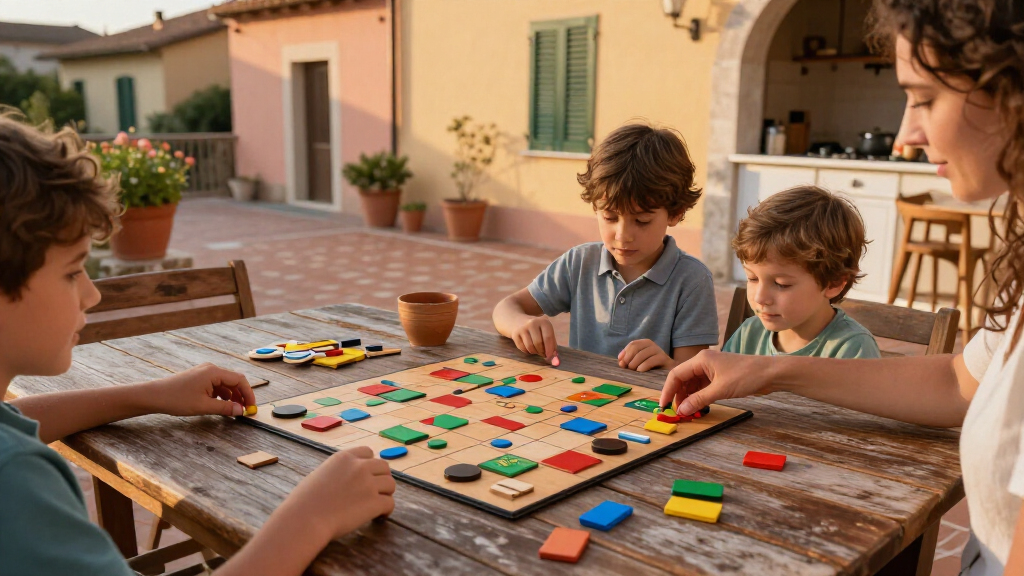
I ranked these games through the lens of a real family table, giving the most weight to age accessibility, teach time, pace between turns, and replay value. I also compared player ranges, reading demands, setup work, storage needs, direct conflict, and the likelihood that adults would remain engaged while children played. A higher age range did not automatically produce a higher position; a game moved up when its rules created useful choices without excluding younger players. I treated price as value over repeated game nights, not simply the lowest shelf price.
My highest positions go to games with broad family fit and few barriers to getting a round started. Titles with narrow two-player strength, such as Battleship and Guess Who?, remain worthwhile but rank below options that work across more situations. I also lowered games when luck overwhelms decision-making, players face long waits, or another entry fills nearly the same role better. This approach makes redundant roles and buyer tradeoffs visible instead of treating all 13 games as interchangeable.
Factors to Consider When Choosing Family Board Games
I recommend choosing family board games around the people who will actually share the table, not the age printed most prominently on the box. The best match balances reading ability, group size, and patience for rules. A game can be excellent yet fail when it excludes the youngest player or leaves half the group waiting. I use the following factors to narrow the field before comparing price.
Match the Game to the Youngest Regular Player
I start with the youngest regular player because reading demand often matters more than the suggested age. Candy Land lets preschool-age children participate through colors and simple movement, while Guess Who? introduces basic deduction through pictures and questions. Older children may outgrow pure chance quickly, making Connect 4 or TAPPLE better bridges into repeat family play. Scrabble asks for spelling, vocabulary, and score calculation, so pairing a child with an adult may work better than expecting equal solo play. A common mistake is buying for the oldest player and assuming younger siblings will catch up during the first round. I would rather choose slightly simpler rules with enough repeat-play depth than let one family member sit out.
Judge Player Count by Downtime, Not Just the Box
I treat advertised player count as a starting point because a game can technically support a group without keeping everyone engaged. Two-player titles such as Guess Who?, Connect 4, and Battleship keep turns moving but cannot serve the whole table at once. Sorry! and Trouble accept more players, yet added participants can create longer downtime and lengthier races around the board. UNO scales more naturally because turns stay short, although a crowded game becomes less predictable and more luck-driven. Hedbanz and Do You Really Know Your Family? suit social groups that enjoy talking in front of one another. For regular gatherings, I favor head-to-head games for focused pairs and larger-group formats when inclusion matters more than tactical control.
Account for the Real Length of Game Night
I look beyond the promised play time and ask how quickly people can learn, set up, finish, and start again. Real session length includes sorting pieces, explaining rules to a newcomer, and resolving interruptions from children. Connect 4, UNO, and Yahtzee are easy to restart, making them practical when the available window is uncertain. Jenga needs little explanation, but rebuilding the tower between rounds adds a small physical reset. Battleship asks both players to arrange fleets before play, while Scrabble tends to reward a longer, quieter sitting. If family attention varies from night to night, I prioritize low setup friction and a fast reset over a game with a grander presentation.
Choose a Comfortable Level of Competition
I separate friendly competition from mechanics built around blocking, attacking, or reversing another player’s progress. Direct conflict is central to Sorry!, and similar tension can appear when Trouble sends pieces back or UNO forces opponents to draw cards. Those moments can be funny for one family and frustrating for another, especially when younger children are still learning how to lose. Yahtzee creates a calmer atmosphere because each person builds an individual score sheet, even though everyone shares the same dice-based uncertainty. Hedbanz and Do You Really Know Your Family? shift attention from winning toward performance and conversation. I would choose the competitive titles for families that enjoy playful retaliation and the lighter social games when shared laughter matters more than tactical victory.
Balance Replay Value Against Repetition
I define replay value as the number of sessions a family can enjoy before decisions or prompts begin to feel familiar. Connect 4 and Battleship reuse the same components but create changing tactical situations through player choices. Yahtzee gains variety from dice combinations, while Candy Land relies more heavily on the changing card order than on new decisions. Do You Really Know Your Family? can stay lively with the right group, though repeated prompts may lose surprise faster than an abstract strategy game. Scrabble and TAPPLE draw variety from language, which gives them a long shelf life when players enjoy word challenges. I prefer durable game systems over a large component count when the purchase is meant for weekly play.
Know When Paying More Adds Useful Play
I would pay more only when the extra cost brings sturdier components, a richer decision space, or a format the family will use often. In this lineup, premium value means a more involved physical setup rather than decorative packaging alone. Battleship with Planes offers a fuller head-to-head strategy format than Guess Who?, but its narrow player count limits how often some households will bring it out. Jenga’s wooden tower can justify space in a collection because the pieces support repeated physical play across age groups. Electronic or digital features may add pace, though they also introduce battery dependence and another part that can stop working. I favor paying for useful mechanisms, while compact card games such as UNO remain smarter purchases when budget and storage matter most.
Frequently Asked Questions
What Is the Safest Single Game to Buy for a Family With Mixed Ages?
I would choose Connect 4 when most players can understand matching and blocking, because it avoids reading, scoring, and long explanations. Its choices are visible enough for children to learn while still giving adults a reason to pay attention. The limitation is its two-player format, which can leave a larger family rotating between rounds. For four or more regular players, UNO is the safer single purchase even though luck and attack cards play a larger role. Families with preschool-age children should start with Candy Land if accessibility matters more than long-term depth.
Which Family Board Game Works Best for Two Players?
I rank Connect 4 as the strongest general two-player choice because rounds are quick and every move affects the opponent’s options. Battleship with Planes fits pairs who want hidden information, planning, and a longer contest. Guess Who? is easier for younger children and helps them practice focused questions, but its character set can become familiar. Scrabble offers the deepest language challenge for older pairs who are comfortable with uneven vocabulary levels. My choice would depend on whether the pair prefers visible tactics, hidden strategy, deduction, or wordplay.
Which Games Are Less Likely to Cause Arguments Between Siblings?
I would start with Yahtzee because players mainly manage their own scorecards rather than removing another person’s progress. Candy Land is also simple, though young players may still react strongly to unlucky movement. Sorry!, Trouble, and UNO create more opportunities for targeted setbacks, so they suit siblings who can separate playful attacks from personal conflict. Hedbanz can work well when the family treats funny guesses as the main reward instead of tracking wins closely. None of these is fully cooperative, making clear house rules and short rounds helpful for conflict-prone groups.
Is UNO a Better Family Purchase Than a Traditional Board Game?
I prefer UNO when cost, portability, and flexible group size carry the most weight. It packs away easily and supports more players than Connect 4, Guess Who?, or Battleship. A traditional board game provides a stronger sense of place and may offer clearer tactical information, especially in Connect 4 or Scrabble. UNO also depends heavily on the draw pile, so skilled players have less control over some outcomes. I would pick the card game for travel and casual gatherings, then choose a board-based option for families seeking more deliberate decisions.
Should I Choose Scrabble or TAPPLE for a Family That Likes Word Games?
I recommend TAPPLE for lively mixed-age groups that enjoy rapid answers and pressure from a timer. It asks players to retrieve words quickly, which feels more social and spontaneous than building a crossword-style board. Scrabble is the better fit for patient players who enjoy spelling, score calculation, and planning several moves ahead. Vocabulary gaps can make Scrabble feel uneven when adults play against younger children, while TAPPLE can disadvantage anyone who freezes under time pressure. I would choose between speed and group energy or depth and language strategy.
Conclusion
For the broadest blend of accessibility, strategy, and replayability, my best overall choice is Hasbro Connect 4. I would buy Mattel UNO for the best value and flexible group play. For beginners and preschool-age children, Candy Land offers the gentlest introduction, though families should expect to move on as children seek more control.
My best premium step-up is Battleship with Planes for two players who want a more involved strategy setup. Word-game families should choose The Original TAPPLE for speed or Scrabble for slower, deeper play. I favor Jenga when physical action matters more than board strategy, while Hedbanz is the stronger fit for playful group guessing.
Guess Who? makes sense for young two-player deduction, and Yahtzee is my calmer pick for families that dislike direct attacks. Between the similar race games, I would select Sorry! for card-driven surprises or Trouble for its contained die roller. For relatives who enjoy personal prompts more than tactical play, Do You Really Know Your Family? fills the most conversation-focused role in the lineup.
Halloween Picks
halloween
As an affiliate, we earn on qualifying purchases.