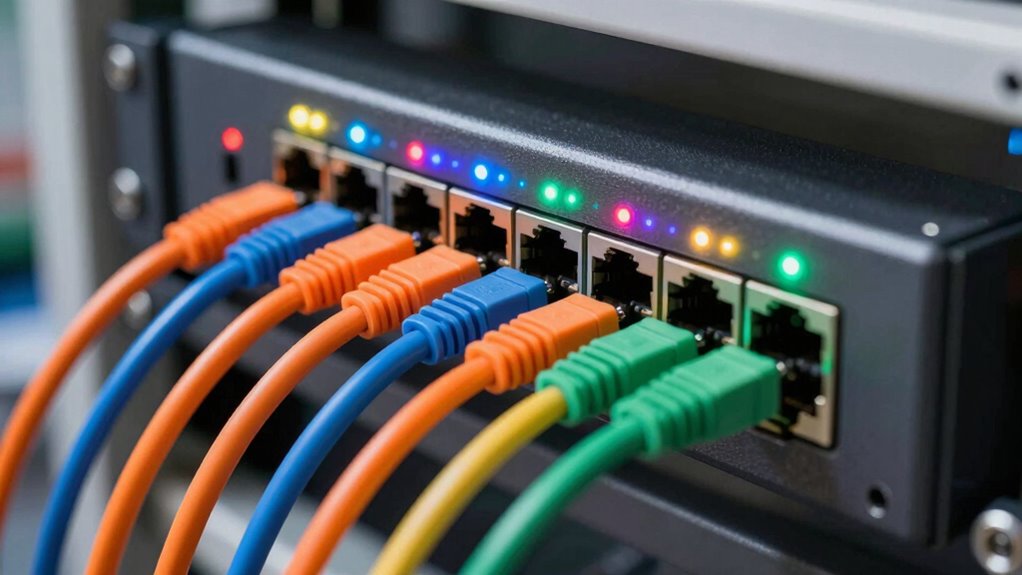

Unmanaged Ethernet switches offer simple, plug-and-play connectivity without complex configuration, making them ideal for small networks or home setups. The best overall pick in this category is the NETGEAR GS105NA, known for reliability and ease of use. For those needing PoE capabilities, the YuanLey 16 Port PoE Switch stands out, while budget-conscious buyers often prefer the TP-Link TL-SF1016D for affordability. However, tradeoffs exist—higher port counts or advanced features usually mean higher costs or increased size. Continue reading for a detailed breakdown of the top unmanaged switches and what makes each one suitable for different needs.

Get kitchen staples and gadgets delivered free with Prime
- Fast, free delivery on millions of items
- Prime Video, Amazon Music and more included
- Member-only deals all year
Key Takeaways
- The most versatile options combine high port counts with PoE support, but these tend to be more expensive and bulkier.
- Build quality and reliability are consistent differentiators, with brands like NETGEAR and TP-Link leading in durability.
- Ease of use remains a top priority for unmanaged switches, with plug-and-play models dominating the best picks.
- Price often correlates with features: budget models are simple, while premium options add ports, PoE, and higher data rates.
- Size and form factor vary widely; compact desktop models suit small spaces, while rackmount units are better for larger setups.
| NICGIGA 8 Port 2.5Gbps Unmanaged Ethernet Switch with 2x 10G SFP+ Ports |  | Best High-Speed Uplink and Versatility | Number of Ports: 10 | Port Types: RJ45, SFP+ | Data Transfer Rate: 10 gigabits_per_second | VIEW ON AMAZON | See Our Full Breakdown |
| 48 Port Gigabit PoE Switch, Unmanaged with 48 Port IEEE802.3af/at PoE+@800W, 2 x 1G Uplink Port, 2 x 1G SFP Slot, Metal Rackmount Network Ethernet Switch |  | Best for Power-Driven Network Expansion | Number of Ports: 48 PoE+ | Uplink Ports: 2 x 1G | SFP Slots: 2 x 1G | VIEW ON AMAZON | See Our Full Breakdown |
| NETGEAR 5-Port Gigabit Ethernet Unmanaged Network Switch (GS105NA) |  | Best for Compact, Reliable Home or Small Office Networks | Number of Ports: 5 | Port Speed: 1.0Gbps | Design: Metal, compact | VIEW ON AMAZON | See Our Full Breakdown |
| TP-Link 5 Port Gigabit Ethernet Network Switch (TL-SG105-605) (Renewed) |  | Best Budget-Friendly Basic Gigabit Switch | Number of Ports: 5 | Compatible Devices: Desktop | Voltage: 240 volts | VIEW ON AMAZON | See Our Full Breakdown |
| NETGEAR 8-Port Gigabit Ethernet Unmanaged Network Switch (GS308) |  | Best for Expanding Small Networks with Reliability | Number of Ports: 8 | Compatible Devices: Computers, servers, networking hardware | Voltage: 12 volts DC | VIEW ON AMAZON | See Our Full Breakdown |
| UGREEN Ethernet Switch, 5 Port Gigabit Plug & Play | 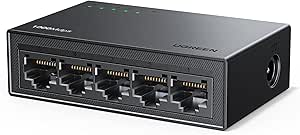 | Best Compact and Silent | Number of Ports: 5 | Data Transfer Rate: 1000 megabits_per_second | Compatible Devices: Desktop, Laptop, Router | VIEW ON AMAZON | See Our Full Breakdown |
| TP-Link LS1005G Litewave 5 Port Gigabit Ethernet Unmanaged Switch |  | Best Energy-Efficient Compact Switch | Ports: 5 x 10/100/1000Mbps RJ45 | Flow Control: IEEE 802.3X | Energy Efficiency: Yes | VIEW ON AMAZON | See Our Full Breakdown |
| Tenda 8 Port Gigabit Ethernet Switch, Desktop Plug & Play |  | Best for Larger Small Networks | Number of Ports: 8 | Port Speed: Gigabit (1000 Mbps) | Connection Type: Ethernet | VIEW ON AMAZON | See Our Full Breakdown |
| TP-Link TL-SG105 5-Port Gigabit Unmanaged Ethernet Switch |  | Best for Durable, Reliable Network Expansion | Ports: 5 x 10/100/1000Mbps RJ45 | Flow Control: IEEE 802.3X | Warranty: 3 years | VIEW ON AMAZON | See Our Full Breakdown |
| D-Link 5-Port Gigabit Unmanaged Ethernet Switch |  | Best Budget-Friendly Durable Choice | Ports: 5 Gigabit ports | Speed: Up to 2 Gbps per port | Housing: All-steel chassis | VIEW ON AMAZON | See Our Full Breakdown |
| 10 Port 2.5Gb Unmanaged Ethernet Switch with 8 2.5G Ports and 2 10G SFP+ Ports |  | Best Overall for High-Speed Home and Small Business Networks | Number of Ports: 10 | Compatible Devices: Desktop, Gaming Console, Laptop, Printer | Interface: SFP | VIEW ON AMAZON | See Our Full Breakdown |
| YuanLey 16 Port PoE Switch with 2 Gigabit Uplink, SFP Port, 250W PoE+ Support |  | Best for Power-Over-Ethernet Devices in Small to Medium Deployments | Number of Ports: 16 PoE+ RJ45 | Uplink Ports: 2 Gigabit Ethernet | SFP Port: 1 | VIEW ON AMAZON | See Our Full Breakdown |
| TP-Link TL-SF1016D 16-Port 10/100Mbps Fast Ethernet Unmanaged Switch |  | Best Budget Unmanaged Switch for Basic Connectivity | Number of Ports: 16 | Speed: 10/100Mbps | Switching Capacity: 3.2Gbps | VIEW ON AMAZON | See Our Full Breakdown |
| NETGEAR 5-Port PoE Gigabit Ethernet Unmanaged Switch (GS305P) |  | Best Compact PoE Switch for Small Networks and IoT Devices | Number of Ports: 5 | PoE Ports: 4 | PoE Power Budget: 63W | VIEW ON AMAZON | See Our Full Breakdown |
| Tenda 5 Port Gigabit Unmanaged Desktop Network Switch (TEG1005D) |  | Best for Small, Quiet, and Reliable Gigabit Connections | Number of Ports: 5 | Speed: 1000 megabits_per_second | Maximum Power: 2.5 watts | VIEW ON AMAZON | See Our Full Breakdown |
More Details on Our Top Picks
NICGIGA 8 Port 2.5Gbps Unmanaged Ethernet Switch with 2x 10G SFP+ Ports
This NICGIGA switch stands out for its combination of 2.5Gbps ports and 10G SFP+ uplinks, making it ideal for users needing high-speed data transfer to NAS or gaming setups. Compared with the NETGEAR GS308, it offers faster uplink options but lacks advanced management features, which could be a drawback for larger or more complex networks. Its fanless, durable metal design ensures quiet operation, yet the absence of detailed power specifications means users must verify compatibility carefully. This model is well-suited for small offices or home labs where high-speed uplinks are a priority. However, those seeking managed features or extensive network control should look elsewhere. Overall, it’s a solid pick for high-speed connections with a quiet footprint.Pros:- Supports 2.5Gbps and 10G uplink connections for fast data transfer
- Fanless design ensures silent operation
- Durable metal case with lightning protection
Cons:- Limited management features due to unmanaged design
- No detailed power supply info, requiring compatible devices
Best for: Small office or home users needing high-speed uplinks and silent operation
Not ideal for: Users requiring managed switches or advanced network security features
- Number of Ports:10
- Port Types:RJ45, SFP+
- Data Transfer Rate:10 gigabits_per_second
- Supported Devices:Camera, Gaming Console, Laptop, Printer
- Upper Temperature Rating:50 °C
- Switch Type:unmanaged
Our verdict“This switch is ideal for users prioritizing high-speed uplinks and silent performance without needing advanced management features.”
48 Port Gigabit PoE Switch, Unmanaged with 48 Port IEEE802.3af/at PoE+@800W, 2 x 1G Uplink Port, 2 x 1G SFP Slot, Metal Rackmount Network Ethernet Switch
This switch excels for deploying multiple PoE devices, supporting up to 48 PoE+ ports with a total 800W power budget. Compared with the NETGEAR GS308, it offers significantly more PoE capacity, making it suitable for security cameras and access points in larger installations, but it lacks managed features for VLAN or traffic prioritization. Its metal housing and rackmount design provide durability and professional deployment options. However, without managed capabilities, network administrators may find it limiting for complex configurations. It’s perfect for small to medium networks needing reliable power delivery without fuss. For those requiring fine-grained control or advanced features, a managed switch would be better suited. This model is a strong choice for power-heavy, plug-and-play setups.Pros:- High PoE power budget supports many IP cameras and access points
- Plug-and-play setup with VLAN support for basic security
- Durable metal case with quiet cooling
- Flexible installation with rackmount and desktop options
Cons:- Lacks managed features beyond VLAN support
- Requires compatible PoE devices to utilize power capabilities
Best for: Small to medium-sized networks needing extensive PoE device support
Not ideal for: Network environments requiring managed switching or detailed traffic management
- Number of Ports:48 PoE+
- Uplink Ports:2 x 1G
- SFP Slots:2 x 1G
- PoE Power Budget:800W
- PoE Standard:IEEE802.3af/at
- Maximum Power per Port:30W
Our verdict“This switch is ideal for power-hungry network expansions where ease of use and durability matter most.”
NETGEAR 5-Port Gigabit Ethernet Unmanaged Network Switch (GS105NA)
The GS105NA is a straightforward, compact switch ideal for small networks that need reliable Gigabit connections. Its fanless design makes it completely silent, and energy efficiency adds to its appeal for home use. Compared to the TP-Link TL-SG105-605, it offers fewer ports but benefits from a more compact form factor and energy-saving features. Its easy plug-and-play setup makes it suitable for users who want simple, dependable connectivity without complex configurations. However, the limited number of ports and lack of managed features restrict its use in larger or more advanced environments. It’s perfect for those seeking an unobtrusive, reliable Ethernet hub for basic needs.Pros:- Plug-and-play setup with no configuration needed
- Silent and fanless for quiet operation
- Energy-efficient with reduced power consumption
- Flexible mounting options for desktop or wall
Cons:- Limited to unmanaged network setup with no advanced controls
- Only suitable for small-scale deployments
Best for: Home users or small offices needing simple, reliable network expansion
Not ideal for: Larger networks or users requiring VLAN, QoS, or managed features
- Number of Ports:5
- Port Speed:1.0Gbps
- Design:Metal, compact
- Operation:Plug-and-play
- Energy Efficiency:IEEE 802.3az
Our verdict“This switch makes sense for users seeking a compact, silent, and reliable Gigabit connection point in small environments.”
TP-Link 5 Port Gigabit Ethernet Network Switch (TL-SG105-605) (Renewed)
This TP-Link switch offers a straightforward plug-and-play setup with sturdy metal construction, making it a practical choice for basic wired connections. Compared with the NETGEAR GS105NA, it may lack some energy efficiency features but provides a similar reliable Gigabit connection at a lower price point. Its simple design suits users who want dependable wired connectivity without complex features, but its limited port count and unmanaged nature restrict scalability. It’s best for small, static networks where simplicity and affordability are key. Those seeking advanced management or higher port density should consider more comprehensive options. This model fits well for budget-conscious users with basic needs.Pros:- Easy plug-and-play setup with no configuration required
- Sturdy metal case for durability
- Supports high-speed Gigabit Ethernet
Cons:- No managed features or traffic control
- Design is basic and lacks advanced functionalities
Best for: Budget-conscious users needing simple, reliable Gigabit connections
Not ideal for: Environments requiring network management or higher port counts
- Number of Ports:5
- Compatible Devices:Desktop
- Voltage:240 volts
- Upper Temperature Rating:40 °C
- Interface:RJ45
- Data Transfer Rate:1000 megabits_per_second
Our verdict“This switch suits budget-focused users who need reliable, basic gigabit connectivity in small setups.”
NETGEAR 8-Port Gigabit Ethernet Unmanaged Network Switch (GS308)
The GS308 provides a reliable, high-speed expansion point for small networks, featuring 8 Gigabit ports in a compact, fanless design. Its simple plug-and-play setup makes it suitable for users who want quick deployment without management complexity. Compared to the NICGIGA switch, it offers fewer high-speed uplinks but is more straightforward and energy-efficient. Its metal case and silent operation make it ideal for home or small office environments where minimal noise is desired. However, the lack of managed features limits its flexibility in larger or more complex networks. It’s best for straightforward network expansion where ease of use is more important than detailed traffic management. It’s a good all-around choice for basic needs.Pros:- Easy plug-and-play setup
- Silent, fanless operation
- Durable metal construction with mounting options
- Energy-efficient technology
Cons:- Limited to unmanaged switch functionality
- No advanced management features
Best for: Small offices or home networks requiring simple Gigabit expansion
Not ideal for: Networks needing VLAN, QoS, or managed control features
- Number of Ports:8
- Compatible Devices:Computers, servers, networking hardware
- Voltage:12 volts DC
- Data Transfer Rate:1 Gbps
- Item Dimensions:6.22″L x 4.02″W x 1.02″H
- Item Weight:13.76 ounces
Our verdict“This switch is perfect for users wanting a straightforward, reliable Gigabit expansion point in small networks.”
UGREEN Ethernet Switch, 5 Port Gigabit Plug & Play
This UGREEN Ethernet Switch stands out for its ultra-compact size and silent, fanless operation, making it ideal for discreet home or small office setups. Compared with the TP-Link TL-SG105, it offers similar gigabit speeds but is slightly more portable and easier to mount on walls due to its lightweight design. However, it lacks PoE support and advanced management features, which could limit its use in more complex networks. Its plug-and-play setup ensures straightforward installation, and its silent operation is perfect for environments requiring quiet. The main tradeoff is its limited functionality—no PoE or network management—making it less suitable for larger or more sophisticated setups.
Pros:- Easy to set up with plug-and-play design
- Supports high-speed gigabit connections
- Compact and suitable for wall mounting
- Fanless and silent operation
Cons:- Does not support PoE
- Limited to unmanaged switching
Best for: Small home offices or security camera setups needing a silent, space-saving switch
Not ideal for: Environments requiring Power over Ethernet or advanced network controls
- Number of Ports:5
- Data Transfer Rate:1000 megabits_per_second
- Compatible Devices:Desktop, Laptop, Router
- Interface:RJ45
- Switch Type:unmanaged, non-PoE
- Color:Black
Our verdict“This switch is best for users seeking a simple, quiet, wall-mountable gigabit switch for basic network expansion.”
TP-Link LS1005G Litewave 5 Port Gigabit Ethernet Unmanaged Switch
The TP-Link LS1005G is an excellent choice for small networks that prioritize energy savings without sacrificing speed. Its fanless, compact design is similar to the TP-Link TL-SG105 but adds the benefit of energy-efficient technology, reducing power consumption over extended use. Unlike the UGREEN model, it offers a durable metal case that withstands diverse environments and supports QoS and IGMP snooping for better network management, even in unmanaged form. The main limitation is its 5-port capacity, which may not suffice for larger setups. Its straightforward plug-and-play setup makes it accessible for beginners, but it lacks advanced management features that some advanced users might need.
Pros:- Energy-efficient design reduces power consumption
- Durable metal casing for long-term use
- Plug-and-play setup with no configuration needed
- Supports QoS and IGMP snooping for better traffic management
Cons:- Limited to 5 ports, not suitable for expanding networks
- No included mounting hardware
- No PoE support
Best for: Small offices or home users needing reliable gigabit connectivity with energy efficiency
Not ideal for: Large networks or users needing PoE or advanced management features
- Ports:5 x 10/100/1000Mbps RJ45
- Flow Control:IEEE 802.3X
- Energy Efficiency:Yes
- Design:Fanless, metal casing
- Dimensions:2.8 x 3.5 x 0.9 inches
- Weight:2.8 ounces
Our verdict“This switch suits users seeking a compact, energy-efficient gigabit solution for small-scale networks with durable build quality.”
Tenda 8 Port Gigabit Ethernet Switch, Desktop Plug & Play
The Tenda 8 Port Gigabit Switch offers more ports for users needing additional wired connections without complexity. Its plug-and-play setup resembles the smaller 5-port options but caters to slightly larger networks like small offices or gaming setups. Compared to the 5-port switches, it provides extra capacity, but it still lacks management features, making it less ideal for environments requiring traffic prioritization or VLANs. The straightforward design makes installation simple, but without an included power adapter, some might face minor inconvenience. Its space-efficient form factor is a plus, yet the absence of managed features limits its usefulness as networks grow more complex.
Pros:- Easy to install with no configuration needed
- Supports high-speed gigabit connections on all ports
- Compact, space-efficient design
- Reliable plug-and-play operation
Cons:- Limited to wired connections only
- No advanced management features
- No included power adapter details
Best for: Home or small office users needing more Ethernet ports with easy setup
Not ideal for: Large enterprise networks or users needing advanced features like VLANs or PoE
- Number of Ports:8
- Port Speed:Gigabit (1000 Mbps)
- Connection Type:Ethernet
- Power:Plug & Play
Our verdict“This switch is ideal for expanding small networks with multiple wired devices in a simple, reliable way.”
TP-Link TL-SG105 5-Port Gigabit Unmanaged Ethernet Switch
The TP-Link TL-SG105 is a well-rounded choice for users who need a durable, reliable switch with a proven track record. Its metal case and fanless design make it suitable for various environments, from home offices to small business settings. While it shares the same 5-port capacity as the LS1005G, it emphasizes durability and quiet operation, ideal for long-term use. Compared to the D-Link model, the TL-SG105 offers similar features, but some may prefer D-Link’s surge protection. The lack of management features limits its use for traffic control, but for basic network expansion, it remains a solid pick.
Pros:- Durable metal case ensures longevity
- Easy plug-and-play setup
- Fanless design provides quiet operation
- Supports QoS for traffic prioritization
Cons:- Limited to 5 ports, not suitable for large-scale networks
- No management features
- No mounting hardware included
Best for: Small businesses or home users seeking a sturdy, durable switch for constant use
Not ideal for: Large networks or environments requiring network management or PoE
- Ports:5 x 10/100/1000Mbps RJ45
- Flow Control:IEEE 802.3X
- Warranty:3 years
- Design:Fanless metal casing
- Operation:Quiet
Our verdict“This switch is best for users needing a durable, quiet gigabit expansion device for small-scale networks.”
D-Link 5-Port Gigabit Unmanaged Ethernet Switch
The D-Link 5-Port Gigabit Switch offers a compelling balance of affordability and reliability. Its all-steel chassis and fanless design make it suitable for continuous use in office or media setups. While it shares the same 5-port capacity as other models like the TL-SG105, it emphasizes surge and ESD protection, adding resilience in environments prone to electrical disturbances. Its plug-and-play setup makes it accessible for users who need quick expansion, though it lacks features like VLAN support or PoE. Compared with the TP-Link TL-SG105, it provides similar durability but might be less visually appealing. This pick is ideal for budget-conscious buyers who need a tough, silent switch.
Pros:- All-steel chassis ensures durability
- Surge and ESD protection for electrical resilience
- Fanless for silent operation
- Simple plug-and-play setup
Cons:- Limited to unmanaged features
- No included power supply details
- No management capabilities
Best for: Cost-sensitive small offices or media setups needing a durable, basic switch
Not ideal for: Networks requiring advanced management, PoE, or larger port counts
- Ports:5 Gigabit ports
- Speed:Up to 2 Gbps per port
- Housing:All-steel chassis
- Mounting:Desktop or wall mount
- Lifetime Coverage:Limited lifetime
Our verdict“This switch is suitable for budget-minded users who want a durable, silent gigabit connection device for small networks.”
10 Port 2.5Gb Unmanaged Ethernet Switch with 8 2.5G Ports and 2 10G SFP+ Ports
This switch stands out for offering a blend of high-speed 2.5Gbps Ethernet ports with 2 dedicated 10G SFP+ uplink ports, making it ideal for demanding data transfers between NAS devices, PCs, and WiFi6 routers. Compared to the TP-Link TL-SF1016D, which only provides 10/100Mbps ports, this model supports much faster speeds suitable for modern workloads. The fanless design ensures quiet operation, perfect for home offices or quiet workspaces, but it lacks management features, which could be a limitation in larger or more complex setups. Its durable metal case and lightning protection enhance reliability, yet the need for compatible SFP+ modules and potential power supply considerations are tradeoffs. This pick makes the most sense for users needing high bandwidth and straightforward, plug-and-play setup.
Pros:- Supports high-speed 2.5Gbps and 10G connections for fast data transfer
- Fanless design provides quiet operation and effective heat dissipation
- Plug-and-play setup simplifies deployment and use
- Durable metal casing with lightning protection
Cons:- Limited to unmanaged switch functionality without advanced features
- Requires compatible SFP+ modules for certain uplink setups
Best for: Small businesses or tech-savvy home users requiring high-speed, reliable connections without management complexity.
Not ideal for: Large enterprise networks or users needing advanced control features—this switch lacks management options.
- Number of Ports:10
- Compatible Devices:Desktop, Gaming Console, Laptop, Printer
- Interface:SFP
- Data Transfer Rate:2.5 gigabits_per_second
- Switch Type:Unmanaged
- Item Dimensions:8.5″L x 4.3″W x 1.14″H
Our verdict“This switch fits well for users prioritizing high-speed connections and simple setup in small-scale environments.”
YuanLey 16 Port PoE Switch with 2 Gigabit Uplink, SFP Port, 250W PoE+ Support
The YuanLey 16-port PoE switch is designed for environments where powering devices like IP cameras, access points, or VoIP phones is crucial. Its 250W PoE+ support with 16 ports allows multiple devices to run without additional power supplies, setting it apart from the NETGEAR GS305P, which has fewer ports and less PoE capacity. The built-in AI Watchdog and VLAN features enhance network stability and security, but the switch remains unmanaged, limiting configuration options for advanced traffic control. Its flexible installation—rackmount or desktop—and surge protection make it suitable for both fixed and temporary setups. The main tradeoff is that it cannot manage complex network policies, which might matter in larger or more segmented networks. This model is ideal for small offices or security setups needing PoE power and straightforward deployment.
Pros:- High power PoE+ support for multiple devices
- AI Watchdog for automatic device recovery
- VLAN support enhances security and traffic segmentation
- Flexible rackmount or desktop installation
Cons:- Limited to unmanaged features, no advanced control
- PoE power may be insufficient for very high-power devices
Best for: Small to medium-sized deployments with PoE device needs, such as surveillance or WiFi access points.
Not ideal for: Large enterprise networks or users requiring detailed network management and monitoring features.
- Number of Ports:16 PoE+ RJ45
- Uplink Ports:2 Gigabit Ethernet
- SFP Port:1
- Power:250W PoE+
- Supported Standards:IEEE 802.3af/at
- Installation:Rackmount and desktop
Our verdict“This switch suits small network setups with PoE device needs and a focus on ease of use over management complexity.”
TP-Link TL-SF1016D 16-Port 10/100Mbps Fast Ethernet Unmanaged Switch
The TP-Link TL-SF1016D offers straightforward 10/100Mbps Ethernet connectivity across 16 ports, making it a reliable choice for basic networking needs like office printers or secondary network segments. Compared to gigabit options like the NETGEAR GS105NA, it provides lower speeds but at a more affordable price point, which can be attractive for light-duty applications. Its non-blocking architecture ensures maximum throughput at each port, while the fanless design maintains silent operation. However, limited to 100Mbps speeds, it doesn’t support the higher data rates required for modern video streaming or large file transfers. The lack of management features means it’s best for simple setups without future expansion plans. This switch is ideal for users who want a low-cost, plug-and-play solution for small, low-bandwidth networks.
Pros:- Energy-efficient technology reduces power consumption
- Non-blocking architecture ensures maximum throughput
- Fanless design offers silent operation
- Plug-and-play setup simplifies installation
Cons:- Limited to 10/100Mbps speeds, not gigabit
- No managed features for network control or expansion
Best for: Small offices or home environments needing reliable, no-fuss Ethernet connectivity at an affordable price.
Not ideal for: Users with high-speed requirements or larger networks that demand gigabit or managed switches.
- Number of Ports:16
- Speed:10/100Mbps
- Switching Capacity:3.2Gbps
- Jumbo Frame:9K
- Design:Fanless
Our verdict“This switch works well for basic, low-demand networking where cost savings are a priority over speed or management.”
NETGEAR 5-Port PoE Gigabit Ethernet Unmanaged Switch (GS305P)
The NETGEAR GS305P packs five Gigabit ports, with four PoE+ ports supporting up to 63W total, making it a compact yet capable solution for powering IP cameras, VoIP phones, or access points. Compared to the larger YuanLey 16-port model, this switch is more suitable for small setups where space is limited and only a handful of PoE devices are involved. Its plug-and-play setup and silent operation are ideal for desktop or wall-mount installation in small offices or home setups. However, with only five ports and a 63W budget, it might fall short for larger PoE deployments or high-power devices. The absence of management features means it’s best for straightforward power and data distribution rather than complex network control. This switch suits environments where space is tight and PoE needs are modest.
Pros:- Supports PoE+ for powering multiple devices
- Compact, fanless, and wall-mountable design
- Easy plug-and-play setup
- Energy-efficient operation
Cons:- Limited to 5 ports, not suitable for larger networks
- PoE budget may be insufficient for high-power devices
Best for: Small offices or home users deploying a few PoE devices needing reliable power and Gigabit connectivity.
Not ideal for: Larger networks or setups requiring detailed management or more PoE ports.
- Number of Ports:5
- PoE Ports:4
- PoE Power Budget:63W
- Ethernet Speed:1.0Gbps
- Design:Fanless, metal
Our verdict“This switch provides a simple, space-saving PoE solution for small-scale device deployments.”
Tenda 5 Port Gigabit Unmanaged Desktop Network Switch (TEG1005D)
The Tenda TEG1005D offers five Gigabit Ethernet ports in a compact, metal enclosure, emphasizing quiet, reliable operation. Compared with the NETGEAR GS305P, which includes PoE support, this switch is a straightforward gigabit-only device, making it suitable for environments where powering devices isn’t needed. Its robust metal case ensures durability, and plug-and-play setup means minimal fuss for home or small office use. Its traffic optimization and lightning protection benefits provide stability, but the 5-port limit restricts scalability, and it lacks management features for more complex network control. For users who need a simple, high-speed switch without PoE, this is a solid choice. This model is best for users seeking a quiet, reliable gigabit switch for small networks or home offices.
Pros:- Gigabit speeds for fast local data transfer
- Fanless, metal case for durability and silent operation
- Easy plug-and-play setup
- Lightning protection for stability
Cons:- Limited to 5 ports, not suitable for expanding networks
- No managed features or PoE support
Best for: Small networks, such as home offices or media centers, requiring reliable gigabit connectivity without management or PoE.
Not ideal for: Larger or more complex networks, or environments needing PoE support or advanced management.
- Number of Ports:5
- Speed:1000 megabits_per_second
- Maximum Power:2.5 watts
- Switch Type:Metal
- Color:Charcoal
Our verdict“This switch is ideal for small, high-speed networks where simplicity and silence are priorities.”

How We Picked
To select these unmanaged switches, I evaluated key factors such as performance consistency, build quality, port versatility, and overall value. Reliability in real-world conditions mattered most, as did ease of setup and use, given the unmanaged nature. I also considered the breadth of features, like PoE support or higher data rates, and balanced these against price and size. The rankings reflect a mix of user needs—from small home networks to small business setups—ensuring each pick offers a clear advantage for specific scenarios. Only products with proven durability and performance made the cut, with a focus on those that deliver the best combination of value and dependability.
Factors to Consider When Choosing Ethernet Switches Unmanaged
Choosing the right unmanaged Ethernet switch depends on several factors that extend beyond basic port count. Understanding these considerations can help you avoid costly mistakes and select a model that fits your current and future needs, whether for a small home setup or a small office network.Port Count and Speed
Determine your current device count and future expansion plans to choose an appropriate port count. Higher port counts offer more flexibility but often come with increased size and cost. Speed support, typically 1Gbps, is standard, but models like 2.5Gbps or 10Gbps switches provide additional headroom for faster data transfer, which can be beneficial for data-heavy tasks or network upgrades.
PoE Support
Power over Ethernet (PoE) simplifies device deployment by powering IP cameras, VoIP phones, and wireless access points directly through the switch. If you plan to connect multiple PoE devices, investing in a PoE-capable model like the YuanLey 16 Port PoE Switch prevents the need for separate power supplies, saving space and reducing clutter. However, PoE models tend to be more expensive and generate more heat, which could impact placement options.
Size and Form Factor
Consider where you’ll place the switch. Desktop models are compact and suitable for small spaces, while rackmount units are designed for server rooms or network closets. Size influences airflow and cooling needs; larger switches with more ports may require better ventilation. Ensure the physical dimensions align with your setup constraints to avoid frustration later.
Build Quality and Reliability
Since unmanaged switches are often used in critical small networks, durability and consistent performance matter. Look for reputable brands like NETGEAR, TP-Link, or D-Link, which have established track records. Cheaper, lesser-known brands might save money upfront but could compromise on longevity or stability, leading to potential downtime or troubleshooting headaches.
Budget and Future-Proofing
Balance your current needs with potential future requirements. While budget models might suffice now, investing slightly more can provide higher speeds, more ports, or PoE support that extends the switch’s lifespan. Think about your growth plans; a slightly higher upfront cost may save money later by avoiding frequent upgrades or replacements.
Frequently Asked Questions
Can unmanaged switches support VLANs or advanced network segmentation?
No, unmanaged switches typically do not support VLANs or complex network segmentation. They are designed for simple plug-and-play connectivity, making them ideal for basic setups. If you need VLAN support, consider managed switches, which offer configuration options for network segmentation, security, and traffic management. For most small networks with basic needs, unmanaged switches provide sufficient performance without added complexity.
Is PoE support worth paying extra for in an unmanaged switch?
PoE support is highly valuable if you plan to connect devices like IP cameras, Wi-Fi access points, or VoIP phones that require power. It simplifies installation by reducing the need for separate power supplies and outlets. However, if your setup doesn’t include PoE devices, a non-PoE switch will usually be more affordable and generate less heat. Assess your device requirements carefully to decide if PoE justifies the additional investment.
What is the typical lifespan of an unmanaged Ethernet switch?
Unmanaged switches generally last between 5 to 10 years, depending on build quality and operating conditions. Proper placement in well-ventilated areas and avoiding power surges can extend their lifespan. Regularly checking connections and firmware updates (if applicable) helps maintain performance. For critical networks, investing in higher-quality brands can also translate into longer-lasting devices.
Should I prioritize higher port counts or higher data speeds?
This depends on your network’s current demands and future plans. Higher port counts provide more connection points, useful for expanding devices or sharing resources. Faster speeds, like 2.5Gbps or 10Gbps, are beneficial if you transfer large files or stream high-definition content. For most small networks, a balance between port count and gigabit speeds offers the best value, but consider your specific use case when making a choice.
Are rackmount unmanaged switches necessary for small networks?
Rackmount switches are primarily designed for larger or more complex networks that require organized, centralized hardware in a server room or network closet. For small home or office setups, desktop models are usually sufficient and easier to place. However, if you plan to expand significantly or want a cleaner, professional installation, a rackmount switch can be a good investment, provided you have the space and infrastructure to support it.
Conclusion
For most home users or small offices, the NETGEAR GS105NA offers a reliable, straightforward choice as the best overall. Budget-minded buyers should consider the TP-Link TL-SF1016D for affordability, while those needing PoE capabilities might favor the YuanLey 16 Port PoE Switch. If you’re new to networking and want simplicity, a plug-and-play desktop model like the Tenda TEG1005D is ideal. Larger or more complex setups should lean toward rackmount options or switches with higher port counts and speeds, depending on future needs. Your choice depends on balancing performance, size, and features against your current and projected network demands.