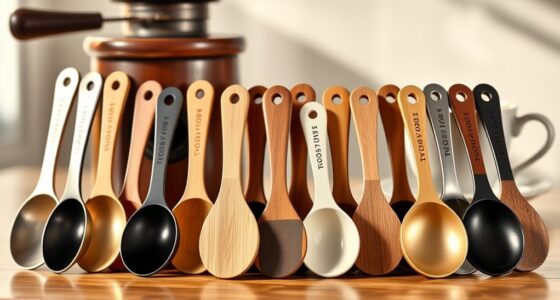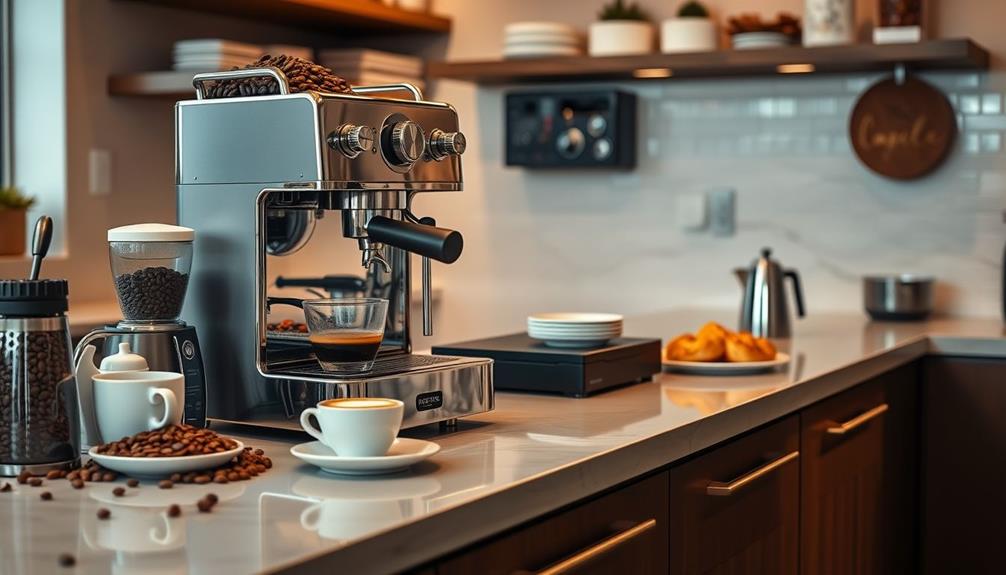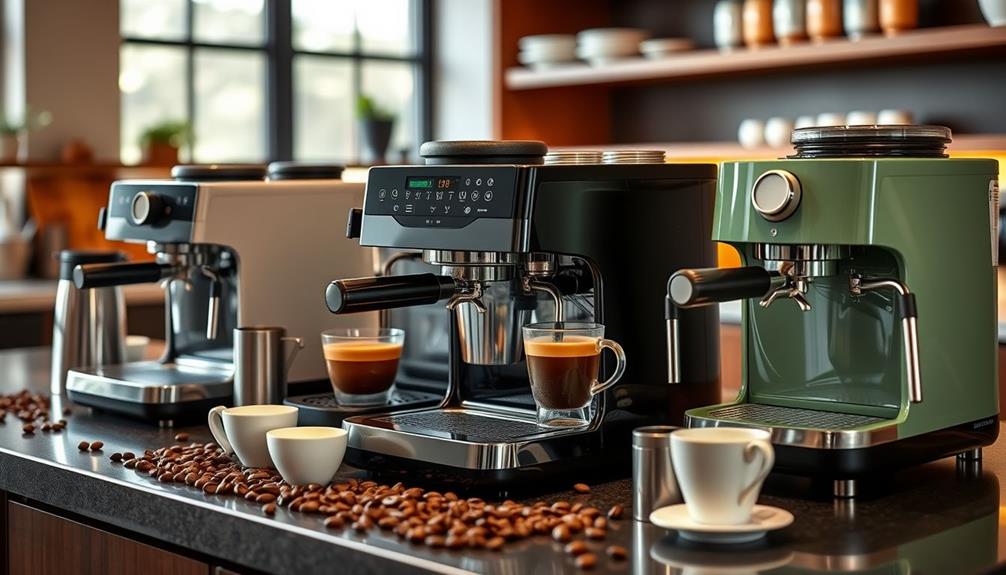

For shoppers searching for an espresso machine in India, my best overall pick is the De’Longhi Classic Signature because it offers the strongest balance of home-friendly operation, brand support, and espresso control when bought as an India-compatible model. The CASABREWS CM5418 is my value choice for smaller kitchens, while the Breville Barista Express is the premium option for buyers who want a built-in grinder. The main tradeoffs are voltage compatibility, grinder cost, milk-steaming ability, counter space, and access to service or replacement parts. A 20-bar label alone does not make one machine better than a well-regulated 15-bar model. Continue reading for the full ranking logic, buyer-specific recommendations, and the checks I would make before ordering any imported machine.

Get kitchen staples and gadgets delivered free — and shop member deals
- Fast, free delivery on millions of items
- Access to Prime Big Deal Days deals on October 6–7
- Prime Video, Amazon Music and more included
Complete the kit


Key Takeaways
- De’Longhi Classic Signature leads the ranking because its balanced home workflow and established brand ecosystem matter more in India than an oversized pressure claim.
- CASABREWS CM5418 is the strongest value pick for buyers who want a compact milk-drink machine without paying for the Breville model’s integrated grinder.
- Breville Barista Express is the only true all-in-one option here, but its higher cost and listing-specific voltage make it a narrower premium recommendation.
- AMZCHEF has the clearest beginner-oriented feature set through its touchscreen and cleaning assistance, although electronics may complicate repairs compared with simpler controls.
- India compatibility can reverse the product order: a 230V model with local warranty coverage is a safer buy than a higher-ranked imported unit that needs a heavy transformer.


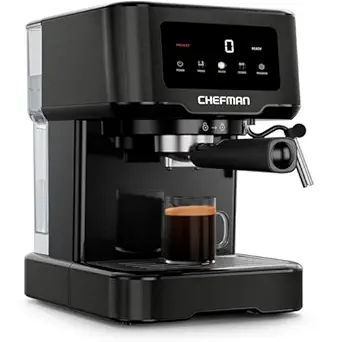
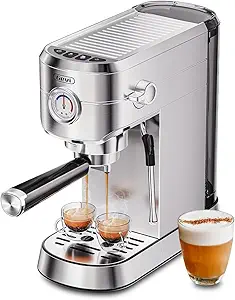


| espresso machine india | Milk System | Power | Pressure | Voltage |
|---|---|---|---|---|
| AMZCHEF Espresso Machine 20 Ba | Adjustable steam wand | — | 20 bar | 120V |
| Casabrews CM5418 Compact Espre | Steam wand | 1350W | 20 bar | — |
| Atatix Espresso Machine with M | Steam wand | — | 20 bar | — |
| CASABREWS 3700 Essential Stain | Steam wand | 1350W | 20 bar | — |
| Chefman CraftBrew Espresso Mac | Steam wand | — | 15 bar | 120V |
| Gevi Commercial Espresso and C | — | 1350W | — | 120V |
| XIXUBX Espresso Machine with M | — | 1100W | — | 120V |
| De’Longhi Classic Signature Es | — | — | — | — |
| Breville BES870XL Barista Expr | — | 1600W | — | 120V |
| 20 Bar Espresso Machine with M | Steam wand | 1450W | — | — |
More Details on Our Top Picks
AMZCHEF Espresso Machine 20 Bar with LED Touchscreen, Self-Cleaning & Milk Frother
I rank the AMZCHEF Espresso Machine first because its touchscreen, programmable memory, and self-cleaning cycle make daily home brewing less demanding. The 20-bar pump and adjustable steam wand support both straight espresso and milk drinks, while the 41 oz tank offers more capacity than the Casabrews CM5418 without taking the Chefman CraftBrew’s larger footprint. Its interface is also friendlier for shared Indian households where several people want repeatable drinks. The drawback is electrical compatibility: this listing specifies 120V rather than India’s standard 230V supply, so buyers need a correctly rated step-down transformer unless a local-voltage version is available. It also lacks a grinder and requires manual milk texturing. Even with those limits, I see it as the most balanced home machine here.
Pros:- LED touchscreen and memory function simplify repeat drink preparation
- Self-cleaning function reduces routine maintenance work
- 41 oz tank holds more water than the Casabrews CM5418
- Adjustable steam wand supports cappuccinos, lattes, and other milk drinks
Cons:- Listed 120V supply is not directly compatible with standard Indian 230V outlets
- No built-in grinder or automatic milk system
- Water tank may still need frequent refilling in high-volume households
Best for: Indian households seeking a compact, repeatable espresso machine with touchscreen controls and easier routine maintenance
Not ideal for: Buyers unwilling to verify voltage compatibility or use a properly rated step-down transformer with the listed 120V model
- Pressure:20 bar
- Wattage:1350W
- Voltage:120V
- Water Tank Capacity:41 oz
- Body Material:Stainless steel
- Display:LED touchscreen
- Milk System:Adjustable steam wand
- Cleaning Function:Self-cleaning
Our verdict“This is my leading home-machine pick for buyers who want accessible controls and broad drink flexibility, provided they solve the 120V compatibility issue safely.”
Casabrews CM5418 Compact Espresso Machine with Milk Frothing Steam Wand
I place the Casabrews CM5418 in the compact slot because it combines a stainless-steel body, 20-bar pump, and capable steam wand in a format suited to smaller Indian kitchens. Compared with the CASABREWS 3700, its 34 oz removable tank gives up capacity, but the reduced footprint is easier to accommodate beside other countertop appliances. It is also more straightforward than the touchscreen AMZCHEF, which may appeal to buyers who prefer physical, semi-automatic preparation. The main compromise appears after steaming: the machine must cool before brewing again, slowing a sequence of cappuccinos or lattes. Developing smooth microfoam also takes practice. I would choose it for one or two regular users, while larger households will benefit more from the 3700 or Chefman. Indian buyers should confirm local voltage compatibility because no voltage is supplied.
Pros:- Compact body suits smaller kitchen counters
- 20-bar pump provides ample stated pressure for espresso extraction
- Powerful steam wand allows manual milk texturing
- Removable 34 oz tank is easier to refill and clean
Cons:- Cooldown after steaming slows back-to-back drink preparation
- Milk texturing and latte art require practice
- Listed data does not confirm compatibility with Indian 230V power
Best for: One- or two-person homes with limited counter space that mainly prepare a few espressos or milk drinks at a time
Not ideal for: Households serving several milk drinks consecutively, since the post-steaming cooldown interrupts the workflow
- Pressure:20 bar
- Power:1350W
- Water Tank Capacity:34 oz
- Milk System:Steam wand
- Body Material:Stainless steel
- Tank Type:Removable
- Intended Setting:Home or small office
Our verdict“I recommend this home machine for space-conscious buyers making limited daily drinks, not for families needing a fast multi-cup workflow.”
Atatix Espresso Machine with Milk Frother, 20 Bar Pressure
I give the Atatix Espresso Machine the manual-control role because its stated 90–96°C range and defined shot-volume guidance offer more brewing detail than the CASABREWS 3700 listing. That information can help a home user tune extraction instead of relying only on preset buttons. Its 20-bar system and steam wand cover espresso, latte, cappuccino, and macchiato preparation, while the detachable tank and drip tray make cleanup more manageable. Compared with the AMZCHEF, however, Atatix lacks a touchscreen memory function and asks more from the person operating it. The unspecified wattage, dimensions, voltage, and warranty also make it harder to judge electrical suitability, counter fit, and ownership support in India. I rank it below the better-documented choices for that reason, though its temperature and extraction detail will suit hands-on learners.
Pros:- Specified 90–96°C temperature range supports more deliberate extraction
- Single- and double-shot volume guidance aids manual dialing-in
- Steam wand is designed to produce dense microfoam
- Detachable tank and drip tray simplify cleaning
Cons:- Manual extraction demands more skill than the AMZCHEF touchscreen workflow
- Power, voltage, and dimensions are not specified
- Warranty information is absent from the supplied product data
Best for: Hands-on home brewers who want stated temperature and shot-volume parameters for learning espresso preparation
Not ideal for: Indian buyers seeking a clearly documented plug-and-play machine with confirmed voltage, dimensions, power, and warranty coverage
- Pressure:20 bar
- Temperature Range:90–96°C
- Maximum Extraction Time:102 seconds
- Single-Shot Volume:25–40 grams
- Double-Shot Volume:55–85 grams
- Material:ABS and stainless steel
- Color:Silver
- Milk System:Steam wand
Our verdict“This is my pick for curious home brewers who value hands-on control and can verify the missing India-specific electrical and support details before buying.”
CASABREWS 3700 Essential Stainless Steel Espresso Machine with Steam Wand
I assign the CASABREWS 3700 Essential to busier homes because its 43.9 oz removable tank is the largest among the AMZCHEF and Casabrews models in this batch. That extra water reduces interruptions when several people want espresso, cappuccino, or latte drinks. Compared with the compact CM5418, the larger reservoir and 1350W system make more sense for repeated brewing, though both still rely on manual grinding, dosing, and milk frothing. The stainless-steel construction gives it a more durable kitchen presence than the partly ABS Atatix. New users face a learning curve, and the supplied information does not identify presets, temperature controls, or a self-cleaning cycle. I would also verify 230V compatibility and Indian warranty support before ordering. For buyers willing to learn semi-automatic preparation, its capacity-to-size balance is the main reason to choose it.
Pros:- 43.9 oz removable tank supports more drinks between refills
- 20-bar pump and 1350W power suit home espresso preparation
- Steam wand expands the menu to lattes, cappuccinos, and macchiatos
- Stainless-steel body offers a sturdy, kitchen-friendly finish
Cons:- Manual dosing and frothing require practice
- No stated touchscreen, memory settings, or self-cleaning function
- Voltage and India-specific warranty coverage are not provided
Best for: Couples and families preparing several home espresso or milk-based drinks who want fewer water-tank refills
Not ideal for: Beginners wanting automated milk preparation, guided touchscreen controls, or confirmed Indian electrical specifications
- Pressure:20 bar
- Power:1350W
- Water Tank Capacity:43.9 oz
- Tank Type:Removable
- Body Material:Stainless steel
- Milk System:Steam wand
- Supported Drinks:Espresso, latte, cappuccino, and macchiato
Our verdict“I favor the 3700 for multi-drink homes that value reservoir capacity over automated controls and are prepared to verify local electrical compatibility.”
Chefman CraftBrew Espresso Machine, 15-Bar Pump Digital Espresso Maker with Steam Wand, 1.5L Removable Water Reservoir, Black
I select the Chefman CraftBrew for buyers who want digital customization without moving to a fully automatic machine. Its 1.5L reservoir exceeds the AMZCHEF and both Casabrews tank capacities, making it better suited to repeated home drinks and fewer refills. The 15-bar pump is lower on paper than their 20-bar systems, but pump rating alone does not decide cup quality; fresh grounds, dose, and technique still shape extraction. Unlike the AMZCHEF, Chefman provides no self-cleaning feature, and its semi-automatic workflow still requires manual setup, frothing, and cleanup. It also accepts ground coffee rather than offering an integrated grinder. The largest issue for India is the specified 120V electrical supply, which requires a suitably rated step-down transformer unless a 230V edition is sold locally. I see its large-capacity, adjustable format as appealing but less convenient overall.
Pros:- Customizable digital settings provide more control over home drinks
- Large 1.5L removable reservoir reduces refill frequency
- Compact dimensions make the capacity relatively counter-friendly
- Steam wand supports manual cappuccino and latte preparation
Cons:- Listed 120V supply requires a correctly rated transformer for standard Indian outlets
- Semi-automatic operation still involves manual preparation and cleaning
- Ground-coffee-only design lacks an integrated grinder
Best for: Frequent home coffee drinkers who want adjustable digital brewing and a large reservoir while retaining manual milk control
Not ideal for: Buyers wanting bean-to-cup automation or direct operation from a standard Indian 230V socket
- Pressure:15 bar
- Wattage:1350W
- Voltage:120V
- Reservoir Capacity:1.5L
- Dimensions:10.8 in D × 8.9 in W × 11.9 in H
- Exterior:Metallic
- Operation Mode:Semi-automatic
- Milk System:Steam wand
- Supported Drinks:Espresso, cappuccino, and latte
Our verdict“I recommend the CraftBrew to high-frequency home users who value a large tank and adjustable brewing enough to manage its manual workflow and 120V requirement.”
Gevi Commercial Espresso and Coffee Maker
I rank the Gevi Commercial Espresso Maker as the control-focused home machine because its pressure gauge, pre-infusion, and adjustable shot volume give buyers more feedback than simpler models. Compared with the XIXUBX, Gevi trades PID temperature stabilization for a built-in pressure gauge and a stronger 1350W system. The stainless-steel construction also feels better suited to regular kitchen use, while the cup warmer helps maintain drink temperature. Its 20-bar rating is less meaningful than grind quality and technique, so beginners should expect practice with dosing, tamping, and steaming. It also lacks the Breville Barista Express’s grinder. Indian buyers face a larger issue: the listed 120V power requirement is incompatible with a standard 230V outlet without a suitably rated transformer.
Pros:- Pressure gauge and pre-infusion provide useful extraction feedback
- Adjustable shot volume supports personalized drink sizes
- 1350W heating and a steam wand support espresso and milk drinks
- Compact stainless-steel design suits many home kitchens
Cons:- Listed 120V electrical system is not directly compatible with standard Indian mains power
- No built-in grinder, adding cost and counter-space requirements
- Manual dosing, tamping, and steaming create a learning curve
Best for: Home espresso enthusiasts who already own a capable grinder and want visible pressure feedback plus manual shot control
Not ideal for: Indian buyers seeking a plug-and-play appliance, since the listed 120V machine requires a properly rated transformer
- Pump pressure:20 bar
- Power:1350W
- Voltage:120V
- Operation:Semi-automatic
- Material:Stainless steel
- Water tank:Removable
- Extraction features:Pre-infusion and adjustable shot volume
- Convenience features:Pressure gauge, auto shut-off, and cup warmer
Our verdict“This is my control-oriented home pick for buyers with a grinder who can safely address its 120V electrical requirement.”
XIXUBX Espresso Machine with Milk Frother
The XIXUBX Espresso Machine earns my compact-machine role by fitting PID temperature control into a body only 6.7 inches wide. That stabilization can produce more repeatable shots than the generic 20 Bar Espresso Machine, which lists fast heating but no PID system. At seven pounds, XIXUBX is also easier to reposition than the Breville Barista Express, and the included pitcher removes one small startup purchase. The tradeoff is a lighter-duty 34-ounce reservoir and no grinder, so several milk drinks can mean frequent refilling and separate bean preparation. Its manual tamping workflow still demands care despite the quick 22–30-second brewing claim. Most of all, the listed 120V specification means Indian households need a suitably rated transformer rather than a basic plug adapter.
Pros:- PID control supports more stable brewing temperatures
- Slim 6.7-inch width works well on crowded home counters
- Included frothing pitcher reduces the accessories needed at startup
- Removable tank and auto shut-off simplify daily handling
Cons:- Listed 120V requirement prevents direct use on standard Indian mains power
- Small 34-ounce tank needs more refills in milk-drink households
- Separate grinder and manual tamping are required
Best for: Apartment dwellers with narrow counters who own a grinder and want PID-assisted consistency for one or two daily drinks
Not ideal for: High-volume households or Indian buyers unwilling to use a properly rated transformer for its 120V electrical system
- Pump pressure:20 bar
- Temperature control:PID
- Power:1100W
- Voltage:120V
- Water capacity:34 fl oz
- Dimensions:11.4 x 6.7 x 11.8 inches
- Weight:7 lb
- Operation:Semi-automatic
- Included milk accessory:Frothing pitcher
Our verdict“I would choose this for a small home setup where PID consistency matters more than capacity or an integrated grinder.”
De’Longhi Classic Signature Espresso Machine
I place the De’Longhi Classic Signature above bare-bones manual machines for buyers who want preset recipes without giving up control of milk texture. Its Thermoblock system is aimed at quick, stable heating, while the two-setting steam wand makes switching between steamed milk and foam more approachable. Compared with the Gevi, De’Longhi offers a simpler home workflow, but it omits the pressure gauge and still requires a separate grinder. The Breville Barista Express remains the stronger all-in-one choice for buyers who want beans ground on demand, though it occupies more space and asks more of a beginner. De’Longhi’s compact stainless-steel styling is easier to place in a home kitchen. Since the supplied data gives no voltage, Indian buyers should verify the exact India-rated SKU before ordering.
Pros:- Thermoblock heating supports a quicker, more stable brewing routine
- Preset recipes reduce repetitive shot setup
- Two-setting steam wand accommodates different milk textures
- Compact stainless-steel design is practical for home counters
Cons:- No built-in grinder, so fresh-bean preparation needs another appliance
- Offers less extraction feedback than the pressure-gauge-equipped Gevi
- Voltage is absent from the supplied specifications and must be checked for India
Best for: Home users who want preset espresso recipes, quick heating, and adjustable frothing in a compact branded machine
Not ideal for: Buyers wanting an integrated grinder or anyone unable to confirm that the exact unit is rated for Indian voltage
- Pump pressure:15 bar
- Pump type:Italian pump
- Heating system:Thermoblock
- Steam wand:Adjustable, two settings
- Recipe control:Customizable presets
- Exterior:Stainless-steel design
- Form factor:Compact
Our verdict“This is my streamlined home-machine pick for preset convenience, provided the seller confirms an India-compatible electrical version.”
Breville BES870XL Barista Express Espresso Machine
The Breville Barista Express takes my premium role because it combines adjustable grinding, espresso preparation, and milk steaming in one home station. Neither the Gevi nor the De’Longhi Classic Signature includes a grinder, making Breville the more coherent choice for buyers starting with whole beans. Its 67-ounce tank also handles more drinks between refills than the 34-ounce XIXUBX, and the supplied dosing, milk, and cleaning accessories form a fuller setup. Those advantages come with more counter-space and setup demands; beginners must learn grind adjustment, dosing, tamping, extraction, and steaming rather than press a single button. The half-pound hopper is adequate for home use but modest for heavy entertaining. This US-listed model runs at 120V and 1600W, so it is not a direct fit for India’s 230V supply.
Pros:- Integrated adjustable grinder creates a cohesive bean-to-cup workflow
- Large 67-ounce tank reduces refills compared with compact machines
- Manual grind override supports experimentation with different beans
- Extensive brewing, milk, and maintenance accessories are included
Cons:- 120V electrical rating is incompatible with standard Indian outlets without a high-capacity transformer
- Larger footprint and multi-step setup make it less friendly to small kitchens
- Manual controls present a steeper learning curve than preset-focused machines
Best for: Committed home baristas who want freshly ground beans, a large tank, and manual control in one machine
Not ideal for: Casual users wanting one-touch coffee or Indian households without a correctly sized transformer for a 1600W, 120V appliance
- Bean hopper capacity:1/2 lb
- Water tank capacity:67 oz
- Power:1600W
- Voltage:120V
- Portafilter equipment:Stainless-steel portafilter and filter baskets
- Dosing accessories:Razor dose tool, scoop, and tamper
- Milk accessory:Milk jug
- Maintenance accessories:Cleaning disc, tablets, brush, Allen key, water filter, and holder
Our verdict“I recommend this to serious home baristas who want an integrated grinder and can accommodate both its size and 120V power needs.”
20 Bar Espresso Machine with Milk Frother
I give this 20 Bar Espresso Machine the speed-focused role because its stated 20-second preheat and 1450W system suit short morning routines. At 5.3 inches wide, it is narrower than the XIXUBX and easier to fit beside other home appliances. The 34-ounce removable tank and drip tray also keep filling and cleanup manageable for one or two users. Speed does not equal consistency, though: the XIXUBX adds PID temperature stabilization, while the Gevi supplies a pressure gauge and adjustable shot volume for closer extraction control. This model’s overheat protection may interrupt back-to-back preparation if steaming is handled incorrectly, and the modest tank is poorly matched to a group of latte drinkers. Because no voltage is listed, Indian buyers should confirm 220–240V compatibility with the seller before purchase.
Pros:- Stated 20-second preheat supports quick morning preparation
- Narrow 5.3-inch body fits especially tight counters
- 1450W system and steam wand support espresso and microfoam
- Removable tank and drip tray simplify routine cleaning
Cons:- Overheat protection can interrupt consecutive brewing after frothing
- Small 34-ounce tank is limiting for multiple milk drinks
- No listed PID control, pressure gauge, or voltage specification
Best for: Solo users or couples who want quick espresso and milk drinks from a very narrow home or office machine
Not ideal for: Households making several consecutive lattes or Indian buyers who cannot verify the unit’s voltage rating
- Pump pressure:20 bar
- Water tank capacity:34 oz
- Power:1450W
- Dimensions:5.3 x 12.2 x 11.5 inches
- Stated preheat time:20 seconds
- Milk system:Steam wand
- Water tank:Removable
- Drip tray:Removable
- Exterior:Compact stainless-steel design
Our verdict“This pick makes the most sense for low-volume home users prioritizing speed and a narrow footprint after confirming India-compatible voltage.”
How We Picked
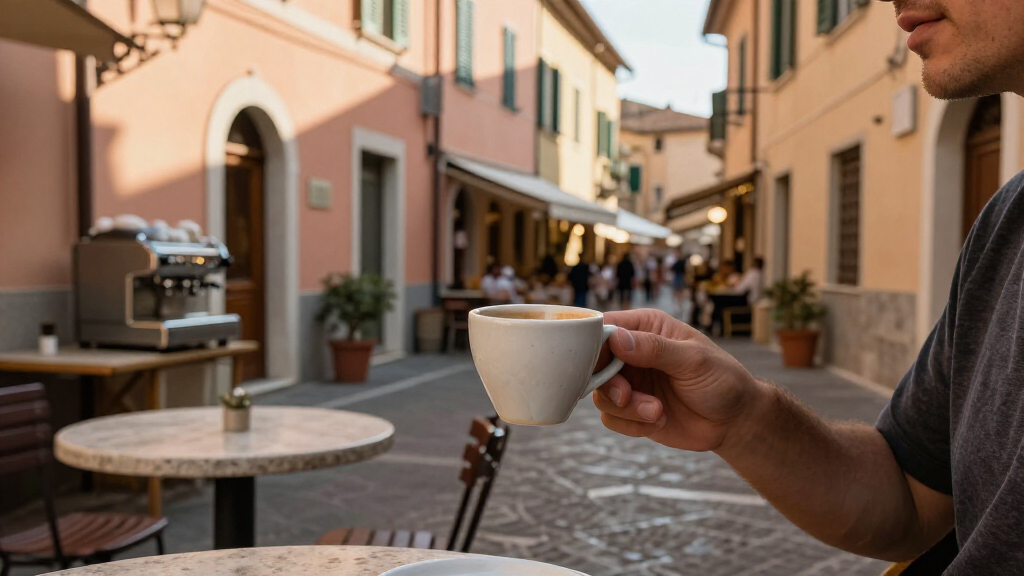
I evaluated these machines through the needs of an Indian home buyer, using published specifications and intended use rather than claiming hands-on testing. My first filter was electrical and ownership practicality: 220–240V availability, plug requirements, warranty terms, service access, and the likely availability of baskets, seals, and descaling products. I then compared heating approach, pressure delivery, temperature control, shot consistency, steam-wand capability, reservoir size, warm-up demands, and the amount of manual technique each machine expects. Because most shoppers behind this query want home machines, I gave more weight to repeatable daily use and manageable cleaning than to commercial-style wording in a product name.
The order reflects a balance of espresso performance, usability, build, maintenance, versatility, and total ownership value. Models with integrated grinders gained points for convenience but lost ground when they demanded more space, money, or repair dependence. Compact machines ranked higher when their smaller footprint produced a real home-kitchen benefit rather than simply reducing reservoir capacity. When two products appeared close, I favored the machine with the clearer brand identity and support path, since uncertain parts and warranty coverage create a larger risk for an Indian buyer than a minor specification difference.
| espresso machine india | Milk System |
|---|---|
| AMZCHEF Espresso Machine 20 Ba | Adjustable steam wand |
| Casabrews CM5418 Compact Espre | Steam wand |
| Atatix Espresso Machine with M | Steam wand |
| CASABREWS 3700 Essential Stain | Steam wand |
| Chefman CraftBrew Espresso Mac | Steam wand |
| Gevi Commercial Espresso and C | — |
| XIXUBX Espresso Machine with M | — |
| De’Longhi Classic Signature Es | — |
| Breville BES870XL Barista Expr | — |
| 20 Bar Espresso Machine with M | Steam wand |
Factors to Consider When Choosing Espresso Machine India
Choosing an espresso machine for an Indian home starts with the ownership conditions around the machine, not the pressure number printed on its listing. I would check power compatibility, coffee preparation, milk-drink habits, available space, and long-term upkeep before comparing cosmetic features. These factors reveal whether a low purchase price will stay economical after a year of use.
Verify Voltage, Plug Type, and Warranty Before Ordering
India generally uses 230V, 50Hz electricity, while some imported listings—especially units carrying North American model codes—may be designed for 110–120V. A plug adapter changes the connector shape but does not convert voltage. Running the wrong version can damage the machine, create a safety risk, and void its warranty. A step-down transformer adds cost, counter clutter, heat, and another possible failure point, so I would rarely choose that route for a daily kitchen appliance. I would ask the seller to confirm the rating-plate voltage and warranty region in writing, rather than relying on a generic product title. Local service access can justify paying more for the correct regional version.
Judge Temperature Control, Not the Maximum Bar Claim
Many machines in this roundup advertise 20-bar pumps, but espresso is normally brewed at much lower pressure at the coffee bed. The larger number mainly describes the pump’s theoretical capacity and says little about temperature stability or flow control. A machine that heats water consistently and regulates pressure can produce more repeatable shots than a loosely controlled model with a bigger label. Thermoblock systems suit quick home use, while machines with more thermal mass may demand extra warm-up time before the first cup. I would place stable extraction and sensible preheating above the difference between 15 and 20 bars. Buyers should also allow the portafilter and cup to warm, since cold components can undermine an otherwise capable machine.
Decide Whether the Grinder Should Be Built In
The Breville Barista Express combines grinding and brewing, which reduces the number of separate appliances and creates a convenient bean-to-cup routine. Its disadvantage is that the whole purchase becomes larger and more expensive, while the grinder offers less upgrade flexibility than a separate specialist model. The other machines leave room to choose a grinder according to budget, bean style, and preferred adjustment range. Pre-ground coffee is simpler, but it loses freshness quickly and can make it harder to tune shot speed. I would reserve part of the budget for an espresso-capable burr grinder before spending extra on touch controls or decorative stainless steel. A modest brewer paired with a capable grinder can beat a costly machine fed with uneven grounds.
Match the Steam Wand to Your Milk-Drink Routine
A buyer making mostly cappuccinos needs a different machine from someone drinking straight espresso. Strong steam recovery matters when preparing several milk drinks, while a single daily latte places less demand on the heating system. Compact single-heater machines may require a pause between brewing and steaming, which can make back-to-back service slow. Wand shape and movement also affect whether a small pitcher can be positioned for smooth microfoam rather than stiff bubbles. I would favor steam control and recovery speed over an automatic-looking interface if milk texture is the priority. Buyers who rarely use milk can save money and cleaning time with a simpler espresso-focused workflow.
Measure the Full Working Footprint
Published width alone does not reveal how much kitchen space a machine needs. Room may be required above the unit to remove the reservoir, beside it to turn the steam knob, and in front to lock the portafilter into place. The CASABREWS CM5418 and other compact models suit limited counters, but a small tank may need frequent refilling in a multi-person home. Larger machines can be easier during busy mornings yet awkward beneath low cabinets. I would map the footprint with paper and include space for a grinder, tamper, knock box, milk pitcher, and bean storage. A machine that stays accessible is more useful than a feature-heavy model stored in a cupboard.
Plan for Water Quality and Routine Cleaning
Hard water can leave scale inside narrow heating passages, reducing flow and changing brew temperature. The right descaling interval depends on local water and usage, so a universal monthly schedule can be either excessive or insufficient. Filtered water with a moderate mineral level is usually kinder to the machine while still supporting balanced extraction; distilled water alone may taste flat and may not suit every sensor design. After milk preparation, the wand should be wiped and purged promptly, while the basket and drip tray need regular washing. Features such as the AMZCHEF self-cleaning function can simplify flushing, but they do not replace descaling or manual removal of coffee oils. I would check the manual for cleaning products, filter availability, and removable parts before buying.
Frequently Asked Questions
Will a US-Spec Espresso Machine Work Safely in India?
Only if its rating plate supports India’s supply, commonly 220–240V at 50Hz, or it is used with a properly rated voltage transformer. A basic travel adapter does not convert a 230V outlet to the 110–120V expected by many US models. Espresso machines draw substantial power while heating, so a small travel transformer is unsuitable. I would confirm the exact model suffix, wattage, voltage, and warranty territory with the seller before payment. For most households, an India-authorized version is the cleaner and safer purchase.
Is a 20-Bar Espresso Machine Better Than a 15-Bar Model?
No; maximum pump pressure is not a quality score. Espresso extraction typically occurs at a lower regulated pressure, and results depend heavily on grind size, dose, temperature stability, and flow. A 15-bar machine with sound regulation can outperform a 20-bar model that runs too hot or forces water through unevenly. The repeated 20-bar claims across this lineup did not separate the strongest picks from the weaker ones. I would compare temperature management, basket design, and shot control before using pump capacity as a tie-breaker.
Is the Breville Barista Express Worth Paying More for in India?
It makes sense for a buyer who wants an integrated grinder and guided manual workflow in one substantial appliance. The price is harder to justify if a capable grinder is already available or if counter space is limited. Regional voltage and service coverage need written confirmation because the BES870XL designation is often associated with imported listings. A separate grinder plus the De’Longhi or CASABREWS may offer more flexibility and easier component replacement. I would choose the Breville only when its all-in-one convenience outweighs the cost and ownership constraints.
Which Type of Machine Is Easiest for a Beginner to Learn?
The AMZCHEF touchscreen model has the most beginner-oriented controls in this group, and its cleaning assistance reduces some routine friction. It still requires learning grind size, dose, tamping, and milk technique, so the interface cannot correct poorly prepared coffee. Pressurized baskets, when included in the selected package, can make pre-ground coffee more forgiving while limiting fine control. Simpler knob-operated models may take longer to learn but can be easier to diagnose and maintain. I would pair any beginner machine with a scale and follow a repeatable dose-and-yield recipe rather than changing several variables at once.
How Much Maintenance Does a Home Espresso Machine Need in India?
Daily care usually means emptying the drip tray, rinsing the basket, and cleaning the steam wand after milk use. Coffee oils should be removed on a regular schedule, while descaling frequency should reflect local water hardness and cup volume. Homes using hard tap water may need more frequent treatment than homes using suitable filtered water. Automatic cleaning programs rinse internal paths but do not remove every residue or replace hands-on cleaning. Before buying, I would check whether descaler, seals, baskets, and water filters are readily obtainable in India.
What are the best best home espresso machines?
The best home espresso machines are those that match your preferred coffee style, experience level, kitchen space, and cleaning routine. The picks above include options suited to different needs, from straightforward everyday brewing to greater control over extraction and milk preparation. When choosing, consider the machine type, water-tank capacity, pressure consistency, warm-up time, steam-wand usability, and availability of compatible accessories. Also check whether replacement parts and servicing are accessible in India. A compact, easy-to-maintain model may suit beginners, while experienced users may prefer more control over grind size, dose, temperature, and brewing time.
Conclusion
For most Indian homes, my best overall recommendation is the De’Longhi Classic Signature, provided it is the authorized 220–240V version, because it offers the strongest mix of approachable control, home suitability, and brand support. The CASABREWS CM5418 is the best value and compact choice for one or two milk drinks at a time. Buyers wanting a premium bean-to-cup setup should choose the Breville Barista Express only after confirming voltage, warranty coverage, and enough counter space. For beginners, the AMZCHEF touchscreen model makes the controls and cleaning routine less intimidating, though simpler machines may be easier to repair. I would point frequent latte and cappuccino drinkers toward the Gevi 20 Bar for its milk-focused design, while the Chefman CraftBrew suits buyers who prefer digital shot controls. If seller identity, spare parts, or electrical specifications remain vague, I would skip the generic 34-ounce model and pay more for a machine with a clearer support path.
Halloween Picks
halloween
As an affiliate, we earn on qualifying purchases.