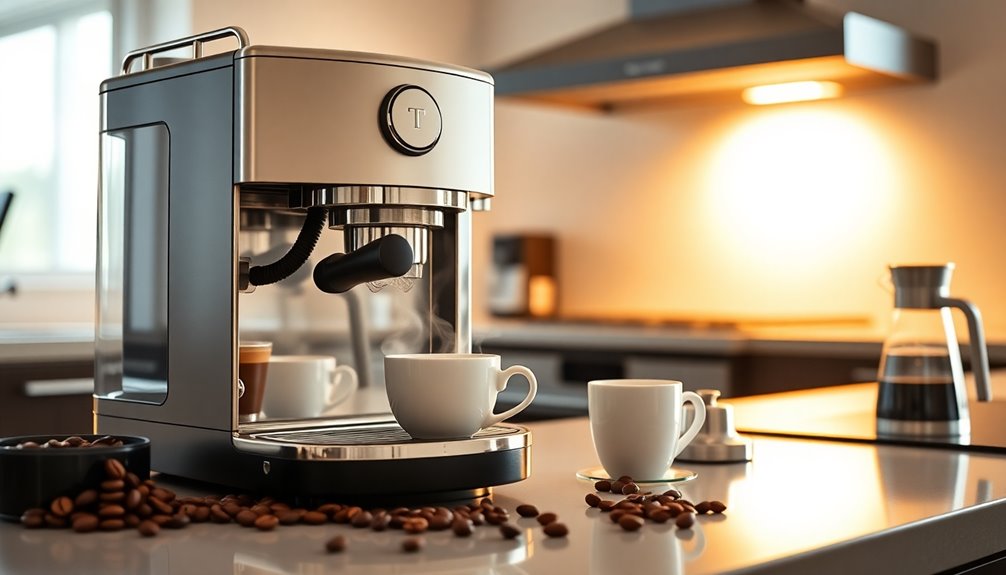
For a coffee shop serving a steady line, the Commercial-Grade Semi-Automatic 2-Group Espresso Machine is the strongest fit in this roundup because its two groups are designed for parallel drink preparation. The Breville Barista Express offers an integrated grinder and hands-on workflow for a small, lower-volume setup, while the Ninja Luxe Café Premier suits shops that want espresso alongside drip coffee and cold brew. The main tradeoff is between commercial throughput and the lower footprint, simpler setup, or broader drink options of home-oriented machines. Many compact models here are better suited to a kiosk, low-volume counter, or backup station than a busy café. Read on for the full comparison and guidance on matching equipment to your menu, staff, and expected demand.

Get kitchen staples and gadgets delivered free with Prime
- Fast, free delivery on millions of items
- Prime Video, Amazon Music and more included
- Member-only deals all year
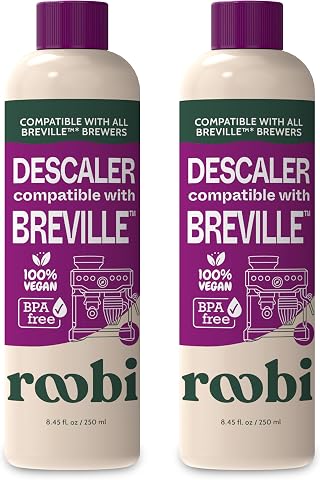
Complete the kit


Key Takeaways
The two-group commercial machine is the clearest match for a busy shop in this lineup; most other options are compact, home-oriented machines that may struggle with sustained service.
The Breville Barista Express models combine espresso preparation and grinding in one unit, making them more practical for a small counter than a separate grinder-and-machine setup.
Several picks add a built-in grinder, including the EUHOMY, Airmsen, Gevi, COUPLUX, and AMZCHEF; this saves counter space but makes grinder service and replacement more tied to the machine.
The Ninja Luxe Café Premier stands apart for a menu that includes drip coffee and cold brew, while its multi-function design is less focused on café-style espresso throughput.
Compact machines such as the CASABREWS CM5418 and AERCANA prioritize a smaller footprint and removable water tanks, but their scale makes them better suited to light duty than a high-volume coffee bar.


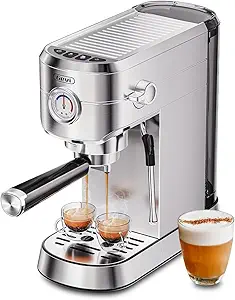


| espresso machine for a coffee shop | Power | Pump pressure |
|---|---|---|
| Breville BES870XL Barista Expr | 1600 W | — |
| Breville Barista Express Espre | 1600 W | — |
| CASABREWS 3700 Essential Stain | 1350 W | 20 bar |
| Commercial-Grade Semi-Automati | — | — |
| SHARDOR 20 Bar Espresso Machin | 1350 W | — |
| CASABREWS CM5418 Compact Espre | 1350 watts | 20 bar |
| Gevi Commercial Espresso and C | — | 20 bar |
| De’Longhi Magnifica Duo Automa | — | — |
| EUHOMY Espresso Machine with G | — | 20 bar |
| Airmsen Espresso Machine with | 1350W | 20 bar |
| Ninja Luxe Café Premier 3-in-1 | 1650 watts, 120V | — |
| Gevi 20 Bar Espresso Machine w | — | 20 bar |
| COUPLUX Espresso Machine with | — | 15 bar |
| AMZCHEF Semi-Automatic Espress | 1500 watts, 120V | — |
| AERCANA Espresso Machine 20 Ba | 1450 watts | 20 bar |
More Details on Our Top Picks
Breville BES870XL Barista Express Espresso Machine, Brushed Stainless Steel
The Barista Express suits a coffee shop where espresso preparation is part of the service and staff can work manually. Its built-in conical burr grinder keeps grinding close to brewing, while PID temperature control supports steadier extraction. The 67-ounce tank and half-pound hopper also mean fewer interruptions than a compact machine such as the CASABREWS 3700. The tradeoff is throughput: this is a single-workstation-style setup, not a two-group commercial machine, and every drink depends on someone dosing, tamping, and texturing milk. Its manual wand gives a trained operator more control over microfoam, but slows service when orders pile up. I’d choose it for a low-volume café or a dedicated espresso station, not as the main machine for a busy rush.
Pros:- Integrated conical burr grinder sends freshly ground coffee directly to the portafilter.
- PID temperature control helps maintain consistent extraction conditions.
- Manual steam wand gives a skilled barista control over milk texture and latte art.
- 67-ounce water tank and 0.5-pound hopper reduce refill frequency.
Cons:- Manual grinding, dosing, tamping, and steaming can slow service during rushes.
- Single-machine workflow cannot match the simultaneous brewing capacity of the two-group commercial option.
- At 22.1 pounds, it is cumbersome to move or reposition.
Best for: A low-volume coffee shop or espresso bar with a trained operator who wants an integrated grinder and hands-on control without a two-group setup.
Not ideal for: Busy cafés serving consecutive milk drinks, or owners who need commercial multi-group throughput and less operator involvement.
- Power:1600 W
- Voltage:120 V
- Dimensions:13.8 x 12.5 x 15.9 in
- Weight:22.1 lb
- Bean hopper capacity:0.5 lb
- Water tank capacity:67 oz
- Grinder:Conical burr
- Temperature control:Digital PID
Our verdict“Choose the Barista Express for a small shop prioritizing hands-on espresso control over high-volume speed.”
Breville Barista Express Espresso Machine, Black Truffle
This Black Truffle Barista Express has the same core café-friendly advantage as the brushed-steel BES870XL: an integrated grinder, PID control, and a manual steam wand in one compact station. Its low-pressure pre-infusion is intended to ease water into the coffee puck before full extraction, giving an operator another tool for balanced shots. The included portafilter, baskets, jug, and cleaning tools make it a more complete starting package than the CASABREWS 3700, which lists a simpler accessory set. Still, these inclusions do not change its basic service ceiling. Like the other Barista Express, it requires hands-on work for each drink and lacks the two-group machine’s simultaneous brewing capacity. I’d favor this version when its included accessories and finish suit the counter; it is not a meaningful throughput upgrade over the BES870XL.
Pros:- Integrated precision conical burr grinder doses coffee into the portafilter.
- PID temperature control and low-pressure pre-infusion support controlled extraction.
- Includes portafilter, filter baskets, milk jug, and cleaning tools.
- 67-ounce water tank and half-pound hopper suit repeated small-batch service.
Cons:- Manual milk texturing and shot preparation demand trained staff time.
- Does not offer the simultaneous brewing capacity of the two-group commercial machine.
- Its 120 V specification may not suit locations using different electrical standards.
Best for: A small café setting up a manually operated espresso station that values an included accessory kit and integrated grinding.
Not ideal for: Operators expecting a higher-volume machine than the brushed-steel Barista Express or needing automated milk preparation.
- Type:Semi-automatic espresso machine
- Grinder:Integrated precision conical burr
- Water tank capacity:67 fl oz
- Bean hopper capacity:0.5 lb
- Power:1600 W
- Voltage:120 V
- Dimensions:13.8 x 12.5 x 15.9 in
- Weight:22.1 lb
- Warranty:1-year limited
Our verdict“Pick this Barista Express for a small, manually run espresso station that benefits from its included tools, not for faster service than the BES870XL.”
CASABREWS 3700 Essential Stainless Steel Espresso Machine with Steam Wand, 20-Bar Italian Pump, 43.9oz Removable Water Tank
The CASABREWS 3700 is the space-conscious choice here, with a removable 43.9-ounce tank and a listed compact stainless-steel design. For a café adding an occasional espresso option to a small counter, that smaller footprint may matter more than the integrated grinder found on either Breville Barista Express model. The tradeoff is a less complete workflow: the product data lists basic brewing accessories but no built-in grinder, so the shop needs a separate grinder and an added step before extraction. Its manual operation also calls for staff who can manage shots and milk frothing. Compared with the two-group commercial machine, the 3700 is aimed at home or small-office use, not sustained café volume. I’d treat it as a modest-demand station rather than the foundation of a busy espresso program.
Pros:- Compact stainless-steel design can fit counters with limited room.
- Removable 43.9-ounce tank supports multiple drinks between refills.
- Includes portafilter, tamper, spoon, and brewing filters.
- Removable drip tray supports routine cleanup.
Cons:- No built-in grinder is listed, so a separate grinder and workflow step are needed.
- Manual brewing and milk frothing require operator skill.
- Product information positions it for home or small-office use rather than sustained café demand.
Best for: A small café, kiosk, or office serving occasional espresso drinks where counter space is tight and a separate grinder is available.
Not ideal for: Coffee shops with a steady line, high milk-drink demand, or a need for integrated grinding and commercial service capacity.
- Pump pressure:20 bar
- Water tank capacity:43.9 oz
- Power:1350 W
- Material:Stainless steel
- Operation:Manual
- Included accessories:Portafilter, tamper, spoon, brewing filters
- Milk frothing:Steam wand
Our verdict“Choose the CASABREWS 3700 for occasional espresso service in a tight space, but not as a busy shop’s primary machine.”
Commercial-Grade Semi-Automatic 2-Group Espresso Machine with 1.6-Gallon Boiler and Stainless Steel Finish
For a shop where orders overlap, this is the clearest café-oriented choice in the group. Its two-group layout lets staff brew two beverages at once, addressing a service bottleneck that the single-station Breville Barista Express cannot. A 1.6-gallon boiler and rotary pump are specified for consistent operation, while semi-automatic controls leave extraction decisions with the barista. That control is useful only if the team has the skill to use it; this machine is not the beginner-friendly shortcut that a touchscreen home model such as the SHARDOR 20 Bar Espresso Machine aims to be. The source data also gives no dimensions, power requirements, grinder, or included accessories, so buyers must confirm installation and workflow needs before committing. Its size and potential cost make little sense for a low-volume counter.
Pros:- Two groups allow simultaneous brewing and can reduce queue bottlenecks.
- 1.6-gallon boiler is suited to a more demanding service environment than the small-tank options.
- Rotary pump is specified for consistent performance.
- Semi-automatic controls allow baristas to manage extraction.
Cons:- Requires operator skill to produce consistent shots.
- Large footprint may not fit a restricted counter.
- Product data omits dimensions, electrical requirements, and grinder details that affect café installation.
Best for: A café or restaurant with trained baristas, repeated drink orders, and enough counter space for a two-group commercial setup.
Not ideal for: Small cafés, pop-up counters, or first-time operators who cannot justify a larger machine or provide trained staff.
- Number of groups:2
- Boiler capacity:1.6 gallons
- Pump type:Rotary
- Material:Stainless steel
- Operation:Semi-automatic
Our verdict“Choose this two-group machine when a trained team needs simultaneous brewing; skip it for low-volume or space-limited service.”
SHARDOR 20 Bar Espresso Machine with Milk Frother and Touchscreen, Stainless Steel
The SHARDOR stands apart from the manual-grinder Breville machines through its touchscreen interface and adjustable temperature, which may make routine selections easier for staff rotating through a small espresso station. Its 45-ounce tank is slightly smaller than the 67-ounce tanks on both Breville Barista Express models, so it will need more frequent refilling in a shop serving a steady stream of drinks. A steam wand keeps milk preparation in the operator’s hands; the screen does not remove the need for someone to texture milk or manage the workflow. The listed 20-bar pump and 1350-watt power supply do not make it equivalent to the two-group commercial machine, which is built around simultaneous brewing. I’d consider SHARDOR for light-duty service where accessible controls matter more than café-scale capacity.
Pros:- Touchscreen interface offers a direct way to adjust brewing settings.
- Adjustable temperature provides a control option not listed for the CASABREWS 3700.
- Steam wand supports milk-based drinks.
- Removable 45-ounce tank makes refilling and handling more convenient.
Cons:- 45-ounce tank is smaller than the 67-ounce tanks on the Breville Barista Express models.
- No built-in grinder is listed, requiring separate equipment and workflow.
- Manual milk steaming and small-to-medium cup limits may constrain café service.
Best for: A small office café or low-volume counter with several operators who value touchscreen controls and adjustable temperature.
Not ideal for: Busy shops needing a built-in grinder, larger water capacity, or simultaneous multi-drink brewing.
- Pressure:20 bar
- Power:1350 W
- Water tank capacity:45 oz
- Material:Stainless steel
- Color:Silver
- Controls:Touchscreen
- Temperature:Adjustable
- Additional features:Milk frother, auto shutoff
Our verdict“Choose SHARDOR for light-duty service where touchscreen adjustments help staff, not for a high-throughput espresso bar.”
CASABREWS CM5418 Compact Espresso Machine with Milk Frothing Wand
The CASABREWS CM5418 is the smallest-footprint choice in this group for a coffee shop that needs a secondary machine for limited, occasional drink preparation—not a main bar machine for a busy service. Its 34-ounce removable tank and steam wand cover basic espresso and milk drinks, while the pressure gauge gives an operator a visual cue during extraction. Compared with the Gevi Commercial Espresso and Coffee Maker, it offers fewer listed brewing controls, so it suits a simpler workflow rather than a staff member who wants pre-infusion and temperature control.
The tradeoff is hands-on pacing: milk frothing requires a cooldown before brewing, and dialing in the grind, dose, or tamp may take adjustment. I would skip it as the shop’s primary espresso machine; its compact design makes more sense for a low-volume counter or backup station.
Pros:- Compact stainless steel design fits a small counter or secondary station.
- Removable 34-ounce water tank is convenient to refill.
- Pressure gauge gives a visual reference during extraction.
- Steam wand supports cappuccinos and other milk-based drinks.
Cons:- Needs to cool down after steaming before brewing.
- Extraction may require grind, dose, or tamp adjustments.
- Small tank and home-oriented format are limiting for sustained café service.
Best for: Small cafés or office coffee counters that need a compact backup for occasional espresso and milk drinks.
Not ideal for: Busy coffee shops needing rapid drink sequences, high-volume output, or a primary machine built for continuous service.
- Model:CM5418
- Type:Semi-automatic espresso machine
- Pump pressure:20 bar
- Power:1350 watts
- Water tank capacity:34 oz
- Material:Stainless steel
- Milk frother:Steam wand
- Included filters:One-cup and two-cup filters
Our verdict“Choose the CM5418 for a small, low-volume secondary station, not as the main espresso machine in a busy shop.”
Gevi Commercial Espresso and Coffee Maker, 20 Bar Professional Espresso Machine with Milk Frother, Stainless Steel
The Gevi Commercial Espresso and Coffee Maker earns its place as the more control-oriented compact option here. Pre-infusion, NTC temperature control, and a pressure gauge give a barista more information and room to adjust than the simpler CASABREWS CM5418, while the hot water function adds flexibility for non-espresso service. Its removable-nozzle milk frother also covers common café-style drinks without taking up the footprint of a larger commercial machine.
Those controls do not make it a high-throughput café machine: the listed design is compact, capacity is limited, and there is no built-in grinder. Staff will need a separate grinder and some practice to get repeatable results. I would choose it over the CM5418 when adjustment options matter more than simplicity, but shops serving a steady queue should look beyond both compact models.
Pros:- Pre-infusion and NTC temperature control offer useful brewing adjustments.
- Pressure gauge helps monitor the extraction process.
- Hot water function expands drink options beyond espresso.
- Removable-nozzle milk frother supports milk-based beverages.
Cons:- No built-in grinder, so the shop needs a separate grinder and counter space.
- Limited capacity is a drawback during sustained service.
- May take practice to master its brewing process.
Best for: Small cafés with a separate grinder that want a compact semi-automatic machine with more extraction controls.
Not ideal for: High-volume shops or operators who need an integrated grinder and a simple, repeatable workflow for multiple staff members.
- Pump pressure:20 bar
- Material:Stainless steel
- Frother:Milk frother with removable nozzle
- Control type:Semi-automatic
- Pre-infusion:Included
- Temperature control:NTC
- Additional function:Hot water
- Pressure gauge:Included
Our verdict“Pick the Gevi over the simpler CM5418 if your small shop has a grinder and values adjustable brewing controls.”
De’Longhi Magnifica Duo Automatic Espresso Machine, Milk Frother, Silver
The De’Longhi Magnifica Duo is the clearest choice in this batch for a shop that values menu variety and button-led preparation over traditional barista control. Its 20 preset recipes, built-in conical burr grinder, and hot and cold milk foam options combine several tasks in one machine. That makes it more self-contained than the Gevi Commercial Espresso and Coffee Maker, which lacks a built-in grinder and calls for more manual adjustment.
The tradeoff is a less conventional café workflow: the listed recipes include drip coffee and cold brew as well as espresso, but this is still an automatic machine rather than a dedicated commercial espresso setup. Setup may take learning, and removable parts need regular cleaning. I would consider it for a small shop with a broad, low-volume menu, but not for a bar that depends on fast, hands-on espresso service and high drink throughput.
Pros:- Twenty preset recipes offer broad drink variety.
- Built-in conical burr grinder avoids the need for a separate grinder.
- Supports espresso, drip coffee, and cold brew.
- Hot and cold foam options broaden the milk-drink menu.
Cons:- Setup and operation may take time for staff to learn.
- Removable parts require regular cleaning.
- Automatic recipe workflow is less suited to hands-on, high-volume espresso service.
Best for: Small cafés or mixed-use counters that want preset espresso, coffee, and cold drink options with an integrated grinder.
Not ideal for: Traditional espresso bars with high order volume or baristas who need direct control over each shot and milk workflow.
- Color:Silver
- Number of recipes:20
- Brewing options:Espresso, drip coffee, and cold brew
- Grinder:Built-in conical burr grinder
- Milk frothing:Hot and cold foam
- Removable parts:Dishwasher-safe
Our verdict“Choose the Magnifica Duo for a small shop seeking broad preset drink options, rather than a traditional high-throughput espresso bar.”
EUHOMY Espresso Machine with Grinder and Milk Frother, 20 Bar Pressure
The EUHOMY Espresso Machine with Grinder stands out for shops that want an integrated grinder but still prefer a manual espresso workflow. Its 30 grinder settings, PID temperature control, and 58mm portafilter offer more adjustment points than the Airmsen, whose listed grinder has 10 settings. That extra range can help an operator tune coffee to different beans, though the specs alone do not make either machine a substitute for a commercial multi-group setup.
EUHOMY also lists an anti-clog system and a milk frother, covering practical parts of day-to-day drink preparation. The main cost is complexity: a wide range of grinder settings requires staff to dial in and maintain a consistent recipe, and the machine may be bulky for a small counter. I would favor it over the compact CASABREWS CM5418 when grinder flexibility matters, but not for shops seeking a simple, fast workflow for a large team.
Pros:- Thirty grinder settings provide a wide adjustment range.
- PID temperature control is specified to ±1°C.
- 58mm portafilter offers a professional-style format.
- Anti-clog system and milk frother add useful workflow features.
Cons:- More grinder settings can mean more dialing-in work for staff.
- May take time to learn and set up.
- Potentially bulky for a compact coffee counter.
Best for: Small specialty cafés with an operator who wants integrated grinding and room to adjust recipes for different beans.
Not ideal for: Busy shops needing a simple staff-proof process, or counters where a bulky footprint is a concern.
- Pump pressure:20 bar
- Grinder settings:30 levels
- Portafilter:58mm
- Temperature control:PID, ±1°C
- Grinder:Built-in precision grinder
- Milk frother:Included
- Additional feature:Anti-clog system
Our verdict“Choose EUHOMY if your small shop values grinder adjustability and temperature control more than a streamlined, high-volume workflow.”
Airmsen Espresso Machine with Burr Grinder, 20 Bar, Milk Frother Steam Wand, Stainless Steel Coffee Maker for Home Use
The Airmsen Espresso Machine combines a built-in conical burr grinder, touchscreen controls, and a manual steam wand in a compact stainless steel body. For a coffee shop with very limited counter space, that all-in-one approach avoids the separate grinder required by the Gevi Commercial Espresso and Coffee Maker. Its 61-ounce water tank is also larger than the CASABREWS CM5418’s 34-ounce tank, reducing refill interruptions in a small, moderate-use setting.
It is not a strong fit for a busy bar: the grinder has 10 settings, fewer than EUHOMY’s 30, and the manual wand calls for staff skill to produce consistent microfoam. The listed dimensions are compact, but the machine’s home-use framing and limited cup-size clearance may constrain café service. I would choose it for a small, low-volume counter that values an integrated setup, not for continuous peak-hour production.
Pros:- Built-in conical burr grinder and touchscreen combine key functions in one unit.
- 61-ounce water tank is larger than the CM5418’s 34-ounce tank.
- Compact stainless steel body suits counters with limited space.
- Manual steam wand allows hands-on milk texturing.
Cons:- Ten grind settings offer less adjustment than EUHOMY’s 30.
- Manual steaming requires skill to produce consistent microfoam.
- Compact design may limit larger cup sizes and sustained café service.
Best for: Small cafés or office-style counters that need an integrated grinder, touchscreen operation, and a larger tank in a compact machine.
Not ideal for: High-volume espresso bars, shops needing extensive grinder adjustment, or staff without experience steaming milk manually.
- Water tank capacity:61 oz
- Power:1350W
- Voltage:120V
- Pump pressure:20 bar
- Grind settings:10
- Dimensions:10.2″ D x 7.9″ W x 12″ H
- Weight:12.57 pounds
- Operation mode:Semi-automatic
Our verdict“Pick the Airmsen for a low-volume shop that needs a compact grinder-and-espresso setup, but choose a more capable machine for rush-hour service.”
Ninja Luxe Café Premier 3-in-1 Espresso Machine, Drip Coffee, and Cold Brew Maker (ES601)
I’d choose the Ninja Luxe Café Premier when a small coffee operation needs more than espresso: it also makes drip coffee and rapid cold brew, giving staff a way to serve different preferences from one counter station. Its built-in conical burr grinder and Barista Assist guidance help standardize grinding, dosing, and tamping, while the hands-free frother reduces some of the work involved in milk drinks. Compared with the more hands-on AMZCHEF CM1626, the Ninja puts more emphasis on guided convenience and drink variety. The tradeoff is its substantial 31.6-pound body and roughly 13-inch-square footprint, which can claim valuable counter space. I’d also be cautious about treating it as a high-volume café machine: its feature-rich home-oriented design is better suited to limited service than sustained rushes.
Pros:- Makes espresso, drip coffee, and cold brew from one unit, broadening drink options without separate brewers.
- Barista Assist guides grinding, dosing, and tamping for a more repeatable workflow.
- Built-in conical burr grinder offers 25 settings for adjusting grounds across drink styles.
- Hands-free dual froth system handles milk and cold foam with less manual effort.
Cons:- Its weight and footprint make it difficult to move and costly in limited counter space.
- The many functions and guided settings may slow staff who want a simple, direct workflow.
- Home-oriented design is a less suitable fit for sustained, high-volume café service.
Best for: Small cafés, offices, or pop-up counters serving espresso alongside drip coffee and cold brew, where menu range matters more than high-volume throughput.
Not ideal for: Busy coffee shops needing a commercial machine for continuous espresso service, or counters with little room for a 31.6-pound appliance.
- Model:ES601
- Brewing modes:Espresso, drip coffee, and cold brew
- Grinder:Built-in conical burr, 25 settings
- Water reservoir:70 oz, removable
- Operation:Fully automatic
- Power:1650 watts, 120V
- Dimensions:12.99 × 13.39 × 14.57 in
- Weight:31.6 lb
Our verdict“Choose the Ninja for a low-volume counter that needs several coffee styles in one station, not for a shop built around nonstop espresso orders.”
Gevi 20 Bar Espresso Machine with Grinder & Milk Frother (2026 Upgrade)
The Gevi 20 Bar is the choice here for an operator who wants to adjust more than grind size: brew strength, temperature, and shot volume are customizable, and NTC and PID temperature control support steadier brewing conditions. A built-in conical burr grinder and steam wand make it a self-contained espresso setup, while the hot-water dispenser adds flexibility for Americanos and other drinks. Compared with the more menu-diverse Ninja Luxe Café Premier, Gevi focuses on espresso preparation rather than drip and cold brew. That focus may suit a compact coffee bar, but it also leaves less room for menu variety from one machine. The control range brings a learning curve, and the product data does not specify tank capacity or dimensions, so I’d verify counter fit and refill needs before planning a shop workflow.
Pros:- Adjustable grind size, brew strength, temperature, and shot volume give the operator control over recipes.
- Built-in conical burr grinder keeps grinding in the same station as brewing.
- NTC and PID temperature control are designed to support consistent extraction conditions.
- Steam wand and hot-water dispenser accommodate milk drinks and Americanos.
Cons:- The range of settings can take time and practice to manage consistently.
- Water tank capacity and machine dimensions are not provided in the supplied product data.
- Unlike the Ninja Luxe Café Premier, it does not offer drip coffee or cold brew modes.
Best for: A small coffee counter or experienced owner-operator who wants control over espresso strength, shot volume, temperature, and milk texture.
Not ideal for: New staff who need a quick, low-training workflow, or shop buyers who require confirmed capacity and footprint details before purchase.
- Pump pressure:20 bar
- Grinder:Built-in conical burr
- Adjustable settings:Grind size, brew strength, temperature, and shot volume
- Temperature control:NTC and PID
- Steam wand:High-pressure wand for milk frothing
- Water tank:Removable; capacity not specified
- Additional feature:Hot-water dispenser
Our verdict“Pick the Gevi if espresso recipe control is your priority and you can confirm its capacity and fit before setting up service.”
COUPLUX Espresso Machine with Grinder, 15 Bar, 30 Grind Settings, Milk Frother, 5 Temp Levels, Compact Coffee Maker for Home
The COUPLUX makes sense for a small operation that wants adjustable brewing without taking on the broader feature set of the Ninja Luxe Café Premier. Its 30 grind settings, five temperature levels, and 58mm portafilter give an operator several ways to tune shots, while a one-touch Americano button can simplify one part of the menu. The 71-ounce tank is generous among these compact all-in-one options, though it does not turn the machine into commercial equipment. Compared with the AERCANA, COUPLUX includes a grinder and more brewing adjustments; the AERCANA is much narrower and simpler. Here, the tradeoff is a more involved cleaning routine and limited batch capacity. I’d view it as a fit for light service or a staff coffee station, not a café expecting constant back-to-back orders.
Pros:- Thirty grind settings and five temperature levels provide meaningful recipe adjustments.
- Integrated grinder, espresso brewing, and frother combine several functions in one machine.
- 71-ounce water tank reduces refill frequency compared with the AERCANA’s 34-ounce tank.
- One-touch Americano preparation adds a convenient menu option.
Cons:- Small-batch capacity limits its usefulness during busy service.
- Regular cleaning and maintenance add work to an already hands-on setup.
- The number of adjustments may be challenging for complete beginners.
Best for: A small café, tasting room, or staff station that needs an integrated grinder, adjustable brew temperature, and occasional milk drinks.
Not ideal for: High-volume shops needing rapid consecutive drink production, or beginners who want minimal adjustment and cleaning.
- Pump pressure:15 bar
- Grind settings:30
- Temperature settings:5 levels, 190°F–205°F
- Water tank:71 oz
- Portafilter:58 mm
- Milk frother:10 mm steam wand with 3 adjustable levels
- Brewing feature:One-touch Americano
Our verdict“Choose COUPLUX for light-duty service where grind and temperature control matter more than commercial throughput.”
AMZCHEF Semi-Automatic Espresso Machine with Built-In Grinder
For a small coffee shop that wants the barista to stay involved in extraction, the AMZCHEF CM1626 offers a useful middle ground between guided automation and a fully manual setup. Its 44 grind settings and adjustable brewing temperature give staff room to tune recipes, while the semi-automatic operation keeps more of the process in their hands than the Ninja Luxe Café Premier. A touchscreen and cold brew mode add convenience without removing that hands-on role. The 60-ounce tank can support several drinks, though frequent service will still mean refills. At 13.9 pounds and about 12.5 inches long, it is lighter than the Ninja, but the smaller tank and manual workflow make it less suited to a rush. I’d favor it for a modest menu where staff skill and recipe adjustment matter more than speed.
Pros:- Forty-four grind settings offer fine adjustment for different beans and recipes.
- Adjustable brewing temperature lets staff tune extraction rather than rely on a fixed setting.
- Cold brew mode adds a menu option beyond espresso drinks.
- At 13.9 pounds, it is lighter than the 31.6-pound Ninja Luxe Café Premier.
Cons:- Semi-automatic brewing requires more staff attention than a fully automatic workflow.
- The 60-ounce tank may need refilling during frequent service.
- The compact format and stated features do not make it a substitute for a commercial machine during rushes.
Best for: Owner-operated coffee counters or training-oriented spaces where a barista wants hands-on control and a built-in grinder.
Not ideal for: Busy shops that need automatic, rapid drink preparation or a larger water supply for extended service.
- Model:CM1626
- Machine type:Semi-automatic espresso machine
- Grind settings:44
- Temperature range:190°F–201°F
- Water tank:60 oz, removable
- Steam wand:8 mm stainless steel
- Power:1500 watts, 120V
- Dimensions and weight:12.5 × 10.82 × 13.38 in; 13.9 lb
- Special features:Built-in grinder, cold brew mode, touchscreen, descaling function
Our verdict“Choose the AMZCHEF for a low-volume barista-led setup that values grind control and cold brew over automation.”
AERCANA Espresso Machine 20 Bar, Compact Stainless Steel Coffee Maker with Milk Frother, 34oz Removable Water Tank
The AERCANA is the easiest fit for a coffee counter where width is at a premium: at just 5.32 inches wide, it takes far less horizontal space than the COUPLUX or Ninja Luxe Café Premier. Its 20-bar pump, steam wand, and 1450-watt heating system cover basic espresso and milk drinks, while a removable 34-ounce tank keeps the footprint small at the cost of more frequent refills. Unlike the COUPLUX, it has no built-in grinder or listed grind and temperature adjustments, so staff will need a separate grinder and a simpler recipe workflow. Manual operation also means the barista must manage more of the process. I’d choose it for a tiny kiosk or office serving modest demand, not a shop that needs rapid throughput or a broad range of brewing styles.
Pros:- At 5.32 inches wide, it occupies much less counter width than the COUPLUX or Ninja.
- Removable 34-ounce tank and drip tray make routine cleaning and refilling more manageable.
- Steam wand supports milk-based drinks and manual milk texturing.
- 1450-watt heating system is specified to heat quickly.
Cons:- The 34-ounce tank means more frequent refills than the COUPLUX’s 71-ounce reservoir.
- No built-in grinder is listed, so espresso preparation requires a separate grinder.
- Manual operation and compact capacity make it a poor match for busy café service.
Best for: A narrow kiosk, office coffee station, or very small counter serving occasional espresso and milk drinks.
Not ideal for: Coffee shops with steady queues, frequent milk-drink orders, or a need for an integrated grinder and larger water supply.
- Pump pressure:20 bar
- Water tank:34 oz, removable
- Power:1450 watts
- Dimensions:12.2 × 5.32 × 11.5 in
- Color:Silver
- Milk frother:Steam wand
- Additional features:Auto shut-off, cup warmer, hot-water dispenser, removable drip tray
Our verdict“Pick the AERCANA when counter width is the main constraint and drink volume is low, but plan for a separate grinder and frequent refills.”

How We Picked
I ranked these machines by how well their stated design fits a coffee-shop workflow, not by home-kitchen convenience alone. The key factors were service capacity, group configuration, grinder arrangement, milk-steaming workflow, water handling, and likely fit for sustained use. A two-group commercial machine ranks above compact single-group units for a busy café because it is built around preparing drinks in parallel; integrated-grinder machines score better for limited counter space and simpler setup.
I also weighed usability, menu flexibility, cleaning demands, and the limits suggested by each product’s stated use. Many models are labeled for home use or offer compact tanks and single-group workflows, so I treat them as candidates for low-volume counters, kiosks, or secondary stations rather than direct substitutes for commercial equipment. A higher position reflects a closer match to a particular shop need, not a claim that every listed machine is suitable for every café.
Factors to Consider When Choosing Espresso Machine For A Coffee Shop
Choosing an espresso machine for a coffee shop starts with the workday, not the feature list. Before comparing touchscreens, pressure claims, or built-in grinders, map your expected drink volume, menu, staffing, and available utilities. These broader decisions can rule out a machine that looks convenient but cannot keep up with service or be maintained easily.
Match Group Capacity to Your Rush
Estimate how many espresso drinks you need to serve during your busiest 15-minute window, rather than relying only on average daily sales. A two-group machine can let staff prepare multiple shots at once, which matters when orders arrive together. A compact single-group unit may work for a quiet counter, but it can become a queue bottleneck even if its listed pump pressure sounds impressive. Ask the seller about recovery time and expected continuous use, since a spec sheet alone may not describe performance during a rush. Avoid buying for your busiest imaginable day if it means paying for capacity your shop will rarely use, but leave room for seasonal peaks and menu growth.
Treat the Grinder as Part of the Service Plan
Espresso quality depends on grind consistency and the ability to adjust quickly as beans age or conditions change. Built-in grinders can save space and simplify initial setup, but a grinder fault may take the whole machine out of service, and replacement options can be more limited. A separate commercial grinder costs counter space and requires its own adjustment and cleaning routine, yet it can be serviced or upgraded independently. Shops with several bean options or frequent recipe changes should pay close attention to adjustment range and dose workflow. Do not assume a high number of grind settings alone guarantees a suitable café grinder.
Check Milk Workflow Against Your Menu
If cappuccinos and lattes make up much of your sales, steam performance and pitcher workflow can matter as much as shot preparation. A small wand intended for occasional home drinks may slow staff who need to texture milk repeatedly between orders. Consider how many milk drinks you serve at once, whether the wand can be cleaned quickly, and whether staff can work without crowding the machine. Shops with a mostly black-coffee menu may not need to pay for elaborate milk features. Also plan for dairy-free options, separate pitchers, and a clear cleaning routine to reduce cross-contact and keep service moving.
Plan for Water, Power, and Installation
A machine’s tank size can affect how often staff must pause to refill it, while a plumbed setup may suit a busier operation if the model supports it. Confirm the machine’s electrical requirements, water connection options, drainage needs, counter depth, and clearance before ordering. A machine that physically fits may still be awkward if staff cannot access the water tank or remove parts for cleaning. Small removable tanks can be useful in a kiosk or temporary setup, but frequent refills become tedious in a steady café. Check local installation and service requirements rather than assuming a countertop machine is ready for commercial use.
Budget for Maintenance and Downtime
The purchase decision should include cleaning supplies, water treatment, replacement parts, and access to repair support. A machine with more integrated components may reduce setup clutter but can be harder to troubleshoot if a key part fails. Ask how often backflushing, descaling, grinder cleaning, and seal replacement are recommended, and whether authorized service is available nearby. A backup brewing option can protect a small shop from lost service if its only espresso machine needs repair. Common mistakes include choosing on features alone and overlooking the time staff will spend maintaining them.
Choose Features That Match Your Menu
Multi-function machines can serve drip coffee or cold brew alongside espresso, which may help a small shop offer variety without adding another appliance. That flexibility can come with a more complex workflow and may not deliver the same speed or serviceability as equipment built primarily for espresso. Decide which drinks generate regular orders and which are occasional requests before paying for extra modes. Touchscreens and preset programs can make training easier, but they do not replace clear recipes and consistent staff practice. For a focused espresso bar, prioritize repeatable shots and straightforward cleaning over features your menu will rarely use.
Frequently Asked Questions
Can a home-oriented espresso machine serve a small coffee shop?
It may serve a low-volume kiosk, office counter, or shop with a limited espresso menu, but home-oriented machines should not be treated as automatic substitutes for commercial equipment. Small tanks, single-group workflows, and home-use positioning can make continuous service difficult. Before relying on one, ask the manufacturer whether it supports commercial duty and check warranty terms for business use. Also consider what happens when the machine needs cleaning or repair during opening hours. For steady queues, a machine designed for parallel service is a safer starting point.
Is a two-group machine necessary for a new café?
Not always; the right capacity depends on peak orders, staffing, and how much of your menu uses espresso. A two-group machine is useful when baristas need to pull shots in parallel, but it may be more equipment than a quiet shop can justify. Track expected drinks during the busiest periods and include seasonal or event demand in that estimate. If you start with one group, confirm that the machine can meet your rush and that upgrading later will fit your counter and utilities. A realistic service plan matters more than choosing the largest machine by default.
Should I choose a machine with a built-in grinder for my shop?
A built-in grinder can reduce counter clutter and make a compact setup easier to organize. The tradeoff is that a grinder problem may affect the entire machine, and the grinder may be less convenient to service or replace independently. Separate grinders offer more flexibility for shops that use multiple coffees or adjust recipes often. Compare the grinder’s adjustment range, cleaning access, and expected duty with your menu and volume. For a small, simple operation, integration may be practical; for a busy espresso bar, separate equipment can be easier to manage.
What should I verify before buying an espresso machine for commercial use?
Confirm that the manufacturer permits business use and that the warranty applies in a café setting. Check electrical requirements, water supply, drainage, installation needs, and whether local technicians can service the machine. Ask about recommended daily cleaning, descaling, parts availability, and expected continuous operation. A product description aimed at home users may not answer these questions, so request written guidance from the manufacturer or seller. These checks can prevent a machine that fits the counter but fails to fit the business.
Is a multi-function machine worthwhile if my shop serves more than espresso?
It can make sense when drip coffee or cold brew is a regular part of the menu and counter space is limited. A combined unit may reduce the need for separate appliances, but more functions can add steps for staff and complicate cleaning. Compare how quickly each mode can serve orders with the workflow of dedicated equipment. If espresso is the main source of demand, a machine focused on espresso service may be a better use of counter space. Choose a multi-function model only when its extra drink options solve a real menu need.
Conclusion
For a busy shop prioritizing espresso throughput, my best overall pick is the Commercial-Grade Semi-Automatic 2-Group machine, though I would verify its installation, service, and commercial-use details before purchase. The best value for a small counter is the Breville Barista Express, which pairs a grinder and espresso machine in one footprint; the Black Truffle version offers the same basic role with a different finish. For a premium, broader-menu choice, the Ninja Luxe Café Premier makes more sense when drip coffee and cold brew matter alongside espresso, rather than when maximum espresso throughput is the goal. The best option for beginners is a built-in-grinder machine with a straightforward workflow, such as the Gevi 20 Bar Espresso Machine with Grinder, provided the shop’s volume is modest. For a specific compact or backup need, the CASABREWS CM5418 or AERCANA is easier to place than the commercial two-group unit, but I would not make either the sole machine for a busy café.