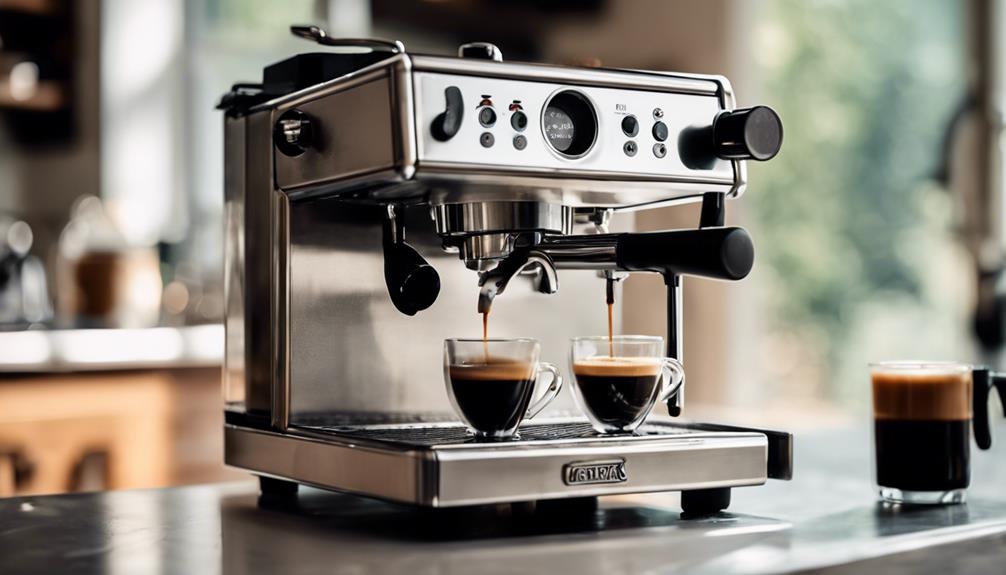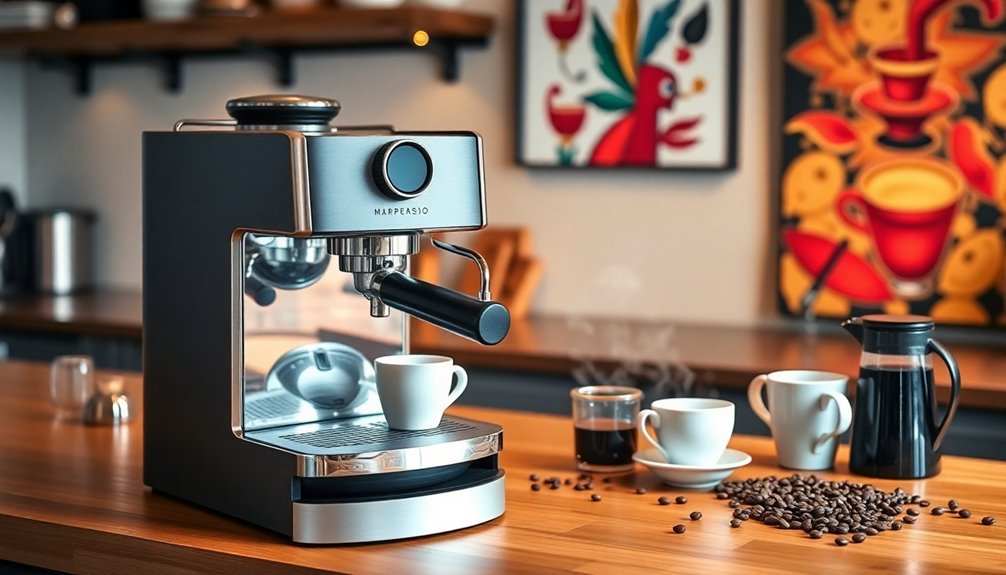

An espresso lever machine gives you direct control over extraction, but the tradeoff is more hands-on preparation than with an automatic machine. I’d put the Flair Classic first for its pressure gauge and two portafilters, which make it a flexible starting point for manual brewing. The Flair 49 PRO suits experienced brewers seeking more control, while the La Pavoni Europiccola offers a traditional, heated lever-machine format. These choices differ in portability, workflow, and how much practice they ask of you. Read on for the full breakdown of all nine options and the buyer priorities that separate them.

Get kitchen staples and gadgets delivered free with Prime
- Fast, free delivery on millions of items
- Prime Video, Amazon Music and more included
- Member-only deals all year
Complete the kit


Key Takeaways
- The Flair Classic ranks first for flexibility: its pressure gauge and two portafilters support experimentation, though brewing remains a manual process.
- The Flair 49 PRO is the control-focused pick: it is better suited to experienced users than buyers seeking a simple, forgiving routine.
- The SUPERKOP and Flair 2GO address portability differently: compare their portable, non-electric and collapsible designs against the added setup and cleanup of brewing away from home.
- La Pavoni’s four machines favor a traditional heated format: the Stradivari, Europiccola, Professional, and Esperto Abile differ in model design and presentation, so capacity and handling deserve a close look.
- Capacity labels do not settle the workflow question: consider how many drinks you make per session alongside warm-up, repeated shots, and cleanup.


More Details on Our Top Picks
Flair Classic Manual Lever Espresso Maker with Pressure Gauge and Two Portafilters
The Flair Classic suits home brewers who want a simple, electricity-free way to shape each shot. Its two included portafilters let you choose between a bottomless setup and flow control, while the detachable brewing head makes cleanup more manageable. Compared with the SUPERKOP, the Flair offers more flexibility in portafilter style; the SUPERKOP is designed around quicker multi-stroke extraction and easier portability. The tradeoff is that the Classic asks you to heat water and prepare grounds separately, then apply the force for every shot. Its modest water input also makes it a one-at-a-time choice. I’d pick it for a home setup where manual control and straightforward maintenance matter more than speed.
Pros:- Works without electricity or electronic components
- Includes bottomless and flow-control portafilters
- Detachable brewing head simplifies cleaning
- Cast aluminum and stainless steel construction
Cons:- Requires manual force for every shot
- Water must be boiled and coffee grounds prepared separately
- Small water input limits it to individual shots
Best for: Home espresso enthusiasts who want interchangeable portafilter styles and do not mind heating water separately
Not ideal for: People who want fast, repeatable drinks with minimal hands-on preparation
- Operation:Manual
- Brew dose:Up to 18 g
- Water input:60 ml
- Shot yield:40 ml
- Dimensions:6 x 12 x 10 inches
- Weight:4.9 pounds
- Materials:Cast aluminum and stainless steel
- Included portafilters:Bottomless 2-in-1 and Flow Control
- Warranty:3 years on aluminum press stand and stainless steel brewing head
Our verdict“Choose the Flair Classic if you want a flexible manual home setup and are comfortable handling water heating, grinding, and lever pressure yourself.”
SUPERKOP Manual Espresso & Coffee Maker, Portable Non-Electric Lever Machine, Black
The SUPERKOP is the travel-minded pick: its non-electric design and compact manual workflow make it easier to take beyond a dedicated kitchen setup. A 1:40 displacement lever builds pressure over five or six strokes, so extraction is guided through repeated movement rather than a single press. That makes it distinct from the Flair Classic, which includes two portafilter styles for home experimentation but has a more involved brewing head. SUPERKOP’s rinse-after-use routine also keeps upkeep simple. The main catch is that portability does not remove the need for preparation: you still need 60 ml of water at 203°F and ground coffee, and multiple lever strokes take more attention than an electric machine. I’d choose it for trips where a manual espresso routine is welcome.
Pros:- Non-electric design works away from outlets
- 58 mm portafilter supports a familiar basket format
- Rinses clean without backflushing or descaling
- Safety valve releases pressure
Cons:- Requires water heated to 203°F before brewing
- Several lever strokes are needed for extraction
- Manual brewing still requires prepared coffee grounds
Best for: Campers and travelers who can carry hot water or heat it at their destination and want espresso without a power outlet
Not ideal for: Commuters seeking a ready-to-drink portable brewer or home users who prioritize one-step convenience
- Power:Non-electric
- Portafilter size:58 mm
- Coffee capacity:18 g
- Water required:60 ml at 203°F
- Extraction time:25–30 seconds
- Lever mechanism:1:40 displacement, 5–6 strokes
- Safety valve pressure:20 bars
- Materials:Powder-coated aluminum shell, stainless steel components, polycarbonate water cup
Our verdict“Pick the SUPERKOP for travel and camping if you are willing to bring or heat water and operate the lever for each shot.”
Manual Espresso Maker Set, Hand Press Espresso Machine with 12-Bar Pressure Profiling, Dual-Lever, Pre-Infusion, Stainless Steel, Black
For enthusiasts who want to shape extraction, this dual-lever machine offers the most explicit pressure control among these five: a 3–12 bar range, pre-infusion, and adjustable temperature give each shot room for experimentation. Its 58 mm portafilter also matches the format used by the SUPERKOP, though the SUPERKOP favors portability and a simpler multi-stroke routine. The Flair Classic is less focused on tuning pressure curves, making this model a better fit for buyers who want to learn how pressure and temperature affect a shot. That control brings a learning curve, and at 8.4 pounds it is less suited to travel than the lighter Flair Classic. I’d shortlist it for a stationary home coffee setup where hands-on adjustment is part of the appeal.
Pros:- Adjustable pressure from 3 to 12 bar
- Pre-infusion and pressure profiling support tailored extraction
- Stainless steel construction with brass reinforcements
- 58 mm portafilter and 360° pressure gauge
Cons:- Manual pressure control can take practice
- At 8.4 pounds, it is less portable than the Flair Classic
- The feature set may be unnecessary for buyers who want a basic lever routine
Best for: Experienced home espresso hobbyists who want to adjust pressure and temperature while dialing in beans
Not ideal for: Travelers or beginners who want a lighter machine and a simpler path to consistent shots
- Operation:Dual-lever manual
- Pressure range:3–12 bar
- Pressure gauge:360°
- Portafilter size:58 mm
- Water temperature range:92°–98°C
- Construction:4 mm stainless steel with brass reinforcements
- Weight:3.8 kg (8.4 lb)
- Plastic parts:None
Our verdict“Choose this machine if pressure and temperature experimentation matter more to you than portability or a beginner-friendly workflow.”
La Pavoni PSW-16 Stradivari Lever Espresso Machine, 16-Cup, Chrome with Wood Handles
The La Pavoni Stradivari stands apart from the Flair Classic and SUPERKOP by pairing a manual piston lever with a 38 oz brass boiler sized for repeated servings. It can brew one or two cups at a time, while the listed capacity of up to 16 two-ounce servings per fill makes it more suited to entertaining than the Flair Classic’s single-shot workflow. A dual frothing system also gives it a broader role for milk drinks. The tradeoff is a more involved, hands-on routine: the boiler must be managed and the lever takes practice, so this is not the quick portable option the SUPERKOP aims to be. Its chrome finish and wood handles make it a distinctive countertop piece, though the wood calls for careful upkeep.
Pros:- 38 oz solid brass boiler supports multiple servings per fill
- Manual piston lever gives hands-on extraction control
- Dual frothing system supports cappuccinos, lattes, and macchiatos
- Chrome finish with wood handles gives it a distinctive design
Cons:- Manual boiler and lever workflow requires attention and practice
- Brews only one or two cups at a time despite the larger boiler
- Wood handles may need careful maintenance
Best for: Hosts and espresso enthusiasts who want a traditional lever machine with capacity for several rounds and milk-drink capability
Not ideal for: Travelers, casual users seeking automatic brewing, or households with little counter space
- Model:PSW-16 Stradivari
- Operation:Manual piston lever
- Boiler capacity:38 oz
- Boiler material:Solid brass
- Servings per fill:Up to 16 servings of 2 oz
- Brewing capacity:1–2 cups at a time
- Frothing system:Dual
- Finish and handles:Chrome with wood handles
- Origin:Made in Italy
Our verdict“Choose the Stradivari if you want a traditional, milk-capable lever machine for serving several rounds at home and accept its hands-on workflow.”
La Pavoni EPC-8 Europiccola Manual Lever Espresso Machine
The La Pavoni Europiccola is aimed at buyers who want a traditional countertop lever machine sized around one or two cups at a time. Its 0.8 L water capacity gives it a different rhythm from the Stradivari, whose larger 38 oz boiler is better suited to preparing several rounds for guests. The Europiccola’s removable drip tray makes routine cleanup simpler, and its chrome and silver finish keeps the design relatively restrained. Like the Stradivari, it leaves extraction in the user’s hands; unlike the portable Flair Classic, it is a home or small-office machine rather than a compact travel brewer. The limited capacity is the central compromise: repeated drinks for a group mean more refilling and hands-on work.
Pros:- 0.8 L capacity suits one or two cups at a time
- Manual lever gives direct control over extraction
- Removable drip tray simplifies maintenance
- Chrome and silver finish suits a traditional home setup
Cons:- Manual operation requires effort and attention for each shot
- Small capacity is inconvenient when serving several people
- Home-focused format is less portable than the Flair Classic
Best for: One- or two-person households and small offices that want a traditional manual lever machine for occasional espresso rounds
Not ideal for: People who regularly serve groups or want an automatic machine with minimal hands-on brewing
- Model:EPC-8 Europiccola
- Operation:Manual lever
- Water capacity:0.8 L
- Finish:Chrome and silver
- Intended use:Home or small office
- Drip tray:Removable
Our verdict“Pick the Europiccola for a small household that wants a traditional lever routine and does not need to make many drinks per fill.”
La Pavoni PC-16 Professional Lever Espresso Machine, Chrome
The PC-16 Professional pairs hands-on lever extraction with a 38-ounce brass boiler and two ways to froth milk. That makes it a more versatile choice for cappuccino drinkers than the Flair 49 PRO, which focuses on manual espresso brewing without a built-in milk system. Its mounted pressure gauge gives you a visual reference while pulling shots, though the lever still takes practice to use consistently. The traditional steam wand offers more direct control over texture, while the automatic cappuccino maker gives you a simpler route to foam. The tradeoff is upkeep: this is a heated boiler machine that needs regular descaling and careful maintenance. I’d choose it for a home setup where milk drinks and a substantial, classic machine matter more than portability.
Pros:- Lever operation lets the brewer control extraction directly
- 38-ounce nickel-plated brass boiler supports multiple shots per fill
- Steam wand and automatic cappuccino maker offer two frothing approaches
- Mounted pressure gauge provides a visual brewing reference
Cons:- Manual lever technique takes practice for consistent shots
- Boiler requires regular descaling and careful maintenance
- Less portable than compact manual brewers such as the Flair 49 PRO
Best for: Home baristas who regularly make cappuccinos and want both manual lever shots and built-in milk-frothing options
Not ideal for: Travelers or buyers who want a compact, low-maintenance manual brewer without a heated boiler
- Model:PC-16
- Type:Lever espresso machine
- Boiler capacity:38 oz
- Boiler material:Nickel-plated solid brass
- Frothing system:Traditional steam wand and automatic cappuccino maker
- Pressure gauge:Mounted
- Heating element:Food-safe stainless steel
- Country of origin:Italy
Our verdict“Choose the PC-16 if you want a traditional lever machine with built-in options for making milk drinks.”
La Pavoni Esperto Abile 16-Cup Lever Espresso Machine with Rosewood Handles
The Esperto Abile suits baristas who want to vary their dose and compare results: it includes 9 g, 16 g, and 20 g competition filters, plus a group pressure gauge and dual frothing systems. Its 54-ounce boiler is larger than the PC-16 Professional’s 38-ounce boiler, which means more stated capacity between fills, though both machines brew only one or two cups at a time. That makes the Esperto a better fit for extended, hands-on sessions than for serving a crowd quickly. The rosewood handles and controls give it a distinct finish, while its manual operation keeps preparation involved. Compared with the more compact Flair 49 PRO, this La Pavoni adds a boiler and milk-frothing options, at the cost of greater setup and maintenance demands.
Pros:- Three included competition filters support different coffee doses
- 54-ounce boiler is larger than the PC-16 Professional’s 38-ounce boiler
- Group pressure gauge and dual frothing systems support hands-on control
- Chrome exterior and rosewood controls give it a distinctive finish
Cons:- Manual preparation takes more involvement than automatic brewing
- Brews only one or two cups at a time
- Boiler-based operation brings more maintenance than compact manual brewers
Best for: Experienced home baristas who want to compare espresso doses and make milk drinks on a boiler-based lever machine
Not ideal for: Buyers who need fast multi-cup service or prefer a simple, travel-friendly manual brewer
- Operation mode:Manual
- Boiler capacity:54 oz
- Espresso capacity:Up to 16 two-ounce servings
- Included filters:9 g, 16 g, and 20 g
- Frothing systems:Dual
- Dimensions:12 × 7 × 15 in
- Weight:17 lb
- Materials and finish:Chrome exterior with rosewood handles and controls
- Origin:Made in Italy
Our verdict“Pick the Esperto Abile if experimenting with dose sizes and making milk drinks matter more than quick, high-volume service.”
Flair 49 PRO Manual Lever Espresso Maker with Pressure Gauge, Black
The Flair 49 PRO puts pressure control at the center of a compact manual setup: its integrated gauge marks an espresso zone of 5–9 bar, so you can see how your lever force relates to extraction. Stainless steel brew-path components keep plastic away from the brew water, and the roughly 12 × 8-inch footprint is easier to accommodate than the boiler-based La Pavoni PC-16 Professional. The included pressurized and bottomless baskets also give newer users a more forgiving starting point before moving to a more demanding shot style. The tradeoff is that this is espresso brewing without a built-in boiler or milk frother, and the 49 mm portafilter is smaller than the traditional 58 mm size. It fits buyers who want control and a compact station, not an all-in-one espresso setup.
Pros:- Integrated gauge marks a 5–9 bar espresso zone
- Stainless steel components keep plastic out of the brew path
- Approximately 12 × 8-inch footprint fits compact counters
- Pressurized and bottomless baskets serve different skill levels
Cons:- Manual operation requires the user to control extraction
- 49 mm portafilter is smaller than the traditional 58 mm size
- No built-in boiler or milk-frothing system
Best for: Apartment dwellers and hands-on home brewers who want pressure feedback in a compact, plastic-free brew path
Not ideal for: People who want integrated heating and milk frothing or rely on standard 58 mm portafilter accessories
- Type:Manual lever espresso maker
- Portafilter size:49 mm
- Pressure gauge:Integrated; espresso zone from 5–9 bar
- Brew path materials:Stainless steel cylinder, valve plunger, and stem
- Footprint:Approximately 12 × 8 in
- Included baskets:Pressurized and bottomless
- Color:Black
Our verdict“Choose the Flair 49 PRO if counter space and visible pressure control matter more than built-in heating or milk frothing.”
Flair 2GO Portable Collapsible Lever Espresso Machine (Grounds Model)
For coffee away from home, the Flair 2GO is the clear portability pick in this group: it weighs less than four pounds, folds into a small case, and uses a manual lever rather than relying on a boiler. Its integrated pressure gauge and 6–9 bar brewing range give traveling users some feedback over extraction, similar in spirit to the countertop Flair 49 PRO. The 2GO’s case measures 9.5 × 5.25 × 4 inches, but its 60 ml capacity is geared toward a single serving, and the grounds model requires an espresso-capable burr grinder. That adds gear to pack and limits convenience when traveling light. Compared with either La Pavoni, it gives up boiler capacity and built-in milk frothing to gain a collapsible form that can travel.
Pros:- Collapsible design packs into a compact carrying case
- Weighs less than four pounds
- Integrated pressure gauge supports monitoring extraction
- Aircraft-grade aluminum frame and stainless steel brew cylinder
Cons:- Requires a separate espresso-capable burr grinder
- 60 ml capacity is suited to a single serving
- Manual lever operation takes user effort
Best for: Travelers and campers who already have an espresso-capable burr grinder and want a compact manual espresso setup
Not ideal for: Households making several drinks at once or buyers who want an integrated grinder, boiler, or milk frother
- Type:Manual espresso machine
- Weight:Less than 4 lbs
- Case dimensions:9.5 × 5.25 × 4 in
- Brewing pressure:6–9 bar
- Capacity:60 ml
- Portafilter:Bottomless 2-in-1
- Materials:Aircraft-grade 6061 aluminum frame; stainless steel brew cylinder
- Warranty:1-year limited warranty on frame and brew cylinder
Our verdict“Choose the Flair 2GO if you want to make espresso while traveling and are willing to carry a suitable grinder.”

How We Picked
I compared the nine machines by how well their designs match real brewing priorities: control over extraction, ease of learning, portability, capacity, and the work involved in setup and cleaning. I also considered build and format, including whether a machine is a portable manual press or a traditional heated lever model. Features such as pressure gauges, pre-infusion, and profiling matter when they give a buyer useful control; they do not automatically make a machine easier to use.
The Flair Classic leads because its gauge and two portafilters offer a useful balance of feedback and flexibility. I placed the Flair 49 PRO and La Pavoni models in roles that reflect their more specialized control or traditional format, while the SUPERKOP and Flair 2GO stand out for portability. The ranking favors a clear fit for a particular buyer over a feature count: a compact brewer can be the right choice for travel, but that does not make it the strongest pick for a fixed home setup.
Factors to Consider When Choosing Espresso Lever Machine
Before choosing, decide what you want the lever to add to your routine. A machine that offers more direct control can also ask for more attention, and a portable form can change how you prepare and serve a shot. These broader tradeoffs help narrow the field beyond model-by-model features.
Match the lever format to your routine
Manual lever machines vary in how much of the brewing process they place in your hands. A portable press can suit a counter with limited space or brewing away from home, while a heated lever machine is designed around a more permanent setup. Before choosing, map the steps you are willing to repeat: preparing hot water, heating or preheating parts, assembling the brewer, and cleaning it afterward. A common mistake is focusing on the lever alone and overlooking everything around the shot. If you want a quick, low-effort drink, look closely at the full workflow rather than assuming every manual machine is equally simple. Choose the format that fits the place and pace where you will actually brew.
Treat pressure feedback as a learning tool
A pressure gauge can show how your pull changes as you press the lever, which gives you feedback when adjusting technique. It does not tell you by itself whether the grind, dose, or extraction is right. Profiling and pre-infusion features can add control, but they also give a beginner more variables to manage. Decide whether you want to learn by changing one thing at a time or prefer a less involved routine. It is easy to pay attention to a gauge while overlooking grind consistency, which has a major effect on how the coffee flows. More feedback pays off when you are willing to use it systematically.
Plan for the grinder and coffee prep
The lever machine is only one part of the setup: espresso depends on a suitable grinder and consistent preparation. A machine with more pressure control cannot compensate for uneven grounds or a poor fit between grind and basket. Check what accessories are included and what you may need separately, especially if a model comes with multiple portafilters or a distinct basket format. Buyers sometimes spend their full setup budget on the brewer, then have little room to improve grinding. Think about the entire path from beans to prepared puck before comparing machines. If you already own a grinder, confirm that its adjustment range can support espresso brewing.
Choose capacity for a whole session
Capacity claims can be easy to misread: a listed cup count does not necessarily mean a machine will produce that many espresso drinks in one uninterrupted pull. Consider how many shots you make back to back, whether you brew for guests, and how much recovery or reheating the process may involve. A compact single-shot routine can make sense for one person even if it takes more steps per drink. For a household that serves several people, repeated preparation and temperature management may matter more than the headline capacity. Think through a typical morning rather than an occasional large gathering. This helps prevent buying a machine whose format slows down the routine you hoped to improve.
Balance portability against setup friction
Portable and collapsible designs can make espresso possible where a countertop machine would be impractical. Portability still involves carrying coffee, hot water, and any parts or tools needed to prepare and clean the brewer. A folding or compact form is most useful when it reduces what you need to pack without making assembly inconvenient. Consider where you will set the machine, how stable that surface is, and where you will dispose of wet grounds. Buyers often judge travel suitability by size alone, then discover that the supporting routine takes more space or effort. If most of your shots happen at home, a travel feature may matter less than a comfortable daily setup.
Account for heat, cleaning, and handling
Traditional heated lever machines and portable manual brewers bring different setup and maintenance habits. Warm-up and hot components affect when you can brew and how you handle the machine; removable parts and grounds affect cleanup after each session. Before buying, look for clear instructions on cleaning, replacement parts, and the care of materials such as wood handles. A machine that looks substantial may still require regular attention to keep its moving parts and brewing surfaces in good condition. Consider whether you prefer a stable appliance that stays in place or a brewer you can put away. Maintenance is easiest to sustain when it fits naturally into your routine.
Frequently Asked Questions
Is a lever machine a good first espresso maker?
It can be, if you want to learn how grind, dose, and pressure affect a shot and are comfortable with a hands-on routine. A model with a pressure gauge, such as the Flair Classic, gives useful feedback while you practice. That feedback does not remove the need for a suitable grinder or careful preparation. If your priority is pressing one button and getting a repeatable drink, a manual lever may feel like extra work. Choose based on whether you enjoy the process as well as the result.
Should I choose a portable Flair or a La Pavoni lever machine?
Start with where you plan to brew most often. The Flair portable models are aimed at compact or travel use, while the La Pavoni options represent a traditional heated lever-machine format for a more settled setup. Portable brewing still requires a way to prepare hot water and manage grounds, so it does not eliminate the supporting kit. A home brewer making several drinks should think about session pace and heat management. The right choice depends on whether mobility or a dedicated brewing station matters more in your day-to-day routine.
Does a pressure gauge make espresso easier to get right?
A gauge makes pressure visible, which can help you compare pulls and learn how your lever technique affects extraction. It cannot diagnose every cause of a poor shot; grind size, dose, puck preparation, and coffee freshness also play a part. Treat it as feedback rather than an automatic correction. Beginners may find it useful if they are willing to adjust one variable at a time. If you would rather avoid tracking technique, a gauge may add complexity without changing your preferences.
What should I check before buying a portable lever machine for travel?
Check the complete kit you will need, including the brewer, coffee, grinder or pre-ground coffee, hot water, and a way to handle used grounds. Then consider assembly time, the stability of the surface where you will pull the lever, and how you will clean the parts. A collapsible shape helps with packing, but it does not answer those practical questions. If you travel light or brew outdoors, test your packing plan against the space available. For mostly home use, convenience at the counter may be more valuable than a smaller packed size.
How should I compare the La Pavoni 16-cup models with the Europiccola?
Do not use the cup label alone to predict how well a model fits your household. Compare the machines’ specific design, handling, and intended session size, then consider how many espresso shots you make in practice. A larger stated capacity may matter for serving multiple people, but it does not necessarily mean less work per shot or a faster routine. The Europiccola may suit a buyer seeking a traditional manual lever format without choosing solely by a larger capacity label. Review the exact model details and care needs before settling on one.
Conclusion
I’d choose the Flair Classic as the best overall for its pressure gauge and two portafilters, which give it a flexible place in this lineup. For a portable option, compare the SUPERKOP with the Flair 2GO based on whether its non-electric format or collapsible design better fits your trips; the best value depends on the included setup and your needs. The Flair 49 PRO is the best fit for experienced brewers who want more control, while the La Pavoni Europiccola makes sense for a beginner drawn to a traditional heated lever machine and ready to learn its routine. For a more distinctive premium-style home setup, look at the La Pavoni Esperto Abile or compare it with the Stradivari and Professional models on their exact design and capacity. Choose the machine whose workflow you will enjoy repeating, since that matters as much as the lever itself.